UGC NET Paper 1 Syllabus 2026: 10 Units, Weightage + PDF
UGC NET Paper 1 syllabus 2026: all 10 units & topics, topic-wise weightage, exam pattern, marking scheme, PDF download (English & Hindi) and a study plan.

The ugc net paper 1 syllabus is a common, compulsory paper of 10 units — Teaching Aptitude, Research Aptitude, Comprehension, Communication, Mathematical Reasoning & Aptitude, Logical Reasoning, Data Interpretation, Information & Communication Technology (ICT), People, Development & Environment, and Higher Education System — tested through 50 objective questions worth 100 marks in 60 minutes, with no negative marking. Every candidate writes the same Paper 1 regardless of the Paper 2 subject, and exactly 5 questions are set from each unit. This 2026 guide gives you the full unit-wise topic list, a topic-wise weightage table, solved examples, a week-by-week study plan and direct PDF download steps in both English and Hindi.
Last reviewed for the 2026 cycle against the UGC/NTA-notified Paper 1 syllabus structure. Weightage and frequency figures below are marked clearly as either official (fixed 5 questions per unit) or trend-based (past-paper analysis, indicative only).
Key takeaways at a glance:
- Paper 1 has exactly 10 units, 5 questions (10 marks) per unit, 50 MCQs, 100 marks, 60 minutes.
- No negative marking — attempt all 50 questions.
- Paper 1 is identical for every subject; only Paper 2 changes.
- Easiest units: Teaching Aptitude, Higher Education System, Comprehension, Communication. Hardest: Mathematical Reasoning and Data Interpretation.
- Qualifying is on the Paper 1 + Paper 2 aggregate — 40% (General) / 35% (reserved) — followed by a top-6% percentile cut-off.
UGC NET Paper 1 syllabus 2026 at a glance
UGC NET (National Eligibility Test) is conducted by the National Testing Agency (NTA) twice a year — usually June and December cycles — to determine eligibility for Assistant Professor and Junior Research Fellowship (JRF). The exam has two papers held in a single 3-hour sitting with no break: Paper 1 (general aptitude, common to all) and Paper 2 (your chosen subject). The ugc net paper 1 syllabus 2026 continues to follow the 10-unit framework notified by the UGC, unchanged in structure but increasingly aligned to NEP 2020 themes and digital pedagogy in the way questions are framed.
Because Paper 1 is identical for a Political Science aspirant, a Commerce aspirant and a Computer Science aspirant alike, it is the single highest-leverage scoring area in the whole exam: the syllabus is finite, the question style is predictable, and a disciplined candidate can realistically target 90+ out of 100 here. Treat Paper 1 as your safety net that pulls up an average Paper 2 score.
UGC NET Paper 1 exam pattern and marking scheme
Before you memorise topics, lock in the ugc net paper 1 exam pattern and marking scheme. Paper 1 is a Computer-Based Test (CBT) of 50 multiple-choice questions. All questions are compulsory — there is no internal choice — and each carries 2 marks. There is no negative marking, so you must attempt all 50.
| Parameter | Detail |
|---|---|
| Mode | Computer-Based Test (CBT), online |
| Total questions | 50 MCQs (all compulsory) |
| Total marks | 100 |
| Marks per question | +2 for a correct answer |
| Negative marking | None (0 for wrong/unattempted) |
| Duration | 60 minutes (part of the combined 3-hour session) |
| Questions per unit | 5 (fixed, across all 10 units) |
| Language | English and Hindi (bilingual) |
Two facts follow directly from this pattern. First, because 5 questions come from each unit, no single unit can be safely ignored — skipping even one unit forfeits up to 10 marks. Second, since there is no penalty for wrong answers, leaving a blank is strategically worse than a considered guess. The negative-marking myth (“don’t attempt if unsure”) is simply false for UGC NET — mark every question.
All 10 units in UGC NET Paper 1 with weightage
There are exactly 10 units in UGC NET Paper 1, and each contributes 5 questions (10 marks). The table below maps each unit to its question and mark share, plus a broad difficulty rating so you can plan effort. This is the master view of the ugc net paper 1 units and topics.
| Unit | Title | Questions | Marks | Difficulty |
|---|---|---|---|---|
| I | Teaching Aptitude | 5 | 10 | Easy |
| II | Research Aptitude | 5 | 10 | Easy–Moderate |
| III | Comprehension | 5 | 10 | Easy |
| IV | Communication | 5 | 10 | Easy |
| V | Mathematical Reasoning & Aptitude | 5 | 10 | Hard |
| VI | Logical Reasoning | 5 | 10 | Moderate |
| VII | Data Interpretation | 5 | 10 | Hard |
| VIII | Information & Communication Technology (ICT) | 5 | 10 | Moderate |
| IX | People, Development & Environment | 5 | 10 | Moderate |
| X | Higher Education System | 5 | 10 | Easy–Moderate |
The total is therefore 50 questions and 100 marks — a flat, official split of 5 questions from every unit, which is why ugc net paper 1 topic wise weightage is best understood at the micro-topic level (covered further down) rather than the unit level.
Unit-by-unit breakdown: complete syllabus and topics
Here is the full ugc net paper 1 syllabus broken into the sub-topics NTA lists under each of the 10 units. Study each unit against this checklist so nothing is missed.
Unit I — Teaching Aptitude
Teaching: concept, objectives, levels of teaching (memory, understanding, reflective), characteristics and basic requirements. Learner’s characteristics: adolescent and adult learners (academic, social, emotional, cognitive), individual differences. Factors affecting teaching related to teacher, learner, support material, instructional facilities, learning environment and institution. Methods of teaching in higher learning institutions: teacher-centred vs learner-centred methods; offline vs online (SWAYAM, SWAYAMPRABHA, MOOCs). Teaching support systems: traditional, modern and ICT-based. Evaluation systems: elements and types of evaluation, evaluation in Choice-Based Credit System (CBCS), computer-based testing, innovations.
Unit II — Research Aptitude
Research: meaning, types (basic, applied, action, qualitative, quantitative), characteristics, positivism and post-positivist approach. Methods of research: experimental, descriptive, historical, qualitative and quantitative. Steps of research. Thesis and article writing: format and styles of referencing. Application of ICT in research. Research ethics — plagiarism, citation, and the role of ethics committees.
Unit III — Comprehension
A passage of text is given, followed by questions based on it. This unit tests reading speed, inference and vocabulary. No sub-topics to memorise — it is a pure skill unit, and among the easiest 10 marks if you practise passage-based questions and keep an eye on the clock.
Unit IV — Communication
Communication: meaning, types and characteristics. Effective communication: verbal and non-verbal, intercultural and group communication, classroom communication. Barriers to effective communication. Mass media and society. Contemporary additions include digital, social-media and virtual-classroom communication.
Unit V — Mathematical Reasoning & Aptitude
Types of reasoning. Number series, letter series, codes and relationships. Mathematical aptitude — fractions, time and distance, ratio, proportion and percentage, profit and loss, interest and discounting, averages. This is one of the trickiest units; formulas and speed matter (covered with shortcuts below).
Unit VI — Logical Reasoning
Understanding the structure of arguments: argument forms, structure of categorical propositions, mood and figure, formal and informal fallacies, uses of language, connotations and denotations of terms, classical square of opposition. Evaluating and distinguishing deductive and inductive reasoning. Analogies. Venn diagram: simple and multiple uses for establishing validity of arguments. Indian Logic: means of knowledge — Pramanas (Pratyaksha/perception, Anumana/inference, Upamana/comparison, Shabda/verbal testimony, Arthapatti/implication, Anupalabdhi/non-apprehension); structure and kinds of Anumana (inference), Vyapti (invariable relation), Hetvabhasa (fallacies of inference).
Unit VII — Data Interpretation
Sources, acquisition and classification of data. Quantitative and qualitative data. Graphical representation — bar chart, histograms, pie chart, table chart and line chart — and mapping of data. Data interpretation. Data and Governance. Along with Unit V, this is the most time-consuming unit; know each chart type’s traps.
Unit VIII — Information & Communication Technology (ICT)
ICT: general abbreviations and terminology. Basics of the internet, intranet, email, audio and video conferencing. Digital initiatives in higher education. ICT and governance (Digital India, e-governance). This unit rewards current-awareness — DigiLocker, NDLI, SWAYAM, ABC (Academic Bank of Credits) and similar schemes are frequent.
Unit IX — People, Development & Environment
Development and environment: Millennium and Sustainable Development Goals (SDGs). Human and environment interaction: anthropogenic activities and their impacts on the environment. Environmental issues — local, regional and global; air, water, soil and noise pollution; nuclear hazards and human health risks. Natural and energy resources: solar, wind, soil, hydro, geothermal, biomass, nuclear and forests. Natural hazards and disasters: mitigation strategies. Environmental Protection Act (1986), National Action Plan on Climate Change, and international agreements/efforts.
Unit X — Higher Education System
Institutions of higher learning and education in ancient India. Evolution of higher learning and research in post-independence India. Oriental, conventional and non-conventional learning programmes in India. Professional, technical and skill-based education. Value education and environmental education. Policies, governance and administration. This unit now heavily reflects NEP 2020, HEC/UGC reforms and the National Digital Library.
Topic-wise weightage and past-year frequency analysis
Official weightage is flat — 5 questions per unit — but past papers show clear patterns in which micro-topics repeat. This is the data-backed edge most syllabus pages miss. The table below reflects observed frequency across recent NTA UGC NET Paper 1 papers and is meant to guide where you spend extra revision time (indicative, based on trend analysis, not an NTA notification).
| Unit | High-frequency micro-topics | Approx. Qs seen |
|---|---|---|
| Teaching Aptitude | Levels of teaching, evaluation types (formative/summative), learner characteristics | 3–5 |
| Research Aptitude | Types of research, sampling, referencing styles, research ethics/plagiarism | 4–5 |
| Comprehension | Single passage set | 5 |
| Communication | Barriers, non-verbal communication, mass media | 3–5 |
| Maths Reasoning | Number/letter series, percentage, ratio, average, time & distance | 3–5 |
| Logical Reasoning | Syllogism, Venn diagrams, Pramanas, fallacies | 3–5 |
| Data Interpretation | Table & pie chart based sets, percentage change | 5 |
| ICT | Abbreviations, memory units, digital-education schemes | 3–5 |
| People & Environment | Pollution, SDGs, energy resources, international summits | 3–5 |
| Higher Education | Ancient institutions, NEP 2020, commissions/policies | 3–5 |
Practical takeaway: within Data Interpretation, table and pie-chart sets appear far more than histograms; within Logical Reasoning, syllogism and the classical square of opposition recur more than obscure fallacies; within ICT, memory-unit conversions (bit, byte, KB, MB) and abbreviations are near-guaranteed easy marks.
Easiest vs hardest units: where the marks are
Not all 10 marks are equally hard to earn. Use this ranking to sequence your preparation and to decide attempt order in the exam hall.
| Tier | Units | Why |
|---|---|---|
| Easiest (attempt first) | Teaching Aptitude, Higher Education System, Comprehension, Communication | Conceptual, memory-based, fast to solve; minimal calculation |
| Moderate | Research Aptitude, ICT, People/Development/Environment, Logical Reasoning | Factual + light reasoning; scoring with revision |
| Hardest (attempt last) | Mathematical Reasoning & Aptitude, Data Interpretation | Calculation-heavy, time-consuming, trap-prone |
The single easiest unit for most aspirants is Teaching Aptitude — it is intuitive, closely tied to everyday classroom logic, and its questions rarely require calculation. Pair it with Higher Education System and you have 20 near-guaranteed marks. Reserve Maths and DI for the end of the paper so a hard set never eats the time you need for easy units.
Solved MCQ examples by unit
To show the real difficulty and question style, here are worked samples across the trickier units.
Teaching Aptitude: Which level of teaching aims at developing reflective thinking? (A) Memory level (B) Understanding level (C) Reflective level (D) Autonomous level. Answer: (C). Reflective level is the highest, problem-centred level of teaching (Hunt’s model).
Mathematical Reasoning: A number series — 3, 8, 15, 24, 35, ? The differences are 5, 7, 9, 11, so the next difference is 13. 35 + 13 = 48. Shortcut: for such series, track the difference-of-differences (here a constant 2).
Logical Reasoning (Indian Logic): “There is fire on the hill because there is smoke” is an example of which Pramana? (A) Pratyaksha (B) Anumana (C) Upamana (D) Shabda. Answer: (B) Anumana (inference), the classic smoke–fire Vyapti example.
Data Interpretation: If a pie chart shows 90° allotted to “Salaries” out of 360°, that segment is 90/360 = 25% of total expenditure. Trap: candidates confuse degrees with direct percentages — always divide by 360.
ICT: 1 kilobyte (KB) equals how many bytes? 1024 bytes (2^10). Memorise the 1024 ladder: bit < byte < KB < MB < GB < TB.
Formulas, shortcuts and common traps for the hard units
Maths, DI and Indian Logic sink more scores than any other topics, so give them dedicated shortcut practice.
Mathematical Reasoning shortcuts
Percentage–fraction conversions (1/8 = 12.5%, 1/6 = 16.66%) let you solve profit/loss and DI sums in seconds. For time and distance, remember speed = distance ÷ time and convert km/h to m/s by multiplying by 5/18. For averages, the average shifts by (change in one value ÷ number of terms). Common trap: mixing up “percentage increase” (on the old value) with “percentage point” change.
Logical Reasoning & Indian Logic traps
For syllogisms, use Venn diagrams rather than rules of thumb; “possibility” conclusions trip up most candidates. In Indian Logic, memorise the six Pramanas of the Mimamsa school and the five-membered Indian syllogism (Pratijna, Hetu, Udaharana, Upanaya, Nigamana). Hetvabhasa (fallacies of the middle term) is a favourite — know Savyabhichara, Viruddha and Asiddha.
Data Interpretation traps
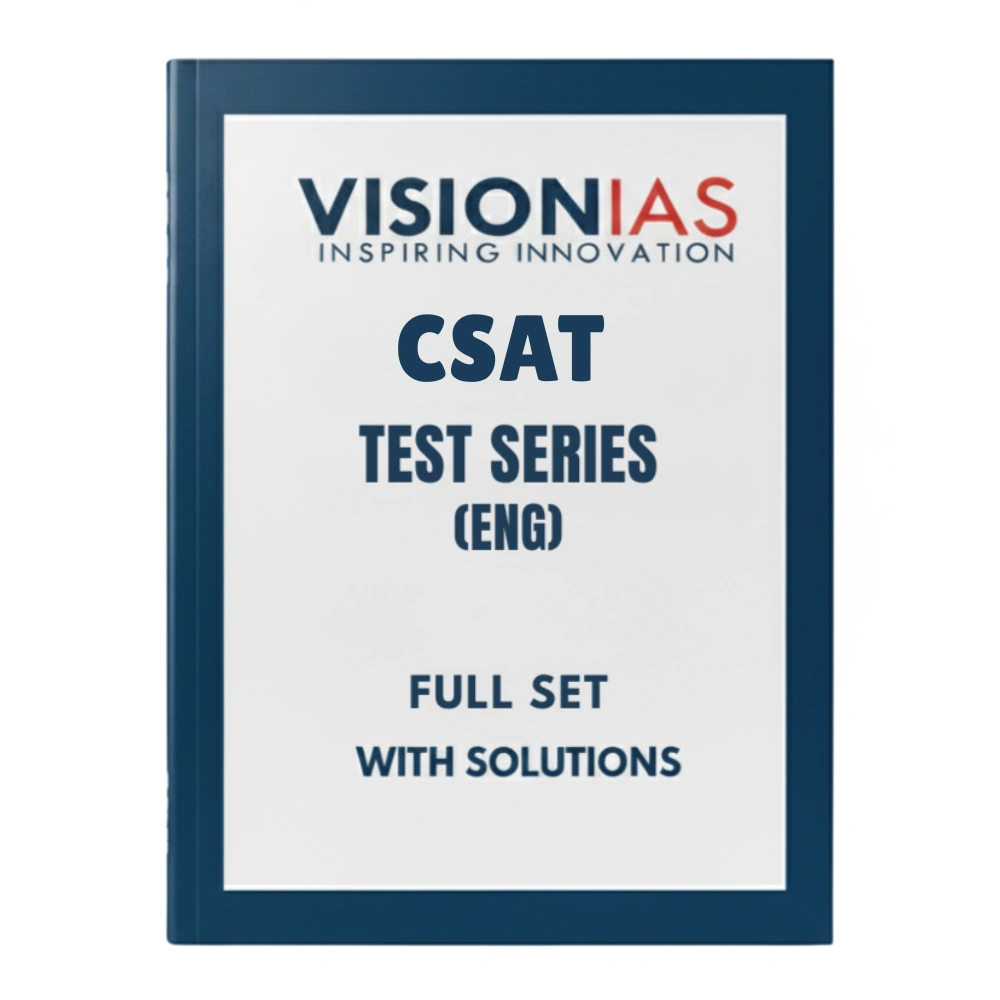
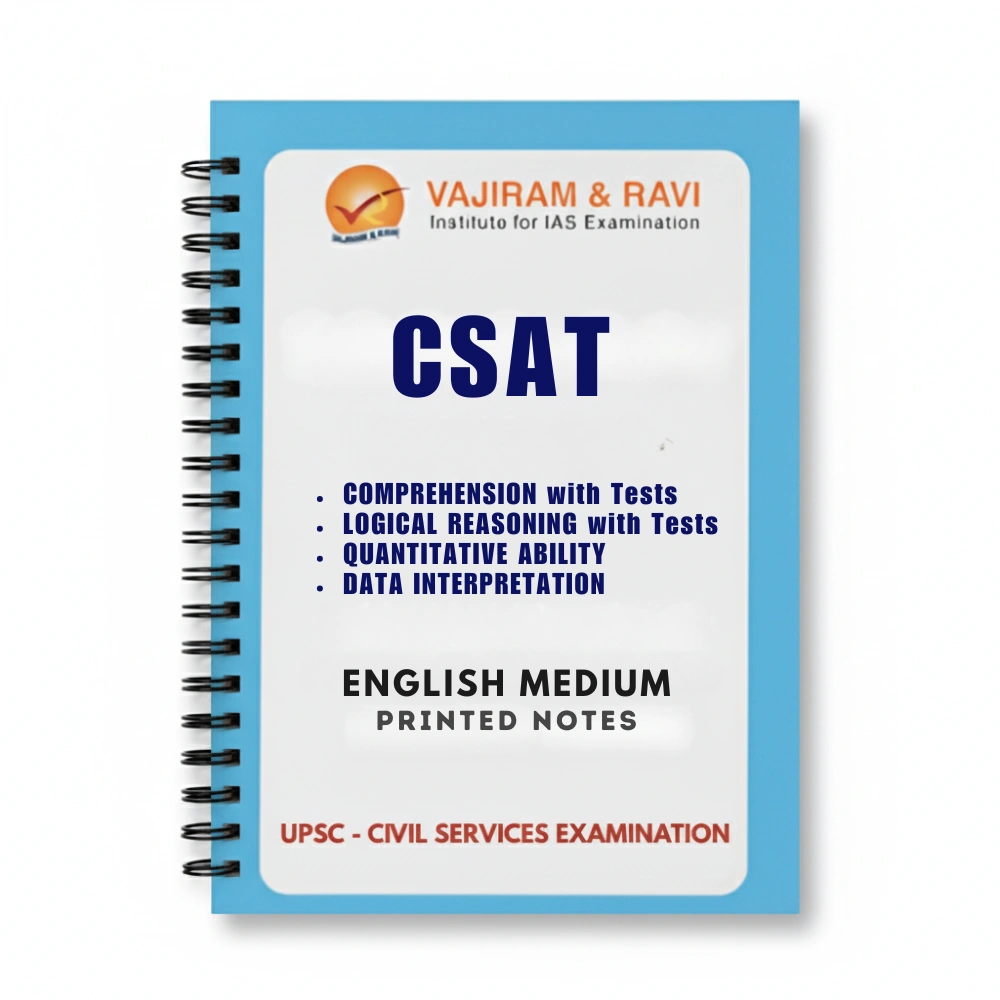
Read the axis units and the legend before touching a calculation; a chart in “lakhs” vs “thousands” changes every answer. For table sets, scan the question first, then extract only the two or three cells you need. Practising DI and reasoning under time pressure is exactly what a good aptitude test series trains — our Vision IAS CSAT Test Series and the Vajiram CSAT complete booklet set cover reasoning, DI and comprehension that overlap heavily with Paper 1 Units V, VI and VII.
Week-by-week study plan for UGC NET Paper 1
Most pages list topics but never sequence them. Here is a realistic 6-week plan (roughly 1.5–2 hours a day) that covers all 10 units and leaves room for revision and mocks. Compress it to 3 weeks by doubling daily hours if your exam is close.
| Week | Focus units | Goal |
|---|---|---|
| Week 1 | Teaching Aptitude + Higher Education System | Lock the two easiest scoring units; make one-page notes |
| Week 2 | Research Aptitude + Communication | Master research types, referencing, ethics; communication barriers |
| Week 3 | Mathematical Reasoning & Aptitude | Daily 20-sum practice; build a formula sheet |
| Week 4 | Data Interpretation + Logical Reasoning | Chart sets + syllogism/Venn + Indian Logic Pramanas |
| Week 5 | ICT + People, Development & Environment | Abbreviations, digital schemes, SDGs, pollution, energy |
| Week 6 | Comprehension + full-length mocks | Timed passages; 2–3 full Paper 1 mocks + error log |
Rule of thumb: finish the easy conceptual units early so your confidence is high, and interleave Maths/DI practice throughout rather than cramming it in one block — numerical skill decays without regular touch.
How to download the UGC NET Paper 1 syllabus PDF (English & Hindi)
For the official, always-current file, go straight to NTA rather than a third-party copy. Here is the reliable path for the ugc net paper 1 syllabus pdf download:
- Open the official portal: ugcnet.nta.ac.in (or ugcnet.nta.nic.in).
- On the homepage, click the “Syllabus” tab (also linked inside the Information Bulletin).
- Select Paper 1 (General Paper on Teaching & Research Aptitude) — it is the same PDF for all subjects.
- Download and save the PDF; the same document contains the English text, and NTA also releases a Hindi version.
For the ugc net paper 1 syllabus in hindi, choose the Hindi-medium bulletin/syllabus link on the same page — Paper 1 is bilingual and the Hindi PDF mirrors the English units exactly. If the portal is busy near the exam, the UGC website (ugc.gov.in) also hosts the master syllabus. Always cross-check the year on the cover page so you have the ugc net paper 1 syllabus 2026 version and not an older bulletin.
Qualifying marks, cut-offs and NEP 2020 updates
UGC NET has no separate passing mark for Paper 1 alone; qualification is based on the aggregate of Paper 1 + Paper 2. To be considered, candidates must meet the minimum aggregate: 40% (General/Unreserved) and 35% (OBC-NCL, SC, ST, PwD, EWS, Third gender). Final selection for JRF/Assistant Professor is then decided by NTA’s category-wise percentile cut-off (top 6% of qualified candidates), so aim well above the floor.
On content, the 10-unit structure is stable, but the framing of Higher Education System, ICT and Teaching Aptitude increasingly reflects NEP 2020 — expect questions on multidisciplinary education, the Academic Bank of Credits (ABC), multiple entry–exit, digital and blended learning (SWAYAM, SWAYAMPRABHA, NDLI, DigiLocker) and CBCS. Keeping up with these digital-pedagogy schemes is now essentially compulsory for Units VIII and X.
What changed vs previous years
Returning aspirants often ask what is new. The core syllabus text has not been re-notified — all 10 units remain — but the practical emphasis has shifted, as summarised below.
| Area | Earlier emphasis | 2026 emphasis |
|---|---|---|
| Teaching & Higher Ed | Traditional methods, commissions | NEP 2020, ABC, multidisciplinary, blended learning |
| ICT | Basic terminology, abbreviations | Digital India schemes, e-governance, online-education platforms |
| Environment | Pollution basics, MDGs | SDGs, climate agreements, NAPCC |
| Evaluation | Written-exam focus | CBT, CBCS, computer-based testing innovations |
The exam pattern itself — 50 questions, 100 marks, 60 minutes, no negative marking — has been consistent, so a returning candidate mainly needs to refresh current-affairs-linked topics rather than relearn structure.
Best books, PYQs and mock tests for Paper 1
You do not need many resources for Paper 1 — one standard guide, plus heavy practice, beats hoarding books. A widely used base is Trishna’s/KVS Madaan UGC NET Paper 1 or Arihant UGC NET Paper 1. Whatever guide you pick, the differentiator is practice: solving previous-year questions (PYQs) and taking timed mocks is what converts knowledge into marks.
| Resource type | Purpose |
|---|---|
| One standard Paper 1 guide | Cover all 10 units with theory + solved examples |
| Previous-year question sets | See real difficulty, spot repeating micro-topics |
| Aptitude/CSAT practice | Sharpen Maths, DI, reasoning and comprehension speed |
| Full-length timed mocks | Build 60-minute stamina and attempt strategy |
Since Units V, VI, VII and III overlap directly with civil-services aptitude, aspirants often reuse CSAT-style material. Our Vajiram CSAT complete notes with practice questions build the numerical and reasoning base, while topic-wise PYQ practice from the Forum IAS Topic-Wise PYQ toolkit trains the pattern-recognition that PYQ solving develops. For test temperament, a structured CSAT test series gives you timed DI and reasoning sets that mirror Paper 1’s hardest units.
Common mistakes and time-management strategy
Three errors cost the most marks. First, leaving questions blank — with zero negative marking, an unattempted question is a wasted opportunity; mark all 50. Second, spending too long on one DI or Maths set — cap any single hard question at 60–75 seconds and move on. Third, ignoring current-affairs-linked ICT and environment topics, which are among the easiest marks if you follow digital-education and SDG updates.
A clean attempt order in the hall: solve Teaching Aptitude, Higher Education, Communication and Comprehension first (fast, high-accuracy), then Research Aptitude, ICT and Environment, and finally Maths, DI and Logical Reasoning. This front-loads certain marks and quarantines the time-eating units to the end, so a hard chart set never robs you of easy points.
Frequently Asked Questions
How many units are there in UGC NET Paper 1?
There are exactly 10 units in UGC NET Paper 1: Teaching Aptitude, Research Aptitude, Comprehension, Communication, Mathematical Reasoning & Aptitude, Logical Reasoning, Data Interpretation, ICT, People/Development/Environment, and Higher Education System. Each unit contributes 5 questions and 10 marks.
Is UGC NET Paper 1 the same for all subjects?
Yes. Paper 1 is a common, compulsory general aptitude paper that is identical for every candidate, regardless of the Paper 2 subject you have chosen. Only Paper 2 changes based on your subject.
Is there negative marking in UGC NET Paper 1?
No, there is no negative marking in UGC NET Paper 1. Each correct answer earns +2 marks, and wrong or unattempted questions score 0. Because there is no penalty, you should attempt all 50 questions.
How many questions come from each unit in Paper 1?
Exactly 5 questions come from each of the 10 units, worth 10 marks per unit. This split is fixed, so all 50 questions and 100 marks are evenly distributed — which is why no single unit can be skipped without losing up to 10 marks.
Which is the easiest unit in UGC NET Paper 1?
Teaching Aptitude is generally the easiest unit because it is conceptual, intuitive and requires no calculation. Higher Education System, Comprehension and Communication are also high-scoring, while Mathematical Reasoning and Data Interpretation are the hardest.
What are the qualifying marks for UGC NET Paper 1?
Qualification is based on the combined Paper 1 + Paper 2 aggregate, not Paper 1 alone. You need a minimum of 40% for General/Unreserved and 35% for reserved categories (OBC-NCL, SC, ST, PwD, EWS), after which category-wise percentile cut-offs decide selection.
How can I download the UGC NET Paper 1 syllabus PDF?
Visit the official NTA portal at ugcnet.nta.ac.in, click the Syllabus tab (or open the Information Bulletin), and select Paper 1. The same file covers all subjects and is available in both English and Hindi; save the PDF and verify the year is 2026.
Which books are best for UGC NET Paper 1 preparation?
One standard guide such as KVS Madaan (Trishna’s) or Arihant UGC NET Paper 1 is enough to cover all 10 units. The real differentiator is practice — previous-year question sets and timed full-length mocks, supported by CSAT-style aptitude material for the Maths, DI, reasoning and comprehension units.
Recommended Study Material

Continue Reading
JPSC Syllabus 2026: Prelims & Mains Pattern + PDF Download
The JPSC syllabus covers a three-stage selection process for the Jharkhand Combined Civil Services Examination — a Preliminary…

JEE Main Syllabus 2026: Subject-Wise PDF + Weightage
The JEE Main syllabus for 2026 is set by the National Testing Agency (NTA) and is drawn entirely…
Agniveer Syllabus 2026: Post-Wise Topics, Pattern + PDF
The Agniveer syllabus for 2026 is a computer-based (CBT) written test built around General Knowledge, General Science, Mathematics,…