RRB Group D Syllabus 2026: Subject-Wise Topics, Exam Pattern + PDF
Complete RRB Group D syllabus 2026: subject-wise CBT topics, exam pattern, section weightage, PET criteria, study plan and official syllabus PDF download steps.

The rrb group d syllabus for the 2026 recruitment cycle is a single Computer Based Test (CBT) of 100 questions worth 100 marks in 90 minutes, split across four subjects: General Intelligence & Reasoning (30 questions), Mathematics (25), General Science (25) and General Awareness & Current Affairs (20). Every wrong answer carries a 1/3 negative-marking penalty, and clearing the CBT is followed by a Physical Efficiency Test (PET), Document Verification and a Medical Examination. This guide breaks down every subject topic-wise, maps real previous-year weightage, and gives you a phase-wise study plan plus official syllabus-PDF download steps and a printable revision tracker.
Last reviewed: September 2026. Figures below are drawn from the RRB/RRC Centralised Employment Notices (CEN) and the standard Level-1 CBT structure used across recent cycles; always confirm the specific numbers against your zone’s official notification before you rely on them.
Key Facts: RRB Group D Syllabus 2026 at a Glance
- Exam: One CBT — no Tier 2 / Mains for Level 1 posts.
- Questions & marks: 100 questions, 100 marks, 90 minutes (120 minutes for PwBD candidates using a scribe).
- Subjects: Reasoning (30), Maths (25), General Science (25), General Awareness & Current Affairs (20).
- Negative marking: 1/3 mark deducted per wrong answer; no penalty for un-attempted questions.
- Highest weightage: General Intelligence & Reasoning (30 questions).
- Level: General Science and Maths are pitched at roughly CBSE Class 10 / NCERT standard.
- Stages: CBT → PET → Document Verification → Medical.
- Merit: decided by normalised CBT score; PET, DV and Medical are qualifying only.
RRB Group D 2026: Quick Overview & Highlights
RRB Group D (Level 1 posts under the 7th CPC pay matrix) recruits for roles such as Track Maintainer Grade-IV, Helper/Assistant in various technical departments, Assistant Pointsman and Level-1 posts in Mechanical, Electrical, Engineering and Stores departments. The selection is conducted by the Railway Recruitment Boards (RRBs) and Railway Recruitment Cells (RRCs) under a Centralised Employment Notice (CEN), most recently CEN 08/2025 and 09/2025. Here is the exam at a glance.
| Particular | Detail |
|---|---|
| Exam Name | RRB Group D (Level 1) CBT |
| Conducting Body | Railway Recruitment Boards / Cells (RRB/RRC) |
| Mode | Computer Based Test (online) |
| Total Questions | 100 |
| Total Marks | 100 |
| Duration | 90 minutes (120 minutes for PwBD with scribe) |
| Subjects | Reasoning, Mathematics, General Science, GA & Current Affairs |
| Negative Marking | 1/3 mark per wrong answer |
| Selection Stages | CBT → PET → Document Verification → Medical |
| Languages | 15+ languages including English & Hindi |
RRB Group D Exam Pattern 2026
The rrb group d exam pattern 2026 is a single-stage objective CBT — there is no Tier 2 or Mains for Level 1 posts. All 100 questions are multiple-choice with four options, and each carries one mark. Because normalisation of marks is applied across shifts, your final score depends on both accuracy and the difficulty of your slot, which is why maximising correct attempts matters more than raw speed.
| Subject | No. of Questions | Marks |
|---|---|---|
| General Intelligence & Reasoning | 30 | 30 |
| Mathematics | 25 | 25 |
| General Science | 25 | 25 |
| General Awareness & Current Affairs | 20 | 20 |
| Total | 100 | 100 |
Qualifying marks are 40% for UR/EWS, 30% for OBC-NCL and SC, and 30% for ST (relaxable by up to 2% for reserved-category candidates in some cases). The negative marking of 1/3 means three wrong answers wipe out one correct answer — treat blind guessing as a leak in your score.
How many questions are asked in RRB Group D CBT?
Exactly 100 questions are asked in the RRB Group D CBT, carrying 100 marks and to be solved in 90 minutes. That gives you an average of 54 seconds per question, so the smart approach is to bank the fast-scoring reasoning and awareness questions first and leave lengthy arithmetic for a second pass.
Is there negative marking in RRB Group D exam?
Yes. There is a deduction of 1/3 mark for each wrong answer in the RRB Group D CBT. Un-attempted questions carry no penalty, so you should only guess when you can confidently eliminate at least two of the four options.
How many marks are needed to qualify the RRB Group D CBT?
You must score at least the category minimum to be considered for the merit list: 40% for UR/EWS, 30% for OBC-NCL and SC, and 30% for ST. Meeting this minimum only makes you eligible — actual selection depends on your normalised score clearing the zone- and category-wise cut-off, which is usually well above the bare qualifying percentage because of the large applicant pool.
Section-Wise Weightage: Theoretical vs Real PYQ Trend
Official notifications publish the number of questions per subject, but candidates rarely see how those questions have actually been distributed within each subject in previous years. Based on analysis of the 2018 and 2022 RRB Group D papers, the table below compares the fixed section weightage with the topics that consistently deliver the most questions — use it to prioritise.
| Subject | Fixed Questions | Highest-Yield Topics (PYQ Trend) | Difficulty |
|---|---|---|---|
| Reasoning | 30 | Analogy, Series, Coding-Decoding, Syllogism | Easy–Moderate |
| Mathematics | 25 | Number System, Percentage, Time & Work, S.I./C.I., Mensuration | Moderate |
| General Science | 25 | Physics (motion, electricity), Biology (human body), Chemistry basics | Moderate (Class 10) |
| GA & Current Affairs | 20 | Sports, Awards, Polity, Current Events (last 6–8 months) | Easy |
Which subject has the highest weightage in RRB Group D?
General Intelligence & Reasoning has the highest weightage in RRB Group D with 30 questions out of 100. It is also the most scoring section for most candidates because the questions are logic-based and require no syllabus memorisation — with consistent practice, a 27+/30 in reasoning is achievable and can offset a tougher Mathematics section.
RRB Group D Maths Syllabus (Subject-Wise Topics)
The rrb group d maths syllabus tests arithmetic and elementary mathematics up to roughly the Class 10 level. Speed and accuracy in calculation win this section, so mastering shortcuts for percentages, ratios and averages pays off across multiple topics. The complete Mathematics topic list is below.
| Topic | Sub-Topics / Focus |
|---|---|
| Number System | Integers, LCM & HCF, divisibility, BODMAS, simplification |
| Fractions & Decimals | Comparison, conversion, operations |
| Ratio & Proportion | Direct/indirect, partnership, mixtures |
| Percentage | Application-based, increase/decrease |
| Profit & Loss, Discount | Marked price, successive discount |
| Simple & Compound Interest | Rate, time, difference of SI & CI |
| Time, Work & Wages | Efficiency, pipes & cisterns |
| Time, Speed & Distance | Trains, boats & streams, relative speed |
| Averages & Ages | Weighted average, problems on ages |
| Mensuration | Area & volume of 2D/3D figures |
| Algebra | Basic identities, linear equations |
| Geometry & Trigonometry | Triangles, circles, basic ratios |
| Elementary Statistics | Mean, median, mode |
| Data Interpretation | Tables, bar graphs, pie charts |
| Calendar & Clock | Odd days, angle problems |
General Intelligence & Reasoning Syllabus
This is the largest and most scoring section of the railway group d syllabus subject wise breakdown. Questions are split roughly between verbal reasoning (analogy, classification, series) and non-verbal/logical reasoning (figures, Venn diagrams, statement-conclusion). Regular practice sets build the pattern recognition that turns 90-second questions into 20-second ones.
| Topic | Topic |
|---|---|
| Analogies | Alphabetical & Number Series |
| Coding & Decoding | Mathematical Operations |
| Relationships (Blood Relations) | Syllogism |
| Jumbling | Venn Diagrams |
| Data Interpretation & Sufficiency | Conclusions & Decision Making |
| Similarities & Differences | Analytical Reasoning |
| Classification | Directions |
| Statement–Argument & Assumptions | Seating Arrangement & Puzzles |
General Science Syllabus (Physics, Chemistry, Biology)
General Science carries 25 questions and is pitched at the CBSE Class 10 level. It draws almost entirely from NCERT Science textbooks of Classes 9 and 10, split across Physics, Chemistry and Life Sciences. Because the concepts are finite and repeat across years, this is a high-return section for disciplined revisers.
| Branch | Key Topics |
|---|---|
| Physics | Units & measurement, motion, force & laws of motion, work-energy-power, gravitation, light (reflection/refraction), electricity, magnetism, sound, heat |
| Chemistry | Matter & its states, atoms & molecules, structure of atom, periodic classification, chemical reactions, acids-bases-salts, metals & non-metals, carbon compounds |
| Biology | Cell, tissues, life processes, control & coordination, reproduction, heredity & evolution, human body systems, nutrition, diseases, environment & ecology |
Is RRB Group D General Science based on NCERT / Class 10 level?
Yes — RRB Group D General Science is based on the NCERT syllabus up to Class 10 standard. Studying the NCERT Science textbooks of Class 9 and 10 thoroughly, along with the physics numericals and biology diagrams, covers the overwhelming majority of questions asked in this section.
General Awareness & Current Affairs Syllabus
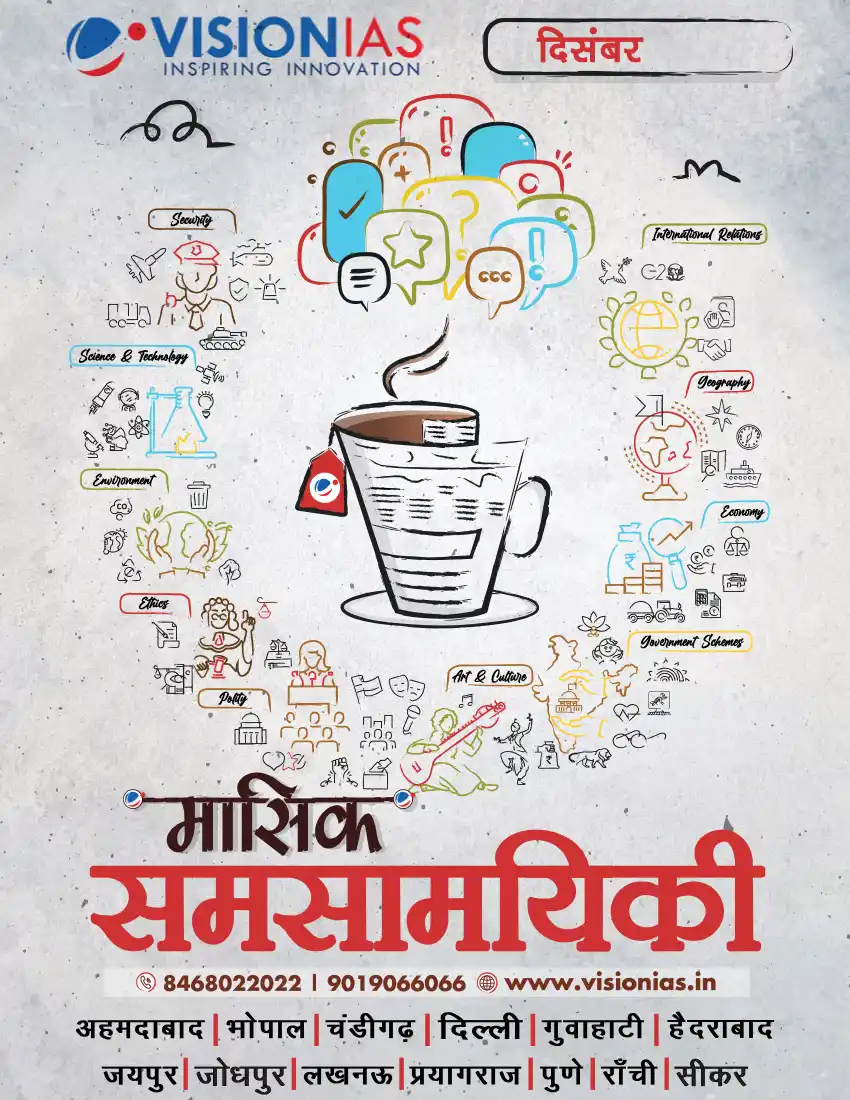
The final 20 questions test static general knowledge and dynamic current affairs, with a clear tilt toward events of the previous 6–8 months. This section rewards daily habit over last-minute cramming, and a good monthly current-affairs digest is the single most efficient resource. Aspirants who follow a compiled magazine save hours over scattered online reading — a resource like the Vision IAS Current Affairs Magazine (January 2026) keeps national and international events organised in one place.
| Static GA | Current Affairs |
|---|---|
| Indian Polity & Constitution | Sports events & winners |
| Indian & World Geography | Awards & honours |
| History & Freedom Movement | Important days & themes |
| Economy basics | Government schemes & budgets |
| Science & Technology | Appointments & obituaries |
| Art, Culture & Books | National & international news |
| Railway general knowledge | Summits, agreements & defence |
RRB Group D Syllabus 2026: What Changed vs Older CENs?
A common source of confusion is whether the rrb group d syllabus 2026 differs from earlier notifications such as CEN 01/2019. The short answer: the core CBT syllabus and the four-subject structure have remained stable across CEN 01/2019, CEN 08/2025 and CEN 09/2025. The topic list for Reasoning, Mathematics, General Science and General Awareness is essentially continuous, so preparation material and previous-year papers from earlier cycles remain fully relevant.
The notable procedural updates in recent cycles relate to eligibility (the minimum educational qualification and age band) and the emphasis on current affairs within the GA section, rather than to the academic syllabus itself. If you prepared from a 2022-cycle plan, you do not need to relearn the syllabus — only refresh your current affairs to the latest window.
What is the syllabus of RRB Group D 2026?
The syllabus of RRB Group D 2026 comprises four subjects in a single CBT: General Intelligence & Reasoning, Mathematics (arithmetic up to Class 10), General Science (Physics, Chemistry, Biology at Class 10 / NCERT level) and General Awareness with Current Affairs. Together they total 100 questions and 100 marks with 1/3 negative marking.
How to Download the RRB Group D Syllabus PDF
The official rrb group d syllabus pdf download is available directly from the recruitment notification. Follow these steps to get the authoritative version rather than an unverified copy:
- Visit the official RRB/RRC regional website linked in the CEN (e.g., the board for your zone).
- Open the Centralised Employment Notice (CEN 08/2025 or 09/2025) PDF.
- Navigate to the annexure titled “Syllabus for CBT” — it lists all four subjects and topics.
- Download and save the PDF; the syllabus section is usually 2–3 pages.
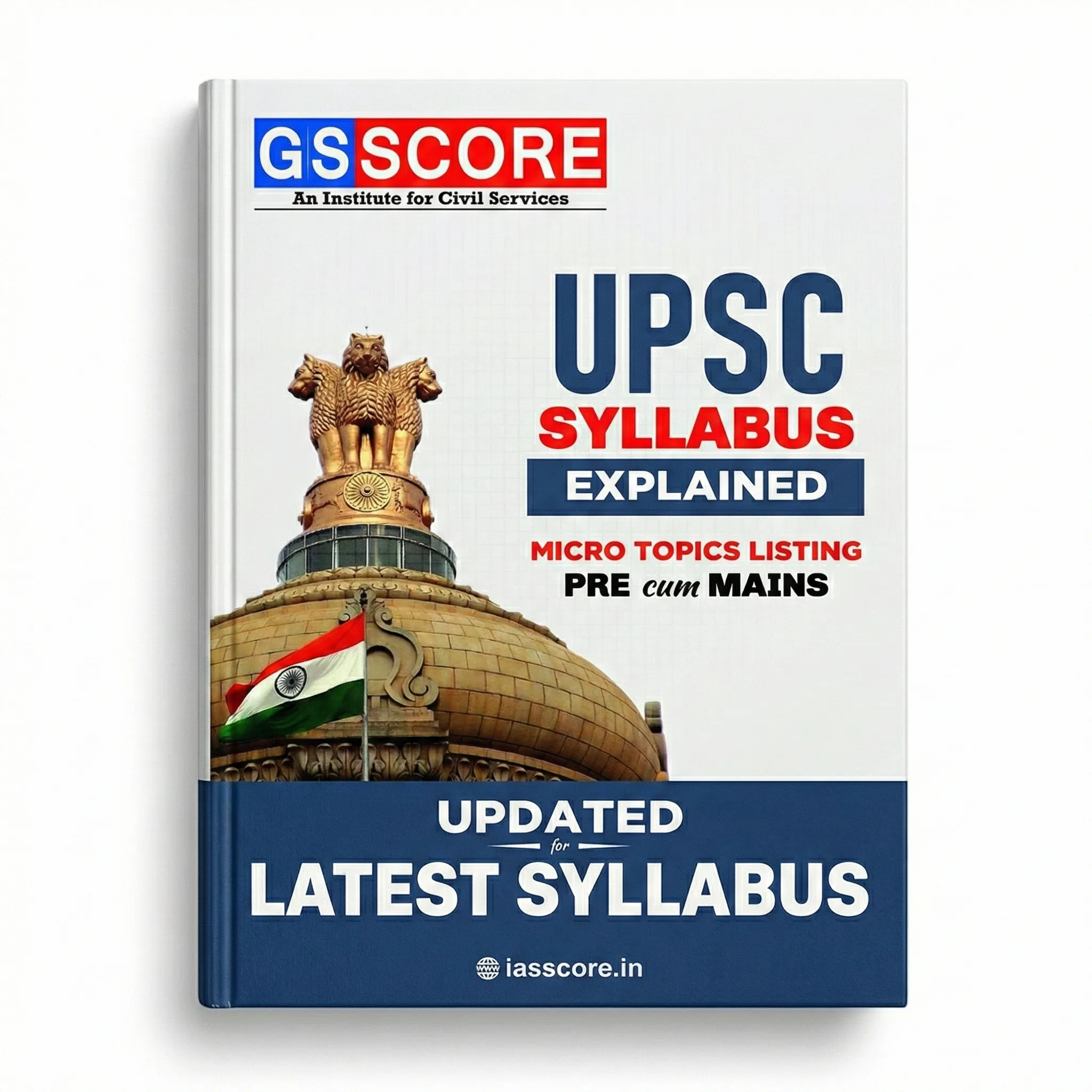
Because the academic syllabus is stable, a consolidated syllabus booklet is a handy companion for structured revision. If you prepare for multiple government exams, a reference like the GS Score Latest Syllabus Booklet keeps official syllabi organised in one printed set alongside your own downloaded RRB PDF.
How can I download the RRB Group D syllabus PDF?
Download the RRB Group D syllabus PDF by opening the official CEN notification on your RRB zone’s website and saving the “Syllabus for CBT” annexure. Always cross-check any third-party PDF against this official document so your topic list matches the exam authority’s version.
RRB Group D Selection Process 2026
Clearing the CBT is only the first of four stages. Each stage is qualifying for the next, and your final merit is based on the normalised CBT score — the PET and Medical are pass/fail, not scored into merit. Here is the full pipeline.
| Stage | What It Involves | Nature |
|---|---|---|
| 1. Computer Based Test (CBT) | 100 questions, 100 marks, 90 minutes | Merit-deciding |
| 2. Physical Efficiency Test (PET) | Weight-carrying + 1000m run | Qualifying |
| 3. Document Verification (DV) | Certificates, category proof, ID | Qualifying |
| 4. Medical Examination | Vision & fitness standards by post | Qualifying |
Physical Efficiency Test (PET) Criteria — Male & Female
The PET is a mandatory qualifying stage. Candidates must complete both the weight-carrying task (without putting the weight down) and the run in a single chance. The standards differ by gender as shown below.
| Category | Weight-Carrying Task | 1000m Run |
|---|---|---|
| Male | Lift & carry 35 kg for 100 metres in 2 minutes in one chance (without putting down) | 1000 m in 4 min 15 sec (one chance) |
| Female | Lift & carry 20 kg for 100 metres in 2 minutes in one chance (without putting down) | 1000 m in 5 min 40 sec (one chance) |
What is the PET criteria for RRB Group D (male and female)?
For male candidates, the PET requires carrying 35 kg for 100 metres in 2 minutes and running 1000 metres in 4 minutes 15 seconds. For female candidates, it requires carrying 20 kg for 100 metres in 2 minutes and running 1000 metres in 5 minutes 40 seconds — both tasks in a single attempt.
Phase-Wise Study Plan Tied to the Syllabus
Most syllabus pages stop at topic lists; the differentiator is a calendar. The plan below assumes roughly 3–4 focused hours a day over about 12 weeks. Adjust the ratios if you have a Mathematics or Science backlog. The goal is to finish the syllabus by Week 9 and spend the final three weeks entirely on mock tests and revision.
| Phase | Weeks | Focus & Estimated Hours |
|---|---|---|
| Foundation | Weeks 1–3 | NCERT Science (Class 9–10) + basic Maths (number system, percentage, ratio). ~70 hrs |
| Core Build | Weeks 4–6 | Reasoning full syllabus + Maths (SI/CI, time-work, mensuration) + Physics numericals. ~80 hrs |
| Awareness & Speed | Weeks 7–9 | Static GK, daily current affairs, DI, topic-wise PYQs. ~70 hrs |
| Test & Revise | Weeks 10–12 | Full-length mocks (3–4/week), error log review, weak-area repair. ~70 hrs |
Layer daily current affairs from Week 1 rather than saving them for the end — a monthly compilation such as the Vision IAS Current Affairs Magazine (December 2025, Hindi Medium) makes the GA section far less overwhelming for Hindi-medium aspirants.
Smart Strategy: High-Weightage, Low-Effort Priorities
With 90 minutes for 100 questions and 1/3 negative marking, exam-day strategy is as important as syllabus coverage. These are the levers that move your score the most:
- Bank Reasoning first: attempt all 30 reasoning questions in the opening 20–22 minutes — they are the fastest marks and rarely need calculation.
- Lock the GA quick wins: answer the 20 GA/current-affairs questions in ~8 minutes; you either know them or you don’t, so don’t linger.
- Two-pass Maths: solve easy arithmetic in the first pass and flag lengthy DI/mensuration for a second pass.
- Guess only with elimination: because of 1/3 negative marking, guess only when two options are ruled out — a 50% chance beats the penalty; a blind 25% chance does not.
- Prioritise high-yield topics: percentage, time & work, and simple/compound interest recur heavily in Maths; analogy, series and coding-decoding dominate Reasoning.
Bilingual Topic Table (English–Hindi) for Hindi Aspirants
Hindi-medium candidates often struggle because most “rrb group d syllabus in hindi” pages only translate the headings. Below is a clean parallel table of the core subjects so you can revise in either language.
| Subject (English) | विषय (Hindi) | प्रश्न / Questions |
|---|---|---|
| General Intelligence & Reasoning | सामान्य बुद्धिमत्ता एवं तर्कशक्ति | 30 |
| Mathematics | गणित | 25 |
| General Science | सामान्य विज्ञान | 25 |
| General Awareness & Current Affairs | सामान्य जागरूकता एवं समसामयिकी | 20 |
Printable Revision Tracker (Topic-Wise Checklist)
Static PDFs of the syllabus are common, but a checklist you can tick as you finish each topic keeps momentum visible. Copy this into a notebook or spreadsheet and mark each column as you complete first-study, revision and PYQ practice.
| Topic | Studied | Revised | PYQ Done |
|---|---|---|---|
| Reasoning – Analogy & Series | ☐ | ☐ | ☐ |
| Maths – Percentage & Ratio | ☐ | ☐ | ☐ |
| Maths – SI/CI & Time-Work | ☐ | ☐ | ☐ |
| Science – Physics numericals | ☐ | ☐ | ☐ |
| Science – Biology (human body) | ☐ | ☐ | ☐ |
| GA – Static (Polity/Geography) | ☐ | ☐ | ☐ |
| Current Affairs – last 6 months | ☐ | ☐ | ☐ |
Common Mistakes to Avoid
- Ignoring Reasoning practice because it “needs no theory” — it is 30 marks and pure practice-driven.
- Reading news randomly instead of using one consolidated current-affairs source.
- Skipping NCERT and jumping to random guides for General Science.
- Not attempting timed full-length mocks, so pacing collapses on exam day.
- Blind guessing and losing marks to 1/3 negative marking.
- Neglecting PET fitness until after the CBT result — start light running early.
Is RRB Group D easy to crack and how many attempts are allowed?
RRB Group D is considered one of the more accessible railway exams because the syllabus is Class 10 level and there is no interview, but the cut-off is competitive due to the huge applicant pool. There is no fixed limit on the number of attempts — you can appear as long as you meet the age criteria for the notification, and age relaxations apply for reserved categories.
Frequently Asked Questions
What is the RRB Group D syllabus 2026?
The RRB Group D syllabus 2026 covers four CBT subjects — General Intelligence & Reasoning (30 questions), Mathematics (25), General Science (25) and General Awareness & Current Affairs (20) — totalling 100 questions and 100 marks in 90 minutes with 1/3 negative marking.
How many questions are asked in RRB Group D CBT and is there negative marking?
The CBT has 100 questions for 100 marks in 90 minutes, and yes, there is a 1/3 mark deduction for every wrong answer. Un-attempted questions carry no penalty.
Which subject has the highest weightage in RRB Group D?
General Intelligence & Reasoning has the highest weightage with 30 questions, followed by Mathematics and General Science with 25 each, and General Awareness & Current Affairs with 20.
Is RRB Group D General Science of NCERT Class 10 level?
Yes. General Science is set at CBSE Class 10 standard and draws mainly from NCERT Science of Classes 9 and 10, covering Physics, Chemistry and Biology.
How can I download the RRB Group D syllabus PDF?
Open the official CEN notification (e.g., CEN 08/2025 or 09/2025) on your RRB zone website and download the “Syllabus for CBT” annexure. Verify any third-party PDF against this official document.
What are the PET timings for RRB Group D?
Male candidates carry 35 kg for 100 m in 2 minutes and run 1000 m in 4 min 15 sec; female candidates carry 20 kg for 100 m in 2 minutes and run 1000 m in 5 min 40 sec — each in a single chance.
What are the qualifying marks for RRB Group D CBT?
The minimum qualifying percentages are 40% for UR/EWS, 30% for OBC-NCL and SC, and 30% for ST (with limited relaxation for reserved categories). Clearing this threshold is necessary but not sufficient — final selection depends on your normalised score meeting the category- and zone-wise cut-off.
Recommended Study Material

Continue Reading
IBPS Clerk Syllabus 2026: Prelims, Mains + Free PDF
The IBPS Clerk syllabus covers three sections in Prelims — English Language, Numerical Ability and Reasoning Ability (100…
NEET Syllabus 2026: Subject & Chapter-Wise Topics, Weightage + PDF
The NEET syllabus for 2026 is the official list of Class 11 and Class 12 topics — across…
KPSC Syllabus 2026: KAS Prelims, Mains & Exam Pattern (+ PDF)
The KPSC syllabus for the KAS (Gazetted Probationers) exam is built around three stages: an objective Prelims (two…