TNPSC Group 1 Syllabus 2026: Prelims, Mains + PDF
TNPSC Group 1 syllabus 2026 — unit-wise Prelims & Mains topics, exam pattern, marks, weightage, Samacheer book mapping and syllabus PDF download.

The tnpsc group 1 syllabus covers a three-stage selection process — an objective Preliminary exam (200 questions, 300 marks), a descriptive Main written exam (four papers) and an Oral Test/Interview (100 marks). Prelims tests six General Studies units plus Aptitude and Mental Ability at degree standard; the Mains tests Modern History, Polity, Geography, Economy, Science and Technology, Ethics and Tamil society through descriptive answer writing. This guide gives you the full official unit-wise syllabus for Prelims and Mains, the exact exam pattern and marks breakdown, unit-wise weightage, Samacheer Kalvi book mapping and how to complete your syllabus PDF download.
The exam is officially the Combined Civil Services Examination-I (CCSE-I), conducted by the Tamil Nadu Public Service Commission (TNPSC) to fill Group 1 posts such as Deputy Collector, Deputy Superintendent of Police (DSP), Assistant Commissioner (Commercial Taxes), District Registrar and District Employment Officer. Because these are among the most prestigious posts in the Tamil Nadu state services, competition is intense and a precise understanding of the syllabus is the single biggest lever in your preparation. Always confirm the final sub-topic list against the official TNPSC notification for your exam year.
TNPSC Group 1 Syllabus 2026: Quick Overview
Before we go unit by unit, here is the tnpsc group 1 syllabus 2026 snapshot — the conducting body, posts, stages, eligibility and standard of questions at a glance.
| Particular | Details |
|---|---|
| Conducting Body | Tamil Nadu Public Service Commission (TNPSC) |
| Exam Name | Combined Civil Services Examination-I (Group 1 / CCSE-I) |
| Posts Filled | Deputy Collector, DSP, Assistant Commissioner (Commercial Taxes), District Registrar, District Employment Officer and allied Group 1 posts |
| Eligibility | Any bachelor’s degree from a recognised university (final-year students can often apply provisionally per the notification) |
| Age Limit | Broadly 21 years and above, with an upper age ceiling that varies by category and post (check the notification for exact bands and relaxations) |
| Selection Stages | Preliminary Exam → Main Written Exam → Oral Test (Interview) |
| Prelims | 200 objective questions, 300 marks, 3 hours (screening test) |
| Mains | 4 descriptive papers (Tamil qualifying + 3 scoring papers of 250 marks each) |
| Interview | Oral Test — 100 marks |
| Standard of Questions | Degree (graduate) level, except the Tamil eligibility paper (SSLC standard) |
| Medium | Tamil and English |
| Negative Marking | No negative marking |
TNPSC Group 1 Exam Pattern: Stages and Total Marks
Understanding the tnpsc group 1 exam pattern first makes the syllabus far easier to plan. Selection happens over three stages, but only the Mains and the Oral Test count towards your final merit rank — the Preliminary exam is purely a screening (qualifying) round to shortlist candidates for the Mains.
| Stage | Type | Marks | Counts in Final Merit? |
|---|---|---|---|
| Preliminary Exam | Objective (1 paper) | 300 | No — qualifying/screening only |
| Mains Paper I — Tamil | Descriptive (Compulsory) | Qualifying (minimum 40%) | No — eligibility paper |
| Mains Paper II | Descriptive | 250 | Yes |
| Mains Paper III | Descriptive | 250 | Yes |
| Mains Paper IV | Descriptive | 250 | Yes |
| Oral Test (Interview) | Personality Test | 100 | Yes |
| Final merit total | — | 850 | Mains (750) + Interview (100) |
In short: you must first clear the Prelims cut-off to sit the Mains; then your three scoring Mains papers (750 marks) plus the Oral Test (100 marks) decide your rank out of 850. The compulsory Tamil paper only needs 40% to qualify and does not add to your merit score. There is no limit on the number of attempts other than the age ceiling, so eligible candidates can reappear until they cross the upper age limit for their category.
TNPSC Group 1 Prelims Syllabus and Exam Pattern
The tnpsc group 1 prelims syllabus is delivered through a single objective paper divided into two parts — Part A (General Studies) and Part B (Aptitude and Mental Ability). All 200 questions come from a single question booklet.
What is the exam pattern for TNPSC Group 1 Prelims?
| Component | Details |
|---|---|
| Total Questions | 200 (multiple choice, objective) |
| Total Marks | 300 (each question = 1.5 marks) |
| Duration | 3 hours (180 minutes) |
| Part A | General Studies (Degree standard) — ~175 questions |
| Part B | Aptitude and Mental Ability (SSLC standard) — ~25 questions |
| Negative Marking | None |
| Nature | Screening test — marks not counted in final merit |
Because there is no negative marking, attempt all 200 questions — never leave a bubble blank. Since the paper is only qualifying, your goal is simply to clear the category cut-off comfortably and move to the Mains.
TNPSC Group 1 Prelims Syllabus: Unit-Wise Breakdown
Part A General Studies is organised into six units, and Part B is a single Aptitude unit. Here is the complete unit-wise tnpsc group 1 syllabus for the Prelims.
| Unit | Broad Coverage |
|---|---|
| Unit I — General Science | Physics, Chemistry, Botany, Zoology fundamentals; scientific laws; nutrition, health, diseases; environment and ecology; latest developments in science and technology |
| Unit II — Geography of India | Physical geography, climate, monsoon, rivers, soils, minerals, natural resources, agriculture, transport, disaster management; geography of Tamil Nadu |
| Unit III — History and Culture of India and Indian National Movement | Indus civilisation, Vedic age, empires, art and architecture, freedom struggle 1857–1947, national leaders, socio-religious reform movements |
| Unit IV — Indian Polity and Governance | Constitution, Preamble, Fundamental Rights and Duties, DPSP, Union and State executive, judiciary, Panchayati Raj, elections, governance and e-governance |
| Unit V — Indian Economy and Tamil Nadu Administration | Planning, banking, budget, taxation, agriculture, industry, welfare schemes; structure and functioning of Tamil Nadu administration and district administration |
| Unit VI — History, Culture, Heritage and Socio-Political Movements of Tamil Nadu | Sangam age, Tamil literature, Dravidian movement, Self-Respect movement, social reformers of Tamil Nadu, art, temples and cultural heritage |
| Part B — Aptitude and Mental Ability | Simplification, percentage, HCF/LCM, ratio, logical reasoning, number series, data interpretation, decision making and problem solving |
TNPSC Group 1 Prelims: Unit-Wise Question Weightage
Based on previous-year paper analysis, the weightage across units is fairly balanced, but Economy, Tamil Nadu history and General Science consistently carry the most questions. The figures below are indicative (they shift a few questions each cycle) and are meant to guide your time allocation, not to be treated as fixed quotas.
| Unit | Indicative Questions | Approx. Marks |
|---|---|---|
| Indian Economy and TN Administration | ~34 | ~51 |
| TN History, Culture and Socio-Political Movements | ~33 | ~49 |
| General Science | ~32 | ~48 |
| Indian Polity and Governance | ~28 | ~42 |
| Geography of India | ~24 | ~36 |
| History, Culture and Indian National Movement | ~24 | ~36 |
| Aptitude and Mental Ability | ~25 | ~38 |
| Total | 200 | 300 |
Polity is deceptively high-value because the concepts you learn here are reused directly in the Mains, so studying it well gives you double returns. A focused resource such as these Vajiram Polity notes covers the constitutional framework in a compact, exam-ready format that maps neatly onto both TNPSC and UPSC polity questions.
TNPSC Group 1 Mains Syllabus and Exam Pattern
The tnpsc group 1 mains syllabus moves from recognition (objective) to reproduction and analysis (descriptive answer writing). The Mains has four papers written in Tamil or English, and there is no negative marking here either because the papers are descriptive rather than multiple choice.
How many papers are there in TNPSC Group 1 Mains?
There are four papers — one compulsory Tamil eligibility paper plus three scoring General Studies papers. Here is the Mains exam pattern.
| Paper | Subject | Marks | Duration | Nature |
|---|---|---|---|---|
| Paper I | Tamil (Compulsory) | Qualifying (min 40%) | 3 hours | Eligibility — not added to merit |
| Paper II | General Studies (Degree standard) | 250 | 3 hours | Scoring |
| Paper III | General Studies (Degree standard) | 250 | 3 hours | Scoring |
| Paper IV | General Studies (Degree standard) | 250 | 3 hours | Scoring |
| Total (scoring) | — | 750 | — | — |
Is Tamil compulsory for TNPSC Group 1?
Yes. Paper I is a compulsory Tamil paper (SSLC/matriculation standard) that you must clear with a minimum of 40%. It is only a qualifying paper — the marks are not counted in your final merit — but failing it disqualifies you regardless of your GS scores. It tests translation, comprehension, grammar, précis writing and general Tamil language skills, so most candidates clear it with light, regular preparation.
TNPSC Group 1 Mains: Paper-Wise Topics
The three scoring papers spread the degree-standard General Studies content across History, Polity, Geography, Economy, Science and Technology, Ethics and Tamil society. The broad thematic split is:
| Paper | Major Themes Covered |
|---|---|
| Paper II | Modern History of India and the Indian National Movement; History and Heritage of Tamil Nadu; Ethics, Integrity and human values in administration |
| Paper III | Indian Polity, Constitution and Governance; Role and impact of Science and Technology in the development of India and Tamil Nadu; Structure of Tamil society, social justice and welfare |
| Paper IV | Geography of India and Tamil Nadu; Environment, ecology and disaster management; Indian Economy and the economy of Tamil Nadu, current developments and government schemes |
Two Mains themes reward focused, dedicated material. For the economy sections — planning, banking, budgeting, welfare schemes and Tamil Nadu’s economic profile — a concise set like these Vision IAS Economics notes gives you clean, structured content you can convert into answers. For the ethics and integrity component in Paper II, dedicated Drishti IAS Ethics notes supply ready definitions, keywords and case-study frameworks that lift your answer quality quickly.
TNPSC Group 1 Oral Test / Interview (100 Marks)
Candidates who clear the Mains cut-off are called for the Oral Test, which carries 100 marks and forms part of the final merit. The interview panel assesses your general awareness, clarity of thought, decision-making ability, leadership potential and suitability for a senior administrative role in Tamil Nadu. Because the final rank is decided by Mains (750) plus Interview (100), a strong interview can meaningfully improve your position — treat it as an integral scoring stage, not a formality. Preparation focuses on your bio-data, home district, graduation subject, current affairs and administrative/ethical scenarios.
Samacheer Kalvi Book Mapping (Class 6–12)
One thing most syllabus pages skip is telling you exactly which textbooks to read. The Tamil Nadu State Board (Samacheer Kalvi) books from Class 6 to 12 form the backbone of TNPSC preparation. Here is a unit-to-book map so you know precisely where each unit’s content lives.
| Syllabus Unit | Samacheer Kalvi Books to Read (TN State Board) |
|---|---|
| General Science | Science Std 6–10; Physics, Chemistry, Botany and Zoology Std 11–12 |
| Geography of India and TN | Geography (Social Science) Std 6–10; Geography Std 11–12 |
| History, Culture and National Movement | History (Social Science) Std 6–10; History Std 11–12 |
| Indian Polity and Governance | Civics/Political Science (Social Science) Std 6–10; Political Science Std 11–12 |
| Indian Economy and TN Administration | Economics (Social Science) Std 9–10; Economics Std 11–12; TN government publications |
| TN History, Culture and Social Movements | Tamil Nadu History Std 11–12; Tamil textbooks Std 6–12; Sangam literature references |
| Aptitude and Mental Ability | Mathematics Std 6–10 (arithmetic and reasoning chapters) |
Read the Social Science books first for a foundation, then layer standard reference books and current affairs on top. The Class 11 and 12 books are especially dense and closely mirror the degree-standard depth TNPSC expects.
Unit-Wise Weightage and Priority Strategy
None of the top syllabus pages tell you what to attack first. Using the weightage above, here is a priority order that maximises marks per hour of study.
| Unit | Weightage | Priority | Why |
|---|---|---|---|
| Indian Economy and TN Administration | Highest (~34 Q) | Attack first | Top weightage and overlaps directly with Mains Paper IV |
| TN History and Social Movements | Very high (~33 Q) | Attack first | Tamil Nadu-specific, high-scoring and less prone to tricky framing |
| General Science | High (~32 Q) | Attack first | Static NCERT/Samacheer content gives quick, reliable marks |
| Indian Polity and Governance | High (~28 Q) | Second | Conceptual and reused heavily in Mains Paper III — double value |
| Geography of India and TN | Medium (~24 Q) | Second | Map and factual practice needed; steady scorer |
| History and National Movement | Medium (~24 Q) | Third | Factual; revise with timelines and mnemonics |
| Aptitude and Mental Ability | Fixed (~25 Q) | Ongoing | Pure practice; short daily sessions build speed and accuracy |
The strategic insight: the three Tamil Nadu-heavy and high-weightage units — Economy plus TN Administration, TN History, and General Science — together account for nearly half the Prelims paper. Secure these first, and clearing the qualifying cut-off becomes far more comfortable.
Previous-Year Cut-Off Trends
The Prelims cut-off decides who moves to the Mains. Because Group 1 attracts lakhs of applicants for a few hundred vacancies, cut-offs are competitive. The ranges below are indicative of recent cycles (out of 300) and vary year to year with paper difficulty and vacancies.
| Category | Indicative Prelims Cut-Off (out of 300) |
|---|---|
| General (GT) | ~150 – 185 |
| BC / BCM | ~145 – 175 |
| MBC / DNC | ~140 – 170 |
| SC / SC(A) | ~110 – 145 |
| ST | ~100 – 135 |
Over recent years the syllabus weightage has tilted steadily towards Tamil Nadu-specific content and current-affairs-linked questions in Economy and Science and Technology, so blending static books with monthly current affairs is now essential rather than optional.
TNPSC Group 1 Syllabus PDF Download (English and Tamil)
For the official, authoritative version of the syllabus, always cross-check with TNPSC. You can complete your tnpsc group 1 syllabus pdf download — in both English and the tnpsc group 1 syllabus in tamil — from the official TNPSC portal at tnpsc.gov.in, under the Combined Civil Services Examination-I notification and syllabus section. The official PDF lists every sub-topic exactly as it will be examined, which is why we recommend keeping it printed beside your study table. The Tamil-medium PDF is a direct translation of the same units, so Tamil-medium aspirants study identical content.
To make the PDF easier to work with, pair the raw official document with a section-tagged, printable one-page revision summary and an editable unit-wise checklist/tracker (the units, weightage and Samacheer mapping in this guide are designed to be copied straight into such a tracker). Tick off each unit as you finish it so nothing in the syllabus slips through the cracks before exam day.
Best Books and Study Material for TNPSC Group 1
Which books are best for TNPSC Group 1 preparation?
The proven booklist for TNPSC Group 1 is built in three layers:
- Foundation: Samacheer Kalvi (TN State Board) textbooks Class 6–12 across Science, Social Science, Economics and Tamil — the non-negotiable core.
- Reference: A standard Indian Polity book, Indian Economy notes, Environment and Geography references, and a compilation of Tamil Nadu history and the Dravidian/Self-Respect movements.
- Practice and current affairs: Previous-year question papers, full-length mock tests and a monthly current-affairs magazine.
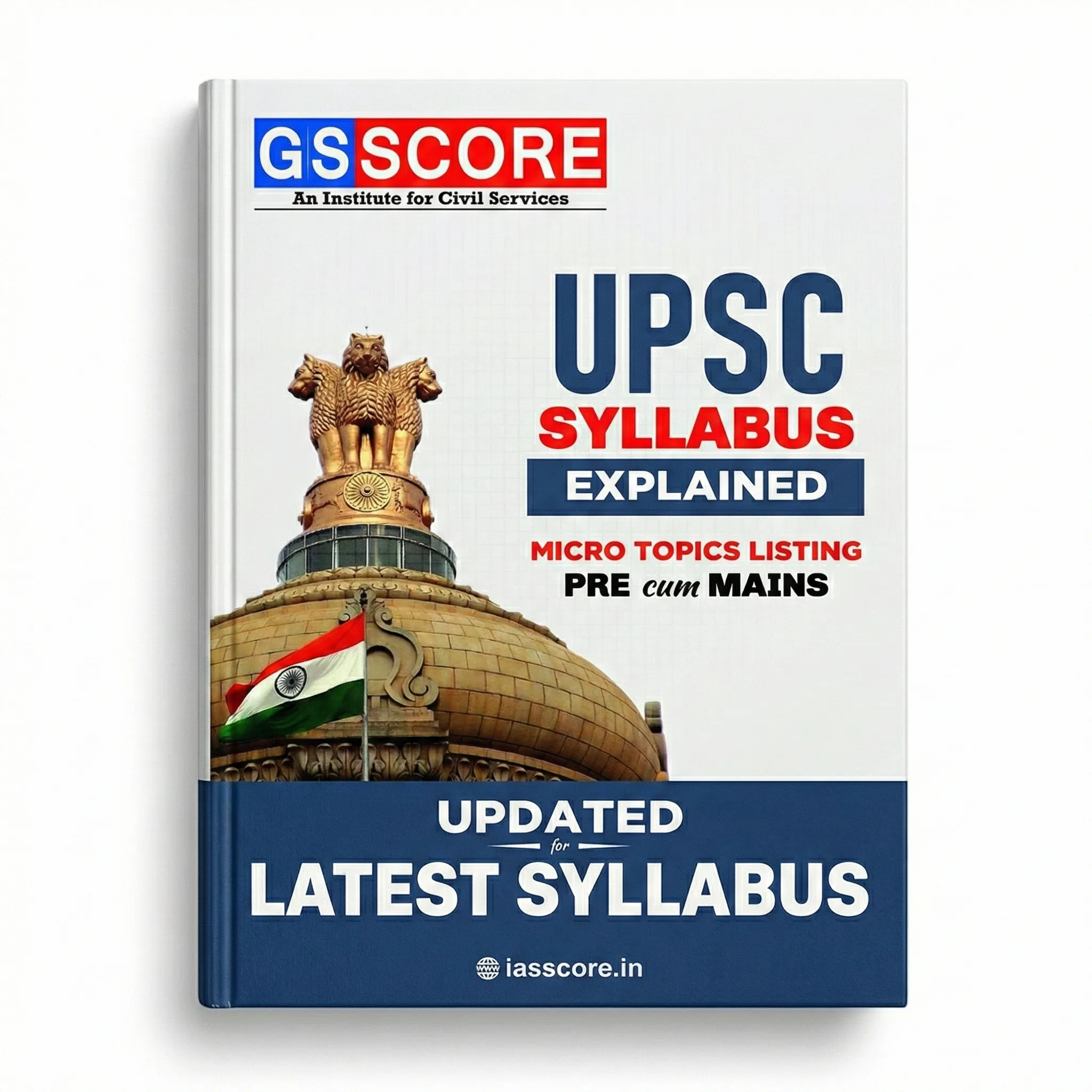
Since a large part of TNPSC’s General Studies overlaps with the UPSC framework (Polity, Economy, Science and Technology, Environment and Modern History), well-structured civil-services notes translate directly. A compact GS syllabus and framework booklet helps you see the whole subject map at a glance, while a current-affairs resource such as the Vision IAS Current Affairs magazine keeps the dynamic economy and science-and-technology portions up to date. To sharpen answer accuracy through repeated practice, a topic-wise PYQ set like the Forum IAS Prelims PYQ toolkit trains you to spot how questions are framed and which facts actually get asked.
Preparation Tips and Strategy
Convert the syllabus into a plan with these high-yield practices:
- Start with Samacheer Kalvi: Finish Class 6–12 State Board books before touching advanced material — they answer a huge share of Prelims questions directly.
- Prioritise by weightage: Lead with Economy plus TN Administration, TN History and General Science, then Polity and Geography.
- Read Thirukkural and Tamil literature: Sangam-age literature, Thirukkural and Tamil moral texts feed both the Tamil paper and the TN culture unit.
- Practise answer writing early: The Mains is descriptive — write structured, point-wise answers with introductions, headings and conclusions from day one.
- Take timed mock tests: Full-length Prelims mocks build speed for 200 questions in 180 minutes; since there is no negative marking, train yourself to attempt all 200.
- Revise with one-pagers: Condense each unit into a single revision sheet and cycle through them weekly in the final months.
- Track current affairs monthly: Link static topics to recent government schemes, TN budget highlights and science developments.
Common Mistakes to Avoid
- Ignoring Tamil Nadu-specific units — they are the highest-return, lowest-competition scoring areas.
- Skipping the compulsory Tamil paper preparation and risking disqualification despite good GS scores.
- Studying only for Prelims (objective) and starting Mains answer writing too late.
- Leaving Prelims questions blank — with no negative marking, every unattempted question is a wasted opportunity.
- Reading too many books instead of revising a focused core multiple times.
Frequently Asked Questions
What is the syllabus for TNPSC Group 1?
The TNPSC Group 1 syllabus has two levels. Prelims covers six General Studies units — General Science, Geography of India, History and Indian National Movement, Indian Polity, Indian Economy and Tamil Nadu Administration, and Tamil Nadu History and Social Movements — plus Aptitude and Mental Ability. Mains adds descriptive papers on Modern History, Polity, Geography, Economy, Science and Technology, Ethics and Tamil society, along with a compulsory Tamil paper.
Is there negative marking in TNPSC Group 1 exam?
No. There is no negative marking in the TNPSC Group 1 Preliminary exam, so you should attempt all 200 questions. The Mains papers are descriptive, so negative marking does not apply there either. This makes intelligent guessing worthwhile in Prelims — never leave a question unanswered.
How many marks are needed to clear TNPSC Group 1 Prelims?
The Prelims is a qualifying screening test out of 300 marks, and the cut-off varies by category and paper difficulty each year. As an indicative benchmark from recent cycles, general-category candidates typically need roughly 150–185 marks, while reserved categories clear at lower ranges. Aim for 170+ to be safe.
What is the exam pattern for TNPSC Group 1 Prelims?
Prelims is a single objective paper of 200 multiple-choice questions carrying 300 marks (1.5 marks each) in 3 hours. Part A is General Studies at degree standard (~175 questions) and Part B is Aptitude and Mental Ability at SSLC standard (~25 questions). There is no negative marking, and the marks are used only for screening, not final merit.
Is Tamil compulsory for TNPSC Group 1?
Yes. Mains Paper I is a compulsory Tamil paper that you must pass with at least 40%. It is only a qualifying paper — its marks are not added to your final merit — but failing it disqualifies you regardless of your other scores.
How many papers are there in TNPSC Group 1 Mains?
There are four Mains papers: one compulsory Tamil eligibility paper plus three General Studies papers of 250 marks each. Only the three GS papers (750 marks total) count towards your merit, along with the 100-mark Oral Test.
Is TNPSC Group 1 syllabus same as UPSC?
No, but they overlap significantly. Core General Studies areas — Polity, Economy, Modern History, Geography, Environment and Science and Technology — are common, so UPSC-style notes are highly useful. However, TNPSC uniquely emphasises Tamil Nadu history, culture, the Dravidian and Self-Respect movements, Tamil society and a compulsory Tamil language paper, which UPSC does not test.
Recommended Study Material
Continue Reading
UPSC Mains Syllabus 2026: All 9 Papers, Pattern & PDF
The UPSC Mains syllabus covers 9 descriptive papers — 2 qualifying papers (one Indian Language and English, 300…
UGC NET History Syllabus 2025: All 10 Units, Weightage + PDF
The UGC NET History syllabus (Subject Code 06) is set by the NTA and is built around 10…
JEE Main Exam Pattern 2026: Marks, Sections & Marking Scheme
The JEE Main exam pattern for 2026 keeps Paper 1 (B.Tech) at 75 questions worth 300 marks, split…