How to Prepare for UPSC 2026: Beginner Roadmap + Study Plan
How to prepare for UPSC from zero: syllabus, NCERT + standard booklist, 6-month & 1-year plans, daily timetable, cost, and self-study strategy without coaching.

How to prepare for UPSC (short answer): read the official UPSC CSE syllabus end-to-end, build your base with NCERT books (Class 6–12), then master one standard book per subject (Laxmikanth for Polity, Ramesh Singh for Economy, Bipan Chandra for History), read a daily newspaper for current affairs, and drill Previous Year Questions before moving to mock tests and answer writing. A disciplined beginner studying 6–7 focused hours a day can build exam-ready foundations in 10–12 months — or a fast-tracked base in 6 months — entirely through self-study at home if resources are chosen wisely.
The Union Public Service Commission Civil Services Examination (UPSC CSE) selects officers for the IAS, IPS, IFS and 20+ other services. Roughly 10–11 lakh candidates apply each year, about 5 lakh sit for Prelims, and fewer than 1,000 are finally recommended — a success rate near 0.2%. That intimidating funnel is exactly why beginners need a clear, no-nonsense roadmap instead of a pile of random books. This guide gives you the full structure, syllabus, curated booklist, timelines, budgets and copy-ready timetables to go from zero to confident.
How to Prepare for UPSC: The 8-Step Roadmap at a Glance
Before the detail, here is the whole journey on one page. Every serious aspirant — whether starting from zero or restarting — moves through these eight steps in order. Bookmark this and return to it whenever you feel lost.
| # | Step | What You Actually Do |
|---|---|---|
| 1 | Master the syllabus | Read and internalise the official UPSC CSE syllabus and exam pattern |
| 2 | Build the NCERT base | Finish Class 6–12 NCERTs subject-wise for core GS |
| 3 | One standard book per subject | Laxmikanth, Ramesh Singh, Bipan Chandra, Shankar, etc. |
| 4 | Current affairs system | Daily newspaper + one monthly magazine + your own notes |
| 5 | PYQ analysis | Solve 10–12 years of Prelims & Mains questions early |
| 6 | Answer writing + mocks | Daily answer practice and a Prelims/Mains test series |
| 7 | CSAT + Optional | Secure the qualifying paper; choose a 500-mark optional wisely |
| 8 | Revise relentlessly | 3–4 revision cycles — this is where marks are made |
Understand the UPSC CSE Exam Structure (3 Stages)
Before you buy a single book, understand what you are preparing for. UPSC CSE has three sequential stages spread across roughly a year. You must clear each stage to reach the next, and only your Mains + Interview marks (1750 + 275 = 2025) decide the final rank — Prelims marks are purely qualifying.
| Stage | Purpose | Marks | Nature |
|---|---|---|---|
| Prelims (CSP) | Screening / qualifying | 400 (GS 200 + CSAT 200) | Objective MCQ |
| Mains (CSM) | Merit ranking | 1750 (+ 2 language papers, qualifying) | Descriptive / written |
| Interview (Personality Test) | Merit ranking | 275 | Face-to-face |
Prelims paper pattern
| Paper | Questions | Marks | Duration | Notes |
|---|---|---|---|---|
| GS Paper 1 | 100 | 200 | 2 hrs | Merit for Prelims; negative marking 1/3 |
| CSAT Paper 2 | 80 | 200 | 2 hrs | Qualifying — need 33% (66/200) |
Mains paper pattern
| Paper | Subject | Marks | Counted? |
|---|---|---|---|
| Paper A | Indian Language | 300 | Qualifying (25%) |
| Paper B | English | 300 | Qualifying (25%) |
| Essay | Essay | 250 | Yes |
| GS I | History, Geography, Society | 250 | Yes |
| GS II | Polity, Governance, IR | 250 | Yes |
| GS III | Economy, Environment, Sci-Tech, Security | 250 | Yes |
| GS IV | Ethics, Integrity, Aptitude | 250 | Yes |
| Optional I & II | Chosen subject | 500 | Yes |
Step 1: Master the Official Syllabus and Exam Pattern
The single most common beginner mistake is starting with books before reading the syllabus. Download the official notification and syllabus from upsc.gov.in and print it. Paste it above your study table. Every newspaper article you read, every note you make, and every book you buy should map to a specific syllabus line — this is how toppers avoid drowning in irrelevant content.
Read the syllabus 3–4 times until you can recall the broad heads of each GS paper. If you want a clean, exam-formatted copy to annotate, the GS Score Latest Syllabus Booklet 2026-27 lays out the full Prelims and Mains syllabus in one place so you can tick topics off as you cover them. Understanding the syllabus is effectively half of learning how to prepare for UPSC efficiently.
Step 2: Build a Strong Foundation with NCERT Books
NCERTs (Class 6–12) are the bedrock. They build conceptual clarity in simple language and are directly quoted in Prelims questions. Beginners — especially those figuring out how to start UPSC preparation from zero level — should finish these before touching advanced standard books. Read them subject-wise, not class-wise, and make one-line margin notes.
| Subject | Key NCERT Classes | Why It Matters |
|---|---|---|
| History | Class 6–12 (esp. XI Ancient/Medieval, XII Modern) | Base for Art & Culture and Modern India |
| Geography | Class 6–12 | Physical + Indian + World geography concepts |
| Polity | Class 9–12 | Democratic politics, constitution basics |
| Economy | Class 9–12 | Micro/macro concepts, Indian economy |
| Science | Class 6–10 | Basic Physics, Chemistry, Biology for Prelims |
This NCERT-first approach is also the safest upsc preparation strategy for beginners and works perfectly for aspirants starting upsc preparation for beginners after 12th, since the material overlaps with what you have recently studied.
Step 3: The Standard Booklist — One Book Per Subject
After NCERTs, move to standard reference books. The golden rule: one standard source per subject, revised multiple times, beats ten sources read once. Below is the minimum viable, widely recommended booklist.
| Subject | Standard Book / Author |
|---|---|
| Polity | Indian Polity – M. Laxmikanth |
| Modern History | India’s Struggle for Independence – Bipan Chandra |
| Economy | Indian Economy – Ramesh Singh |
| Geography | Certificate Physical & Human Geography – G.C. Leong + Oxford Atlas |
| Art & Culture | Nitin Singhania |
| Environment | Shankar IAS Environment |
| Ethics (GS-IV) | Lexicon / standard ethics notes |
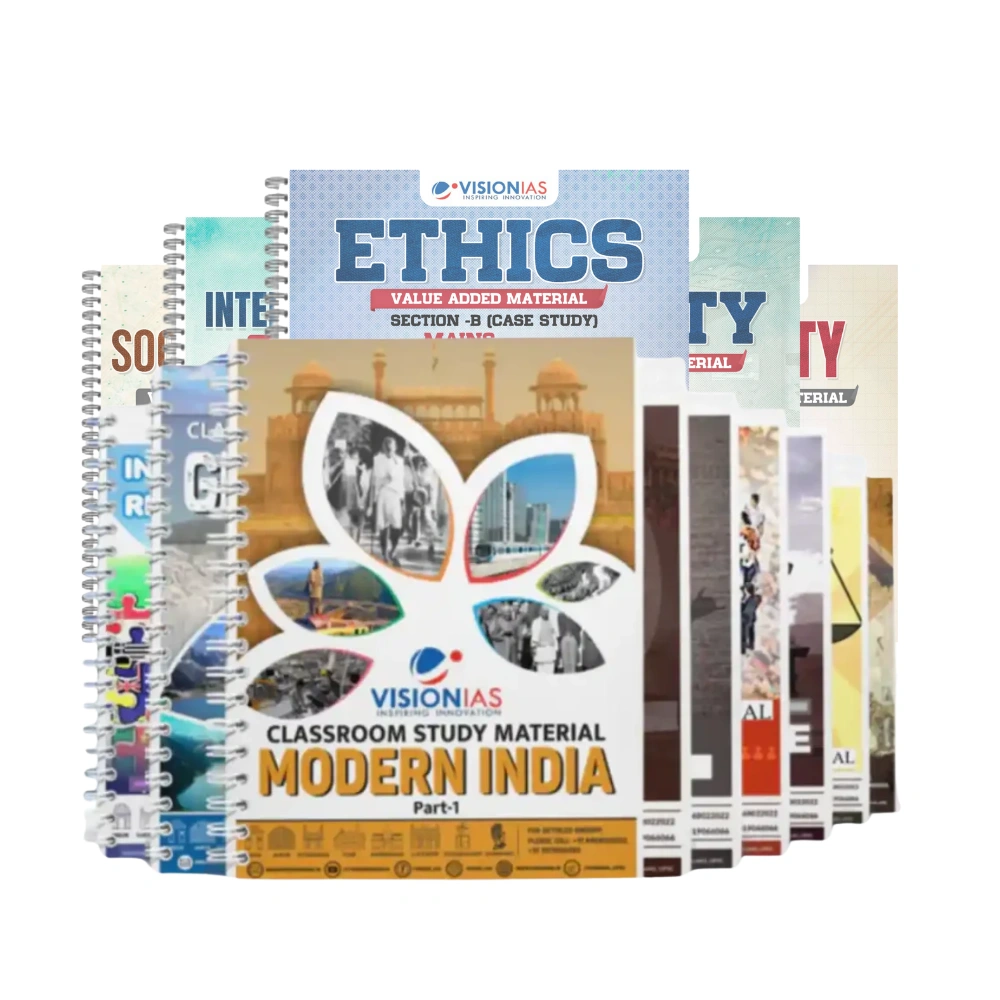
Coaching institutes consolidate all of this into structured, exam-ready booklets that save months of self-compilation. If you prefer a single integrated set, the Vision IAS GS 2026-27 Booklets with Value Added Materials (56 Booklets) covers the full GS syllabus for both Prelims and Mains. Hindi-medium aspirants can use the Drishti IAS Hindi Study Material (18 Booklets). For a focused essay foundation, the Vajiram Essay Notes are an inexpensive, high-utility add-on.
What to SKIP (de-cluttering for beginners)
Beginners waste months on the wrong things. Skip: multiple coaching modules for the same subject, exhaustive foreign-author textbooks, obscure YouTube playlists, and ‘complete’ Art & Culture tomes. Do not make separate notes from every source. Your minimum viable resource kit is: NCERTs + one standard book per subject + one current affairs source + PYQs + one test series. That is enough to clear the exam.
Step 4: Current Affairs — The Daily Backbone
Current affairs cut across Prelims, Mains and Interview. Build a simple three-layer system: (1) read one daily newspaper — The Hindu or The Indian Express — for 60–90 minutes, (2) consolidate with one monthly magazine, and (3) make crisp, syllabus-linked notes you can revise in 2–3 days before the exam.
Do not hoard magazines. One reliable monthly source is enough. The Vision IAS Current Affairs Magazine (January 2026, English) is a widely used, syllabus-tagged option; Hindi readers can pick the Hindi-medium edition. Cover roughly the last 12–18 months before your attempt.
| Layer | Source | Time / Frequency |
|---|---|---|
| Daily | The Hindu / Indian Express | 60–90 min/day |
| Monthly | One current affairs magazine | 3–4 hrs/month |
| Revision | Your own consolidated notes | Before mocks & exam |
Step 5: Previous Year Questions (PYQ) Analysis
PYQs are the exam’s blueprint. Solving the last 10–12 years of Prelims and Mains questions reveals high-weightage areas, UPSC’s framing style, and topics you can safely de-prioritise. Do this early — not just at the end — so your reading is targeted from day one.
A topic-wise PYQ compilation makes this dramatically faster. The Forum IAS UPSC Prelims Toolkit: Topic-Wise PYQ (1992–2025) organises three decades of questions by theme so you instantly see which chapters UPSC returns to and which it ignores — the fastest route to smart prioritisation.
Step 6: Answer Writing and Mock Tests
Knowledge alone does not clear UPSC — the exam rewards reproduction under time pressure. Two habits separate selected candidates: consistent Mains answer writing and repeated Prelims mock testing.
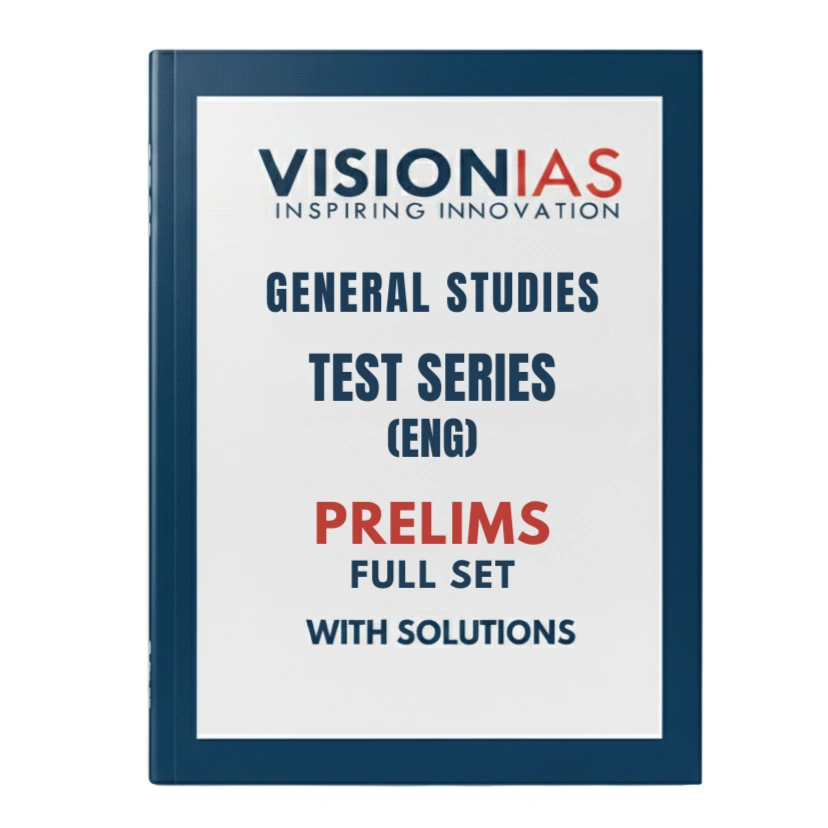
Start answer writing early — even one or two questions a day — and review against model answers. For Prelims, take a test series 5–6 months out and analyse every mistake; the analysis matters more than the score. A structured Vision IAS Prelims Test Series 2026 simulates real exam pressure and elimination technique, while the Vision IAS Mains Test Series 2026 builds answer-writing stamina. This directly answers the question of how to prepare for UPSC prelims and mains together — read for both from the start, then split practice by stage as the exam nears.
Step 7: The Underrated CSAT (Paper 2) Strategy
CSAT is ‘only qualifying’ — which is exactly why it eliminates thousands who ignore it. You need just 66/200, but the paper has turned unpredictable, with tough comprehension and reasoning. Non-maths backgrounds especially must not treat it casually.
Devote 3–4 focused hours a week from the start: practise comprehension daily, and drill basic maths (percentages, ratios, averages), data interpretation and logical reasoning. Solve past CSAT papers under timed conditions. A dedicated Vision IAS CSAT Test Series 2025-26 or the Vajiram CSAT Complete Booklet Set with practice questions removes the biggest silent reason for Prelims failure.
Step 8: Choosing Your Optional Subject Wisely
The optional carries 500 marks and often decides ranks. Do not pick blindly. Evaluate every candidate subject against four factors before committing.
| Factor | Question to Ask | Weight |
|---|---|---|
| Interest | Can I study this for a year without boredom? | High |
| GS Overlap | Does it cover GS topics too? (e.g., PSIR, Geography, Sociology) | High |
| Scoring trend | Do recent toppers score well in it? | Medium |
| Material & guidance | Are quality notes and mentors available? | Medium |
Popular high-overlap optionals include PSIR, Sociology, Geography and Public Administration. Depending on your choice, curated material such as Shubhra Ranjan PSIR Notes, SS Pandey Sociology Notes, or Vajiram Geography Optional Notes can cut your preparation time significantly. Beginners after 12th should delay locking the optional until they have tasted a few subjects through GS.
How Much Does UPSC Preparation Actually Cost?
A big myth is that UPSC requires lakhs in coaching fees. It does not. Self-study with printed booklets costs a fraction of classroom coaching, which typically runs ₹1.5–2.5 lakh for a full GS course plus optional.
| Item | Self-Study (Approx.) | Coaching (Approx.) |
|---|---|---|
| Core GS material / booklets | ₹5,000–8,000 | ₹1,50,000–2,00,000 |
| Current affairs (1 year) | ₹2,000–3,000 | Included |
| Optional material | ₹1,500–2,500 | ₹40,000–60,000 |
| Test series (Prelims + Mains) | ₹2,000–3,500 | ₹15,000–25,000 |
| Approx. Total | ₹11,000–17,000 | ₹2,00,000+ |
This is why learning how to prepare for UPSC at home without coaching is not just possible — for many, it is the smarter financial choice, freeing money for quality material and mock tests instead.
How to Prepare for UPSC at Home Without Coaching (Self-Study)
Yes, you can prepare for UPSC without coaching. Many toppers, including rank holders, have cleared UPSC entirely through self-study. What coaching gives — structure, notes, tests, and discipline — you can replicate at home with a fixed timetable, ready-made booklets, an online test series, and a peer group for answer-writing feedback. The internet has levelled the field: free lectures, mains model answers, and PYQ archives are all a search away.
The keys to self-study success are: a printed, structured note set so you are not compiling from scratch; a strict daily routine; monthly self-review; and mock tests to simulate real conditions. If you are self-disciplined, coaching adds little that free and low-cost resources cannot. The one thing self-study demands more of is honesty — you must grade your own answers against model answers ruthlessly and act on the gaps.
Daily Timetable: Full-Time Aspirant vs Working Professional
Beginners always ask how many hours to study. Quality beats quantity — 6–7 focused hours with revision outperform 12 distracted hours. Here are two copy-ready templates.
| Time Block | Full-Time Aspirant (6–7 hrs) | Working Professional (3–4 hrs) |
|---|---|---|
| Early morning | Newspaper + current affairs notes | Newspaper (45 min before work) |
| Morning | Static subject (2 hrs) | — |
| Afternoon | Second subject + NCERT (2 hrs) | Audio revision during commute |
| Evening | Answer writing / optional (1.5 hrs) | Static subject (2 hrs) |
| Night | Revision of the day (1 hr) | Revision + weekend catch-up (1 hr) |
Working professionals and college students should weaponise weekends for tests and backlog clearing, use audio/PDF revision during commutes, and protect a non-negotiable daily core hour. Consistency over months matters more than any single marathon day.
Timelines: Zero-Level, 6-Month and 1-Year Roadmaps
Your plan depends on your runway. Below are three realistic roadmaps.
| Timeline | Focus | Best For |
|---|---|---|
| Zero-level (12–18 months) | NCERTs → standard books → current affairs → tests → revision | Absolute beginners / students |
| 1 year | Fast NCERT base + standard books in parallel with CA; 3–4 revisions | Graduates with full-time hours |
| 6 months | Skip deep NCERT reading; rely on structured booklets + PYQ + intensive tests | Repeaters / fast learners |
For how to prepare for UPSC in 6 months, ruthlessly prioritise: use consolidated booklets instead of raw textbooks, focus on high-weightage PYQ areas, take frequent mocks, and revise relentlessly. Six months is tight but workable for Prelims if you already have graduation-level general awareness — treat it as a Prelims-first sprint and build Mains depth only after you clear the first stage.
Key UPSC 2026 dates (indicative)
| Event | Indicative Timing |
|---|---|
| Notification | January 2026 |
| Prelims | Around May–June 2026 |
| Mains | Around August–September 2026 |
| Interview | Early 2027 |
Always confirm exact dates from the official UPSC calendar on upsc.gov.in.
Eligibility, Age Limits and Number of Attempts
Know the rules before you commit years. You need a bachelor’s degree in any discipline (final-year students can apply for Prelims).
| Category | Age Limit | Attempts |
|---|---|---|
| General | 21–32 years | 6 |
| OBC | 21–35 years | 9 |
| SC / ST | 21–37 years | Unlimited (until age limit) |
| PwBD | Relaxed per category | 9 (Gen/OBC), unlimited (SC/ST) |
The best age to start is right after graduation, at 20–22 — early attempts give you room to learn from mistakes while your student study habits are still intact. But there is no single ‘perfect’ age: what matters is having enough attempts and runway within your category’s age limit. Always keep a back-up plan (state PCS, a job, or higher studies) so a setback never becomes a crisis.
Common Mistakes, Revision and Staying Consistent
Most failures are not from lack of intelligence but from avoidable errors: collecting too many books, skipping revision, ignoring CSAT, starting answer writing too late, and chasing new sources instead of revising old ones. Build 3–4 revision cycles into your plan — revision is where marks are actually made.
Protect your health: sleep 7 hours, exercise 30 minutes, and take one half-day off weekly to avoid burnout. Motivation fades; systems endure. A fixed timetable, a small accountability group, and weekly self-review will carry you through the inevitable low phases of this multi-year journey.
Your 30-Day Starter Checklist
- Download and print the official syllabus from upsc.gov.in.
- Start a daily newspaper habit (60–90 minutes).
- Finish 2–3 NCERTs of your strongest subject.
- Solve one year of Prelims PYQs to feel the exam’s level.
- Pick a static note set and one current affairs source — then stop hunting for more.
- Draft your personal timetable (full-time or working template above).
- Attempt 5 Mains answers to start building the writing muscle.
Start with your most comfortable subject — usually Polity or History — to build momentum and confidence in the first month.
Frequently Asked Questions
How can I start UPSC preparation from zero level?
Begin by reading the official syllabus, then build your base with NCERT books (Class 6–12) for History, Polity, Geography and Economy. After NCERTs, move to one standard book per subject, start a daily newspaper habit, solve previous year questions, and add mock tests. A structured note set and a fixed 6–7 hour timetable make the zero-level start far less overwhelming.
Can I prepare for UPSC by self-study without coaching?
Yes. Many toppers have cleared UPSC entirely through self-study. With ready-made structured booklets, a monthly current affairs magazine, an online test series, and self-discipline, you can replicate everything coaching offers at a fraction of the cost — roughly ₹11,000–17,000 versus ₹2 lakh+ for classroom coaching.
How many hours should I study daily for UPSC?
Aim for 6–7 focused hours a day as a full-time aspirant, or 3–4 consistent hours if you are working or studying. Quality and revision matter more than raw hours — six well-planned hours with note-making and testing beat twelve distracted ones.
Is 1 year enough to prepare for UPSC?
Yes, one year is enough for a dedicated aspirant with full-time hours. Read NCERTs quickly, cover standard books alongside current affairs, complete 3–4 revision cycles, and take regular Prelims and Mains tests. Repeaters and fast learners with a strong base can even target a 6-month plan using consolidated booklets and PYQ-focused study.
Which subject should I start with for UPSC preparation?
Start with Polity (using NCERTs and Laxmikanth) or Modern History, as both are scoring, concept-based and relatively easy for beginners. Beginning with a comfortable subject builds early momentum and confidence before you tackle tougher areas like Economy or Environment.
How much does UPSC preparation cost?
Self-study typically costs ₹11,000–17,000 for a full year — covering GS booklets, current affairs, optional material and test series. Classroom coaching, by contrast, can cost ₹2 lakh or more. For most disciplined aspirants, quality printed material plus a good test series delivers the same outcome at a fraction of the price.
Can I clear UPSC in the first attempt?
Yes, some candidates clear UPSC in their first attempt, but it is uncommon — many selected aspirants succeed on their second or third try. A realistic first-attempt strategy is to start 12–18 months early, finish the full syllabus with time to spare, complete 3–4 revisions, and take enough mock tests that the real exam feels familiar. Treat the first attempt as a genuine, well-prepared shot rather than a ‘trial run’, and always keep a back-up plan.
What is the best age to start UPSC preparation?
The most common time to start is right after graduation, around 20–22 years, when study habits are fresh and you have the maximum number of attempts available within your category’s age limit (up to 32 for General, higher for reserved categories). That said, there is no single perfect age — many aspirants begin later while working. What matters more than age is your remaining attempts, available study runway, and consistency.
Recommended Study Material


Continue Reading
NEET Exam Pattern 2026: Marks, Questions & Marking Scheme
The NEET exam pattern for 2026 is a single 3-hour (180-minute) pen-and-paper test of 180 compulsory questions carrying…
IBPS Clerk Syllabus 2026: Prelims, Mains, Exam Pattern + PDF
The ibps clerk syllabus for 2026 covers three subject areas in Prelims — English Language, Numerical Ability and…
PSIR Optional Syllabus 2026: Paper 1 & 2 + PDF
The psir optional syllabus for UPSC Mains is divided into two papers of 250 marks each (500 marks…