Bank PO Preparation 2026: Full Roadmap, Timetable, Syllabus & Books
Complete bank po preparation guide for 2026 — IBPS & SBI PO eligibility, syllabus, section-wise strategy, 6-month timetable, cutoff targets, best books and a mock-test plan to clear it in your first attempt.

Bank PO preparation is a 6–9 month, three-stage effort — Prelims, Mains and Interview — built around four scoring areas: Reasoning, Quantitative Aptitude, English and Banking/General Awareness. To crack IBPS PO or SBI PO, ideally in your first attempt, study 5–7 focused hours a day, take 40–60 analysed full-length mocks, read a newspaper daily, target 60%+ accuracy in Prelims and 150+ marks in Mains, and set every goal against previous-year cutoffs instead of guesswork. This guide gives you the exact eligibility, syllabus, a week-by-week 6-month timetable, scoring benchmarks and a section-wise booklist to get there.
What Is a Bank PO and Which Exams Recruit One?
A Probationary Officer (PO) is an entry-level managerial post — a Scale-I officer — in a public-sector or private bank. During the 2-year probation you rotate through deposits, loans, forex, cash management and customer service before being confirmed as an Assistant Manager. It is one of the most sought-after government jobs in India because of job security, a strong pay package, quick promotions and a public-facing leadership role.
Multiple recruiters conduct Bank PO (or equivalent officer) exams every year. Knowing who conducts what helps you plan a single preparation cycle that covers several exams at once — the biggest efficiency win most aspirants miss.
| Exam | Recruiter | Post | Typical Vacancies/Year | Approx. Starting Pay (In-hand) |
|---|---|---|---|---|
| IBPS PO | Institute of Banking Personnel Selection | PO/MT in 11 public-sector banks | 3,000–5,000 | ₹52,000–₹55,000 |
| SBI PO | State Bank of India | Probationary Officer | 2,000–2,500 | ₹52,000–₹63,000 |
| RBI Grade B | Reserve Bank of India | Manager (Grade B) | 200–300 | ₹75,000+ |
| NABARD Grade A | National Bank for Agriculture & Rural Development | Assistant Manager | 100–150 | ₹70,000+ |
IBPS PO and SBI PO share almost the same syllabus and pattern, so most candidates prepare for both together. RBI Grade B and NABARD add specialised economics, finance and management (ESI/FM) papers on top of the same aptitude base, so they layer neatly onto a core Bank PO plan.
Bank PO Eligibility: Age, Qualification and Attempts
Before you invest months, confirm you actually qualify. The core criteria are similar across IBPS PO and SBI PO, with minor differences in age band and attempt limits. Always verify the exact figures in the official notification for the year you apply.
| Criterion | IBPS PO | SBI PO |
|---|---|---|
| Age (as on cut-off date) | 20–30 years | 21–30 years |
| Educational Qualification | Graduate in any discipline | Graduate in any discipline |
| Attempt Limit (General) | No fixed limit | 4 attempts |
| Nationality | Indian citizen | Indian citizen |
| Final-year students | Must hold the degree by application | Must hold the degree by application |
Age relaxation is typically +5 years for SC/ST, +3 years for OBC (non-creamy layer) and +10 years for PwD candidates, over and above the upper limit. Because the upper age limit is 30, most aspirants get several attempt windows — a strong reason to treat your first attempt seriously rather than as a “trial run.”
Bank PO Exam Pattern: The Three-Stage Structure
Both IBPS PO and SBI PO follow a three-stage process — Preliminary Examination, Main Examination and Interview (SBI adds a Group Exercise). Prelims is purely qualifying; your final merit is built only from Mains + Interview. Understand this early: you must clear Prelims comfortably, but you must dominate Mains.
Prelims Pattern
| Section | Questions | Marks | Time |
|---|---|---|---|
| English Language | 30 | 30 | 20 min |
| Quantitative Aptitude | 35 | 35 | 20 min |
| Reasoning Ability | 35 | 35 | 20 min |
| Total | 100 | 100 | 60 min |
Mains Pattern
| Section | Questions | Marks | Time |
|---|---|---|---|
| Reasoning & Computer Aptitude | 40–45 | 60 | 60 min |
| Data Analysis & Interpretation | 35 | 60 | 45 min |
| General/Economy/Banking Awareness | 40–45 | 40 | 35 min |
| English Language | 35–40 | 40 | 40 min |
| Descriptive (Letter + Essay) | 2 | 25 | 30 min |
| Total | ~155 | 225 | 3 hrs 30 min |
There is a negative marking of 0.25 marks per wrong answer in objective sections. The Interview carries 100 marks, and final merit is usually built on an 80:20 weightage between Mains and Interview. SBI PO also has a sectional time limit in Prelims, so speed is non-negotiable.
IBPS PO vs SBI PO: Key Differences at a Glance
The two exams look almost identical on paper, but the differences decide how you fine-tune your plan in the final months.
| Factor | IBPS PO | SBI PO |
|---|---|---|
| Conducting Body | IBPS (common exam) | State Bank of India |
| Banks Covered | 11 public-sector banks | State Bank of India only |
| Selection Stages | Prelims → Mains → Interview | Prelims → Mains → Group Exercise + Interview |
| Descriptive Test | Yes (25 marks in Mains) | Yes (25 marks in Mains) |
| Overall Difficulty | Moderate–high | High (tougher DI & puzzles) |
| Vacancies/Year | 3,000–5,000 | 2,000–2,500 |
Because the core syllabus is shared, prepare one aptitude base to a high standard, then add SBI-specific practice — harder puzzles/DI and group-exercise readiness — in the last stretch.
Detailed Bank PO Syllabus (Section-Wise)
The syllabus is not officially exhaustive, but the topic universe is well-defined by previous years. Here is the complete section-wise breakdown with high-weightage topics flagged.
| Section | Core Topics | High-Weightage Focus |
|---|---|---|
| Reasoning Ability | Puzzles, Seating Arrangement, Syllogism, Inequality, Blood Relations, Direction Sense, Coding-Decoding, Order & Ranking, Input-Output, Data Sufficiency | Puzzles & Seating (35–50% of section) |
| Quantitative Aptitude | Data Interpretation, Simplification/Approximation, Number Series, Quadratic Equations, Arithmetic (SI/CI, Time & Work, Profit & Loss, Ratio, Ages, Mixtures, Speed-Time-Distance) | DI & Arithmetic word problems |
| English Language | Reading Comprehension, Cloze Test, Para Jumbles, Error Spotting, Sentence Improvement, Fillers, Word Usage, Vocabulary | Reading Comprehension (10–15 marks) |
| General/Banking Awareness | Current Affairs (6–8 months), Banking & Financial Awareness, RBI & monetary policy, Static GK, Economy, Government schemes, Budget | Banking + last 6 months’ current affairs |
| Computer Aptitude | Fundamentals, MS Office, Internet, Networking, Shortcut keys, Abbreviations, Security | Basics + banking-related IT |
If you are doing bank PO preparation for beginners at home, don’t try to learn everything at once. Master the high-weightage clusters first — puzzles, DI and arithmetic alone can decide whether you clear Prelims.
Step 0: Run a Diagnostic Before You Start (The Gap Most Aspirants Skip)
Before you buy a single book, take one full-length free mock test on day one. Most guides skip this — and it is exactly why so many candidates waste month one revising what they already know. Your baseline score tells you where your marks are hiding.
| Diagnostic Score (Prelims Mock /100) | What It Means | Your Priority |
|---|---|---|
| Below 25 | Weak fundamentals across sections | Concept building — 8+ months plan |
| 25–45 | Concepts okay, speed/accuracy weak | Topic drills + timed practice — 6 months |
| 45–60 | Prelims-ready, Mains-weak | Shift focus to Mains-level DI/puzzles |
| Above 60 | Strong aspirant | Mock volume + descriptive + interview |
Record your per-section accuracy. If your Quant accuracy is 55% and Reasoning is 80%, you now know precisely where to invest hours. Repeat this diagnostic every 3 weeks to track movement.
How to Prepare for Bank PO Exam: Section-Wise Strategy
Reasoning Ability
Reasoning is the fastest section to turn into a strength because it needs logic, not memorisation. Spend the first two weeks on syllogism, inequality, coding-decoding and blood relations — these are quick, high-accuracy scorers. Then attack puzzles and seating arrangement daily; solve at least 5–6 sets a day. In the exam, always start with the puzzle sets you can decode fastest and leave the ambiguous ones for the end.
Quantitative Aptitude
Quant decides most results because it is where candidates lose time. Build a rock-solid arithmetic base (percentages, ratio, averages) because DI questions are just arithmetic dressed in tables and graphs. Learn tables up to 25, squares up to 30, cubes up to 15 and fraction-to-percentage conversions by heart — this single habit can save 8–10 minutes per paper.
English Language
Reading Comprehension is the anchor. Read one editorial daily, note new words in a personal vocabulary diary, and practise grammar rules (subject-verb agreement, tenses, prepositions) rather than rote-learning. Para jumbles and cloze tests improve fastest with daily reading, which also doubles as current-affairs prep.
General & Banking Awareness
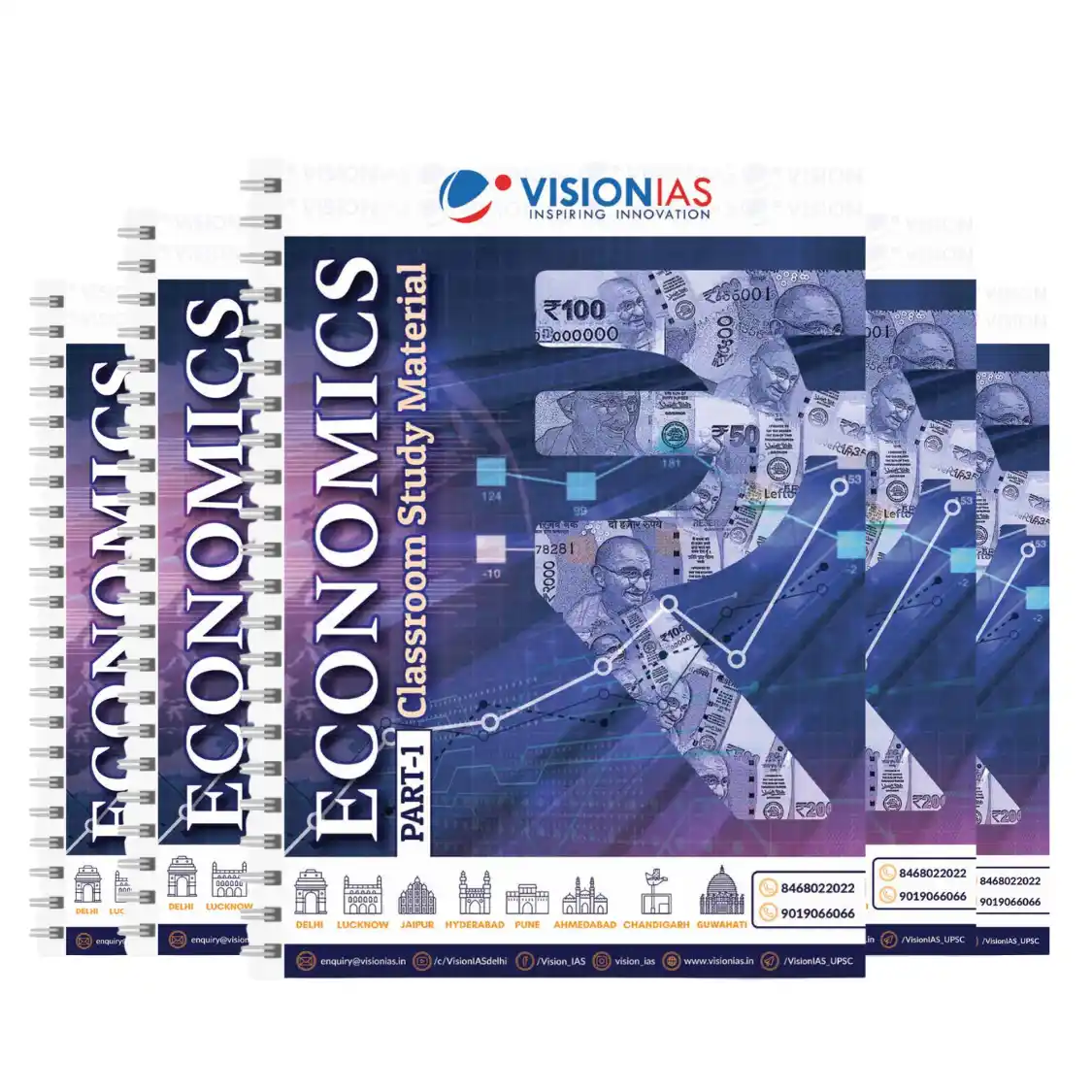
This is the easiest section to score in and the easiest to ignore. It needs no calculation — just consistent revision. Cover the last 6–8 months of current affairs, banking terms (repo rate, CRR, SLR, NPA, priority-sector lending), RBI functions and static banking history. A monthly current-affairs compilation like the Vision IAS Current Affairs Magazine (January 2026) is an efficient way to consolidate a full month’s events in one revision-friendly booklet. To strengthen the economy and monetary-policy side of banking awareness, a focused resource like these Vision IAS Economics Notes helps you understand concepts (fiscal deficit, inflation, banking regulation) rather than just memorise headlines.
Computer Aptitude
Only relevant in Mains, and low-effort/high-return. A week of revision on fundamentals, MS Office, networking basics and abbreviations is enough to secure most of these marks.
Speed & Accuracy Shortcuts (With Worked Examples)
Bank PO is won by attempts-per-minute, not knowledge alone. These shortcuts turn 90-second sums into 20-second ones.
Approximation over exact calculation
In DI, you rarely need the exact answer. Example: 48.9% of 1998 ≈ 49% of 2000 = 980. The nearest option wins — no long multiplication.
Percentage-fraction conversion
Memorise that 1/8 = 12.5%, 1/16 = 6.25%, 1/12 = 8.33%. So “increase 240 by 12.5%” becomes 240 + 240/8 = 270 instantly.
Vedic multiplication (base method)
To compute 108 × 106: base 100, surplus 8 and 6. Answer = (108+6) | (8×6) = 114 | 48 = 11448. Two seconds, no working.
Reasoning elimination
In seating puzzles, fix the most-constrained clue first (e.g., “A sits third to the right of B”) and eliminate impossible arrangements rather than testing every case. In syllogism, use the “possibility” rule to reject options fast.
| Technique | Best For | Time Saved |
|---|---|---|
| Approximation | DI, Simplification | 60–70% |
| Fraction values | Percentage, Profit-Loss | 50% |
| Vedic base method | Multiplication in DI | 60% |
| Constraint-first solving | Puzzles, Seating | 40% |
Bank PO Preparation in 6 Months: The Timetable
Is 6 months enough? Yes — if you study 5–7 disciplined hours a day and follow a phased plan. Here is a bank PO preparation in 6 months timetable broken into three phases.
| Phase | Timeline | Focus | Daily Hours |
|---|---|---|---|
| Phase 1: Foundation | Month 1–2 | Concept building in all 3 core sections + daily newspaper | 5–6 |
| Phase 2: Application | Month 3–4 | Topic tests, sectional tests, speed drills, start Prelims mocks | 6–7 |
| Phase 3: Test & Mains | Month 5–6 | Full mocks daily, Mains-level DI/puzzles, descriptive writing, revision | 6–7 |
A Sample Daily Routine (5–7 Hours)
| Time Slot | Activity | Duration |
|---|---|---|
| Morning | Newspaper + current affairs notes | 45 min |
| Session 1 | Quantitative Aptitude (concept + practice) | 90 min |
| Session 2 | Reasoning Ability (puzzles + drills) | 90 min |
| Session 3 | English (RC + grammar/vocab) | 60 min |
| Evening | Sectional/full mock + analysis | 60–90 min |
| Night | Banking awareness revision | 30 min |
Weekly Hour Allocation by Subject
| Subject | Foundation Phase (hrs/week) | Test Phase (hrs/week) |
|---|---|---|
| Quantitative Aptitude | 12 | 10 |
| Reasoning Ability | 12 | 10 |
| English Language | 8 | 7 |
| Banking/General Awareness | 5 | 6 |
| Mocks + Analysis | 5 | 12 |
If you have 8–9 months, simply extend the Foundation phase; if you have 3–4 months, compress it and rely on your diagnostic to skip your strongest topics.
Scoring Benchmarks: Cutoff Trends and Safe Attempts
Preparing without a target score is like running without a finish line. Study previous-year cutoff trends and set concrete attempt and accuracy targets. The numbers below are indicative ranges from recent IBPS/SBI PO cycles and vary by year, state and category.
| Stage | Section/Overall | Safe Attempts | Target Accuracy | Indicative Cutoff |
|---|---|---|---|---|
| Prelims | English | 18–22 | 85% | — |
| Prelims | Quant | 20–24 | 80% | — |
| Prelims | Reasoning | 24–28 | 85% | — |
| Prelims | Overall (100) | 62–70 | — | 55–65 |
| Mains | Overall (225) | — | — | 75–95 (varies by year) |
A realistic winning target: clear Prelims with 60+ marks and score 150+ in Mains to be safely above the interview cutoff in most years. Because Mains marks decide your final merit, every extra mark there matters far more than an extra mark in Prelims.
Mock Tests, Sectional Tests and PYQ Practice
Mock tests are the single highest-return activity in Bank PO preparation. They build exam temperament, expose weak topics and train time management. Aim for 40–60 full-length mocks before Prelims and a fresh set for Mains.
The 3-step mock analysis method
Taking a mock is only half the job — analysis is where marks are made. After every mock: (1) categorise every wrong answer as a concept gap, silly mistake or time crunch; (2) re-solve all skipped questions untimed to check if they were solvable; (3) log recurring weak topics and drill them before the next mock. A candidate who analyses 30 mocks well beats one who blindly takes 60.
Practising previous-year question papers (PYQs) reveals the exam’s real difficulty and recurring patterns. The discipline of solving topic-wise PYQs — the same method used across competitive exams, as in resources like the Forum IAS Prelims Toolkit of topic-wise PYQs — trains you to recognise question archetypes instantly, a habit that transfers directly to banking DI and reasoning sets.
Newspaper Reading and Current-Affairs Strategy
Banking awareness and current affairs can be a 40-mark difference-maker in Mains, and they take the least effort per mark. Read a business-focused newspaper daily and maintain a one-page monthly note of banking events, appointments, schemes, RBI policy changes and important data (repo rate, GDP, inflation).
Cover the last 6–8 months before the exam — that is the standard window from which current affairs are asked. Consolidating from a monthly magazine such as the Vision IAS Current Affairs Magazine (December 2025) alongside your own newspaper notes gives you both breadth and revision efficiency, so you are not scrambling in the final month.
Descriptive Paper: Essay and Letter Writing
SBI and IBPS PO Mains include a 25-mark descriptive test (one letter + one essay) that most aspirants under-prepare — making it a cheap place to gain a merit edge. Practise 2 letters and 2 essays a week on banking, economy and social themes.
Letter template
Salutation → subject line → opening (purpose in one line) → body (2 short paragraphs with specifics) → polite closing → signature. Keep formal letters under 150 words and to the point.
Essay structure
Introduction (define + context) → 2–3 body paragraphs (arguments with data/examples) → balanced view → conclusion with a forward-looking line. Target 250–300 words, clean grammar and a neutral tone. Common themes: digital banking, financial inclusion, cashless economy, women in the workforce, AI in banking.
Best Books and Study Material for Bank PO
The right resources save months. Here is a compact, section-wise bank PO preparation books and study material list.
| Section | Recommended Resource Type | Popular Choices |
|---|---|---|
| Quantitative Aptitude | Concept + practice book | R.S. Aggarwal; Arun Sharma (DI) |
| Reasoning Ability | Practice-heavy book | R.S. Aggarwal; M.K. Pandey (Analytical) |
| English Language | Grammar + practice | Wren & Martin; S.P. Bakshi (Objective English) |
| Banking/GA | Monthly compilations | Monthly current-affairs magazines + banking capsules |
| Descriptive | Essay/letter guides | Essay & letter practice sets |
| Computer | Objective computer book | Objective Computer Awareness |
Pair one book per section with an online test series — do not collect ten books for the same topic. Depth over volume wins.
Preparing for Multiple Bank Exams in One Cycle (IBPS + SBI + RBI)
Because IBPS PO, SBI PO, RBI Assistant and IBPS RRB share 70–80% of their syllabus, one well-built core plan can target 4–5 exams in a single year. Prepare the common aptitude base once, then add exam-specific layers only where needed.
| Exam | Shared Core | Extra Layer to Add |
|---|---|---|
| IBPS PO | Reasoning, Quant, English, GA | None (base exam) |
| SBI PO | Same core | Higher-difficulty puzzles/DI + descriptive + GD |
| RBI Grade B | Same core (Phase 1) | ESI & Finance-Management papers |
| IBPS RRB PO | Reasoning, Quant, GA | Regional/agriculture GA |
Fill your annual calendar with these exams so a single preparation cycle yields multiple shots at selection.
Common Mistakes and Consistency Management
A long prep cycle fails more often from burnout and bad habits than from lack of intelligence. Avoid these traps:
- Ignoring analysis: taking mocks without reviewing errors is the number-one wasted effort.
- Hoarding resources: switching books mid-prep breaks continuity — pick one and finish it.
- Neglecting the weakest section: Prelims has sectional cutoffs; one weak section can fail you despite a high total.
- Skipping current affairs till the end: it compounds — 15 minutes daily beats a panic cram.
- Over-attempting under negative marking: accuracy beats reckless attempts.
For consistency, use the two-day rule (never skip study two days in a row), take one lighter day a week to prevent burnout, and track progress with a simple checklist so motivation comes from visible improvement rather than willpower alone.
Interview Preparation
Once you clear Mains, the interview (and SBI’s group exercise) decides your final selection. Panels test confidence, clarity, banking awareness and personality — not trick questions.
- Documents: carry the originals and self-attested copies of your ID, mark sheets, degree, category certificate, call letter and photographs in an organised folder.
- Banking knowledge: revise RBI functions, types of accounts, digital banking (UPI, NEFT/RTGS), current banking news and basic economic terms.
- Self-introduction: prepare a crisp intro, your background, why banking, and your strengths/weaknesses with honest examples.
- Mock interviews: do 3–5 mocks to fix body language and filler words.
- Dress code: formal, sober attire; be punctual, greet the panel, and maintain calm eye contact.
Can You Do Bank PO Preparation at Home Without Coaching?
Absolutely — thousands clear it every year through self-study. The winning formula for home preparation is: a fixed daily timetable, one book per section, a good online test series, daily newspaper reading and rigorous mock analysis. Self-study also builds the independent problem-solving speed the exam actually rewards. What you must replace from coaching is discipline and feedback — a mock test series and a peer group or online community fill that gap. If you follow the diagnostic-driven plan above, coaching is optional, not essential.
Frequently Asked Questions
How can I prepare for Bank PO at home without coaching?
Yes, you can. Follow a fixed 5–7 hour daily timetable, use one standard book per section, subscribe to a mock test series, read a newspaper daily for current affairs, and analyse every mock rigorously. Self-study combined with disciplined mock practice is enough to clear IBPS PO or SBI PO without coaching.
Is 6 months enough to prepare for the Bank PO exam?
Six months is enough for most aspirants who study 5–7 focused hours daily. Use a phased plan — two months of concept building, two months of topic and sectional tests, and two months of full mocks plus Mains-level and descriptive practice. Beginners with weak fundamentals may need 8–9 months.
Which subject is most important for the Bank PO exam?
Quantitative Aptitude and Reasoning are the most decisive because they carry the most marks and separate candidates on speed and accuracy. However, Banking/General Awareness is the highest marks-per-hour section in Mains, so a balanced approach across all sections is what actually clears the sectional cutoffs.
How many hours should I study daily for Bank PO?
Aim for 5–7 hours of focused study per day — roughly 90 minutes each for Quant and Reasoning, an hour for English, a mock with analysis, and 30–45 minutes for current affairs. Quality and consistency matter more than raw hours; a well-analysed 6-hour day beats an unfocused 10-hour one.
What is the syllabus for the IBPS PO and SBI PO exam?
Prelims covers three sections — English Language, Quantitative Aptitude and Reasoning Ability (100 marks, 60 minutes). Mains adds Data Analysis & Interpretation, Reasoning & Computer Aptitude, General/Economy/Banking Awareness and English (225 marks), plus a 25-mark descriptive letter-and-essay test. High-weightage areas are puzzles and seating in Reasoning, DI and arithmetic in Quant, Reading Comprehension in English, and the last 6–8 months of banking current affairs.
Which books are best for Bank PO preparation?
For Quant, R.S. Aggarwal for concepts and Arun Sharma for DI; for Reasoning, R.S. Aggarwal and M.K. Pandey’s Analytical Reasoning; for English, Wren & Martin plus S.P. Bakshi’s Objective English; and for Banking/GA, monthly current-affairs magazines and banking capsules. Pick one book per section and pair it with an online test series rather than hoarding multiple books on the same topic.
What is the difference between IBPS PO and SBI PO?
Both share the same core syllabus, but SBI PO is generally tougher, with higher-difficulty puzzles and DI, a compulsory group exercise before the interview, and slightly higher pay. IBPS PO recruits for 11 public-sector banks at once, while SBI PO recruits only for the State Bank of India. Most candidates prepare for both together.
Can I clear the Bank PO exam in my first attempt?
Yes — many candidates clear it on their first attempt with a structured 6–9 month plan, strong speed-and-accuracy habits, 40–60 analysed mock tests, and consistent current-affairs revision. A diagnostic-driven strategy that targets your weakest section and previous-year cutoffs greatly improves first-attempt success.
Recommended Study Material


Continue Reading
How to Prepare for NEET 2027: Strategy, Timetable & Books
How to prepare for NEET: master the NCERT textbooks cover-to-cover (especially Biology, which gives ~85–90% of its questions…
SSC GD Syllabus 2026: Subject-Wise Topics, Pattern + PDF
The SSC GD syllabus for 2026 covers four subjects in a single Computer-Based Examination (CBE): General Intelligence &…
SSC MTS Syllabus 2026: Subject-Wise Topics, Exam Pattern + PDF
The SSC MTS syllabus for 2026 covers four subjects at the 10th-standard level — Numerical & Mathematical Ability,…