Bank PO Preparation 2026: Complete Plan, Books & Strategy
Bank PO preparation 2026 made simple: exam pattern, full syllabus, 3/6-month study plan, subject-wise tips, best books & mock strategy for IBPS/SBI PO.

Bank PO preparation in 2026 comes down to clearing three stages — Prelims, Mains and Interview — across five subjects: Quantitative Aptitude, Reasoning Ability, English, General/Banking Awareness and Computer Knowledge. Most aspirants who study 3–4 focused hours a day, build concepts before chasing speed, revise current affairs daily and analyse 3–4 mock tests a week can crack IBPS PO or SBI PO in about six months from zero — or in roughly three months if their basics are already strong. This guide gives you the exact exam pattern, the full syllabus, a month-wise study plan and weekly timetable, subject-wise tricks, the best books, a mock-analysis framework and an in-exam attempt strategy — everything you need to move from beginner to selection-ready.
Bank PO Preparation 2026 at a Glance
If you only remember five things about bank PO preparation, make it these:
- It is beatable by average students. The syllabus is fixed and repeatable; consistency wins over raw talent.
- Concepts first, mocks later. Beginners who jump straight into full tests waste months.
- Current affairs is a daily habit, not a last-month sprint. Start reading from day one.
- Accuracy beats speed because of 0.25 negative marking — never guess blindly.
- Self-study works. Coaching is optional if you have one book per subject, a current-affairs source and a mock series.
Everything below expands these points into an actionable, timeline-based plan.
What Is a Bank PO? Job Profile, Salary and Eligibility
A Probationary Officer (PO) is an entry-level managerial officer in a public-sector or private bank, recruited mainly through IBPS PO (for 11+ participating banks) and SBI PO (for the State Bank of India). A PO handles customer relationships, loan processing, cash management, cross-selling of financial products, and general branch administration during a two-year probation, after which they can rise to Assistant Manager, Branch Manager and beyond.
The role attracts lakhs of graduates every year because of its stability, clear promotion path and strong pay. Before you build a study plan, lock in the eligibility so you don’t waste months preparing for an exam you can’t sit.
| Parameter | Details |
|---|---|
| Educational qualification | Graduation in any discipline from a recognised university |
| Minimum percentage | No fixed minimum in most notifications — a pass degree is generally enough (check the year’s notice) |
| Age limit (IBPS PO) | 20–30 years (relaxation for reserved categories) |
| Age limit (SBI PO) | 21–30 years (relaxation as per rules) |
| Nationality | Indian citizen (or as specified in the notification) |
| Starting basic pay (approx.) | ₹48,480 basic; in-hand ₹57,000–₹63,000/month with allowances |
| Number of attempts | No fixed limit within the age window (category-wise relaxation applies) |
The in-hand salary varies with city and dearness allowance, but the takeaway is clear: a bank PO earns a competitive package with fast promotions, which is why the competition is fierce and your preparation quality has to beat thousands of other aspirants. One quick reassurance for beginners: there is usually no minimum-percentage bar in graduation — a pass degree qualifies you in most years, so a modest college record does not block you.
Is Bank PO Tough for Beginners or Average Students?
This is the first doubt most aspirants have, so let’s settle it early. Bank PO is competitive, not impossible. The questions themselves are class 10–12 level in maths and reasoning; the difficulty comes from speed, accuracy under time pressure, and the sheer number of applicants per vacancy. Average students clear it every single year — not because they were naturally gifted, but because they followed a repeatable daily routine, analysed their mistakes ruthlessly, and kept showing up. If you can commit to 3–4 focused hours a day for a few months, you are already in the serious minority who actually get selected.
Bank PO Exam Pattern: The 3 Stages Explained
Both IBPS PO and SBI PO follow a three-stage structure — Preliminary exam, Main exam and Interview. Understanding the exact marks, timing and negative marking is the foundation of any bank po preparation strategy 2026, because it tells you where to spend your hours and how aggressively to attempt each section.
Stage 1: Preliminary Exam
Prelims is a qualifying, speed-based screening test of 100 marks in 60 minutes with sectional timing of 20 minutes each. There is a negative marking of 0.25 marks per wrong answer.
| Section | Questions | Marks | Time |
|---|---|---|---|
| English Language | 30 | 30 | 20 min |
| Quantitative Aptitude | 35 | 35 | 20 min |
| Reasoning Ability | 35 | 35 | 20 min |
| Total | 100 | 100 | 60 min |
Stage 2: Main Exam
The Mains is the decisive stage — it carries the most weight in the final merit list. It has objective sections plus a descriptive English test (letter and essay). Negative marking of 0.25 applies to objective questions.
| Section | Questions | Marks | Time |
|---|---|---|---|
| Reasoning & Computer Aptitude | 45 | 60 | 60 min |
| Data Analysis & Interpretation | 35 | 60 | 45 min |
| General/Economy/Banking Awareness | 40 | 40 | 35 min |
| English Language | 35 | 40 | 40 min |
| Descriptive (Letter + Essay) | 2 | 25 | 30 min |
| Total | 157 | 225 | 210 min |
Stage 3: Interview (and GD for SBI)
Candidates who clear Mains are called for a Personal Interview (usually 50 marks for IBPS). SBI PO adds a Group Exercise / Psychometric-based discussion before the interview. The final merit list weights Mains and Interview together — Prelims marks are not added to the final score, so treat Prelims purely as a gateway.
IBPS PO vs SBI PO: Key Differences Aspirants Miss
Searchers constantly conflate the two, but the preparation is not identical. SBI PO is generally considered slightly tougher and more application-heavy, with a psychometric-linked group exercise, while IBPS PO opens doors to many banks at once. Here is a clear comparison so you can tune your ibps po preparation tips and sbi po preparation strategy correctly.
| Feature | IBPS PO | SBI PO |
|---|---|---|
| Recruiting body | IBPS (for 11+ member banks) | State Bank of India (single bank) |
| Difficulty trend | Moderate | Slightly higher, more application-based |
| Descriptive test | Letter + Essay in Mains | Letter + Essay in Mains |
| Final stage extras | Interview only | Group Exercise + Psychometric + Interview |
| Prelims difficulty | Standard | Often calculation-heavy DI, tricky puzzles |
| Vacancy spread | Across many public-sector banks | SBI branches nationwide |
Practical implication: if you target SBI PO, invest extra time in high-level Data Interpretation, tricky puzzles, essay writing and the ability to speak confidently for the group exercise. For IBPS PO, breadth and accuracy across sections matter more than tackling the very hardest DI sets. The good news is that the core syllabus is shared, so a single preparation base serves both — you simply add SBI-specific advanced practice and communication drills on top if you are sitting for SBI.
Full Subject-Wise Bank PO Syllabus
Before making a plan, understand exactly what you must learn. The syllabus is stable year to year, so map it once and revisit it each week. Below is the complete subject-wise breakdown for both Prelims and Mains.
| Subject | Key Topics |
|---|---|
| Quantitative Aptitude / DI | Simplification, number series, quadratic equations, percentages, ratio, average, profit & loss, SI/CI, time-speed-distance, time & work, mensuration, permutation & combination, probability, Data Interpretation (tables, bar/line/pie, caselet) |
| Reasoning Ability | Puzzles & seating arrangement, syllogism, inequality, blood relations, direction sense, coding-decoding, order & ranking, input-output, data sufficiency, logical reasoning |
| English Language | Reading comprehension, cloze test, error spotting, sentence improvement, para jumbles, fillers, word usage/vocabulary, sentence connectors, descriptive letter & essay |
| General/Banking Awareness | Current affairs (last 6 months), banking & financial awareness, RBI & monetary policy, static GK, government schemes, economy news, budget & important committees |
| Computer Knowledge | Computer fundamentals, hardware/software, MS Office, networking, internet, shortcut keys, security basics (asked within Reasoning & Computer Aptitude in Mains) |
Notice the weightage shift between stages: Prelims tests only Quant, Reasoning and English, while Mains adds heavy General/Banking Awareness, DI and Computer Aptitude. A strong grounding in economy and banking concepts pays off directly in the Mains awareness section, where fact-based questions on RBI, monetary policy and schemes are common.
How to Prepare for Bank PO Exam From Zero
If you are wondering how to start preparing for Bank PO from zero, follow this sequence rather than jumping straight into mocks. Beginners waste months by attempting full tests before building basics — reverse that order.
Step 1 — Understand the syllabus and pattern. Spend your first two days doing nothing but reading the syllabus, pattern and a couple of previous-year papers so you know exactly what you are up against.
Step 2 — Diagnose your baseline. Take one untimed previous-year paper. Your score tells you which subject to prioritise. Most beginners are weakest in Quant and puzzles and strongest in one of English or GA.
Step 3 — Build concepts subject by subject. Start with the subject that scares you most (usually Quant) so momentum is easiest early. Learn one topic, do 30–40 questions, then move on.
Step 4 — Layer current affairs from day one. Banking awareness and current affairs take months to build, so start reading daily immediately — don’t leave it for the last month.
Step 5 — Add timing and mocks only after basics. Introduce sectional tests once you’ve covered ~60% of a subject, and full mocks once you’ve covered the whole syllabus once.
Which subject should you start with? Begin with Quantitative Aptitude and Reasoning because they need the most practice and improve slowest; layer English and General Awareness alongside since those compound with daily habit. Starting with the hardest subject while your motivation is fresh is the single most common trait of aspirants who finish their plan.
Subject-Wise Preparation Tips and Short Tricks
Quantitative Aptitude
Memorise tables up to 30, squares up to 30, cubes up to 15, and fractions-to-percentage conversions — this alone cuts calculation time dramatically. Master approximation for simplification and quadratic equations first (the easiest marks), then move to arithmetic word problems and finally DI. In DI, read the question before the data set and pick sets where the calculation is clean.
Reasoning Ability
Puzzles and seating arrangement carry the highest reasoning weight, so practise 4–5 sets daily. For syllogism and inequality, use the possibility/Venn-diagram method; for coding-decoding and directions, drill pattern recognition. In the exam, scan all puzzles first and solve the ones with fully defined variables before the ambiguous ones.
English Language
Reading Comprehension is the biggest scorer — read editorials daily to build speed. For vocabulary-based questions, learn words in context, not from random lists. Practise para jumbles and error spotting as pattern recognition. For the descriptive test, prepare formats for formal/informal letters and 3–4 essay themes (economy, banking, social issues).
General & Banking Awareness
This is the fastest-scoring Mains section because it needs recall, not calculation. Read the business pages of a newspaper daily, follow RBI announcements, and revise a monthly current-affairs capsule. A structured monthly magazine keeps your revision organised — pairing the latest monthly current affairs magazine with the previous month’s edition gives you a clean, revisable 6-month bank without hunting through scattered notes.
Computer Knowledge
This is the smallest and easiest scoring area. A week of focused study on fundamentals, MS Office, networking and shortcuts is enough. Don’t over-invest here — the marginal returns are far lower than DI or puzzles.
Bank PO Study Plan and Timetable (3, 6 and 12 Months)
Most sites say study 7–8 hours daily — but that is unrealistic for working professionals and full-time college students. The truth is that 3–4 hours of focused, distraction-free study beats 8 hours of half-attention. Below are three realistic tracks; pick the one that matches your timeline.
| Track | Best For | Daily Hours | Approach |
|---|---|---|---|
| 3-month crash | Repeat aspirants with basics done | 5–6 hrs | Revision + heavy mocks + daily CA |
| 6-month balanced | First-timers, working professionals | 3–4 hrs | Concepts → sectional tests → mocks |
| 12-month foundation | College students, complete beginners | 2–3 hrs | Deep concept-building + slow habit growth |
Here is how the 6-month balanced track breaks down month by month, so you always know what “phase” you should be in.
| Phase | Focus | Milestone |
|---|---|---|
| Months 1–2 | Concept building in Quant, Reasoning, English; start daily CA | Full syllabus covered once |
| Months 3–4 | Sectional tests + topic revision + banking awareness | Sectional accuracy above 75% |
| Month 5 | Full mocks (3–4/week) + strict mistake analysis | Consistent Prelims-clearing scores |
| Month 6 | Mains-level practice, descriptive writing, CA revision | Selection-ready across all sections |
And here is a sample weekly timetable for the 6-month track that working aspirants can actually follow with 3–4 focused hours a day.
| Day | Slot 1 (90 min) | Slot 2 (60–90 min) | Daily Habit (30 min) |
|---|---|---|---|
| Monday | Quant concept + practice | Reasoning puzzles | Current affairs + newspaper |
| Tuesday | English (RC + grammar) | Quant arithmetic | Current affairs + newspaper |
| Wednesday | Reasoning (syllogism/inequality) | DI practice | Current affairs + newspaper |
| Thursday | Quant revision | English vocab + para jumbles | Current affairs + newspaper |
| Friday | Banking & static awareness | Reasoning puzzles | Current affairs + newspaper |
| Saturday | Full/sectional mock test | Mistake analysis | Weekly CA revision |
| Sunday | Weak-area revision | Descriptive writing practice | Monthly capsule revision |
Can you crack Bank PO in 3 months? Yes — if your concepts are already built and you focus purely on revision, mocks and current affairs. From absolute zero, 6 months is the realistic minimum for a first selection, and 9–12 months is more comfortable if you are also studying or working full-time.
Best Books and Study Material for Bank PO
The right bank po preparation books and study material keep you from drowning in resources. Here is a lean, high-yield list — you do not need more than one book per subject plus a mock-test platform and a current-affairs source.
| Subject | Recommended Resource Type | What It Covers |
|---|---|---|
| Quantitative Aptitude | A standard quant practice book (e.g., Arun Sharma / R.S. Aggarwal style) | Concepts + graded practice + DI sets |
| Reasoning | A verbal & non-verbal reasoning book | Puzzles, syllogism, all reasoning types |
| English | A grammar + comprehension guide | Rules, RC practice, vocabulary in context |
| General/Banking Awareness | Monthly current-affairs magazine + banking capsule | Last 6 months’ news, RBI, economy, schemes |
| Previous-Year Papers | Topic-wise PYQ compilation | Real question patterns and difficulty calibration |
| Mock Tests | Online sectional + full test series | Speed, accuracy and exam temperament |
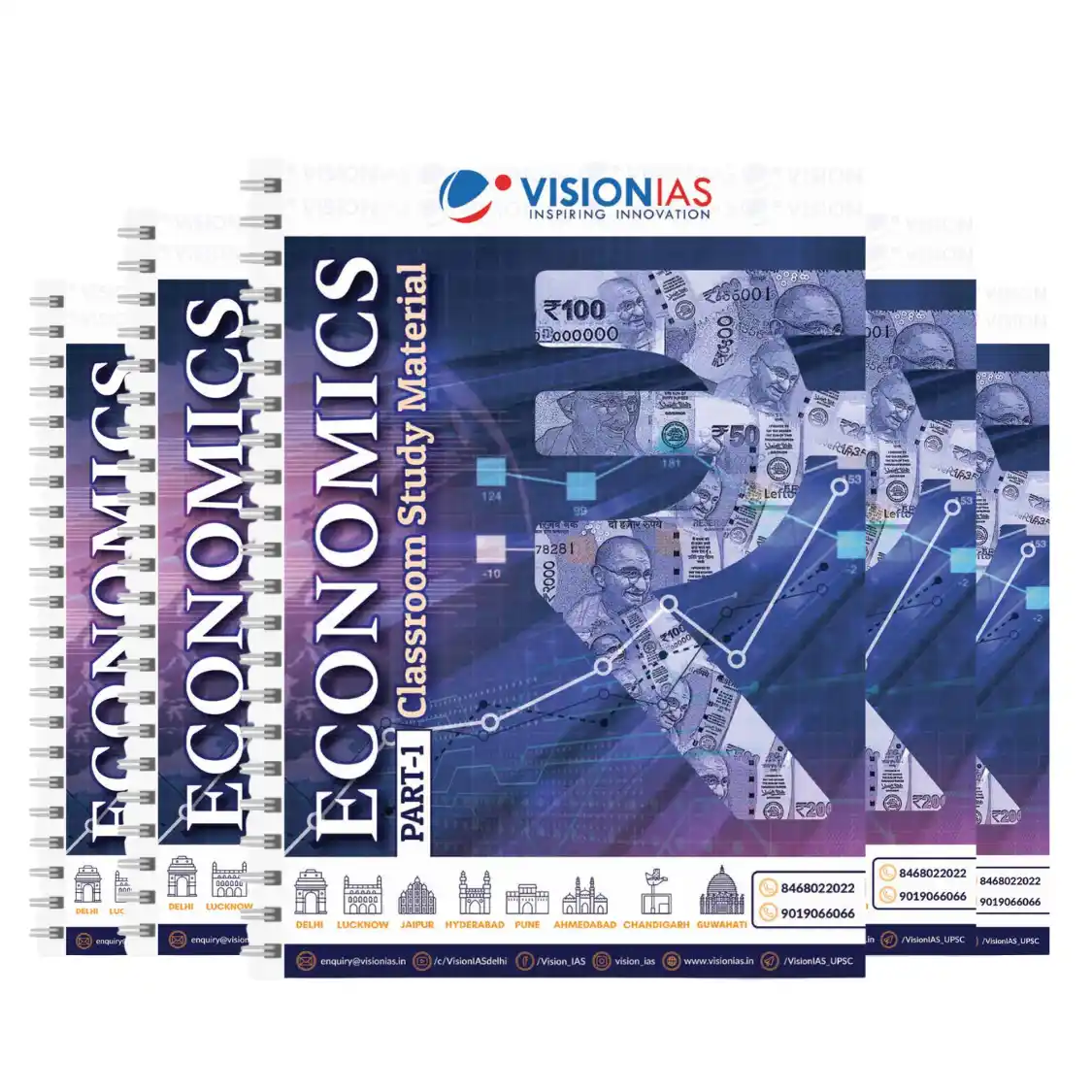
Two of these deserve special attention. First, current affairs — an organised monthly magazine is far more efficient than scrolling news apps; keep the last six editions and revise them in a loop. Second, previous-year questions — pattern familiarity is a huge advantage, and a disciplined topic-wise PYQ practice habit trains you to recognise question types instantly. For the economy and banking-awareness portion of Mains, structured economics notes help you connect news to underlying concepts instead of memorising in isolation.
Which is the best book for Bank PO? There is no single “best” — the best combination is one quant book, one reasoning book, one English book, a monthly current-affairs source and a good online mock series. Consistency with a small set beats hoarding a dozen books you never finish.
Mock Tests, Sectional Tests and the Mistake-Analysis Framework
Almost every guide tells you to give mocks — but the score never comes from giving mocks, it comes from analysing them. What you do in the 60–90 minutes after a mock matters more than the test itself. Use this framework after every full test.
| Category | What Happened | Action |
|---|---|---|
| Silly mistakes | Knew it, marked wrong | Slow down 5% on that question type |
| Concept gaps | Didn’t know the method | Re-study the concept the same day |
| Time sinks | Spent 3+ min, still wrong | Learn to skip and move on |
| Left blank (should have attempted) | Skipped an easy question | Improve section scanning |
| Guessed correctly | Lucky, not skill | Revise concept — don’t count it as mastery |
Maintain an error log: a single notebook where every recurring mistake is written down and reviewed weekly. Aim for 3–4 full mocks a week in the final two months, plus daily sectional tests on your weakest area. Track your accuracy, not just your score — an 80% accuracy at moderate speed beats a 55% accuracy at high speed because of negative marking.
In-Exam Attempt Strategy and Sectional Timing
Even well-prepared aspirants fail because of poor exam-hall strategy. With sectional timing in Prelims, you cannot borrow time from one section for another, so plan attempts per section in advance.
| Section (Prelims) | Target Attempts | Order Strategy |
|---|---|---|
| English (20 min) | 22–26 of 30 | Start here to settle nerves (least calculation) |
| Reasoning (20 min) | 26–30 of 35 | Do easy sets first, leave 1 hard puzzle for last |
| Quant (35, 20 min) | 22–27 of 35 | Simplification & quadratic first, then DI |
Golden rules inside the exam: never chase a single question for more than 60–75 seconds; make two passes per section (easy first, tough second); and remember that with 0.25 negative marking, blind guessing hurts you — attempt only when you can eliminate at least two options. Accuracy over speed wins the merit list.
Cut-Off, Normalization and the Interview Stage
Two things confuse aspirants at the end: cut-offs and normalization. The overall cut-off is what decides selection, but you must also clear sectional cut-offs — score too low in even one section and you’re out despite a high total. Because exams run in multiple shifts of varying difficulty, banks apply normalization to make scores comparable across slots, so don’t panic if your shift felt hard — everyone in that shift is adjusted fairly. As a rough working target, aim to comfortably beat the previous year’s category cut-off rather than scraping past it, since cut-offs move with difficulty and vacancies each year.
For the interview, prepare your bio-data, banking basics, current banking news, and answers to “why banking” and “why PO”. SBI PO aspirants must also practise the group exercise — speak clearly, add value, and don’t dominate or stay silent. Dress formally, stay calm, and keep answers honest and concise.
Common Mistakes and Exam-Day/Revision-Week Plan
Avoid these preparation killers: hoarding too many resources, skipping current affairs until the last month, giving mocks without analysis, ignoring sectional cut-offs, and neglecting speed-accuracy balance. In your final revision week, stop learning new topics — revise formulas, error logs and current-affairs capsules only, take one light mock, sleep well, and keep exam-day stress low by arriving early with documents ready.
Is Bank PO tough for beginners or average students? It is competitive, not impossible. Average students clear it every year through consistency, smart mock analysis and disciplined revision — raw talent matters far less than a repeatable daily routine.
Frequently Asked Questions
How many hours should I study daily for Bank PO?
Most toppers recommend 7–8 hours, but 3–4 hours of fully focused study daily is enough for working professionals and college students if you cover concepts, practise daily, read current affairs, and analyse every mock. Quality and consistency beat raw hours.
Can I crack Bank PO in 3 months or 6 months?
Yes. Repeat aspirants with strong basics can crack it in 3 months by focusing on revision, mocks and current affairs. First-timers from zero should plan for 6 months of structured study to build concepts before shifting to full mock practice.
Can I prepare for Bank PO without coaching?
Absolutely. Self-study works well for Bank PO because the syllabus is fixed and resources are widely available. You need one book per subject, a monthly current-affairs source, a good online mock series, and strict mistake analysis — coaching is optional, not essential.
Which subject should I start with for Bank PO?
Start with Quantitative Aptitude and Reasoning, as they need the most practice and improve slowest. Build English and General Awareness alongside through daily reading, since those two compound over time and are hard to cram at the end.
What is the difference between IBPS PO and SBI PO preparation?
SBI PO is generally tougher, with calculation-heavy DI, trickier puzzles and an added group exercise plus psychometric round, so it needs stronger advanced practice and communication skills. IBPS PO rewards breadth and accuracy across sections and opens vacancies in many banks at once.
Which is the best book for Bank PO preparation?
There is no single best book. The best combination is one standard quant book, one reasoning book, one English grammar-and-comprehension guide, a monthly current-affairs magazine, and a topic-wise previous-year question set — used consistently rather than hoarding many titles.
How can I start preparing for Bank PO from zero?
Read the syllabus and a few previous-year papers first, take one untimed paper to find your weakest subject, then build concepts subject by subject starting with Quant and Reasoning. Add daily current affairs from day one, and introduce mocks only after you have covered the syllabus once.
Do I need a minimum percentage in graduation for Bank PO?
In most notifications there is no minimum-percentage requirement — a pass degree in any discipline from a recognised university qualifies you. Always confirm the exact eligibility in the current year’s official notification, as small conditions can change.
Recommended Study Material


Continue Reading
UPSC Ethics Syllabus 2026: GS Paper 4 Topics + PDF
The upsc ethics syllabus is the official prescribed content for General Studies Paper 4 — titled Ethics, Integrity…
UGC NET Syllabus 2026: Paper 1 & 2 Subject-Wise + PDF
The UGC NET syllabus is split into two papers: Paper 1 is a common Teaching & Research Aptitude…
Best Books for UPSC 2026: Complete Subject-Wise List + Cost
The best books for UPSC are a small, fixed set of standard titles: NCERTs (Classes 6–12) for the…