Best Optional Subject for UPSC 2026: Ranked List + Success-Rate Data
Best optional subject for UPSC 2026 — a ranked, data-backed shortlist with success rates, GS overlap, booklists and a persona framework to help you choose right.

The best optional subject for UPSC is the one that matches your background, interest and scoring ability — there is no single universal winner. That said, if you want a data-backed shortlist, Sociology, Anthropology, PSIR (Political Science & International Relations), Geography and Public Administration are the five most reliable picks for the average 2026 aspirant, because they combine manageable syllabi, strong General Studies overlap, abundant coaching material and consistent scoring. This guide ranks every serious contender, gives you a persona-based decision matrix, answers the questions aspirants actually search for, and maps each optional to the exact booklist you need next.
Your optional carries 500 of 1750 Mains marks (~28.5%) — two papers of 250 marks each. Two candidates with identical GS and interview scores routinely finish 200+ ranks apart purely on optional performance, which is why choosing correctly is arguably the single highest-leverage decision in your preparation.
How This Ranking Was Built
Rather than crowning one “best” subject, this guide scores every serious optional on five weighted factors — scoring consistency, GS overlap, resource availability, syllabus length and beginner-friendliness — and then matches those subjects to concrete aspirant profiles. The success-rate and popularity figures are consolidated directional ranges across recent Civil Services cycles; UPSC does not publish subject-wise cut-offs, so treat every number here as a decision aid, not an official statistic. The aim is a shortlist you can defend for your situation, not a leaderboard you copy blindly.
Why the Optional Subject Decides Your Rank
In the current pattern, the written Mains total is 1750 marks: seven papers that count (Essay 250, GS I–IV at 250 each, and Optional Paper I & II at 250 each), plus two qualifying language papers. The optional alone is 500 marks — more than any two GS papers combined in influence, because GS scores cluster tightly (most serious candidates land within a narrow 90–120 band per paper) while optional scores spread widely from 230 to 340+.
Put simply: GS is where you avoid losing marks; the optional is where you actively gain them. A 320/500 optional versus a 250/500 optional is a 70-mark swing — often the difference between a Group C service and the IAS itself.
| Mains Paper | Marks | Nature |
|---|---|---|
| Paper A – Indian Language | 300 | Qualifying only |
| Paper B – English | 300 | Qualifying only |
| Essay | 250 | Counted |
| GS I – GS IV | 250 × 4 = 1000 | Counted |
| Optional Paper I & II | 250 × 2 = 500 | Counted |
| Total (counted) | 1750 | + Interview 275 = 2025 |
The Full List of UPSC Optional Subjects (All 48)
UPSC offers 48 optional subjects: 26 core subjects plus 22 literatures of Indian and select foreign languages. You may choose exactly one. Here is the complete official list grouped by stream so you can spot subjects aligned to your degree.
| Stream | Optional Subjects |
|---|---|
| Humanities / Social Science | History, Geography, Political Science & IR, Sociology, Public Administration, Philosophy, Psychology, Anthropology, Economics |
| Commerce & Management | Commerce & Accountancy, Management |
| Law & Governance | Law |
| Science | Physics, Chemistry, Mathematics, Statistics, Botany, Zoology, Geology |
| Applied / Technical | Agriculture, Animal Husbandry & Veterinary Science, Civil Engineering, Mechanical Engineering, Electrical Engineering, Medical Science |
| Literatures (22) | Hindi, English, Sanskrit, Urdu, Tamil, Telugu, Kannada, Malayalam, Bengali, Marathi, Gujarati, Punjabi, Assamese, Odia, Maithili, Konkani, Manipuri, Nepali, Bodo, Dogri, Santhali, Kashmiri, Sindhi, Arabic, Persian, Chinese, French, German, Russian |
You are not restricted to a subject you studied in graduation — you may pick any optional on this list regardless of your degree, which is exactly why a strong persona-based choice matters more than your academic label.
Best Optional Subject for UPSC: The Ranked Top 10
The ranking below weighs five factors equally — scoring consistency, GS overlap, resource availability, syllabus length, and beginner-friendliness. It is a starting shortlist, not a command; the final column tells you exactly who each subject fits.
| Rank | Optional | Papers/Length | GS Overlap | Best-Fit Persona |
|---|---|---|---|---|
| 1 | Sociology | Short, conceptual | GS I & II, Essay | Beginners, working professionals, non-technical grads wanting fast coverage |
| 2 | Anthropology | Medium, factual | GS I (society), Essay | Science/engineering/medical grads who prefer diagrams & static facts |
| 3 | PSIR | Medium-long | GS II heavily, Essay | Polity & current-affairs lovers, arts/law backgrounds |
| 4 | Geography | Medium, semi-technical | GS I & III | Science grads comfortable with maps, diagrams, logic |
| 5 | Public Administration | Short-medium | GS II & IV, Essay | Governance-focused aspirants wanting a compact syllabus |
| 6 | History | Long, memory-heavy | GS I largely | History lovers with strong retention & reading stamina |
| 7 | Philosophy | Shortest syllabus | GS IV (Ethics), Essay | Abstract thinkers wanting the smallest syllabus to master |
| 8 | Psychology | Medium | GS IV, Essay | Aspirants drawn to human behaviour & applied case-work |
| 9 | Law | Long, technical | GS II | LLB holders & judiciary aspirants only |
| 10 | Commerce / Agriculture | Technical | Low (subject-specific) | Commerce or agri/science graduates with domain command |
Most Scoring & Highest Success-Rate Optionals (Multi-Year Data)
Two questions dominate every aspirant forum: which is the most scoring optional and which has the highest success rate. They are not the same. “Success rate” (candidates recommended ÷ candidates who appeared with that optional) rewards optionals chosen by smaller, self-selected, well-prepared pools — which is why niche technical subjects often top the chart despite tiny numbers.
| Optional | Typical Success Rate* | Scoring Ceiling (Paper I+II) | Read the Data As |
|---|---|---|---|
| Animal Husbandry & Vet. Science | ~11–13% | High | High rate, but tiny expert pool — not a general pick |
| Management | ~9–11% | Medium-high | Strong for MBA/commerce grads |
| Anthropology | ~9–10% | High (320+) | Best rate-to-accessibility ratio |
| Commerce & Accountancy | ~8–10% | High | Excellent for commerce graduates |
| Sociology | ~7–9% | High (320+) | Best all-rounder for beginners |
| PSIR | ~6–8% | High (330+) | Large pool, high ceiling, current-affairs synergy |
| Geography | ~6–7% | Medium-high | Reliable but examiner has tightened marking |
| Public Administration | ~5–7% | Medium | Once dominant; scoring has become stricter |
*Indicative ranges consolidated across recent Civil Services cycles; UPSC does not publish subject-wise cut-offs, so treat these as directional, not absolute. The consistent takeaway across years: Anthropology and Sociology deliver the best blend of accessible material and high scoring ceiling, while technical optionals show high percentages mainly because only domain experts attempt them.
Popularity: How Many Aspirants Pick Each Optional
Popularity matters for two reasons — abundant material and peer benchmarking on one side, versus a crowded, harshly moderated pool on the other. Here are the approximate numbers of candidates opting for the leading humanities optionals in a typical Mains cycle.
| Optional | Approx. Aspirants/Year | Material Availability | Crowding Risk |
|---|---|---|---|
| Geography | ~3,500 | Very high | High |
| History | ~3,500 | Very high | High |
| Public Administration | ~3,000 | High | Moderate-high |
| Sociology | ~1,800 | High | Moderate |
| PSIR | ~1,600 | High | Moderate |
| Anthropology | ~1,200 | Growing | Low-moderate |
| Philosophy | ~900 | Moderate | Low |
GS Overlap: The Smartest Way to Save 200+ Hours
The single most under-used selection criterion is General Studies overlap. Pick an optional that overlaps GS and you effectively study parts of Prelims, Mains GS and Essay simultaneously — the closest thing to a free lunch in this exam. The UPSC optional subject with maximum GS overlap for most aspirants is PSIR (feeds GS II) or Geography (feeds GS I and III).
| Optional | Overlaps With | Shared Content |
|---|---|---|
| Geography | GS I & GS III | Physical geography, resources, disasters, environment |
| PSIR | GS II & Essay | Polity, governance, international relations, foreign policy |
| Sociology | GS I & GS II & Essay | Society, social justice, welfare schemes, empowerment |
| Public Administration | GS II & GS IV | Governance, administration, ethics in public service |
| Philosophy | GS IV (Ethics) & Essay | Moral thinkers, ethical theories, value premises |
| Anthropology | GS I (society) & Essay | Tribal issues, human evolution, social structure |
| History | GS I | Ancient, medieval, modern India, world history |
How to Choose the Right Optional Subject for UPSC
Run every candidate optional through these seven filters, in order. If a subject fails the first two, stop — no amount of material fixes a mismatch of interest and aptitude.
1. Genuine Interest
You will spend 700–1000 hours here. If the subject bores you by month two, your scores plateau. Read one topper’s answer copy and one standard chapter before committing — if it energises you, that is signal.
2. Academic Background & Aptitude
An engineer often finds Anthropology’s diagram-and-fact structure natural; a literature graduate may find Sociology’s argument-building instinctive. Play to how your mind already works.
3. Scoring Potential & Predictability
Prefer optionals where marking is stable and answers can be structured, not ones dependent on an unpredictable examiner mood.
4. GS Overlap
As shown above, overlap compounds your study hours. Weight it heavily if you are short on time.
5. Resource & Coaching Availability
Some optionals are self-study-friendly; others practically require guidance (see the next section). Match this to your budget and access.
6. Time Available Before the Exam
With only 3–4 months, a compact syllabus (Philosophy, Sociology, Public Administration) beats a sprawling one (History, Law).
7. Language Proficiency
Hindi-medium aspirants have excellent material in Sociology, PSIR, History and Geography; confirm quality material exists in your medium before locking in.
Self-Study-Friendly vs Coaching-Dependent Optionals
Top-ranking guides rarely say this plainly: some optionals are genuinely conquerable through good printed notes and answer practice, while others reward structured mentorship. If you are preparing without coaching, this table should shape your shortlist.
| Optional | Self-Study Feasibility | Why |
|---|---|---|
| Sociology | High | Limited syllabus, clear standard notes, intuitive concepts |
| Philosophy | High | Smallest syllabus; fixed thinkers and theories |
| Public Administration | High | Finite thinkers, heavy current-governance linkage |
| Anthropology | Medium-high | Factual and diagram-based; good notes suffice |
| PSIR | Medium | IR portion needs current-affairs discipline |
| Geography | Medium | Map & diagram practice benefits from feedback |
| History | Medium-low | Vast; answer-writing guidance helps prioritise |
| Law / Medical Science | Low | Technical; realistically for degree-holders only |
The Persona Decision Matrix: Which Optional Suits Me?
This is the section competitor pages skip. Instead of a vague “choose what you like”, match your profile to a concrete recommendation. Answer the self-assessment questions, then read your row.
| If You Are… | Pick | Backup | Reason |
|---|---|---|---|
| A first-time aspirant / working professional short on time | Sociology | Public Administration | Shortest learning curve, big GS & Essay payoff |
| An engineer / doctor / science graduate | Anthropology | Geography | Structured, factual, diagram-friendly — plays to your training |
| A polity & current-affairs enthusiast | PSIR | Public Administration | Heavy GS II overlap; high scoring ceiling |
| An arts graduate who loves reading & narrative | History | Sociology | Deep GS I synergy; rewards retention |
| An abstract / logical thinker wanting the smallest syllabus | Philosophy | Sociology | Tiny syllabus + direct Ethics (GS IV) benefit |
| A law graduate or judiciary aspirant | Law | PSIR | Leverages existing degree; GS II overlap |
| A commerce / MBA graduate | Commerce & Accountancy | Management | Domain command = high, predictable scores |
| A strong regional-language reader | Language Literature | Sociology | High-scoring niche with limited competition (see below) |
Best Optional Subject for UPSC for Beginners
If you are starting from scratch with no subject-specific advantage, the best optional subject for UPSC for beginners is Sociology, followed by Public Administration and Philosophy. All three share the traits a first-timer needs: a short, finite syllabus you can finish in one focused pass, intuitive concepts that do not assume prior study, standardised self-study notes, and meaningful overlap with GS and the Essay. Sociology in particular lets a beginner see returns quickly — its thinkers and Indian-society modules double up as ammunition for GS I, GS II and the Essay, so early effort feels rewarding rather than isolated. Avoid vast or technical optionals (History, Law, the pure sciences) for a first attempt unless you already have a genuine head start, because their length and marking curve punish a slow start. The rule of thumb for beginners: pick the smallest syllabus you can stay genuinely interested in, then win the paper on answer-writing.
The Overlooked Niche: Literature Optionals
For the right candidate, a language literature (Hindi, Tamil, Telugu, Malayalam, Kannada, Punjabi, Maithili, and others) is one of the most scoring optionals available. The syllabus is finite, competition is small, and native fluency lets you write with a nuance non-literature optionals cannot match — several toppers have posted 330–345/500 with a literature optional. The caveat: you need genuine command of the language’s texts, grammar and literary history, not just conversational fluency. If that describes you, do not dismiss it as an oddity — it is a legitimate route to a very high optional score.
Optionals to Approach With Caution
Honesty wins rankings, so here is what the top pages avoid saying. A few optionals have become riskier in recent cycles:
- Public Administration — once the most popular optional, its scoring has tightened and become less predictable; still fine, but no longer the automatic “scoring” default it was a decade ago.
- Geography — reliable, but examiner marking on Paper I has become stricter, so map and diagram precision now matters more than ever.
- Pure Science & Engineering optionals — high ceilings but almost zero GS overlap and steep opportunity cost unless you are a domain graduate.
- Optionals with thin material in your medium — avoid any subject where you cannot source quality notes and mentorship in the language you will write in.
The meta-lesson: do not blindly copy a topper. A rank-1 holder’s Anthropology score reflects their background and mentor access, not a guarantee it will work for you.
Preparation Timeline & Hours Needed
Budget 700–1000 hours for the optional across your preparation, at roughly 4–5 hours daily in the dedicated phase. Here is a realistic sequencing for a candidate with about a year in hand.
| Phase | Duration | Focus |
|---|---|---|
| Foundation | Months 1–3 | Read core notes once; build a syllabus-mapped index |
| Consolidation | Months 4–6 | Second reading + start topic-wise answer writing |
| Answer Mastery | Months 7–9 | Previous-year questions, sectional tests, value addition |
| Revision | Months 10–12 | Full-length tests, 3–4 revisions, current-affairs linkage |
If you have only 3–4 months, choose a compact optional (Sociology, Philosophy or Public Administration), skip a leisurely first reading, and go straight to notes-plus-answer-writing in parallel.
Booklist & Resource Mapping Per Optional
Choosing the subject is step one; the next question every aspirant asks is what do I actually study. Here is the practical resource map, with printed note-sets you can order and revise from directly.
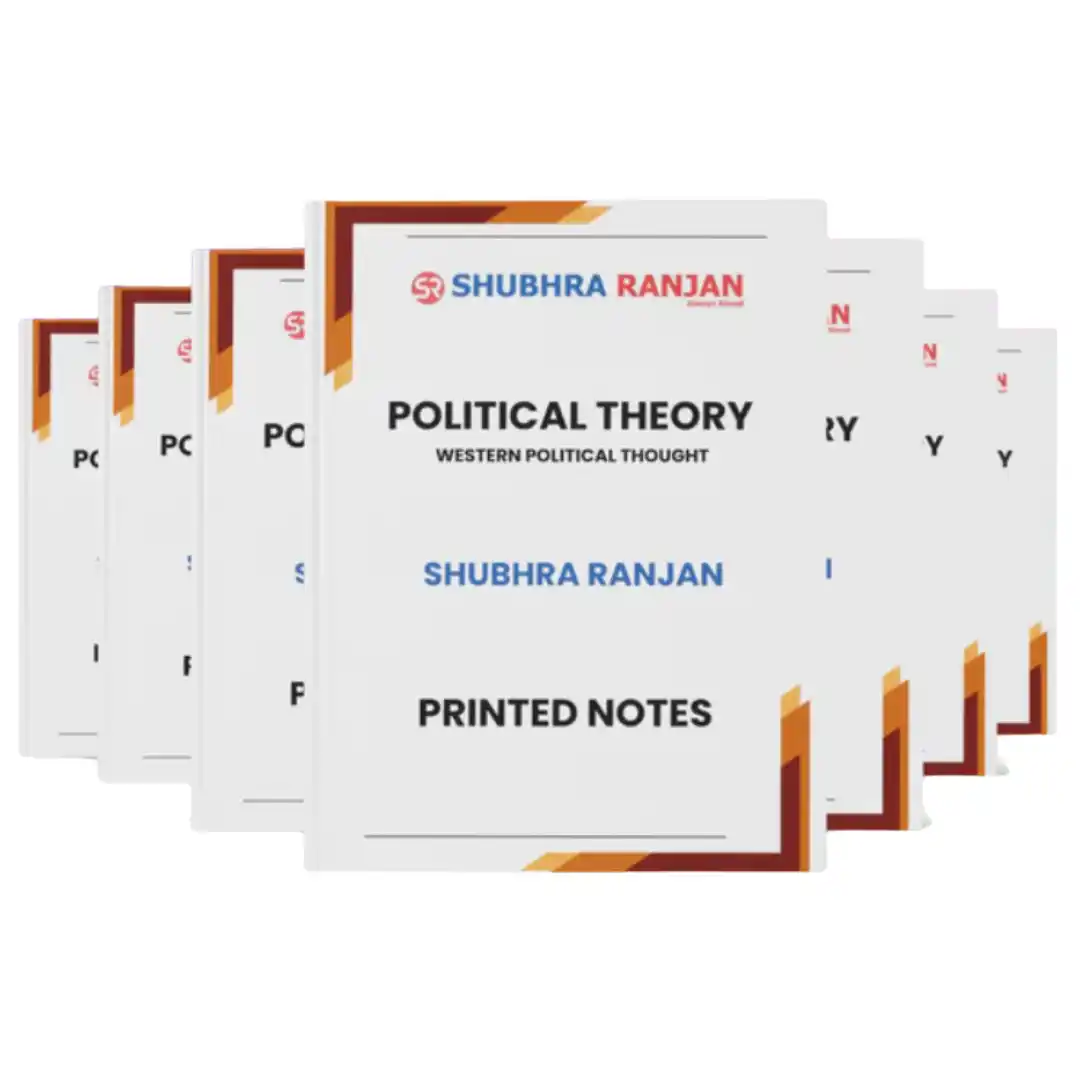
For PSIR, the standard route is a strong conceptual note-set plus current-affairs linkage for the IR half — the widely used Shubhra Ranjan PSIR notes (or the Rajesh Mishra PSIR notes in Hindi for Hindi-medium aspirants) cover both papers systematically.
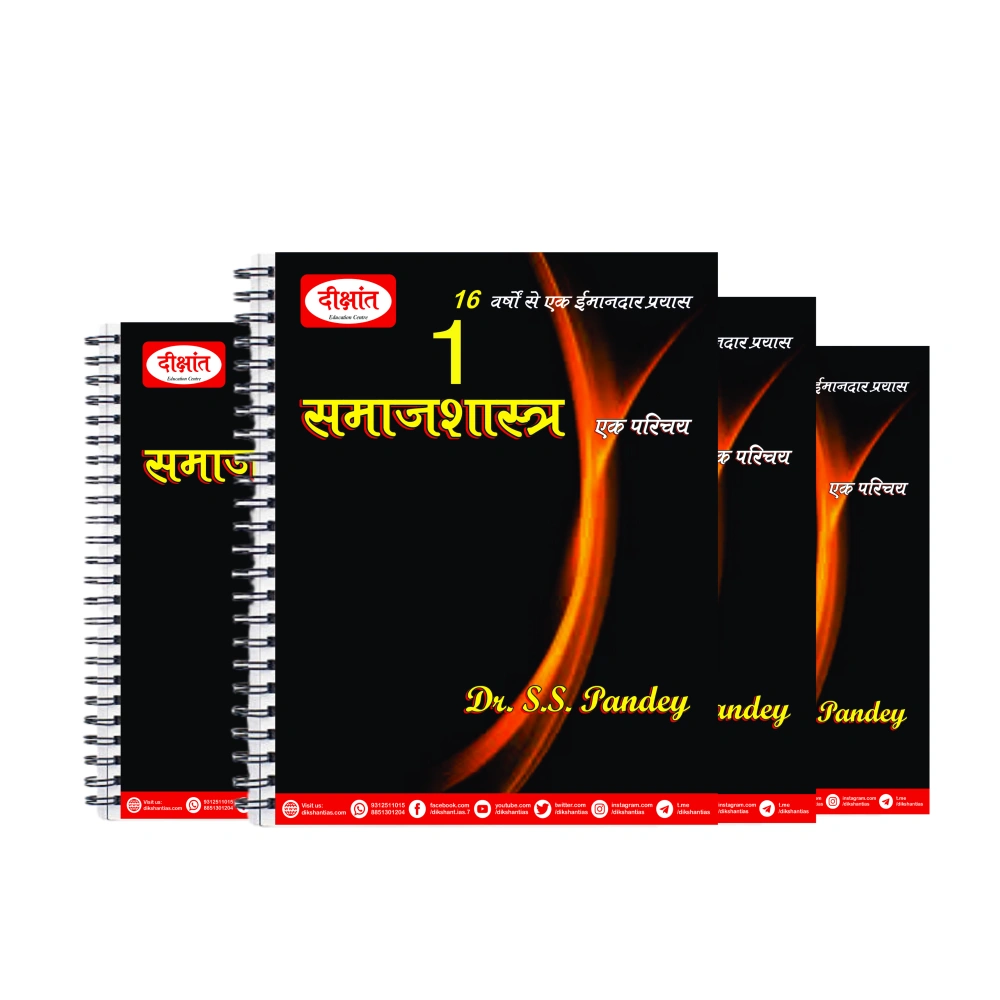
For Sociology, thinkers and Indian society are the scoring core; the SS Pandey Sociology module set and the Vikash Ranjan (Triumph IAS) Sociology notes are both popular self-study anchors.
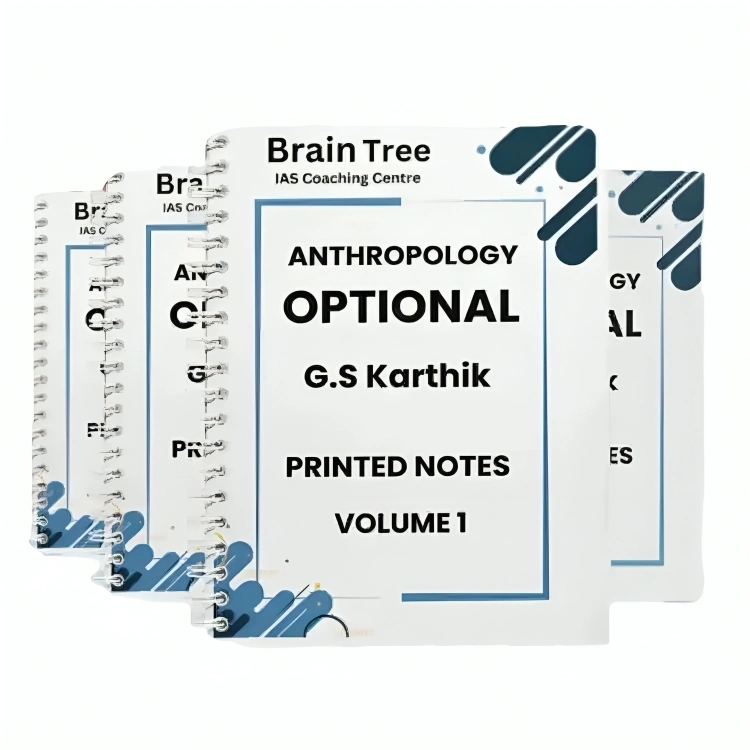
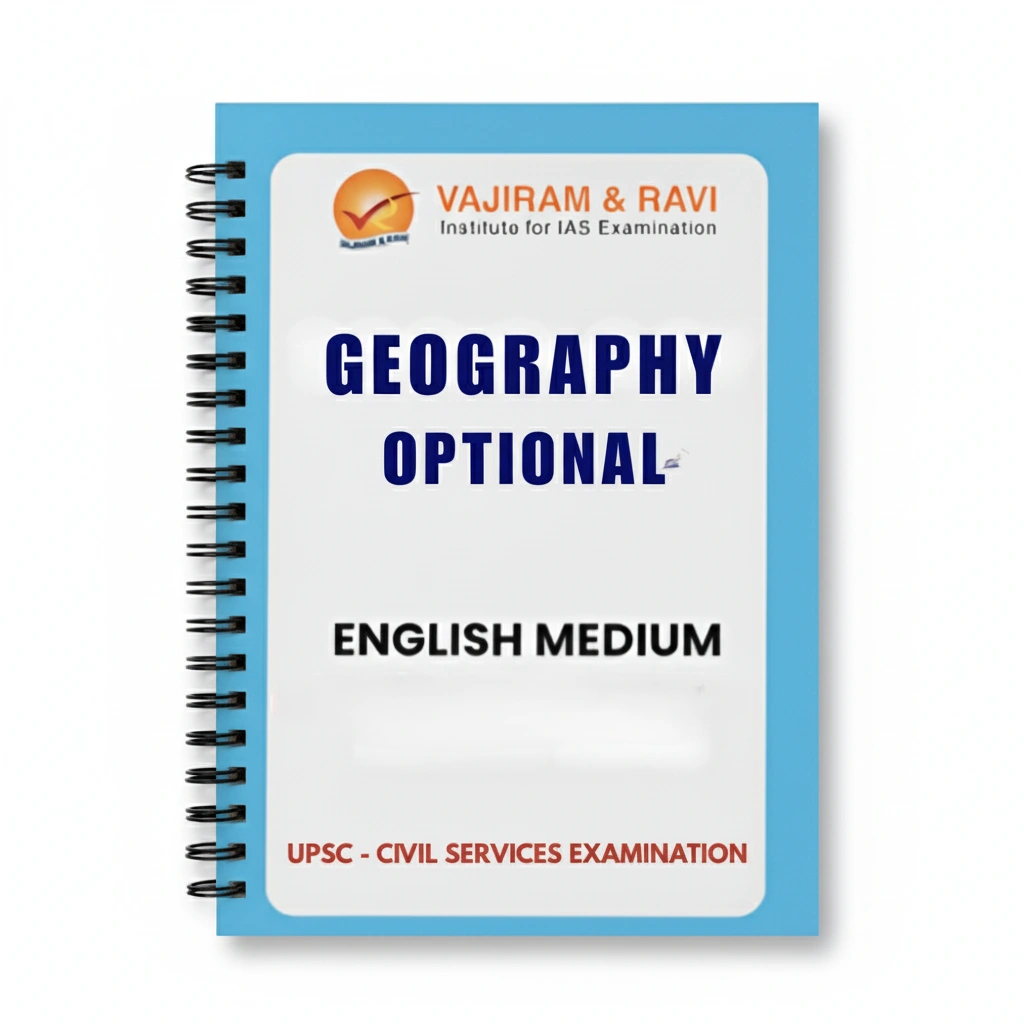
For Anthropology, diagram-driven revision is everything — the Brain Tree Anthropology notes are a compact, exam-oriented set. For Geography, pair a concept text with the map-and-diagram focused Vajiram Geography optional notes or Shabbir Sir’s Edukemy handwritten booklets. Public Administration aspirants can build around the Vajiram Public Administration notes, and Philosophy aspirants around the Mitra’s IAS Philosophy notes.
| Optional | Note-Set to Start With | Then Add |
|---|---|---|
| PSIR | Shubhra Ranjan / Rajesh Mishra (Hindi) | Monthly current affairs for IR |
| Sociology | SS Pandey / Vikash Ranjan | PYQ answer practice |
| Anthropology | Brain Tree | Diagram booklet + case studies |
| Geography | Vajiram / Shabbir Sir handwritten | Map practice + GS III linkage |
| Public Administration | Vajiram Public Administration | Governance current affairs |
| Philosophy | Mitra’s IAS | Ethics (GS IV) cross-linking |
Common Mistakes to Avoid When Picking an Optional
- Copying a topper’s optional without matching it to your own background and interest.
- Chasing “success rate” numbers from tiny expert pools (e.g. veterinary science) that do not apply to a general aspirant.
- Ignoring GS overlap and then studying two disconnected worlds under time pressure.
- Changing the optional mid-preparation — this resets 300+ hours; decide once, decisively.
- Picking a subject with poor material in your medium, then struggling to write quality answers.
- Underestimating answer-writing — content is necessary but the optional is won on structured, well-presented answers, not raw knowledge.
Is Sociology or Anthropology Better?
This is the most-searched head-to-head, so it deserves a direct verdict. Sociology is the better all-rounder — shorter, more intuitive, strong GS I/II and Essay overlap, ideal for beginners and non-science graduates. Anthropology is more factual and diagram-based with a marginally higher scoring ceiling and success rate, making it the sharper pick for engineers, doctors and science graduates who prefer concrete facts over open-ended argument. Neither is universally superior — match it to how you think and what you studied.
Final Verdict: The Best Optional Subject for UPSC in 2026
If you want the safest, most replicable choice for the average 2026 aspirant, pick Sociology — best-in-class for beginners, compact, and generous with GS overlap. If you are from a science or engineering background, Anthropology is your edge. If polity and international relations excite you, PSIR offers the highest ceiling with heavy GS II synergy. Whatever you choose, commit early, get quality printed notes, and pour your energy into answer writing — that, far more than the subject label, is what converts your optional into rank.
Frequently Asked Questions
Which is the most scoring optional subject for UPSC?
Anthropology, Sociology and PSIR are consistently among the most scoring, with toppers regularly crossing 320/500. For domain graduates, Commerce & Accountancy and Management also deliver high, predictable scores. There is no permanent “most scoring” subject — it depends on your command and answer-writing quality.
Which optional has the highest success rate in UPSC?
Niche technical subjects like Animal Husbandry & Veterinary Science and Management often show the highest percentages (~9–13%), but only because very small, expert pools attempt them. Among widely accessible optionals, Anthropology and Sociology offer the best success-rate-to-accessibility balance.
What is the easiest optional subject for UPSC?
Sociology and Philosophy are widely considered the easiest to start because of their short, concept-driven syllabi and abundant material. “Easy” is relative to your interest and background, though — a science graduate may find Anthropology easier than Sociology.
How do I choose the right optional subject for UPSC?
Filter each candidate through seven tests in order: genuine interest, academic aptitude, scoring predictability, GS overlap, resource availability, time in hand, and material quality in your medium. If a subject fails interest or aptitude, drop it — those two cannot be fixed with more books. Read one standard chapter and one topper’s answer copy before you commit.
How many marks is the optional subject in UPSC Mains?
The optional carries 500 marks — two papers of 250 marks each — which is about 28.5% of the 1750 counted Mains marks. It is the single largest scoring lever after the four GS papers combined.
Can I change my optional subject after applying for UPSC?
You cannot change it within a given attempt once the Mains form is finalised, but you may choose a different optional in a subsequent attempt. Because switching resets hundreds of study hours, decide carefully before you commit to your first serious preparation cycle.
Which optional subject has the most overlap with General Studies?
PSIR (feeds GS II and Essay) and Geography (feeds GS I and GS III) offer the maximum GS overlap for most aspirants, while Sociology overlaps GS I, GS II and Essay. High overlap lets you effectively study your optional and GS together, saving 150–200+ hours.
Is Sociology or Anthropology better as a UPSC optional?
Sociology is the better all-rounder — shorter, more intuitive and stronger on GS I/II and Essay overlap, so it suits beginners and non-science graduates. Anthropology is more factual and diagram-based with a slightly higher scoring ceiling and success rate, which favours engineers, doctors and science graduates. Choose by how you think and what you studied, not by reputation alone.
Can I take an optional subject unrelated to my graduation?
Yes. UPSC lets you pick any one optional from the official list regardless of your degree, so an engineer can take Sociology or a commerce graduate can take PSIR. Match the subject to your interest, aptitude and time rather than your academic label.
Is coaching necessary for the optional subject?
No — several optionals (Sociology, Philosophy, Public Administration, Anthropology) are genuinely self-study-friendly with good printed notes and disciplined answer practice. Coaching helps most for technical or answer-heavy optionals like Geography, History and Law, or when you need structured feedback on answer-writing.
Recommended Study Material
Continue Reading
UPSC CSAT Syllabus 2026: Full Topics, Pattern + PDF Download
The upsc csat syllabus for UPSC Prelims Paper II (CSAT) has seven official heads: comprehension; interpersonal and communication…
SSC CGL Preparation 2026: Plan, Books, Books & Strategy (Self-Study)
SSC CGL preparation in 2026 is entirely doable through disciplined self-study at home without coaching. In short: give…
JPSC Syllabus 2025: Prelims, Mains Pattern + PDF Download
The JPSC syllabus for 2025 covers the Combined Civil Services Examination (CCSE) across three stages: a Preliminary exam…