CTET Paper 1 Syllabus 2026: Subjects, Pattern + PDF
Complete CTET Paper 1 syllabus 2026 with subject-wise topics, exam pattern, NCERT Class 1-5 mapping, weightage, qualifying marks and PDF download.

The CTET Paper 1 syllabus covers five sections of 30 marks each — Child Development & Pedagogy, Language I, Language II, Mathematics and Environmental Studies (EVS) — for a total of 150 MCQs worth 150 marks in 2.5 hours, with no negative marking. CTET Paper 1 is for candidates who want to teach Classes I to V (primary level), and its content is closely aligned with NCERT textbooks of Class 1 to 5. To qualify you need 60% (90/150) if you are General and 55% (82/150) if you belong to a reserved category, and the certificate is valid for a lifetime.
This guide gives you the complete, section-wise CTET Paper 1 syllabus for 2026, an accurate exam pattern table, an NCERT chapter-by-chapter checklist (the part most pages skip), previous-year weightage trends, a realistic study plan, a Paper 1 vs Paper 2 comparison, and where to download the official PDF in English and Hindi. Whether you are a first-time aspirant or re-attempting, you will leave with a clear, examiner-accurate picture of exactly what to study. All figures below reflect the CBSE CTET Information Bulletin; always confirm against the live 2026 notification on ctet.nic.in.
CTET Paper 1 Syllabus 2026: Quick Overview
CTET (Central Teacher Eligibility Test) is conducted by the Central Board of Secondary Education (CBSE) to certify candidates as eligible to teach in Central Government schools (KVS, NVS, central Tibetan schools) and many state and private schools. Paper 1 is for the primary stage — Classes I to V. If you hold a D.El.Ed. or a B.El.Ed. and want to teach young learners, Paper 1 is the paper you sit for.
For the 2026 cycle, the structure of the CTET Paper 1 syllabus remains unchanged from the official CBSE CTET notification: the same five subjects, the same 30+30+30+30+30 mark split, the same 150-mark offline OMR format. There is no fundamental syllabus revision — what changes year to year is the difficulty balance and the framing of pedagogy questions, which now lean more on the NCF (National Curriculum Framework) and NEP 2020 ideas of competency-based, inclusive teaching. We flag exactly what to watch in the change-log section below.
| Particular | Detail (CTET Paper 1) |
|---|---|
| Conducting body | Central Board of Secondary Education (CBSE) |
| Level | Primary — Classes I to V |
| Number of sections | 5 (compulsory, no choice between sections) |
| Total questions | 150 MCQs |
| Total marks | 150 |
| Duration | 2 hours 30 minutes (150 minutes) |
| Mode | Offline / pen-paper / OMR sheet |
| Negative marking | None |
| Qualifying marks | 60% General / 55% reserved categories |
| Certificate validity | Lifetime |
| Languages of paper | English & Hindi (plus chosen Language I & II) |
CTET Paper 1 Exam Pattern 2026
Before the topics, fix the exam pattern in your head, because it dictates strategy. The CTET Paper 1 exam pattern is deliberately balanced — every one of the five sections carries equal weight, so you cannot ignore any subject and still clear the cut-off. There is one mark per question and, importantly, no negative marking, which means you should attempt all 150 questions.
| Section | No. of Questions | Marks | Nature |
|---|---|---|---|
| Child Development & Pedagogy (CDP) | 30 | 30 | Compulsory |
| Language I (medium of instruction) | 30 | 30 | Compulsory |
| Language II (different from Language I) | 30 | 30 | Compulsory |
| Mathematics | 30 | 30 | Compulsory |
| Environmental Studies (EVS) | 30 | 30 | Compulsory |
| Total | 150 | 150 | 2.5 hours |
A few accuracy notes, because competitor pages get these wrong: CTET is conducted in offline OMR mode, not online/computer-based — you darken bubbles on an answer sheet with a ball-point pen. All questions are objective MCQs with four options. There is no descriptive component. Because there is no negative marking, your raw attempt should be 150/150; never leave a question blank.
CTET 1st Paper Syllabus: For Primary Teachers (Section-Wise)
Now the heart of the matter — the CTET Paper 1 subject wise syllabus. Each of the five sections is examined in two layers: content (the actual subject knowledge a Class 1–5 teacher must have) and pedagogy (how children learn that subject and how it should be taught and assessed). Roughly half of the entire paper is pedagogy, which is why aspirants who only revise content underperform. Read each section below as a checklist.
1. Child Development & Pedagogy (30 Marks)
CDP is the highest-leverage section — it is pure pedagogy, the same theory underpins parts of the language and EVS pedagogy sub-sections, and it is the most scoring once understood. Around 15 questions test child development, 5 the concept of inclusive education, and 10 the learning and pedagogy theme. Core topics:
- Concept of development and its relationship with learning; principles of the development of children; influence of heredity and environment.
- Socialisation processes: social world and children (teacher, parents, peers).
- Piaget, Kohlberg and Vygotsky: constructs and critical perspectives — Piaget’s stages of cognitive development, Vygotsky’s social constructivism and Zone of Proximal Development (ZPD), Kohlberg’s stages of moral reasoning.
- Child-centred and progressive education; critical perspective on intelligence; multi-dimensional intelligence; language and thought.
- Gender as a social construct; gender roles, gender-bias and educational practice.
- Individual differences among learners; understanding differences based on diversity of language, caste, gender, community, religion.
- Distinction between assessment for learning and assessment of learning; School-Based Assessment; Continuous and Comprehensive Evaluation (CCE); constructing appropriate questions to assess readiness, enhance learning and critical thinking.
- Inclusive education: addressing learners from disadvantaged and deprived backgrounds; addressing children with learning difficulties; addressing the talented, creative, specially abled learners.
- Learning and pedagogy: how children think and learn; how and why they ‘fail’ to achieve success; basic processes of teaching and learning; alternative conceptions of learning; cognition and emotions; motivation and learning; factors contributing to learning — personal and environmental.
2. Language I (30 Marks)
Language I is the medium of instruction you intend to teach in — you must be fluent and grammatically strong in it. It carries roughly 15 marks of comprehension (unseen prose/poetry passages with questions on inference, grammar and verbal ability) and 15 marks of language pedagogy. Topics:
- Reading comprehension: two unseen passages (one prose or drama, one poem) with questions on comprehension, inference, grammar and verbal ability.
- Pedagogy of language development: learning and acquisition; principles of language teaching; role of listening and speaking; function of language and how children use it as a tool.
- Critical perspective on the role of grammar in learning a language for communicating ideas verbally and in written form.
- Challenges of teaching language in a diverse classroom; language difficulties, errors and disorders.
- Language skills; evaluating language comprehension and proficiency: speaking, listening, reading and writing.
- Teaching-learning materials: textbook, multi-media materials, multilingual resource of the classroom; remedial teaching.
3. Language II (30 Marks)
Language II must be different from Language I and tests your ability to function in a second language — for most candidates this is English (when Language I is Hindi/a regional language) or Hindi (when Language I is English). The 30 marks again split into comprehension and pedagogy, but here the comprehension uses two unseen discursive/prose passages (no poem is mandatory) testing comprehension, grammar and verbal ability. The pedagogy portion mirrors Language I: learning and acquisition, principles of language teaching, role of listening and speaking, the role of grammar, classroom diversity, language skills, evaluation of proficiency, and teaching-learning materials including remedial teaching.
4. Mathematics (30 Marks)
Mathematics for Paper 1 is pitched at the level a primary teacher must master — it is Class 1–5 arithmetic and geometry, not high-school math. The split is about 15 content marks and 15 pedagogy marks. Content topics:
- Geometry: shapes and spatial understanding; solids around us.
- Numbers: counting, place value, operations (addition, subtraction, multiplication, division).
- Addition and subtraction; multiplication; division — word problems and number sense.
- Measurement; weight; time; volume/capacity.
- Data handling; patterns; money.
Pedagogical issues in Mathematics:
- Nature of Mathematics / logical thinking; understanding children’s thinking and reasoning patterns and strategies of making meaning and learning.
- Place of Mathematics in the curriculum; language of Mathematics.
- Community Mathematics; evaluation through formal and informal methods.
- Problems of teaching; error analysis and related aspects of learning and teaching; diagnostic and remedial teaching.
5. Environmental Studies / EVS (30 Marks)
EVS is the section most aligned with NCERT — the Class 3, 4 and 5 EVS textbooks (“Looking Around”) are practically the source material. It splits into roughly 15 content marks across six themes and around 9–12 pedagogy marks. Content themes:
- Family and Friends: relationships, work and play, animals, plants.
- Food — sources, components, cooking, food habits.
- Shelter — houses, materials, building.
- Water — sources, uses, conservation, scarcity.
- Travel — modes of transport, journeys, maps and directions.
- Things We Make and Do — work, occupations, tools, crafts.
EVS pedagogical issues:
- Concept and scope of EVS; significance of EVS, integrated EVS.
- Environmental Studies & Environmental Education; learning principles; scope & relation to Science and Social Science.
- Approaches to presenting concepts; activities; experimentation/practical work; discussion.
- CCE; teaching material/aids; problems faced while teaching EVS.
CTET Paper 1 Subject-Wise Syllabus Mapped to NCERT (Class 1–5) Checklist
This is the gap almost every ranking page leaves open: they list themes but never tell you which exact NCERT books and chapters to open. Because CTET questions are NCERT-pegged, this table turns the syllabus into a study list you can tick off. Treat it as your topic-by-topic checklist.
| Section | Primary NCERT source (Class 1–5) | What to focus on |
|---|---|---|
| Mathematics | Math-Magic Class 1, 2, 3, 4, 5 | Number operations, place value, fractions, shapes, measurement, money, patterns, data handling |
| EVS | Looking Around (EVS) Class 3, 4, 5 | All six themes — family, food, shelter, water, travel, things we make/do |
| Language I & II (English) | Marigold / Raindrops Class 1–5 | Comprehension, grammar, parts of speech, tenses, vocabulary |
| Language I & II (Hindi) | Rimjhim Class 1–5 | Apathit gadyansh, vyakaran, sandhi, samas, muhavare |
| CDP / Pedagogy | NCERT B.Ed. / D.El.Ed. foundation texts + NCF 2005 & NEP 2020 ideas | Developmental theories, inclusive education, assessment, learning |
Practical tip: a primary teacher’s content is fully covered by NCERT Class 1–5; you do not need advanced books for content. Your real differentiator is pedagogy and reasoning. For aspirants who are simultaneously building a strong school-level conceptual base, structured material such as AAKASH Class 10 study material can sharpen the foundational reasoning that underlies primary-level Mathematics and EVS framing.
CTET Paper 1 Maths and EVS Syllabus: Where Marks Actually Come From
Because Mathematics and EVS together are 60 of the 150 marks and are the most NCERT-predictable, they are where disciplined aspirants build their cushion above the cut-off. In Mathematics, the content half rewards speed and accuracy on Class 3–5 arithmetic, while the pedagogy half rewards understanding of error analysis — recognising why a child made a mistake (e.g., place-value confusion) rather than just marking it wrong. In EVS, the content half is straight recall and inference from the “Looking Around” themes, and the pedagogy half tests the integrated, activity-based EVS approach. Master both halves of these two subjects and you only need to clear, not dominate, the language and CDP sections.
CTET Paper 1 Section-Wise Weightage & Previous-Year Trends
The official split is 30 marks per section, but within each section, previous-year analysis shows a consistent internal weightage. Knowing which topics repeat lets you sequence revision intelligently — another gap in thin SEO pages.
| Section | Approx. content marks | Approx. pedagogy marks | High-frequency repeat topics |
|---|---|---|---|
| CDP | 0 (all pedagogy) | 30 | Piaget & Vygotsky, inclusive education, assessment vs evaluation, motivation |
| Language I | ~15 (comprehension) | ~15 | Inference questions, grammar in context, language acquisition vs learning |
| Language II | ~15 (comprehension) | ~15 | Discursive passage inference, role of grammar, remedial teaching |
| Mathematics | ~15 | ~15 | Number operations, fractions, geometry; error analysis, nature of maths |
| EVS | ~17 | ~13 | Family/food/water themes; integrated EVS, CCE, activity method |
Trend takeaway: roughly half the entire paper (about 75 marks — all of CDP plus the pedagogy halves) is pedagogy. That is why pedagogy, not content, decides who clears CTET Paper 1.
CTET Paper 1 Syllabus 2026 PDF Download (English + Hindi)
The most reliable, examiner-accurate CTET Paper 1 syllabus PDF is the one inside the official CBSE CTET Information Bulletin published at ctet.nic.in. To get the official ctet paper 1 syllabus PDF download in both English and Hindi:
- Visit the official CTET website (ctet.nic.in) when the 2026 notification is live.
- Open the “Information Bulletin / Syllabus” link — the bulletin contains the bilingual (English + Hindi) Paper 1 syllabus as an annexure.
- Download and save it; the syllabus annexure is the same document that defines what we have listed above.
Always cross-check any third-party PDF against the official bulletin, because the only authoritative source for the ctet paper 1 syllabus 2026 is the CBSE notification itself. Bookmark our blog and the official link so you compare like-for-like.
How to Use the CTET Syllabus for Study: A Realistic Paper 1 Plan
A syllabus is only useful if it becomes a timetable. Here is a practical 8-week CTET Paper 1 study plan that allocates time by weightage and difficulty, not equally — another point competitor pages handle weakly.
| Phase | Weeks | Focus | Daily target |
|---|---|---|---|
| Foundation | 1–2 | CDP theories (Piaget/Vygotsky/Kohlberg) + NCERT Math-Magic Class 3–5 | 3–4 hrs: 1 hr CDP, 1 hr Maths, rest revision |
| Content build | 3–4 | EVS “Looking Around” themes + Language I & II grammar | EVS theme/day + grammar drills + 1 CDP topic |
| Pedagogy deep-dive | 5–6 | All pedagogy sub-sections (language, maths, EVS) + assessment/CCE | Pedagogy notes + 30 MCQs/day |
| Test & revise | 7–8 | Full-length mocks + previous-year papers + error log | 1 mock every alternate day + analysis |
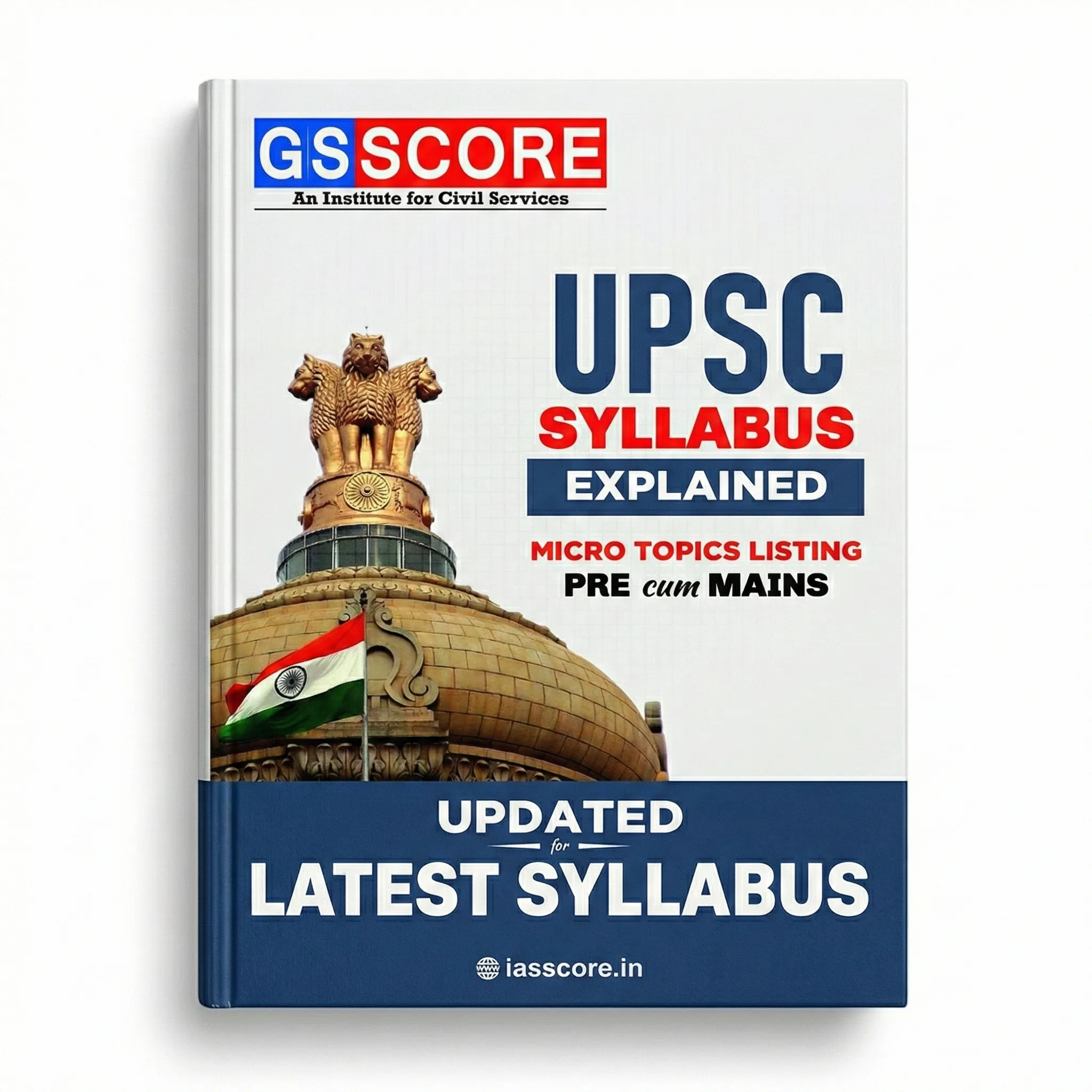
Three habits that move the needle: (1) attempt at least 8–10 full-length mocks in OMR style so the 150-minute pacing becomes automatic; (2) maintain an error log of every pedagogy question you miss, grouped by concept; (3) revise NCERT Class 1–5 content twice rather than reading thick guidebooks once. Disciplined syllabus-mapped revision beats volume. The same syllabus-first discipline is exactly how serious aspirants approach larger exams — structured booklets like the GS Score Latest Syllabus Booklet show how breaking an official syllabus into trackable units accelerates preparation.
Which Language Should I Choose for CTET Paper 1 (Language I & II)?
Language choice is the single most under-explained mechanic on competitor pages, yet it directly affects your score. CBSE allows you to pick Language I and Language II from a list of 20 languages, and they must be two different languages. Language I is assessed for the proficiency required to teach in it (medium of instruction); Language II is assessed as a second language.
| The 20 CTET languages |
|---|
| English, Hindi, Assamese, Bengali, Garo, Gujarati, Kannada, Khasi, Malayalam, Manipuri, Marathi, Mizo, Nepali, Oriya, Punjabi, Sanskrit, Tamil, Telugu, Tibetan, Urdu |
How to choose strategically:
- Pick as Language I the language you are most fluent in and intend to teach in — usually your mother tongue or the school medium — because it tests deeper proficiency.
- Pick as Language II the language you are second-strongest in. For most candidates this is English or Hindi, both of which have abundant practice material and predictable grammar patterns.
- Easiest to score: for fluent speakers, choosing your mother tongue as Language I and English/Hindi as Language II maximises marks, because comprehension passages feel natural and grammar pedagogy questions are easier when you genuinely think in the language.
- Avoid choosing two languages you are only moderately comfortable in just because “more material exists” — fluency beats familiarity here.
Remember: the school/state you target may require a specific language as the medium of instruction, so verify their requirement before locking your choice in the application form.
Pedagogy Made Practical: Sample CTET Paper 1 Questions
Since about half the paper is pedagogy and aspirants find it the hardest, here are model questions with reasoning — the kind of practical guidance most pages omit.
CDP sample: “A child who can solve a problem with a teacher’s hint but not alone is operating in their ___.” Answer: Zone of Proximal Development (ZPD) — Vygotsky’s idea that learning happens just ahead of independent ability, with scaffolding. Recognising the keyword “with help” points you to ZPD.
Maths pedagogy (error analysis) sample: “A child writes 27 + 5 = 77. The error indicates the child has not understood ___.” Answer: place value / regrouping — the child added 5 to the tens digit. Error analysis questions reward diagnosing the misconception, not just labelling the answer wrong.
EVS pedagogy sample: “The best way to teach the theme ‘Water’ to Class 4 is to ___.” Answer: use an activity/discussion-based, integrated approach (observe local water sources, discuss conservation) rather than rote definitions — reflecting the integrated, child-centred EVS philosophy.
The pattern across all three: pedagogy questions test whether you can apply a learning theory to a classroom scene. Practise by reasoning through scenarios, not memorising definitions.
CTET Paper 1 vs Paper 2 Syllabus: Which Should You Attempt?
Many candidates ask whether to sit Paper 1, Paper 2, or both. The decision is governed by the class you want to teach. Paper 1 qualifies you for Classes I–V; Paper 2 qualifies you for Classes VI–VIII. You can — and many do — attempt both to widen eligibility (Classes I–VIII).
| Feature | CTET Paper 1 (Primary) | CTET Paper 2 (Upper Primary) |
|---|---|---|
| Teaches | Classes I–V | Classes VI–VIII |
| Total marks/questions | 150 / 150 | 150 / 150 |
| CDP | 30 (compulsory) | 30 (compulsory) |
| Language I & II | 30 + 30 (compulsory) | 30 + 30 (compulsory) |
| Mathematics & EVS | 30 + 30 (both compulsory) | Replaced by a 60-mark choice below |
| Maths & Science / Social Studies | Not applicable | Maths & Science (60) OR Social Studies (60) — candidate chooses |
| Duration | 2.5 hours | 2.5 hours |
Which subjects are in Paper 1 but not Paper 2? Environmental Studies (EVS) as a standalone 30-mark section is unique to Paper 1. In Paper 2, EVS is absorbed into the Maths & Science or Social Studies stream and there is no general EVS section. Mathematics also appears in both, but at the primary (Class 1–5) level in Paper 1 versus the upper-primary level in Paper 2. So if you are deciding, EVS mastery is a Paper 1–specific investment.
CTET Paper 2 Syllabus 2026: For Upper Primary Teachers (Quick Reference)
For completeness: CTET Paper 2 also has CDP (30) and Language I & II (30 each), but then offers a 60-mark elective. Maths & Science teachers take a combined Mathematics Section (algebra, geometry, mensuration, data handling + pedagogy) and a Science Section (food, materials, the world of the living, moving things, natural phenomena, natural resources + science pedagogy). Social Studies/Humanities teachers instead take History, Geography, Social and Political Life, plus pedagogy. If you also plan to teach Classes VI–VIII, prepare both papers — the CDP and language portions overlap, so the extra load is mainly the subject elective.
Qualifying Marks & Certificate Validity
To be declared CTET-qualified, you must score the minimum percentage across the whole 150-mark paper (there is no separate sectional cut-off in CTET, though some recruiting bodies later prefer higher sectional balance).
| Category | Minimum % | Marks (out of 150) |
|---|---|---|
| General / Unreserved | 60% | 90 |
| OBC / SC / ST / PwD | 55% (as per CBSE/state relaxation) | 82 |
Two important facts: there is no negative marking, so the cut-off is your only hurdle — attempt every question. And the CTET certificate is now valid for a lifetime (CBSE removed the earlier 7-year limit), so clearing once is a permanent eligibility credential. Clearing CTET does not by itself guarantee a job; it is an eligibility test, after which you apply to KVS, NVS, state and private school recruitments.
Study Material & Best Resources for CTET Paper 1
Curate, don’t accumulate. The most efficient CTET Paper 1 resource stack is small:
- Content: NCERT Math-Magic (Class 1–5), “Looking Around” EVS (Class 3–5), and your chosen-language NCERT readers (Marigold/Rimjhim).
- Pedagogy & CDP: a standard CTET CDP guide built around Piaget, Vygotsky, Kohlberg, inclusive education and CCE, supplemented with NCF 2005 and NEP 2020 summaries.
- Practice: previous-year CTET papers (at least the last 5 sittings) and 8–10 full-length mock tests in OMR format.
- Revision: a syllabus-mapped checklist (the NCERT table above) you physically tick off.
If you are an aspirant who also prepares for competitive government exams alongside teaching eligibility, the same printed-booklet, syllabus-first method works across the board — the way Competer prints structured material such as the GS Score Syllabus Booklet for UPSC, or school-level study material for foundational concepts, mirrors how you should organise your CTET prep: one source per topic, revised twice, tracked against the official syllabus.
Important Tips for CTET Success & Mistakes to Avoid
Do this:
- Anchor every content topic to the exact NCERT Class 1–5 chapter — don’t study above the primary level.
- Treat pedagogy as application: practise scenario questions, build an error log.
- Take timed OMR mocks so 150 questions in 150 minutes becomes second nature.
- Attempt all 150 questions — no negative marking means no blanks.
- Choose Language I & II by genuine fluency, not by availability of material.
Avoid this:
- Over-studying content and neglecting pedagogy — pedagogy is roughly half the paper.
- Using thick competitive-exam math books — Paper 1 math is primary level.
- Trusting random third-party PDFs over the official CBSE bulletin.
- Skipping previous-year papers — repeat-frequency in CDP and EVS pedagogy is high.
- Leaving Language II weak because it “feels easy” — grammar pedagogy questions catch the unprepared.
2026 Change-Log: What’s New (and What Isn’t)
For transparency, here is the honest 2026 status: the structural CTET Paper 1 syllabus has not been overhauled — five sections, 30 marks each, 150 total, offline OMR, no negative marking, lifetime validity all remain. What has gradually shifted, and what you should expect in 2026, is the framing of pedagogy and language questions toward NEP 2020 and NCF ideas: competency-based assessment, foundational literacy and numeracy (FLN / NIPUN Bharat), inclusive and activity-based learning. Treat these themes as the modern vocabulary your pedagogy answers should reflect. Always confirm the final 2026 syllabus and pattern against the official CBSE CTET notification when it releases on ctet.nic.in.
After Passing the CTET
Qualifying CTET is the eligibility gate, not the destination. With a lifetime-valid certificate in hand, your next steps are to apply to recruitment drives where CTET is required or preferred — Kendriya Vidyalaya Sangathan (KVS), Navodaya Vidyalaya Samiti (NVS), central government schools, and numerous state government and private schools. Many states also conduct their own TET; a CTET pass strengthens applications nationwide. Keep your score card and certificate safe, and target recruitments that match your Paper 1 (primary, Classes I–V) eligibility.
Frequently Asked Questions
What is the syllabus for CTET Paper 1?
The CTET Paper 1 syllabus has five compulsory sections of 30 marks each: Child Development & Pedagogy, Language I, Language II, Mathematics and Environmental Studies (EVS). Each subject is tested on both content and pedagogy, aligned with NCERT Class 1 to 5, for a total of 150 marks.
How many subjects or sections are there in CTET Paper 1?
There are five sections in CTET Paper 1 — CDP, Language I, Language II, Mathematics and EVS — all compulsory, each carrying 30 questions and 30 marks, totalling 150 questions and 150 marks.
Is there negative marking in CTET Paper 1?
No. CTET Paper 1 has no negative marking. Every question carries one mark and wrong answers are not penalised, so you should attempt all 150 questions.
What are the qualifying marks for CTET Paper 1?
General/unreserved candidates need 60% (90 out of 150). OBC, SC, ST and PwD candidates need 55% (82 out of 150), as per CBSE and applicable state relaxations. The certificate is valid for a lifetime.
Is CTET Paper 1 based on NCERT books?
Yes. CTET Paper 1 content is closely aligned with NCERT textbooks of Classes 1 to 5 — Math-Magic for Mathematics, “Looking Around” for EVS, and Marigold/Rimjhim for languages — making NCERT revision the most efficient preparation route.
How many questions come from Child Development and Pedagogy in CTET Paper 1?
Child Development & Pedagogy (CDP) carries 30 questions and 30 marks in CTET Paper 1. It is entirely pedagogy-based, covering developmental theories (Piaget, Vygotsky, Kohlberg), inclusive education, learning and assessment.
Which subjects are in CTET Paper 1 but not in Paper 2?
Environmental Studies (EVS) as a standalone 30-mark section is unique to CTET Paper 1. In Paper 2 there is no general EVS section — it is absorbed into the Maths & Science or Social Studies elective. Mathematics appears in both papers but at the primary (Class 1–5) level in Paper 1.
Which language should I choose for CTET Paper 1 (Language I and II)?
Choose from the 20 CTET languages, with Language I and Language II being different. Pick the language you are most fluent in and will teach in as Language I (it tests deeper proficiency), and your second-strongest — usually English or Hindi — as Language II. Fluency matters more than how much practice material exists.
Recommended Study Material
![AAKASH [2024 Ed.] Latest Study Material for Class 10](https://competer.in/wp-content/uploads/2025/03/WhatsAppImage2024-05-07at6.43.29PM.jpg)
Continue Reading
SSC CGL Exam Pattern 2026: Tier 1 & 2, Marks, Timing
The SSC CGL exam pattern is a two-tier, fully computer-based (CBT) selection process: Tier 1 is a 100-question,…

NCERT Books for NEET 2026: Subject-Wise List + PDF
The NCERT books for NEET are the 6 core NCERT science textbooks — Biology, Physics and Chemistry for…

Geography Optional Syllabus 2026: Paper 1 & 2 + PDF
The geography optional syllabus for UPSC has two papers of 250 marks each (500 total), each written in…