CTET Paper 1 Syllabus 2026: Subject-Wise + PDF
Complete CTET Paper 1 syllabus 2026 — subject-wise topics, exam pattern, weightage, Hindi coverage, best books, checklist & PDF download for primary (Class 1-5) teachers.

The ctet paper 1 syllabus is for candidates who want to teach Classes I to V (primary level) and covers five compulsory sections — Child Development & Pedagogy, Language I, Language II, Mathematics, and Environmental Studies — each worth 30 marks. In short: the paper has 150 multiple-choice questions for 150 marks, must be completed in 2.5 hours, is conducted in online (CBT) mode, and carries no negative marking. This guide breaks down every section topic-by-topic and adds a downloadable checklist, section-level weightage, a Hindi-medium map, a best-books plan, and an 8-week timeline so a primary-teacher aspirant can prepare with zero guesswork. Everything below follows the structure CBSE publishes in the official CTET Information Bulletin, which you should cross-check against the latest notification before your attempt.
CTET Paper 1 Syllabus 2026: Quick Overview
The Central Teacher Eligibility Test (CTET) is conducted by the Central Board of Secondary Education (CBSE). Paper 1 is the qualifying test for anyone who wishes to teach at the primary stage — Classes 1 to 5. If you plan to teach Classes 6 to 8 instead, you sit for Paper 2; if you want eligibility for both stages, you appear for both papers. The ctet paper 1 syllabus 2026 has stayed structurally stable, so last year’s preparation material remains valid, but you should always cross-check topics against the latest official notification before your attempt.
Five sections make up Paper 1, and all five are compulsory — there is no optional section and no internal choice. The single biggest strategic point most aspirants miss is this: Child Development & Pedagogy plus the pedagogy portions of Maths and EVS together decide roughly half your paper. So a candidate strong only in “content” but weak in “pedagogy” almost always underperforms.
CTET Paper 1 Exam Pattern 2026
Before diving into topics, lock in the CTET Paper 1 exam pattern. Every section carries equal weight — 30 questions and 30 marks — which means no single subject can be safely ignored.
| Section | No. of Questions | Marks |
|---|---|---|
| Child Development & Pedagogy | 30 | 30 |
| Language I (medium of instruction) | 30 | 30 |
| Language II | 30 | 30 |
| Mathematics | 30 | 30 |
| Environmental Studies (EVS) | 30 | 30 |
| Total | 150 | 150 |
Key exam-day facts every candidate should memorise:
- Mode: Computer-Based Test (CBT / online).
- Question type: Objective multiple-choice questions (MCQs) with four options and one correct answer.
- Duration: 150 minutes (2 hours 30 minutes).
- Negative marking: None — there is no deduction for a wrong answer, so attempt all 150 questions.
- Difficulty benchmark: Questions are pitched at the nature and standard of what a primary teacher must know, not at a very advanced conceptual level.
- Validity: The CTET certificate is now valid for a lifetime.
Because there is no negative marking, your attempt rate should be 150/150. Even educated guesses have positive expected value — never leave a question blank.
What Is the Syllabus of CTET Paper 1? (Subject-Wise)
Here is the high-level map of the ctet paper 1 subject wise syllabus. Each row below is expanded into its own section later in this guide.
| Section | Core Focus | Standard / Level |
|---|---|---|
| Child Development & Pedagogy | How children aged 6-11 learn; teaching-learning theories; inclusive education; assessment | Concept + application |
| Language I | Reading comprehension + pedagogy of language development (in your medium of instruction) | Proficiency level |
| Language II | Comprehension, grammar and language pedagogy in a second language | Proficiency level |
| Mathematics | Number system, geometry, measurement + pedagogy of mathematics | Up to Class 5 (NCERT) |
| Environmental Studies | Family, food, shelter, water, travel, things we make/do + EVS pedagogy | Up to Class 5 (NCERT) |
Child Development and Pedagogy Syllabus (30 Marks)
This is the make-or-break section. It tests whether you understand how a primary-age child thinks, learns, and can be assessed. The 30 questions typically split across three broad blocks.
a) Child Development (Primary School Child)
- Concept of development and its relationship with learning
- Principles of the development of children
- Influence of heredity and environment
- Socialisation processes: society and children
- Piaget, Kohlberg and Vygotsky — constructs and critical perspectives
- Concepts of child-centred and progressive education
- Critical perspective on the construct of intelligence; multi-dimensional intelligence
- Language and thought
- Gender as a social construct; gender roles, gender-bias and educational practice
- Individual differences among learners; understanding differences based on diversity of language, caste, gender, community, religion
- Distinction between assessment for learning and assessment of learning; School-Based Assessment, Continuous & Comprehensive Evaluation
- Formulating appropriate questions for assessing readiness levels; enhancing learning and critical thinking
b) Concept of Inclusive Education and Understanding Children with Special Needs
- Addressing learners from diverse backgrounds, including disadvantaged and deprived groups
- Addressing the needs of children with learning difficulties, impairment etc.
- Addressing the talented, creative, and specially-abled learners
c) Learning and Pedagogy
- How children think and learn; how and why they “fail” to achieve success
- Basic processes of teaching and learning; children’s strategies of learning as a social activity
- Alternative conceptions of learning in children; child as a problem-solver and a “scientific investigator”
- Cognition and emotions; motivation and learning
- Factors contributing to learning — personal and environmental
Language I and Language II Syllabus (30 + 30 Marks)
Language I is your chosen medium of instruction and tests proficiency; Language II tests a second language. Both sections mix unseen comprehension passages with pedagogy of language development. You must choose two different languages from the official list.
| Component | Language I (30 Q) | Language II (30 Q) |
|---|---|---|
| Comprehension | Two passages (prose/drama/poem) with questions on comprehension, inference, grammar and verbal ability | Two passages (one prose/factual + one discursive/literary) with comprehension, inference and grammar |
| Pedagogy of Language | Learning & acquisition, principles of language teaching, role of listening & speaking, language skills, evaluating proficiency, teaching-learning materials, remedial teaching | Same pedagogy focus, applied to the second language |
| Split (approx.) | 15 comprehension + 15 pedagogy | 15 comprehension + 15 pedagogy |
Eligible language options include: Hindi, English, Sanskrit, Assamese, Bengali, Garo, Gujarati, Kannada, Khasi, Malayalam, Manipuri, Marathi, Mizo, Nepali, Oriya, Punjabi, Tamil, Telugu, Tibetan, Urdu, and other notified regional languages. Confirm the exact list in the current official notification, as available options can be updated.
CTET Paper 1 Maths and EVS Syllabus (Content + Pedagogy)
The ctet paper 1 maths and evs syllabus is where the “content vs pedagogy” split becomes explicit — each of these two sections divides its 30 marks between subject content and how to teach that content.
Mathematics (30 Marks)
| Content Topics (~15 Q) | Pedagogical Issues (~15 Q) |
|---|---|
| Geometry; shapes & spatial understanding; solids around us | Nature of mathematics / logical thinking |
| Numbers; addition & subtraction; multiplication; division | Place of mathematics in the curriculum |
| Measurement; weight; time; volume/capacity | Language of mathematics; community mathematics |
| Data handling; patterns; money | Evaluation through formal and informal methods |
| — | Problems of teaching; error analysis; diagnostic and remedial teaching |
Environmental Studies (30 Marks)
| Content Themes (~15 Q) | Pedagogical Issues (~15 Q) |
|---|---|
| Family and Friends (relationships, work & play, animals, plants) | Concept and scope of EVS; significance of EVS (integrated approach) |
| Food | Environmental Studies & Environmental Education |
| Shelter | Learning principles; scope & relation to Science and Social Science |
| Water | Approaches to presenting concepts; activities; experimentation / practical work |
| Travel | Discussion; CCE; teaching material / aids; problems |
| Things We Make and Do | — |
Content vs Pedagogy: How to Study Each Differently
Most CTET Paper 1 candidates study “the subject” as one block and get blindsided in the exam. In reality, content and pedagogy questions demand different preparation:
- Content questions test what a Class 1-5 topic actually is — e.g. solving a division sum, identifying a shape, or naming a food source. Study route: read NCERT Class 3-5 Maths and EVS textbooks cover to cover and solve every in-text exercise.
- Pedagogy questions test how you would teach or assess that topic — e.g. how to diagnose why a child makes a subtraction error, or which activity best introduces the water cycle. Study route: read a dedicated pedagogy/child-development book and practise application-based MCQs rather than memorising definitions.
A practical rule: if a question begins with “A teacher…”, “The best way to…”, “A child who…”, or “To assess…”, it is almost always a pedagogy question and the answer that is most child-centred, activity-based and non-punitive is usually correct.
Sub-Topic Weightage: Where the Marks Actually Come From
Top-ranking pages rarely break weightage below the section level. Based on trends across recent CTET papers, here is an indicative distribution of the 30 Child Development & Pedagogy questions — use it to prioritise, not as a guarantee.
| CDP Sub-Area | Indicative Questions | Priority |
|---|---|---|
| Learning theories & theorists (Piaget, Vygotsky, Kohlberg) | 4-6 | High |
| Assessment, CCE & evaluation | 3-5 | High |
| Inclusive education & special needs | 3-4 | Medium-High |
| Motivation, cognition & learning | 3-4 | Medium |
| Individual differences, gender, socialisation | 3-4 | Medium |
| Concept of development & principles | 2-3 | Medium |
The takeaway: theorists and assessment together can fetch 7-11 marks in a single section. Aspirants who “revised inclusion but skipped Piaget” leave easy marks on the table. Similar logic applies within Maths and EVS, where roughly half the questions are pedagogy — so a candidate who is a strong arithmetic solver but ignores “error analysis” and “diagnostic teaching” caps their own score.
CTET Paper 1 Syllabus PDF Download (English + Hindi)
You can get the official ctet paper 1 syllabus pdf download straight from the source. The CBSE releases the syllabus inside the CTET Information Bulletin, and it is bilingual.
How to download the CTET Paper 1 syllabus PDF:
- Visit the official CTET portal, ctet.nic.in.
- Open the latest CTET Information Bulletin / notification link on the homepage.
- Scroll to the “Syllabus and Structure of Question Papers” section for Paper 1.
- Use the browser’s save/print option to store the pages as a PDF, or download the full bulletin.
- For the ctet paper 1 syllabus in hindi, choose the Hindi bulletin or the bilingual pages, which carry the same content in Devanagari.
Because the official bulletin is prose-heavy, we recommend converting it into the tick-box checklist below so you can track coverage while studying.
Downloadable Topic-by-Topic Study Checklist
This is the tracker most CTET pages don’t give you. Copy it into a document, print it, and tick each topic as you finish. “C” = content, “P” = pedagogy.
| Section | Checklist Items | Type |
|---|---|---|
| CDP | Piaget stages ▢ · Vygotsky (ZPD, scaffolding) ▢ · Kohlberg ▢ · Heredity vs environment ▢ · Multiple intelligence ▢ · Gender as construct ▢ · Individual differences ▢ · Inclusive education ▢ · Special needs ▢ · CCE & assessment ▢ · Motivation ▢ | P |
| Language I | Comprehension practice ▢ · Grammar & verbal ability ▢ · Language acquisition vs learning ▢ · Listening/speaking skills ▢ · Remedial teaching ▢ · Teaching-learning material ▢ | C+P |
| Language II | Prose passage ▢ · Discursive passage ▢ · Grammar ▢ · Principles of language teaching ▢ · Evaluating proficiency ▢ | C+P |
| Maths | Numbers & four operations ▢ · Geometry & shapes ▢ · Measurement ▢ · Time/money/data ▢ · Nature of maths ▢ · Error analysis ▢ · Diagnostic & remedial ▢ | C+P |
| EVS | Family & friends ▢ · Food ▢ · Shelter ▢ · Water ▢ · Travel ▢ · Things we make & do ▢ · Concept & scope of EVS ▢ · CCE in EVS ▢ | C+P |
CTET Paper 1 Syllabus in Hindi (हिंदी में)
Hindi-medium aspirants are usually under-served, so here is the section map in Hindi to make the ctet paper 1 syllabus in hindi practical to use:
| खंड (Section) | मुख्य विषय (Main Topics) | अंक |
|---|---|---|
| बाल विकास एवं शिक्षाशास्त्र | बाल विकास, सीखना और शिक्षण, समावेशी शिक्षा, आकलन (पियाजे, वायगोत्स्की, कोहलबर्ग) | 30 |
| भाषा – I | अपठित गद्यांश/पद्यांश, व्याकरण, भाषा विकास का शिक्षाशास्त्र | 30 |
| भाषा – II | अपठित गद्यांश, व्याकरण, भाषा शिक्षण के सिद्धांत | 30 |
| गणित | संख्याएँ, ज्यामिति, माप, आँकड़े + गणित शिक्षाशास्त्र | 30 |
| पर्यावरण अध्ययन (EVS) | परिवार, भोजन, आवास, पानी, यात्रा, हम चीज़ें कैसे बनाते हैं + EVS शिक्षाशास्त्र | 30 |
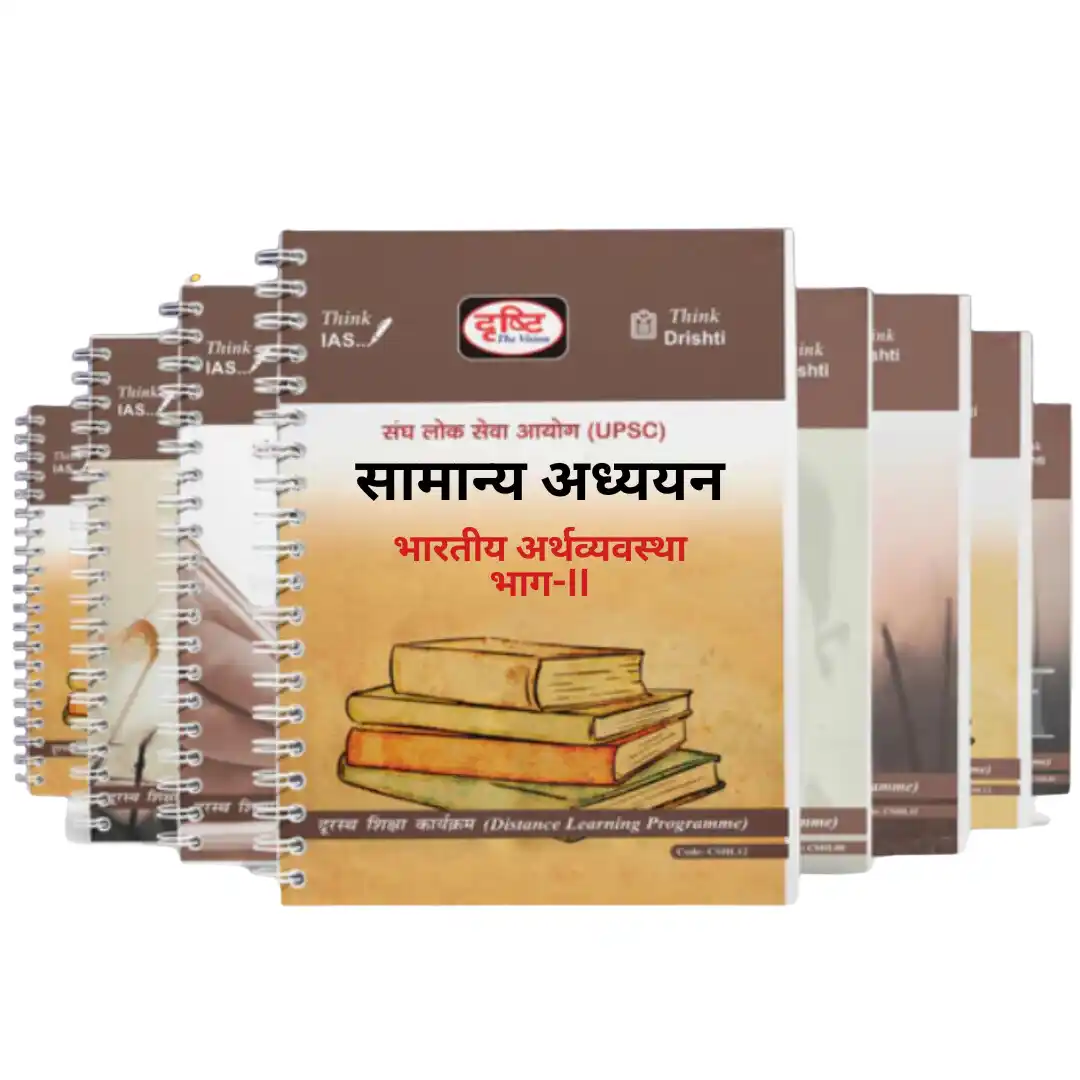
Hindi-medium candidates often benefit from building a disciplined, notes-driven revision habit — the same structured, booklet-based approach seen in serious competitive-exam prep like Drishti IAS Hindi study material — where every topic is written out in clean Devanagari before moving to MCQs. The principle transfers directly to CTET: read the concept in Hindi, write a one-line summary, then solve questions.
CTET Paper 1 vs Paper 2: Which Should You Take?
Candidates unsure of which paper to pick can use this side-by-side comparison. Choose based on the class level you want to teach.
| Feature | Paper 1 | Paper 2 |
|---|---|---|
| Teaching level | Classes 1 to 5 (primary) | Classes 6 to 8 (upper primary) |
| Total questions / marks | 150 / 150 | 150 / 150 |
| Compulsory sections | CDP, Lang I, Lang II, Maths, EVS | CDP, Lang I, Lang II + (Maths & Science OR Social Studies) |
| Subject choice | No subject choice (EVS fixed) | Choose Maths/Science or Social Studies stream |
| Duration | 2.5 hours | 2.5 hours |
| Negative marking | No | No |
Which is easier, CTET Paper 1 or Paper 2? Many aspirants find Paper 1 easier because its content is pegged to Classes 1-5 (basic arithmetic and everyday EVS), whereas Paper 2’s Maths & Science or Social Studies content goes up to Class 8 level. However, “easier” depends on your background — a science graduate may find Paper 2’s Maths & Science stream more comfortable than primary pedagogy. If you want eligibility for both stages, appear for both papers.
Qualifying Marks for CTET Paper 1 by Category
To earn the CTET certificate you must clear the cut-off. The passing benchmark is 60%, with relaxation for reserved categories as decided by respective State/UT governments.
| Category | Qualifying % | Marks (out of 150) |
|---|---|---|
| General / Unreserved | 60% | 90 |
| SC / ST / OBC / PwD | Relaxed (commonly 55%) | ~82 (as per State/UT relaxation) |
Note that qualifying CTET establishes eligibility only; final teacher recruitment, weightage of the CTET score, and any category relaxation in marks are governed by the recruiting State/UT or organisation.
Best Books and NCERT Chapter Mapping for CTET Paper 1
Which books are best for CTET Paper 1 preparation? Build your foundation on NCERT, then layer a pedagogy book and MCQ practice on top. The mapping below tells you exactly which NCERT classes feed which section.
| Section | Primary Resource | NCERT Mapping |
|---|---|---|
| Maths (content) | NCERT Maths textbooks | “Math-Magic” Classes 3, 4 & 5 |
| EVS (content) | NCERT EVS textbooks | “Looking Around” Classes 3, 4 & 5 |
| Language I & II | NCERT language readers + grammar book | Classes 3-5 readers of chosen languages |
| CDP & all pedagogy | A standard child development & pedagogy book | NCF perspective + theorists |
For MCQ discipline, previous-year practice matters more than any single guide. The habit of drilling topic-wise past questions — the model behind resources such as the Forum IAS topic-wise PYQ toolkit — teaches you the question style far faster than passive reading. Replicate that habit with CTET past papers: sort questions section-wise, attempt them timed, and log every mistake. For the EVS awareness edge and reading fluency, aspirants who read a monthly digest like the Vision IAS current affairs magazine tend to handle inference-based comprehension passages with more confidence.
Week-by-Week Study Timeline for CTET Paper 1
A realistic 8-week plan tied directly to the syllabus. Scale it up or compress it based on your available time, but keep the sequence — pedagogy needs the most repetition.
| Week | Focus | Deliverable |
|---|---|---|
| 1-2 | Child Development & Pedagogy (theorists, learning, assessment) | Complete CDP notes + 200 MCQs |
| 3 | Mathematics content (NCERT Class 3-5) + maths pedagogy | Solve all NCERT exercises + error-analysis MCQs |
| 4 | EVS content (six themes) + EVS pedagogy | Theme-wise notes + CCE application questions |
| 5 | Language I (comprehension + pedagogy) | Daily 2 passages + grammar drills |
| 6 | Language II (comprehension + pedagogy) | Daily 2 passages + language-teaching notes |
| 7 | Full-length mock tests + weak-area revision | 3-4 timed mocks, analyse each |
| 8 | Previous-year papers + final revision of high-weightage topics | 5+ PYQ sets + checklist tick-off |
The discipline of sitting timed, full-length tests is what converts knowledge into a score. Whether you use CTET-specific mock sets or borrow the timed, analyse-every-error rhythm of a structured test series like the Drishti IAS test series, the routine is identical: attempt, review, and re-test your weak section.
Solved Sample Questions (One Per Section)
These illustrate the actual difficulty and question style of CTET Paper 1.
- CDP: According to Piaget, a child in the concrete operational stage (7-11 years) can perform conservation tasks but struggles with abstract reasoning. Correct approach: pick the option describing logical thinking about concrete objects.
- Language: “The best way to develop reading comprehension in early grades is…” Correct answer: encouraging children to read varied texts and construct meaning — not repeated rote reading aloud.
- Maths (pedagogy): A child writes 45 + 27 = 612. This error shows the child added digits column-wise without carrying. Diagnosis: lack of place-value understanding — remedy with bundling/place-value material.
- EVS: “Which is the best method to teach the concept of the water cycle?” Correct answer: an activity/experiment-based demonstration, not a lecture.
Notice the pattern: the child-centred, activity-based, diagnostic option almost always wins in pedagogy questions.
Common Mistakes to Avoid
- Treating Language II casually — it carries a full 30 marks and is easy to score if you practise comprehension.
- Studying Maths and EVS content but skipping their pedagogy halves.
- Memorising theorists’ names without understanding applications — CTET asks scenario-based questions.
- Ignoring previous-year papers, which are the single best predictor of question style.
- Leaving questions blank — with no negative marking, every attempt is free.
Frequently Asked Questions
What is the syllabus of CTET Paper 1?
The CTET Paper 1 syllabus covers five compulsory sections of 30 marks each — Child Development & Pedagogy, Language I, Language II, Mathematics, and Environmental Studies — pitched at the Class 1 to 5 (primary) level, with each subject combining content topics and pedagogical issues.
How many subjects are there in CTET Paper 1?
There are five subjects/sections in CTET Paper 1, all compulsory: Child Development & Pedagogy, Language I, Language II, Mathematics, and Environmental Studies, together making up 150 questions and 150 marks.
Is there negative marking in CTET Paper 1?
No. CTET Paper 1 has no negative marking, so no marks are deducted for wrong answers. You should attempt all 150 questions, since even educated guesses can only add to your score.
What are the qualifying marks for CTET Paper 1?
The qualifying mark is 60%, i.e. 90 out of 150 for General category candidates. SC, ST, OBC and PwD candidates receive relaxation as decided by the respective State/UT government, commonly around 55% (about 82 marks).
Is CTET Paper 1 for primary teachers (Class 1 to 5)?
Yes. CTET Paper 1 is specifically for candidates who intend to become teachers for primary classes, that is Classes 1 to 5. If you want to teach Classes 6 to 8, you must appear for Paper 2 instead.
How do I download the CTET Paper 1 syllabus PDF?
Visit the official portal ctet.nic.in, open the latest CTET Information Bulletin, go to the “Syllabus and Structure of Question Papers” section for Paper 1, and save or print those pages as a PDF. Both English and Hindi versions are available in the bilingual bulletin.
Which is easier, CTET Paper 1 or Paper 2?
Most candidates find CTET Paper 1 easier because its Maths and EVS content is limited to the Class 1-5 level, while Paper 2 tests Maths & Science or Social Studies up to Class 8. That said, ease is personal — someone with a strong subject background may prefer Paper 2’s specialised stream. Sit for both papers if you want eligibility across primary and upper-primary levels.
Which books are best for CTET Paper 1 preparation?
Start with NCERT textbooks — “Math-Magic” and “Looking Around” for Classes 3-5 cover the Maths and EVS content, and Class 3-5 language readers cover Language I and II. Add one standard child development and pedagogy book for CDP and the pedagogy portions, then drill previous-year papers and topic-wise MCQs for exam-style practice.
Can I choose the same language for Language I and Language II?
No. Language I and Language II must be two different languages selected from the official CTET list. Language I is usually your medium of instruction and focuses on proficiency, while Language II tests a second language along with its teaching pedagogy.
Is the CTET certificate valid for a lifetime?
Yes. The CTET qualifying certificate is now valid for a lifetime for teacher-recruitment eligibility. However, qualifying only establishes eligibility — final selection and any score weightage are decided by the recruiting State/UT or organisation.
Recommended Study Material


Continue Reading
CTET Syllabus 2026: Paper 1 & 2 Topics, Pattern + PDF
The CTET syllabus covers five sections for Paper 1 (Classes 1-5) and four sections for Paper 2 (Classes…

Best Books for JEE Advanced 2026: Subject-Wise Toppers' List
The best books for JEE Advanced are H.C. Verma and D.C. Pandey for Physics; NCERT with O.P. Tandon,…

Best Study Material for IIT-JEE 2026: FIITJEE, Resonance, Aakash & More Compared
Best Study Material for IIT-JEE: An Honest Buying Guide (2026) Choosing the best study material for IIT JEE…