DSSSB Syllabus 2026: TGT, PGT, PRT & Non-Teaching Pattern + PDF
Complete DSSSB syllabus 2026 with post-wise exam pattern, Section A & B topics, marking scheme, qualifying marks and PDF download for TGT, PGT, PRT & non-teaching posts.

The DSSSB syllabus is split into two clear parts for every post: a common Section A (General Awareness, General Intelligence & Reasoning, Arithmetic & Numerical Ability, English and Hindi Language & Comprehension) and a post-specific Section B that tests the subject and, for teaching posts, B.Ed.-based teaching methodology (pedagogy). The exam is a computer-based objective test with 1 mark per question and 0.25 negative marking, and the paper size changes by post — 300 questions for PGT, and 200 questions each for TGT, PRT and non-teaching roles like Junior Assistant.
This 2026 guide gives you the complete, post-wise DSSSB syllabus — every Section A micro-topic, subject-wise TGT and PGT lists, the exam pattern for each post, marking scheme, category-wise qualifying marks, the one-tier vs two-tier structure, the skill-test matrix, a mapped study plan and a downloadable PDF — so you can stop hunting across ten diluted pages and start structured preparation today.
DSSSB Syllabus 2026: Key Highlights
If you only skim one block, make it this one. These are the facts most aspirants search for, in a single glance.
- Conducting body: Delhi Subordinate Services Selection Board (DSSSB), Government of NCT of Delhi.
- Structure: Two blocks — Section A (common, 100 marks) + Section B (post/subject-specific).
- Mode: Computer-Based Test (CBT), objective MCQs, bilingual (English & Hindi).
- Marking: +1 per correct answer, −0.25 per wrong answer; no penalty for unattempted.
- Paper size: 300 questions/marks for PGT; 200 questions/marks for TGT, PRT and most non-teaching posts.
- Qualifying marks: 40% (Gen/EWS), 35% (OBC), 30% (SC/ST/PwBD).
- Selection: Written exam → merit shortlist → document verification; skill/typing test for specific posts; generally no interview.
Always confirm the exact Section B contents, tier and skill-test details from the official notification (advertisement number) on dsssb.delhi.gov.in, as post-level specifics can vary by recruitment year.
DSSSB Syllabus 2026 at a Glance
DSSSB (Delhi Subordinate Services Selection Board) recruits for teaching posts (PGT, TGT, PRT, Assistant Teacher, Special Education Teacher) and a large basket of non-teaching posts (Junior Assistant, LDC, Grade-IV DASS, Stenographer, Patwari, Junior Engineer, Head Clerk and more) under the Government of NCT of Delhi. Whatever the post, the written test is built on the same two-block architecture — a shared general section and a specialised section.
| Component | What It Covers | Applies To |
|---|---|---|
| Section A | General Awareness, Reasoning, Arithmetic, English, Hindi (20 marks each = 100) | Every post (common core) |
| Section B | Subject-specific content + teaching methodology / pedagogy | Teaching posts & technical/graduate non-teaching posts |
| Marking | +1 per correct answer, −0.25 per wrong answer | All posts |
| Mode | Computer-Based Test (CBT), objective MCQs | All posts |
| Medium | English & Hindi (bilingual paper) | All posts |
The single most important thing to understand: Section A is identical for almost every post, so building it once pays off across TGT, PGT, PRT and non-teaching attempts. What changes is Section B — and that is where a focused, subject-level topic list wins over the generic pages that try to squeeze every post onto one URL.
DSSSB Exam Pattern 2026 (Post-Wise)
The DSSSB exam pattern differs mainly in the total number of questions and the split between Section A and Section B. All papers carry 1 mark per question with the same 0.25 negative marking. Here is the clean post-wise breakdown.
| Post | Section A | Section B | Total Q / Marks | Duration |
|---|---|---|---|---|
| PGT (Post Graduate Teacher) | 100 marks (Gen Awareness, Reasoning, Maths, English, Hindi — 20 each) | 200 marks (Subject + Teaching Methodology / B.Ed.) | 300 / 300 | 3 hours |
| TGT (Trained Graduate Teacher) | 100 marks (5 sections × 20) | 100 marks (Subject + Teaching Methodology) | 200 / 200 | 2 hours |
| PRT / Assistant Teacher (Primary) | 100 marks (5 sections × 20) | 100 marks (General Awareness, Reasoning, Maths, Hindi, English, Teaching Methodology as per notification) | 200 / 200 | 2 hours |
| Junior Assistant / LDC / DASS Grade-IV | 100 marks (5 sections × 20) | 100 marks (post-related / additional GA & aptitude as per notification) | 200 / 200 | 2 hours |
| Stenographer / Steno Grade-C & D | 100 marks core sections | 100 marks (as per notification) + Skill/Stenography test | 200 / 200 | 2 hours |
Note: PRT and several non-teaching one-tier posts carry the whole 200-mark paper as a single objective test; the exact Section B contents are always confirmed by the post-specific notification, so cross-check the advertisement PDF before finalising your plan.
How many questions are asked in the DSSSB exam?
PGT papers have 300 questions (300 marks, 3 hours). TGT, PRT and non-teaching posts such as Junior Assistant have 200 questions (200 marks, 2 hours). Every question is worth 1 mark.
One-Tier vs Two-Tier Exam Structure
DSSSB conducts exams under two schemes. Most posts — including all teaching posts — follow the One-Tier pattern (a single written exam that is both qualifying and merit-deciding). Some higher-grade non-teaching posts follow the Two-Tier pattern, where Tier-I is only a shortlisting/qualifying screen and Tier-II decides merit, often with a descriptive or advanced component.
| Scheme | Structure | Typical Posts | Merit Basis |
|---|---|---|---|
| One-Tier (General) | Single CBT of 200 marks | Junior Assistant, LDC, PRT, Patwari, matriculation/12th-level posts | Score in the single exam |
| One-Tier (Technical) | Single CBT of 200 marks with technical Section B | TGT, PGT, Junior Engineer, Special Education Teacher | Score in the single exam |
| Two-Tier | Tier-I (qualifying, 200 marks) + Tier-II (merit, includes subject/descriptive) | Section Officer, Assistant Section Officer (ASO), higher graduate posts | Tier-II performance |
For a Two-Tier post, Tier-I marks usually do not carry into the final merit — they only decide who advances. Always confirm the tier from the notification, because the same post name can appear under different schemes across recruitment years.
DSSSB Section A Syllabus (One-Tier Common Section)
Section A is the shared backbone of the DSSSB syllabus 2026. It carries 100 marks (20 marks each across five sub-sections) and is the fastest place to gain reliable marks because the topics repeat year after year.
1. General Awareness (20 marks)
Questions test everyday observation and knowledge of current events, especially matters of relevance to Delhi and India.
| Area | Micro-Topics |
|---|---|
| Current Affairs | National & international events, awards, sports, appointments, summits, government schemes (esp. Delhi) |
| History | Ancient, Medieval, Modern India; Freedom Struggle |
| Geography | India & world physical geography, rivers, resources, Delhi geography |
| Polity | Constitution, Fundamental Rights, Parliament, Delhi governance/NCT structure |
| Economy | Basic economic terms, budget, banking, Indian economy fundamentals |
| Science & Tech | Everyday science — Physics, Chemistry, Biology basics; recent tech |
| Static GK | Books & authors, important days, capitals & currencies, culture |
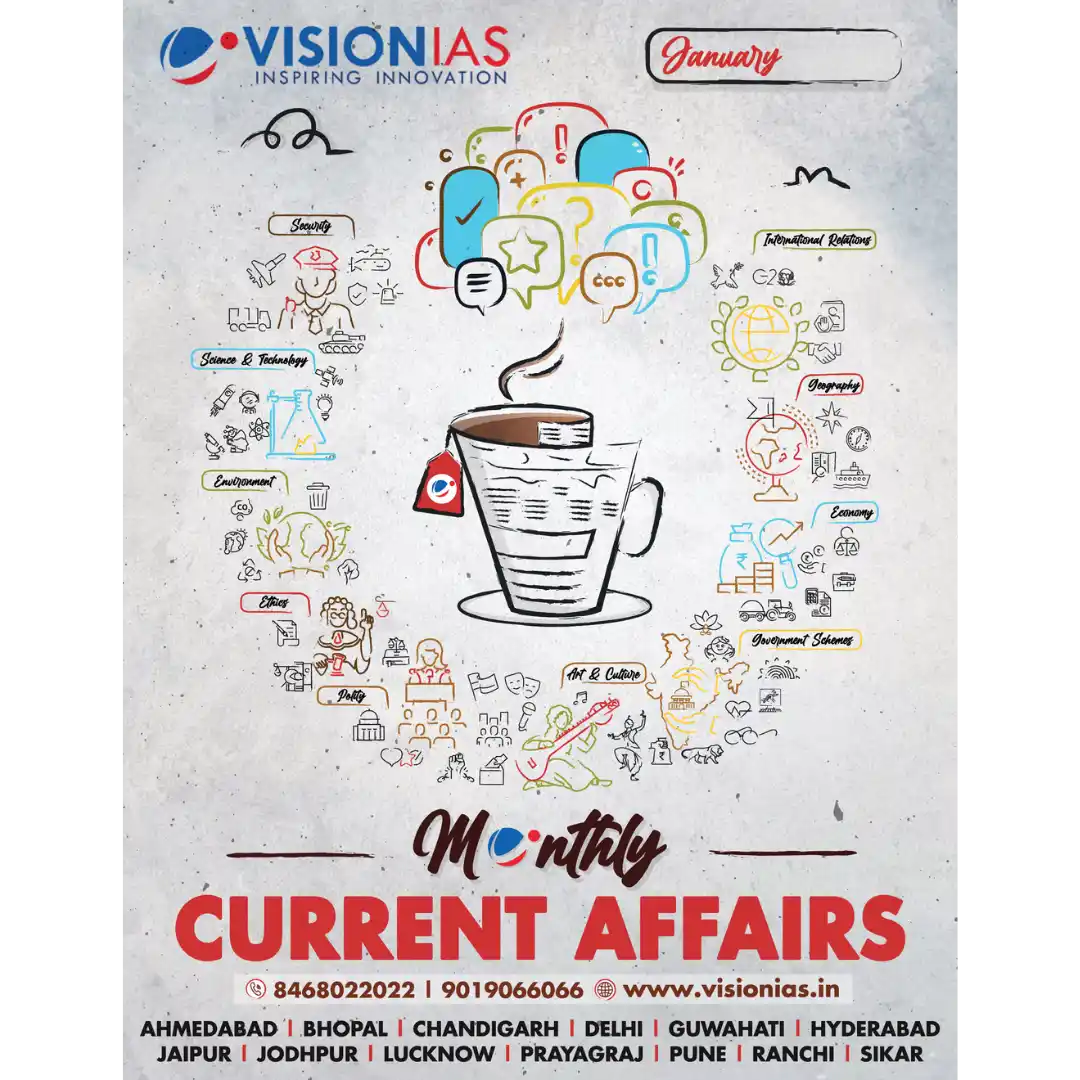
General Awareness rewards steady current-affairs revision. A structured monthly magazine keeps this section current without you scraping newspapers daily — many DSSSB aspirants pair a compact GK book with a monthly compilation such as the Vision IAS Current Affairs Magazine (January 2026, English) for national and international coverage.
2. General Intelligence & Reasoning Ability (20 marks)
A mix of verbal and non-verbal reasoning that is high-yield because the question types are predictable.
| Type | Topics |
|---|---|
| Verbal Reasoning | Analogies, similarities & differences, coding-decoding, blood relations, series, direction sense, syllogism, statement-conclusion |
| Non-Verbal Reasoning | Spatial visualisation, figure classification, pattern completion, mirror/water images, embedded figures |
| Analytical | Seating arrangement, ranking, puzzles, decision making, arithmetical reasoning, Venn diagrams |
3. Arithmetic & Numerical Ability (20 marks)
Class 8-10 level quantitative aptitude. Accuracy plus speed here directly protects your negative marks.
| Cluster | Chapters |
|---|---|
| Number System | Whole numbers, decimals, fractions, LCM & HCF, simplification |
| Arithmetic | Percentage, ratio & proportion, average, profit & loss, discount, simple & compound interest, partnership |
| Time-based | Time & work, time-speed-distance, pipes & cisterns, trains |
| Advanced | Mensuration, algebra basics, data interpretation (tables, bar/pie graphs) |
4. English Language & Comprehension (20 marks)
Tests reading ability and basic grammar.
| Sub-Area | Topics |
|---|---|
| Grammar | Error spotting, tenses, articles, prepositions, subject-verb agreement, active/passive, direct/indirect |
| Vocabulary | Synonyms, antonyms, one-word substitution, idioms & phrases, spelling |
| Comprehension | Reading passages, fill in the blanks, cloze test, sentence rearrangement |
5. Hindi Language & Comprehension (20 marks) — हिंदी
Mirror of the English section, in Hindi.
| Sub-Area | Topics (विषय) |
|---|---|
| व्याकरण (Grammar) | संधि, समास, उपसर्ग-प्रत्यय, कारक, लिंग-वचन, पर्यायवाची-विलोम, वाक्य शुद्धि |
| शब्दावली (Vocabulary) | मुहावरे-लोकोक्तियाँ, एक शब्द, तत्सम-तद्भव, अनेकार्थी शब्द |
| गद्यांश (Comprehension) | अपठित गद्यांश, रिक्त स्थान, वाक्य क्रम |
DSSSB Section B Syllabus (Post & Subject-Specific)
Section B is where the DSSSB syllabus differs by post. For teaching posts it has two parts: the subject at the relevant academic level, and teaching methodology / pedagogy based on B.Ed. Ignoring pedagogy is the classic mistake — it is a scoring, memory-based block that many candidates leave for last and then rush.
| Post | Subject Level in Section B | Pedagogy Included? |
|---|---|---|
| PRT | Up to primary/upper-primary + child pedagogy | Yes (child development, learning) |
| TGT | Graduation-honours level of the subject | Yes (teaching methodology) |
| PGT | Post-graduation / Master’s level of the subject | Yes (teaching methodology) |
| Non-teaching (JA/LDC) | No subject block — extended GA & aptitude | No |
Teaching Methodology / Pedagogy (B.Ed.-based)
Common pedagogy topics across TGT/PGT/PRT: principles and methods of teaching, learning theories (Piaget, Vygotsky, behaviourism, constructivism), child development and adolescence, individual differences and inclusive education, motivation, classroom management, assessment & evaluation (formative/summative, CCE), teaching aids and ICT in education, and educational psychology. This block alone can add 30-40 marks in a teaching-post paper, so treat it as a core subject, not an afterthought.
DSSSB TGT Syllabus 2026 (Subject-Wise)
The DSSSB TGT syllabus Section B is set at graduation level in the chosen subject plus teaching methodology. Below are the broad content heads by subject.
| TGT Subject | Key Section B Content |
|---|---|
| Maths | Number system, algebra, geometry, trigonometry, mensuration, statistics, coordinate geometry |
| Science | Physics (motion, light, electricity), Chemistry (matter, reactions, periodic table), Biology (cell, human body, plants) |
| Social Science | History (ancient-modern India, world), Geography (physical & Indian), Civics/Polity, Economics basics |
| English | Grammar, literature, phonetics, prose & poetry, language pedagogy |
| Hindi | व्याकरण, हिंदी साहित्य, काव्य & गद्य, भाषा शिक्षण |
| Sanskrit | व्याकरण, साहित्य, अनुवाद, श्लोक, शिक्षण विधि |
| Urdu / Punjabi / Bengali | Grammar, literature, prose/poetry, translation, language pedagogy of the respective language |
For every TGT subject, add the common teaching-methodology block. Practising previous-year question patterns is the fastest way to see how deep each topic actually goes — a topic-wise PYQ resource like the Forum IAS Topic-Wise PYQ Toolkit trains you to read questions the way examiners set them, a skill that transfers across GA and reasoning sections.
DSSSB PGT Syllabus 2026 (Subject-Wise)
The DSSSB PGT syllabus pitches Section B at post-graduation / Master’s level — deeper and more analytical than TGT — across 200 marks of subject content plus methodology.
| PGT Subject | Master’s-Level Focus |
|---|---|
| Maths | Calculus, real analysis, algebra, differential equations, probability, linear programming |
| Physics | Mechanics, thermodynamics, optics, electromagnetism, modern & nuclear physics |
| Chemistry | Physical, organic, inorganic chemistry; chemical bonding, kinetics |
| Biology | Genetics, ecology, physiology, biotechnology, cell & molecular biology |
| Commerce | Accounting, business studies, financial management, statistics, economics |
| Economics | Micro & macro economics, Indian economy, statistics, development economics |
| History / Geography / Political Science | Advanced discipline content at PG level |
| English / Hindi / Sanskrit | Advanced literature, linguistics, criticism, language pedagogy |
| Computer Science | Programming, data structures, DBMS, networking, operating systems |
DSSSB also recruits for specialised streams — Drawing, Domestic Science (Home Science), Special Education, Physical Education and regional languages — each with its own PG-level Section B. Confirm your subject code and Master’s syllabus from the official notification.
DSSSB PRT Syllabus 2026
The DSSSB PRT syllabus (Primary Teacher / Assistant Teacher Primary) is a single 200-question paper. It combines the Section A core (General Awareness, Reasoning, Arithmetic, Hindi, English) with a Section B weighted toward primary-level content and child-centred pedagogy.
| Block | PRT Content |
|---|---|
| General Awareness | Current affairs, static GK, Delhi-centric awareness |
| Reasoning | Analogies, series, coding, non-verbal reasoning |
| Numerical Ability | Class 8-10 arithmetic, basic maths |
| Hindi & English | Grammar, comprehension, vocabulary in both languages |
| Teaching Methodology | Child development, learning principles, primary pedagogy, EVS & foundational literacy/numeracy |
A candidate with a CTET/DSSSB pedagogy foundation has a real edge in PRT, because roughly a fifth of the paper is child-development and teaching methodology.
DSSSB Junior Assistant & Non-Teaching Syllabus
For non-teaching posts — Junior Assistant, LDC, DASS Grade-IV, Head Clerk, Patwari, Stenographer — Section B usually has no academic subject block. Instead, the 200-mark one-tier paper leans on the Section A core plus additional general awareness, aptitude and post-related knowledge, followed (where applicable) by a skill/typing test.
| Non-Teaching Post | Written Focus | Skill Component |
|---|---|---|
| Junior Assistant / LDC | GA, Reasoning, Arithmetic, English, Hindi (200 Q) | Typing test (qualifying) |
| Stenographer (Grade C/D) | Section A core + relevant aptitude | Stenography/shorthand skill test |
| Patwari | GA, reasoning, arithmetic, Delhi land/revenue awareness | As per notification |
| Junior Engineer | Section A + technical engineering discipline (Civil/Electrical/Mech) | Nil (technical Section B instead) |
Because these posts lean heavily on Section A, mastering the common core plus current affairs is the single highest-return investment for a non-teaching aspirant.
DSSSB Marking Scheme & Qualifying Marks
Every DSSSB objective paper follows the same simple marking rule, and the qualifying cut-off is category-based.
Is there negative marking in DSSSB?
Yes. Each correct answer earns +1 mark and each wrong answer deducts 0.25 mark (one-fourth). Unattempted questions carry no penalty, so blind guessing is risky — attempt only when you can eliminate options.
| Element | Value |
|---|---|
| Marks per correct answer | +1 |
| Negative marking per wrong answer | −0.25 |
| Unattempted question | 0 (no penalty) |
What are the qualifying marks for DSSSB?
Minimum qualifying percentages are category-wise:
| Category | Qualifying Marks |
|---|---|
| General / EWS | 40% |
| OBC (Delhi) | 35% |
| SC / ST / PwBD | 30% |
Clearing the qualifying percentage only makes you eligible; final selection is on merit through the category-wise ranked list, so aim well above the cut-off.
DSSSB Selection Process & Skill-Test Matrix
The core route is: Computer-Based written exam → shortlisting on merit → document verification, with a skill/typing test layered on for specific posts.
Is there an interview or skill test in the DSSSB selection process?
Most DSSSB posts have no interview — selection is purely exam-based. However, several posts include a qualifying skill test (typing or stenography). Teaching posts are selected on the written exam followed by document verification, without an interview.
| Post | Written | Skill / Typing Test | Interview |
|---|---|---|---|
| PGT / TGT / PRT | Yes | No | No |
| Junior Assistant / LDC | Yes | Yes (typing, qualifying) | No |
| Stenographer | Yes | Yes (shorthand) | No |
| Section Officer / ASO (Two-Tier) | Tier-I + Tier-II | As per notification | No |
DSSSB Syllabus PDF Download (Post-Wise)
Use this table to grab the right DSSSB syllabus PDF download for your exact post rather than a generic all-in-one file. The most authoritative copy is always the syllabus annexure inside the official DSSSB notification for your advertisement number, published on dsssb.delhi.gov.in.
| Post | What the PDF Should Contain | Source |
|---|---|---|
| PGT (all subjects) | Section A (100) + PG-level subject + methodology (200) | Official notification annexure |
| TGT (all subjects) | Section A (100) + graduation-level subject + methodology (100) | Official notification annexure |
| PRT | 200-Q pattern + primary pedagogy | Official notification annexure |
| Junior Assistant / Non-teaching | Section A + aptitude + skill-test details | Official notification annexure |
Keeping the exact official syllabus wording beside your study material prevents you from over-preparing off-syllabus topics. If you want a ready reference for how a modern competitive syllabus is structured and mapped to sources, the GS Score Latest Syllabus Booklet is a handy template for building your own topic-tracker.
Section-Wise Weightage & Preparation Strategy
Top-ranking pages list the syllabus but rarely tell you where to spend your hours. Here is a priority map for a teaching-post aspirant, based on scoring reliability and effort.
| Section | Approx. Weight | Priority | Why |
|---|---|---|---|
| Section B — Subject | 50-66% | Highest | Largest block; decides merit |
| Teaching Methodology / Pedagogy | 10-20% | High | Memory-based, quick to score |
| General Awareness | ~10% | High | Repeats yearly; current affairs driven |
| Reasoning | ~10% | Medium-High | Predictable question types |
| Arithmetic | ~10% | Medium | Speed & accuracy sensitive |
| English + Hindi | ~20% combined | Medium | Grammar-heavy, steady scoring |
A Simple 12-Week Study Plan
| Weeks | Focus |
|---|---|
| 1-4 | Build Section B subject fundamentals + start daily current affairs |
| 5-7 | Teaching methodology/pedagogy + Reasoning & Arithmetic practice |
| 8-9 | English + Hindi grammar drills; General Awareness revision |
| 10-11 | Full-length mock tests with negative marking simulated |
| 12 | Revision, weak-area fixes, PYQ solving |
High-yield tip: because negative marking is 0.25, targeting ~85-90% accuracy usually beats a higher raw attempt count. Practice deciding when to skip.
Best Books & Study Material Mapped to the Syllabus
Match resources to each syllabus block rather than buying one thick guide for everything.
| Syllabus Block | Recommended Resource Type |
|---|---|
| General Awareness | A compact GK book + a monthly current-affairs magazine |
| Reasoning | A dedicated verbal & non-verbal reasoning practice book |
| Arithmetic | Quantitative aptitude workbook (Class 8-10 level) |
| English & Hindi | Objective grammar + comprehension practice sets |
| Section B Subject | Standard NCERTs + graduation/PG textbooks of your subject |
| Pedagogy | B.Ed. teaching-methodology & child-development notes |
For the General Awareness portion, a running monthly compilation keeps you current — Hindi-medium aspirants can use the Vision IAS Current Affairs Magazine (January 2026, Hindi), while previous-year practice from a topic-wise PYQ toolkit sharpens exam temperament for the reasoning and GA sections.
DSSSB vs SSC: How the Syllabus Compares
Many DSSSB aspirants also attempt SSC. The good news: the general sections overlap heavily, so repeat aspirants can reuse most of their preparation.
| Feature | DSSSB | SSC (CGL/CHSL) |
|---|---|---|
| Common section | GA, Reasoning, Arithmetic, English, Hindi | GA, Reasoning, Quant, English (no Hindi section) |
| Subject/pedagogy block | Yes (teaching posts) | No |
| Negative marking | 0.25 | 0.25-0.50 (tier-dependent) |
| Hindi language section | Yes (20 marks) | No dedicated Hindi section |
| Interview | No | No |
The stand-out differences for DSSSB are the dedicated Hindi language section and the Section B subject + pedagogy block for teaching posts — plan extra time for these two if you are coming from an SSC background.
Common Mistakes DSSSB Aspirants Make
- Neglecting pedagogy — teaching methodology is 10-20% of marks and is quick to score; do not leave it for the last week.
- Ignoring the Hindi section — 20 marks are easy to lose if you skip Hindi grammar practice.
- Over-attempting — with 0.25 negative marking, wild guesses erode your score.
- Studying off-syllabus — always map topics to the official notification annexure for your exact post.
- Skipping mocks — the CBT interface and time pressure need rehearsal, especially the 3-hour PGT paper.
Frequently Asked Questions
What is the syllabus of the DSSSB exam?
The DSSSB syllabus has two parts. Section A is common to all posts and covers General Awareness, General Intelligence & Reasoning, Arithmetic & Numerical Ability, English and Hindi Language & Comprehension. Section B is post-specific — the subject at graduation/PG level plus teaching methodology (pedagogy) for teaching posts, or extended aptitude/technical content for non-teaching posts.
How many sections are there in the DSSSB exam?
There are two broad sections: Section A (a five-part common general section worth 100 marks) and Section B (post/subject-specific). Section A itself is divided into five sub-sections of 20 marks each.
Is there negative marking in DSSSB?
Yes. Every correct answer gives +1 mark and every wrong answer deducts 0.25 mark. Unattempted questions are not penalised, so guess only when you can eliminate options.
What is the DSSSB exam pattern for TGT and PGT?
TGT has 200 questions for 200 marks in 2 hours (100 marks Section A + 100 marks subject & methodology). PGT has 300 questions for 300 marks in 3 hours (100 marks Section A + 200 marks subject & methodology). Both use +1/−0.25 marking.
Is the DSSSB syllabus the same for all posts?
Section A is essentially the same for every post, which is why building it once helps across attempts. Section B changes by post — a Maths TGT, a Physics PGT and a Junior Assistant each face different Section B content, so you must prepare the subject/pedagogy block for your specific post.
How many questions are asked in the DSSSB exam?
PGT papers carry 300 questions for 300 marks in 3 hours. TGT, PRT and non-teaching posts such as Junior Assistant carry 200 questions for 200 marks in 2 hours. Each question is worth 1 mark with 0.25 negative marking.
Is there an interview in the DSSSB selection process?
Most DSSSB posts, including all teaching posts, have no interview — selection is based on the written exam followed by document verification. Some non-teaching posts add a qualifying skill test (typing or stenography), but not a personal interview.
Are the DSSSB qualifying marks the same for every category?
No. The minimum qualifying marks are 40% for General/EWS, 35% for OBC, and 30% for SC/ST/PwBD. Qualifying only makes you eligible; final selection is on category-wise merit, so score well above the cut-off.
Is the DSSSB syllabus changing in 2026?
The core structure — Section A (common) + Section B (post-specific), CBT mode and +1/−0.25 marking — has been stable and is expected to continue in 2026. Post-level details such as Section B topics, tier and skill-test requirements are always finalised in each recruitment’s official notification, so verify the annexure for your advertisement number before you start.
Which is tougher, DSSSB TGT or PGT?
PGT is generally more demanding: its Section B is pitched at post-graduation/Master’s level and carries 200 of 300 marks over a 3-hour paper, versus TGT’s graduation-level Section B of 100 of 200 marks in 2 hours. The common Section A is the same standard for both.
Recommended Study Material

Continue Reading
NEET Exam Pattern 2026: Marks, Questions & Marking Scheme
The NEET exam pattern for 2026 is a single 3-hour (180-minute) pen-and-paper test of 180 compulsory questions carrying…
SSC GD Syllabus 2026: Subject-Wise Topics, Exam Pattern + PDF
The SSC GD syllabus for 2026 covers four subjects in a single Computer Based Test (CBT): General Intelligence…
Best Test Series for UPSC 2026: 9 Options Compared with Prices
The best test series for UPSC 2026 is Vision IAS for Prelims — the most representative difficulty, detailed…