JEE Main Syllabus 2026: PCM Topics, Weightage + PDF
JEE Main syllabus 2026 by NTA — subject-wise Physics, Chemistry & Maths topics, chapter weightage, deleted topics and free PDF download link.

The jee main syllabus is the official NTA-prescribed list of Class 11 and Class 12 topics in three subjects — Physics (20 units), Chemistry (around 20 chapters across Physical, Inorganic and Organic), and Mathematics (14 units) — plus a practical/experimental section in each science subject. It is built almost entirely on the NCERT syllabus and is released by the National Testing Agency (NTA) on jeemain.nta.nic.in inside the Information Bulletin. For JEE Main 2026, the syllabus is unchanged from the reduced 2024 version: several chapters were deleted and nothing new was added.
This guide gives you the complete subject-wise jee main syllabus, chapter-wise weightage tables, the exam pattern for Paper 1, 2A and 2B, a clear deleted-vs-retained comparison, chapter counts per subject, a Class 11 vs Class 12 split, and a free downloadable checklist — everything a serious aspirant needs in one place.
JEE Main syllabus 2026 at a glance:
- Subjects: Physics, Chemistry, Mathematics (Paper 1, B.E./B.Tech).
- Based on: NCERT Class 11 & 12 (CBSE-aligned).
- Total chapters/units: ~20 Physics + ~20 Chemistry + 14 Maths, plus experimental skills.
- 2026 status: same reduced syllabus as 2024 — no new chapters added.
- Official PDF: Information Bulletin on jeemain.nta.nic.in.
JEE Main Syllabus 2026: Official Source & Release
The syllabus is notified by the NTA in the JEE Main Information Bulletin, usually released in October–November before the January session. You can always download the authentic jee main syllabus 2026 pdf from the official portal — treat that Bulletin as the single source of truth.
| Detail | Information |
|---|---|
| Conducting body | National Testing Agency (NTA) |
| Official website | jeemain.nta.nic.in |
| Subjects (Paper 1) | Physics, Chemistry, Mathematics |
| Based on | NCERT Class 11 & 12 (CBSE-aligned) |
| Sessions | Two — Session 1 (January), Session 2 (April) |
| Syllabus status 2026 | Unchanged from reduced 2024 syllabus |
| Where to download | Information Bulletin PDF on jeemain.nta.nic.in |
Tip: Always cross-check any coaching or blog version against the official Information Bulletin, because unofficial lists sometimes still show the deleted chapters. Our print-ready subject-wise syllabus checklist below mirrors the current NTA topic list.
Has the JEE Main Syllabus Changed for 2026?
No. The major revision happened in 2024, when the NTA reduced the syllabus to align it with the trimmed NCERT content. For the 2026 cycle, the same reduced list continues — no chapters have been added back and no new topics introduced. In short, if you are studying from the post-2024 syllabus, you are already studying the correct 2026 syllabus. The only thing to double-check each year is the Information Bulletin release date and the exam-pattern fine print, not the topic list.
How Many Chapters Are in the JEE Main Syllabus?
A common aspirant question is exactly how many chapters/units each subject has after the reduction. Here is the current count, based on the NTA topic list.
| Subject | Units / Chapters | Extra Section |
|---|---|---|
| Physics | 20 units (Section A) | Experimental Skills (Section B) |
| Chemistry | ~20 chapters (Physical + Inorganic + Organic) | Principles of Practical Chemistry |
| Mathematics | 14 units | — |
So a candidate covers roughly 54 units/chapters in total across PCM, plus the practical/experimental sections in Physics and Chemistry. That is fewer than the pre-2024 syllabus, which is why using an updated topic list matters.
JEE Main Exam Pattern 2026 (Paper 1, 2A, 2B)
Before the syllabus, understand how it is tested. JEE Main has three papers: Paper 1 for B.E./B.Tech, Paper 2A for B.Arch, and Paper 2B for B.Planning. All papers are 3 hours (4 hours if you attempt both 2A and 2B).
| Paper | Course | Sections | Total Questions | Total Marks |
|---|---|---|---|---|
| Paper 1 | B.E./B.Tech | Physics, Chemistry, Maths | 75 (attempt) | 300 |
| Paper 2A | B.Arch | Maths, Aptitude, Drawing | 77 (attempt) | 400 |
| Paper 2B | B.Planning | Maths, Aptitude, Planning | 100 | 400 |
In Paper 1, each subject has 20 MCQs (all compulsory) and 5 numerical-value questions (all 5 compulsory from 2024 onward). That makes 25 questions × 3 subjects = 75 questions and 300 marks.
| Marking Rule | Details |
|---|---|
| Correct answer | +4 marks |
| Wrong answer (MCQ) | −1 mark |
| Wrong answer (Numerical) | −1 mark |
| Unattempted | 0 marks |
| Duration | 3 hours (180 minutes) |
JEE Main Physics Syllabus
The jee main physics syllabus is divided into two sections: Section A (theory, ~80% weightage) covering 20 units, and Section B (Experimental Skills, ~20% weightage). It is fully NCERT-aligned across Class 11 and 12.
Physics Units (Section A)
| Unit | Key Topics |
|---|---|
| Units & Measurements | Dimensions, errors, significant figures |
| Kinematics | Motion in a straight line & plane, projectile |
| Laws of Motion | Newton’s laws, friction, circular motion |
| Work, Energy & Power | Work-energy theorem, conservation, collisions |
| Rotational Motion | Centre of mass, torque, moment of inertia |
| Gravitation | Kepler’s laws, gravitational potential, satellites |
| Properties of Solids & Liquids | Elasticity, viscosity, surface tension, calorimetry |
| Thermodynamics | Laws of thermodynamics, heat engines |
| Kinetic Theory of Gases | Gas laws, degrees of freedom, mean free path |
| Oscillations & Waves | SHM, wave motion, superposition, Doppler effect |
| Electrostatics | Coulomb’s law, potential, capacitance |
| Current Electricity | Ohm’s law, Kirchhoff, Wheatstone bridge |
| Magnetic Effects of Current | Biot-Savart, Ampere’s law, moving charges |
| Magnetism & Matter | Bar magnet, earth’s magnetism |
| EMI & Alternating Current | Faraday’s law, LCR circuits, transformers |
| Electromagnetic Waves | EM spectrum, displacement current |
| Optics | Ray optics, wave optics, interference, diffraction |
| Dual Nature of Matter & Radiation | Photoelectric effect, de Broglie |
| Atoms & Nuclei | Bohr model, radioactivity, nuclear energy |
| Electronic Devices | Semiconductors, diodes, logic gates |
Physics Experimental Skills (Section B)
Section B tests practical/lab-based questions: Vernier callipers, screw gauge, simple pendulum, metre scale, Young’s modulus, surface tension by capillary rise, speed of sound (resonance tube), specific heat, resistance using Ohm’s law and metre bridge, focal length of lenses/mirrors, and characteristic curves of a p-n junction diode. Expect 4–5 marks worth of direct experimental-skills questions.
JEE Main Chemistry Syllabus
The jee main chemistry syllabus is split into three blocks — Physical Chemistry, Inorganic Chemistry and Organic Chemistry — spanning roughly 20 retained chapters after the 2024 reduction.
| Block | Key Chapters |
|---|---|
| Physical Chemistry | Some Basic Concepts, Atomic Structure, Chemical Bonding, Thermodynamics, Solutions, Equilibrium, Redox & Electrochemistry, Chemical Kinetics |
| Inorganic Chemistry | Classification of Elements & Periodicity, p-Block Elements, d- & f-Block Elements, Coordination Compounds |
| Organic Chemistry | Purification & Characterisation, Basic Principles (GOC), Hydrocarbons, Haloalkanes & Haloarenes, Alcohols-Phenols-Ethers, Aldehydes-Ketones-Acids, Amines, Biomolecules, Principles of Practical Chemistry |
Practical / Experimental Chemistry
The retained “Principles Related to Practical Chemistry” covers detection of elements (N, S, halogens), functional-group tests, qualitative analysis of cations and anions, and the chemistry involved in titrimetric exercises (acid-base and redox). This is a low-effort, high-return area worth 1–2 questions.
JEE Main Maths Syllabus
The jee main maths syllabus contains 14 units. Maths often decides ranks because it is scoring but time-intensive, so plan speed practice around it.
| Unit | Key Topics |
|---|---|
| Sets, Relations & Functions | Types of relations, functions, composition |
| Complex Numbers & Quadratic Equations | Argand plane, roots, nature of roots |
| Matrices & Determinants | Operations, inverse, system of equations |
| Permutations & Combinations | Arrangements, selections |
| Binomial Theorem | General term, properties |
| Sequences & Series | AP, GP, sum of special series |
| Limits, Continuity & Differentiability | Standard limits, differentiation rules |
| Integral Calculus | Indefinite & definite integrals, area under curves |
| Differential Equations | Order, degree, first-order equations |
| Coordinate Geometry | Straight lines, circles, conic sections |
| Three Dimensional Geometry | Lines, planes, distance formulae |
| Vector Algebra | Dot & cross product, scalar triple product |
| Statistics & Probability | Mean, variance, conditional probability |
| Trigonometry | Identities, inverse trig, heights & distances |
JEE Main Syllabus with Weightage (Chapter-Wise)
Weightage varies slightly year to year, but the last five years of PYQ trends give a reliable high-ROI map. Below is the jee main syllabus with weightage per subject — study the high-weightage chapters first. Treat these figures as indicative averages from past papers, not guarantees for a specific shift.
Physics Weightage
| Chapter | Approx. Weightage | Expected Marks |
|---|---|---|
| Electrostatics & Current Electricity | ~14% | ~12 |
| Optics | ~10% | ~8 |
| Modern Physics (Atoms, Nuclei, Dual Nature) | ~10% | ~8 |
| Magnetism & EMI/AC | ~10% | ~8 |
| Mechanics (Kinematics to Rotation) | ~20% | ~16 |
| Heat & Thermodynamics | ~8% | ~8 |
| Oscillations & Waves | ~7% | ~4 |
| Electronic Devices | ~5% | ~4 |
Chemistry Weightage
| Chapter | Approx. Weightage | Expected Marks |
|---|---|---|
| Organic Chemistry (full block) | ~34% | ~28 |
| Physical Chemistry (full block) | ~35% | ~28 |
| Inorganic Chemistry (full block) | ~31% | ~24 |
| Coordination Compounds | ~8% | ~8 |
| Chemical Bonding | ~7% | ~8 |
| Thermodynamics & Equilibrium | ~8% | ~8 |
Maths Weightage
| Chapter | Approx. Weightage | Expected Marks |
|---|---|---|
| Calculus (Limits, Differentiation, Integration) | ~30% | ~24 |
| Coordinate Geometry | ~15% | ~12 |
| Algebra (Complex, Quadratic, Sequences) | ~14% | ~12 |
| Vectors & 3D Geometry | ~12% | ~12 |
| Trigonometry | ~7% | ~4 |
| Probability & Statistics | ~7% | ~8 |
| Matrices & Determinants | ~7% | ~8 |
High-ROI Chapters: What to Study First
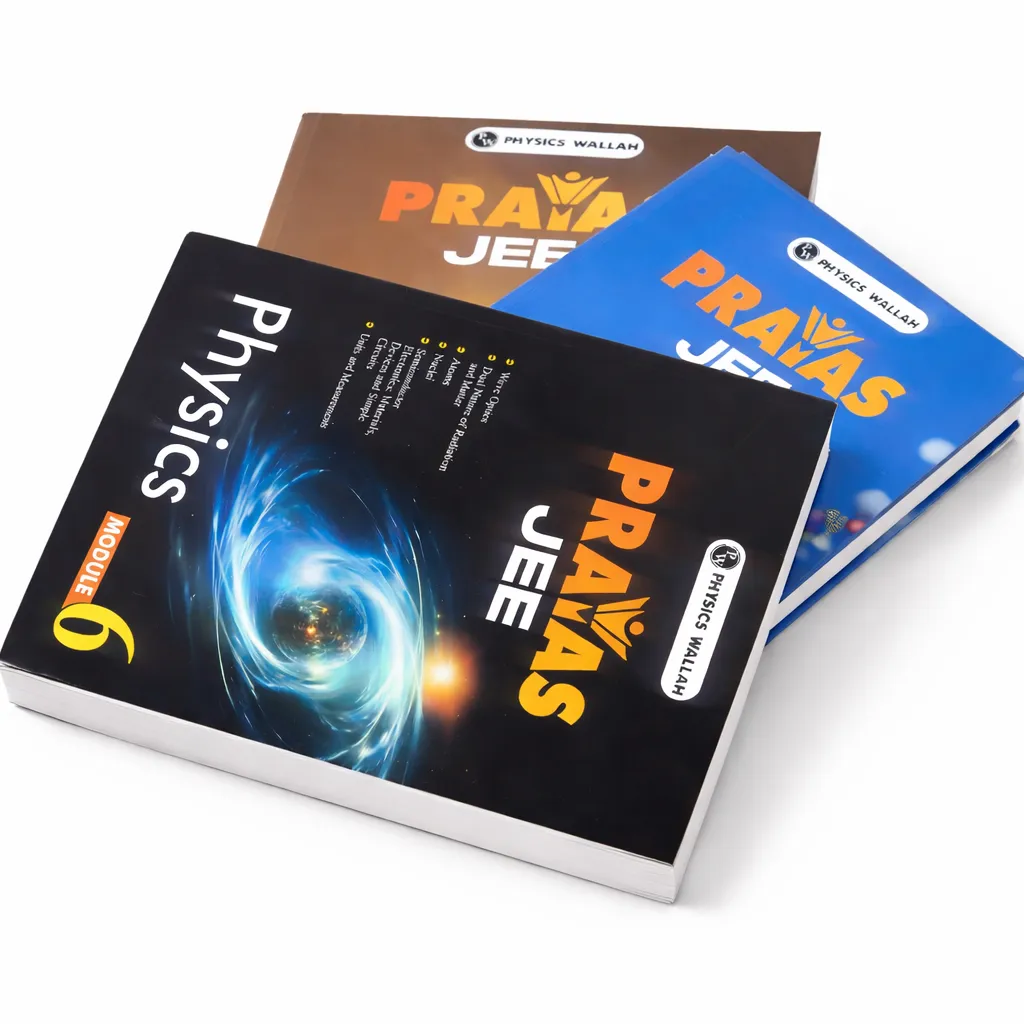
If you are short on time, this revision-priority list — built from five years of PYQ trends — tells you where to invest first. A structured module set like the PW Prayas JEE Modules (18 books for Class 11+12) is arranged unit-wise so you can attack these high-weightage chapters directly.
| Priority | Physics | Chemistry | Maths |
|---|---|---|---|
| First (highest ROI) | Electrostatics, Current Electricity, Modern Physics | Organic (GOC, Aldehydes), Coordination Compounds | Calculus, Coordinate Geometry |
| Second | Optics, EMI & AC, Rotation | Chemical Bonding, Thermodynamics, p-Block | Vectors & 3D, Algebra |
| Third | Waves, SHM, Semiconductors | Electrochemistry, Solutions, Kinetics | Probability, Matrices, Trigonometry |
JEE Main Deleted Syllabus 2026 (Removed Topics)
In the 2024 revision, the NTA trimmed the syllabus to align it with the reduced NCERT content, and the same reduced list continues for 2026. Below is the jee main deleted syllabus 2026 shown as a clear side-by-side of removed vs retained areas.
| Subject | Deleted Topics / Chapters | Status of Rest |
|---|---|---|
| Physics | Communication Systems (full chapter); parts of experimental skills (e.g., Zener diode, transistor characteristics) | All other 20 units retained |
| Chemistry | States of Matter; Surface Chemistry; s-Block Elements; Hydrogen; Environmental Chemistry; General Principles & Processes of Isolation of Metals (Metallurgy); Polymers; Chemistry in Everyday Life | Physical, Inorganic (p/d/f-block, coordination) & Organic core retained |
| Mathematics | Mathematical Reasoning; Mathematical Induction | All other 14-unit core retained |
Note: These deletions are reflected in the official NTA syllabus. Many older question banks still contain these topics — solving those specific questions wastes time, so confirm against the current list before practising.
Class 11 vs Class 12 Topic Split
Roughly half the jee main syllabus comes from each class. Droppers should revise Class 11 first (it is often weaker after a year), while current 12th students should stay in sync with their boards.
| Subject | Class 11 (major) | Class 12 (major) |
|---|---|---|
| Physics | Mechanics, Thermodynamics, Waves, Kinetic Theory | Electrostatics, Current, Magnetism, Optics, Modern Physics |
| Chemistry | Basic Concepts, Atomic Structure, Bonding, Equilibrium, GOC, Hydrocarbons | Solutions, Electrochemistry, Kinetics, Coordination, d/f-block, Aldehydes, Amines, Biomolecules |
| Maths | Sets, Trigonometry, Complex Numbers, Permutations, Straight Lines, Conics | Calculus, Matrices, Vectors, 3D, Probability, Differential Equations |
JEE Main vs JEE Advanced Syllabus
Many aspirants prepare for both exams, so it helps to know where the two syllabi diverge. They share the same NCERT foundation and most PCM topics, but JEE Advanced adds a few extra topics and, more importantly, tests them with harder, multi-concept problems. Use the same base syllabus for both and simply layer higher-difficulty practice on top for Advanced.
| Aspect | JEE Main | JEE Advanced |
|---|---|---|
| Base foundation | NCERT Class 11 & 12 | NCERT Class 11 & 12 |
| Topic coverage | Fixed NTA list (reduced 2024) | Overlaps Main + a few extra topics |
| Question difficulty | Moderate, single-concept heavy | Harder, multi-concept, application-based |
| Numerical depth | Direct formula application | Deeper derivation & analysis |
Chapter-to-Resource Mapping (Study Material Guide)
Knowing the syllabus is step one; mapping each unit to a resource is what actually moves your score. Start every chapter from NCERT, then move to a structured JEE module for theory + solved examples, and finish with PYQs. The eSaral IIT JEE Modules 2026 and the PW Prayas JEE Modules are both organised unit-wise, so you can pick the exact booklet for the chapter you are studying.
| Stage | Best Resource | Why |
|---|---|---|
| Concept building | NCERT + JEE modules | Foundation is fully NCERT-based |
| Practice | Unit-wise module exercises | Graded difficulty per chapter |
| Revision | Short notes / formula sheets | Fast recall before exam |
| Testing | PYQs + full mock tests | Builds speed & accuracy |
Because the JEE Main and JEE Advanced foundations overlap, the same module set doubles up if you plan to attempt Advanced — just add higher-difficulty problem sets on top.
Preparation Tips & Downloadable Checklist
Use the syllabus itself as a tracker. Tick each chapter after (1) theory done, (2) 100+ questions solved, (3) PYQs solved, and (4) revision done. Combine that with these habits:
- NCERT first: Especially for Inorganic and Physical Chemistry, NCERT lines are directly asked.
- Mock tests weekly: Attempt at least one full 3-hour mock every week to build 300-mark stamina and −1 negative-marking discipline.
- PYQ per chapter: Solve the last 5 years’ questions chapter-by-chapter to spot repeating patterns.
- Formula sheet: Maintain a one-page formula sheet per subject for last-week revision.
- Track weightage: Spend about 60% of effort on the high-ROI chapters listed above.
Download our print-ready subject-wise syllabus checklist (Physics, Chemistry, Maths) from the resources section and tick off each unit as you finish — it mirrors the current NTA topic list, minus the deleted chapters.
Frequently Asked Questions
What is the syllabus of JEE Main?
The JEE Main syllabus covers Class 11 and 12 Physics, Chemistry and Mathematics as prescribed by NTA — 20 Physics units, about 20 Chemistry chapters across Physical, Inorganic and Organic, and 14 Maths units, plus experimental/practical skills. It is released in the official Information Bulletin on jeemain.nta.nic.in.
Is the JEE Main syllabus based on NCERT (Class 11 and 12)?
Yes. The JEE Main syllabus is almost entirely NCERT-aligned and drawn from CBSE Class 11 and 12. NCERT is the foundation, especially for Chemistry, though for Physics and Maths you need additional problem practice beyond NCERT.
How many chapters are there in JEE Main (Physics, Chemistry, Maths)?
After the 2024 reduction, Physics has 20 units (plus an experimental-skills section), Chemistry has around 20 chapters across Physical, Inorganic and Organic (plus practical chemistry), and Mathematics has 14 units — roughly 54 units/chapters in total across PCM.
Which chapters have been deleted from the JEE Main syllabus?
In the 2024 revision (continued for 2026), NTA removed Communication Systems from Physics; States of Matter, Surface Chemistry, s-Block, Hydrogen, Environmental Chemistry, Metallurgy, Polymers and Chemistry in Everyday Life from Chemistry; and Mathematical Reasoning and Mathematical Induction from Maths.
Is the JEE Main and JEE Advanced syllabus the same?
They overlap heavily but are not identical. JEE Advanced has a slightly different, often deeper topic list and some extra topics not in JEE Main, along with harder, multi-concept questions. The NCERT foundation, however, is common to both.
Which are the most important high-weightage chapters in JEE Main?
Physics: Electrostatics, Current Electricity, Modern Physics and Mechanics. Chemistry: Organic (GOC, Aldehydes-Ketones), Coordination Compounds and Chemical Bonding. Maths: Calculus and Coordinate Geometry. Together these carry the largest share of marks year after year.
Has the JEE Main syllabus changed for the latest exam cycle?
No. The syllabus for 2026 is the same reduced list introduced in 2024 — no new chapters have been added and none restored. Only exam-cycle details like Bulletin release dates may change, so verify those against the official notification.
Where can I download the official JEE Main syllabus PDF?
Download the official jee main syllabus 2026 pdf from the NTA Information Bulletin on jeemain.nta.nic.in. For a clean, print-ready, subject-wise checklist reflecting the current reduced syllabus, use Competer’s free downloadable version linked in this guide.
Recommended Study Material

Continue Reading
SSC CGL Preparation 2026: Plan, Books & Timetable
Short answer: winning ssc cgl preparation in 2026 comes down to five disciplined habits — master the Tier…
RRB Technician Syllabus 2026: Grade 1 & 3, Pattern + PDF
The rrb technician syllabus for 2026 is a single-stage Computer Based Test (CBT) offered in two roles —…
Best Books for UPSC Prelims 2026: Subject-Wise List (GS + CSAT)
The best books for UPSC Prelims 2026 are a tight, topper-tested set: NCERTs (Classes 6–12) as the base,…