RRB Technician Syllabus 2026: Grade 1 & 3 Pattern + PDF
RRB Technician syllabus 2026 explained: subject-wise topics for Grade 1 Signal & Grade 3, CBT exam pattern, marks weightage, negative marking & PDF download.

The RRB Technician syllabus for 2026 is a single Computer Based Test (CBT) of 100 questions worth 100 marks, completed in 90 minutes, with 1/3 mark deducted for every wrong answer. It splits into two posts: Technician Grade 1 Signal (heavy on Basic Science & Engineering, 35 marks) and Technician Grade 3 (heavy on General Science, 40 marks). Both share General Awareness, Reasoning and Mathematics, but the weightage and depth differ sharply — which is exactly what most aspirants get confused about.
This guide gives you the full subject-wise syllabus for both grades, the exam pattern with marks weightage, minimum qualifying marks by category, a topic-priority map, a week-by-week study plan tied to the notification timeline, and a direct route to the official syllabus PDF. Bookmark it — it is built to be the most complete RRB Technician resource for 2026.
RRB Technician Syllabus 2026 at a Glance
If you only remember five things about the rrb technician syllabus, make it these:
- One exam, not two: a single CBT of 100 questions / 100 marks in 90 minutes — there is no CBT 2.
- Negative marking: 1/3 mark is lost per wrong answer, so accuracy beats volume.
- Two posts, two blueprints: Grade 1 Signal is engineering-heavy; Grade 3 is general-science-heavy.
- Highest weightage: Basic Science & Engineering (35 marks) for Grade 1; General Science (40 marks) for Grade 3.
- Shared subjects: both grades test General Awareness, Reasoning and Mathematics — only the weightage changes.
RRB Technician 2026 Overview: Posts, Vacancies & Mode
The Railway Recruitment Board (RRB) conducts the Technician recruitment to fill technical posts across Indian Railways zones. The 2026 cycle carries a large vacancy pool and two distinct post categories. Understanding the overview first helps you decide which grade to target and, therefore, which slice of the rrb technician syllabus 2026 to prioritise.
| Particular | Detail |
|---|---|
| Conducting Body | Railway Recruitment Board (RRB) |
| Posts | Technician Grade 1 Signal & Technician Grade 3 |
| Total Vacancies | 6,557 |
| Exam Mode | Online — Computer Based Test (CBT) |
| Total Questions | 100 |
| Total Marks | 100 |
| Duration | 90 minutes (120 minutes for PwBD with scribe) |
| Negative Marking | 1/3 mark per wrong answer |
| Selection Stages | CBT → Document Verification → Medical Examination |
| Notification | Released 29th June; apply by 29th July |
The two posts are not interchangeable. Grade 1 Signal is a higher technical post that expects engineering-level science, while Grade 3 is broader and science-general. Your eligibility (ITI trade vs. Diploma/degree) usually decides which grade you can apply for, so read the eligibility note further down before you lock your preparation.
RRB Technician Exam Pattern 2026 (Grade 1 & Grade 3)
The rrb technician exam pattern 2026 is a single-stage CBT for both grades — there is no separate CBT 1 and CBT 2 like RRB ALP or NTPC. The subjects and the number of questions per subject differ between Grade 1 and Grade 3, which is the single most important distinction to internalise. Every question carries 1 mark, and there is a 1/3 negative marking penalty, so blind guessing is costly.
RRB Technician Grade 1 Signal Exam Pattern
| Subject | No. of Questions | Marks |
|---|---|---|
| General Awareness | 10 | 10 |
| General Intelligence & Reasoning | 15 | 15 |
| Basics of Computers & Applications | 20 | 20 |
| Mathematics | 20 | 20 |
| Basic Science & Engineering | 35 | 35 |
| Total | 100 | 100 |
Note the standout: Basic Science & Engineering carries 35 marks — more than a third of the paper. This is where Grade 1 aspirants win or lose. Computers add another 20 marks, so together these two technical sections decide 55% of your Grade 1 score.
RRB Technician Grade 3 Exam Pattern
| Subject | No. of Questions | Marks |
|---|---|---|
| General Awareness | 10 | 10 |
| General Intelligence & Reasoning | 25 | 25 |
| Mathematics | 25 | 25 |
| General Science | 40 | 40 |
| Total | 100 | 100 |
For Grade 3, General Science carries 40 marks — the highest weightage of any section in either grade. There is no Computers section and no engineering component; instead, Reasoning and Mathematics are beefed up to 25 marks each. A Grade 3 aspirant who is strong in class 10 science and quick at reasoning has a genuinely scoreable paper.
Grade 1 vs Grade 3: Side-by-Side Syllabus Comparison
Searchers repeatedly confuse the two grades, so here is the clean comparison in one place. Use it to decide where your existing strengths pay off most.
| Subject | Grade 1 Signal (Marks) | Grade 3 (Marks) |
|---|---|---|
| General Awareness | 10 | 10 |
| General Intelligence & Reasoning | 15 | 25 |
| Mathematics | 20 | 25 |
| Basics of Computers & Applications | 20 | — |
| Basic Science & Engineering | 35 | — |
| General Science | — | 40 |
| Total | 100 | 100 |
The takeaway: Grade 1 rewards a candidate with an electronics/electrical/instrumentation background (engineering physics + computers dominate), while Grade 3 rewards an all-rounder with solid general science, reasoning and arithmetic. If you have a Diploma in an electronics-related trade, Grade 1 plays to your strengths. If you hold an ITI in a general trade or are a 10+2 candidate, Grade 3 is usually the smarter target.
RRB Technician Grade 1 Signal Syllabus 2026 (Subject-Wise)
The rrb technician grade 1 syllabus is the most technical of the two. Below is the full subject-wise breakdown, with the highest-weightage section explained in the depth it deserves.
Basic Science & Engineering (35 marks — highest weightage)
This is the decisive section for the rrb technician signal grade 1 syllabus. It is engineering-oriented and expects diploma-level understanding, not just class 10 recall. Expect application and numerical questions, not only definitions. Core areas:
- Engineering Physics & Mechanics: units and measurements, mass, weight, density, work, power, energy, speed and velocity, force and motion, simple machines, levers and pulleys.
- Heat & Temperature: concepts of heat, temperature scales, expansion, specific heat, transmission of heat.
- Electricity & Magnetism: electric charge, field and intensity, potential and potential difference, Ohm’s law, resistances in series and parallel, capacitance, magnetic effect of current, electromagnetic induction, electric power.
- Electronics & Measurements: semiconductors, diodes, transistors, logic gates, transducers, sensors, digital electronics, measuring instruments and gauges. This is where Grade 1 goes deeper than general exams — be comfortable with device characteristics and simple circuits.
- Microprocessors & Digital Systems: basic architecture, number systems (binary, octal, hexadecimal), Boolean logic and elementary microprocessor concepts.
- Engineering Drawing & Occupational Safety: projections, views, drawing instruments, symbols, and workplace safety and health, environment.
Because 35 marks ride on this one section, treat electronics and electricity/magnetism as your top two revision blocks. Even a modest improvement here moves your total more than a big push in a 10-mark section.
Mathematics (20 marks)
Standard quantitative aptitude at roughly class 10 level: number system, BODMAS, decimals, fractions, LCM and HCF, ratio and proportion, percentages, mensuration, time and work, time and distance, simple and compound interest, profit and loss, algebra, geometry and trigonometry, elementary statistics, square roots, age calculations, calendar and clock, and pipes and cistern.
General Intelligence & Reasoning (15 marks)
Analogies, alphabetical and number series, coding-decoding, mathematical operations, relationships, syllogism, jumbling, Venn diagrams, data interpretation and sufficiency, conclusions and decision making, similarities and differences, analytical reasoning, classification, directions, and statement-argument/assumption questions.
Basics of Computers & Applications (20 marks)
Architecture of computers, input and output devices, storage devices, networking, operating systems (Windows, Unix, Linux), MS Office, data representation, internet and email, websites and web browsers, computer viruses, and basic security concepts. At 20 marks, this is a fast-scoring section for anyone comfortable with everyday computing.
General Awareness (10 marks)
Current affairs, Indian geography, culture and history including the freedom struggle, Indian polity and constitution, economics, environmental issues, sports, general scientific and technological developments — questions relate to matters of everyday observation and experience.
RRB Technician Grade 3 Syllabus 2026 (Subject-Wise)
The rrb technician grade 3 syllabus replaces engineering and computers with a large, class-10-level General Science block, and gives more room to reasoning and maths. Full breakdown:
General Science (40 marks — highest weightage)
The scope is Physics, Chemistry and Life Sciences at approximately the 10th standard CBSE level. This section alone decides 40% of the Grade 3 paper, so it is your number-one priority.
- Physics: measurement, motion, force and laws of motion, gravitation, work-energy-power, sound, light, electricity, magnetism, heat, and simple machines.
- Chemistry: matter and its states, atoms and molecules, structure of atom, chemical reactions, acids, bases and salts, metals and non-metals, carbon compounds, and periodic classification.
- Biology / Life Sciences: cell structure, tissues, life processes, control and coordination, reproduction, heredity and evolution, nutrition, human body systems, diseases, and natural resources and environment.
Mathematics (25 marks)
Same quantitative range as Grade 1 but with five extra questions: number systems, BODMAS, decimals and fractions, LCM/HCF, ratio and proportion, percentages, mensuration, time and work, time and distance, simple and compound interest, profit and loss, algebra, geometry, trigonometry, elementary statistics, square roots, age, calendar and clock, and pipes and cistern.
General Intelligence & Reasoning (25 marks)
Analogies, series completion, coding-decoding, mathematical operations, syllogism, Venn diagrams, data interpretation and sufficiency, conclusions and decision making, analytical and non-verbal reasoning, classification, directions, blood relations, and statement-conclusion questions. At 25 marks this is highly scoreable with practice.
General Awareness (10 marks)
Current affairs of national and international importance, Indian history and freedom struggle, geography, polity, economy, general science and technology developments, sports, and awards — the same everyday-observation scope as Grade 1.
Topic-Wise Weightage & High-Scoring Priority Map
Most pages list topics but never tell you where to invest your hours. Here is the priority map — the single most useful table for planning your prep, based on marks weightage and the typical effort-to-return ratio.
| Grade | Highest-Return Sections | Why Prioritise |
|---|---|---|
| Grade 1 | Basic Science & Engineering (35) + Computers (20) | 55 marks combined; technical background gives a real edge |
| Grade 1 | Mathematics (20) | Fully scoreable with formula drills; low ambiguity |
| Grade 3 | General Science (40) | Largest single block; class-10 NCERT covers most of it |
| Grade 3 | Reasoning (25) + Maths (25) | 50 marks; speed and accuracy convert directly to score |
| Both | General Awareness (10) | Lowest weightage — cap your time; don’t over-invest |
Which subject has the highest weightage in RRB Technician? For Grade 1 it is Basic Science & Engineering (35 marks); for Grade 3 it is General Science (40 marks). Build your timetable around that single section first, then layer Maths and Reasoning, and keep General Awareness as a light daily habit rather than a heavy study block.
RRB Technician Selection Process 2026
Selection is a three-stage funnel. Clearing the CBT is only the first gate.
| Stage | What Happens |
|---|---|
| 1. Computer Based Test (CBT) | Single online exam, 100 marks, 90 minutes, 1/3 negative marking. Merit is drawn from normalised scores. |
| 2. Document Verification (DV) | Shortlisted candidates verify educational certificates, category and identity documents. |
| 3. Medical Examination | Candidates must meet the medical fitness standard for the applied post before final appointment. |
Because scores across shifts are normalised, aim to be comfortably above the cutoff rather than at its edge — a single wrong-answer penalty can shift your normalised rank.
RRB Technician Minimum Qualifying Marks by Category
What are the minimum qualifying marks for RRB Technician? You must clear the category-wise minimum in the CBT to be considered for the next stage. These are qualifying thresholds — the actual cutoff for selection is usually higher and depends on vacancies and competition.
| Category | Minimum Qualifying % |
|---|---|
| UR (Unreserved) | 40% |
| EWS | 40% |
| OBC (Non-Creamy Layer) | 30% |
| SC | 30% |
| ST | 25% |
These percentages may be relaxed by up to 2% for reserved categories where sufficient vacancies remain. Treat the qualifying mark as a floor, not a target — top zones routinely see cutoffs of 65–80+ marks.
Eligibility: Which Grade Should You Apply For?
Eligibility is the first decision you must make, yet many guides barely connect it to grade choice. As a practical guide:
- Technician Grade 1 Signal: generally requires a relevant Diploma/Degree in Engineering (Electronics, Electrical, Instrumentation, Communication, Computer or allied streams). If your qualification is in one of these, the 35-mark engineering section is your natural advantage.
- Technician Grade 3: generally requires SSC/Matriculation plus an ITI in a notified trade (or equivalent). This is the right target for 10+2 and ITI candidates, since the paper is class-10 science plus reasoning and maths.
Always confirm the exact trade-to-post mapping in the official notification for your RRB zone before applying — the notified trade list is the deciding document.
RRB Technician Syllabus 2026 PDF Download
How can I download the RRB Technician syllabus PDF? The authoritative rrb technician syllabus pdf download is available inside the official notification hosted on your RRB region’s website (all zones are linked from the central portal, rrbcdg.gov.in). Steps:
- Visit your regional RRB website (e.g., Chennai, Mumbai, Bhopal) or the central RRB portal.
- Open the Technician 2026 notification/CEN PDF.
- Scroll to the annexure titled “Syllabus for CBT” — it lists both Grade 1 Signal and Grade 3 subject-wise.
- Save the PDF so you have the exact, verbatim topic list handy during revision.
Use the official PDF as the master reference and this page as your planning and priority layer on top of it. Pair the PDF with a printed topic checklist so you can tick off each sub-topic as you finish it.
Study Plan: A Week-by-Week Roadmap to the Exam
With the notification out on 29th June and applications closing 29th July, you have a clean runway to prepare. Here is a realistic roadmap that assumes roughly 3–4 focused hours a day. Scale the weeks to your own exam date.
| Phase | Focus | Goal |
|---|---|---|
| Weeks 1–2 | Grade 1: Electricity, Magnetism, Electronics. Grade 3: Physics + Chemistry basics | Lock the highest-weightage section first |
| Weeks 3–4 | Mathematics — formulas, shortcuts, daily 30-question drills | Build speed and accuracy |
| Weeks 5–6 | Reasoning + (Grade 1) Computers / (Grade 3) Biology | Convert scoreable sections into sure marks |
| Week 7 | General Awareness + current affairs sweep | Cover the 10-mark block efficiently |
| Weeks 8–9 | Full-length mock tests + previous-year papers | Simulate 90-minute pressure; fix weak spots |
| Final week | Revision, formula sheets, error-log review | Peak on exam day, not before |
Keep an “error log” from day one — every question you get wrong in practice goes into it, tagged by topic. In the final week you revise the log, not the whole syllabus. This single habit is worth several marks.
Previous-Year Paper Analysis & Section Difficulty
Difficulty analysis is where thin pages fall short, so here is a candid read based on past Technician and comparable RRB papers:
- Basic Science & Engineering (Grade 1): Moderate to hard. Numerical and circuit-based questions appear; rote learning alone underperforms here.
- General Science (Grade 3): Easy to moderate. Mostly direct NCERT-level facts and simple applications — the best return on effort in the paper.
- Mathematics: Moderate. Predictable topics; speed decides your score more than difficulty.
- Reasoning: Easy to moderate. High accuracy is achievable with pattern practice.
- General Awareness: Moderate and unpredictable. Diminishing returns — study smart, not long.
The recurring lesson from past papers: attempt Reasoning and General Science first to bank quick marks, keep Maths for the middle, and never leave the high-weightage technical/science section for the last exhausted minutes.
RRB Technician Preparation Tips
Beyond the syllabus, these habits separate selected candidates from the crowd:
- Respect the negative marking. With 1/3 deducted per wrong answer, only guess when you can eliminate at least two options. Blind attempts quietly erase your hard-earned marks.
- Master timing. 100 questions in 90 minutes is under one minute per question. Practise a fixed section order so you never freeze on exam day.
- Prioritise by weightage. Give the 35/40-mark section the largest share of your hours — do not spread time evenly across sections.
- Take timed mocks weekly. A previous-year paper or full mock every week builds exam stamina and exposes weak topics while there is still time to fix them.
- Revise, don’t re-learn. In the last two weeks, work only from your notes, formula sheets and error log.
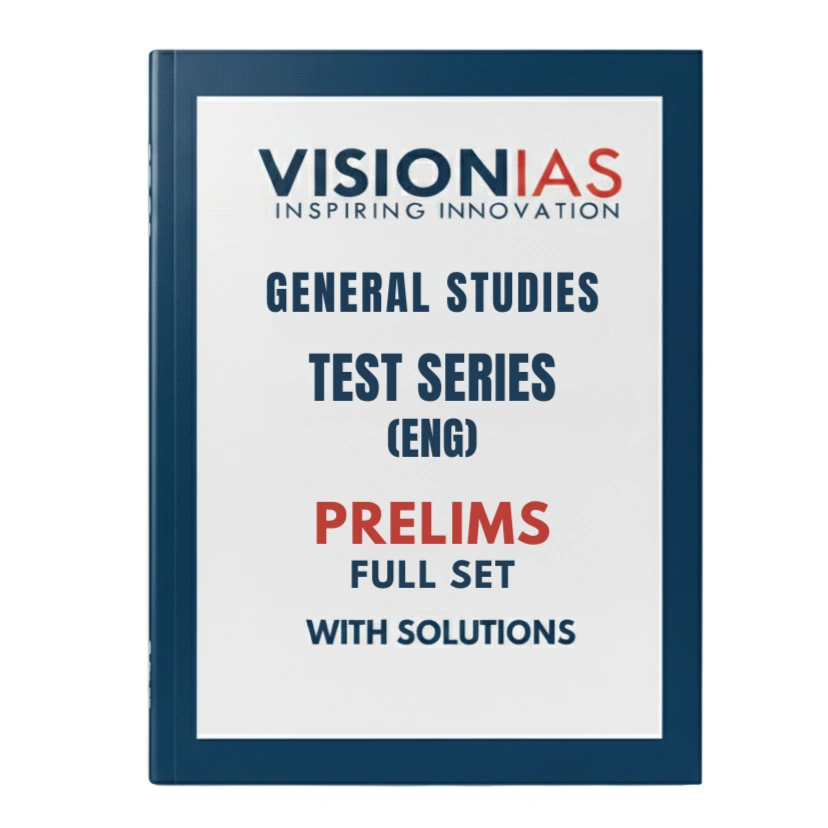
Aspirants who are simultaneously preparing for other competitive exams often build a broader test-taking rhythm by attempting structured mock sets. Disciplined practice on a platform like the Vision IAS Prelims Test Series trains the same exam temperament — timed attempts, accuracy under pressure and post-test analysis — that pays off in the RRB CBT too.
RRB Technician Books to Prepare
Which books are best for RRB Technician preparation? Build a lean, high-quality shelf rather than a tall pile. The essentials:
| Subject | Recommended Resource |
|---|---|
| General Science (Grade 3) | NCERT Science (Class 9 & 10) + Lucent’s General Science |
| General Awareness | Lucent’s General Knowledge + a monthly current-affairs digest |
| Mathematics | R.S. Aggarwal Quantitative Aptitude / Kiran’s arithmetic |
| Reasoning | R.S. Aggarwal Verbal & Non-Verbal Reasoning |
| Basic Science & Engineering (Grade 1) | Diploma-level Basic Electronics / Electrical Engineering guides |
| Practice | Previous-year papers + full-length online mock tests |
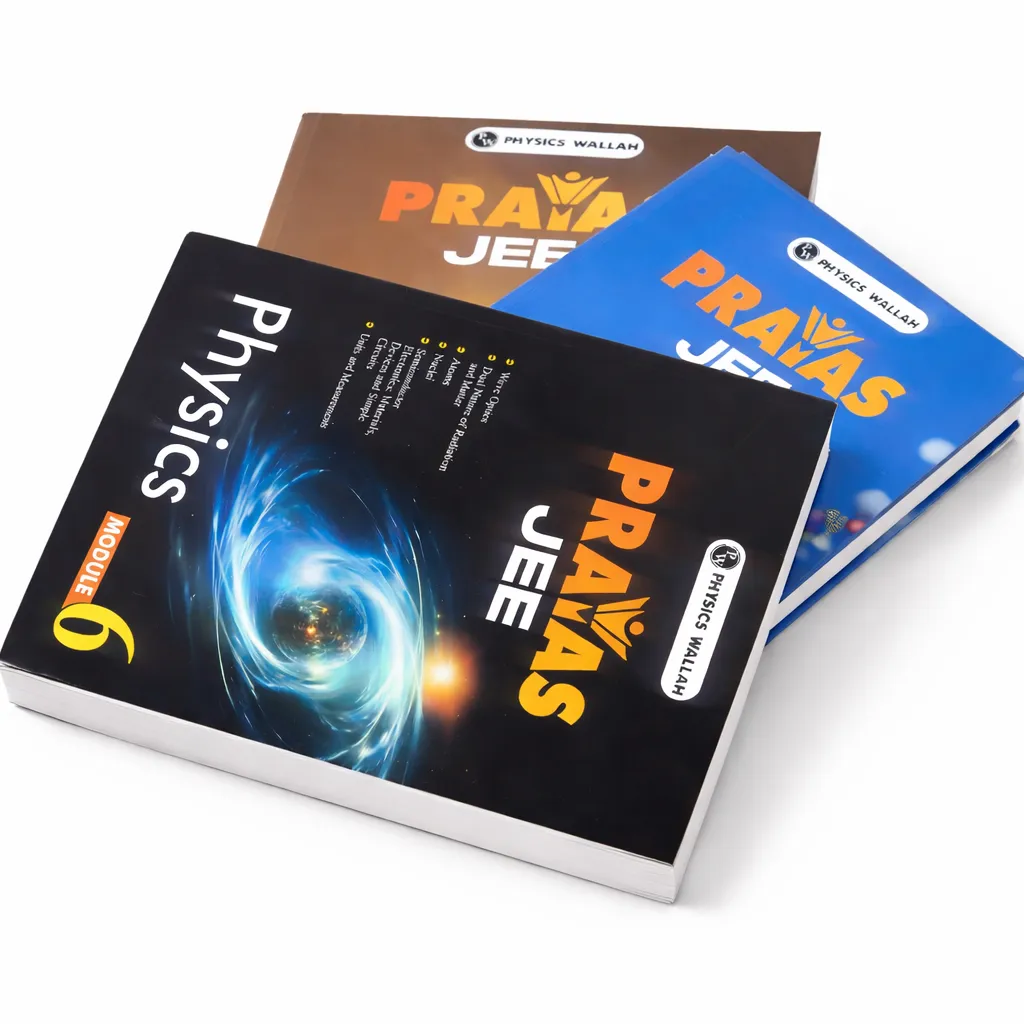
The two non-negotiables are Lucent’s GK for General Awareness and a solid bank of previous-year papers with mock tests for exam simulation. Practising with a curated question toolkit builds pattern recognition fast — the same principle behind the Forum IAS Topic-Wise PYQ Toolkit, which shows how systematic previous-year practice sharpens accuracy. Candidates from an engineering background who also mentor JEE aspirants often keep concept modules like the PW Prayas JEE Modules handy for brushing up physics fundamentals that overlap with the Grade 1 science section.
Common Mistakes to Avoid
- Preparing for the wrong grade. Studying Grade 3 general science when you applied for Grade 1 Signal (or vice versa) is the costliest error — confirm your grade first.
- Ignoring the high-weightage section until late. The 35/40-mark block needs the most runway; it is not a last-week topic.
- Guessing recklessly. Negative marking punishes it; disciplined elimination protects your score.
- Skipping mocks. Reading the syllabus is not the same as performing under a 90-minute clock.
- Over-studying General Awareness. It is only 10 marks — cap it and redirect the time to scoreable sections.
Frequently Asked Questions
What is the syllabus of RRB Technician 2026?
The RRB Technician 2026 syllabus covers a single CBT of 100 marks. Grade 1 Signal includes General Awareness (10), Reasoning (15), Basics of Computers (20), Mathematics (20) and Basic Science & Engineering (35). Grade 3 includes General Awareness (10), Reasoning (25), Mathematics (25) and General Science (40).
What is the difference between RRB Technician Grade 1 and Grade 3 syllabus?
Grade 1 Signal has Basic Science & Engineering (35 marks) and Computers (20 marks), making it engineering-oriented for diploma holders. Grade 3 has no computers or engineering; instead it carries General Science (40 marks) at class-10 level, with larger Reasoning and Maths sections of 25 marks each.
How many questions are asked in the RRB Technician exam?
The exam has 100 questions worth 100 marks, to be answered in 90 minutes. Every question carries 1 mark, so accuracy and time management are both critical.
Is there negative marking in the RRB Technician exam?
Yes. One-third (1/3) of a mark is deducted for every wrong answer. Only attempt questions where you can eliminate at least two options, as reckless guessing directly lowers your score.
Which subject has the highest weightage in RRB Technician?
For Grade 1 Signal, Basic Science & Engineering has the highest weightage at 35 marks. For Grade 3, General Science is highest at 40 marks. Build your study plan around this dominant section first.
What are the minimum qualifying marks for RRB Technician?
The category-wise minimum qualifying marks are 40% for UR and EWS, 30% for OBC (Non-Creamy Layer) and SC, and 25% for ST, with up to 2% relaxation for reserved categories where vacancies remain. These are only qualifying floors — actual selection cutoffs often run 65–80+ marks in competitive zones.
How can I download the RRB Technician syllabus PDF?
Open the official Technician 2026 notification on your regional RRB website or the central portal (rrbcdg.gov.in), go to the “Syllabus for CBT” annexure, and save the PDF. It lists the verbatim subject-wise syllabus for both Grade 1 Signal and Grade 3.
Which books are best for RRB Technician preparation?
Use NCERT Science (Class 9 & 10) and Lucent’s General Science for the science sections, Lucent’s GK for General Awareness, R.S. Aggarwal for Mathematics and Reasoning, and diploma-level electronics/electrical guides for Grade 1 Basic Science & Engineering. Pair these with previous-year papers and full-length mock tests for exam simulation.
Is the RRB Technician syllabus the same for all RRB zones?
Yes. The syllabus and exam pattern are set centrally, so the CBT is identical across all RRB zones such as Chennai, Mumbai, Bhopal and Secunderabad. Only vacancies, notified trades and zone-wise cutoffs differ, which is why you download the notification for your specific region.
Recommended Study Material

Continue Reading
HPSC Syllabus 2026: HCS Prelims, Mains (New Pattern) & PDF Download
The HPSC syllabus for the Haryana Civil Services (HCS) exam 2026 spans three stages — Preliminary (objective), Mains…
Anthropology Optional Syllabus 2026: Paper 1 & 2 + PDF
The anthropology optional syllabus for UPSC Mains is divided into two papers of 250 marks each (500 total),…
Public Administration Optional Syllabus 2026: Paper 1 & 2 + PDF
The public administration optional syllabus for UPSC has two papers of 250 marks each (500 total): Paper 1…