JPSC Syllabus 2026: Prelims, Mains, Pattern + PDF
JPSC syllabus 2026 for Prelims & Mains: exam pattern, marks, Paper 2 Jharkhand GS, negative marking, language options and a free PDF download guide.

The JPSC syllabus for the Combined Civil Services Examination is spread across three stages: a Preliminary exam (2 objective papers of 200 marks each), a Mains exam (6 descriptive papers totalling around 950 scoring marks), and a Personality Test/Interview of 100 marks. Paper I of Prelims tests national General Studies while Paper II is fully Jharkhand-specific, and the Mains covers language, social science, polity, economy, and science with one Language & Literature choice. This guide breaks down the complete jpsc syllabus 2026 — stage-wise topics, exam pattern, marks, weightage, a JPSC vs UPSC comparison, a paper-wise booklist, and a free JPSC syllabus PDF download so you can plan preparation from day one.
JPSC Syllabus 2026: Key Facts at a Glance
If you only have a minute, here is the jpsc syllabus and selection process boiled down to the essentials aspirants ask about most:
- Three stages: Prelims (objective) → Mains (descriptive) → Personality Test (interview).
- Prelims: 2 papers × 200 marks = 400 marks; Paper I is national GS, Paper II is Jharkhand-specific GS.
- Mains: 6 papers; Paper I (language) is qualifying only, Papers II–VI are scoring (~950 marks).
- Interview: 100 marks, added to the final merit.
- Final merit: ~950 (Mains scoring) + 100 (interview) ≈ 1,050 marks; Prelims marks are not added.
- Negative marking: recent Prelims cycles have carried no negative marking (always verify the notification).
JPSC Syllabus 2026 at a Glance
The Jharkhand Public Service Commission (JPSC) conducts the Combined Civil Services Examination (CCE) to recruit officers for services such as Jharkhand Administrative Service, Jharkhand Police Service, and other state cadre posts. Before diving into the detailed jpsc prelims syllabus and jpsc mains syllabus, here is the full selection process and the marks attached to each stage.
| Stage | Type | Papers | Total Marks | Purpose |
|---|---|---|---|---|
| Preliminary Examination | Objective (MCQ) | 2 papers | 400 | Screening / qualifying for Mains |
| Main Examination | Descriptive (written) | 6 papers | ~950 (scoring) + 100 qualifying | Merit-deciding written stage |
| Personality Test | Interview | — | 100 | Final merit + personality assessment |
Key point for planners: Prelims marks are not added to the final merit — the Preliminary examination is only a screening test. The final merit list is prepared from the scoring Mains papers (roughly 950 marks) plus the 100-mark Personality Test, i.e. around 1,050 marks in total.
JPSC Exam Pattern 2026 (Prelims + Mains)
Understanding the jpsc exam pattern is the first step to reading the syllabus correctly, because it tells you how deep to go on each topic. The Preliminary exam is entirely objective, while the Main exam is entirely descriptive.
JPSC Prelims Exam Pattern
| Paper | Subject | Marks | Duration | Nature |
|---|---|---|---|---|
| Paper I | General Studies (Paper-I) — National + General | 200 | 2 hours | Objective, merit-counting for Prelims cut-off |
| Paper II | General Studies (Paper-II) — Jharkhand-specific | 200 | 2 hours | Objective, merit-counting for Prelims cut-off |
| Total | 400 | 4 hours | — | |
Negative marking status: As per recent JPSC notifications, the Preliminary examination has carried no negative marking for wrong answers, unlike UPSC where one-third of the marks are deducted. Because rules can change between notifications, always confirm the negative-marking clause in the official JPSC notification for your exam cycle before finalising your attempt strategy.
JPSC Mains Exam Pattern
The jpsc mains syllabus is delivered across six papers. Paper I (General Hindi & English) is only qualifying — you must clear the minimum cut-off, but its marks are not counted in the merit list. Papers II to VI are the scoring papers.
| Paper | Subject | Marks | Duration | Counts for Merit? |
|---|---|---|---|---|
| Paper I | General Hindi & General English | 100 | 3 hours | Qualifying only |
| Paper II | Language & Literature (choose one) | 150 | 3 hours | Yes |
| Paper III | Social Science, History & Geography | 200 | 3 hours | Yes |
| Paper IV | Indian Constitution, Polity, Public Administration & Good Governance | 200 | 3 hours | Yes |
| Paper V | Indian Economy, Globalization & Sustainable Development | 200 | 3 hours | Yes |
| Paper VI | General Science, Environment & Technology Development | 200 | 3 hours | Yes |
| Scoring Total (Papers II–VI) | 950 | — | — | |
JPSC Prelims Syllabus 2026 — Paper I (General Studies)
Paper I of the jpsc prelims syllabus mirrors the national General Studies template that UPSC and most state PSCs follow. It is broad but shallow — the goal at Prelims is coverage and recall, not depth. The major areas are listed below.
| Area | Key Topics |
|---|---|
| History of India | Ancient, Medieval and Modern India; freedom movement; socio-religious reform; national leaders |
| Geography | India & world physical geography; climate, rivers, agriculture, minerals; Indian & Jharkhand geography overview |
| Indian Polity & Governance | Constitution, Parliament, judiciary, Panchayati Raj, rights, governance & policy |
| Economy & Sustainable Development | Planning, poverty, inclusion, demographics, social sector, sustainable development |
| Science & Technology | Everyday science, biology, space, IT, defence and recent tech developments |
| Current Affairs | National and international events of importance; government schemes; awards; sports |
| Miscellaneous / General Awareness | Static GK, general mental ability, and topics of general interest |
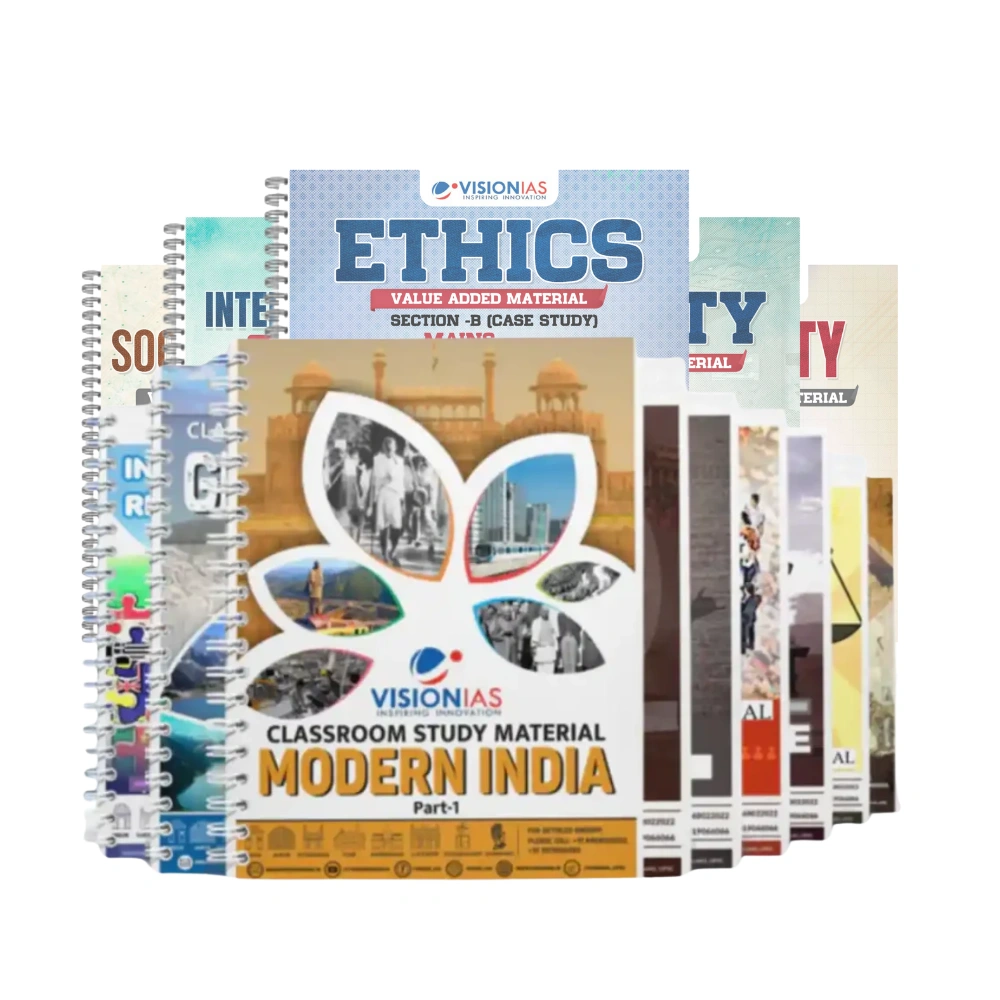
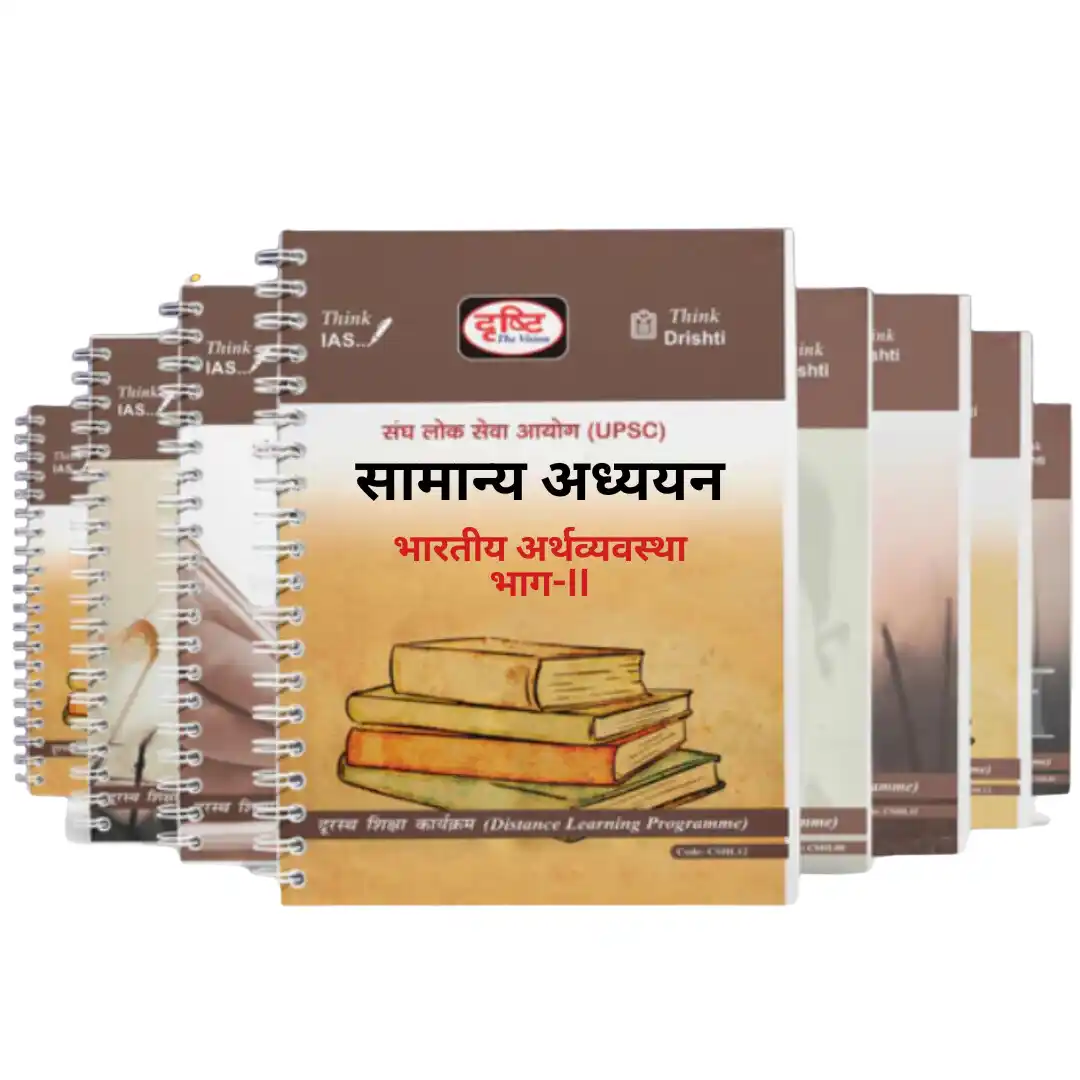
Because Paper I overlaps almost entirely with the UPSC/State-PCS General Studies base, standard national GS material works well here. A consolidated GS set such as the Vision IAS GS 2026-27 booklets covers history, polity, geography, economy, and science in one place, and Hindi-medium aspirants can use the Drishti IAS Hindi Study Material for the same topics.
JPSC Civil Services Syllabus Paper 2 (Jharkhand-Specific GS)
This is where JPSC aspirants win or lose — and where most online guides stay vague. Paper II of Prelims is entirely about Jharkhand, so it cannot be covered by generic UPSC notes. Mastering the jpsc civil services syllabus paper 2 is the single biggest differentiator between a selected candidate and a rejected one, because everyone reads the national GS but few master the state-specific portion in depth.
| Theme | What to Study |
|---|---|
| History of Jharkhand | Ancient to modern Jharkhand; tribal history; role of the region in the freedom struggle |
| Tribal Movements & Revolts | Santhal Hul (1855–56), Birsa Munda & Ulgulan, Kol revolt, Tana Bhagat, Kherwar movement |
| Culture, Society & Literature | Tribal festivals (Sarhul, Karma, Sohrai), folk dance, art, tribal & regional literature |
| Land Laws | Chotanagpur Tenancy Act (CNT Act), Santhal Pargana Tenancy Act (SPT Act) and land rights |
| Geography of Jharkhand | Physiography, rivers, forests, climate, minerals (coal, iron, mica, bauxite), districts |
| Economy & Industries | Mining, steel and heavy industries, agriculture, forest economy, state schemes & welfare |
| Jharkhand Polity & Current Affairs | State administration, Panchayati Raj in scheduled areas (PESA), state-level current events |
Because no national coaching brand publishes a dedicated Jharkhand GS booklet, aspirants typically combine the state-specific portion (Jharkhand yearbook, JPSC-focused material, and state government sources) with a strong national GS foundation. Candidates preparing for neighbouring state services often study across states; for example, the Drishti BPSC books (Hindi) show the depth expected in the state-PCS regional GS portion, which is a useful benchmark while you build your Jharkhand notes.
JPSC Mains Syllabus 2026 — Paper-by-Paper
The Mains is descriptive and merit-deciding, so the jpsc mains syllabus must be studied for depth, structure and answer-writing. Below is the paper-wise breakdown.
Paper I: General Hindi & English (Qualifying, 100 marks)
This qualifying paper tests basic language competence in both Hindi and English. Typical components include comprehension/precis, grammar and usage, essay/paragraph writing, letter/report writing, and translation. You must score the prescribed minimum (a qualifying percentage set by the Commission); the marks are not added to your merit total, but failing to qualify eliminates you regardless of how well you score elsewhere — so never neglect it.
Paper II: Language & Literature (150 marks)
Candidates choose one Language & Literature subject. This is one of the most under-explained parts of the syllabus online, yet it directly affects your scoring strategy. The available options usually include:
| Category | Language & Literature Options |
|---|---|
| Tribal & Regional Languages | Santali, Ho, Mundari, Kurukh (Oraon), Kharia, Nagpuri, Khortha, Kurmali, Panch Pargania |
| Major Indian Languages | Hindi, Bengali, Urdu, Odia, Sanskrit |
| Others | English (and other languages as notified by the Commission) |
The exact list is confirmed in each official notification, so verify your language option before you begin. Choosing a language you are genuinely comfortable reading and writing in — often the mother tongue for tribal-language aspirants — is a proven scoring advantage in this 150-mark paper.
Paper III: Social Science — History & Geography (200 marks)
Covers History of India and Jharkhand (ancient, medieval, modern, freedom struggle, post-independence), World History outlines, and Geography — physical, economic and human geography of India and Jharkhand, resources, environment and disaster management. Expect a heavy Jharkhand overlay on the general framework.
Paper IV: Indian Constitution, Polity, Public Administration & Good Governance (200 marks)
Includes the Constitution, features and amendments, Union and State government, judiciary, federalism, local self-government, public administration concepts, accountability, e-governance, transparency (RTI), and good-governance initiatives with a Jharkhand governance angle.
Paper V: Indian Economy, Globalization & Sustainable Development (200 marks)
Covers Indian economy fundamentals, planning and NITI Aayog, agriculture, industry, banking and fiscal policy, globalization and its effects, inclusive growth, and sustainable development including Jharkhand’s economy, mineral resources and industrial base.
Paper VI: General Science, Environment & Technology Development (200 marks)
Covers general science (physics, chemistry, biology fundamentals), environment and ecology, biodiversity, climate change, science and technology developments, IT, biotechnology, space and defence technology, and their applications.
How JPSC Mains Cut-Offs & Qualifying Marks Work
A point most syllabus pages skip: clearing the Mains is not only about the 950 scoring marks — two gates decide whether those marks even count. First, Paper I (General Hindi & English) is purely qualifying, so you must reach the minimum threshold the Commission sets or your entire candidature is cancelled. Second, the Commission calls candidates for interview in a fixed ratio to vacancies based on scoring-paper totals, which means the effective Mains cut-off floats with the number of posts and competition each cycle. Practically, this tells you to (1) bank guaranteed marks in the Language & Literature paper, (2) not treat the qualifying language paper casually, and (3) confirm the exact qualifying percentages and interview ratio in the official notification, since these have varied across JPSC cycles.
JPSC Interview / Personality Test (100 Marks)
Candidates who clear the Mains are called for the Personality Test carrying 100 marks. The interview board assesses mental alertness, clarity of thought, balance of judgement, leadership, integrity, and awareness of Jharkhand’s socio-economic and cultural issues along with national and international current affairs. Since the final merit combines the ~950 scoring Mains marks with these 100 marks, the interview can meaningfully change your rank — treat it as a serious scoring stage, not a formality.
JPSC Subject-Wise Weightage & PYQ Trend
Most syllabus pages stop at topic lists. To actually plan your hours, you need to know where the marks concentrate. Based on the paper structure and past-year trends, here is an indicative weightage map for the scoring Mains papers.
| Mains Paper | Marks | Share of Scoring Total | Preparation Priority |
|---|---|---|---|
| Language & Literature | 150 | ~16% | High — easy to score with the right option |
| Social Science (History & Geography) | 200 | ~21% | High — large Jharkhand overlap |
| Polity, Public Admin & Governance | 200 | ~21% | High — static + current mix, scoring |
| Economy & Sustainable Development | 200 | ~21% | Medium-High — needs current linkage |
| General Science, Environment & Tech | 200 | ~21% | Medium — factual, current-affairs heavy |
Practical takeaway from trends: (1) Jharkhand-specific content is spread across almost every paper, so state material has the highest return on effort; (2) current affairs feeds Polity, Economy and Science papers heavily; and (3) the Language & Literature paper is the most controllable score if you pick the right option early. Keeping a current-affairs magazine such as the Vision IAS Current Affairs Magazine (January 2026) updated month-on-month covers the dynamic portion across all three papers.
Is the JPSC Syllabus the Same as UPSC?
No — but the overlap is large enough that UPSC aspirants can reuse most of their national GS preparation. The structure and the state-specific Paper II differ, while the underlying General Studies base is nearly identical. This comparison helps you decide how much fresh material you actually need.
| Aspect | JPSC (CCE) | UPSC (CSE) |
|---|---|---|
| Prelims Papers | 2 (GS-I + Jharkhand GS-II) | 2 (GS + CSAT, CSAT qualifying) |
| Negative Marking (Prelims) | Generally none (verify notification) | Yes, one-third deduction |
| State-Specific Content | Heavy (Jharkhand across most papers) | Minimal |
| Mains Papers | 6 (1 qualifying language) | 9 (2 qualifying + Essay + optional) |
| Optional Subject | No separate optional; Language & Literature paper instead | One optional (2 papers) |
| Interview | 100 marks | 275 marks |
If you are already preparing for UPSC, your history, polity, geography, economy, science and current-affairs notes transfer directly to JPSC Paper I and Mains Papers III–VI. You mainly need to add the Jharkhand layer and a Language & Literature option. National PYQ practice also sharpens your objective accuracy — a topic-wise PYQ resource like the Forum IAS Prelims Toolkit (Topic-wise PYQ) builds the pattern recognition that helps in JPSC Prelims too.
Best Books & Study Material for JPSC (Paper-Wise)
Since JPSC has no single official textbook, the winning approach is a strong national GS core plus Jharkhand-specific sources. Here is a paper-wise mapping.
| Paper / Area | Recommended Approach |
|---|---|
| Prelims Paper I & Mains III–VI (GS) | Consolidated national GS notes (history, polity, geography, economy, science) + NCERTs |
| Prelims Paper II & Jharkhand portions | Jharkhand GK/yearbook, state government sources, CNT/SPT Act summaries, tribal movements notes |
| Economy & Sustainable Development | Dedicated economy notes + Economic Survey highlights + current affairs |
| Language & Literature | Prescribed texts for your chosen language; past papers for answer patterns |
| Current Affairs (all papers + interview) | Monthly current-affairs magazine + Jharkhand state news tracking |
For the GS core, English-medium aspirants can rely on the Vision IAS GS 2026-27 set and add a focused economy resource such as the Vision IAS Economics Notes for Paper V. Hindi-medium aspirants — a large share of JPSC candidates — can build the same base with the Drishti IAS Hindi Study Material, then layer Jharkhand-specific reading on top.
How to Download the JPSC Syllabus PDF for 2026
You can access the official jpsc syllabus pdf download through the following routes:
- Visit the official JPSC website (jpsc.gov.in) and open the latest Combined Civil Services Examination notification.
- Download the notification PDF — the detailed Prelims and Mains syllabus is included as an annexure.
- Save both the Prelims (Paper I + Paper II) and Mains (Papers I–VI) syllabus sections for offline reference.
For a clean, exam-ready plan, keep a consolidated syllabus sheet that maps each topic to your source material and revision status. A free, ungated summary of the jpsc syllabus 2026 — Prelims plus Mains — is compiled in this article’s tables above, which you can save or print directly without any login.
JPSC Eligibility & Age Limits (Quick Touchpoints)
While the syllabus is the focus, eligibility decides whether you can appear at all. Broad touchpoints (always confirm against the live notification):
| Criterion | Details (Indicative) |
|---|---|
| Nationality | Indian citizen |
| Educational Qualification | Bachelor’s degree from a recognised university |
| Minimum Age | 21 years |
| Maximum Age (Unreserved) | Around 35 years (as per latest notification) |
| Age Relaxation | For SC/ST, OBC, women and other categories as per Jharkhand government rules |
Age limits and cut-off dates change between notifications and have been revised in recent cycles, so treat the above as indicative and cross-check the exact numbers in the official JPSC notification.
JPSC Preparation Strategy & Timeline
A structured 10–12 month plan built around the syllabus works best for most working and student aspirants.
| Phase | Duration | Focus |
|---|---|---|
| Foundation | Months 1–4 | NCERTs + national GS core (history, polity, geography, economy, science) |
| Jharkhand Layer | Months 3–6 | Paper II Jharkhand GS, CNT/SPT, tribal movements, state geography & economy |
| Mains & Answer Writing | Months 5–9 | Depth for Papers III–VI, Language & Literature option, daily answer practice |
| Prelims Sprint | Months 8–10 | MCQ practice, PYQs, revision, mock tests for both Prelims papers |
| Revision & Interview | Final 2 months | Consolidated revision, current affairs, personality-test preparation |
Overlap the phases — do not wait to finish national GS before starting Jharkhand content. Current affairs should run continuously from day one because it feeds Prelims, three Mains papers and the interview.
Common Mistakes JPSC Aspirants Make
- Ignoring Paper II depth: Treating Jharkhand GS as an afterthought is the top reason capable candidates miss the Prelims cut-off.
- Choosing the wrong Language & Literature option: Picking a “scoring” language you cannot write fluently backfires — comfort beats hype.
- Neglecting the qualifying language paper: Paper I Mains is only qualifying, but failing it eliminates you outright.
- Stale material: Recycling old patterns and outdated notes instead of tracking the latest notification and current affairs.
- No answer-writing practice: The Mains is descriptive; content without structured, time-bound writing does not convert to marks.
Frequently Asked Questions
What is the syllabus of JPSC exam?
The JPSC syllabus covers three stages: Prelims with two objective papers — Paper I (national General Studies: history, geography, polity, economy, science, current affairs) and Paper II (Jharkhand-specific GS). Mains has six descriptive papers covering language, social science, polity and governance, economy, and general science, followed by a 100-mark Personality Test.
How many papers are there in JPSC Prelims and Mains?
JPSC Prelims has 2 objective papers of 200 marks each (400 total). JPSC Mains has 6 papers — Paper I (General Hindi & English) is qualifying, while Papers II to VI are scoring and add up to about 950 marks.
What is the JPSC Mains exam pattern and total marks?
JPSC Mains has 6 descriptive papers of 3 hours each. Paper I (General Hindi & English, 100 marks) is qualifying only. Papers II–VI are scoring: Language & Literature (150), Social Science/History & Geography (200), Polity & Governance (200), Economy & Sustainable Development (200), and General Science/Environment & Tech (200) — about 950 scoring marks. Added to the 100-mark interview, the final merit is around 1,050 marks.
Is there negative marking in JPSC Prelims?
As per recent JPSC notifications, there has been no negative marking in the Preliminary examination, unlike UPSC. Since rules can change per cycle, always confirm the negative-marking clause in the official notification for your exam year before deciding your attempt strategy.
Is the JPSC syllabus the same as UPSC?
Not identical, but heavily overlapping. The national General Studies base is nearly the same, so UPSC notes transfer directly to JPSC Paper I and Mains Papers III–VI. The key differences are JPSC’s Jharkhand-specific Paper II, its Language & Literature paper instead of a separate optional, and generally no negative marking in Prelims.
What is covered in JPSC Paper 2 (Jharkhand-specific GS)?
JPSC Prelims Paper II is entirely about Jharkhand: history of the region and tribal history; tribal movements and revolts (Santhal Hul, Birsa Munda’s Ulgulan, Kol revolt, Tana Bhagat); culture, festivals and literature; land laws (CNT and SPT Acts); geography and minerals; the state economy and industries; and Jharkhand polity, PESA and state current affairs. Generic UPSC notes do not cover it, so dedicated Jharkhand material is essential.
Which optional/language subjects are available in JPSC Mains?
In the Language & Literature paper (150 marks), candidates choose one option, typically from Santali, Ho, Mundari, Kurukh (Oraon), Kharia, Nagpuri, Khortha, Kurmali, Panch Pargania, Hindi, Bengali, Urdu, Odia, Sanskrit and English. Confirm the exact list in the official notification.
How can I download the JPSC syllabus PDF for 2026?
Visit the official JPSC website (jpsc.gov.in), open the latest Combined Civil Services Examination notification, and download the PDF — the detailed Prelims and Mains syllabus is included as an annexure. You can also save or print the consolidated syllabus tables in this free, ungated guide.
Recommended Study Material


Continue Reading
Best Books for NEET 2026: Subject-Wise List (Bio, Phy, Chem)
The best books for NEET are the NCERT Class 11 and Class 12 textbooks for Physics, Chemistry and…
RRB JE Syllabus 2025: CBT 1 & CBT 2 Subjects, Pattern & PDF
The RRB JE syllabus is split across two computer-based tests: CBT 1 covers Mathematics, General Intelligence & Reasoning,…
CTET Paper 1 Syllabus 2026: Subjects, Pattern + PDF
The CTET Paper 1 syllabus covers five sections of 30 marks each — Child Development & Pedagogy, Language…