RRB JE Syllabus 2025: CBT 1 & CBT 2 Subjects, Pattern & PDF
Complete RRB JE syllabus 2025 for CBT 1 & CBT 2 — subject-wise topics, exam pattern, marking scheme, branch-wise Technical Abilities, weightage & PDF download.

The RRB JE syllabus is split across two computer-based tests: CBT 1 covers Mathematics, General Intelligence & Reasoning, General Awareness and General Science, while CBT 2 covers General Awareness, Physics & Chemistry, Basics of Computers & Applications, Basics of Environment & Pollution Control, and a 100-mark branch-specific Technical Abilities section. CBT 1 has 100 questions in 90 minutes and is only a screening test; CBT 2 has 150 questions in 120 minutes and decides the final merit. Both stages carry 1/3 negative marking, and selection runs CBT 1 → CBT 2 → Document Verification → Medical Examination with no interview.
This guide gives you the full section-wise and subject-wise rrb je syllabus 2025, the exam pattern for every stage, branch-wise Technical Abilities topics for Civil, Electrical, Electronics & Telecommunication, Mechanical, Computer Science/IT, Printing Technology and CMA, a high-yield weightage table, a 90-day study plan, an RRB JE vs SSC JE comparison, and where to download the official syllabus PDF. Everything a Railway Junior Engineer aspirant needs to plan preparation is here in one place.
RRB JE Syllabus 2025 at a Glance
Before the detailed breakdown, here is the entire rrb je syllabus compressed into quick facts you can scan or bookmark:
- Stages: CBT 1 (screening) → CBT 2 (merit) → Document Verification → Medical Examination. No interview.
- CBT 1 subjects: Mathematics (30), General Intelligence & Reasoning (25), General Awareness (15), General Science (30) — 100 marks total.
- CBT 2 subjects: General Awareness (15), Physics & Chemistry (15), Basics of Computers & Applications (10), Basics of Environment & Pollution Control (10), Technical Abilities (100) — 150 marks total.
- Negative marking: 1/3 mark per wrong answer in both CBTs.
- Merit: Prepared only from normalised CBT 2 scores; CBT 1 marks are not counted.
- Branch dependency: Only the 100-mark Technical Abilities section changes by engineering discipline; everything else is common.
RRB JE Exam Pattern 2025 (CBT 1 & CBT 2)
The RRB JE recruitment (conducted by Railway Recruitment Boards for engineering posts like Junior Engineer, JE-IT, Depot Material Superintendent and Chemical & Metallurgical Assistant) is a two-tier computer-based test followed by document verification and a medical exam. Understanding the rrb je exam pattern is the first step, because the two CBTs differ sharply in scope, duration and marking.
| Feature | CBT 1 | CBT 2 |
|---|---|---|
| Number of questions | 100 | 150 |
| Total marks | 100 | 150 |
| Duration | 90 minutes (120 min for PwBD) | 120 minutes (160 min for PwBD) |
| Question type | Objective MCQ | Objective MCQ |
| Negative marking | 1/3 mark per wrong answer | 1/3 mark per wrong answer |
| Nature | Screening / qualifying | Merit-deciding |
| Virtual calculator | No | Yes (on-screen) |
CBT 1 is only a screening test — its marks are not added to the final merit. It filters candidates for CBT 2 (typically 15 times the number of vacancies per board and category). The final merit list is prepared solely from CBT 2 marks (normalised across shifts to adjust for shift-wise difficulty). Because of the 1/3 negative marking, a wrong answer costs you 0.33 marks, so blind guessing is penalised in both stages.
RRB JE CBT 1 Syllabus (Subject-Wise)
The rrb je cbt 1 syllabus is common to every engineering branch — there is no technical section in CBT 1. It tests four subjects: Mathematics, General Intelligence & Reasoning, General Awareness and General Science. Here is the exact marks distribution.
| Subject | No. of Questions | Marks |
|---|---|---|
| Mathematics | 30 | 30 |
| General Intelligence & Reasoning | 25 | 25 |
| General Awareness | 15 | 15 |
| General Science | 30 | 30 |
| Total | 100 | 100 |
Mathematics (30 marks)
Number systems, BODMAS, decimals, fractions, LCM and HCF, ratio and proportion, percentages, mensuration, time and work, time and distance, simple and compound interest, profit and loss, algebra, geometry and trigonometry, elementary statistics, square roots, age calculations, calendar and clock, and pipes and cisterns.
General Intelligence & Reasoning (25 marks)
Analogies, alphabetical and number series, coding-decoding, mathematical operations, relationships, syllogism, jumbling, Venn diagrams, data interpretation and sufficiency, conclusions and decision making, similarities and differences, analytical reasoning, classification, directions, and statement-arguments and assumptions.
General Awareness (15 marks)
Knowledge of current affairs, Indian geography, culture and history including the freedom struggle, Indian polity and constitution, Indian economy, environmental issues concerning India and the world, sports, general scientific and technological developments etc. This section rewards consistent monthly current-affairs reading, which is why a compact, exam-oriented magazine such as this Vision IAS Current Affairs Magazine (January 2026) is a smart low-effort, high-return resource.
General Science (30 marks)
Physics, Chemistry and Life Sciences at the 10th-standard (CBSE) level. High-frequency topics include units and measurements, motion and force, work-energy-power, light, sound, electricity and magnetism, atomic structure, periodic table, acids-bases-salts, metals and non-metals, carbon compounds, cell biology, human physiology, nutrition and diseases.
RRB JE CBT 2 Syllabus (Subject-Wise)
The rrb je cbt 2 syllabus is the merit-deciding stage and is split into a 50-mark general portion (General Awareness, Physics & Chemistry, Basics of Computers & Applications, and Basics of Environment & Pollution Control) plus a 100-mark branch-specific Technical Abilities section. The general half is identical for every branch; only Technical Abilities changes with your engineering discipline.
| Subject | No. of Questions | Marks |
|---|---|---|
| General Awareness | 15 | 15 |
| Physics & Chemistry | 15 | 15 |
| Basics of Computers & Applications | 10 | 10 |
| Basics of Environment & Pollution Control | 10 | 10 |
| Technical Abilities | 100 | 100 |
| Total | 150 | 150 |
General Awareness
Current affairs, Indian geography, history, polity, economy and general science — broadly the same scope as CBT 1 but slightly more current-affairs heavy.
Physics & Chemistry
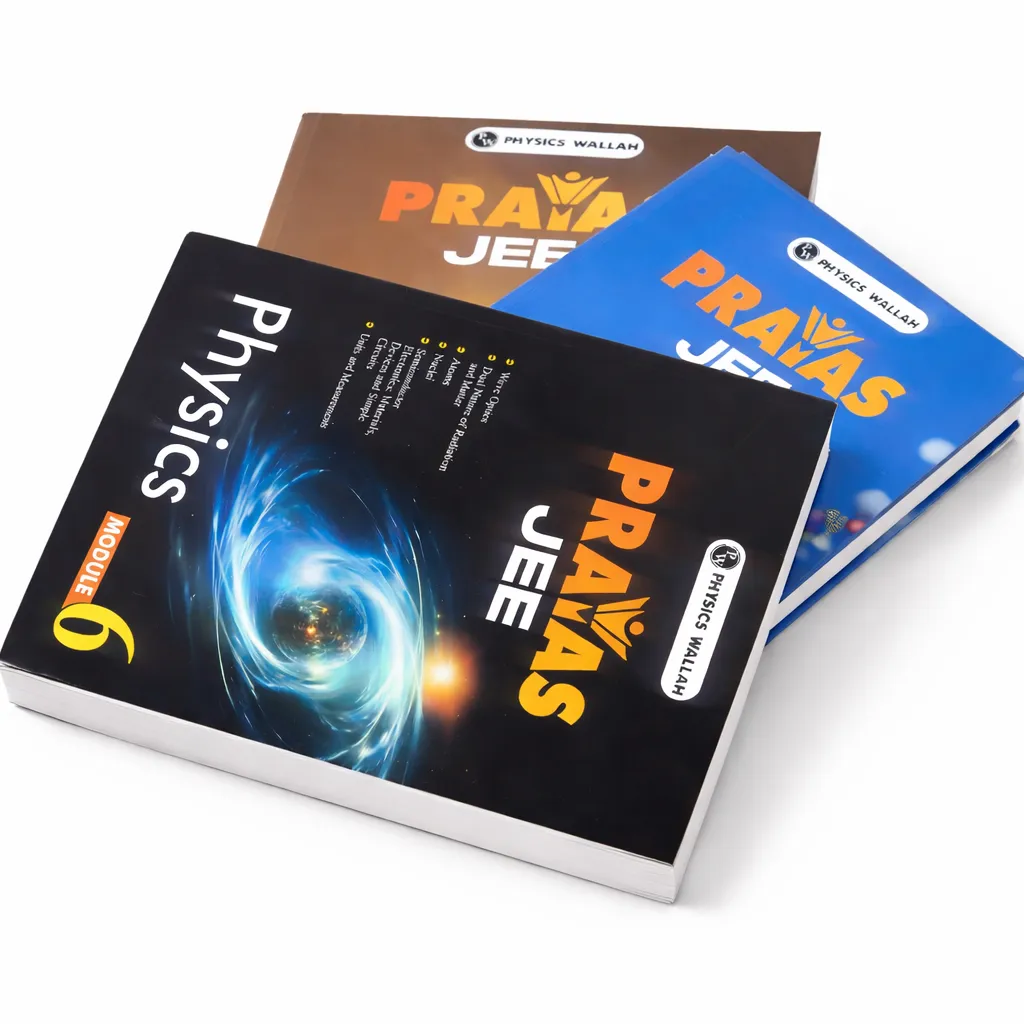
10th-standard CBSE Physics and Chemistry: units and measurements, motion, force and Newton’s laws, work-energy-power, gravitation, heat and thermodynamics, wave motion, electricity and magnetism, atomic structure, periodic classification, chemical reactions, acids-bases-salts, and metals and non-metals. Candidates comfortable with foundation-level JEE material find this section easy; structured modules like these PW Prayas JEE Modules cover the same Physics and Chemistry base with plenty of solved problems.
Basics of Computers & Applications
Architecture of computers, input and output devices, storage devices, networking, operating systems (Windows, Unix, Linux), MS Office, data representation, internet and email, websites and web browsers, computer viruses and cyber security basics.
Basics of Environment & Pollution Control
Basics of environment, adverse effects of environmental pollution and control strategies, air/water/noise pollution and their effects, waste management, global warming, acid rain, ozone depletion, and pollution norms and controls. This is a small but scoring 10-mark section that many aspirants ignore — a costly mistake we address in the study-plan section below.
RRB JE Technical Abilities Syllabus (Branch-Wise)
The rrb je technical abilities syllabus carries 100 of the 150 CBT 2 marks — two-thirds of your merit score — so this is where the exam is truly won or lost. Technical Abilities is NOT the same for every branch; each candidate answers questions from the exam group mapped to their diploma/degree discipline. The table below maps common posts to their Technical Abilities group.
| Exam Group | Typical Posts | Core Discipline |
|---|---|---|
| Group 1 | JE (Civil), JE (P.Way), JE Works, DMS | Civil Engineering |
| Group 2 | JE (Mechanical), JE (Workshop), CMA | Mechanical / Metallurgy |
| Group 3 | JE (Electrical), TRD | Electrical Engineering |
| Group 4 | JE (S&T), Signal | Electronics & Telecom |
| Group 5 | JE (IT) | Computer Science / IT |
RRB JE Civil Engineering Syllabus
The rrb je civil engineering syllabus covers: Engineering Mechanics; Building Construction and materials (cement, bricks, timber, concrete); Building Drawing; Surveying (chain, compass, levelling, theodolite, total station); Estimating, Costing and Valuation; Fluid Mechanics and Hydraulics; Strength of Materials; Theory of Structures; Concrete Technology; RCC Design; Steel Design; Soil Mechanics and Foundation Engineering; Transportation Engineering (highways, railways); Environmental Engineering (water supply, sanitation); and Irrigation Engineering.
RRB JE Electrical Engineering Syllabus
Basic concepts and circuit laws; magnetic, AC and DC circuits; measurement and measuring instruments; electrical machines (transformers, DC machines, induction and synchronous machines); fractional kilowatt motors; synchronous machines; generation, transmission and distribution; estimation and costing; utilisation of electrical energy; and basic electronics.
RRB JE Mechanical Engineering Syllabus
Engineering Mechanics; Strength of Materials; Thermodynamics; Fluid Mechanics and Hydraulic Machines; Theory of Machines; Machine Design; Manufacturing and Production technology; Material Science; Heat Transfer; Refrigeration and Air Conditioning; IC Engines; Power Plant Engineering; and Industrial Engineering.
RRB JE Electronics & Telecommunication Syllabus
Electronic components and materials; electronic devices and circuits; analog and digital electronics; microprocessors and microcontrollers; communication systems (analog and digital); network filters and transmission lines; instruments and measurements; control systems; and computer fundamentals.
RRB JE Computer Science / IT Syllabus
Programming fundamentals (C, C++); data structures and algorithms; database management systems (DBMS); operating systems; computer networks; software engineering; web technologies; information systems; and boolean algebra and digital logic.
Printing Technology & CMA (Chemical & Metallurgical Assistant)
Printing Technology covers image carriers, printing processes (letterpress, offset, gravure, screen), colour science, paper and ink technology, and post-press finishing. CMA covers General Chemistry, Physics, Metallurgy, thermodynamics, chemical process principles, and instrumentation — a strong Physics & Chemistry foundation, like the one built by these eSaral IIT JEE Modules, gives CMA candidates a real edge.
Is the RRB JE Syllabus Same for All Engineering Branches?
This is one of the most common doubts, so it deserves a clear answer: the entire CBT 1 syllabus and the 50-mark general half of CBT 2 (General Awareness, Physics & Chemistry, Computers, Environment) are identical for every branch. Only the 100-mark Technical Abilities section in CBT 2 changes — and it changes strictly according to the exam group mapped to your diploma or degree qualification. A Civil diploma holder cannot choose the Mechanical Technical Abilities paper; the board assigns your group based on the post and eligibility you applied under. This means non-technical preparation can be shared across candidates, while Technical Abilities must be tailored to your own discipline.
RRB JE High-Yield vs Low-Yield Topics (Weightage Analysis)
Most syllabus pages list every topic with equal emphasis. Based on previous-year RRB JE question trends, here is a data-driven priority table so you invest time where marks actually come from. Weightage is approximate and combines CBT 1 and CBT 2 observations.
| Topic Area | Approx. Weightage | Priority |
|---|---|---|
| Technical Abilities (branch) | ~67% of CBT 2 | High — must master |
| Mathematics (arithmetic, mensuration) | High in CBT 1 | High |
| General Science (Physics + Chemistry) | High in CBT 1 | High |
| Reasoning (series, coding, syllogism) | Medium-High | High — quick-scoring |
| Current Affairs / General Awareness | Medium | Medium |
| Basics of Computers | 10 marks (CBT 2) | Medium — easy marks |
| Environment & Pollution Control | 10 marks (CBT 2) | Medium — easy marks |
| Static GK (history, polity, geography) | Low-Medium | Low |
The takeaway: Technical Abilities and Mathematics/Science are non-negotiable, but the 20 combined marks in Computers and Environment are the highest return-on-effort in the entire paper because their syllabus is small and repetitive. Aspirants who skip them leave easy merit marks on the table.
RRB JE 90-Day Study Plan (Branch-Wise Timeline)
A syllabus is only useful when tied to a timeline. Here is a phased 90-day plan that maps each syllabus block to a preparation window. Adjust the branch/technical hours to your discipline.
| Phase | Days | Focus |
|---|---|---|
| Phase 1: Foundation | Day 1–30 | CBT 1 basics — Maths, Reasoning, General Science + start Technical Abilities theory |
| Phase 2: Technical depth | Day 31–60 | Complete branch Technical Abilities, Physics & Chemistry, Computers, Environment |
| Phase 3: Practice | Day 61–80 | PYQ papers, sectional tests, full-length mocks for CBT 1 & CBT 2 |
| Phase 4: Revision | Day 81–90 | Formula revision, current affairs, weak-area drilling, mock analysis |
Daily split suggestion: 3 hours on Technical Abilities, 2 hours on Maths + Reasoning, 1 hour on General Science/Awareness, and 30 minutes on current affairs. Reserve the last two weeks almost entirely for mock tests and error logs, because RRB JE is heavily speed-dependent.
Best Books & Study Material for RRB JE Preparation
The right resource stack for the rrb je syllabus mixes a standard reference per subject with regular practice. Below is a subject-wise recommendation.
| Subject | Recommended Resource Type |
|---|---|
| Mathematics | R.S. Aggarwal Quantitative Aptitude; topic-wise PYQ practice |
| Reasoning | R.S. Aggarwal / M.K. Pandey Verbal & Non-Verbal Reasoning |
| General Science | Lucent General Science; NCERT Class 9–10 Science |
| General Awareness | Monthly current-affairs magazine + Lucent GK |
| Physics & Chemistry (CBT 2) | NCERT Class 10 + foundation JEE modules |
| Technical Abilities | Made Easy / branch-specific handbook + PYQ sets |
For the General Awareness and current-affairs load in both CBTs, a curated monthly magazine saves hours of scattered reading — the Vision IAS Current Affairs Magazine (December 2025) is a compact, exam-ready option. For the Physics & Chemistry portion of CBT 2 and CMA, structured foundation modules keep concepts and numericals in one place.
RRB JE vs SSC JE Syllabus: Side-by-Side
Many diploma holders prepare for both RRB JE and SSC JE. The technical syllabus overlaps heavily, but the pattern and non-technical portions differ. This comparison helps you plan combined preparation.
| Feature | RRB JE | SSC JE |
|---|---|---|
| Conducting body | Railway Recruitment Boards | Staff Selection Commission |
| Stages | CBT 1 + CBT 2 + DV + Medical | Paper 1 (CBT) + Paper 2 (CBT) |
| Branches | Civil, Electrical, E&T, Mechanical, CS/IT, others | Civil, Electrical, Mechanical |
| Non-technical portion | Maths, Reasoning, GS, GA, Computers, Environment | General Intelligence + General Awareness |
| Negative marking | 1/3 mark | 0.25 (Paper 1) / 1 mark (Paper 2) |
| Technical weight | 100/150 in CBT 2 | Paper 1 (100) + Paper 2 (300) |
Because the core engineering topics (Strength of Materials, Thermodynamics, Electrical Machines, etc.) are shared, a candidate can prepare Technical Abilities once and appear for both exams — only the pattern and general sections need separate tuning.
RRB JE Selection Process & Qualifying Marks
The RRB JE selection process has four stages and no interview: CBT 1 → CBT 2 → Document Verification → Medical Examination. You must clear the minimum qualifying percentage in each CBT to move forward.
| Category | Minimum Qualifying Marks |
|---|---|
| UR (General) / EWS | 40% |
| OBC (NCL) | 30% |
| SC | 30% |
| ST | 25% |
These cut-offs may be relaxed by up to 2% for reserved categories where required to fill vacancies. The final merit list is drawn from normalised CBT 2 scores only. After the merit list, candidates undergo document verification and a post-specific medical examination (vision standards like A2, A3, B1, B2, C1 etc. vary by post), and CBT 2 provides an on-screen virtual calculator for numerical questions.
RRB JE Syllabus PDF Download
The authoritative, most current syllabus is always published inside the official RRB JE detailed notification (CEN) on the regional RRB websites (e.g. rrbcdg.gov.in, rrbmumbai.gov.in) and via the Indian Railways portal indianrailways.gov.in. Download the CEN PDF for your recruitment cycle, confirm the Technical Abilities exam group mapped to your qualification, and cross-check any post-specific medical standards. Always treat the official notification as the final word over any third-party summary, and re-check it each cycle, as the board can revise question counts, group mappings or medical standards between recruitment rounds.
Common Mistakes RRB JE Aspirants Make
Understanding the syllabus is half the battle; avoiding these recurring errors is the other half:
- Ignoring Computers & Environment: These 20 CBT 2 marks are easy and repetitive — skipping them is the single most common avoidable loss.
- Treating CBT 1 marks as merit: CBT 1 is only qualifying; over-investing in it while neglecting Technical Abilities hurts your final rank.
- Guessing blindly: With 1/3 negative marking, reckless guessing erases hard-earned marks. Attempt only when you can eliminate options.
- Skipping PYQs: RRB JE repeats topic patterns yearly; previous-year papers are the highest-signal practice you can do.
- No mock-test discipline: The paper is speed-sensitive. Untimed study without full-length mocks leaves you unprepared for shift pressure.
Frequently Asked Questions
What is the syllabus of RRB JE?
The RRB JE syllabus spans two CBTs. CBT 1 covers Mathematics, General Intelligence & Reasoning, General Awareness and General Science. CBT 2 covers General Awareness, Physics & Chemistry, Basics of Computers & Applications, Basics of Environment & Pollution Control, plus a 100-mark branch-specific Technical Abilities section.
Is there negative marking in RRB JE?
Yes. Both CBT 1 and CBT 2 have negative marking of 1/3 mark for every wrong answer. There is no penalty for unanswered questions, so attempt only questions where you can reasonably eliminate wrong options.
What is the difference between RRB JE CBT 1 and CBT 2?
CBT 1 (100 questions, 90 minutes) is a common screening test with no technical section and its marks are not counted in the final merit. CBT 2 (150 questions, 120 minutes) includes a 100-mark branch-specific Technical Abilities section and is the merit-deciding stage.
How many marks is the Technical Abilities section in RRB JE CBT 2?
The Technical Abilities section carries 100 marks out of the 150 total in CBT 2 — roughly 67% of the paper. Because the final merit is based on CBT 2, this section effectively decides selection.
Which subjects are included in RRB JE CBT 1?
RRB JE CBT 1 includes four subjects: Mathematics (30 marks), General Intelligence & Reasoning (25 marks), General Awareness (15 marks) and General Science (30 marks), for a total of 100 questions and 100 marks in 90 minutes. There is no technical section in CBT 1.
Is RRB JE syllabus same for all engineering branches?
The CBT 1 syllabus and the general half of CBT 2 are identical for all branches. Only the 100-mark Technical Abilities section differs — candidates answer questions from the exam group mapped to their engineering discipline (Civil, Electrical, Mechanical, E&T, CS/IT, etc.).
What is the exam pattern for RRB JE 2025?
RRB JE 2025 follows a two-tier objective MCQ pattern. CBT 1 has 100 questions for 100 marks in 90 minutes and is qualifying only. CBT 2 has 150 questions for 150 marks in 120 minutes (with an on-screen calculator) and decides merit. Both stages apply 1/3 negative marking, followed by Document Verification and a Medical Examination.
Which books are best for RRB JE preparation?
Use R.S. Aggarwal for Maths and Reasoning, Lucent for General Science and GK, NCERT Class 9–10 for Physics & Chemistry, a branch-specific technical handbook (e.g. Made Easy) for Technical Abilities, and a monthly current-affairs magazine for General Awareness, supplemented with previous-year papers and mock tests.
Recommended Study Material


Continue Reading
KPSC Syllabus 2026: KAS Prelims, Mains, Pattern + PDF
The KPSC syllabus for the KAS (Gazetted Probationers) exam is a three-stage structure: a Prelims screening test with…
Best Books for JEE Main 2026: Subject-Wise List Recommended by Toppers
The best books for JEE Main are NCERT (Classes 11 and 12) as your non-negotiable base, plus HC…
UKPSC Syllabus 2026: Prelims & Mains + PDF (Hindi & English)
The UKPSC syllabus for the Uttarakhand Combined State Civil/Upper Subordinate Services (PCS) exam is split across three stages…