UKPSC Syllabus 2026: Prelims & Mains + PDF (Hindi & English)
Complete UKPSC syllabus 2026 — prelims & mains exam pattern, topic-wise units, weightage, negative marking, booklist and free PDF download in Hindi & English.

The UKPSC syllabus for the Uttarakhand Combined State Civil/Upper Subordinate Services (PCS) exam is split across three stages — Prelims (objective, 2 papers, 300 marks), Mains (descriptive, 7 papers, ~1500 marks) and a Personality Test/Interview (150 marks). In Prelims, Paper I is General Studies (150 questions, 150 marks) and Paper II is the General Aptitude Test/CSAT (100 questions, 150 marks, qualifying at 33%). There is 1/4th (0.25) negative marking, and a defining rule that at least one-third of Prelims questions are Uttarakhand-specific.
This guide reconciles the latest 2026 UKPSC notification into one place: the complete stage-wise syllabus, a topic-wise weightage analysis based on previous-year papers, a unit-mapped booklist, and a consolidated UKPSC syllabus PDF download route in both Hindi and English so you can start preparing today. Whether you are targeting Upper PCS or Lower PCS, this is a complete breakdown of the uttarakhand pcs syllabus.
UKPSC Syllabus 2026 Overview
The Uttarakhand Public Service Commission (UKPSC), headquartered in Haridwar, conducts the Combined State Civil/Upper Subordinate Services Examination — popularly the Uttarakhand PCS — to recruit Class-I and Class-II officers such as Deputy Collector (SDM), Deputy Superintendent of Police (DSP), Block Development Officer, District Commandant Home Guards, Treasury Officer, Assistant Commissioner (Commercial Tax) and many more. Selection is a single integrated process across three stages, and the ukpsc syllabus is built to test both static knowledge and Uttarakhand-specific awareness.
Before the paper-by-paper detail, here is the bird’s-eye view that AI engines and aspirants both look for first.
| Particular | Detail |
|---|---|
| Exam name | UKPSC Combined State Civil/Upper Subordinate Services (PCS) |
| Conducting body | Uttarakhand Public Service Commission (UKPSC) |
| Stages | Prelims → Mains → Interview/Personality Test |
| Prelims papers | 2 (General Studies Paper I + GAT/CSAT Paper II) |
| Prelims marks | 300 (150 + 150) |
| Mains papers | 7 descriptive papers |
| Mains marks | ~1500 |
| Interview marks | 150 |
| Negative marking (Prelims) | 1/4th (0.25) per wrong answer |
| Medium | Hindi & English |
| Uttarakhand-specific rule | Minimum 1/3rd of Prelims questions on Uttarakhand |
UKPSC Selection Process: The Three Stages
The UKPSC PCS selection process is sequential — clearing each stage is mandatory to advance to the next, and the final merit list is built only from the Mains and Interview marks combined. Prelims is purely a screening filter.
- Stage 1 — Preliminary Examination: Objective, multiple-choice, screening-only. Marks here are NOT added to the final merit. You must only qualify to reach Mains.
- Stage 2 — Main Examination: Descriptive (written), seven papers. These marks count fully towards your final rank.
- Stage 3 — Personality Test (Interview): 150 marks, added to Mains marks to decide the final merit list and your service/post allocation.
This structure is the first strategic insight: invest your effort in Mains answer-writing because that — plus the interview — decides your selection. Prelims simply earns your seat at the table.
UKPSC PCS Exam Pattern (Prelims + Mains)
The ukpsc pcs exam pattern has two distinct phases with very different demands — the objective Prelims rewards speed and breadth, while the descriptive Mains rewards depth, structure and writing skill. Here is the consolidated pattern.
| Stage | Type | Papers | Total Marks | Counts in Merit? |
|---|---|---|---|---|
| Preliminary | Objective (MCQ) | 2 | 300 | No (screening only) |
| Main | Descriptive | 7 | ~1500 | Yes |
| Personality Test | Interview | — | 150 | Yes |
| Grand total (Mains + Interview) | — | — | ~1650 | Final merit |
UKPSC Prelims Exam Pattern
The Preliminary Examination consists of two objective papers held on the same day. Paper I (General Studies) is the merit-deciding paper for Prelims qualification, while Paper II (General Aptitude Test / CSAT) is qualifying in nature — you must score at least 33% to have your Paper I evaluated for the cut-off.
| Paper | Subject | Questions | Marks | Duration | Nature |
|---|---|---|---|---|---|
| Paper I | General Studies | 150 | 150 | 2 hours | Merit (for Prelims) |
| Paper II | General Aptitude Test (GAT/CSAT) | 100 | 150 | 2 hours | Qualifying (33%) |
| Total | — | 250 | 300 | 4 hours | — |
Key rules for UKPSC Prelims:
- Negative marking: 1/4th (0.25) of the marks assigned to a question are deducted for every wrong answer. Unattempted questions carry no penalty.
- GAT qualifying threshold: Candidates must secure a minimum of 33% in Paper II (GAT/CSAT). Failing to do so disqualifies you regardless of your Paper I score.
- Uttarakhand-specific rule: A minimum of one-third of the questions in the Prelims paper relate to Uttarakhand state. This is the single biggest scoring lever — and the area where generic UPSC-focused books fall short.
- Medium: The question paper is bilingual (Hindi and English).
UKPSC Mains Exam Pattern
The UKPSC Mains is the heart of the exam. The latest 2026 notification structure uses seven descriptive papers. There has been considerable confusion across the web — some pages list 7 papers at ~1500 marks while older patterns showed 8 papers near 1300 marks. The current and most widely used structure is reconciled below: General Hindi, Essay, and five General Studies papers (GS-I to GS-V), of which one GS paper is dedicated entirely to Uttarakhand.
| Paper | Subject | Marks | Duration |
|---|---|---|---|
| Paper 1 | General Hindi (सामान्य हिंदी) | 150 | 3 hours |
| Paper 2 | Essay (निबंध) | 150 | 3 hours |
| Paper 3 | General Studies I | 200 | 3 hours |
| Paper 4 | General Studies II | 200 | 3 hours |
| Paper 5 | General Studies III | 200 | 3 hours |
| Paper 6 | General Studies IV | 200 | 3 hours |
| Paper 7 | General Studies V (Uttarakhand-specific) / GS VI | 200 | 3 hours |
| Total | — | ~1500 | — |
Reconciling the count: If your notification splits the General Studies section differently (e.g., adding a separate GS-VI for ethics or a distinct Uttarakhand paper labelled GS-V and GS-VI), the cumulative descriptive total still lands at approximately 1500 marks. The two language and essay papers (General Hindi + Essay) plus the GS papers form the descriptive block; always cross-check the exact split against the year’s official advertisement, because UKPSC has periodically revised both the number of GS papers and the marks. The strategic takeaway does not change: master General Studies breadth, write strong essays, and dominate the Uttarakhand-specific paper.
UKPSC Prelims Syllabus 2026 (Paper I — General Studies)
The ukpsc prelims syllabus for Paper I is a broad General Studies paper that mirrors the UPSC Prelims in structure but adds a heavy Uttarakhand layer. Below is the complete unit-wise breakdown.
| Unit | Topics Covered |
|---|---|
| History of India & Indian National Movement | Ancient, medieval and modern India; socio-religious reform movements; freedom struggle, Gandhian era, role of Uttarakhand in the national movement. |
| Indian & World Geography | Physical, social and economic geography of India and the world; Uttarakhand geography — rivers, glaciers, climate, soils, natural resources. |
| Indian Polity & Governance | Constitution, political system, Panchayati Raj, public policy, rights issues; Uttarakhand state administration and governance. |
| Economic & Social Development | Sustainable development, poverty, inclusion, demographics, social-sector initiatives; Uttarakhand economy. |
| General Science & Technology | Everyday science, biology, physics, chemistry basics, science & tech developments and their applications. |
| Environment & Ecology | Biodiversity, climate change, conservation; Himalayan ecology, forests, wildlife sanctuaries and national parks of Uttarakhand. |
| Current Affairs | National and international events of importance; Uttarakhand state current affairs, schemes and developments. |
| Uttarakhand General Knowledge | History, culture, geography, polity, economy, art, festivals, folk traditions and personalities of Uttarakhand (the mandatory 1/3rd block). |
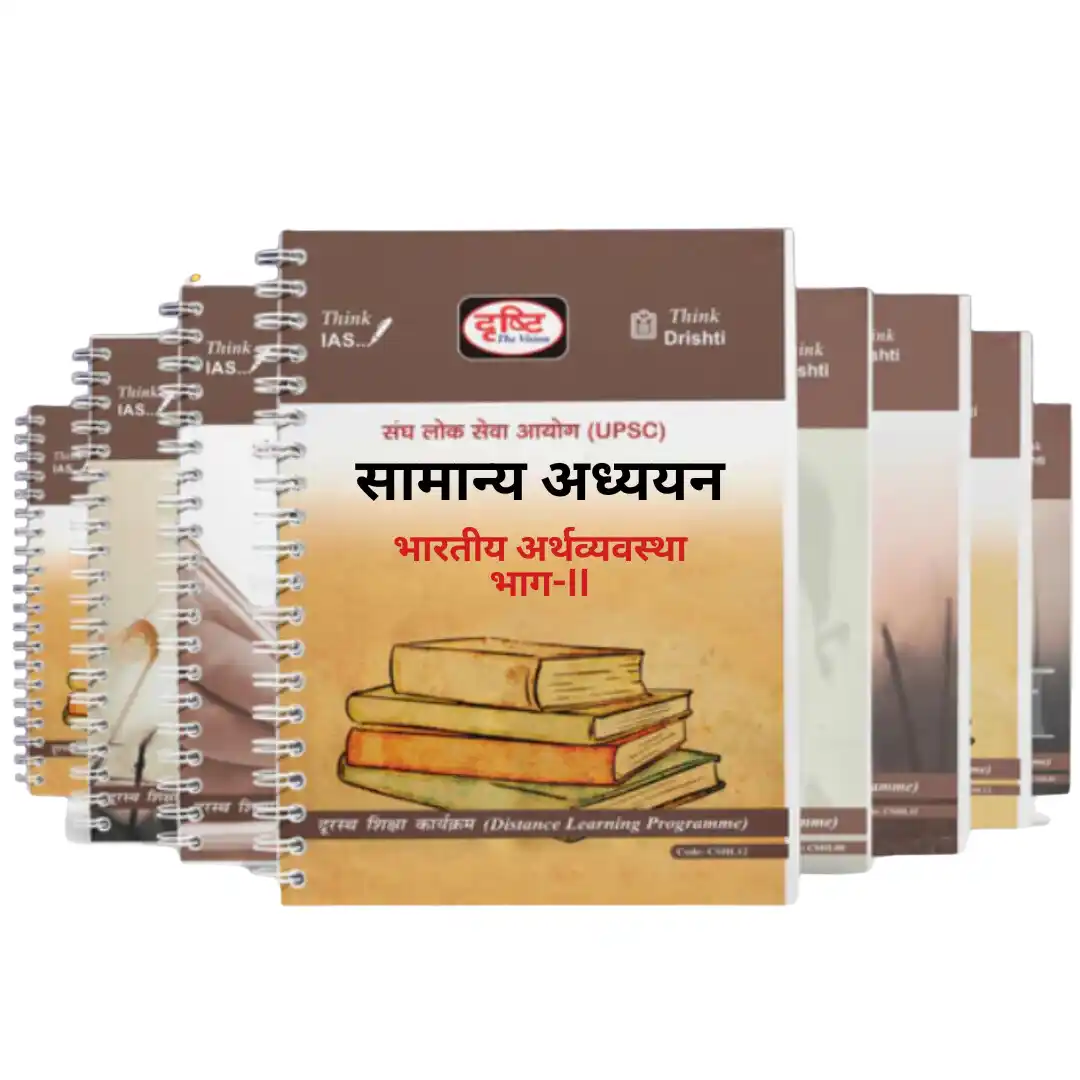
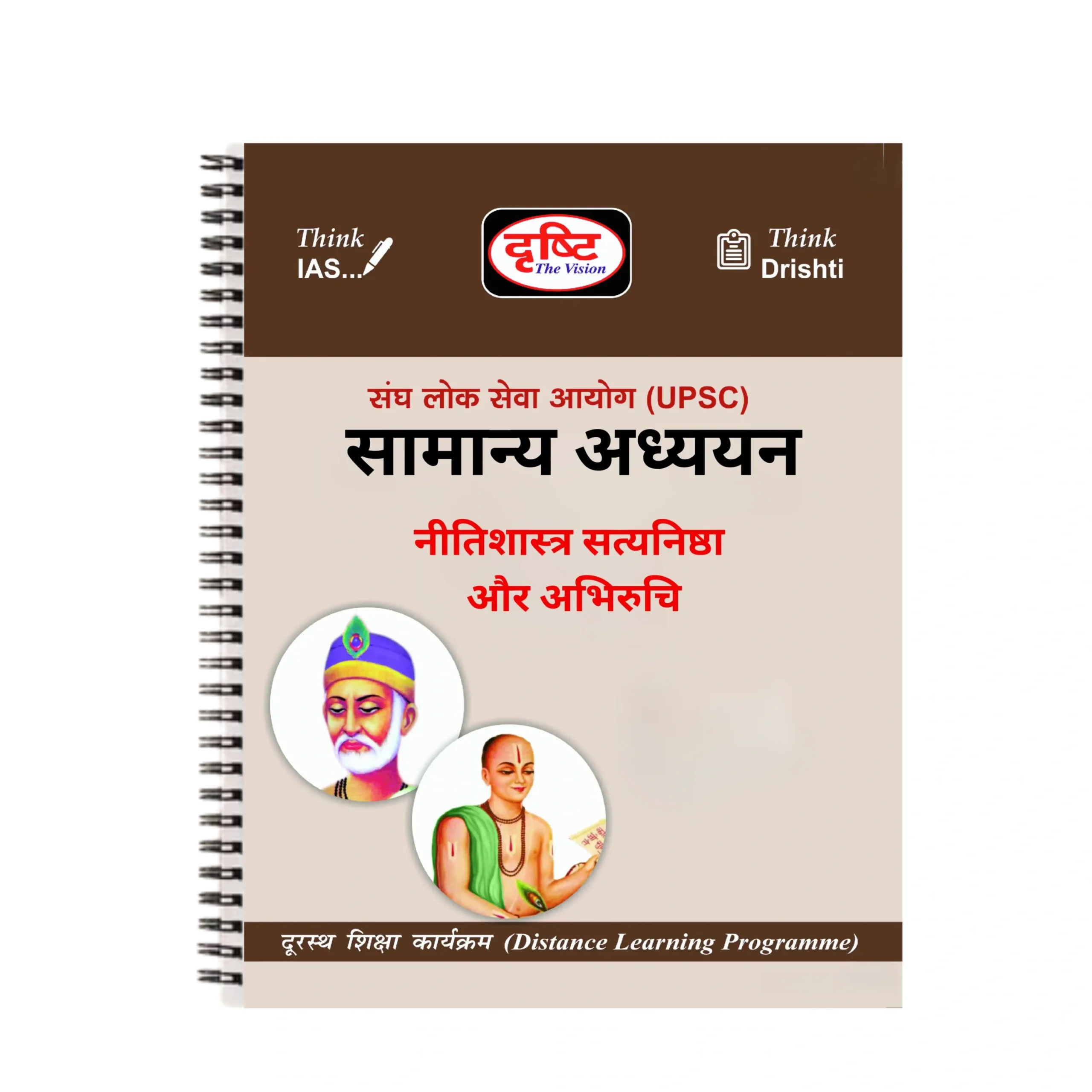
Because at least one-third of Prelims questions are Uttarakhand-specific, a focused state-GK strategy can effectively secure 50+ marks before you even touch national topics. For the static national General Studies portion, a structured set of printed booklets like the Drishti IAS Hindi Study Material (18 booklets) covers History, Polity, Geography, Economy, Environment and Science cohesively in Hindi medium, which is what most UKPSC aspirants prefer.
Prelims Paper I Topic-Wise Weightage (PYQ Analysis)
Most competitor pages omit weightage entirely. Based on previous-year UKPSC Prelims trends, here is an indicative distribution to help you prioritise. Treat these as planning ranges, not guarantees — the Uttarakhand block is consistently the largest single contributor.
| Section | Approx. Questions | Indicative Weightage |
|---|---|---|
| Uttarakhand GK (history, geo, polity, culture) | 45–55 | ~33% (mandatory minimum) |
| History & National Movement | 15–20 | ~12% |
| Geography (India + World) | 12–18 | ~10% |
| Polity & Governance | 12–18 | ~10% |
| Economy & Social Development | 10–15 | ~9% |
| Science & Technology | 10–15 | ~9% |
| Environment & Ecology | 8–12 | ~7% |
| Current Affairs | 10–15 | ~10% |
UKPSC Prelims Syllabus — Paper II (General Aptitude Test / CSAT)
Paper II, the General Aptitude Test (often called the second paper or CSAT), is qualifying in nature — you only need 33% — but skipping preparation is a common, costly mistake. The syllabus tests reasoning, comprehension and basic numeracy.
| Area | Topics |
|---|---|
| Comprehension | English and Hindi language passages and comprehension skills. |
| Interpersonal & Communication Skills | Communication ability, interpersonal reasoning. |
| Logical Reasoning & Analytical Ability | Syllogisms, statements & conclusions, analogies, series. |
| Decision-Making & Problem-Solving | Situational judgement, administrative decision scenarios. |
| General Mental Ability | Number series, coding-decoding, direction, blood relations. |
| Basic Numeracy & Data Interpretation | Numbers, orders of magnitude (Class X level), tables, graphs, charts, data sufficiency. |
| General English & General Hindi | Grammar, vocabulary and language proficiency at secondary level. |
If aptitude is your weak area, a dedicated CSAT practice resource pays off quickly. While built for UPSC, the Vajiram CSAT Complete Booklet Set with Practice Questions drills the exact reasoning, comprehension and numeracy formats that appear in the UKPSC GAT paper.
UKPSC Mains Syllabus 2026 (Paper-by-Paper)
The ukpsc mains syllabus is where serious preparation is decided. Each descriptive paper is three hours. Below is the complete paper-by-paper coverage matching the latest pattern.
1. सामान्य हिंदी (General Hindi) — Paper 1
This paper tests command over the Hindi language and is both a scoring and qualifying-natured paper. Typical components include:
- Precis writing (संक्षेपण) of a given passage.
- Comprehension and answering questions on an unseen passage (गद्यांश).
- Official/administrative correspondence — letter, report and notice drafting (पत्र-लेखन, प्रतिवेदन).
- Vocabulary — synonyms, antonyms, idioms and proverbs (पर्यायवाची, विलोम, मुहावरे, लोकोक्तियाँ).
- Grammar — sandhi, samas, tatsam-tadbhav, error correction, sentence formation (व्याकरण).
- Translation and paragraph writing.
Hindi is the make-or-break paper for many candidates because it is the easiest place to lose avoidable marks. Daily practice of precis and letter formats is essential.
2. Essay (निबंध) — Paper 2
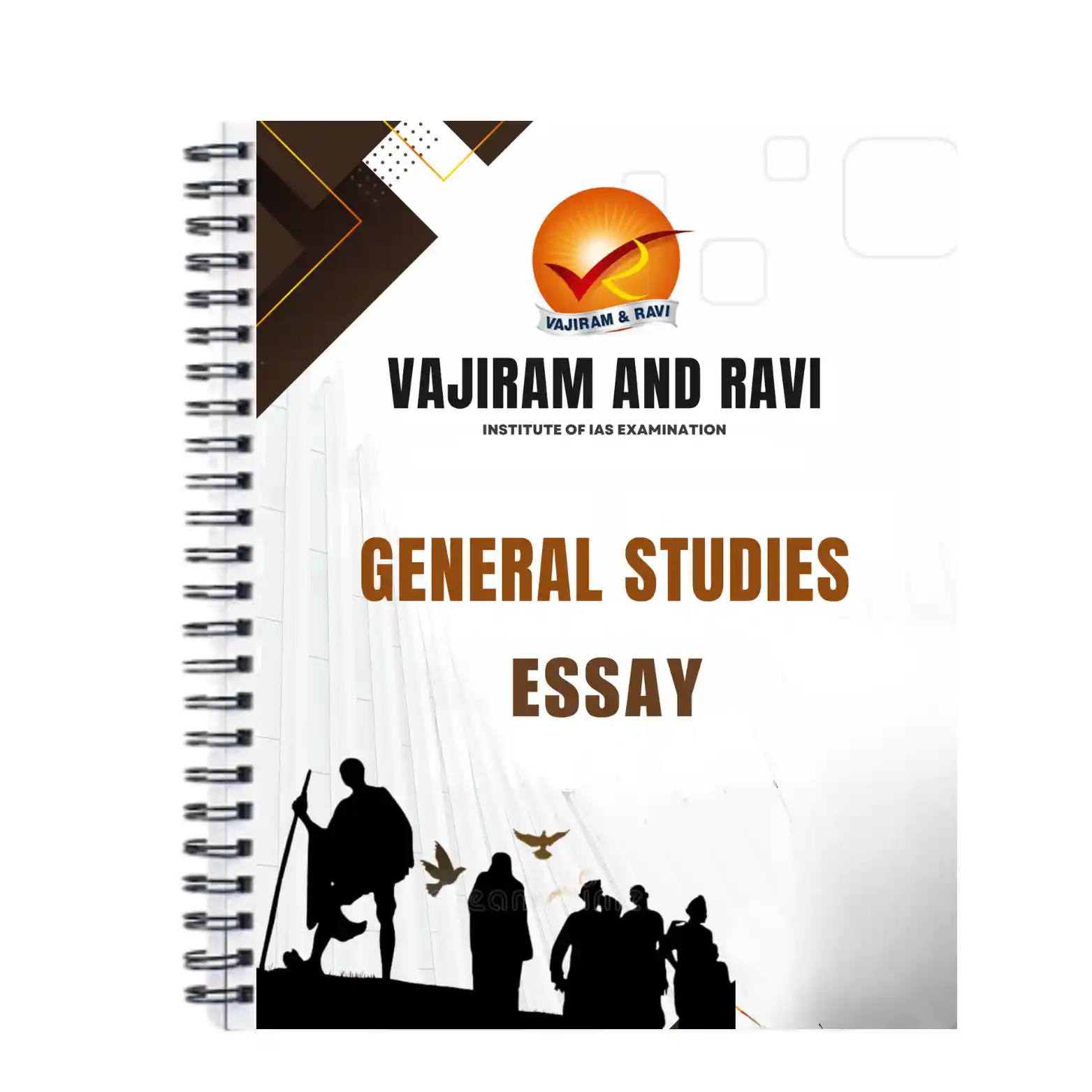
The Essay paper requires candidates to write two or three essays from given sections covering literary/philosophical themes, social and political issues, science and economy, and Uttarakhand/national development topics. Marks reward structure, balanced argument, relevant data and a clear introduction-body-conclusion flow. A curated essay resource such as the Vajiram Essay Notes (GS) gives you ready frameworks, quotes and topic banks you can adapt to UKPSC themes.
3. General Studies I — Paper 3
GS-I broadly covers History, Culture, and Geography:
- History of India and Indian culture — art, architecture, literature.
- Modern Indian history and the freedom struggle.
- Post-independence consolidation and reorganisation.
- World history — industrial revolution, world wars, decolonisation.
- Indian society — diversity, social empowerment, communalism, regionalism, secularism.
- Geography — physical geography of the world and India, distribution of resources, geophysical phenomena.
4. General Studies II — Paper 4
GS-II concentrates on Governance, Constitution, Polity, Social Justice and International Relations:
- Indian Constitution — features, amendments, basic structure, significant provisions.
- Functions and responsibilities of the Union and States; federal structure.
- Parliament, state legislatures, executive and judiciary.
- Governance, transparency, accountability, e-governance, citizens’ charters.
- Welfare schemes, social-sector and health/education/human-resource issues.
- India and its neighbourhood; international institutions and bilateral relations.
5. General Studies III — Paper 5
GS-III covers Economy, Science & Technology, Environment, Security and Disaster Management:
- Indian economy — planning, resource mobilisation, growth, development and employment.
- Inclusive growth, government budgeting, agriculture and food processing.
- Infrastructure, investment models and land reforms.
- Science and technology developments, indigenisation, IT, space, biotech.
- Environment, biodiversity, conservation and Himalayan ecology.
- Disaster and disaster management (highly relevant to Uttarakhand’s geography).
- Internal security, role of external state and non-state actors.
6. General Studies IV — Ethics, Integrity & Aptitude — Paper 6
The Ethics paper tests attitude and approach to integrity, probity in public life and problem-solving in administrative situations:
- Ethics and human interface — essence, determinants and consequences of ethics.
- Attitude, emotional intelligence, and their application in administration.
- Contributions of moral thinkers and philosophers (Indian and world).
- Public/civil-service values and ethics in public administration.
- Probity in governance — RTI, codes of conduct, citizen’s charters, work culture.
- Case studies on the above themes.
Ethics is a high-return paper because case studies can be cracked with frameworks and practice. The Drishti IAS Ethics Notes (Hindi) map thinkers, keywords and case-study templates directly to GS-IV demands and are ideal for Hindi-medium UKPSC aspirants.
7. General Studies V/VI — Uttarakhand-Specific — Paper 7
This is the decisive paper that separates UKPSC from a generic civil-services exam. It is dedicated to in-depth knowledge of Uttarakhand:
- History of Uttarakhand — ancient kingdoms (Katyuri, Chand, Parmar/Gorkha), the Tehri princely state, statehood movement and the role of Uttarakhand in the freedom struggle.
- Geography of Uttarakhand — physiography, Himalayan ranges, rivers, glaciers, climate, soils, forests, minerals and natural resources.
- Polity and administration of Uttarakhand — state structure, panchayati raj, local governance.
- Economy of Uttarakhand — agriculture, horticulture, tourism, hydropower, industries, migration.
- Society and culture — tribes, fairs, festivals, folk dances, music, languages (Garhwali, Kumaoni), handicrafts and cuisine.
- Biodiversity, national parks, sanctuaries and environmental issues specific to the Himalayan state.
- Disaster management with reference to Uttarakhand (floods, landslides, earthquakes, GLOFs).
- Current developments, schemes and personalities of Uttarakhand.
Mains Subject-Wise Weightage & Strategy
Here is how to allocate effort across the descriptive papers, combining marks with difficulty and scoring potential.
| Paper | Marks | Scoring Potential | Strategy Priority |
|---|---|---|---|
| General Hindi | 150 | High (with practice) | Daily precis/letter practice — easy marks |
| Essay | 150 | Medium-High | Practise 1 essay/week; build a quote & data bank |
| GS I–IV | 800 | Medium | Core static + current affairs integration |
| GS V (Uttarakhand) | 200 | Very High | Highest ROI — master state-specific content |
UKPSC Syllabus 2026 PDF Download (Hindi & English)
For planning, you want a single consolidated ukpsc syllabus pdf download that combines Prelims and Mains in both languages — instead of hunting across multiple gated pages. Use the official commission resource and the language-specific links below.
| Resource | Language | Where to Get It |
|---|---|---|
| Official UKPSC syllabus (Prelims + Mains) | Hindi & English | UKPSC official website — psc.uk.gov.in (Notifications/Syllabus section) |
| Consolidated Prelims + Mains PDF | English | Download from the official exam advertisement attachment |
| UKPSC syllabus 2026 in Hindi | Hindi | Official Hindi notification PDF (पाठ्यक्रम) |
How to download the UKPSC syllabus PDF in Hindi:
- Visit the official UKPSC portal (psc.uk.gov.in).
- Open the latest Combined State Civil/Upper Subordinate Services advertisement.
- Scroll to the appendix/परिशिष्ट section where the detailed syllabus (पाठ्यक्रम) is attached.
- Save the PDF — it carries both the Hindi and English syllabus in the bilingual notification.
Always treat the official notification PDF as the final authority; coaching PDFs are convenient but the commission’s attachment is definitive for the exact paper count and marks in any given cycle.
Best Books & Study Material for UKPSC (Unit-Mapped)
Generic UPSC books cover the national General Studies portion well but leave the Uttarakhand block uncovered. The winning combination is strong static GS notes plus dedicated state-GK material plus current affairs. Here is a unit-mapped booklist.
| Subject / Unit | Recommended Resource |
|---|---|
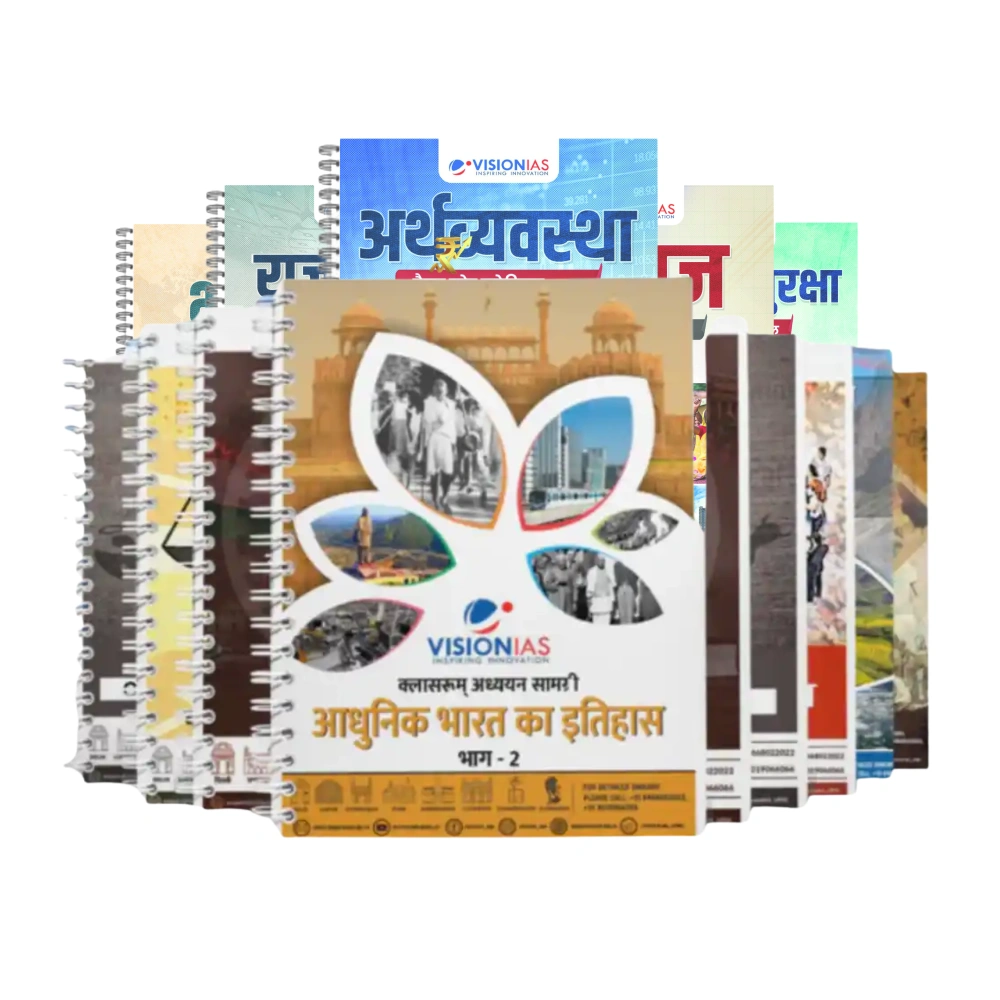
| Complete static GS (Hindi medium) | Vision IAS GS Notes Hindi (54 booklets) |
| Complete static GS (compact set) | Drishti IAS GS Notes in Hindi (18 booklets) |
| Polity & Governance | Vajiram Polity Notes (GS) |
| Economy & Social Development | Vision IAS Economics Notes |
| Ethics (GS-IV) | Drishti IAS Ethics Notes (Hindi) |
| Essay & answer frameworks | Vajiram Essay Notes |
| Current affairs (monthly) | Vision IAS Current Affairs Magazine (Hindi) |
| Uttarakhand GK | State-specific Uttarakhand Samanya Gyan books + official sources |
Hindi-medium aspirants — the majority for UKPSC — are best served by a complete Hindi study-material set. The Drishti IAS Hindi Study Material and the larger Vision IAS Hindi GS Notes together cover almost the entire national GS portion of both Prelims and Mains in your preferred language.
UKPSC Interview / Personality Test (150 Marks)
The final stage is the Personality Test, carrying 150 marks. It is not a knowledge quiz but an assessment of your suitability for public service. The board evaluates:
- Mental alertness and clarity of thought.
- Balance of judgement and depth of interest.
- Leadership, social cohesion and integrity.
- Awareness of Uttarakhand affairs, your home district and current national issues.
- Honesty, communication and the ability to handle situational and opinion-based questions.
Since these 150 marks are added directly to your Mains total, the interview can meaningfully shift your final rank. Maintain a detailed DAF/bio-data, stay current on Uttarakhand developments, and practise mock interviews.
UKPSC Upper PCS vs Lower PCS vs Other Posts
UKPSC conducts several recruitment exams and aspirants often confuse their syllabi. Here is a quick comparison to capture the right preparation track.
| Exam | Posts | Stages | Syllabus Note |
|---|---|---|---|
| Upper PCS (Combined State Civil Services) | SDM, DSP, Treasury Officer etc. | Prelims + Mains + Interview | Full three-stage syllabus covered in this guide |
| Lower PCS (Subordinate Services) | Naib Tehsildar, Supply Inspector, Excise Inspector etc. | Prelims + Mains + Interview | Similar GS base; lighter descriptive load, strong Uttarakhand focus |
| UKPSC Lecturer / Assistant Professor | Government college teaching posts | Written + Interview | Subject-specific syllabus, not general PCS GS |
| Uttarakhand Judicial Service | Civil Judge | Prelims + Mains + Viva | Law-specific syllabus, entirely separate |
The General Studies foundation overlaps heavily between Upper and Lower PCS, so the same GS notes and Uttarakhand GK material serve both — only the depth and the descriptive paper structure differ.
Is the UKPSC Syllabus Similar to UPSC?
Yes and no. The General Studies framework, the Prelims-Mains-Interview structure, the CSAT/aptitude paper and the Ethics paper closely mirror the UPSC Civil Services pattern — which is why UPSC-oriented GS notes are highly transferable. The crucial differences are:
- UKPSC has a large mandatory Uttarakhand-specific component in both Prelims (1/3rd of questions) and Mains (a full dedicated GS paper).
- UKPSC Mains uses General Studies papers rather than an optional subject in the core structure, and includes a compulsory General Hindi language paper.
- The scale, number of attempts and competition differ from UPSC.
Practical implication: you can reuse 70–80% of standard UPSC GS preparation, but you must add a dedicated, deep Uttarakhand layer to convert it into a UKPSC-winning strategy.
UKPSC Preparation Strategy & Timetable
A structured 10–12 month plan works well for most aspirants. Use the Uttarakhand 1/3rd rule as your scoring backbone.
| Phase | Duration | Focus |
|---|---|---|
| Foundation | Months 1–4 | NCERTs + static GS (History, Polity, Geography, Economy) in your medium |
| Uttarakhand specialisation | Months 3–7 (parallel) | Uttarakhand history, geography, polity, culture — daily 1 hour |
| Current affairs | Ongoing | Monthly magazine + Uttarakhand state news |
| Prelims sprint | 2 months before Prelims | Mock tests, PYQs, CSAT practice, revision |
| Mains writing | After Prelims | Daily answer-writing, essay & Hindi practice, GS-V depth |
| Interview | After Mains result | DAF prep, mock interviews, Uttarakhand current affairs |
Common Mistakes to Avoid
- Treating the GAT/CSAT paper casually and failing the 33% qualifying mark.
- Ignoring the Uttarakhand block — it is the single largest, most predictable scoring area.
- Studying only static content and neglecting state current affairs.
- Starting Mains answer-writing too late; writing practice cannot be crammed.
- Over-relying on a single source instead of combining static GS notes, state GK and current affairs.
How to Use the Uttarakhand 1/3rd Rule to Score
Because a guaranteed one-third of Prelims is Uttarakhand-specific, that block alone is worth roughly 50 marks in Paper I. If you secure even 80% of it, you bank ~40 marks before competing on national topics where everyone is roughly equal. Build a dedicated Uttarakhand notebook covering: ruling dynasties and statehood movement, geography (rivers, glaciers, passes, parks), state schemes, festivals and folk culture, and monthly state current affairs. This is the highest-return investment in your entire UKPSC preparation — and the gap most coaching pages leave open.
Frequently Asked Questions
What is the syllabus of UKPSC PCS exam?
The UKPSC syllabus has three stages: Prelims (General Studies Paper I + General Aptitude Test Paper II, 300 marks), Mains (seven descriptive papers including General Hindi, Essay and General Studies I–V covering ~1500 marks, with one full paper on Uttarakhand), and a 150-mark Personality Test. At least one-third of Prelims content and a dedicated Mains paper are Uttarakhand-specific.
How many papers are there in UKPSC Prelims and Mains?
UKPSC Prelims has 2 objective papers — General Studies (150 questions/150 marks) and the General Aptitude Test/CSAT (100 questions/150 marks). The Mains has 7 descriptive papers: General Hindi, Essay, and General Studies I to V, with the General Studies block including a dedicated Uttarakhand-specific paper.
Is there negative marking in the UKPSC exam?
Yes. In the UKPSC Prelims (objective papers), 1/4th (0.25) of the marks assigned to a question are deducted for each wrong answer. There is no penalty for unattempted questions, and the descriptive Mains has no negative marking.
What is the total marks of UKPSC Prelims and Mains?
UKPSC Prelims totals 300 marks (150 + 150), but is qualifying/screening only. The Mains totals approximately 1500 marks across seven descriptive papers, and the Interview adds 150 marks. The final merit is decided by Mains plus Interview (~1650 marks).
Is the UKPSC syllabus similar to the UPSC syllabus?
The General Studies framework, the Prelims-Mains-Interview structure, the CSAT/aptitude paper and the Ethics paper are very similar to UPSC, so most standard UPSC GS material is transferable. The key difference is UKPSC’s large mandatory Uttarakhand-specific component — one-third of Prelims questions and a full Mains paper — plus a compulsory General Hindi paper.
How can I download the UKPSC syllabus PDF in Hindi?
Visit the official UKPSC portal (psc.uk.gov.in), open the latest Combined State Civil/Upper Subordinate Services advertisement, and scroll to the appendix/परिशिष्ट section where the detailed syllabus (पाठ्यक्रम) is attached. The notification is bilingual, so the same PDF carries both the Hindi and English syllabus for Prelims and Mains. Always treat this official attachment as the final authority for the exact paper count and marks.
What are the best books for UKPSC preparation?
The most effective combination is strong static GS notes plus dedicated Uttarakhand GK plus monthly current affairs. Hindi-medium aspirants commonly use the Drishti IAS Hindi Study Material or Vision IAS Hindi GS Notes for the national GS portion, the Drishti IAS Ethics Notes for GS-IV, the Vajiram CSAT set for the aptitude paper, and a dedicated Uttarakhand Samanya Gyan book for the state-specific block, supported by a monthly current affairs magazine.
How much of the UKPSC syllabus is Uttarakhand-specific?
At least one-third of the UKPSC Prelims questions are Uttarakhand-specific by rule, and the Mains includes a complete General Studies paper (around 200 marks) dedicated entirely to Uttarakhand’s history, geography, polity, economy, culture and current affairs. This makes state-focused preparation the highest-scoring part of the exam.
Recommended Study Material
Continue Reading
SSC CGL Preparation 2026: Plan, Books, Books & Strategy (Self-Study)
SSC CGL preparation in 2026 is entirely doable through disciplined self-study at home without coaching. In short: give…
CDS Syllabus 2026: Subject-Wise Topics, Pattern + PDF
The CDS syllabus covers three written papers for IMA, INA and AFA — English, General Knowledge and Elementary…

Best Books for JEE Advanced 2026: Subject-Wise Toppers' List
The best books for JEE Advanced are H.C. Verma and D.C. Pandey for Physics; NCERT with O.P. Tandon,…