KPSC Syllabus 2026: KAS Prelims, Mains, Pattern + PDF
Complete KPSC syllabus 2026 for KAS Prelims & Mains — exam pattern, GS I-IV topics, Karnataka focus, marks, negative marking, UPSC overlap and a free PDF download guide.

The KPSC syllabus for the KAS (Gazetted Probationers) exam is a three-stage structure: a Prelims screening test with two General Studies papers of 200 marks each, a written Mains of seven papers (two qualifying language papers, one Essay and General Studies I–IV) carrying 1,250 merit marks, and a 200-mark Personality Test (interview). Under the amended 2023 recruitment rules the optional subject has been removed, so every KAS aspirant now writes the same standardised General Studies papers — making the Karnataka Public Service Commission syllabus closer to UPSC than ever before.
This guide gives you the full topic-wise kpsc kas syllabus 2026 for both stages, the exam pattern with marks and negative marking, Karnataka-specific high-yield areas, a KPSC-vs-UPSC overlap table, and clear guidance on the kpsc syllabus pdf download so you can plan your entire preparation in one place. Everything below is mapped to the current Gazetted Probationers notification pattern; always cross-check the exact figures against the latest KPSC notification before you begin.
Last reviewed: August 2026. Compiled by the Competer editorial team from the Karnataka Public Service Commission’s Gazetted Probationers notification and the amended Karnataka Recruitment of Gazetted Probationers rules. Figures such as vacancy ratios and cut-offs vary by cycle — treat them as indicative and verify against the live notification.
KPSC Syllabus 2026: Quick Overview
The Karnataka Public Service Commission (KPSC) conducts the Gazetted Probationers exam — popularly called KAS (Karnataka Administrative Service) — to recruit Group A and Group B officers such as Deputy Collector, DySP, Commercial Tax Officer, Assistant Commissioner and Tahsildar. The selection runs across three stages, and understanding the weight of each stage is the first step to planning your study calendar.
| Stage | Nature | Marks | Purpose |
|---|---|---|---|
| Preliminary Exam | Objective (MCQ) | 400 (screening) | Qualifying only — marks not counted in final merit |
| Main Exam | Descriptive (written) | 1,250 merit + 300 qualifying | Counted for final ranking |
| Personality Test | Interview | 200 | Counted for final ranking |
| Final Merit | Mains + Interview | 1,450 | Basis for service allocation |
Because Prelims marks do not carry into the final list, treat Prelims as a gateway and invest your deepest effort in Mains — that is where ranks are actually made. The 1,450-mark final merit is built entirely from the Essay + GS I–IV papers (1,250) and the interview (200).
KPSC KAS Selection Process: Prelims → Mains → Interview
The KAS recruitment funnel is deliberately narrow. Roughly 20 times the number of vacancies are shortlisted from Prelims for the Mains, and about 5 times the vacancies (as per the 1:5 ratio) are called for the Personality Test after Mains.
| Step | What happens | Shortlisting ratio |
|---|---|---|
| 1. Prelims | Two objective GS papers screen lakhs of applicants | ~1:20 of vacancies |
| 2. Mains | Seven descriptive papers decide written merit | ~1:5 of vacancies |
| 3. Personality Test | Board interview of 200 marks | All Mains-qualified within ratio |
| 4. Final list | Mains merit (1,250) + Interview (200) | Rank-based allotment |
Ratios are indicative and can shift with the number of vacancies notified in a given year. The principle holds regardless: only a fraction of Prelims-qualified candidates reach Mains, and only Mains performance plus the interview decides your rank.
KPSC KAS Prelims Syllabus & Exam Pattern
The kpsc kas prelims syllabus is spread across two papers. Both are compulsory, both are objective, and each carries 200 marks for 100 questions over two hours. There is negative marking of one-fourth (0.25) of the marks assigned to a question for every wrong answer, so blind guessing is penalised.
| Paper | Subjects | Questions | Marks | Duration |
|---|---|---|---|---|
| Paper 1 | General Studies (Nature & Society) + Humanities | 100 | 200 | 2 hours |
| Paper 2 | General Studies, General Science & Technology, General Mental Ability | 100 | 200 | 2 hours |
| Total | — | 200 | 400 | 4 hours |
Negative marking: 0.25 marks are deducted per wrong answer. Unanswered questions carry no penalty. Note that unlike UPSC — where Paper 2 (CSAT) is merely qualifying — both KAS Prelims papers count towards the screening score, so you cannot afford to neglect either.
Prelims Paper 1 — Topic Breakdown
Paper 1 leans heavily on current events, history and the social sciences, with a strong Karnataka flavour.
| Area | Topics covered |
|---|---|
| Current Affairs | State, national and international events of contemporary importance |
| History | Indian history and the Indian national movement; history of Karnataka |
| Geography | Physical, social and economic geography of India and Karnataka |
| Polity & Governance | Constitution, political system, Panchayati Raj, public policy, rights |
| Economy | Sustainable development, poverty, inclusion, demographics, social sector |
| Society & Culture | Art, literature, heritage and social movements of India and Karnataka |
Prelims Paper 2 — Topic Breakdown
Paper 2 tests science, environment and aptitude — the CSAT-style element of the KAS Prelims.
| Area | Topics covered |
|---|---|
| General Science & Technology | Everyday science, biotechnology, space, IT, defence, health science |
| Environment & Ecology | Biodiversity, climate change, conservation — no subject specialisation needed |
| General Mental Ability | Logical reasoning, analytical ability, decision-making, problem-solving |
| Basic Numeracy | Numbers, data interpretation, charts, tables (Class 10 level) |
| Comprehension | Reading passages and drawing inferences |
A strong current-affairs base is the single biggest lever in Prelims. Aspirants who revise monthly compilations consistently — such as the Vision IAS Current Affairs Magazine (January 2026) — clear the screening cut-off far more reliably than those who rely on newspapers alone.
KPSC KAS Mains Syllabus 2026: GS I–IV, Essay & Language Papers
The kpsc kas mains syllabus is the heart of the exam. It has seven papers: two qualifying language papers, one Essay paper and four General Studies papers. Only the Essay and GS I–IV count toward the 1,250 merit marks; the two language papers must simply be passed (35% each).
| Paper | Subject | Marks | Counted in merit? |
|---|---|---|---|
| Paper 1 | Kannada (qualifying) | 150 | No — pass at 35% |
| Paper 2 | English (qualifying) | 150 | No — pass at 35% |
| Paper 3 | Essay | 250 | Yes |
| Paper 4 | General Studies I | 250 | Yes |
| Paper 5 | General Studies II | 250 | Yes |
| Paper 6 | General Studies III | 250 | Yes |
| Paper 7 | General Studies IV | 250 | Yes |
| Total merit | Essay + GS I–IV | 1,250 | — |
The two compulsory language papers — Kannada and English — are qualifying in nature. You must score the minimum 35% in each; the marks themselves are not added to your merit total, but failing either paper disqualifies your whole Mains regardless of how well you score in GS. So while the merit total is 1,250, the Mains you actually sit is worth 1,550 written marks (1,250 merit + 300 qualifying language).
General Studies Paper-Wise Topics
The four GS papers mirror the UPSC structure closely, with an added layer of Karnataka-specific content in every theme.
| Paper | Core themes |
|---|---|
| GS I | Indian & Karnataka history, culture and heritage; the freedom movement; Indian society, diversity, social issues; role of women; globalisation |
| GS II | Physical & human geography of India and Karnataka; Indian Constitution, polity, governance; public administration; social justice; international relations |
| GS III | Indian & Karnataka economy; agriculture; science & technology; environment & biodiversity; disaster management; internal security |
| GS IV | Ethics, integrity and aptitude; emotional intelligence; attitude & values; probity in governance; case studies |
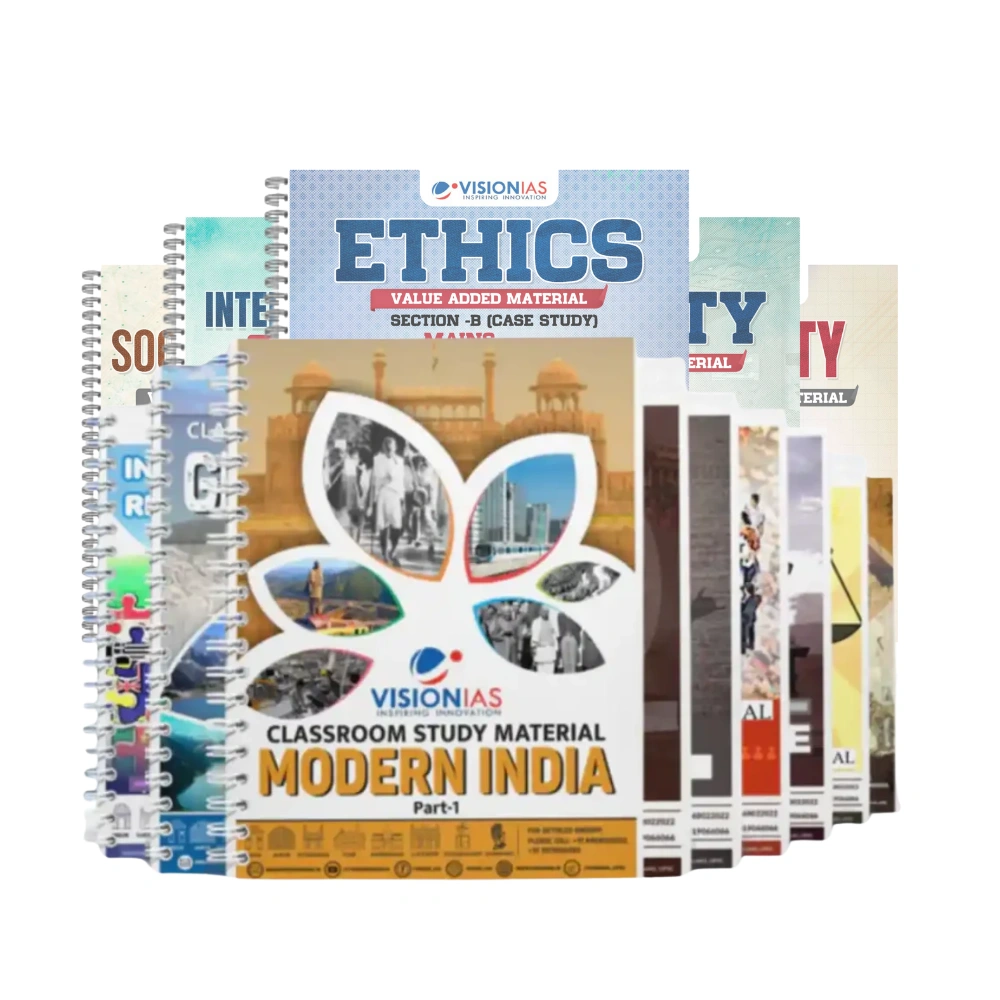
Notice how each paper doubles the syllabus with a Karnataka dimension — state history, state economy, state administration and state current affairs. This is exactly where generic UPSC material must be supplemented with Karnataka-specific notes. A solid GS foundation from a set like the Vision IAS GS 2026-27 Booklets covers the national portion; you then layer Karnataka-specific reading on top.
Essay Paper
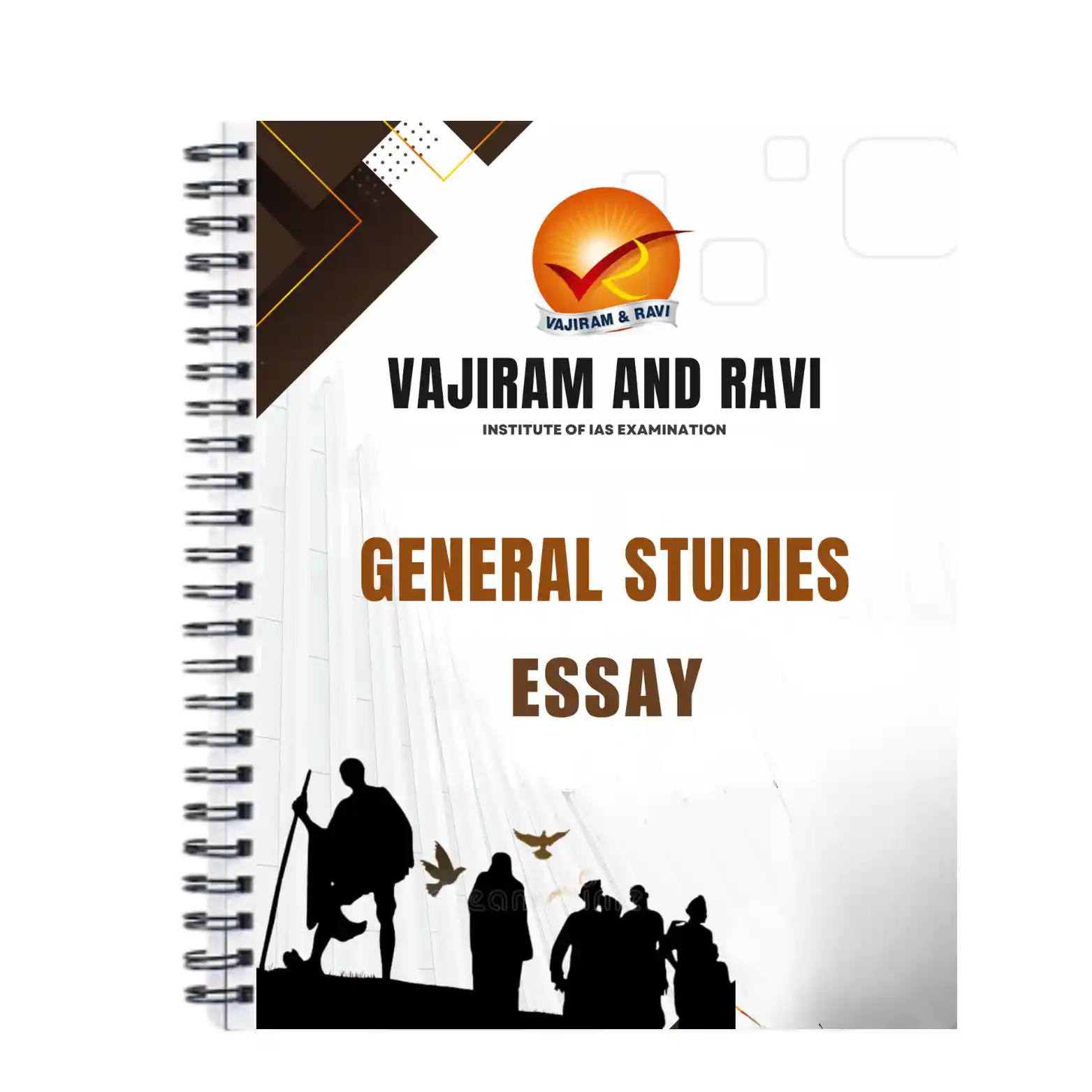
The 250-mark Essay paper asks candidates to write essays on given topics that span society, polity, economy, ethics and contemporary affairs. Structure, balance and a clear argument matter more than jargon. Structured essay practice — the kind found in the Vajiram Essay Notes — helps you build introductions, multi-dimensional bodies and crisp conclusions under time pressure.
KPSC KAS Interview / Personality Test
Candidates who clear the Mains cut-off within the shortlisting ratio are called for the Personality Test, worth 200 marks. The board assesses mental alertness, clarity of thought, balance of judgement, leadership, awareness of Karnataka’s socio-economic realities and suitability for public service. There is no fixed syllabus — your Detailed Application Form (DAF), home district, graduation subject and current affairs are the natural starting points.
| Component | Marks | Share of final merit |
|---|---|---|
| Mains (merit papers) | 1,250 | ~86% |
| Personality Test | 200 | ~14% |
| Grand Total | 1,450 | 100% |
Because the interview is only ~14% of the final merit, a strong Mains performance is decisive — but a poor interview can still cost you dozens of ranks in a tight list, so it deserves genuine mock-board practice.
Latest Rule Change: Optional Subjects Removed
This is the single most confused point online, and getting it right is how a serious aspirant plans correctly. Older articles still list an optional subject with 26, 28 or even 31 choices — that information is outdated.
As of the amended Karnataka Recruitment of Gazetted Probationers rules (notified 2023, applicable to the 2024 and 2026 cycles), the optional subject has been removed from the KAS Mains. Every candidate now writes the same four General Studies papers plus Essay. There is no optional paper to choose. If you see a page listing optionals like Sociology, History or Public Administration for KAS, it is describing the pre-amendment pattern and should be disregarded for your 2026 planning.
| Element | Old pattern (pre-2023) | Current pattern (2026) |
|---|---|---|
| Optional subject | 1 optional (2 papers) from ~26–31 subjects | Removed — no optional |
| GS papers | Fewer GS papers | GS I–IV (four papers) |
| Merit marks | Included optional marks | Essay + GS I–IV = 1,250 |
Is the KPSC KAS Syllabus Similar to UPSC?
Yes — substantially. With optionals gone and a GS I–IV + Essay + Ethics structure, the kpsc gazetted probationers syllabus now overlaps roughly 70–75% with UPSC General Studies. That is excellent news: UPSC aspirants can reuse most of their GS preparation for KAS, and vice versa.
| Aspect | UPSC CSE | KPSC KAS |
|---|---|---|
| Prelims papers | GS + CSAT (CSAT qualifying) | Paper 1 + Paper 2 (both count for screening) |
| Mains GS papers | GS I–IV | GS I–IV |
| Essay | Yes (250) | Yes (250) |
| Ethics (GS IV) | Yes | Yes |
| Optional subject | Yes (2 papers) | Removed |
| State-specific content | Minimal | Heavy Karnataka focus |
| Language papers | English + one Indian language | Kannada + English (qualifying) |
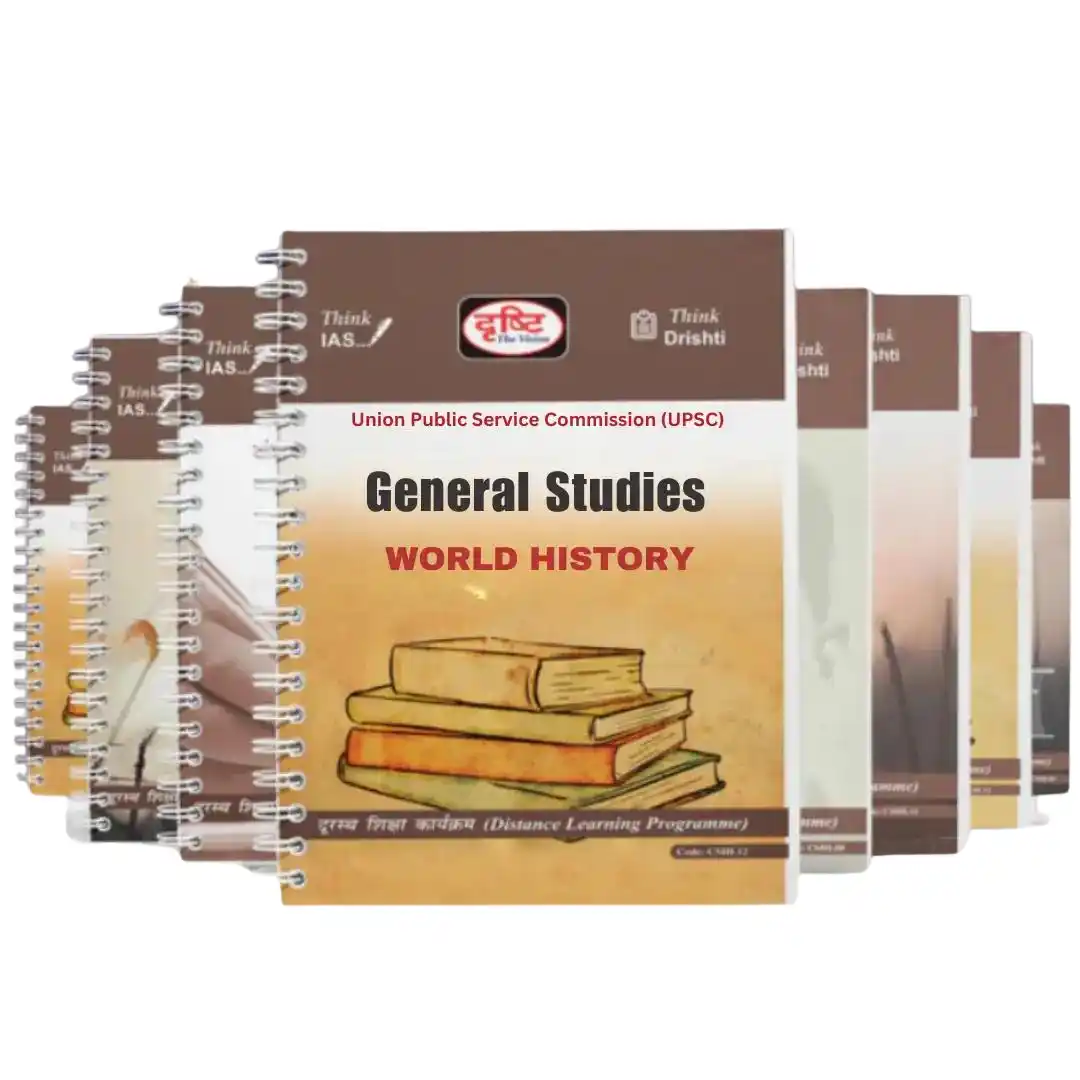
The practical takeaway: build your GS core once with a comprehensive package like Drishti IAS English Study Material, then add Karnataka-specific layers. A dual UPSC + KAS strategy is genuinely efficient in 2026. The two biggest differences to plan around are the compulsory Kannada paper and the depth of Karnataka history, polity and economy expected in both Prelims and Mains.
‘KPSC Syllabus’ Beyond KAS: FDA, SDA, PDO, PSI & Group C
Many people who search ‘kpsc syllabus’ are not KAS aspirants at all — they want the syllabus for one of the many other exams KPSC and allied Karnataka boards conduct. Here is the wider net so you land on the right pattern.
| Exam | Post | Broad syllabus focus |
|---|---|---|
| KAS / Gazetted Probationers | Deputy Collector, DySP, etc. | GS Prelims + Mains + Interview |
| FDA | First Division Assistant | GK, GS, Kannada, English, computer knowledge |
| SDA | Second Division Assistant | GK, quantitative aptitude, Kannada, English |
| PDO | Panchayat Development Officer | GK, rural development, Panchayati Raj, aptitude |
| PSI | Police Sub-Inspector | Physical test + written GK, reasoning, Kannada |
| Group C / Departmental | Various | Subject/role-specific plus general Kannada & GK |
If your goal is one of these, note that the exam pattern and marks differ substantially from KAS — always match your preparation to the specific notification you are targeting.
Karnataka PSC vs Kerala PSC: Clearing the ‘KPSC’ Confusion
The abbreviation ‘KPSC’ is used by two different bodies, and mixing them up wastes weeks of preparation:
- Karnataka Public Service Commission (KPSC) — official site kpsc.kar.nic.in. Conducts KAS (Gazetted Probationers) and Group B/C exams for Karnataka. This article covers this KPSC.
- Kerala Public Service Commission (Kerala PSC) — official site keralapsc.gov.in. Conducts Kerala state exams and is often abbreviated ‘KPSC’ by Kerala aspirants.
If you are preparing for Karnataka administrative posts, always confirm the domain is kpsc.kar.nic.in before downloading any syllabus or notification.
High-Yield Karnataka Topics & Weightage
Because Prelims marks and Mains merit both reward Karnataka-specific knowledge, these areas deliver disproportionate returns. Based on past KAS trends, prioritise the following.
| Theme | High-yield Karnataka topics | Indicative emphasis |
|---|---|---|
| History | Kadambas, Chalukyas, Hoysalas, Vijayanagara, Wodeyars, Karnataka unification | High |
| Polity | Karnataka Panchayati Raj, state administration, Lokayukta | High |
| Geography | Rivers (Kaveri, Krishna, Tungabhadra), Western Ghats, minerals, agro-climatic zones | Medium-High |
| Economy | Karnataka budget, IT/BT sector, Bengaluru economy, irrigation, HDI schemes | High |
| Culture | Karnataka literature (Jnanpith winners), folk arts, festivals, heritage sites | Medium |
| Current Affairs | State government schemes, budget, appointments, awards | Very High |
Trend analysis of past year questions (PYQs) shows current affairs and Karnataka polity/economy dominate. Regular monthly current-affairs revision is non-negotiable for both stages.
KPSC KAS Study Plan & Booklist Mapping
Map each Mains paper to the right resource so you are not reading blindly. The table below pairs GS papers with study material available on Competer — combine these national GS sources with dedicated Karnataka-specific reading.
| Paper | What to read | Suggested resource |
|---|---|---|
| GS I & II | History, polity, geography, IR foundations | Comprehensive GS booklet set |
| GS III | Economy, science-tech, environment | GS booklet set + monthly current affairs |
| GS IV | Ethics, integrity, case studies | Dedicated ethics notes |
| Essay | Structured essay writing practice | Essay notes and model answers |
| Prelims + Mains CA | State + national current affairs | Monthly current-affairs magazine |
A realistic month-wise plan: months 1–4 build static GS with a full booklet set; months 5–7 layer Karnataka-specific history, polity and economy; months 8–9 shift to answer writing, essay practice and current-affairs revision; the final month is full-length mock tests and consolidated revision. Keep a printable syllabus checklist beside your desk and tick off each micro-topic as you finish it — this prevents the classic KAS mistake of over-reading a few areas and skipping others entirely.
KPSC KAS Syllabus PDF Download
For offline planning, get the kpsc syllabus pdf download directly from the Karnataka Public Service Commission website (kpsc.kar.nic.in) under the relevant Gazetted Probationers notification — this is the authoritative source and always reflects the latest amended rules. Save the Prelims and Mains syllabus pages, print the paper-wise topic tables from this guide as a tracker, and cross-check any third-party PDF against the official notification before trusting it, since many circulating PDFs still list the removed optional subjects.
Tip: Always verify the notification date on any PDF. If it predates 2023, it will show the outdated optional-subject pattern and mislead your preparation.
Common Mistakes KAS Aspirants Make
- Preparing an optional subject that no longer exists — wasting months on removed papers.
- Ignoring Karnataka-specific content and relying only on national UPSC material.
- Treating language papers casually and failing the 35% qualifying cut-off.
- Neglecting monthly current affairs, which drives both Prelims and Mains.
- Confusing Karnataka PSC with Kerala PSC and downloading the wrong syllabus.
- Skipping answer-writing practice until the last month before Mains.
Frequently Asked Questions
What is the syllabus of KPSC KAS exam?
The KPSC KAS syllabus has two objective Prelims papers covering current affairs, history, geography, polity, economy, science, environment and mental ability, followed by seven Mains papers — two qualifying language papers (Kannada, English), an Essay, and General Studies I–IV covering history, geography, constitution, economy, science-technology, environment and ethics, with strong Karnataka-specific emphasis throughout.
How many papers are there in KPSC KAS Prelims and Mains?
Prelims has two papers of 200 marks each (400 total). Mains has seven papers: two qualifying language papers (Kannada and English, 150 each), one Essay (250) and four General Studies papers GS I–IV (250 each), giving 1,250 merit marks.
Is there an optional subject in KPSC KAS Mains now?
No. Under the amended Gazetted Probationers rules notified in 2023, the optional subject has been removed. All candidates write the same Essay and GS I–IV papers, so older lists of 26–31 optional subjects no longer apply to the 2026 cycle.
Is the KPSC KAS syllabus similar to UPSC?
Yes, roughly 70–75% overlaps with UPSC General Studies since KAS now uses a GS I–IV, Essay and Ethics structure without optionals. The main differences are the heavy Karnataka-specific content and the compulsory Kannada language paper, so UPSC aspirants can reuse most of their GS preparation.
Which language papers are compulsory in KPSC KAS Mains?
Two language papers are compulsory: Kannada (150 marks) and English (150 marks). Both are qualifying — you must score at least 35% in each — and their marks are not added to your merit total. However, failing either paper disqualifies your entire Mains, so they cannot be treated casually.
Is there negative marking in KPSC KAS Prelims?
Yes. In both Prelims papers, 0.25 marks (one-fourth) are deducted for every wrong answer. Unanswered questions carry no penalty, so avoid blind guessing and answer only where you can reasonably eliminate options.
How many total marks is the KPSC KAS Mains exam?
The Mains you sit is worth 1,550 written marks — Essay (250) + GS I–IV (250 each = 1,000) contribute the 1,250 merit marks, while Kannada and English (150 each = 300) are qualifying only. Combined with the 200-mark Personality Test, the final merit list is prepared out of 1,450 marks.
Where can I download the KPSC KAS syllabus PDF?
Download the official syllabus PDF from the Karnataka Public Service Commission website at kpsc.kar.nic.in under the Gazetted Probationers notification. Always check the notification date to ensure the PDF reflects the current amended pattern without the removed optional subjects.
Recommended Study Material

Continue Reading
PSIR Optional Syllabus 2026: Paper 1 & 2 + PDF Download
The psir optional syllabus for UPSC has two papers of 250 marks each (500 marks total): Paper 1…
MPSC Syllabus 2025: Prelims, Mains (New Pattern) + PDF
The MPSC syllabus for the Rajyaseva (State Services) examination is split across three stages: an objective Prelims (2…
WBCS Syllabus 2026: Prelims, Mains, Optional + PDF
The WBCS syllabus for 2026 is divided across three stages conducted by the West Bengal Public Service Commission…