MPSC Syllabus 2025: Prelims, Mains (New Pattern) + PDF
Complete MPSC syllabus 2025 for Rajyaseva — Prelims & Mains (new descriptive pattern), exam pattern, subject-wise topics, optional list & PDF download.

The MPSC syllabus for the Rajyaseva (State Services) examination is split across three stages: an objective Prelims (2 papers, 400 marks), a descriptive UPSC-style Mains of 9 papers worth 1,750 marks, and a Personality Test / Interview of 275 marks. The Maharashtra Public Service Commission (MPSC) runs this exam to recruit Deputy Collectors, DySP, Tahsildars and other Class-I and Class-II officers.
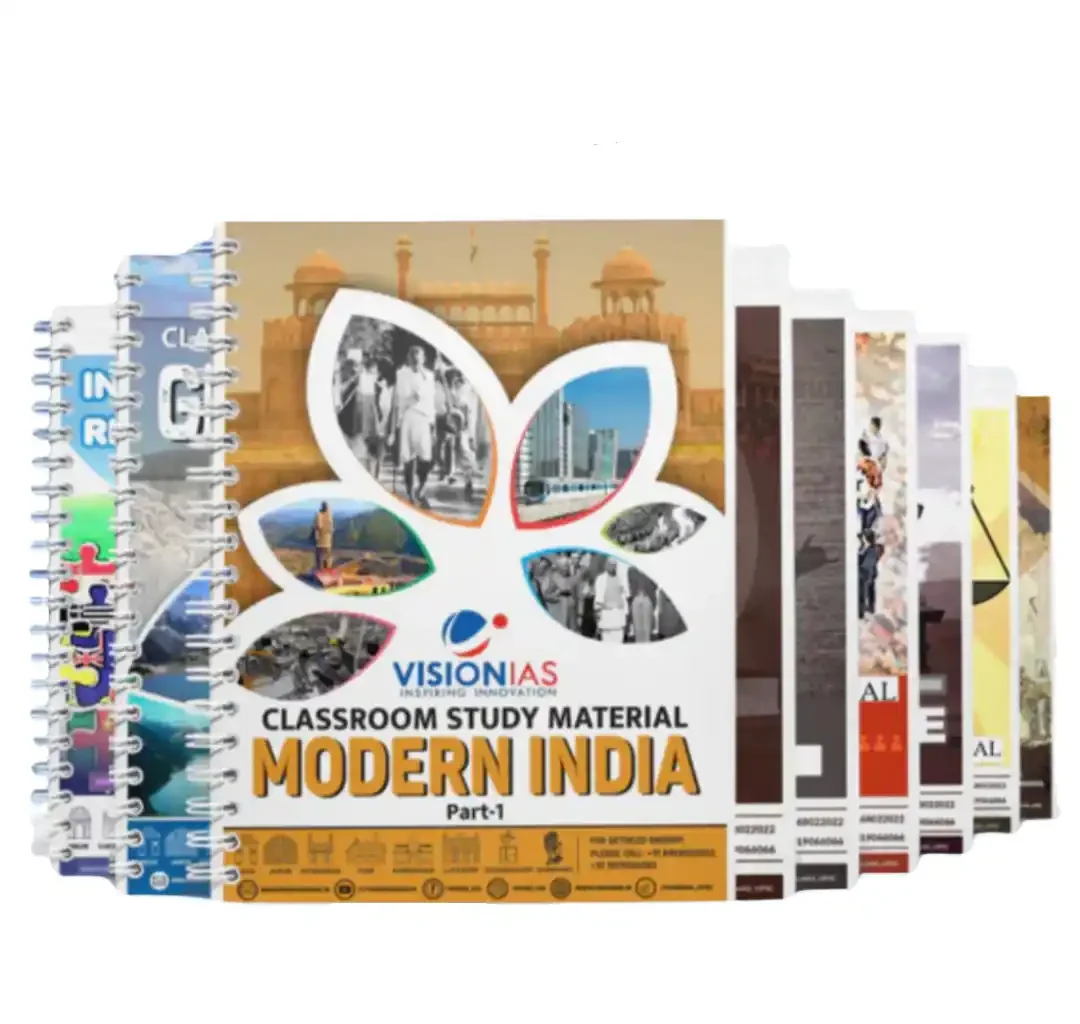
The single biggest change to understand in 2025 is the shift from the old 6-paper objective Mains (800 marks) to a 9-paper descriptive Mains (1,750 marks). This guide covers the full mpsc rajyaseva syllabus 2025 for every stage — a clean OLD vs NEW comparison, an MPSC vs UPSC overlap map, optional-subject advice, Marathi-medium guidance, and a printable topic-wise checklist. If you are also preparing for the Civil Services Exam, our Vision IAS GS study material covers most of the overlapping GS ground.
Last reviewed: 2025. This guide is compiled from the MPSC Rajyaseva notification and syllabus gazette published on mpsc.gov.in. Because the Commission has revised and deferred the Mains pattern more than once, always confirm the exact applicable pattern and year against the latest official notification for your target exam before finalising your plan.
MPSC Syllabus 2025: Exam Overview
Before the subject-wise mpsc syllabus, here is a snapshot of the Rajyaseva structure. MPSC consolidated its State Services posts under a single examination framework and revised the pattern to align closely with the UPSC Civil Services Examination.
| Particular | Detail |
|---|---|
| Conducting Body | Maharashtra Public Service Commission (MPSC) |
| Exam Name | Maharashtra Civil Services (Rajyaseva) Examination |
| Selection Stages | Prelims → Mains → Personality Test (Interview) |
| Prelims Marks | 400 marks (Paper I: 200, Paper II/CSAT: 200) |
| Mains Marks (New) | 1,750 marks across 9 papers |
| Interview Marks | 275 marks |
| Grand Total (Mains + Interview) | 2,025 marks |
| Question Type | Prelims: Objective (MCQ); Mains: Descriptive (subjective) |
| Medium / Language | Marathi & English (Marathi and English papers both compulsory) |
| Negative Marking | Yes, in Prelims (1/3rd of marks per wrong answer) |
| Age Limit | 19–38 years (relaxations for reserved categories) |
MPSC Selection Process: The Three Stages
The MPSC Rajyaseva selection is a three-tier process. You must clear each stage to advance, and the final merit list is built only from Mains and Interview marks — Prelims is purely a screening filter.
- Stage 1 — Preliminary Examination: Two objective papers (GS Paper I and CSAT Paper II). A qualifying-cum-screening test; marks do not count in the final merit.
- Stage 2 — Main Examination: Nine descriptive papers totalling 1,750 marks. This is where your rank is largely decided.
- Stage 3 — Personality Test / Interview: 275 marks, assessing suitability for a career in public service.
Understanding this weightage is strategic: since Prelims marks are not carried forward, treat it as a threshold to cross efficiently, then invest maximum energy into the high-marks descriptive Mains.
MPSC Prelims Exam Pattern 2025
The mpsc prelims syllabus is delivered through two objective papers, each of 200 marks and 2 hours. Paper I is merit-ranking for screening, while Paper II (CSAT) is qualifying — you must score at least 33% to be considered.
| Paper | Subject | Marks | Questions | Duration | Nature |
|---|---|---|---|---|---|
| Paper I | General Studies (GS) | 200 | 100 | 2 hours | Merit (screening) |
| Paper II | CSAT (Aptitude) | 200 | 80 | 2 hours | Qualifying (33%) |
Negative marking: Yes. For every wrong answer, one-third (1/3) of the marks allotted to that question is deducted. There is no penalty for un-attempted questions. Both papers are bilingual (Marathi and English), except the English comprehension portion of CSAT.
Is there negative marking in MPSC Prelims?
Yes. MPSC deducts 1/3rd of a question’s marks for each incorrect answer in both Prelims papers. Because Paper I carries 2 marks per question, a wrong answer costs you roughly 0.66 marks. This makes accuracy and educated elimination more valuable than blind guessing.
MPSC Prelims Syllabus 2025 (Subject-Wise)
The Prelims General Studies paper tests a broad, moderately deep understanding of national and Maharashtra-specific topics. Below is the complete Paper I mpsc syllabus, mapped subject by subject.
Paper I — General Studies (200 marks / 100 questions)
| Subject | Key Topics |
|---|---|
| Current Events | Current affairs of state, national and international importance |
| History | History of India (special reference to Maharashtra) and the Indian National Movement |
| Geography | Physical, social, economic geography of Maharashtra, India and the world |
| Polity & Governance | Constitution, political system, Panchayati Raj, Public Policy, Rights issues |
| Economic & Social Development | Sustainable development, poverty, inclusion, demographics, social sector initiatives |
| Environment | Environmental ecology, biodiversity, climate change (general awareness) |
| General Science | Everyday science, scientific developments (no subject specialisation required) |
Note the repeated emphasis on Maharashtra — state history (Shivaji Maharaj, the social reform movement, Samyukta Maharashtra movement), Maharashtra geography (rivers, crops, districts) and state polity are where MPSC differs from UPSC and where candidates most often lose easy marks.
Paper II — CSAT / Aptitude (200 marks / 80 questions)
| Area | Topics Covered |
|---|---|
| Comprehension | Reading passages (Marathi & English), interpretation |
| Interpersonal & Communication Skills | Situational communication ability |
| Logical Reasoning & Analytical Ability | Series, syllogisms, analogies, patterns |
| Decision-Making & Problem-Solving | Situational judgement |
| General Mental Ability | Basic numeracy, orders of magnitude |
| Basic Numeracy & Data Interpretation | Numbers, tables, graphs, charts (Class X level) |
Since CSAT is only qualifying (33%), do not over-invest — but do not ignore it either, as many serious aspirants have failed Prelims purely by underestimating the paper. Regular practice with a structured CSAT test series keeps your comprehension and reasoning speed exam-ready.
MPSC Mains Exam Pattern 2025: The New Descriptive Pattern
This is the most important update in the entire mpsc mains syllabus. MPSC has replaced the older objective/short-answer Mains with a full descriptive, UPSC-style pattern. The new Mains has 9 papers totalling 1,750 marks, including two qualifying language papers, an Essay, four General Studies papers, and two optional-subject papers.
| Paper | Subject | Marks | Nature |
|---|---|---|---|
| Paper A | Marathi (compulsory) | 300 | Qualifying |
| Paper B | English (compulsory) | 300 | Qualifying |
| Paper I | Essay | 250 | Merit |
| Paper II | General Studies I | 250 | Merit |
| Paper III | General Studies II | 250 | Merit |
| Paper IV | General Studies III | 250 | Merit |
| Paper V | General Studies IV (Ethics) | 250 | Merit |
| Paper VI | Optional Subject — Paper 1 | 250 | Merit |
| Paper VII | Optional Subject — Paper 2 | 250 | Merit |
The two language papers (Marathi and English) are qualifying — you must score the minimum, but the marks do not count towards the merit list. The remaining seven papers (Essay + 4 GS + 2 Optional) totalling 1,750 merit marks plus the 275-mark interview decide your final rank out of 2,025.
How many papers are there in MPSC Mains 2025?
MPSC Mains 2025 has nine papers: two qualifying language papers (Marathi, English), one Essay paper, four General Studies papers (GS I–IV), and two optional-subject papers. Seven of these nine are merit-ranking, contributing 1,750 marks to the final selection.
OLD vs NEW MPSC Mains Pattern: What Exactly Changed
Many top-ranking pages still display the outdated 6-paper objective pattern, which causes real confusion. Here is the clean, unambiguous comparison every aspirant is searching for.
| Feature | OLD Pattern | NEW Pattern (2025 Descriptive) |
|---|---|---|
| Number of papers | 6 papers | 9 papers |
| Total marks | 800 marks | 1,750 marks (merit) |
| Question type | Objective (MCQ) + limited descriptive | Fully descriptive (subjective) |
| Essay paper | Not separate | Yes — 250 marks |
| Ethics (GS IV) | Absent | Yes — 250 marks |
| Optional subject | No optional | Yes — 2 papers, 500 marks |
| Language papers | Marathi + English (objective component) | Marathi (300) + English (300), descriptive & qualifying |
| Interview | 100 marks | 275 marks |
2025 Transition Changelog: When the New Pattern Applies
The revised descriptive pattern was announced by MPSC to align the State Services examination with the UPSC model. The Commission originally notified the change for the 2023 cycle and then deferred implementation, so aspirants should always confirm the exact applicable year against the latest official notification and gazette for their target exam. The core changes to lock into memory are: (1) MCQ Mains is gone — everything is now written and analytical; (2) an optional subject returns to the exam after years of absence; (3) Essay and Ethics become full 250-mark papers; and (4) the interview weightage rises to 275. Because the analytical, answer-writing demand mirrors UPSC, candidates preparing with quality GS notes and answer-writing practice have a clear edge.
MPSC Mains Syllabus 2025 (Subject-Wise Breakdown)
The four General Studies papers in the new mpsc mains syllabus closely mirror the UPSC GS structure but retain a strong Maharashtra focus. Here is the paper-wise topic map.
General Studies I — History & Geography
- History: Modern India and Maharashtra — the social and religious reform movements, Indian freedom struggle with special reference to Maharashtra’s contribution (Tilak, Gokhale, Ranade, Phule, Ambedkar, Shahu Maharaj), post-independence consolidation.
- Geography: Physical geography of Maharashtra, India and the world; economic geography (agriculture, minerals, industries of Maharashtra); population and settlement geography; environmental geography.
General Studies II — Constitution, Polity & Governance
- Indian Constitution — evolution, features, amendments, basic structure.
- Political system, Union and State governance, Panchayati Raj and urban local bodies in Maharashtra.
- Public administration, Right to Information, e-governance, welfare schemes and their implementation.
- Law, human rights and social justice topics relevant to governance.
General Studies III — Economy, Science & Technology, Agriculture
- Macroeconomics & Indian Economy: National income, planning, fiscal and monetary policy, banking, inflation, budgeting, economic reforms and their impact on Maharashtra.
- Agriculture: Cropping patterns, irrigation, agricultural economy of Maharashtra, food security, farmer welfare — a high-weightage MPSC area.
- Science & Technology: Developments in S&T, space, defence, IT, biotechnology and their applications and governance implications.
- Infrastructure, industrial policy, cooperative movement in Maharashtra.
General Studies IV — Ethics, Integrity & Aptitude
- Ethics and human interface, attitude, aptitude and foundational values for civil service.
- Emotional intelligence, contributions of moral thinkers and philosophers.
- Public/civil service values, probity in governance, codes of conduct, and case studies.
- Human rights dimensions in administration.
Because GS IV (Ethics) and the Essay are new full-length descriptive papers, dedicated answer-writing preparation matters. Aspirants who use structured essay frameworks — like our Vajiram Essay notes — find it easier to build introductions, arguments and conclusions under time pressure.
MPSC Optional Subjects List 2025 (26 Subjects)
With the new pattern, candidates choose one optional subject with two papers (500 marks total). MPSC offers 26 optional subjects. Here is the complete list.
| Group | Optional Subjects |
|---|---|
| Humanities | History, Geography, Political Science & International Relations, Sociology, Public Administration, Philosophy, Psychology, Economics, Law |
| Sciences | Physics, Chemistry, Mathematics, Statistics, Botany, Zoology, Geology |
| Applied / Professional | Agriculture, Animal Husbandry & Veterinary Science, Civil Engineering, Mechanical Engineering, Electrical Engineering, Commerce & Accountancy, Management, Medical Science |
| Languages / Literature | Marathi Literature, English Literature |
Does MPSC have optional subjects now?
Yes. Under the new descriptive Mains pattern, MPSC has reintroduced optional subjects. Each candidate picks one optional carrying two papers of 250 marks each (500 marks total), chosen from a list of 26 subjects.
How to Choose Your MPSC Optional Subject
Optional selection can make or break your rank. Use these four filters:
- Background & interest: A subject from your graduation is easier to grasp and enjoy over months of study.
- GS overlap: Subjects like History, Geography, Political Science and Public Administration overlap heavily with GS papers — you effectively prepare twice with one effort.
- Scoring reputation: Sociology, PSIR, Geography and Public Administration are considered relatively scoring and have abundant material.
- Material & guidance availability: Choose a subject with reliable, structured notes. For instance, PSIR aspirants often use Shubhra Ranjan PSIR notes, which map cleanly to both MPSC and UPSC optional demands.
MPSC Interview / Personality Test (275 Marks)
The final stage is the Personality Test, worth 275 marks. Unlike a knowledge test, the interview assesses your mental alertness, clarity of thought, balance of judgement, leadership, integrity and depth of interest in Maharashtra and national affairs. The board evaluates your Detailed Application Form (DAF), your optional subject, your home district, and current affairs. With 275 marks now at stake — up from 100 in the old pattern — the interview can meaningfully shift your final rank, so mock interviews and current-affairs fluency are essential.
MPSC vs UPSC Syllabus: What’s Common, What’s Extra
A very common question — Is MPSC syllabus same as UPSC? — deserves a precise answer. After the new pattern, the two are structurally very similar, but MPSC adds a compulsory Maharashtra layer.
| Element | UPSC | MPSC (Rajyaseva) | Overlap |
|---|---|---|---|
| Prelims papers | GS + CSAT | GS + CSAT | Very high |
| Mains structure | Essay + 4 GS + 1 Optional (2 papers) + 2 language | Essay + 4 GS + 1 Optional (2 papers) + 2 language | Very high |
| GS themes | History, Geography, Polity, Economy, Ethics, S&T | Same six themes | High |
| State focus | Minimal | Strong Maharashtra history, geography, polity, agriculture | MPSC extra |
| Language paper | English + one Indian language | English + Marathi (compulsory) | Partial |
| Optional subjects | 48 options | 26 options | Partial |
Bottom line: roughly 70–80% of the MPSC GS syllabus overlaps with UPSC. If you prepare for both, your NCERT foundation, standard reference books and current affairs serve both exams — you simply add a Maharashtra-specific layer for MPSC. This is why many aspirants build their base with UPSC-grade material such as Vision IAS study material and then supplement with state-specific sources.
Is MPSC tougher than UPSC?
Neither is universally “tougher” — they test different things. UPSC has a wider, more unpredictable syllabus and far stiffer national competition. MPSC is more focused but adds a demanding Maharashtra-specific layer and a compulsory Marathi paper, and the new descriptive pattern has raised the answer-writing bar significantly. For a Marathi-medium aspirant rooted in Maharashtra, MPSC can feel more accessible; the competition ratio, however, remains intense.
Maharashtra-Specific Weightage: Where MPSC Really Differs
The area where candidates most often lose marks is Maharashtra-specific content, which generic national material does not cover. Give focused attention to:
- State history: Maratha empire and Shivaji Maharaj’s administration, the 19th-century social reform movement (Phule, Ranade, Agarkar, Shahu, Ambedkar), Samyukta Maharashtra movement.
- State geography: Sahyadri and the Konkan coast, major rivers (Godavari, Krishna, Bhima), district-level crops, irrigation projects and industrial belts.
- State polity & governance: Maharashtra’s Panchayati Raj model, state legislature, cooperative institutions.
- State current affairs: Maharashtra government schemes, budget, and recent policy decisions.
Guidance for Marathi-Medium Aspirants
Marathi-medium candidates are the core of the MPSC audience, yet most syllabus guides ignore them. Practical pointers:
- Bilingual papers: GS Prelims papers are set in both Marathi and English. If wording is ambiguous, cross-check both language versions of the question before answering.
- Compulsory Marathi Mains paper: The 300-mark Marathi paper (grammar, comprehension, essay, translation) is qualifying — do not neglect it; a surprising number of strong candidates falter here.
- Study material: Build concepts in whichever language you are strongest in, then practise technical terms in both. For overlapping GS content, Hindi-medium standard notes can also help bridge understanding; resources like Vision IAS Hindi GS notes are useful for concept-building before you write in Marathi.
- Answer writing: Practise descriptive answers in Marathi if you intend to write Mains in Marathi — vocabulary and speed in your exam language matter as much as content.
MPSC Syllabus PDF Download & Printable Checklist
You can download the official mpsc syllabus pdf directly from the Commission’s website (mpsc.gov.in) under the notification/syllabus section for the Rajyaseva examination. The official gazette is comprehensive but not study-friendly, so we recommend maintaining a topic-wise checklist you can tick off during revision.
| Stage | Checklist Item | Status |
|---|---|---|
| Prelims GS | Current events, History (Maharashtra), Geography, Polity, Economy, Environment, General Science | ☐ |
| Prelims CSAT | Comprehension, Reasoning, Decision-making, Numeracy, DI | ☐ |
| Mains Language | Marathi (300) + English (300) — grammar, essay, translation | ☐ |
| Mains Essay | Essay structure & practice (250) | ☐ |
| Mains GS I–IV | History-Geography, Polity-Governance, Economy-S&T-Agri, Ethics | ☐ |
| Mains Optional | Paper 1 + Paper 2 (500) | ☐ |
| Interview | DAF prep, mock interviews, Maharashtra current affairs | ☐ |
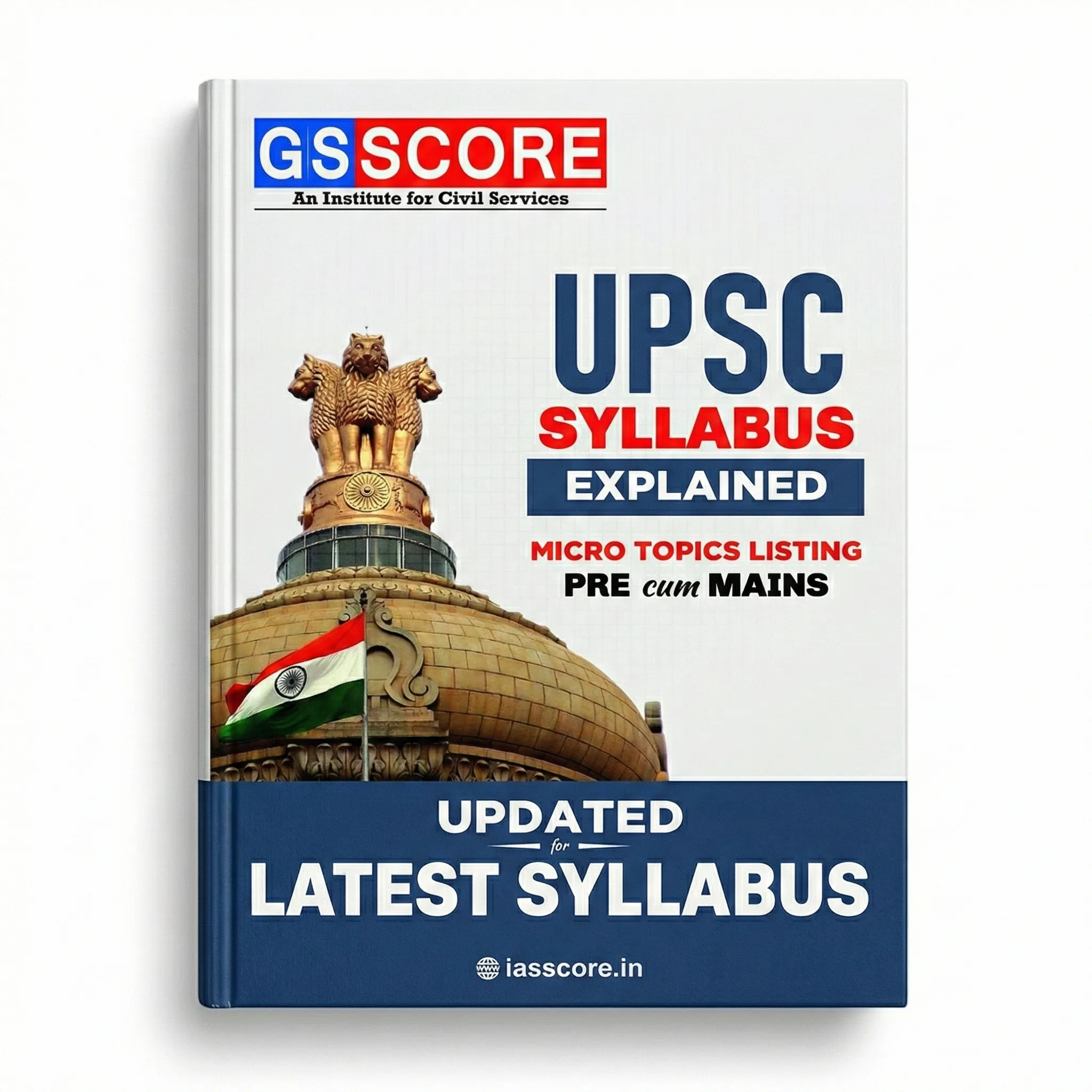
For a ready-made subject-wise syllabus reference that mirrors the UPSC-style demands of the new Mains, the GS Score latest syllabus booklet is a handy printed companion to keep beside your study desk.
MPSC Preparation Strategy, Best Books & Study Material
With the descriptive shift, the winning approach is: build a strong conceptual base, layer Maharashtra specifics, and practise answer writing relentlessly.
Which subjects are best for MPSC preparation?
Start with the high-weightage, high-overlap subjects: Polity, History (with Maharashtra), Geography, Economy and Current Affairs. These appear in both Prelims and Mains and anchor the GS papers. Ethics and Essay need dedicated answer-writing practice, and your optional demands consistent daily effort.
Recommended Study Approach
- Foundation: NCERTs (6–12) for History, Geography, Polity, Economy, followed by standard reference notes.
- Concept notes: UPSC-grade GS material covers 70–80% of the syllabus; comprehensive sets like Vision IAS GS notes are efficient because they consolidate multiple sources.
- Current affairs: Daily newspaper plus a monthly compilation. A magazine such as the Vision IAS Current Affairs Magazine keeps national and international events organised for both Prelims and Mains.
- Answer writing: Practise structured descriptive answers weekly; the new Mains rewards clarity, structure and Maharashtra-linked examples.
- Maharashtra layer: Add state history, geography, polity and current affairs on top of your national base.
How long does it take to prepare for MPSC?
Most serious aspirants need roughly 12–18 months of consistent preparation for the new descriptive pattern, assuming 6–8 focused hours a day. A first read of the full syllabus and NCERT base typically takes 4–6 months; the rest goes into optional, Maharashtra specifics, answer writing and revision. Working professionals should plan for the longer end and protect daily current-affairs and answer-writing habits, since the descriptive Mains rewards sustained practice over last-minute cramming.
Can I clear MPSC without coaching?
Yes — many candidates clear MPSC through self-study. What you need is a clear syllabus map, disciplined daily current affairs, quality self-study notes, and consistent answer-writing and mock-test practice. Coaching mainly adds structure and mentorship; a self-motivated aspirant with the right printed study material and test series can absolutely succeed.
Common Mistakes MPSC Aspirants Make
- Studying the old objective Mains pattern — always verify you are preparing for the descriptive 9-paper pattern.
- Ignoring Maharashtra-specific content — this is precisely where the exam differentiates candidates.
- Underestimating CSAT — a qualifying paper still ends aspirants’ attempts every year.
- Skipping answer-writing practice — descriptive Mains cannot be cleared by reading alone.
- Neglecting the compulsory Marathi paper — the 300-mark qualifying paper is a silent eliminator.
- Choosing an optional blindly — pick based on background, GS overlap and material availability, not just perceived scoring.
Frequently Asked Questions
What is the syllabus of MPSC exam?
The MPSC Rajyaseva syllabus spans three stages: an objective Prelims (GS Paper I covering current events, history, geography, polity, economy, environment and general science, plus a qualifying CSAT paper); a descriptive Mains of nine papers (Marathi, English, Essay, four General Studies papers and two optional papers totalling 1,750 merit marks); and a 275-mark Personality Test. Maharashtra-specific history, geography, polity and current affairs run through every stage.
Is MPSC syllabus same as UPSC?
They are structurally very similar after the new pattern — both have GS + CSAT Prelims and a descriptive Mains with Essay, four GS papers, an optional and language papers. Roughly 70–80% of the GS content overlaps. The key difference is MPSC’s strong, compulsory focus on Maharashtra history, geography, polity, agriculture and current affairs, plus a compulsory Marathi paper.
Is Marathi compulsory for MPSC?
Yes. Marathi is compulsory. The Prelims papers are bilingual (Marathi and English), and the Mains includes a compulsory 300-mark Marathi language paper that is qualifying. Candidates can generally choose to write the merit Mains papers in Marathi or English.
How many papers are there in MPSC Mains 2025?
MPSC Mains has nine papers: Marathi and English (qualifying language papers), Essay, General Studies I to IV, and two optional-subject papers. Seven of these are merit-ranking, contributing 1,750 marks to the final selection.
Is there negative marking in MPSC Prelims?
Yes. One-third (1/3) of the marks allotted to a question is deducted for every wrong answer in both Prelims papers. There is no deduction for questions left unanswered, so calculated attempts based on elimination are safer than blind guessing.
Does MPSC have optional subjects now?
Yes. Under the new descriptive Mains pattern, MPSC has reintroduced optional subjects. Each candidate chooses one optional carrying two papers of 250 marks each (500 marks total) from a list of 26 subjects, and can prepare a subject that overlaps with the GS papers to save effort.
Where can I download the official MPSC syllabus PDF?
The official MPSC syllabus PDF is available on the Commission’s website, mpsc.gov.in, under the Rajyaseva examination notification and syllabus section. For a study-friendly, subject-wise reference alongside the official gazette, a printed syllabus booklet keeps your daily preparation organised.
Recommended Study Material

Continue Reading
SSC Stenographer Syllabus 2026: Grade C & D Exam Pattern + PDF
The ssc stenographer syllabus covers three Computer-Based Test (CBT) sections — General Intelligence & Reasoning (50 marks), General…
UKPSC Syllabus 2026: Prelims, Mains, Exam Pattern + PDF (Hindi & English)
The UKPSC syllabus for the Uttarakhand Combined State Civil Services (Upper PCS) exam is a three-stage syllabus spread…
RRB Technician Syllabus 2026: Grade 1 & 3, Pattern + PDF
The rrb technician syllabus for 2026 is tested in a single 90-minute Computer Based Test (CBT) of 100…