UKPSC Syllabus 2026: Prelims, Mains, Exam Pattern + PDF (Hindi & English)
Complete UKPSC syllabus 2026 for Prelims & Mains — exam pattern, marks, Uttarakhand GK weightage, subject-wise strategy, booklist and Hindi + English PDF download links.

The UKPSC syllabus for the Uttarakhand Combined State Civil Services (Upper PCS) exam is a three-stage syllabus spread across a two-paper objective Prelims (300 marks), a seven-paper descriptive Mains (1300 marks), and an Interview / Personality Test (150 marks) — a combined final-merit total of roughly 1450 marks. Prelims tests General Studies plus a qualifying CSAT/GAT paper, while Mains covers General Hindi, an Essay, and six General Studies papers with two full papers dedicated to Uttarakhand. Around one-third of the questions across the exam focus on Uttarakhand-specific history, geography, polity, economy and current affairs.
This guide gives you the complete UKPSC syllabus for 2026 — the exact exam pattern, marks, paper-wise topics, subject weightage, a topic-wise study strategy, a preparation timeline, a subject-to-booklist map, and bilingual (Hindi + English) PDF download links so you can plan your preparation in one sitting. Figures below reflect the structure published on the official UKPSC portal; because the Commission has revised the pattern in past cycles, treat the live notification for your year as the final word.
What Is the UKPSC Syllabus? Quick Answer
In one line: the UKPSC syllabus is a three-stage examination scheme — an objective screening Prelims, a descriptive seven-paper Mains, and a personality-test Interview — that blends a UPSC-style national General Studies base with a heavy, exam-deciding layer of Uttarakhand-specific content. If you understand two things — that Prelims is only a screening gate and that Uttarakhand carries about a third of the total weight — you already grasp the strategy the rest of this page details. The sections below break down every paper, its marks, and exactly what to study.
UKPSC Exam Pattern 2026: The Three Stages at a Glance
The Uttarakhand Public Service Commission (UKPSC) conducts the Combined State Civil / Upper Subordinate Services Examination — commonly called Uttarakhand PCS or Upper PCS — in three successive stages. You must clear each stage to advance to the next, but only the Mains and Interview marks are added for the final merit list. The ukpsc exam pattern is summarised below.
| Stage | Type | Papers | Total Marks | Counts for Merit? |
|---|---|---|---|---|
| Prelims | Objective (MCQ) | 2 | 300 | No — screening only |
| Mains | Descriptive (written) | 7 | 1300 | Yes |
| Interview | Personality Test | — | 150 | Yes |
| Final Merit | Mains + Interview | — | 1450 | — |
A common point of confusion across coaching pages is the total marks and paper count — some list 7 papers/1300, others 8 papers/1500. The accurate current structure per the UKPSC notification is 7 compulsory Mains papers (1300 marks) + 150-mark interview = 1450 marks, with Prelims used purely as a qualifying screen. Always cross-check the exact figures in the official notification for your cycle, as UKPSC has revised the pattern in the past.
UKPSC Prelims Syllabus 2026: Two Objective Papers
The ukpsc prelims syllabus is delivered through two objective papers of 150 marks each, taken on the same day. Paper-I (General Studies) is the merit-deciding paper for Prelims screening, while Paper-II (General Aptitude Test / CSAT) is qualifying in nature — you only need 33% to pass it.
| Paper | Subject | Marks | Questions | Duration | Nature |
|---|---|---|---|---|---|
| Paper-I | General Studies | 150 | 150 | 2 hours | Merit (screening) |
| Paper-II | General Aptitude (CSAT/GAT) | 150 | 150 | 2 hours | Qualifying (33%) |
Is there negative marking in UKPSC Prelims?
Yes. UKPSC applies negative marking of 1/4th (0.25) of the marks assigned to a question for every wrong answer in both objective papers. This makes accuracy critical — blind guessing on a 150-question paper can quietly erode your score. Attempt questions where you can eliminate at least two options.
UKPSC Prelims Paper-I: General Studies Topics
Paper-I is a broad general awareness paper. The syllabus mirrors most state PCS prelims but adds a heavy dose of Uttarakhand-specific content. Key areas include:
- Current events of national and international importance
- History of India and the Indian National Movement
- Indian and World Geography — physical, social and economic geography
- Indian Polity and Governance — Constitution, political system, Panchayati Raj, public policy, rights issues
- Economic and Social Development — sustainable development, poverty, inclusion, demographics, social sector initiatives
- General Science and Science & Technology
- Environment, Ecology, Biodiversity and Climate Change (general awareness, no subject specialisation)
- Uttarakhand General Knowledge — state history, geography, polity, economy, culture and current affairs
The single biggest differentiator is Uttarakhand GK: roughly one-third of Paper-I questions are state-focused. Aspirants who master static Uttarakhand content gain a decisive edge that generic UPSC-style preparation alone cannot substitute.
UKPSC Prelims Paper-II: CSAT / General Aptitude
The qualifying aptitude paper tests reasoning and comprehension. Topics include comprehension; interpersonal and communication skills; logical reasoning and analytical ability; decision-making and problem-solving; general mental ability; basic numeracy (numbers, orders of magnitude — Class X level); and data interpretation (charts, graphs, tables — Class X level). Because it is only qualifying, do not over-invest here — but a weak candidate can still fail if they ignore it, so target consistent 40%+ performance in mock tests.
UKPSC Prelims Subject Weightage & Priority
Most top-ranking pages give the syllabus as a flat bullet list without telling you where to spend your hours. Based on previous-year trends, here is an indicative weightage table to prioritise your Paper-I preparation. Treat the percentages as planning guidance, not fixed quotas — the actual split varies year to year.
| Subject Area | Approx. Weightage | Priority |
|---|---|---|
| Uttarakhand GK (static + current) | ~30–35% | Very High |
| Current Affairs (national/international) | ~15% | High |
| History & National Movement | ~12% | High |
| Geography (India + World) | ~10% | Medium |
| Polity & Governance | ~10% | High |
| Economy & Social Development | ~8% | Medium |
| Science, Tech & Environment | ~10% | Medium |
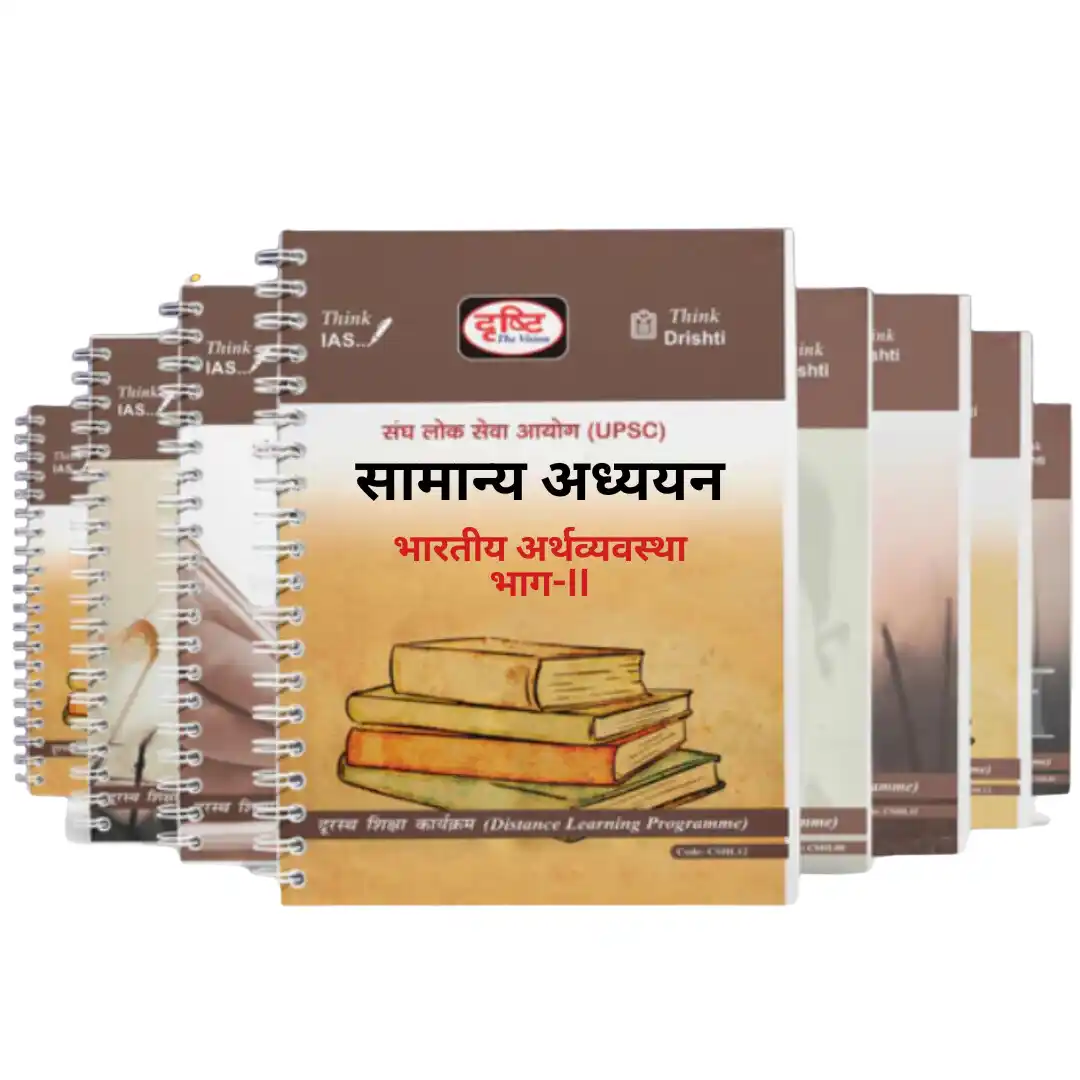
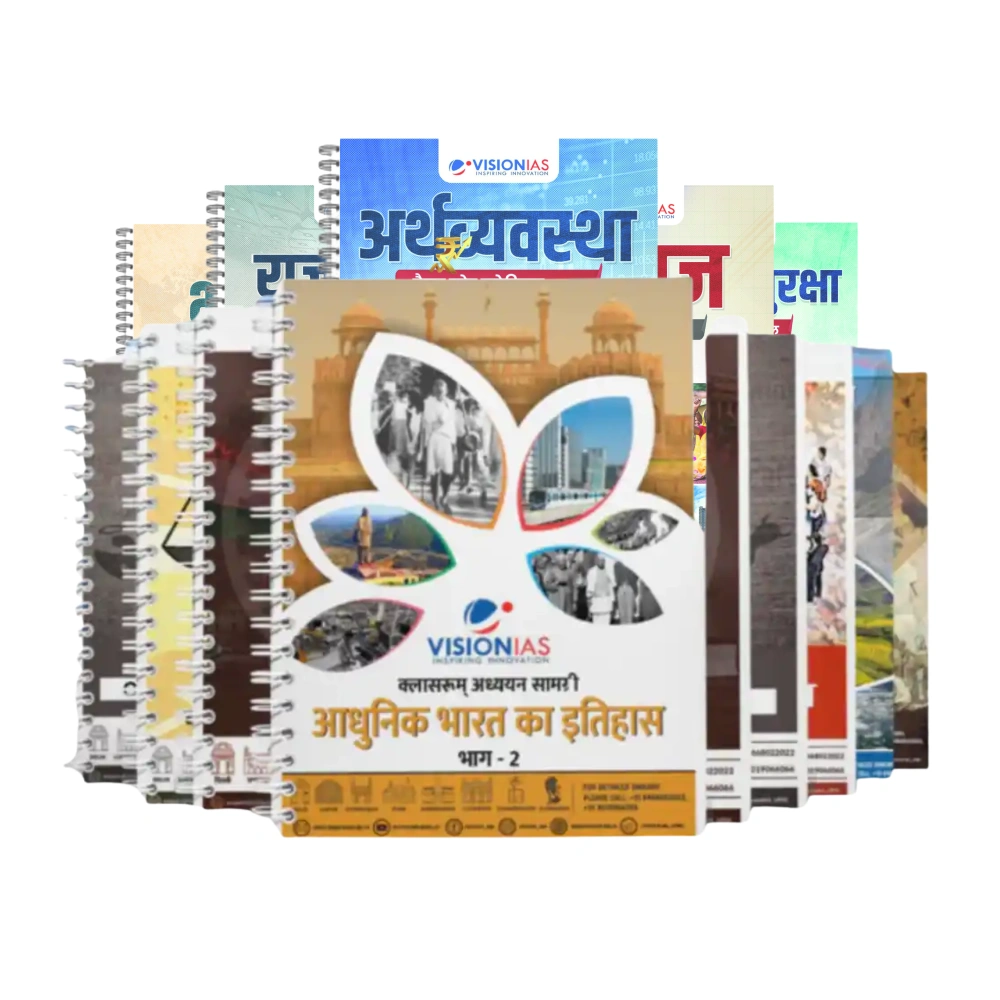
Strategy takeaway: treat Uttarakhand GK and Current Affairs as non-negotiable scoring pillars. A structured GS foundation from a reliable source — for example the Vision IAS GS Notes in Hindi (54 booklets) or the Drishti IAS Hindi Study Material — covers polity, history, geography, economy and science comprehensively, letting you dedicate separate time to the state-specific layer.
UKPSC Mains Syllabus 2026: Seven Compulsory Papers
The ukpsc mains syllabus is entirely compulsory and descriptive — there are no optional subjects. All seven papers are written, three hours each. Two of the six General Studies papers (GS-V and GS-VI) are dedicated exclusively to Uttarakhand, reinforcing how central the state is to this exam. The Mains pattern is shown below.
| Paper | Subject | Marks | Duration |
|---|---|---|---|
| Paper 1 | General Hindi (सामान्य हिन्दी) | 150 | 3 hours |
| Paper 2 | Essay (निबंध) | 150 | 3 hours |
| Paper 3 | General Studies I | 200 | 3 hours |
| Paper 4 | General Studies II | 200 | 3 hours |
| Paper 5 | General Studies III | 200 | 3 hours |
| Paper 6 | General Studies IV | 200 | 3 hours |
| Paper 7 | General Studies V & VI (Uttarakhand)* | 200 | 3 hours |
| Total | — | 1300 | — |
*Note: UKPSC has, across cycles, structured the Uttarakhand-focused content either as dedicated GS-V and GS-VI papers or consolidated within the six-GS scheme. Confirm the exact split for your year in the official notification. Either way, the essential fact holds: two full General Studies papers’ worth of content is on Uttarakhand.
How many papers are there in UKPSC Mains?
There are seven compulsory papers in UKPSC Mains — General Hindi, Essay, and General Studies I to VI (six GS papers), totalling 1300 marks. There is no optional subject and no candidate choice; every aspirant writes the same seven papers.
Is there any optional subject in UKPSC Mains?
No. Unlike UPSC Civil Services, the UKPSC Upper PCS Mains has no optional subject. This is actually good news — you don’t have to research and gamble on an optional; you simply master the fixed, well-defined GS syllabus, which levels the field and rewards disciplined, uniform preparation.
UKPSC Mains Paper-Wise Syllabus (GS I–IV)
The four national General Studies papers broadly follow the UPSC-style thematic division. Here is the paper-wise breakdown of core topics.
| GS Paper | Core Themes |
|---|---|
| GS-I | History (ancient, medieval, modern & Indian National Movement), Art & Culture, Indian & World Geography, Society |
| GS-II | Indian Constitution & Polity, Governance, Social Justice, Public Administration, International Relations |
| GS-III | Indian Economy, Agriculture, Science & Technology, Environment, Biodiversity, Disaster Management, Internal Security |
| GS-IV | Ethics, Integrity & Aptitude — human values, attitude, emotional intelligence, probity in governance, case studies |
These four papers overlap heavily with the UPSC Mains GS syllabus, so standard UPSC GS material transfers directly. Comprehensive booklet sets such as the Vision IAS GS 2026-27 Booklets or the Drishti IAS English Study Material cover GS I–IV in the depth a descriptive Mains demands. For the ethics paper specifically, focused notes like the Drishti IAS Ethics Notes help you structure value-based answers and case studies.
UKPSC Mains: General Hindi & Essay Papers
Two papers reward language skill and structured thinking, and Hindi-medium aspirants often under-prepare them despite being easy scoring papers.
General Hindi (Paper 1 — 150 marks)
Tests functional command of Hindi: comprehension (गद्यांश/अपठित बोध), precis writing (संक्षेपण), letter and official/administrative correspondence (पत्र-लेखन), grammar (व्याकरण — संधि, समास, अलंकार, वाक्य-शुद्धि), vocabulary, idioms and proverbs (मुहावरे और लोकोक्तियाँ), and translation. Consistent daily practice of precis and letter formats is the fastest way to secure marks here.
Essay (Paper 2 — 150 marks)
You typically write essays across sections covering current affairs, socio-economic issues, philosophy/abstract themes and Uttarakhand-specific topics. Structure, balanced argumentation and a strong introduction–body–conclusion flow matter more than flowery language. A dedicated resource such as the Vajiram Essay Notes gives you ready frameworks, quotes and topic material to build essays quickly.
Uttarakhand-Focused Papers (GS-V & GS-VI): The Real Differentiator
This is where UKPSC diverges most from national exams and where top pages give the thinnest guidance. Two full papers’ worth of Uttarakhand content means you cannot treat state GK as an afterthought. Prepare these dimensions systematically:
| Uttarakhand Dimension | What to Study |
|---|---|
| History & Culture | Katyuri & Chand dynasties, Gorkha rule, Tehri princely state, freedom movements (Coolie Begar, Chipko roots), folk traditions, fairs, festivals, dialects (Garhwali, Kumaoni) |
| Geography | Himalayan physiography, rivers (Ganga, Yamuna, Alaknanda, Bhagirathi), glaciers, forests, national parks, climate, soils, minerals |
| Polity & Administration | State formation (2000), governance structure, districts, local bodies, state policies and schemes |
| Economy | Agriculture & horticulture, hydropower, tourism, migration, handicrafts, state budget and development indicators |
| Environment & Disaster Management | Biodiversity, eco-sensitive zones, forest conservation, earthquakes, landslides, cloudbursts, flood management (Kedarnath 2013 lessons) |
| Current Affairs | State government initiatives, schemes, appointments, awards, sports and recent events |
A practical way to lock this in: build one master notebook organised by these six dimensions, and every time a state news item appears, file it under the right head (a new hydropower project under Economy, a landslide under Disaster Management). By exam time you own a revision resource that no generic booklet provides, because it is tailored to exactly how UKPSC frames Uttarakhand questions.
How much of the UKPSC syllabus is about Uttarakhand?
Uttarakhand accounts for roughly one-third of the overall exam weight. In Prelims, about a third of Paper-I questions are state-based; in Mains, the equivalent of two General Studies papers is dedicated to Uttarakhand’s history, geography, polity, economy, environment and current affairs. Neglecting this content is the single most common reason strong general-knowledge aspirants fail UKPSC.
Subject-Wise Study Strategy & Booklist Map
A syllabus is only useful when mapped to material and a plan. Use this table to align each subject with a reliable resource and an approach.
| Subject | Recommended Resource Type | Strategy |
|---|---|---|
| Polity & Governance | Standard GS booklets + Constitution basics | Read once, revise thrice; make one-page maps of articles & schemes |
| History & Culture | NCERT + comprehensive GS notes | Timeline-based revision; link national + Uttarakhand history |
| Geography & Environment | GS notes + atlas + state geography | Diagram-heavy; overlay Uttarakhand physical features |
| Economy & Social Development | GS economy notes + current schemes | Track budget & state schemes; connect to current affairs |
| Current Affairs | Monthly magazine (national) + state news | 10–12 months before exam; maintain a state-CA notebook |
| CSAT / Aptitude | Test-series practice | Weekly timed sets to clear 33% comfortably |
| Ethics & Essay | Ethics notes + essay frameworks | Answer-writing practice with case studies |
For current affairs — the most dynamic and highest-yield segment — a structured monthly magazine keeps you consistent. The Vision IAS Current Affairs Magazine (Hindi Medium) is ideal for Hindi-medium UKPSC aspirants, and pairs well with a dedicated state-current-affairs notebook. For previous-year practice and PYQ-to-syllabus mapping, the Forum IAS Prelims Toolkit (Topic-Wise PYQ 1992–2025) teaches you how examiners frame GS questions — a skill that transfers directly to UKPSC Paper-I.
UKPSC Preparation Timeline: A 10–12 Month Roadmap
The syllabus tells you what to study; a timeline tells you when. This indicative phase plan helps a working aspirant or fresher sequence the full ukpsc upper pcs syllabus without burning out.
| Phase | Timeframe | Focus |
|---|---|---|
| Foundation | Months 1–4 | Finish NCERT + GS booklets for polity, history, geography, economy; begin Uttarakhand static GK |
| Core Building | Months 5–7 | Complete Uttarakhand dimensions; start daily current affairs; begin General Hindi & essay practice |
| Answer-Writing & Tests | Months 8–10 | Weekly CSAT sets, Mains answer-writing, PYQ solving, sectional tests |
| Revision & Mocks | Months 11–12 | Full-length Prelims mocks, three revision cycles, current-affairs consolidation |
The order matters more than the exact months: build the static GS base first, layer Uttarakhand on top, and only then shift weight to testing and revision. Aspirants who start answer-writing and mocks too late are usually the ones who know the syllabus but cannot deliver it under time pressure.
PYQ Analysis: How Topics Actually Appear in the Exam
Reading the syllabus is not the same as knowing how it is tested. Previous-year UKPSC papers reveal clear patterns most aspirants miss:
- Uttarakhand static GK repeats — dynasties, rivers, national parks, districts and folk culture recur year after year; a one-time deep read locks in many marks.
- Polity leans factual in Prelims — articles, constitutional bodies and schemes dominate over analytical questions.
- Current affairs blend with static — questions often link a scheme or event to its constitutional or geographical base, so study current affairs alongside static topics, not in isolation.
- Science is application-light — general awareness and current science & technology developments matter more than deep theory.
Building a habit of solving PYQs after each topic converts passive reading into exam-ready recall and exposes exactly which sub-topics carry weight.
Eligibility, Age Limit & Vacancy Snapshot
For one-stop planning, here is the broad eligibility framework (always confirm against the live notification, as UKPSC revises limits and reservations by cycle).
| Parameter | Details (Indicative) |
|---|---|
| Nationality | Indian citizen (Uttarakhand domicile preferred for reservation benefits) |
| Educational Qualification | Bachelor’s degree in any discipline from a recognised university |
| Minimum Age | 21 years |
| Maximum Age | 42 years (with category-wise relaxations) |
| Age Relaxation | As per Uttarakhand government rules (SC/ST/OBC/PwD/ex-servicemen) |
| Attempts | No fixed cap (within age limit) |
UKPSC Syllabus 2026 PDF Download (Hindi & English)
The complete ukpsc syllabus 2026 pdf download — including the detailed Prelims and Mains topic list — is published on the official UKPSC portal, psc.uk.gov.in. Because UKPSC is a strongly Hindi-and-Uttarakhand-oriented exam, the syllabus and notification are released in both Hindi and English.
How can I download the UKPSC syllabus PDF in Hindi?
Visit psc.uk.gov.in → open the latest Combined State Civil Services / Upper PCS notification → find the syllabus (पाठ्यक्रम) annexure → download the Hindi PDF. The same notification carries the English version. We recommend printing the syllabus and converting it into a topic-wise checklist you can tick off — a printable tracker (which raw official PDFs lack) keeps revision honest and shows real coverage progress.
Tip: keep the official PDF as your master reference and build a one-page uttarakhand pcs syllabus in hindi checklist beside your study table so every topic is accounted for before the exam.
Common Mistakes UKPSC Aspirants Make
- Under-preparing Uttarakhand GK — treating it as a side topic despite it carrying ~one-third weight.
- Ignoring General Hindi & Essay — these are 300 easy Mains marks that many candidates leave to chance.
- Skipping CSAT practice — a qualifying paper still fails the unprepared.
- Confusing UPSC and UKPSC scope — over-reading national topics while neglecting the state layer.
- No answer-writing practice — Mains is descriptive; reading alone doesn’t build the ability to write within time.
- Ignoring PYQs — not analysing how the syllabus actually converts into questions.
How Competer Helps Your UKPSC Preparation
Competer prints and delivers the study material you need to cover the UKPSC syllabus end-to-end — from comprehensive GS booklet sets and Hindi-medium notes to current affairs magazines, ethics notes and prelims test series. Since UKPSC GS overlaps heavily with UPSC-style content, standard GS booklet sets form your foundation, which you then supplement with a focused Uttarakhand static-GK layer. Explore the full range of Hindi-medium GS notes and current affairs material to build a preparation stack matched to the ukpsc upper pcs syllabus. Bihar and other state PCS aspirants can also review comparable state-focused sets such as the Drishti BPSC Books to understand how state-oriented material is structured.
Frequently Asked Questions
What is the syllabus of UKPSC exam?
The UKPSC syllabus covers three stages: a two-paper objective Prelims (General Studies + qualifying CSAT), a seven-paper descriptive Mains (General Hindi, Essay and six General Studies papers including two on Uttarakhand), and a 150-mark Interview. It spans current affairs, history, geography, polity, economy, science, environment and extensive Uttarakhand-specific GK.
What is the exam pattern for UKPSC Prelims and Mains?
Prelims has two objective papers of 150 marks each (2 hours each) with 1/4th negative marking; GS Paper-I counts for screening and CSAT Paper-II is qualifying at 33%. Mains has seven compulsory descriptive papers (3 hours each) totalling 1300 marks, followed by a 150-mark interview — a combined merit of about 1450 marks.
How many papers are there in UKPSC Mains?
UKPSC Mains has seven compulsory papers — General Hindi (150), Essay (150) and six General Studies papers of 200 marks each, with two GS papers dedicated to Uttarakhand — adding up to 1300 marks. There is no optional subject.
Is there negative marking in UKPSC Prelims?
Yes. UKPSC deducts 1/4th (0.25) of the marks assigned to a question for each wrong answer in both objective Prelims papers, so accuracy and selective attempting are essential.
Is there any optional subject in UKPSC Mains?
No. The UKPSC Upper PCS Mains has no optional subject — every candidate writes the same seven compulsory papers. This removes the optional-selection gamble found in UPSC and rewards uniform GS preparation.
How much of the UKPSC syllabus is about Uttarakhand?
About one-third. Roughly a third of Prelims Paper-I questions are Uttarakhand-based, and in Mains the equivalent of two full General Studies papers focuses on the state’s history, geography, polity, economy, environment and current affairs.
How can I download the UKPSC syllabus PDF in Hindi?
Go to the official UKPSC portal psc.uk.gov.in, open the latest Combined State Civil Services / Upper PCS notification, and download the syllabus (पाठ्यक्रम) annexure — it is published in both Hindi and English. Save the Hindi PDF as your master reference and turn it into a topic-wise checklist for tracking revision.
What are the best books to prepare for the UKPSC syllabus?
Start with a comprehensive GS booklet set (Hindi or English) for polity, history, geography, economy and science, add a monthly current affairs magazine, ethics and essay notes, and a dedicated Uttarakhand static-GK resource. Competer stocks Vision IAS Hindi GS notes, Drishti IAS study material, current affairs magazines and prelims test series suited to UKPSC preparation.
Recommended Study Material

Continue Reading

Best Books for JEE Advanced 2026: Subject-Wise List & Tiers
The best books for JEE Advanced are NCERT (as your base), H.C. Verma and D.C. Pandey for Physics;…
UGC NET Syllabus 2025: Paper 1 & 2 Units, Weightage + PDF Download
The UGC NET syllabus has two parts: Paper 1, a common teaching and research aptitude paper (10 units,…
SSC CGL Syllabus 2025: Tier 1 & 2 Topic-Wise + PDF
The SSC CGL syllabus is split across two computer-based stages: Tier 1 — a qualifying 100-question screening test…