UGC NET Syllabus 2025: Paper 1 & 2 Units, Weightage + PDF Download
Complete UGC NET syllabus 2025: Paper 1 all 10 units with weightage, Paper 2 subject list, exam pattern, qualifying marks, Hindi & PDF download for JRF prep.

The UGC NET syllabus has two parts: Paper 1, a common teaching and research aptitude paper (10 units, 50 questions, 100 marks) taken by every candidate, and Paper 2, your chosen subject syllabus (100 questions, 200 marks) drawn from one of 85+ NTA subjects. Both papers are computer-based, bilingual (English & Hindi), multiple-choice, and carry no negative marking. The same syllabus qualifies you for JRF, Assistant Professor, and PhD admission — there is no separate syllabus for any of the three.
This guide gives you the full official ugc net syllabus 2025 — every Paper 1 unit broken down to topic level, unit-wise weightage from previous-year trends, the complete Paper 2 subject list with PDF links, exam pattern, minimum qualifying marks, Hindi coverage, recommended books, and a printable study plan. All structure and pattern details here follow the National Testing Agency (NTA) syllabus and information bulletin; always confirm the final version against the current PDF on ugcnet.nta.ac.in before you begin. If you want a syllabus you can actually prepare from (not just a list of unit names), this is engineered for exactly that.
UGC NET Exam Pattern 2025 at a Glance
Before the syllabus, understand the structure. NTA conducts UGC NET in Computer-Based Test (CBT) mode. A candidate attempts two papers in a single 3-hour session with no break between them. Here is the confirmed ugc net exam pattern 2025:
| Feature | Paper 1 | Paper 2 |
|---|---|---|
| Nature | Teaching & Research Aptitude (common to all) | Subject-specific (your chosen subject) |
| Questions | 50 MCQs | 100 MCQs |
| Total marks | 100 | 200 |
| Marks per question | 2 | 2 |
| Negative marking | None | None |
| Medium | English & Hindi (bilingual) | English & Hindi (subject-dependent) |
| Duration | 3 hours (180 minutes) combined, no break | |
Because there is no negative marking, you should attempt all 150 questions. Every question carries 2 marks, so accuracy plus full attempt is the winning formula. The combined score of Paper 1 + Paper 2 (out of 300) decides your merit for both JRF and Assistant Professor eligibility.
Minimum Qualifying Marks & Cut-Off Basics
The syllabus tells you what to study; the qualifying rule tells you the target. To be declared qualified, candidates must clear the aggregate minimum on the combined 300 marks, and the merit list is then built from the aggregate percentage:
| Category | Minimum aggregate to qualify | Applies to |
|---|---|---|
| General / Unreserved | 40% (120 / 300) | Paper 1 + Paper 2 combined |
| OBC-NCL / SC / ST / PwD / EWS / Third gender | 35% (105 / 300) | Paper 1 + Paper 2 combined |
Clearing the minimum only makes you eligible for consideration — the actual JRF and Assistant Professor cut-offs are decided category-wise and subject-wise afterwards, based on the top slice of qualified candidates (broadly the top ~6% per the UGC norm). The JRF cut-off is always higher than the Assistant Professor cut-off, which is why a high-scoring Paper 1 matters so much. There is no separate sectional cut-off for Paper 1 alone.
Two-Paper Structure Explained
UGC NET is deliberately split so that it tests two different things. Paper 1 syllabus is the same for all subjects — it measures your reasoning, teaching aptitude, research understanding, and general awareness, and is compulsory for a candidate registering under any subject. Paper 2 is subject-specific — it tests deep, postgraduate-level command of the single subject you select at the time of application (for example Commerce, Political Science, Economics, Computer Science, or Sociology).
You cannot change your Paper 2 subject after applying, and ideally it should match your postgraduation. Both papers happen back-to-back; there is no separate qualifying cut-off for Paper 1 alone — the aggregate matters. This is why toppers refuse to treat Paper 1 as an afterthought: a strong, scoring Paper 1 (it is high-scoring and more predictable than most Paper 2 subjects) can lift your total significantly.
UGC NET Paper 1 Syllabus: All 10 Units (Topic-Wise)
The ugc net paper 1 syllabus is fixed into 10 units. Most pages only list the unit names — below is the granular topic-level breakdown you actually need to prepare each unit. Roughly 5 questions come from each unit across a paper (50 total), though the distribution varies year to year.
| Unit | Unit Name | Key Topics to Cover |
|---|---|---|
| I | Teaching Aptitude | Concept, objectives, levels & characteristics of teaching; learner & teacher characteristics; factors affecting teaching; methods (teacher-centred vs learner-centred, offline/online, ICT-based); evaluation systems & feedback. |
| II | Research Aptitude | Meaning, types & approaches of research; methods (experimental, descriptive, qualitative, quantitative); steps of research; thesis & article writing; application of ICT in research; research ethics. |
| III | Comprehension | A passage of text with questions on it — testing reading, inference & interpretation. No fixed content; skill-based. |
| IV | Communication | Meaning, types & characteristics of communication; effective classroom communication; barriers; mass-media & society. |
| V | Mathematical Reasoning & Aptitude | Types of reasoning; number series, letter series, codes & relationships; mathematical aptitude (fraction, time & distance, ratio, proportion, percentage, profit & loss, interest & discounting). |
| VI | Logical Reasoning | Structure of arguments; deductive & inductive reasoning; Venn diagram; Indian logic (Pramanas); analogies; fallacies. |
| VII | Data Interpretation | Sources, acquisition & classification of data; quantitative & qualitative data; graphical representation (bar chart, table, pie chart, line graph); data & governance. |
| VIII | Information & Communication Technology (ICT) | General abbreviations & terminology; basics of internet, intranet, email, audio-video conferencing; digital initiatives in higher education; ICT & governance. |
| IX | People, Development & Environment | Development & environment (Millennium Development Goals, SDGs); human & environment interaction; pollutants & their impact; natural hazards; environmental protection Acts & international agreements. |
| X | Higher Education System | Institutions of higher learning in ancient India; evolution of higher learning & research in post-independence India; oriental, conventional & non-conventional learning programmes; professional, technical & skill-based education; value & environmental education; policies, governance & administration. |
Which are the most important / high-weightage topics in UGC NET Paper 1?
Based on previous-year question analysis, the aptitude-and-reasoning cluster (Units V, VI, VII) plus Teaching & Research Aptitude (Units I, II) are the most consistent scorers. These are practice-driven and predictable, so they should be your first targets. Comprehension (III) and ICT (VIII) are the fastest marks per minute once your basics are firm, while People/Development & Environment (IX) and Higher Education System (X) reward rote revision of SDGs, environment Acts, commissions and NEP 2020 points.
UGC NET Paper 1 Unit-Wise Weightage & Marks Distribution
This is the gap most top pages miss. Using previous-year trends, here is the approximate unit-wise weightage so you know where to invest time. Numbers are indicative — NTA does not publish a fixed split — but they hold well across recent cycles.
| Unit | Topic | Avg. Questions | Approx. Marks | Difficulty / Yield |
|---|---|---|---|---|
| I | Teaching Aptitude | 5 | 10 | Easy — high yield |
| II | Research Aptitude | 5 | 10 | Moderate — high yield |
| III | Comprehension | 5 | 10 | Easy — scoring if calm |
| IV | Communication | 5 | 10 | Easy — high yield |
| V | Maths Reasoning & Aptitude | 5 | 10 | Moderate — practice-based |
| VI | Logical Reasoning | 5 | 10 | Moderate — scoring |
| VII | Data Interpretation | 5 | 10 | Easy-moderate — scoring |
| VIII | ICT | 5 | 10 | Easy — high yield |
| IX | People, Development & Environment | 5 | 10 | Moderate — memory-based |
| X | Higher Education System | 5 | 10 | Moderate — memory-based |
Strategy takeaway: aim to nearly ace Units I, III, IV, VII and VIII (easy, high-yield, ~50 marks), practise Units V and VI to convert them fully, and give focused revision to the memory-heavy Units IX and X. Getting 42–46 out of 50 in Paper 1 is very achievable and cushions a harder Paper 2. A quick self-check after every mock — logging which two units cost you the most marks — is the single fastest way to lift your Paper 1 average.
UGC NET Paper 2 Syllabus: Subject-Wise List (85+ Subjects)
The ugc net paper 2 syllabus depends entirely on the subject you choose. NTA offers 85+ subjects, each with its own detailed, 10-unit postgraduate-level syllabus and its own PDF. You appear for exactly one. Below is a representative table of the most popular subjects with their NTA subject codes; each has a downloadable syllabus PDF on the official NTA UGC NET portal.
| Subject | NTA Code | Syllabus Snapshot (broad areas) |
|---|---|---|
| Commerce | 08 | Business environment, accounting & auditing, business economics, finance, marketing, HRM, banking & financial institutions, income tax, statistics. |
| Economics | 01 | Micro & macro economics, development economics, public economics, international economics, Indian economy, statistics & econometrics. |
| Political Science | 02 | Political theory, comparative politics, IR, Indian government & politics, public administration, political thought (Indian & Western). |
| History | 06 | Ancient, medieval & modern Indian history; historiography; world history; art, culture & archaeology. |
| Sociology | 05 | Sociological theory, research methods, family & kinship, social stratification, Indian society, social change & movements. |
| English | 30 | British & world literature, literary theory & criticism, language & linguistics, cultural studies. |
| Computer Science & Applications | 87 | Discrete structures, DBMS, data structures & algorithms, operating systems, computer networks, software engineering, AI. |
| Education | 09 | Educational studies, philosophy & sociology of education, psychology, curriculum, measurement & evaluation, ICT. |
| Hindi | 20 | Hindi sahitya ka itihaas, kavya, gadya, aalochana, bhasha vigyan, prayojanmoolak Hindi. |
| Management | 17 | Management concepts, organisational behaviour, marketing, finance & accounting, HRM, strategic & international management. |
| Geography | 80 | Geomorphology, climatology, oceanography, human & economic geography, regional planning, GIS & remote sensing. |
| Law | 58 | Constitutional law, jurisprudence, contract & tort, criminal law, international law, human rights, environmental law. |
For the full official list, download the specific PDF for your subject from the NTA UGC NET website (ugcnet.nta.ac.in) under the “Syllabus” section. Subjects such as Psychology, Public Administration, Philosophy, Home Science, Physical Education, Library & Information Science, Social Work and Anthropology follow the same 10-unit format. Note the codes above are NTA subject codes used at application; always match the code to the exact subject name on the portal, because a few subjects share similar titles.
Study strategy for popular Paper 2 subjects
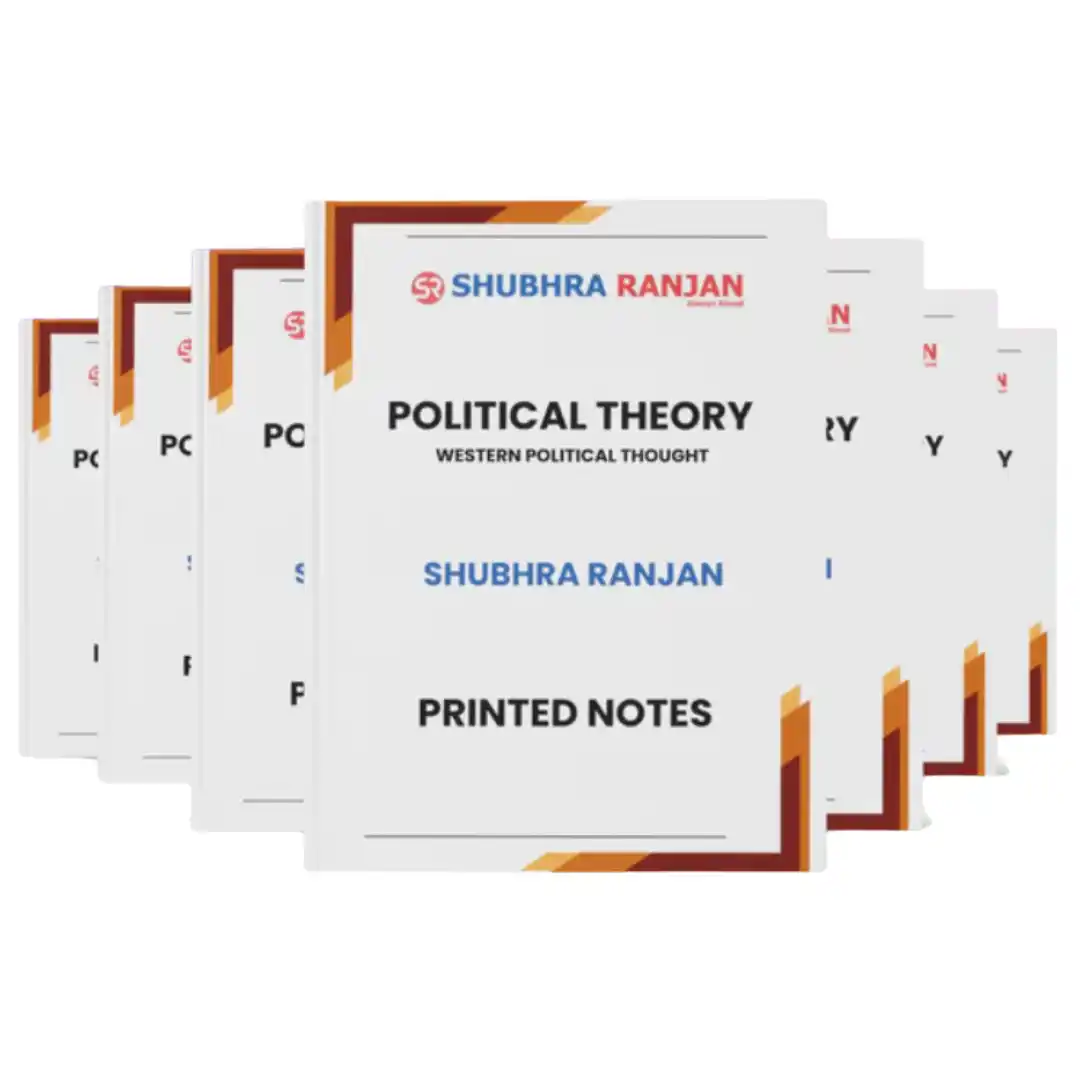
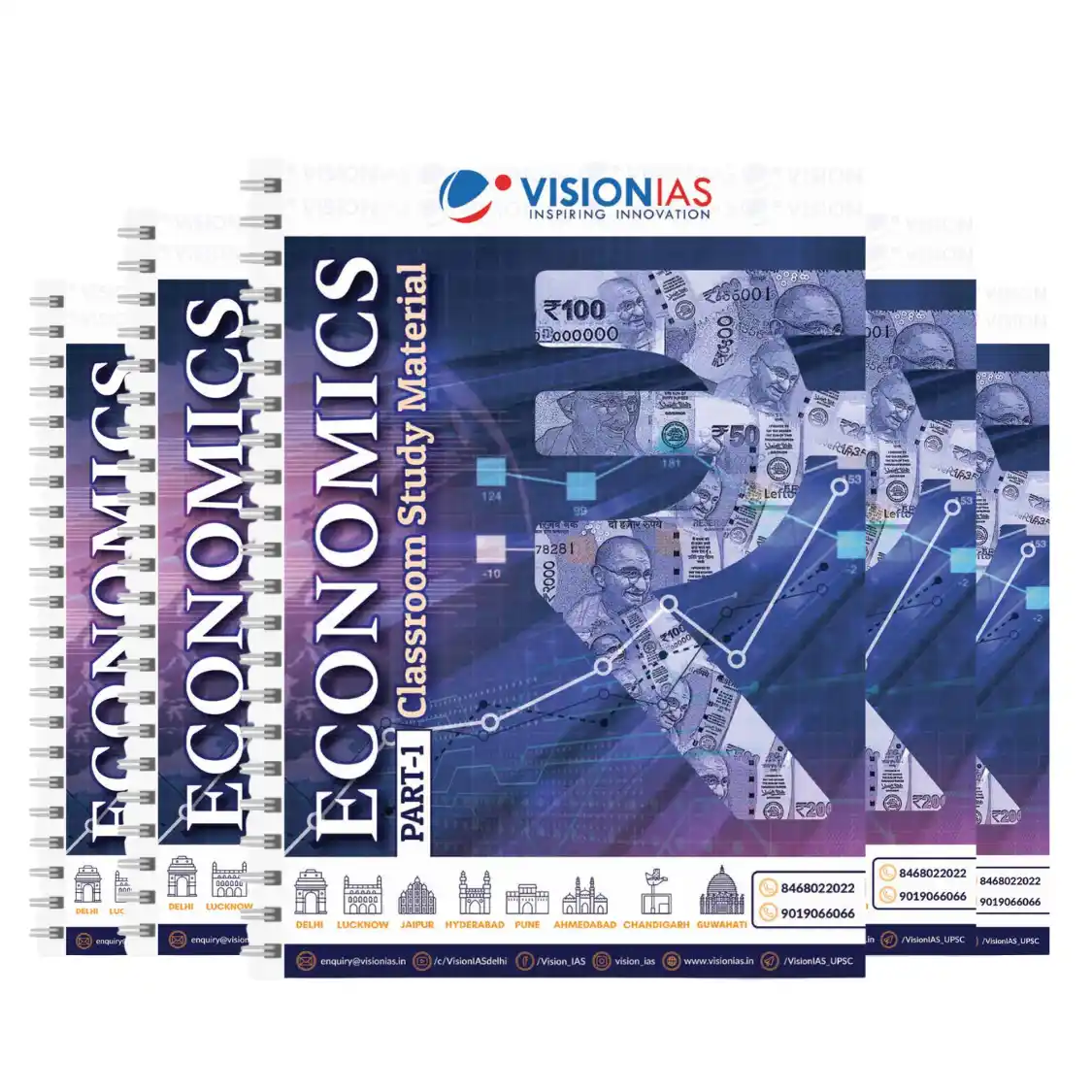
For subject preparation, mapped notes save months. If you have taken Political Science or PSIR-linked options, a well-structured optional set like Shubhra Ranjan PSIR notes covers political theory, IR and Indian politics in the depth Paper 2 expects. Commerce and Economics aspirants benefit from concise, exam-ready material such as Vision IAS Economics notes for micro/macro fundamentals and Indian economy. Sociology candidates can build theory and Indian-society coverage from SS Pandey Sociology notes. In every subject, anchor your prep to the official 10-unit PDF, then use notes to add depth and revision structure.
Download UGC NET Syllabus PDF (Paper 1 & Paper 2)
Every aspirant wants a ugc net syllabus pdf download. The up-to-date PDFs are hosted on the official NTA portal — always download from there so you are working from the current version rather than an outdated file floating on a random site. Here is the routine:
| What you need | Where / how |
|---|---|
| Paper 1 syllabus PDF | NTA UGC NET site → “Syllabus” → “General Paper on Teaching & Research Aptitude (Paper 1)”. |
| Paper 2 syllabus PDF | Same “Syllabus” page → select your subject & subject code → download that subject’s PDF. |
| Hindi / bilingual PDF | Paper 1 PDF is bilingual (English + Hindi in one file); most humanities Paper 2 PDFs also carry Hindi. |
| Official website | ugcnet.nta.ac.in (National Testing Agency). |
How can I download the UGC NET syllabus PDF (Paper 1 and Paper 2)?
Visit ugcnet.nta.ac.in, open the “Syllabus” menu, and download the Paper 1 PDF (compulsory) plus the single Paper 2 PDF for your chosen subject. Save both, print them, and paste the unit list above your study desk as a checklist. If the portal shows a “revised” date on a subject PDF, use that latest file and discard older saved copies.
UGC NET Syllabus in Hindi (Bilingual Coverage)
The ugc net syllabus in hindi is not a different syllabus — it is the same content offered bilingually. Paper 1 is set in both English and Hindi, and every candidate can choose their answer medium for most subjects. Hindi-medium aspirants should note:
- The official Paper 1 PDF prints each unit in English and Hindi together, so you can revise in your comfort language.
- Language subjects like Hindi (code 20), Sanskrit, Urdu are taught in that language itself; general subjects (Commerce, History, Education, Political Science) offer Hindi question versions.
- Purely technical subjects (some science/computer papers) may be in English only — check your subject’s PDF before assuming Hindi availability.
- In case of any wording difference between the English and Hindi question, NTA treats the English version as final — so learn key technical terms in both languages.
For Hindi-medium study support that mirrors this bilingual approach, pairing the official Hindi PDF with structured Hindi notes keeps your terminology exam-accurate.
UGC NET JRF Syllabus: Is It Different?
No — the UGC NET JRF syllabus is exactly the same as the Assistant Professor eligibility syllabus. There is one exam, one syllabus, and one set of two papers. What differs is the outcome:
| Qualification | Syllabus | What it means |
|---|---|---|
| Assistant Professor | Same (Paper 1 + Paper 2) | Eligible to apply for Assistant Professor posts in Indian universities/colleges. |
| JRF (Junior Research Fellowship) | Same (Paper 1 + Paper 2) | Higher merit + age limit (generally under 30, with relaxations); grants a research fellowship & funds PhD. |
| PhD admission | Same | Qualifying the exam now also serves as PhD admission eligibility per UGC norms. |
So you never prepare “JRF syllabus” separately — you prepare one syllabus and aim for a higher score to secure the JRF cut-off, which is stricter than the Assistant Professor cut-off.
Recommended Books & Unit-Wise Preparation Tips
Books should map to units, not the other way around. Here is a practical, unit-wise plan for Paper 1 plus subject-book guidance:
| Area | What to use | How to prepare |
|---|---|---|
| Paper 1 (all 10 units) | A standard NTA Paper 1 guide (Trishna/Arihant/KVS Madaan) + previous-year papers | Read unit → solve 10 years PYQs unit-wise → revise weekly. |
| Aptitude & Reasoning (V, VI, VII) | Any quantitative-aptitude & reasoning book | Daily 30-min practice; speed + accuracy. |
| ICT & Environment (VIII, IX) | Current-affairs plus static notes | Note abbreviations, SDGs, environment Acts, digital initiatives. |
| Higher Education (X) | NTA guide + UGC/NEP updates | Memorise institutions, commissions, NEP 2020 points. |
| Paper 2 (your subject) | Subject standard textbooks + focused notes | Follow official 10-unit PDF; revise with concise notes & PYQs. |
General preparation tips: (1) Attempt the entire paper — no negative marking means never leave a blank. (2) Solve at least 10 years of previous-year questions; Paper 1 repeats concepts heavily. (3) Take full-length bilingual mock tests to build 3-hour stamina. (4) Keep a one-page revision sheet per unit. (5) Revise the whole Paper 1 syllabus every 7–10 days in the final month. (6) In the last week, practise on the official NTA mock/interface so the CBT screen, navigation and clock feel familiar on exam day.
Has the UGC NET Syllabus Changed for 2025?
The core ugc net syllabus 2025 — Paper 1’s 10 units and the established Paper 2 subjects — remains unchanged and stable. What has evolved is the subject bouquet: NTA has expanded the list, adding subjects like Statistics and Forestry in recent cycles, which sometimes confuses searchers who see a “new” subject. If your subject already existed, your syllabus is the same as prior years; only newly introduced subjects have brand-new PDFs. Always cross-check the current PDF on the NTA site before you start, and note the exam pattern (50 + 100 questions, no negative marking) has been steady.
2024 → 2025 quick clarity
- Paper 1: no change in units, pattern, or marks.
- Paper 2: existing subjects unchanged; a few new subjects added to the list.
- Exam mode: CBT, bilingual, single 3-hour session — unchanged.
- Qualifying rule: 40% (General) / 35% (reserved) aggregate — unchanged.
UGC NET 2025: Frequency & When to Start
UGC NET is conducted by NTA twice a year — the June cycle and the December cycle — so you always have two attempts in a calendar year, and there is no cap on the number of times you can appear for Assistant Professor eligibility. Because the syllabus is stable, most aspirants find 3–4 focused months enough to cover both papers well if they follow the unit map and PYQs above. Track the official notification for the exact application window and exam dates each cycle, and lock your Paper 2 subject choice carefully at the form stage, since it cannot be changed later.
One-Page Syllabus Checklist & Study Planner
Turn the syllabus into an actionable plan. Use this indicative timeline (scale it to your available months):
| Phase | Duration | Focus |
|---|---|---|
| Foundation | Weeks 1–4 | Read all 10 Paper 1 units once; start Paper 2 unit 1–3. |
| Building | Weeks 5–10 | Complete Paper 2 syllabus; practise aptitude & reasoning daily. |
| PYQ & Practice | Weeks 11–14 | 10-year PYQs (both papers) unit-wise; weekly mock tests. |
| Revision | Final 2–3 weeks | Full-length mocks, one-page revision sheets, high-yield units. |
Print the Paper 1 unit table and your Paper 2 unit list, tick topics as you finish, and log your mock scores weekly. A visible checklist is the simplest lead into disciplined, structured preparation.
Frequently Asked Questions
What is the syllabus of UGC NET?
The UGC NET syllabus has two papers. Paper 1 is a common Teaching & Research Aptitude paper split into 10 units (teaching, research, comprehension, communication, maths reasoning, logical reasoning, data interpretation, ICT, people/development & environment, and higher education system). Paper 2 is the detailed syllabus of the single subject you choose from NTA’s 85+ subjects.
Is UGC NET Paper 1 syllabus the same for all subjects?
Yes. Paper 1 is identical and compulsory for every candidate regardless of the Paper 2 subject chosen. It tests teaching aptitude, research aptitude, reasoning, data interpretation, ICT, environment and the higher education system — the same 10 units for everyone.
How many papers and subjects are there in UGC NET?
There are two papers — Paper 1 (common) and Paper 2 (subject-specific). NTA offers 85+ subjects for Paper 2, but each candidate appears in only one subject. Both papers are attempted in a single 3-hour session.
Is there negative marking in UGC NET?
No. UGC NET has no negative marking in either paper. Every correct answer earns 2 marks and wrong answers cost nothing, so you should attempt all 150 questions.
How many marks is UGC NET Paper 1 and Paper 2?
Paper 1 carries 100 marks (50 questions × 2) and Paper 2 carries 200 marks (100 questions × 2), for a combined total of 300 marks. Merit for both JRF and Assistant Professor is based on this aggregate.
What are the minimum qualifying marks in UGC NET?
Candidates must score at least 40% aggregate (120 out of 300) in the General category and 35% (105 out of 300) in reserved categories (OBC-NCL, SC, ST, PwD, EWS, third gender). Clearing this minimum makes you eligible; the final JRF and Assistant Professor cut-offs are then fixed category- and subject-wise from the top-scoring candidates.
How many times is UGC NET held in a year?
NTA conducts UGC NET twice a year — a June cycle and a December cycle. There is no limit on attempts for Assistant Professor eligibility, while JRF has an upper age limit with category-based relaxations. Check the official notification for each cycle’s application window and exam dates.
Has the UGC NET syllabus changed for 2025?
The core syllabus and exam pattern remain the same for 2025 — Paper 1’s 10 units and existing Paper 2 subjects are unchanged. NTA has only expanded its subject list (adding subjects like Statistics and Forestry), so if your subject already existed, your syllabus is unchanged. Always confirm from the latest PDF on ugcnet.nta.ac.in.
Recommended Study Material
Continue Reading
PSIR Optional Syllabus 2026: Paper 1 & 2 + PDF
The psir optional syllabus for UPSC Mains is divided into two papers of 250 marks each (500 marks…

SSC CGL Preparation 2026: Strategy, Study Plan & Books
SSC CGL preparation in 2026 comes down to three things done consistently: master the exam pattern and topic-wise…
RPSC RAS Syllabus 2026: Prelims, Mains Pattern + PDF
The RPSC RAS syllabus is built around one objective Prelims paper (150 questions, 200 marks) followed by four…