PSIR Optional Syllabus 2026: Paper 1 & 2 + PDF
Complete PSIR optional syllabus for UPSC 2026: full Paper 1 & Paper 2 topics, marks, booklist, PYQ trends, timeline and free syllabus PDF download.

The psir optional syllabus for UPSC Mains is divided into two papers of 250 marks each (500 marks total), covering Political Theory, Indian & Western Political Thought, Indian Government & Politics in Paper 1, and Comparative Politics, International Relations and India & the World in Paper 2. PSIR (Political Science & International Relations) is one of the most popular UPSC optionals because roughly 30-40% of its content overlaps with GS Paper 2, Essay and current affairs. This guide gives you the complete official topic-by-topic syllabus, a downloadable PDF, the standard booklist, PYQ trends and a realistic month-by-month plan to finish it.
What Is PSIR Optional? (Full Form & Overview)
PSIR stands for Political Science & International Relations. It is one of the 48 optional subjects offered by UPSC in the Civil Services (Mains) Examination. Aspirants pick one optional, and it carries two papers worth a combined 500 marks — a significant chunk of the 1750-mark written Mains total. PSIR is a humanities optional, meaning it requires no prior degree in the subject; engineers, doctors and commerce graduates take it every year and score well.
The subject blends abstract political theory (justice, liberty, democracy, the ideas of Plato to Gramsci) with the concrete machinery of Indian governance and the fast-moving world of foreign policy and international relations. This mix is exactly why it doubles as a GS booster: what you study for PSIR feeds directly into GS Paper 2 (polity, governance, international relations), the Essay paper, and even the interview.
Why Aspirants Choose PSIR
- Heavy GS overlap (~30-40%): Indian Government & Politics maps onto GS-2 polity; International Relations maps onto GS-2 IR and daily current affairs.
- Static + dynamic balance: Paper 1 is largely static and can be mastered from notes; Paper 2 rewards current-affairs integration.
- Abundant guidance: Toppers, coaching notes and test series are widely available, so self-study is very feasible.
- Interview edge: A political-science base helps in DAF-based and current-affairs questions during the personality test.
PSIR Optional Exam Pattern & Marking Scheme
Before the topics, understand how the paper is structured. Both papers follow an identical format, and both are attempted on the same descriptive answer-writing model as GS.
| Parameter | Details |
|---|---|
| Number of papers | 2 (Paper 1 & Paper 2) |
| Marks per paper | 250 |
| Total marks | 500 |
| Duration per paper | 3 hours each |
| Medium | English or any Eighth Schedule language (e.g. Hindi) |
| Question structure | 8 questions in 2 sections (A & B); attempt 5, Q1 & Q5 compulsory |
| Marks per question | Mix of 10, 15 and 20 markers |
| Nature | Descriptive / analytical, answer-writing based |
Each paper has two sections. Question 1 and Question 5 are compulsory (usually short-note style), and you choose three more from the remaining six. Strong intra-syllabus choice means you can leave a small number of low-yield areas — but only after knowing exactly what the full syllabus contains.
PSIR Optional Paper 1 Syllabus (Political Theory & Indian Politics)
The psir optional paper 1 syllabus is split into two clear halves. Section A is Political Theory and Indian & Western Political Thought — the conceptual, static core. Section B is Indian Government & Politics — the domestic governance half that overlaps heavily with GS Polity. Below is the complete topic-by-topic breakdown.
Paper 1, Section A — Political Theory & Political Thought
| Unit | Topics Covered |
|---|---|
| Political Theory | Meaning and approaches |
| Theories of the State | Liberal, Neo-liberal, Marxist, Pluralist, Post-colonial and Feminist |
| Justice | Conceptions of justice with special reference to Rawls’ theory and its communitarian critiques |
| Equality | Social, political and economic; relationship between equality and freedom; affirmative action |
| Rights | Meaning and theories; different kinds of rights; concept of human rights |
| Democracy | Classical and contemporary theories; different models of democracy — representative, participatory and deliberative |
| Concept of Power | Hegemony, ideology and legitimacy |
| Political Ideologies | Liberalism, Socialism, Marxism, Fascism, Gandhism |
| Indian Political Thought | Dharamshastra, Arthashastra and Buddhist traditions; Sir Syed Ahmed Khan, Sri Aurobindo, M.K. Gandhi, B.R. Ambedkar, M.N. Roy |
| Western Political Thought | Plato, Aristotle, Machiavelli, Hobbes, Locke, John S. Mill, Marx, Gramsci, Hannah Arendt |
Paper 1, Section B — Indian Government & Politics
| Unit | Topics Covered |
|---|---|
| Indian Nationalism | Political strategies of the freedom struggle — constitutionalism to mass Satyagraha, non-cooperation, civil disobedience; militant and revolutionary movements, peasant and workers’ movements. Perspectives — liberal, socialist and Marxist; radical humanist and Dalit. |
| Making of the Constitution | Legacies of the British rule; different social and political perspectives |
| Salient Features of the Constitution | The Preamble, Fundamental Rights and Duties, Directive Principles; parliamentary system and amendment procedures; judicial review and basic structure doctrine |
| Principal Organs of the Union Government | Envisaged role and actual working of the Executive, Legislature and Supreme Court |
| Principal Organs of State Government | Envisaged role and actual working of the Executive, Legislature and High Courts |
| Grassroots Democracy | Panchayati Raj and municipal government; significance of the 73rd and 74th Amendments; grassroot movements |
| Statutory Institutions/Commissions | Election Commission, CAG, Finance Commission, UPSC, NCSC, NCST, NCW, NHRC, NCM, NBCC, etc. |
| Federalism | Constitutional provisions; changing nature of Centre-State relations; integrationist tendencies and regional aspirations; inter-state disputes |
| Planning and Economic Development | Nehruvian and Gandhian perspectives; role of planning and public sector; Green Revolution, land reforms and agrarian relations; liberalisation and economic reforms |
| Caste, Religion & Ethnicity in Indian Politics | Determinants of voting behaviour; changing socio-economic profile of legislators |
| Party System | National and regional political parties, ideological and social bases of parties; patterns of coalition politics; pressure groups, trends in electoral behaviour; changing nature of the political elite |
| Social Movements | Civil liberties and human rights movements; women’s movements; environmentalist movements |
PSIR Optional Paper 2 Syllabus (Comparative Politics & IR)
The psir optional paper 2 syllabus shifts from India to the world. Section A covers Comparative Political Analysis and International Politics; Section B covers India and the World, including India’s foreign policy in depth. This is the paper where daily current affairs and news analysis directly boost marks.
Paper 2, Section A — Comparative Politics & International Relations
| Unit | Topics Covered |
|---|---|
| Comparative Politics | Nature and major approaches; political economy and political sociology perspectives; limitations of the comparative method |
| State in Comparative Perspective | Characteristics and changing nature of the state in capitalist and socialist economies, and advanced industrial and developing societies |
| Politics of Representation & Participation | Political parties, pressure groups and social movements in advanced industrial and developing societies |
| Globalisation | Responses from developed and developing societies |
| Approaches to Study of IR | Idealist, Realist, Marxist, Functionalist and Systems theory |
| Key Concepts in IR | National interest, security and power; balance of power and deterrence; transnational actors and collective security; world capitalist economy and globalisation |
| Changing International Political Order | Rise of superpowers; strategic and ideological Bipolarity, arms race and Cold War; nuclear threat; collapse of the Soviet Union and unipolarity; American hegemony; relevance of non-alignment in the post-Cold War era |
| Evolution of the International Economic System | From Bretton Woods to WTO; socialist economies and CMEA; Third World demand for NIEO; globalisation of the world economy |
| United Nations | Envisaged role and actual record; specialised UN agencies — aims and functioning; the need for UN reforms |
| Regionalisation of World Politics | EU, ASEAN, APEC, SAARC, NAFTA |
| Contemporary Global Concerns | Democracy, human rights, environment, gender justice, terrorism, nuclear proliferation |
Paper 2, Section B — India and the World
| Unit | Topics Covered |
|---|---|
| Indian Foreign Policy | Determinants of foreign policy; institutions of policy-making; continuity and change |
| India’s Contribution to Non-Aligned Movement | Different phases; current role of NAM |
| India and South Asia | Regional cooperation — SAARC (past and present); free trade area; India’s “Look East”/Act East policy; obstacles to regional cooperation — river water disputes, illegal cross-border migration, ethnic conflicts and insurgency, border disputes |
| India and the Global South | Relations with Africa and Latin America; leadership role in the demand for NIEO and WTO negotiations |
| India and the Global Centres of Power | USA, EU, Japan, China and Russia |
| India and the UN System | Role in UN peace-keeping; demand for permanent seat in the Security Council |
| India and the Nuclear Question | Changing perceptions and policy |
| Recent Developments in Indian Foreign Policy | India’s position on recent crises in Afghanistan, Iraq and West Asia; growing relations with the US and Israel; vision of a new world order |
Download the PSIR Optional Syllabus PDF (Printable Checklist)
Aspirants consistently search for a psir optional syllabus pdf download so they can print it, paste it above the study desk and tick off topics as they go. The official syllabus is part of UPSC’s Civil Services Mains notification, and a clean, printable topic-by-topic checklist is the single most useful revision tool for an optional this large. Use the table below as a ready-to-print completion tracker; copy it into a document and mark each unit as you finish reading, make notes, and complete PYQ practice.
| Paper | Section | Read? | Notes Made? | PYQs Done? |
|---|---|---|---|---|
| Paper 1 A | Political Theory | ☐ | ☐ | ☐ |
| Paper 1 A | Western Political Thinkers | ☐ | ☐ | ☐ |
| Paper 1 A | Indian Political Thinkers | ☐ | ☐ | ☐ |
| Paper 1 B | Constitution & Institutions | ☐ | ☐ | ☐ |
| Paper 1 B | Federalism & Party System | ☐ | ☐ | ☐ |
| Paper 2 A | Comparative Politics | ☐ | ☐ | ☐ |
| Paper 2 A | International Relations Theory | ☐ | ☐ | ☐ |
| Paper 2 B | India’s Foreign Policy | ☐ | ☐ | ☐ |
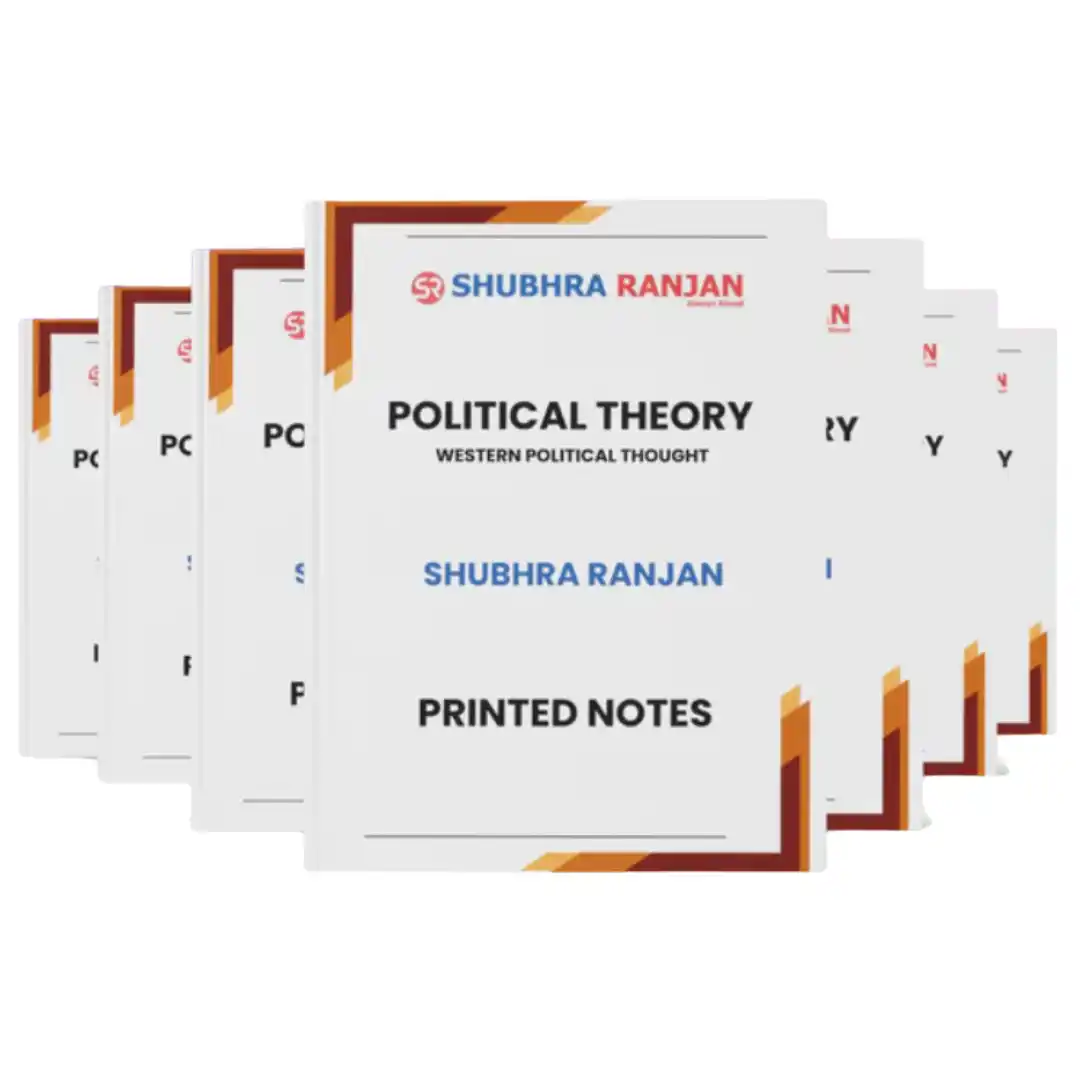
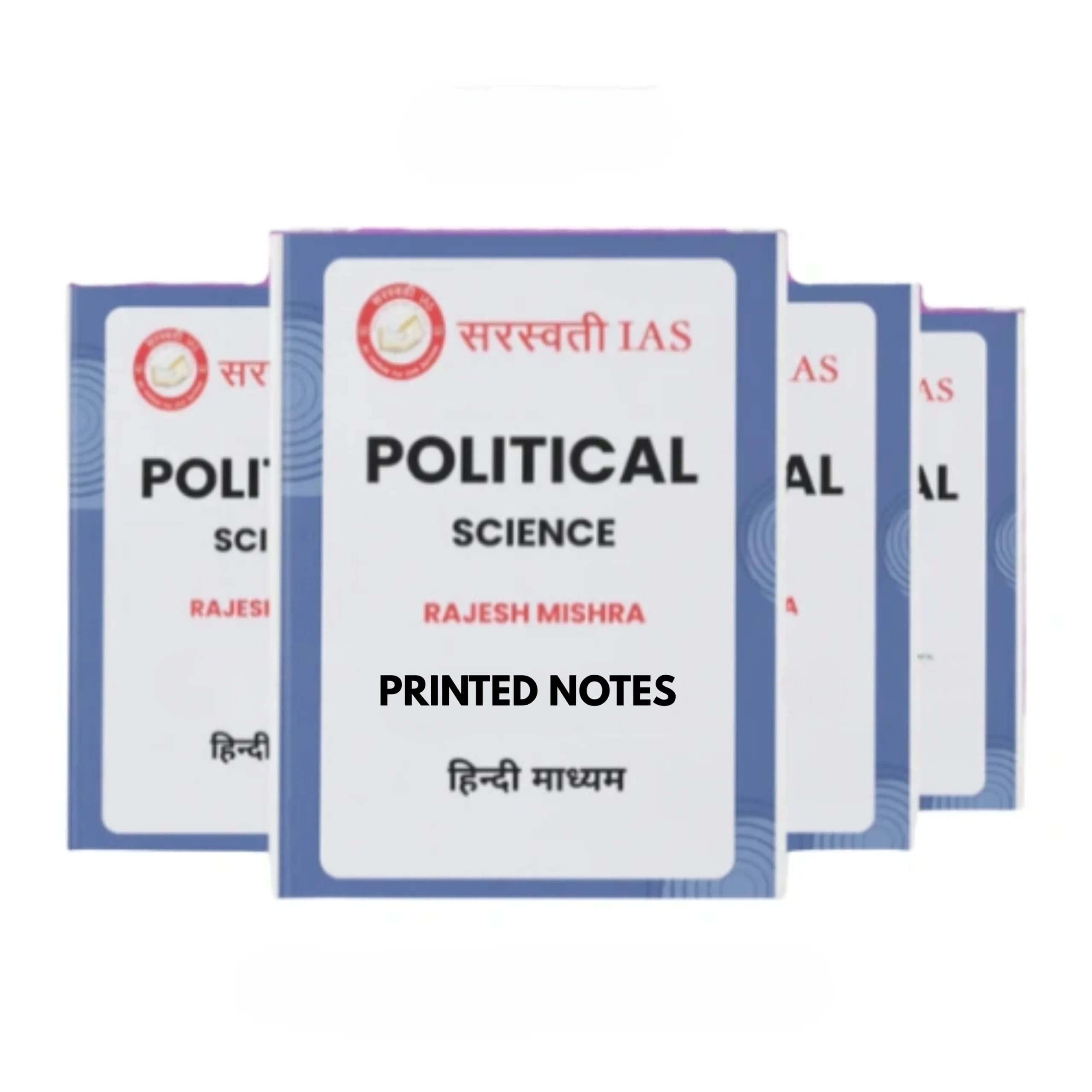
A well-structured set of coaching notes already arranges the entire syllabus in this sequence. The Shubhra Ranjan PSIR notes (set of 4 booklets, English) and the Rajesh Mishra PSIR notes (6 booklets, Hindi medium) both map cleanly onto the units above, so you can treat them as your printed syllabus tracker plus content in one place.
Best Books for PSIR Optional (Complete Booklist)
A focused psir optional booklist matters more than a huge one — PSIR is a subject where over-reading standard texts wastes time. The following are the standard, widely-recommended sources, mapped to the part of the syllabus they cover.
| Book / Author | Best For (Syllabus Area) |
|---|---|
| An Introduction to Political Theory — O.P. Gauba | Paper 1A — Political Theory foundations |
| Political Theory — Andrew Heywood | Paper 1A & Paper 2A — concepts, ideologies, IR theory |
| Western Political Thought — Subrata Mukherjee & Sushila Ramaswamy | Paper 1A — Plato to Arendt |
| Foundations of Indian Political Thought — V.R. Mehta | Paper 1A — Indian thinkers |
| India’s Struggle for Independence — Bipan Chandra | Paper 1B — Indian Nationalism |
| Indian Government & Politics — various / coaching notes | Paper 1B — Constitution, institutions, party system |
| Global Politics — Andrew Heywood | Paper 2A — Comparative Politics & IR |
| International Relations Theories — Tim Dunne, Kurki & Smith | Paper 2A — IR approaches |
| Does the Elephant Dance? — David Malone / IDSA articles | Paper 2B — Indian Foreign Policy |
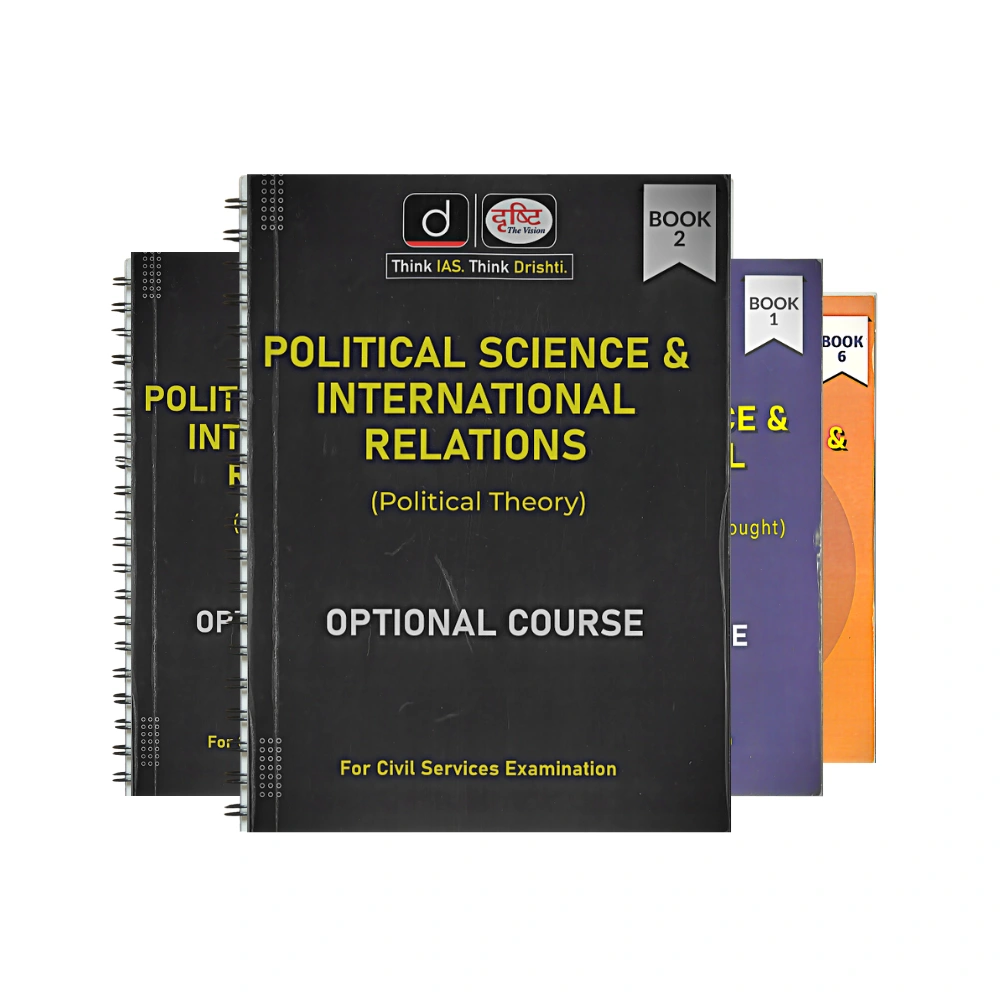
Most successful candidates supplement these standard texts with a single reliable set of coaching notes to save time on synthesis and answer structure. The Shubhra Ranjan PSIR notes in Hindi (7 booklets) and the Drishti IAS PSIR notes (set of 6 booklets) are popular one-stop consolidations that cover both papers. If you are pairing PSIR with GS-2 polity, the Vajiram Polity notes reinforce the Indian Government & Politics overlap.
Topic-to-Source Mapping: Read the Right Book for Each Unit
One reason aspirants fall behind is reading everything from every book. Instead, map each syllabus unit to a single primary source and stick to it. This targeted approach — a gap most top pages ignore — is what keeps the syllabus finishable.
| Syllabus Unit | Primary Source | Approach |
|---|---|---|
| Justice, Rights, Equality | Gauba + Heywood | Make concept-wise short notes with thinker attributions |
| Western thinkers | Subrata Mukherjee | One page per thinker: key ideas, quotes, critiques |
| Indian thinkers | V.R. Mehta + notes | Compare thinkers on state, nation, freedom |
| Constitution & institutions | Coaching notes + current affairs | Link static provisions to recent judgments/events |
| IR theory | Heywood Global Politics | Realism vs Liberalism vs Marxism comparisons |
| Foreign policy | Notes + IDSA/newspapers | Country-wise dynamic value addition |
PSIR PYQ Trend Analysis: High-Weightage vs Low-Yield Topics
Analysing previous year questions (PYQs) reveals which areas are asked almost every year and which are rare. Prioritise the high-frequency zones for deep preparation and answer-writing practice.
| Topic Area | PYQ Frequency | Priority |
|---|---|---|
| Justice, Equality, Rights, Democracy (theory) | Very high — asked every year | High |
| Western thinkers (Marx, Gramsci, Hobbes, Locke) | High | High |
| Indian thinkers (Gandhi, Ambedkar, Aurobindo) | High | High |
| Federalism, Party System, Pressure Groups | High — dynamic linkages | High |
| IR theories (Realism, Liberalism) | High | High |
| India’s foreign policy (China, USA, neighbourhood) | Very high — current-affairs driven | High |
| UN reforms, regional organisations | Medium | Medium |
| Comparative method, Dharamshastra/Arthashastra | Low | Low (revise, don’t over-invest) |
The clear lesson: political theory and India’s foreign policy are the two engines of a high PSIR score. Practising past questions from these zones with structured, thinker-supported answers is the fastest route to marks.
Current-Affairs Integration for Paper 2 (The Marks Multiplier)
Paper 2 — especially India and the World — is essentially a dynamic paper. The difference between an average and a top scorer is the ability to link static IR concepts to fresh developments: a recent India-China border update, a G20 outcome, a UN Security Council debate, or shifts in India-US ties. Build a running current-affairs register organised by country and by IR theme, and revise it monthly.
Pair a good monthly compilation with the newspaper. The Vision IAS Current Affairs Magazine (January 2026) is a compact way to capture foreign-policy and IR developments that plug directly into Paper 2 answers and, thanks to the overlap, into GS-2 as well.
Month-by-Month PSIR Completion Timeline
Can you complete the psir syllabus for upsc mains in a few months? Yes — with a disciplined plan. Here is a realistic 4-month first-reading timeline for a dedicated aspirant; stretch it to 5-6 months if you are studying alongside a job or full GS.
| Month | Focus Area | Milestone |
|---|---|---|
| Month 1 | Paper 1A — Political Theory + Western thinkers | Concept notes + 20 answers written |
| Month 2 | Paper 1A Indian thinkers + Paper 1B Indian Govt & Politics | Paper 1 first reading complete |
| Month 3 | Paper 2A — Comparative Politics + IR theory | IR framework + current-affairs register started |
| Month 4 | Paper 2B — India & the World + full PYQ practice | Both papers covered; revision cycle begins |
After the first reading, shift to a revision-plus-answer-writing loop: revise each section, write 3-5 answers, and get them evaluated. Answer-writing practice — not endless re-reading — is what converts syllabus coverage into marks.
PSIR vs Sociology, Anthropology & History: Which Optional Is Better?
“Which is better, Sociology or PSIR optional?” is one of the most common aspirant questions. There is no universally best optional — the right choice depends on your interest, background and GS overlap. Here is an honest comparison of the popular humanities options.
| Optional | GS Overlap | Static vs Dynamic | Best Suited For |
|---|---|---|---|
| PSIR | High (GS-2 polity & IR, Essay) | Balanced (Paper 2 dynamic) | Those interested in politics, governance & world affairs |
| Sociology | Moderate (GS-1 society, GS-2) | Mostly static, concise syllabus | Beginners wanting a short, scoring syllabus |
| Anthropology | Low-moderate | Static, diagram-friendly | Science background aspirants |
| History | Moderate (GS-1) | Very static but vast | Those with strong memory & interest in history |
If you enjoy reading about elections, the Constitution, and international affairs and want maximum GS synergy, PSIR is an excellent fit. If you prefer a shorter, tightly-bounded syllabus, compare it against Sociology optional material before committing. Whatever you choose, commit fully — switching optionals mid-preparation costs months.
How Much PSIR Overlaps With GS (And Why It Matters)
Roughly 30-40% of the PSIR syllabus reinforces GS. Indian Government & Politics (Paper 1B) directly supports GS Paper 2’s polity and governance portions. International Relations and India’s Foreign Policy (Paper 2) map onto GS Paper 2’s IR section. Political theory and ideologies enrich the Essay paper, and the analytical style you build for PSIR improves every descriptive answer you write. This overlap effectively means you are preparing two exams’ worth of content in one subject — a major reason PSIR remains a top-3 optional choice year after year.
Toppers Who Chose PSIR & Their Scores
PSIR has a strong record of producing rankers, which reassures aspirants worried about whether it is scoring. Recent toppers who took Political Science & International Relations include Shakti Dubey (AIR 1, CSE 2024), Ishita Kishore (AIR 1, CSE 2022), and Pooja Ranawat, among many others. Consistent PSIR scores in the 250-300+ range (out of 500) at the top of the merit list show the optional can be genuinely high-scoring when paired with disciplined answer writing, thinker-based value addition and current-affairs integration. Studying toppers’ answer copies for structure and content selection is one of the fastest ways to level up your own answers.
Common Mistakes to Avoid in PSIR Preparation
- Over-reading standard texts: Reading five books per topic instead of making crisp notes from one primary source.
- Ignoring Paper 2 dynamism: Treating foreign policy as static and skipping the current-affairs register.
- Skipping answer writing: Completing the syllabus but writing too few practice answers before the exam.
- No thinker attribution: Writing generic theory answers without quoting Rawls, Gramsci, Gandhi or IR theorists.
- Weak revision cycles: A subject this large needs at least 2-3 full revisions before Mains.
Frequently Asked Questions
What is the syllabus of PSIR optional?
The PSIR optional syllabus has two papers of 250 marks each. Paper 1 covers Political Theory, Indian & Western Political Thought, and Indian Government & Politics. Paper 2 covers Comparative Politics, International Relations, and India & the World (including India’s foreign policy). Together they total 500 marks in UPSC Mains.
Is PSIR a scoring or high-scoring subject?
Yes, PSIR can be high-scoring. Toppers such as Shakti Dubey (AIR 1, 2024) and Ishita Kishore (AIR 1, 2022) took PSIR, and top scores routinely cross 250-300 out of 500. Marks come from thinker-based theory answers, strong structure, and current-affairs integration in Paper 2.
Is PSIR optional tough?
PSIR is moderate in difficulty. Political theory is abstract and needs conceptual clarity, while Paper 2 demands regular current-affairs updates. It requires no prior background, so with good notes, answer-writing practice and revision, aspirants from any stream can master it.
Can I complete the PSIR optional syllabus in 3-4 months?
Yes. A dedicated aspirant can finish the first reading of both papers in about 4 months using a structured month-by-month plan — Paper 1 in the first two months and Paper 2 in the next two — followed by revision and answer writing. Part-time aspirants should allow 5-6 months.
What is the difference between PSIR Paper 1 and Paper 2?
Paper 1 is largely static and India/theory focused — political theory, thinkers, the Constitution and Indian politics. Paper 2 is more dynamic and world-focused — comparative politics, international relations theory and India’s foreign policy, where daily current affairs directly add value.
How much of the PSIR syllabus overlaps with GS papers?
Around 30-40% overlaps with GS. Indian Government & Politics supports GS Paper 2 polity and governance, while International Relations and India’s foreign policy support GS Paper 2’s IR section. Political ideologies and theory also strengthen the Essay paper, making PSIR efficient for combined preparation.
Recommended Study Material
Continue Reading
SSC CGL Preparation 2026: Plan, Books & Strategy
SSC CGL preparation for 2026 can be cracked in a single attempt with 4-6 months of focused self-study…
SSC CPO Syllabus 2026: Paper 1 & 2 Topics, Pattern + PDF
The SSC CPO syllabus covers four core subjects across two computer-based papers — General Intelligence & Reasoning, General…
SSC CGL Syllabus 2026: Tier 1 & Tier 2 Topics + PDF
The SSC CGL syllabus for 2026 is split across two computer-based stages. Tier 1 (100 questions, 200 marks,…