SSC CPO Syllabus 2026: Paper 1 & 2 Topics, Pattern + PDF
Complete SSC CPO syllabus 2026 with Paper 1 & Paper 2 topics, exam pattern, PET/PST & medical standards, topic weightage and a free syllabus PDF download guide.


The SSC CPO syllabus covers four core subjects across two computer-based papers — General Intelligence & Reasoning, General Knowledge & General Awareness, Quantitative Aptitude and English Comprehension in Paper 1, and an in-depth English Language & Comprehension test in Paper 2. Paper 1 carries 200 questions for 200 marks and Paper 2 carries 200 questions for 200 marks, both with 0.25 negative marking, and selection runs through four stages: Paper 1 → PET/PST → Paper 2 → Detailed Medical Examination (DME). The SSC CPO SI syllabus is identical for Delhi Police and CAPF Sub-Inspector aspirants. This guide gives you the complete subject-wise syllabus, topic-wise weightage, physical (PET/PST) and medical standards, a week-by-week study plan and a free syllabus PDF route so you can plan your entire preparation from one page.
Quick answer — SSC CPO syllabus 2026 at a glance:
- Paper 1: Reasoning + GK/GA + Quantitative Aptitude + English Comprehension (50 questions each = 200 questions, 200 marks, 2 hours).
- Paper 2: English Language & Comprehension only (200 questions, 200 marks, 2 hours).
- Negative marking: 0.25 per wrong answer in both papers.
- Physical stages: PET/PST and DME are qualifying (pass/fail) and add no marks to merit.
Last reviewed: September 2026. SSC finalises the exact pattern in the official notification each cycle. The figures below reflect the pattern SSC has used consistently in recent SSC CPO cycles and are cross-referenced against previous official notifications. Always confirm against the current SSC notification before your attempt.
SSC CPO 2026 Overview: What the Exam Is
The SSC CPO (Central Police Organisation) examination is conducted by the Staff Selection Commission to recruit Sub-Inspectors (SI) in Delhi Police and Sub-Inspectors in the Central Armed Police Forces (CAPFs) — namely BSF, CISF, CRPF, ITBP and SSB. It is one of the most sought-after uniformed-services jobs after graduation because it combines a Group-B non-gazetted post, strong pay (Level-6, roughly ₹35,400–₹1,12,400) and a clear promotion ladder.
Because the post is a field-police role, the SSC CPO SI recruitment is unique among SSC exams: it tests both your written knowledge (two papers) and your physical fitness (PST/PET) and medical standards. Understanding all four stages before you start is the single biggest planning advantage most aspirants miss.
| Particular | Detail (SSC CPO 2026) |
|---|---|
| Conducting body | Staff Selection Commission (SSC) |
| Post | Sub-Inspector (SI) in Delhi Police & CAPFs |
| Eligibility | Graduate (Bachelor’s degree in any discipline) |
| Age limit | 20–25 years (with category relaxations) |
| Selection stages | Paper 1 → PET/PST → Paper 2 → DME |
| Paper 1 & 2 mode | Computer-Based Test (online) |
| Negative marking | 0.25 mark per wrong answer (both papers) |
| Medium | English & Hindi (except the English section) |
What’s New in SSC CPO 2026: Exam Pattern Clarified
A big source of confusion online is that several blogs mix up the SSC CPO exam pattern 2026 with SSC CGL/CHSL Tier-1, which use a 100-question format with sectional timing. That is not the SSC CPO pattern. For SSC CPO, both Paper 1 and Paper 2 have historically been 200-question, 200-mark papers of 2 hours each, without section-wise timing, and with 0.25 negative marking. The table below settles the inconsistency you may have seen.
| Claim seen on some sites | Reality (SSC CPO SI) |
|---|---|
| Paper 1 has 100 questions with 15-min sectional timing | Myth — that is the CGL/CHSL Tier-1 style. SSC CPO Paper 1 = 200 questions, no sectional timing |
| Paper 2 is only 100 questions | SSC CPO Paper 2 = 200 questions (English), 200 marks |
| No negative marking | 0.25 negative marking applies in both papers |
| PET marks count toward merit | PET/PST is only qualifying (pass/fail); marks do not add to merit |
Bottom line: prepare for two full-length 200-question papers, budget your time yourself (there is no forced section timer), and never guess blindly because every wrong answer costs 0.25.
SSC CPO Exam Pattern 2026: Paper 1 & Paper 2
The written stage has two computer-based papers, but they are attempted at different points in the process. You clear Paper 1 first, then appear for PET/PST, and only PET/PST-qualified candidates sit for Paper 2. Here is the authoritative SSC CPO exam pattern 2026 for both.
SSC CPO Paper 1 Syllabus & Pattern
Paper 1 is a broad aptitude and general-studies test with four equally weighted sections. Each section has 50 questions of 1 mark each.
| Section | Questions | Marks | Duration |
|---|---|---|---|
| General Intelligence & Reasoning | 50 | 50 | 2 hours (120 minutes) |
| General Knowledge & General Awareness | 50 | 50 | |
| Quantitative Aptitude | 50 | 50 | |
| English Comprehension | 50 | 50 | |
| Total | 200 | 200 |
Negative marking is 0.25 for every wrong answer. Candidates with a benchmark disability (VH/PwBD) as per rules are typically allowed a compensatory time of around 40 minutes.
SSC CPO Paper 2 Syllabus & Pattern
Paper 2 is a single, English-only section that tests your language depth at a much higher level than Paper 1’s English portion. This is where strong readers and grammar-confident candidates create a decisive merit gap.
| Section | Questions | Marks | Duration |
|---|---|---|---|
| English Language & Comprehension | 200 | 200 | 2 hours (120 minutes) |
Paper 2 also carries 0.25 negative marking. Because 100% of Paper 2 is English, your Paper-2 score can single-handedly decide your final rank — do not treat it as an afterthought once Paper 1 is done.
SSC CPO Selection Process 2026: The Four Stages
Merit for the SSC CPO SI post is built on the combined marks of Paper 1 and Paper 2, provided you clear the physical and medical stages, which are purely qualifying.
| Stage | What it involves | Nature |
|---|---|---|
| 1. Paper 1 (CBT) | 200 marks, 4 sections | Counts toward merit; shortlists for PET/PST |
| 2. PST & PET | Physical Standard Test (height/chest) + Physical Efficiency Test (races, jumps) | Qualifying (pass/fail) |
| 3. Paper 2 (CBT) | 200 marks, English only | Counts toward merit |
| 4. DME | Detailed Medical Examination + document verification | Qualifying |
Final merit = Paper 1 marks + Paper 2 marks. PET/PST and DME do not add marks, but failing any of them removes you from selection regardless of how high your written score is.
SSC CPO Syllabus 2026: Paper 1 Subject-Wise Topics
Below is the complete, subtopic-level SSC CPO Paper 1 syllabus for all four sections. Master this list and you will have covered everything SSC can ask.
General Intelligence & Reasoning
This section tests both verbal and non-verbal reasoning and is the most scoring section for well-practised candidates.
- Analogies, similarities and differences
- Space visualisation, spatial orientation
- Problem solving, analysis, judgment, decision making
- Visual memory, discrimination, observation
- Relationship concepts (blood relations)
- Arithmetical reasoning and figural classification
- Arithmetic number series, non-verbal series
- Coding and decoding, statement conclusion
- Syllogistic reasoning
- Semantic, symbolic/number and figural analogy/classification/series
- Venn diagrams, drawing inferences, punched hole/pattern folding & unfolding
- Figural pattern completion, embedded figures, critical thinking
- Emotional and social intelligence
General Knowledge & General Awareness
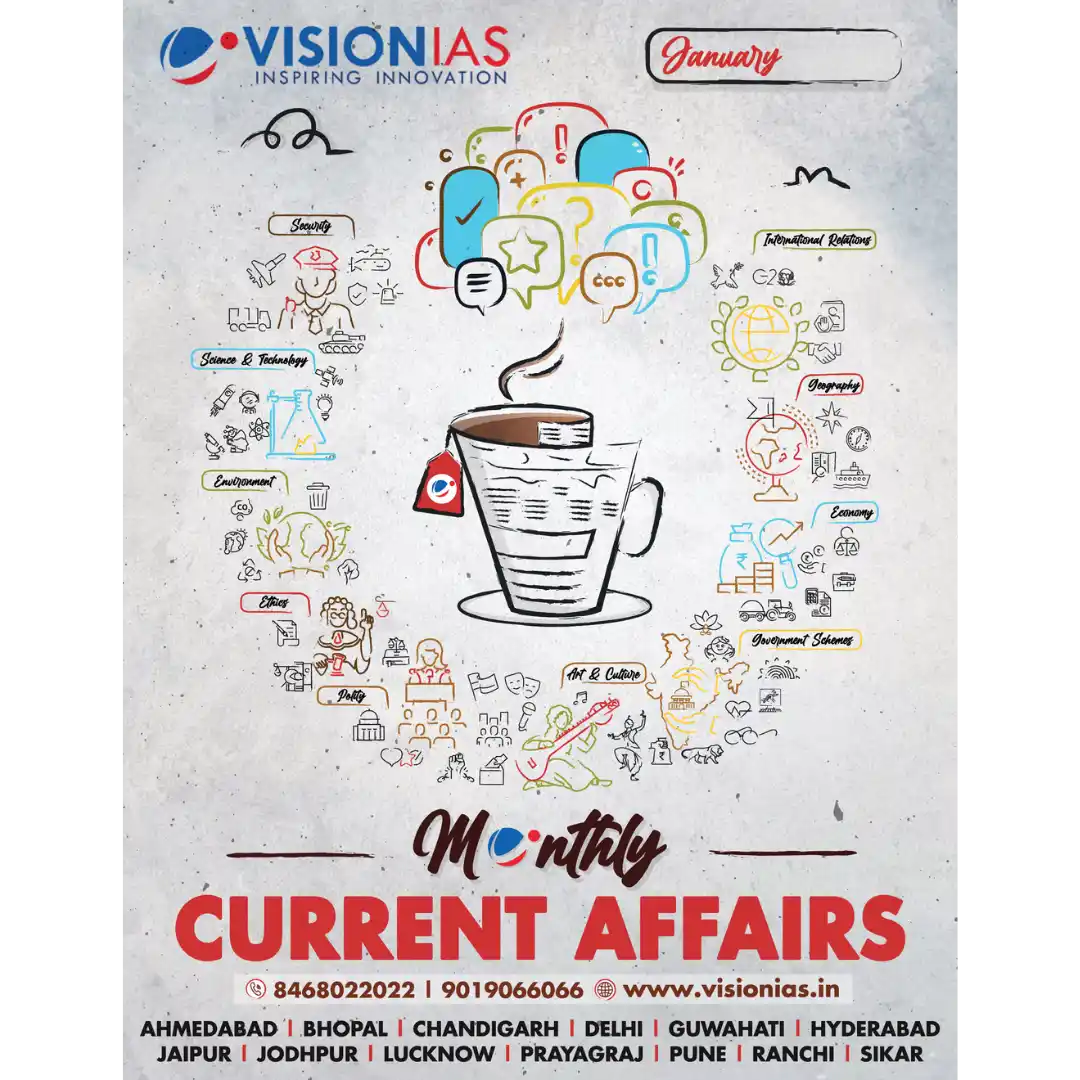
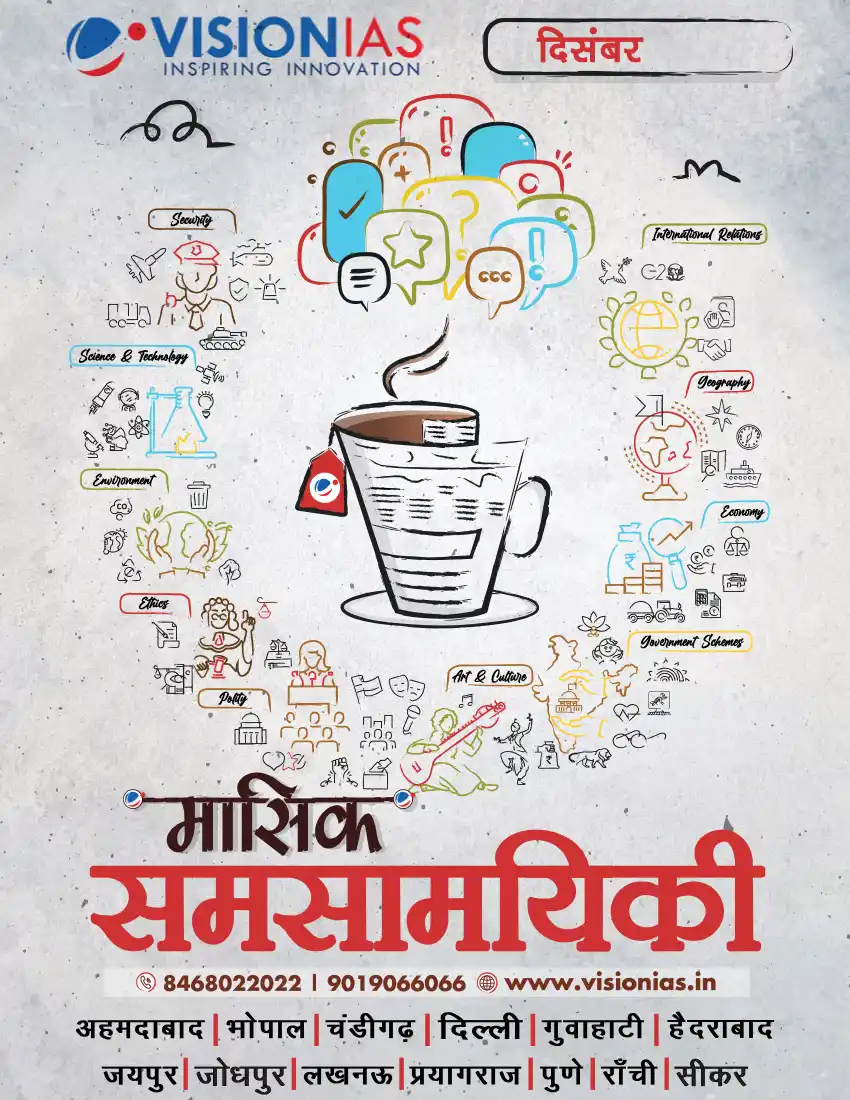
This section rewards consistent current-affairs reading and a solid static-GK base. Aspirants preparing this section often supplement their notes with a monthly current-affairs digest such as the Vision IAS Current Affairs Magazine (January 2026, English) to keep national and international events organised month by month.
- Current events — national and international
- History (Indian and world), Culture
- Geography (India and world)
- Indian Polity & Constitution
- Economic Scene / General Economy
- General Science (Physics, Chemistry, Biology basics)
- Scientific research, sports, awards, books & authors
- Important schemes, organisations and days
- India and its neighbouring countries
Quantitative Aptitude
Numerical ability up to roughly Class-10 level, with an emphasis on speed and accuracy.
- Number systems, computation of whole numbers, decimals, fractions
- Percentage, ratio & proportion, averages
- Profit & loss, discount, partnership, mixture & alligation
- Simple & compound interest
- Time & work, time-speed-distance, pipes & cisterns
- Square roots, surds, indices
- Algebra — basic identities and elementary surds, graphs of linear equations
- Geometry — triangles, circles, tangents, angles, congruence & similarity
- Mensuration — triangle, quadrilaterals, regular polygons, circle, prism, cone, cylinder, sphere, hemisphere
- Trigonometry — ratios, identities, heights & distances
- Data interpretation — bar graph, pie chart, histogram, frequency polygon
English Comprehension (Paper 1)
The Paper-1 English section is moderate and shares its base with Paper 2’s tougher version.
- Reading comprehension
- Error spotting and sentence correction
- Fill in the blanks, cloze test
- Synonyms & antonyms, one-word substitution
- Idioms & phrases, spelling errors
- Sentence improvement, para jumbles
- Active/passive voice, direct/indirect speech
SSC CPO Paper 2 Syllabus: English Language & Comprehension
Paper 2 is 200 questions of pure English at a higher difficulty than Paper 1. It rewards deep grammar command and wide reading. Because it is worth a full 200 marks, treat it as a scoring subject, not a hurdle.
| Area | Sub-topics tested in Paper 2 |
|---|---|
| Grammar | Error detection, sentence correction, tenses, articles, prepositions, subject-verb agreement |
| Vocabulary | Synonyms, antonyms, one-word substitution, idioms & phrases, spellings |
| Comprehension | Long reading passages, inference-based questions |
| Usage & structure | Fill in the blanks, cloze test, sentence rearrangement (para jumbles), sentence improvement |
| Transformation | Active/passive voice, direct/indirect narration |
How to prepare Paper 2 specifically: read an editorial daily to build passage speed, maintain a running vocabulary notebook, and drill 30–40 grammar questions a day. Since Paper 1’s English overlaps in concept, disciplined Paper-2 practice lifts both scores at once.
SSC CPO Topic-Wise Weightage (Approximate)
Most competitor pages skip this — yet knowing where the marks historically sit lets you prioritise. The distribution below is an approximate, trend-based guide from previous years’ Paper 1; use it to decide what to master first, not as an official quota.
| Section | High-weight topics | Approx. questions |
|---|---|---|
| Reasoning | Series, analogy, coding-decoding, non-verbal (figures) | 25–30 of 50 |
| Quant | Arithmetic (percentage, ratio, profit-loss, TSD), DI, geometry/mensuration | 30–35 of 50 |
| GK/GA | Current affairs, polity, history, general science | 30–35 of 50 |
| English (P1) | Reading comprehension, error spotting, vocabulary | 30–35 of 50 |
Takeaway: in Quant, arithmetic + DI alone can fetch you the bulk of the section; in GK, current affairs and polity are the highest-return areas.
SSC CPO Physical Standard Test (PST): Height & Chest
The PST checks height and (for males) chest measurements against category- and region-specific standards. Falling short here disqualifies you regardless of written marks, so verify your measurements early.
| Category | Male height | Male chest (unexpanded–expanded) | Female height |
|---|---|---|---|
| General / OBC / SC | 170 cm | 80–85 cm (min 5 cm expansion) | 157 cm |
| Hill-area candidates (Garhwali, Kumaoni, Gorkha, Dogra, Marathas; and candidates from Assam, HP, J&K, NE, Sikkim) | 165 cm | 80–85 cm | 155 cm |
| Scheduled Tribes (ST) | 162.5 cm | 77–82 cm | 154 cm |
Chest measurement applies to male candidates only, and a minimum expansion of 5 cm is mandatory.
SSC CPO Physical Efficiency Test (PET): Event Standards
PET is a set of timed races, jumps and a shot-put throw. It is qualifying — you must complete each event within the prescribed standard.
| Event | Male standard | Female standard |
|---|---|---|
| 100 metre race | 16 seconds | 18 seconds |
| Long race | 1.6 km in 6.5 minutes | 800 m in 4 minutes |
| Long jump | 3.65 m (3 chances) | 2.7 m (3 chances) |
| High jump | 1.2 m (3 chances) | 0.9 m (3 chances) |
| Shot put (16 lbs) | 4.5 m (3 chances) | Not applicable |
Start light running and interval training at least 2–3 months before your PET date. Many strong written candidates lose the post purely because they left fitness for the last week.
SSC CPO Medical Exam (DME): Vision Standards & Disqualifiers
The Detailed Medical Examination confirms you meet the physical/medical fitness needed for uniformed duty. Eyesight standards are strict and measured without corrective glasses/lenses.
| Vision parameter | Better eye | Worse eye |
|---|---|---|
| Distant vision (uncorrected) | 6/6 | 6/9 |
| Near vision | N6 | N9 |
Common medical disqualifiers include knock knees, flat foot, squint, colour blindness, and prominent varicose veins. Candidates must also be free of visible physical deformities affecting duty.
Relaxations, remedies and re-examination
- Region/category relaxation: height and chest standards are relaxed for hill-area and ST candidates as shown above; age relaxations apply for OBC (+3 years), SC/ST (+5 years), ex-servicemen and PwBD as per rules.
- Remedies: issues like squint can sometimes be surgically corrected before DME; get any borderline condition assessed by a specialist well in advance.
- Review Medical (RME): a candidate declared unfit in DME can generally appeal for a Review Medical Examination within the stipulated window if they believe the finding is incorrect.
SSC CPO Study Plan 2026: Week-by-Week Timetable
A syllabus is only useful when mapped to a schedule. Here is a practical 12-week block you can repeat and intensify as the exam nears.
| Weeks | Focus | Daily target |
|---|---|---|
| 1–3 | Quant arithmetic + Reasoning basics + start daily current affairs | 2 hrs Quant, 1 hr Reasoning, 30 min GK |
| 4–6 | Advanced Quant (geometry, DI, trig) + Reasoning non-verbal + Polity/History | 2 hrs Quant/Reasoning, 1 hr GK, 1 hr English |
| 7–9 | English deep-dive for Paper 2 (grammar + RC) + GK revision + PET fitness starts | 2 hrs English, 1 hr GK, mock every 3 days, daily run |
| 10–12 | Full-length mocks + error log review + speed drills | 1 full mock daily + 2 hrs analysis |
Non-negotiables: one full-length mock every alternate day in the final month, a written error-log you actually revisit, and current affairs revision every weekend.
Most Important Topics to Focus On
If your time is limited, concentrate on high-return areas first:
- Quant: Percentage, ratio, profit & loss, time-speed-distance, DI and mensuration.
- Reasoning: Series, coding-decoding, analogy, and non-verbal figure questions.
- GK/GA: Last 6–8 months of current affairs, Indian Polity, and general science.
- English (P2 decider): Error spotting, reading comprehension, cloze test and vocabulary.
Best Books & Study Material for SSC CPO 2026
A focused resource stack beats a shelf of half-read books. A practical SSC CPO combination looks like this:
- Reasoning: R.S. Aggarwal (Verbal & Non-Verbal Reasoning).
- Quantitative Aptitude: R.S. Aggarwal / Kiran SSC chapter-wise PYQs.
- English: Wren & Martin for grammar + a dedicated SSC English practice book for Paper 2.
- General Awareness: Lucent’s GK for static topics plus a monthly current-affairs magazine.
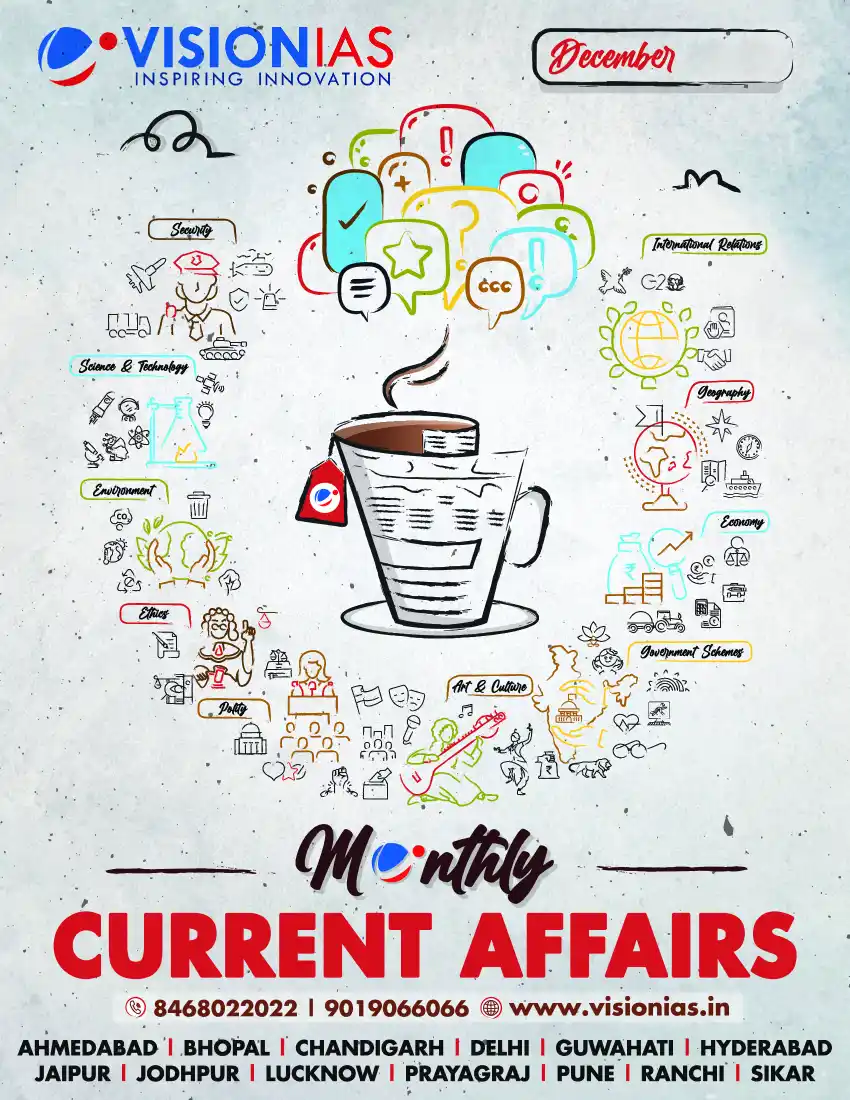
For the current-affairs component that drives the GA section, a structured monthly magazine keeps your revision organised. English-medium aspirants can use the Vision IAS Current Affairs Magazine (December 2025, English) alongside the January 2026 edition, while Hindi-medium candidates can pick the Hindi-medium December 2025 edition. Competer prints and delivers these study materials to your doorstep across India, so you can build a complete, ready-to-use prep stack without hunting store to store.
How to Download the SSC CPO Syllabus PDF
You can save this complete syllabus for offline revision in two ways:
- Official PDF: visit ssc.gov.in, open the latest SSC CPO SI notification, and the detailed syllabus is included as an annexure inside the notification PDF.
- Printable checklist: use the section-wise topic lists above as a tick-box tracker — print this page or copy the subject lists into a document and mark each topic as you finish it. A physical syllabus checklist on your wall is one of the most under-rated completion tools for SSC prep.
Always match any third-party PDF against the official notification, because only the SSC notification is authoritative for a given cycle.
Common Mistakes SSC CPO Aspirants Make
- Ignoring PET/PST fitness until the last month and losing the post despite a strong written score.
- Treating Paper 2 as a formality — it is a full 200-mark English paper that decides ranks.
- Guessing answers blindly and bleeding marks to 0.25 negative marking.
- Reading current affairs randomly instead of from one organised monthly source.
- Skipping full-length mocks, so time management collapses on exam day.
Frequently Asked Questions
What is the syllabus of SSC CPO?
The SSC CPO syllabus has two computer-based papers. Paper 1 covers General Intelligence & Reasoning, General Knowledge & General Awareness, Quantitative Aptitude and English Comprehension (50 questions each, 200 marks total). Paper 2 is a single English Language & Comprehension test of 200 questions and 200 marks. It is followed by qualifying PET/PST and a medical exam.
How many subjects are there in SSC CPO Paper 1 and Paper 2?
Paper 1 has four subjects/sections — Reasoning, General Awareness, Quantitative Aptitude and English Comprehension. Paper 2 has a single subject: English Language & Comprehension, tested in far greater depth.
What is the exam pattern for SSC CPO 2026?
Both Paper 1 and Paper 2 are 200-question, 200-mark computer-based tests of 2 hours each, with 0.25 negative marking per wrong answer. SSC CPO does not use the 100-question, sectional-timing format seen in SSC CGL/CHSL Tier-1. Always confirm the exact pattern in the official SSC notification.
Is there negative marking in the SSC CPO exam?
Yes. Both Paper 1 and Paper 2 carry a penalty of 0.25 mark for every wrong answer. Avoid blind guessing and only attempt questions where you can reasonably eliminate options.
What is the difference between SSC CPO Paper 1 and Paper 2?
Paper 1 is a multi-subject aptitude and general-studies test (Reasoning, GA, Quant, English). Paper 2 is entirely English Language & Comprehension at a higher difficulty level. Paper 1 shortlists you for PET/PST, and PET/PST-qualified candidates then sit for Paper 2; final merit combines both papers’ marks.
What are the physical (PET/PST) standards for SSC CPO Sub-Inspector?
For PST, general male candidates need a height of 170 cm and chest of 80–85 cm, while general female candidates need 157 cm (relaxed for hill-area and ST candidates). For PET, males must run 100 m in 16 seconds and 1.6 km in 6.5 minutes; females must run 100 m in 18 seconds and 800 m in 4 minutes, along with prescribed jumps.
Which books are best for SSC CPO preparation?
A tight, high-yield stack works best: R.S. Aggarwal for Reasoning; R.S. Aggarwal or Kiran chapter-wise previous-year questions for Quantitative Aptitude; Wren & Martin plus a dedicated SSC English practice book for Paper 2; and Lucent’s GK with a monthly current-affairs magazine for General Awareness. Pair these with SSC CPO previous-year papers and regular full-length mocks rather than collecting too many books.
Is SSC CPO Paper 2 tougher than Paper 1?
Yes, the English in Paper 2 is set at a noticeably higher difficulty than the English Comprehension section of Paper 1, with longer passages and finer grammar and vocabulary distinctions. Since Paper 2 is a full 200-mark paper that counts toward merit, it often becomes the deciding factor in final ranks, so it deserves dedicated preparation.
How can I download the SSC CPO syllabus PDF?
Open the latest SSC CPO SI notification on ssc.gov.in — the complete syllabus is included inside the official notification PDF as an annexure. You can also use the subject-wise lists on this page as a printable topic-completion checklist.
Recommended Study Material
Continue Reading
CTET Paper 1 Syllabus 2026: Topics, Pattern + PDF
The CTET Paper 1 syllabus covers five compulsory sections — Child Development & Pedagogy, Language I, Language II,…
CGPSC Syllabus 2025: Prelims & Mains Pattern + PDF Download
The CGPSC syllabus for the State Service Examination is divided into three stages — Preliminary (2 objective papers…
SSC CGL Preparation 2026: Plan, Strategy & Best Books
SSC CGL preparation in 2026 comes down to four moves: master the Tier-1 pattern (100 questions, 60 minutes,…