SSC CGL Preparation 2026: Plan, Strategy & Best Books
Complete SSC CGL preparation guide 2026: exam pattern, syllabus, day-wise study plan, best books, mock-test routine & how to crack it at home without coaching.

SSC CGL preparation in 2026 comes down to four moves: master the Tier-1 pattern (100 questions, 60 minutes, four sections of 25 each with 0.50 negative marking), reverse-engineer a marks target from last year’s post-wise cutoffs, follow a fixed day-wise timetable of 6–7 hours (or 2–3 hours for working aspirants), and practise 40–60 full mock tests before the exam. You can absolutely crack SSC CGL at home without coaching in 6 months if you pair the right books with disciplined revision and previous-year papers. This guide gives you the 2026 exam pattern, complete syllabus, a printable study plan, subject-wise strategy, a best-books list, a mock-test routine, and an exam-day playbook — everything a beginner needs in one place.
SSC CGL Preparation Strategy 2026 at a Glance
Before the detail, here is the entire strategy in one screen. If you internalise only this list, you already know more than most first-time aspirants:
- Know the pattern cold — Tier 1 qualifies; Tier 2 (where each question is worth 3 marks) decides your post and rank.
- Fix a target post first, then work the marks backwards into a per-section goal.
- One book per subject, finished end to end — not twenty books half-read.
- Practice beats theory — previous-year questions (PYQs) and 40–60 timed mocks with error analysis are the highest-ROI activity.
- Accuracy before speed — negative marking punishes over-attempting more than it rewards volume.
- Consistency beats intensity — a steady 5–7 hours daily beats sporadic 12-hour bursts.
The syllabus and pattern have been stable for several cycles, so a 2026 aspirant can start today without waiting for a fresh notification. Always confirm the final pattern, dates and vacancies against the official notification on ssc.gov.in when it is released, since section weightage occasionally shifts.
SSC CGL Exam Pattern 2026: Tier 1 & Tier 2
The Staff Selection Commission Combined Graduate Level exam is a two-tier, fully computer-based test. Tier 1 is the qualifying screening stage; Tier 2 decides your final selection and post. Before you touch any book, internalise the structure below — every hour of your SSC CGL preparation should map to a section that carries marks.
| Tier 1 Section | Questions | Marks | Negative Marking |
|---|---|---|---|
| General Intelligence & Reasoning | 25 | 50 | 0.50 |
| General Awareness | 25 | 50 | 0.50 |
| Quantitative Aptitude | 25 | 50 | 0.50 |
| English Comprehension | 25 | 50 | 0.50 |
| Total | 100 | 200 | 60 minutes |
Each Tier-1 question carries 2 marks and every wrong answer costs 0.50 marks. There is no sectional cut-off in Tier 1 — only an overall qualifying mark — so you can lean on your strong sections. Tier 2 is where the game is won.
SSC CGL Tier 2 pattern (Paper 1, 2 & 3)
| Paper | For Which Posts | Questions | Marks | Duration |
|---|---|---|---|---|
| Paper 1 (Compulsory) | All posts | 150 + Computer + DEST | 450 | 2 hr 15 min |
| Paper 2 | Junior Statistical Officer (JSO) | 100 | 200 | 2 hours |
| Paper 3 | Assistant Audit/Accounts Officer (AAO) | 100 | 200 | 2 hours |
Paper 1 is mandatory for everyone. Papers 2 and 3 are only for candidates who applied for statistics and accounts posts respectively. Here is how Paper 1 breaks down:
| Paper 1 Section | Module | Questions | Marks | Negative |
|---|---|---|---|---|
| Section I | Mathematical Abilities | 30 | 90 | 1 mark |
| Section I | Reasoning & General Intelligence | 30 | 90 | 1 mark |
| Section II | English Language & Comprehension | 45 | 135 | 1 mark |
| Section II | General Awareness | 25 | 75 | 1 mark |
| Section III | Computer Knowledge (qualifying) | 20 | 60 | 1 mark |
| Section III | DEST (Typing skill test) | — | Qualifying | — |
In Tier 2 each question carries 3 marks — three times the weight of a Tier-1 question — which is why accuracy matters far more here. Note that the Computer Knowledge module and DEST are qualifying in nature but you must clear them.
SSC CGL Syllabus 2026: Section-Wise Topics & Weightage
The latest SSC CGL syllabus is stable year on year, so 2026 aspirants can start immediately. Below is the topic weightage that repeatedly shows up in previous-year papers — use it to decide the order of attempt during the exam and where to invest study hours.
| Subject | High-Weightage Topics | Approx. Qs (Tier 1) |
|---|---|---|
| Reasoning | Analogy, Series, Coding-Decoding, Classification, Matrix, Paper Folding, Venn Diagram | 25 |
| Quantitative Aptitude | Arithmetic (percentage, profit-loss, ratio, time-work), Algebra, Geometry, Trigonometry, DI, Mensuration | 25 |
| English | Reading Comprehension, Cloze Test, Error Spotting, Fill in the Blanks, Synonyms/Antonyms, Idioms, One-Word Substitution | 25 |
| General Awareness | Static GK, History, Polity, Geography, Economy, General Science, Current Affairs (last 6–8 months) | 25 |
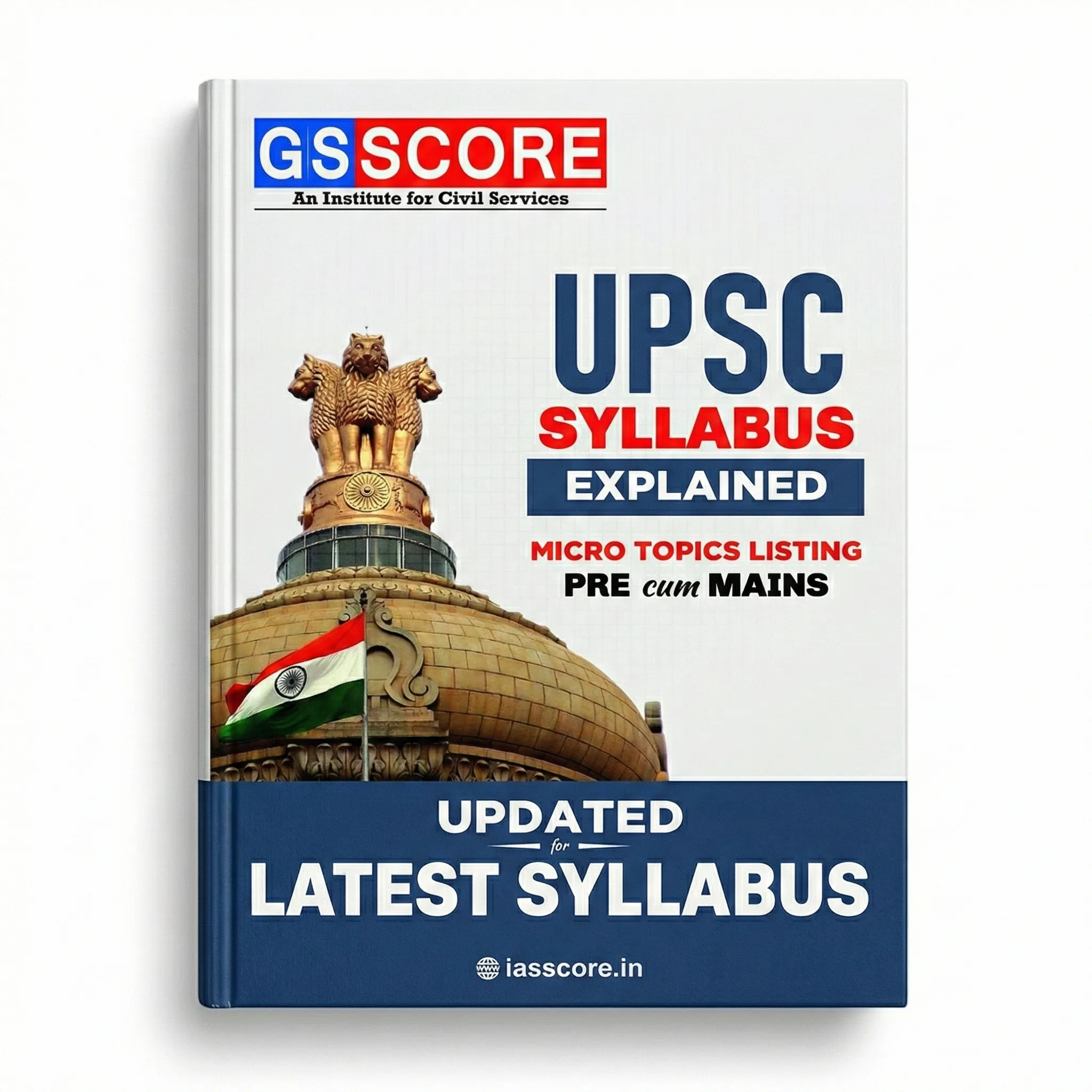
Order of attempt matters. Most toppers attempt General Awareness first (it is either known or unknown — no time drain), then Reasoning (fast scoring), then English, and finally Quantitative Aptitude (the time-hungry section) so a slow maths question never eats into your GA or Reasoning score. If you prefer, download an official syllabus reference like the GS Score Latest Syllabus Booklet so every micro-topic is checkboxed before you begin.
Marks-to-Post Targets: Reverse-Engineer Your Score
The single biggest gap in generic SSC CGL preparation guides is that they never tell you how many marks equal which post. Your entire strategy should be built backwards from a target score. Below are indicative combined-cutoff bands (Tier 1 + Tier 2, out of 690 for General/UR) based on recent cycles — treat them as directional targets, not guarantees, since cutoffs shift with vacancies and difficulty.
| Post | Department | Indicative Target (UR) | Difficulty |
|---|---|---|---|
| Assistant Audit Officer (AAO) | CAG | 560–580+ | Very High |
| Assistant Section Officer (CSS/MEA/AFHQ) | Central Secretariat | 520–545 | High |
| Income Tax Inspector / CGST Inspector | CBDT / CBIC | 510–535 | High |
| Auditor / Accountant | CAG / CGA | 460–490 | Medium |
| Tax Assistant / UDC | CBIC / Ministries | 430–460 | Medium |
Fix your dream post, note the target, and translate it into a per-section goal — for example, an Inspector aspirant should aim for roughly 175+/200 in Tier 1 and 340+/450 in Paper 1. Every mock test is then measured against that number, not an abstract “good score”.
Subject-Wise Strategy for SSC CGL
Quantitative Aptitude
Quant decides ranks because scores here separate the top 1%. Build arithmetic first (it is ~40% of the section), then move to advanced maths — algebra, geometry, trigonometry and mensuration. The trick is speed with accuracy: learn tables up to 30, squares to 30, cubes to 15, and fraction-to-percentage conversions by heart so you calculate in seconds. Aim to solve each Quant question in under 45 seconds by the end of your preparation.
Reasoning & General Intelligence
Reasoning is the highest-accuracy, fastest-scoring section — target 23+/25 in Tier 1. Non-verbal (mirror image, paper folding, embedded figures) and coding-decoding are pure practice topics. Do 50 mixed reasoning questions daily; within a month you will hit near-100% accuracy.
English Comprehension
English is the most under-rated scoring section and the most improvable for non-native speakers. Focus on vocabulary (synonyms, antonyms, one-word substitution, idioms), grammar (error spotting, sentence improvement) and comprehension. Maintain a vocabulary diary of 15 new words a day and revise cloze-test patterns — these are formula-driven once you spot the trick.
General Awareness
GA is 50 marks you can lock in under 5 minutes of exam time if prepared. Static GK (History, Polity, Geography, Economy) plus General Science (Physics, Chemistry, Biology at Class 10 level) forms 70% of it; the rest is current affairs from the last 6–8 months. Compress your current-affairs revision with a monthly capsule rather than reading scattered newspapers — a structured monthly magazine such as the Vision IAS Current Affairs Magazine (January 2026) and the December 2025 edition lets you cover national, economic and science news in a single pass and revise it three times before the exam.
SSC CGL Study Plan & Daily Timetable
A study plan only works if it maps every syllabus topic to a specific date. Here is a balanced 6–7 hour daily timetable for a full-time aspirant. Working professionals should compress this to the 2–3 hour version further down.
| Time Slot | Activity | Focus |
|---|---|---|
| 6:00–7:30 AM | Quantitative Aptitude | New concept + 30 practice sums |
| 8:00–9:00 AM | General Awareness | 1 static topic + current affairs capsule |
| 10:00–11:30 AM | Reasoning | 2 topics + 50 mixed questions |
| 4:00–5:00 PM | English | Grammar/vocab + 1 comprehension |
| 6:00–7:00 PM | Full/Sectional Mock | Timed practice |
| 8:30–9:30 PM | Analysis & Revision | Error log + weak-area redo |
6-month month-wise plan (beginners)
| Month | Primary Goal | Milestone |
|---|---|---|
| Month 1 | Arithmetic + Reasoning basics + English grammar | Finish NCERT-level fundamentals |
| Month 2 | Advanced Maths (Algebra, Geometry, Trig) + Vocabulary | Start sectional tests |
| Month 3 | Static GK (History, Polity, Geography, Economy) | First full mock |
| Month 4 | General Science + Data Interpretation + PYQs | 2 mocks/week |
| Month 5 | Current affairs + Tier-2 depth (Statistics/DI if applicable) | Daily full mock |
| Month 6 | Full revision + speed building + weak-area repair | 40–60 mocks completed |
Short 30/50/60-day crash plans
If your exam is close, a 60-day plan means: 40 days concept revision from your notes (no fresh books) + 20 days pure mock testing. A 50-day plan drops slow topics and doubles down on high-weightage arithmetic, reasoning and GA. A 30-day plan is revision-only — one full mock every single day plus error analysis, and memorising GA/GK one-liners.
How to Prepare for SSC CGL at Home Without Coaching
Yes, you can prepare for SSC CGL at home without coaching — a majority of selected candidates are self-study aspirants. The framework is simple: reliable books + free YouTube concept videos + a paid test series + relentless PYQ practice. Start with a SWOT self-assessment: take one full mock on Day 1 to identify Strengths (protect them), Weaknesses (schedule extra hours), Opportunities (high-weightage topics you can quickly gain), and Threats (time management, negative marking).
SSC CGL preparation tips for beginners
If this is your first attempt, the fastest way to lose months is to over-plan and under-practise. These beginner tips keep you on the shortest path to marks:
- Take a diagnostic mock in week one — you cannot fix a weakness you have not measured.
- Pick one book per subject and stop shopping — book-hopping is procrastination in disguise.
- Do PYQs from day one, not just at the end — they teach you what the exam actually asks.
- Keep a formula sheet and a vocabulary diary from the start so revision is a single glance, not a re-read.
- Revise on a schedule — the topic you learned on Monday needs a touch on Thursday, or it evaporates.
- Track a daily streak, not a mood — motivation fades; systems don’t.
Which subject should I start with?
Start with the subject you are weakest in while your motivation is highest — for most beginners that is Quantitative Aptitude, because it has the steepest learning curve and takes longest to build speed. Run Reasoning and English in parallel as lighter daily habits, and layer General Awareness on top since it needs repetition, not comprehension.
A big advantage of structured printed material over scattered YouTube playlists is that it removes decision fatigue — you follow one linear path instead of jumping between 20 channels. For the practice-and-revision layer, a topic-wise previous-year-question compilation like the Forum IAS Topic-Wise PYQ Toolkit trains you to spot exam patterns and recurring question types — the same PYQ-first discipline that works for SSC CGL General Awareness and reasoning.
Best Books for SSC CGL Preparation
You do not need 20 books — you need one authoritative book per subject, mastered end to end. This is the tried-and-tested SSC CGL booklist recommended by toppers.
| Subject | Best Books | Best For |
|---|---|---|
| Quantitative Aptitude | Rakesh Yadav Class Notes, RS Aggarwal, Kiran SSC Maths Chapterwise | Concept + PYQ practice |
| Reasoning | RS Aggarwal Verbal & Non-Verbal, Kiran Reasoning Chapterwise | Coverage + practice |
| English | SP Bakshi (Objective English), Wren & Martin, Plinth to Paramount (Neetu Singh) | Grammar + vocabulary |
| General Awareness | Lucent’s General Knowledge, monthly current-affairs magazine | Static GK + current affairs |
| Practice | Kiran SSC CGL Tier-1 & Tier-2 previous-year papers | PYQ & mock practice |
Free vs paid resources: what to actually buy
Be honest about the split. Concept videos on YouTube are excellent and free. Where you should spend money is on (1) a good PYQ book, (2) a paid test series for accurate percentile ranking, and (3) a compact current-affairs magazine so you are not doom-scrolling news sites. Everything else can be free. Spend on tools that save time and give feedback — not on more theory you will never finish.
Mock Tests, PYQ & Revision Strategy
Mock tests are the highest-ROI activity in SSC CGL preparation. The rule of thumb: attempt 40–60 full-length mocks before Tier 1, and at least 20 sectional tests per weak subject. But the mock itself is only half the value — the analysis is the other half.
| Phase | Mock Frequency | Analysis Time |
|---|---|---|
| Build-up (months 1–3) | 2 sectional tests/week | 30 min each |
| Practice (month 4) | 2 full mocks/week | 60 min each |
| Intensive (months 5–6) | 1 full mock/day | 60–90 min each |
After every mock, maintain an error log: categorise mistakes into silly errors, concept gaps, and time-outs. Silly errors are fixed by slowing down 5%; concept gaps send you back to the book; time-outs mean you must skip and move on faster. Revise old mocks weekly — the topics you got wrong are your real syllabus.
Tier 1 vs Tier 2 Strategy Split
Tier 1 is about speed and qualifying comfortably; Tier 2 is about depth and accuracy because each question is worth 3 marks. Do not treat them the same.
| Aspect | Tier 1 | Tier 2 (Paper 1) |
|---|---|---|
| Goal | Qualify with margin | Maximise — decides post |
| Key skill | Speed, section switching | Accuracy, deep concepts |
| Maths depth | Moderate | Advanced DI, harder arithmetic |
| English | 25 questions | 45 questions — big weightage |
Don’t ignore Tier 2 Paper 2 & 3 depth
If you have applied for JSO, Paper 2 is full-fledged Statistics — collection & presentation of data, measures of central tendency and dispersion, correlation, regression, probability, sampling and time series. AAO aspirants must prepare Paper 3 Finance & Economics — fundamentals of accounting, and economics topics like demand-supply, national income, money & banking, and Indian public finance. These are decided early: choose your optional Tier-2 paper in month 4 so you have runway to build it, because most Tier-1-focused resources ignore this depth entirely.
Plans for Beginners, Repeaters & Working Professionals
Working professionals (2–3 hours/day)
You cannot do 7 hours — so do not pretend to. Protect two high-focus hours on weekdays (1 hour Quant + 1 hour rotating Reasoning/English) and reserve weekends for a full mock plus GA. A 2–3 hour aspirant realistically needs 8–10 months rather than 6, but consistency beats intensity. Batch your current affairs into one weekly capsule instead of daily reading.
Repeaters
Repeaters already know the syllabus — your enemy is a plateau. Diagnose the exact section that capped your last score, and spend 60% of your time there. Move from concept-building to pure speed and mock volume. If you scored 150/200 last year, your job is the 25-mark gap, not a fresh start.
Beginners & burnout
Beginners should prioritise consistency over perfection — a steady 5 hours daily beats sporadic 12-hour days. Schedule one rest half-day a week to avoid burnout, track a simple daily streak, and never compare your Day 20 to someone’s Day 200. Mental stamina is a trainable exam skill.
Negative Marking, Accuracy vs Speed & Attempt Strategy
Yes, there is negative marking in SSC CGL — 0.50 per wrong answer in Tier 1 and 1 mark per wrong answer in Tier 2 Paper 1. This changes everything about attempt strategy. Never guess blindly. A useful rule: attempt a question only if you can eliminate at least two of the four options, which tilts probability in your favour. Below is how to allocate your 60 Tier-1 minutes.
| Section | Target Time | Target Attempts | Accuracy Goal |
|---|---|---|---|
| General Awareness | 5–7 min | 22–25 | 90%+ |
| Reasoning | 10–12 min | 24–25 | 95%+ |
| English | 10–12 min | 23–25 | 90%+ |
| Quantitative Aptitude | 20–25 min | 20–23 | 90%+ |
Notice that accuracy is targeted at 90%+ everywhere. Because of negative marking, an 85% accuracy on 90 attempts beats a 70% accuracy on 100 attempts. Speed only helps when accuracy is already locked — build accuracy first, then compress time.
Last-Minute & Exam-Day Do’s and Don’ts
In the final week, stop learning new topics — revise only. Sleep well, take the last full mock 3 days before (not the night before), and revise your GA capsule and formula sheet daily.
- Do attempt General Awareness and Reasoning first to bank easy marks and build confidence.
- Do keep a mental time-check every 15 minutes to avoid getting stuck on one Quant question.
- Do skip and return — flag time-consuming questions and come back if time permits.
- Don’t guess randomly on questions where you cannot eliminate two options.
- Don’t spend more than 90 seconds on any single question in the first pass.
- Don’t try new tricks or shortcuts on exam day — stick to what you practised.
Common Mistakes in SSC CGL Preparation
The recurring reasons aspirants fail despite hard work: collecting too many books instead of finishing one; skipping mock analysis (attempting mocks but never reviewing errors); ignoring General Awareness until the last month; over-attempting under exam pressure and losing marks to negatives; and neglecting Tier-2 depth while over-preparing Tier 1. Fix these five and you are already ahead of most of the field.
Frequently Asked Questions
Can I crack SSC CGL in 6 months or in the first attempt?
Yes. A full-time aspirant studying 6–7 hours daily with the right books, a disciplined day-wise plan and 40–60 mock tests can clear SSC CGL in 6 months and in the first attempt. Working professionals typically need 8–10 months at 2–3 hours a day, but first-attempt success is common when preparation is consistent and mock-analysis driven.
How to prepare for SSC CGL at home without coaching?
Self-study works for the majority of selected candidates. Use one standard book per subject, free YouTube concept videos, a paid test series for ranking, and relentless previous-year-paper practice. Start with a SWOT self-assessment via a Day-1 mock, follow a fixed timetable, and analyse every mock in an error log. No coaching is required to score high.
What is the SSC CGL exam pattern and syllabus for 2026?
SSC CGL 2026 is a two-tier online exam. Tier 1 has 100 questions (Reasoning, General Awareness, Quantitative Aptitude and English — 25 each) for 200 marks in 60 minutes, with 0.50 negative marking. Tier 2 Paper 1 is compulsory and covers Mathematical Abilities, Reasoning, English, General Awareness plus qualifying Computer Knowledge and DEST, with each question worth 3 marks; Papers 2 and 3 apply only to JSO and AAO aspirants. Always cross-check the final pattern and dates on the official ssc.gov.in notification.
Which subject should I start with for SSC CGL preparation?
Start with Quantitative Aptitude because it has the steepest learning curve and takes the longest to build speed. Run Reasoning and English as lighter daily habits alongside it, and layer General Awareness on top since it needs repetition rather than deep understanding. Beginning with your weakest subject while motivation is high pays off most.
What are the best books for SSC CGL preparation?
The core booklist is Rakesh Yadav and RS Aggarwal for Quantitative Aptitude, RS Aggarwal Verbal & Non-Verbal for Reasoning, SP Bakshi and Wren & Martin for English, and Lucent’s General Knowledge plus a monthly current-affairs magazine for General Awareness. Add Kiran previous-year papers for Tier 1 and Tier 2 practice.
How many hours should I study daily for SSC CGL?
Full-time aspirants should target 6–7 focused hours a day, split across all four sections plus a daily mock and analysis. Working professionals can succeed with a consistent 2–3 hours on weekdays and a full mock on weekends. Consistency and mock analysis matter more than raw hours.
How many mock tests should I attempt before the SSC CGL exam?
Aim for 40–60 full-length mocks before Tier 1, plus at least 20 sectional tests per weak subject. Ramp up from 2 sectional tests a week in the early months to one full mock a day in the final six to eight weeks. The number matters far less than the discipline of analysing every mock in an error log and re-doing the questions you got wrong.
Is there negative marking in SSC CGL and how do I manage it?
Yes — 0.50 marks are deducted per wrong answer in Tier 1 and 1 mark per wrong answer in Tier 2 Paper 1. Manage it by attempting a question only when you can eliminate at least two options, prioritising 90%+ accuracy over raw attempt count, and never guessing blindly. Controlled attempts protect your net score.
Recommended Study Material



Continue Reading
NEET Syllabus 2026: Chapter-Wise Weightage, Deleted Topics + PDF
The NEET syllabus for 2026 is the official, NCERT-based list of Physics, Chemistry and Biology topics from Class…

Best Sociology Optional Notes for UPSC 2026: Faculty-Wise Comparison
Sociology Optional Notes for UPSC: An Honest Buying Guide (2026) Choosing the right sociology optional notes can quietly…
SSC GD Syllabus 2026: Subject-Wise Topics, Pattern + PDF
The SSC GD syllabus for 2026 covers four subjects in a single Computer-Based Examination (CBE): General Intelligence &…