KVS Syllabus 2025: PRT, TGT, PGT Pattern + PDF
KVS Syllabus 2025 for PRT, TGT & PGT: full exam pattern, Tier-1 & Tier-2 marks, negative marking, subject-wise topics and official syllabus PDF download.

The KVS syllabus 2025 for PRT, TGT and PGT is set by Kendriya Vidyalaya Sangathan (kvsangathan.nic.in) and is divided into a common part (General English, General Hindi, General Awareness & Current Affairs, Reasoning Ability, Computer Literacy, and Perspectives on Education & Leadership) and a post-specific Subject-Concerned part. The written test is conducted in two stages — Tier-1 (100 objective questions for 300 marks) and Tier-2 (an objective section of 60 questions plus a descriptive section of 40 marks) — with negative marking of –1 in Tier-1 and –0.25 for the objective part of Tier-2. This guide breaks down the complete post-wise KVS syllabus, exam pattern, weightage and a verified syllabus PDF download route so you can plan your preparation from a single, clearly-dated source.
Last updated: 24 August 2025. The pattern above reflects KVS’s most recent teaching-recruitment cycles. KVS revises the structure from time to time, so always cross-check the exact marks and stages against the official notification for the recruitment cycle you are applying to.
KVS Syllabus 2025: Key Takeaways
- Two tiers: Tier-1 (objective, 300 marks) screens candidates; Tier-2 (objective + descriptive) tests deep subject command.
- Common + Subject-Concerned: six common sections are shared by PRT, TGT and PGT; only the Subject-Concerned paper changes with your post.
- Biggest block: Perspectives on Education & Leadership carries 150 of 300 Tier-1 marks — half the paper.
- Negative marking: –1 in Tier-1, –0.25 in the Tier-2 objective part, none in the descriptive test.
- Depth ladder: PRT = primary curriculum + child pedagogy; TGT = graduation level; PGT = post-graduation level.
- PDF source: the only fully reliable KVS syllabus and exam pattern PDF is the annexure attached to the official notification on kvsangathan.nic.in.
KVS Syllabus 2025: Overview at a Glance
Kendriya Vidyalaya Sangathan (KVS) is an autonomous body under the Ministry of Education, Government of India, that runs over 1,250 Kendriya Vidyalayas across the country and abroad. It recruits teaching staff — Primary Teachers (PRT), Trained Graduate Teachers (TGT) and Post Graduate Teachers (PGT) — along with Principals, Vice-Principals and non-teaching/sub-staff, through a centralised Computer Based Test (CBT). Recent KVS recruitment cycles have released several thousand vacancies across PRT, TGT and PGT combined, making it one of the most sought-after teaching jobs in India.
The recruitment is conducted online through the official website kvsangathan.nic.in. Understanding the KVS syllabus and exam pattern is the first and most important step, because the paper is built around a fixed blueprint: a large common section shared by every post and a Subject-Concerned section that changes with the post you apply for. Get the blueprint right and every study hour after that lands where the marks are.
| Particular | Detail |
|---|---|
| Recruitment body | Kendriya Vidyalaya Sangathan (KVS) |
| Official website | kvsangathan.nic.in |
| Posts covered | PRT, TGT, PGT, Principal, Vice-Principal, Non-Teaching |
| Mode of exam | Computer Based Test (CBT), bilingual (English & Hindi) |
| Stages | Tier-1 and Tier-2 (written), followed by interview/demo & document verification |
| Marking | Tier-1: +3 per question, –1 negative; Tier-2 objective: –0.25 negative |
| Medium of test | Bilingual, except language-specific papers |
KVS Exam Pattern 2025: Tier-1 and Tier-2 Structure
The KVS selection process for teaching posts is spread across two written tiers followed by a personal interaction/teaching demonstration. Tier-1 is a screening-cum-scoring test, while Tier-2 tests deeper subject command along with a descriptive component. Knowing the KVS Tier-1 and Tier-2 syllabus and marks distribution is critical because it tells you exactly where to invest your revision hours.
KVS Tier-1 Exam Pattern (100 Questions / 300 Marks)
Tier-1 is a fully objective, multiple-choice test. It carries 100 questions for a total of 300 marks (each question worth 3 marks) and mixes the common sections that every KVS aspirant must master — regardless of whether they are appearing for PRT, TGT or PGT.
| Section | Questions | Marks |
|---|---|---|
| Part-1: General English | 10 | 30 |
| Part-1: General Hindi | 10 | 30 |
| Part-2: General Awareness & Current Affairs | 10 | 30 |
| Part-2: Reasoning Ability | 10 | 30 |
| Part-2: Computer Literacy | 10 | 30 |
| Part-3: Perspectives on Education & Leadership | 50 | 150 |
| Total | 100 | 300 |
Notice that Perspectives on Education & Leadership alone carries half the paper (150 of 300 marks). Many aspirants underestimate this section because it looks unfamiliar — treating it as high-priority is one of the biggest scoring levers in Tier-1. The remaining 150 marks are spread thinly across five sections, so no single language or aptitude area can rescue a weak leadership score.
KVS Tier-2 Exam Pattern (Objective 60 + Descriptive 40)
Candidates who clear the Tier-1 cut-off proceed to Tier-2, which is a subject-heavy stage. It is split into an objective part (60 questions on the Subject-Concerned area) and a descriptive part (40 marks), which typically tests essay/comprehension/subject-application writing. This is where the PRT, TGT and PGT syllabi diverge sharply — the common sections fall away and your chosen teaching subject decides the outcome.
| Component | Type | Marks | Negative Marking |
|---|---|---|---|
| Subject-Concerned (objective) | 60 MCQs | Objective scoring | –0.25 per wrong answer |
| Descriptive test | Essay / comprehension / subject-based writing | 40 | Not applicable |
| Tier-2 focus | Deep subject command | — | Language & expression tested |
KVS Marking Scheme and Negative Marking
Getting the marking scheme right shapes your attempt strategy — how many risky guesses you take, and where you leave a question blank. Here is the consolidated picture for KVS 2025.
| Stage | Marks per correct answer | Negative marking |
|---|---|---|
| Tier-1 (objective) | +3 | –1 per wrong answer |
| Tier-2 objective (Subject-Concerned) | As per notification | –0.25 per wrong answer |
| Tier-2 descriptive | 40 marks total | No negative marking |
Because Tier-1 penalises a wrong answer by a full mark against +3 for a correct one, blind guessing is expensive: a 3:1 risk-reward ratio means random guessing statistically drags your score down. The –0.25 penalty in Tier-2 is gentler, so an educated guess where you can eliminate two options is usually worth it. Never leave the descriptive section under-attempted — there is no negative marking there and a well-structured answer can lift a borderline candidate above the cut-off.
KVS Common Syllabus (Shared Across PRT, TGT and PGT)
Every KVS teaching aspirant sits the same common sections in Tier-1. Mastering these first gives you a guaranteed base score before the post-specific subject paper. Below is the topic-level breakdown of each common section, followed by a quick weightage snapshot.
| Common Section | Approx. Marks (Tier-1) | Nature |
|---|---|---|
| General English | 30 | Static, practice-driven |
| General Hindi | 30 | Static, practice-driven |
| General Awareness & Current Affairs | 30 | Dynamic, needs updates |
| Reasoning Ability | 30 | Skill-based, high accuracy |
| Computer Literacy | 30 | Static, quick to secure |
| Perspectives on Education & Leadership | 150 | Conceptual, highest weight |
General English
Reading comprehension, cloze test, spotting errors, synonyms and antonyms, one-word substitution, idioms and phrases, sentence improvement, fill in the blanks, active/passive voice, direct-indirect speech, and articles/prepositions/tenses. Focus on grammar accuracy and comprehension speed rather than obscure vocabulary.
General Hindi
अपठित गद्यांश (unseen passage), संधि-समास, पर्यायवाची-विलोम, मुहावरे और लोकोक्तियाँ, वाक्य शुद्धि, अलंकार, रस-छंद, वाच्य, कारक and general grammar (व्याकरण). Language sections reward daily practice more than one-time study.
General Awareness & Current Affairs
Static GK (history, geography, polity, economy, general science), important national and international current affairs of the last 6–12 months, awards, sports, books and authors, government schemes, defence, and appointments. A dependable monthly current affairs source keeps this section manageable — Competer’s Vision IAS Current Affairs Magazine (English) is a compact way to cover the current-events load that this section demands.
Reasoning Ability
Analogies, series (number/letter), coding-decoding, blood relations, direction sense, syllogism, seating arrangement, classification, non-verbal reasoning, clock and calendar, and mathematical operations. This is a high-accuracy, low-effort section once patterns are drilled.
Computer Literacy
Fundamentals of computers, hardware and software basics, MS Office (Word, Excel, PowerPoint), operating systems, internet and email, networking basics, input/output devices, and common shortcuts. Ten near-guaranteed marks for anyone comfortable with basic IT.
Perspectives on Education & Leadership
This is the single largest block in Tier-1. It covers understanding the learner and learning process, teaching-learning methods and pedagogy, inclusive education, National Education Policy (NEP) 2020, National Curriculum Framework, school leadership and management, educational administration, assessment and evaluation, and the role of a teacher as a leader. Read NEP 2020 highlights and NCF closely — direct questions appear here regularly, and the vocabulary of these documents often becomes the wording of the options.
KVS PRT Syllabus 2025 (Primary Teacher)
The KVS PRT syllabus 2025 targets teachers for Classes I–V. Along with the common sections above, the Subject-Concerned part is built on the primary-level curriculum and child pedagogy. The PRT paper leans heavily on Child Development and Pedagogy, environmental studies, elementary mathematics, and language proficiency in English and Hindi.
| PRT Subject Area | Key Topics |
|---|---|
| Child Development & Pedagogy | Concept of development, learning & motivation, inclusive education, assessment, individual differences |
| Environmental Studies (EVS) | Family, food, shelter, water, travel, plants & animals, our environment, EVS pedagogy |
| Mathematics (elementary) | Numbers, addition/subtraction, multiplication/division, geometry, measurement, data handling, maths pedagogy |
| Language-I & II (English/Hindi) | Comprehension, grammar, language development, pedagogy of language teaching |
CTET-style child pedagogy overlaps heavily with the PRT paper, so candidates who have prepared for CTET Paper 1 already have a strong head start. Ground your PRT subject prep in the NCERT textbooks of Classes I–V and the pedagogy chapters, then reinforce with previous-year question analysis.
KVS TGT Syllabus 2025 (Trained Graduate Teacher)
The KVS TGT syllabus 2025 is for teachers of Classes VI–X and is subject-specific — you choose one teaching subject and the Subject-Concerned paper tests it up to the graduation/senior-secondary level, along with its pedagogy. TGT posts include English, Hindi, Sanskrit, Social Studies, Mathematics, Science, and physical/art/work education.
| TGT Subject | Syllabus Coverage |
|---|---|
| TGT Mathematics | Algebra, geometry, trigonometry, mensuration, statistics, arithmetic up to Class X + graduation basics |
| TGT Science | Physics, chemistry, biology fundamentals up to secondary level and graduation core concepts |
| TGT Social Studies | History, geography, political science, economics up to Class X and degree level |
| TGT English | Prose, poetry, grammar, literature, comprehension, language pedagogy |
| TGT Hindi | गद्य-पद्य, व्याकरण, साहित्य का इतिहास, भाषा शिक्षण |
| TGT Sanskrit | व्याकरण, श्लोक, साहित्य, अनुवाद, संस्कृत शिक्षण शास्त्र |
The depth here is roughly graduation-level for the concerned subject plus school-level pedagogy. TGT aspirants should build strong conceptual clarity through NCERT textbooks of Classes VI–X and then extend to graduation-level standard books for the chosen subject. Do not neglect the pedagogy portion — for a subject teacher it is the easiest overlooked scoring area.
KVS PGT Syllabus 2025 (Post Graduate Teacher)
The KVS PGT syllabus 2025 is the most advanced of the three. PGTs teach Classes XI–XII, so the Subject-Concerned paper is set at the post-graduation level of the chosen subject. PGT posts include Physics, Chemistry, Biology, Mathematics, Economics, Commerce, History, Geography, Political Science, English, Hindi, Computer Science and Biotechnology, among others.
| PGT Subject | Level & Focus |
|---|---|
| PGT Physics / Chemistry / Biology | Post-graduation depth of core science; senior-secondary teaching application |
| PGT Mathematics | Calculus, algebra, coordinate geometry, statistics, higher maths at PG level |
| PGT Commerce / Economics | Accountancy, business studies, micro/macro economics, Indian economy |
| PGT History / Geography / Pol. Science | Advanced subject theory at graduation/post-graduation depth |
| PGT English / Hindi | Literature, advanced grammar, criticism, language teaching methodology |
| PGT Computer Science | Programming, data structures, DBMS, networking, computer fundamentals |
Because the PGT bar is set at post-graduation level, candidates should study their master’s-level notes and standard reference books rather than relying on school textbooks alone. Senior-secondary NCERTs remain useful for application-style questions, but the conceptual depth of the MCQs is pitched well above Class XII.
KVS Syllabus for Principal, Vice-Principal and Non-Teaching Posts
Beyond PRT/TGT/PGT, KVS also recruits for administrative and support roles. The syllabus emphasis shifts accordingly:
- Principal & Vice-Principal: heavier weightage on educational administration, school leadership, management, general awareness, reasoning and current affairs — reflecting the leadership nature of the role.
- Non-Teaching (LDC, UDC, Stenographer, Assistant, etc.): General English, General Hindi, General Awareness, quantitative aptitude/numerical ability, and computer knowledge, with typing/skill tests for relevant posts.
- Sub-staff: basic aptitude, general awareness and language, matched to the post’s eligibility.
KVS PRT vs TGT vs PGT: What Changes in the Syllabus?
The common Tier-1 sections stay the same across all three teaching posts — where they differ is the class level they teach and the depth of the Subject-Concerned paper. This single distinction drives your entire study plan, so it is worth internalising before you buy a single book.
| Parameter | PRT | TGT | PGT |
|---|---|---|---|
| Classes taught | I–V | VI–X | XI–XII |
| Subject depth | Primary curriculum + child pedagogy | Graduation level of one subject | Post-graduation level of one subject |
| Common Tier-1 sections | Same | Same | Same |
| Core focus | Child development, EVS, elementary maths, language | Subject + secondary pedagogy | Advanced subject mastery |
| Typical qualification | Sr. Secondary + D.El.Ed/JBT + CTET | Graduation + B.Ed + CTET | Post-graduation + B.Ed |
KVS vs NVS vs CTET Syllabus Overlap
Many teaching aspirants prepare for KVS, NVS (Navodaya Vidyalaya Samiti) and CTET together — and the good news is the overlap is significant. Preparing smartly for one builds a large part of the others.
| Area | KVS | NVS | CTET |
|---|---|---|---|
| Child pedagogy / development | Yes | Yes | Core (Paper 1 & 2) |
| General awareness & reasoning | Yes | Yes | Limited |
| Language I & II | Yes | Yes | Yes |
| Subject-concerned depth | Up to PG (PGT) | Up to PG | Up to elementary/secondary |
| Perspectives on Education & Leadership | Yes (heavy) | Partial | Pedagogy-focused |
If you are appearing for CTET as an eligibility requirement, your child-development and pedagogy preparation directly feeds the KVS PRT/TGT sections. Use a common notes base for pedagogy and only diverge for the subject-specific depth — this is the single biggest efficiency gain available to multi-exam aspirants.
KVS Syllabus and Exam Pattern PDF Download
The most reliable KVS syllabus and exam pattern PDF is always the one attached to the official recruitment notification on kvsangathan.nic.in. To complete the KVS syllabus PDF download: visit the official website, open the “Recruitment” or “Vacancy” section, click the relevant PRT/TGT/PGT notification, and download the detailed syllabus annexure PDF. Save it and map each topic to your timetable.
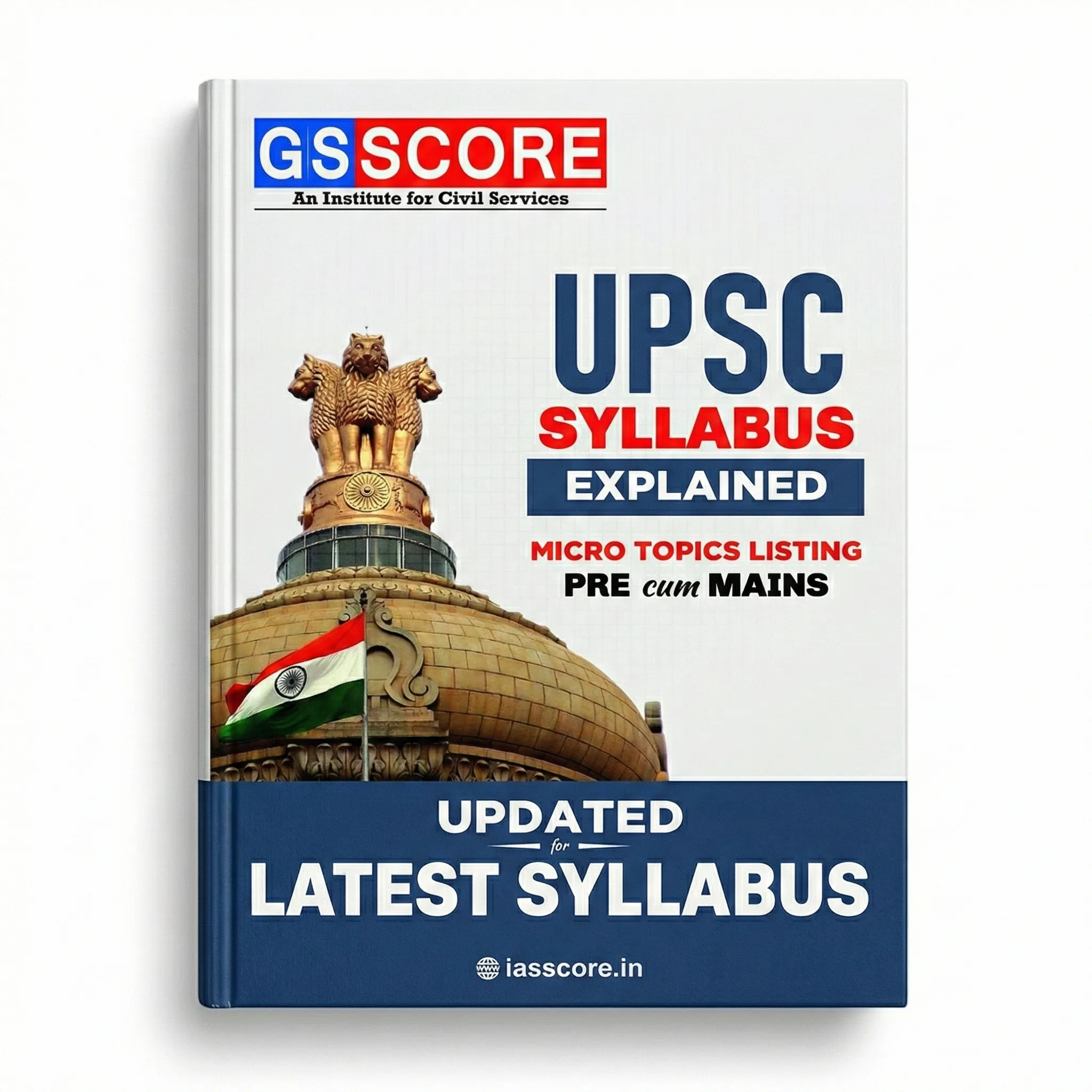
Because syllabus PDFs on aggregator sites are often outdated or gated, treat the official annexure as your master copy and use structured study material to actually cover it. A concise, current syllabus booklet keeps you anchored — the GS Score Latest Syllabus Booklet is a handy printed reference for candidates who also touch general-studies preparation alongside teaching exams.
| Step | Action |
|---|---|
| 1 | Go to kvsangathan.nic.in |
| 2 | Open the Recruitment/Vacancies section |
| 3 | Select PRT / TGT / PGT notification |
| 4 | Download the syllabus & exam pattern annexure PDF |
| 5 | Print it and map topics to a weekly plan |
KVS Preparation Strategy: Weightage-Based Study Plan
A syllabus is only useful when paired with a plan. Since Perspectives on Education & Leadership carries 150 of 300 Tier-1 marks, and the Subject-Concerned paper decides Tier-2, your hours should follow the marks — not your comfort zone.
| Priority | Area | Why |
|---|---|---|
| High | Perspectives on Education & Leadership | 150 marks in Tier-1 — biggest single block |
| High | Subject-Concerned (your post) | Decides Tier-2 selection |
| Medium | General Awareness & Current Affairs | Dynamic; needs daily/monthly updates |
| Medium | Reasoning & Computer Literacy | High-accuracy, scoring with practice |
| Steady | General English & Hindi | Improves with daily practice |
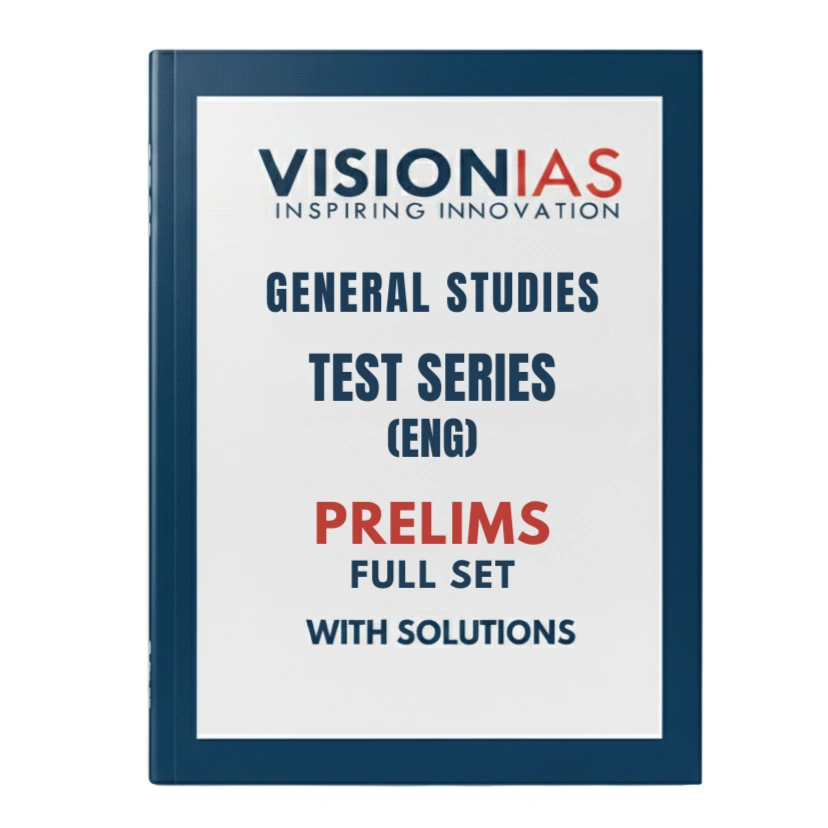
Practical tips: (1) Read NEP 2020 and NCF thoroughly for the leadership section. (2) Anchor subject prep to NCERTs first, then move to graduation/PG-level standard books. (3) Take timed mock tests to fix the –1 negative-marking discipline in Tier-1. Regular full-length testing under exam conditions is the fastest way to convert knowledge into marks — a structured objective test series builds the speed and accuracy that objective papers reward. (4) Revise current affairs monthly rather than in one last-minute burst.
Common Mistakes KVS Aspirants Make
- Ignoring Perspectives on Education & Leadership despite it carrying half of Tier-1.
- Studying the subject only at school level for TGT/PGT, when the bar is graduation/post-graduation depth.
- Guessing blindly in Tier-1 and losing marks to the –1 penalty.
- Relying on outdated syllabus PDFs from third-party sites instead of the official notification annexure.
- Under-attempting the descriptive Tier-2 section, which has no negative marking.
- Treating current affairs as static — KVS asks recent 6–12 month events.
Frequently Asked Questions
What is the KVS syllabus for PRT, TGT and PGT?
The KVS syllabus has a common part (General English, General Hindi, General Awareness & Current Affairs, Reasoning, Computer Literacy, and Perspectives on Education & Leadership) shared by all posts, plus a Subject-Concerned part. PRT is set at primary-curriculum and child-pedagogy level, TGT at graduation level of the chosen subject, and PGT at post-graduation level.
What is the KVS exam pattern and total marks?
The KVS written test has two tiers. Tier-1 is a 100-question objective paper worth 300 marks (3 marks per question), and Tier-2 has an objective Subject-Concerned section of 60 questions plus a descriptive section of 40 marks. Perspectives on Education & Leadership alone accounts for 150 marks in Tier-1.
Is there negative marking in the KVS exam?
Yes. Tier-1 deducts 1 mark for every wrong answer against +3 for a correct one. The objective Subject-Concerned section in Tier-2 has a lighter penalty of –0.25 per wrong answer, while the descriptive section carries no negative marking.
Is CTET compulsory for KVS PRT and TGT recruitment?
For PRT and TGT teaching posts, a valid CTET (or equivalent state TET) qualification is generally required as per KVS eligibility norms, along with the prescribed academic and B.Ed/D.El.Ed qualifications. PGT posts typically require post-graduation with B.Ed. Always confirm against the exact recruitment notification.
How many tiers are there in the KVS exam?
The KVS teaching recruitment has two written tiers — Tier-1 (objective, 300 marks) and Tier-2 (objective Subject-Concerned plus a descriptive test) — followed by an interview/teaching demonstration and document verification for shortlisted candidates.
Which subjects are common across all KVS teaching posts?
General English, General Hindi, General Awareness & Current Affairs, Reasoning Ability, Computer Literacy, and Perspectives on Education & Leadership are common across PRT, TGT and PGT. The Subject-Concerned paper is the only part that changes with the post you apply for.
What is the difference between KVS PRT, TGT and PGT syllabus?
The common Tier-1 sections are identical for all three. The difference lies entirely in the Subject-Concerned paper: PRT covers the primary curriculum (Classes I–V) with child development and pedagogy, TGT covers one subject at graduation level for Classes VI–X, and PGT covers one subject at post-graduation level for Classes XI–XII. In short, only the depth and level of the subject paper change.
How can I download the KVS syllabus PDF?
Go to the official KVS website kvsangathan.nic.in, open the Recruitment or Vacancies section, select the relevant PRT/TGT/PGT notification, and download the syllabus and exam pattern annexure PDF attached to it. This official annexure is the most reliable source; third-party PDFs can be outdated, so use them only for practice, not as your master syllabus.
Recommended Study Material

Continue Reading
UPSC Previous Year Question Papers: Free PDF (2025)
UPSC previous year question papers are the official question booklets released by the Union Public Service Commission after…
SBI Clerk Syllabus 2026: Prelims, Mains Pattern + PDF
The SBI Clerk syllabus for the Junior Associate (Customer Support & Sales) post has three Prelims sections —…

Best Books for JEE Main 2026: Subject-Wise List + Prices
The best books for JEE Main are NCERT (the non-negotiable foundation, especially for Chemistry) plus two trusted references…