UPSC Previous Year Question Papers: Free PDF (2025)
Download UPSC previous year question papers with answers PDF free — year-wise Prelims (GS + CSAT) & Mains sets, last 10–25 years, Hindi & English.

UPSC previous year question papers are the official question booklets released by the Union Public Service Commission after each Civil Services Examination, and you can download them free, year-wise, as PDFs for both Prelims (GS Paper I + CSAT) and Mains (Essay, GS I–IV, and optional subjects). The quickest route is the official archive at upsc.gov.in (Examination → Previous Question Papers), supported by solved copies and answer keys from coaching institutes. This guide gives you year-wise download tables for the last 10–25 years up to 2025, worked-solution guidance, topic-wise repetition and weightage analysis, and a tested method to actually convert these PDFs into marks.
Last updated for the 2026 preparation cycle. Patterns, question counts and marking below reflect the current UPSC Civil Services Examination scheme; availability notes are based on the official upsc.gov.in archive and widely used coaching compilations.
Quick answer: solve the last 10 years of UPSC PYQs thoroughly (then extend Prelims practice to 20–25 years for recurring static topics). Download question papers free from upsc.gov.in in Hindi and English; use coaching-hosted solved copies and topic-wise compilations for answer keys, explanations and pre-2015 archives. PYQs are indispensable for both stages but must be paired with standard notes, current affairs and fresh mocks.
- GS Paper I: 100 MCQs, 200 marks, 2 hours — decides your merit rank.
- CSAT (GS Paper II): 80 MCQs, 200 marks, 2 hours — qualifying at 33% (66/200).
- Negative marking: one-third of the marks per wrong answer in both papers.
- Official source: upsc.gov.in provides question papers only — not detailed solutions, and final Prelims keys only after the selection process ends.
Aspirants who treat these papers as the backbone of preparation — rather than a last-month afterthought — consistently report sharper topic selection, better time management, and fewer silly mistakes. Below, everything is organised so you can download the exact set you need and then use it with a clear study plan.
Download UPSC Previous Year Question Papers PDF (Year-Wise)
The table below lists the complete UPSC Prelims sets — General Studies Paper I and CSAT (GS Paper II) — from 2015 to 2025. Each set is available in both Hindi and English medium on the official site. For upsc pyq pdf download year wise, start with the most recent five years, then widen your range.
| Year | GS Paper I (Prelims) | CSAT (GS Paper II) | Medium | Answer Key |
|---|---|---|---|---|
| 2025 | Available | Available | Hindi + English | Official key after result |
| 2024 | Available | Available | Hindi + English | Official + coaching keys |
| 2023 | Available | Available | Hindi + English | Official + coaching keys |
| 2022 | Available | Available | Hindi + English | Official + coaching keys |
| 2021 | Available | Available | Hindi + English | Official + coaching keys |
| 2020 | Available | Available | Hindi + English | Official + coaching keys |
| 2019 | Available | Available | Hindi + English | Official + coaching keys |
| 2018 | Available | Available | Hindi + English | Coaching keys |
| 2017 | Available | Available | Hindi + English | Coaching keys |
| 2016 | Available | Available | Hindi + English | Coaching keys |
| 2015 | Available | Available | Hindi + English | Coaching keys |
For an archive stretching further back — 1992 onward in topic-sorted form — a consolidated, topic-wise compilation saves hundreds of hours of manual sorting. The Forum IAS UPSC Prelims Toolkit (Topic-Wise PYQ 1992–2025) organises every Prelims question by subject and theme across 33 years, so you can see exactly how a topic has been tested over time instead of scrolling through raw year PDFs.
UPSC PYQ PDF Download Year Wise: How to Pick Your Range
Not every year deserves the same depth. Use this simple priority order so your upsc pyq pdf download year wise effort goes where it pays off most:
- Last 5 years (2021–2025): your pattern anchor — solve these first, under a timer, and analyse them to the last option. They reflect the current difficulty, the multi-statement format, and the CSAT spike.
- Years 6–10 (2016–2020): solve fully for breadth of topics and to watch the shift from factual to conceptual framing.
- Years 11–25 (pre-2016): use selectively — mine them topic-wise for static polity, history, geography and environment concepts that cycle back, rather than solving end-to-end under a clock.
Download each year’s GS Paper I and CSAT together so you always practise them as a pair, exactly as they are set on exam day. Rename and date each PDF the moment you save it; a tidy, year-labelled folder is what turns a download spree into a usable study system.
UPSC Prelims Previous Year Question Papers With Answers PDF
UPSC Prelims has two papers held on the same day. Knowing the exact structure before you open any PDF tells you what to look for while solving. Here is the official pattern that every upsc prelims previous year question papers with answers pdf set follows.
| Paper | Questions | Max Marks | Duration | Negative Marking | Nature |
|---|---|---|---|---|---|
| GS Paper I | 100 MCQs | 200 | 2 hours | 1/3 of marks per wrong answer | Merit-ranking |
| GS Paper II (CSAT) | 80 MCQs | 200 | 2 hours | 1/3 of marks per wrong answer | Qualifying (33%) |
So in GS Paper I you face 100 questions and in CSAT you face 80 questions. CSAT is qualifying — you must score 33% (66 of 200) — but GS Paper I decides whether you clear the cut-off. When you download a solved Prelims PDF, cross-check your answers against the official key UPSC releases after the final result, because coaching keys occasionally differ on 2–4 debatable questions each year. Treat those disputed questions as a learning signal, not a scoring quarrel: they are usually the ambiguously worded ones UPSC itself later drops or re-keys.
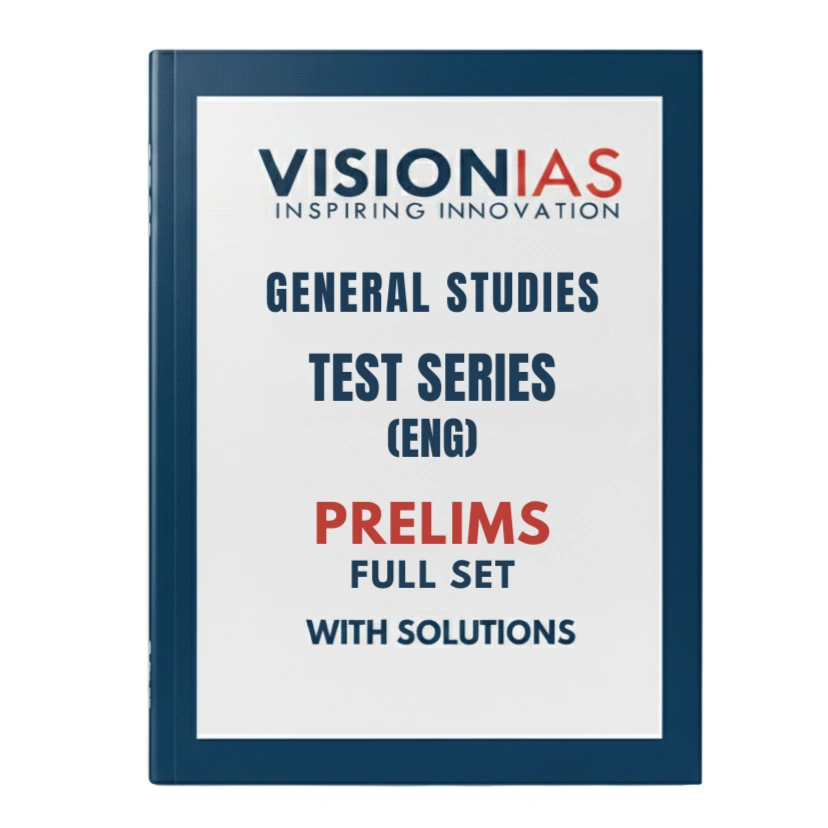
To practise under real exam conditions after studying the PYQs, a structured test series simulates the marking scheme and the 2-hour clock. The Vision IAS Prelims Test Series 2026 mirrors current difficulty levels and gives detailed solution booklets, which bridges the gap between passively reading answer keys and actively attempting fresh questions.
UPSC CSAT Previous Year Question Papers
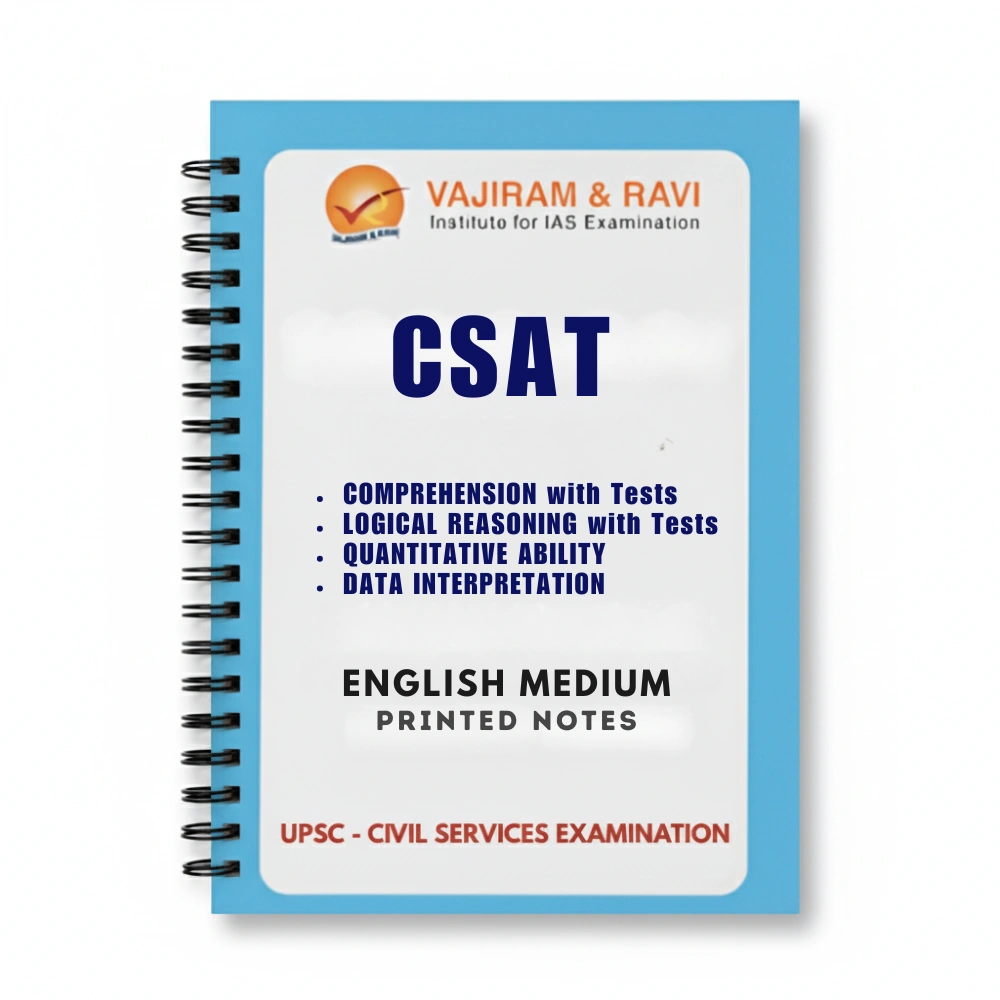
CSAT (Civil Services Aptitude Test) trips up more candidates than most expect — in recent years the comprehension and reasoning sections have become notably tougher, pushing many who ignored it into the disqualification zone. Solving upsc csat previous year question papers from at least the last seven years is non-negotiable, especially 2023–2025, where the difficulty spike was sharpest. Focus on reading comprehension, basic numeracy (Class X level), data interpretation and logical reasoning. A single bad CSAT morning can end a campaign that months of GS preparation had set up — which is why even strong candidates now time at least one full CSAT PYQ every week in the run-up to the exam. If CSAT is a weak area, pair the PYQs with a dedicated resource like the Vajiram CSAT Complete Booklet Set with Practice Questions to build the underlying aptitude before you time yourself on past papers.
UPSC Mains Previous Year Question Papers PDF Download
Mains is a written, descriptive examination of nine papers, seven of which count toward the merit list. For upsc mains previous year question papers pdf download, you need the Essay paper, the four General Studies papers, and both papers of your chosen optional. The table below shows the full year-wise Mains availability from 2016 to 2024, with 2025 Mains papers released after the examination.
| Year | Essay | GS I | GS II | GS III | GS IV | Optional (both papers) |
|---|---|---|---|---|---|---|
| 2024 | Available | Available | Available | Available | Available | Available |
| 2023 | Available | Available | Available | Available | Available | Available |
| 2022 | Available | Available | Available | Available | Available | Available |
| 2021 | Available | Available | Available | Available | Available | Available |
| 2020 | Available | Available | Available | Available | Available | Available |
| 2019 | Available | Available | Available | Available | Available | Available |
| 2018 | Available | Available | Available | Available | Available | Available |
| 2017 | Available | Available | Available | Available | Available | Available |
| 2016 | Available | Available | Available | Available | Available | Available |
The Mains marking structure determines how you should approach each paper. Here is the full written-stage breakdown.
| Paper | Subject | Marks | Counts for Merit? |
|---|---|---|---|
| Paper A | Indian Language (qualifying) | 300 | No |
| Paper B | English (qualifying) | 300 | No |
| Paper I | Essay | 250 | Yes |
| Paper II | GS I — History, Geography, Society | 250 | Yes |
| Paper III | GS II — Polity, Governance, IR | 250 | Yes |
| Paper IV | GS III — Economy, Environment, Sci-Tech, Security | 250 | Yes |
| Paper V | GS IV — Ethics, Integrity, Aptitude | 250 | Yes |
| Paper VI | Optional Paper I | 250 | Yes |
| Paper VII | Optional Paper II | 250 | Yes |
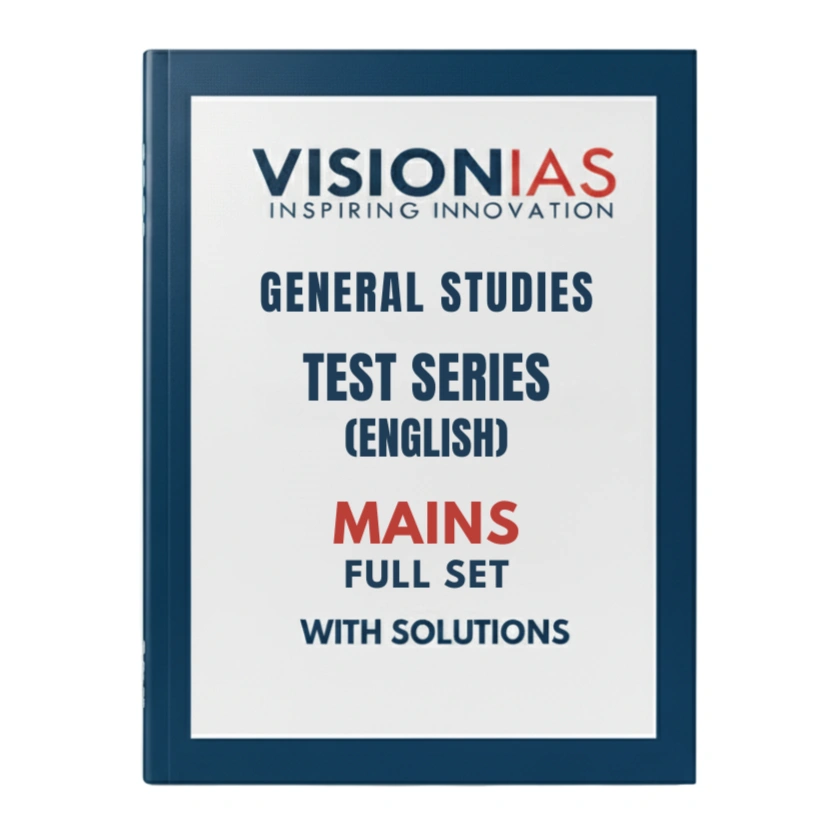
That is 1750 merit marks from Mains plus 275 marks from the Personality Test (interview), for a total of 2025 marks. Unlike Prelims, Mains PYQs are not for ticking right answers — they are question banks you write answers to and then compare against toppers’ copies and model answers. For GS IV, map every past ethics question to its syllabus keyword; for the Essay paper, build a bank of 60–70 past topics and practise structuring them. A smart first pass is to tag every GS Mains question by its directive verb — examine, critically analyse, discuss, comment — because the verb dictates the structure examiners reward. The Vajiram Essay Notes and timed practice through the Vision IAS Mains Test Series 2026 turn these raw question lists into actual writing practice.
UPSC Optional Subject Previous Year Question Papers
Every optional has two papers of 250 marks each, and upsc optional subject previous year question papers reveal recurring themes more sharply than GS, because the optional syllabus is narrow and static. Popular optionals — PSIR, Sociology, Geography, Public Administration, History, Anthropology — show clear repetition of core concepts across a decade. Download at least 10 years of your optional’s papers, sort questions topic-wise against the syllabus, and you will quickly see which 20–25 themes generate the bulk of marks. Whether your optional is Political Science, Sociology, Geography, or Economics, align the PYQs with standard notes for that subject so your answers hit the expected depth and terminology. Because optional papers reward precise, subject-specific vocabulary and named thinkers or case studies, read each past question asking “what exact concept is being tested here?” rather than treating it as a generic essay prompt.
Last 10 Years UPSC Question Papers With Answers PDF: Why They Matter
Searching for last 10 years upsc question papers with answers pdf is the single most common starting point for serious aspirants — and rightly so. A ten-year window captures at least one full cycle of UPSC’s evolving preferences without drowning you in outdated patterns. Here is what solving PYQs systematically does for you:
- Pattern recognition: You stop guessing what UPSC wants and start seeing how it phrases questions, mixes statements, and designs traps.
- Trend analysis: You spot the rising weight of environment, economy and current-affairs-linked static topics that dominate recent Prelims.
- Time management: Attempting a full 100-question GS paper in 120 minutes under a timer teaches pacing no amount of reading can.
- Elimination skill: Most Prelims marks come from eliminating wrong options, not from knowing everything — PYQs train this directly.
- Syllabus prioritisation: You learn to drop low-yield areas and over-prepare high-frequency ones.
- Confidence under pressure: Repeated exposure to the real format removes the exam-hall surprise factor that derails first-timers.
In short, PYQs are a feedback loop: they tell you what to study, how deeply, and how it will be asked.
Topic-Wise Weightage & Repetition Analysis (Prelims GS I)
This is where most free PYQ pages stop short — they hand you PDFs but never tell you which subjects actually carry the paper. Based on the pattern of the last several years, here is the approximate subject-wise distribution in the 100-question GS Paper I. Treat these as indicative ranges, not fixed quotas — UPSC deliberately varies the mix each year — and use them to decide where your study hours go.
| Subject Area | Approx. Questions / Year | Trend | Priority |
|---|---|---|---|
| Polity & Governance | 13–18 | Stable, application-based | High |
| Economy | 14–20 | Rising, concept + current | High |
| Environment & Ecology | 12–18 | Strongly rising | High |
| History (Ancient/Medieval/Modern) | 12–17 | Art & culture emphasis | High |
| Geography (Indian + World) | 10–15 | Stable, map-linked | Medium |
| Science & Technology | 7–12 | Current-affairs driven | Medium |
| Current Affairs (standalone) | 12–18 | Dominant, cross-cutting | Very High |
The clear signal: Economy, Environment and Current Affairs together now shape the paper far more than a decade ago, while static art-and-culture history keeps a steady presence. Keeping a monthly current affairs resource alongside your PYQ practice closes the biggest gap, since roughly a third of recent papers link directly to events of the preceding 12–18 months.
Does UPSC Repeat Previous Year Questions?
UPSC rarely repeats a question verbatim in Prelims, but it repeats concepts and themes relentlessly. The same article of the Constitution, the same economic term, or the same biosphere reserve will resurface framed differently across years. In optionals and in Mains GS, thematic repetition is even higher — entire question stems echo earlier years with minor rewording. So the honest answer is: don’t expect copy-paste repeats, but absolutely expect concept repeats, which is exactly why topic-wise PYQ compilations are so valuable.
Year-on-Year Difficulty & Trend Shift
Reading PYQs chronologically reveals a shifting examination. The table captures the broad difficulty and emphasis shifts aspirants should internalise.
| Period | GS Paper I Character | CSAT Character | Key Shift |
|---|---|---|---|
| 2015–2017 | Factual, direct | Moderate, scoring | Static knowledge rewarded |
| 2018–2020 | Conceptual, analytical | Rising numeracy | Elimination skill critical |
| 2021–2022 | Current-affairs heavy | Moderate-tough | Dynamic linkage grows |
| 2023–2025 | Unpredictable, multi-statement | Very tough comprehension | CSAT becomes a real filter |
The practical takeaway: an aspirant preparing only from pre-2020 papers would badly underestimate CSAT and the multi-statement, “how many of the above are correct” format that now dominates GS Paper I. Weight your practice toward the most recent five years for pattern, and use the older decade for coverage.
How to Solve UPSC PYQs Effectively: A 4-Stage Method
Downloading the PDFs is the easy part; extracting marks from them needs a system. Here is a structured loop that works for both stages.
- Stage 1 — Diagnostic solve: Attempt a full paper under timed, exam-like conditions before you “finish the syllabus”. Your raw score is your baseline, not a verdict.
- Stage 2 — Deep analysis: For every question, label it: knew it, guessed right, guessed wrong, or no idea. The “guessed right” and “wrong” buckets are your real study list.
- Stage 3 — Mistake tracking: Maintain a running error log — a notebook or spreadsheet with the question, why you got it wrong (knowledge gap, misreading, or bad elimination), and the correct concept. Revisit it weekly.
- Stage 4 — Revision loop: Re-solve the same paper after 3–4 weeks. The goal is not memorising answers but confirming the underlying concept has stuck.
Run this loop across 10 years first, then extend to 20–25 years for coverage of rarely-tested but recurring static topics. One discipline multiplies the method’s payoff: after analysing each question, go back to your core textbook or notes and read around the tested fact, not just the fact itself — that is how a single past question becomes five marks of future coverage.
How Many Years of UPSC Previous Year Question Papers Should I Solve?
Solve the last 10 years thoroughly and with full analysis — this is the mandatory core. Once that is done, extend Prelims practice to 20–25 years (especially for polity, history and geography static concepts that cycle back), and keep Mains and optional practice to the last 10–12 years, since the Mains pattern changed meaningfully after the 2013 restructuring. Depth on 10 years beats a shallow skim of 25.
Are Previous Year Question Papers Enough to Crack UPSC Prelims?
PYQs alone are not sufficient, but they are indispensable. They tell you the direction, depth and style — but you still need standard subject notes, NCERTs, and current affairs to build the actual knowledge base, plus fresh mock tests to practise the current difficulty level. Think of PYQs as the map and your study material as the vehicle; you need both to reach the destination.
Is Solving PYQs Useful for Both Prelims and Mains?
Yes — but differently. For Prelims, PYQs train elimination, speed and factual precision through MCQs. For Mains, they are a question bank for answer-writing practice, demand-of-the-question analysis, and structuring 150/250-word answers within the word and time limits. The same paper serves two distinct purposes depending on the stage you are preparing for.
Where to Download UPSC PYQs Free (Official + Platform Copies)
You have two reliable sources, and you should use both.
| Source | What You Get | Best For |
|---|---|---|
| upsc.gov.in (Examination → Previous Question Papers) | Authentic Prelims & Mains PDFs, Hindi + English | The authentic, unedited question papers |
| Coaching / platform-hosted copies | Solved papers, answer keys, explanations | Detailed worked solutions and keys |
| Topic-wise PYQ compilations | Questions sorted by subject across decades | Repetition & weightage analysis |
The official site holds papers typically for the recent several years in clean PDF form; for solved versions with explanations and for pre-2015 archives, coaching compilations fill the gap. Always treat the official PDF as the source of truth for the question wording, and use solved copies only for the answers and reasoning.
Does the Official UPSC Website Provide Previous Year Question Papers?
Yes. The official portal upsc.gov.in hosts previous year question papers under its “Examination” section for both the Preliminary and Main examinations, in Hindi and English. However, the official site provides only the question papers — it does not publish detailed solutions or explanations, and it releases the final answer keys of Prelims only after the complete selection process concludes. For solved papers and keys, you need supplementary sources.
Prelims vs Mains: Two Different PYQ Strategies
A common mistake is using PYQs the same way for both stages. They demand opposite skills.
| Dimension | Prelims PYQ Approach | Mains PYQ Approach |
|---|---|---|
| Format | Objective MCQs | Descriptive answers |
| Goal | Accuracy + elimination speed | Content structuring + articulation |
| Method | Timed solve, option analysis | Answer writing, model-answer comparison |
| Metric | Score vs cut-off | Peer/mentor evaluation |
| Frequency | Daily in last 3–4 months | Weekly, year-round |
Build a dedicated Prelims PYQ phase in the final 4–5 months before the exam, but start Mains answer-writing on past questions from early in your preparation — writing is a skill that compounds slowly.
Common Mistakes Aspirants Make With PYQs
- Reading, not solving: Glancing at questions and answers without a timer gives a false sense of readiness.
- Ignoring CSAT papers: Treating a qualifying paper as unimportant until it eliminates you — a rising risk given recent difficulty.
- Skipping analysis: Solving ten papers but never logging why answers were wrong wastes the entire exercise.
- Memorising answers: Re-solving a paper and scoring high because you remembered the key, not the concept.
- Only recent years: Missing the static concepts that recur from the 15–25 year archive.
- No fresh mocks: Relying only on PYQs and never testing yourself on current-pattern, unseen questions.
- Mixing mediums carelessly: Switching between Hindi and English versions mid-practice, which costs time and breeds terminology confusion in the real exam.
Frequently Asked Questions
Where can I download UPSC previous year question papers with answers PDF for free?
Download the question papers free from the official site upsc.gov.in under its Examination → Previous Question Papers section, available in both Hindi and English. For solved versions with answer keys and explanations, use coaching-hosted copies or a topic-wise PYQ compilation, since the official site provides only the question papers and releases Prelims answer keys after the final result.
How many questions are asked in UPSC Prelims GS Paper 1 and CSAT?
GS Paper I has 100 multiple-choice questions for 200 marks in 2 hours, and CSAT (GS Paper II) has 80 multiple-choice questions for 200 marks in 2 hours. Both carry a negative marking of one-third of the marks for each wrong answer. GS Paper I decides your merit rank, while CSAT is only qualifying at 33%.
Does UPSC repeat previous year questions?
UPSC very rarely repeats a Prelims question word-for-word, but it repeats concepts and themes constantly — the same constitutional article, economic term, or ecology topic reappears in a reworded form. In Mains and in optional papers, thematic repetition is even higher, which is why analysing topic-wise PYQs is far more useful than memorising individual past questions.
Are previous year question papers enough to crack UPSC Prelims?
No — PYQs are indispensable but not sufficient on their own. They reveal the pattern, depth and question style, but you still need standard subject notes, NCERTs, current affairs and fresh mock tests to build and test your actual knowledge. Use PYQs to guide your preparation and your study material to build it.
How many years of UPSC previous year question papers should I solve?
Solve the last 10 years thoroughly with full analysis as your mandatory core, then extend Prelims practice to 20–25 years for recurring static concepts in polity, history and geography. For Mains and optionals, the last 10–12 years is enough because the Mains pattern changed after the 2013 restructuring. Depth on ten years matters more than a shallow skim of twenty-five.
How do I solve UPSC PYQs effectively?
Attempt each paper under timed, exam-like conditions first, then analyse every question by labelling it as known, guessed-right, guessed-wrong or unknown. Maintain a mistake log recording why each error happened and the correct concept, and re-solve the same paper after three to four weeks to confirm the concept has stuck rather than just the answer.
In which languages are UPSC previous year question papers available?
UPSC publishes its previous year question papers in both Hindi and English on upsc.gov.in, and the medium is noted on each PDF. Pick one medium and practise consistently in it so your reading speed and the technical terminology you rehearse match what you will use in the actual examination.
Should I practise PYQs topic-wise or year-wise?
Use both, in order. Solve the recent years full-length and year-wise to build timing, stamina and exam temperament, then switch to a topic-wise arrangement to spot repetition, weightage and the concepts UPSC returns to. Year-wise practice trains exam behaviour; topic-wise practice sharpens what you study — together they cover both halves of PYQ preparation.
Recommended Study Material

Continue Reading
CGPSC Syllabus 2025: Prelims, Mains, Exam Pattern + PDF Download
The CGPSC syllabus for the Chhattisgarh State Service Examination (SSE) spans three stages: Prelims — two objective papers…
JEE Main Syllabus 2026: PCM Topics, Weightage + PDF
The jee main syllabus is the official NTA-prescribed list of Class 11 and Class 12 topics in three…

Best Books for JEE Main 2026: Subject-Wise List + Prices
The best books for JEE Main are NCERT (the non-negotiable foundation, especially for Chemistry) plus two trusted references…