NCERT Books for UPSC 2026: Subject-Wise List + Free PDF
NCERT books for UPSC: full Class 6-12 subject-wise list, old vs new NCERT, free PDF links, reading order & a printable Prelims 2026 checklist.

NCERT books for UPSC are the single best starting point for any beginner: you need roughly 40-44 NCERTs from Class 6 to 12 across History, Geography, Polity, Economics, Science, Art & Culture and Environment, and a focused aspirant can finish them in about 2.5-3 months. They build the conceptual base from which both Prelims and Mains questions are framed — many Prelims MCQs echo NCERT lines almost verbatim, while Mains answers gain depth from NCERT fundamentals. This guide gives you the complete ncert books for upsc subject wise list, class-wise titles, old vs new NCERT clarity, free PDF download links, a chapter-level ‘what to skip’ filter, a realistic timeline, and a printable ncert booklist for upsc prelims you can tick off.
How this list was built: every title below is mapped against the official UPSC General Studies syllabus and cross-checked with past Prelims and Mains question themes, so you read each book with a clear exam purpose rather than as a school text. Who this is for: first-time aspirants, repeaters rebuilding their base, and working professionals who need a lean, prioritised plan.
Why NCERT Books Are the Foundation for UPSC
Almost every topper repeats the same advice: build your base with NCERT before touching standard reference books like Laxmikanth or Spectrum. There are three concrete reasons the NCERT books for UPSC matter so much.
1. Simple, authoritative language. NCERTs are written by subject experts under a government body, so the facts are reliable and the language is beginner-friendly. When you later read denser books, the NCERT base makes them noticeably easier to absorb.
2. Direct and indirect questions. In UPSC Prelims, questions on ancient/medieval history, art & culture, basic geography and environment are frequently framed straight from NCERT chapters. In Mains, NCERT gives you the frameworks and definitions that anchor a good answer. The exam rewards clarity of basics, and NCERTs deliver exactly that.
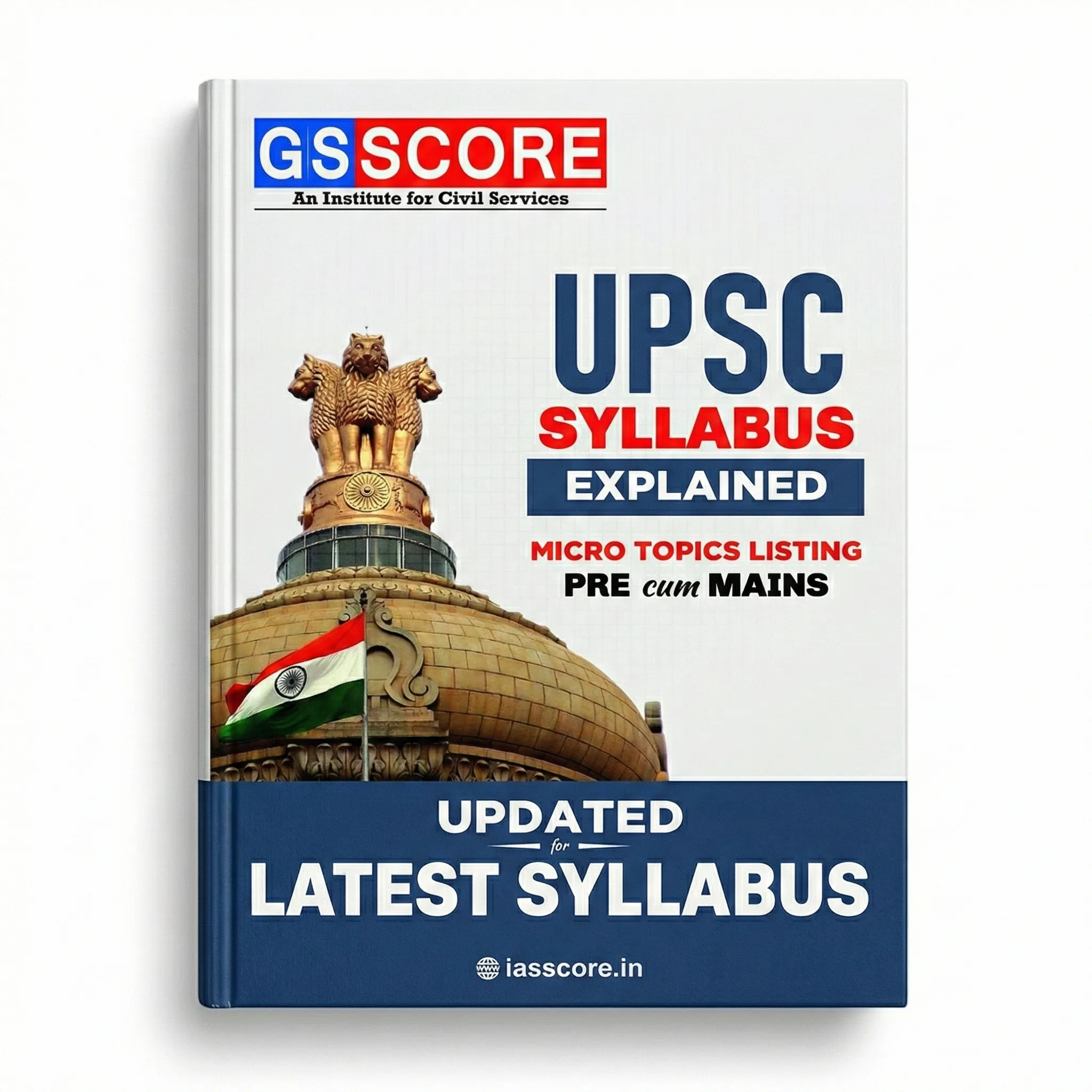
3. Syllabus coverage at low cost. A full set of NCERTs covers a large chunk of the GS Prelims and Mains syllabus at a fraction of coaching cost. To map them against the official syllabus, keep the GS Score Latest Syllabus Booklet 2026-27 beside you while you read — tick each NCERT chapter against the exact syllabus sub-topic it feeds.
Which NCERT Books Are Required for UPSC? (Subject-Wise List)
Here is the master subject-wise list of NCERT books for UPSC, mapped to the General Studies papers where they matter most. This directly answers the most common People-Also-Ask query: “Which NCERT books are required for UPSC?”
| Subject | Classes to Read | Maps to GS Paper | Priority |
|---|---|---|---|
| History (Ancient, Medieval, Modern) | 6-8 (new) + 11-12 (old/new) | GS I (Prelims & Mains) | High |
| Art & Culture | 11 (An Introduction to Indian Art) | GS I | High |
| Geography | 6-12 | GS I | High |
| Indian Polity | 9-12 (Political Science) | GS II | High |
| Economics | 9-12 | GS III | High |
| Science & Technology | 6-10 | GS III | Medium |
| Environment & Ecology | Biology 12 (last units) + Geography | GS III | High |
| Sociology / Society | 11-12 (Sociology) | GS I & Ethics (GS IV) | Medium |
Class 6 to 12 NCERT Books for UPSC: Class-Wise Titles
Below is the exact class-wise breakdown of book titles — the detail most top pages bury. Use it as your buying and download checklist for the class 6 to 12 NCERT books for UPSC.
History NCERTs
| Class | Book Title | What It Covers |
|---|---|---|
| 6 | Our Pasts I | Ancient India basics |
| 7 | Our Pasts II | Medieval India |
| 8 | Our Pasts III (Part 1 & 2) | Modern India, colonialism |
| 11 | Themes in World History | World history for Mains GS I |
| 12 | Themes in Indian History I, II, III | In-depth Indian history |
Geography NCERTs
| Class | Book Title |
|---|---|
| 6 | The Earth: Our Habitat |
| 7 | Our Environment |
| 8 | Resources and Development |
| 9 | Contemporary India I |
| 10 | Contemporary India II |
| 11 | Fundamentals of Physical Geography; India – Physical Environment |
| 12 | Fundamentals of Human Geography; India – People and Economy |
Polity, Economics, Science & Sociology NCERTs
| Subject | Class | Book Title |
|---|---|---|
| Polity | 9-10 | Democratic Politics I & II |
| Polity | 11 | Indian Constitution at Work |
| Polity | 12 | Politics in India Since Independence |
| Economics | 9-10 | Economics; Understanding Economic Development |
| Economics | 11 | Indian Economic Development |
| Economics | 12 | Introductory Macroeconomics |
| Science | 6-10 | Science (General) – selective reading |
| Environment | 12 | Biology (last 4 chapters: ecology & environment) |
| Sociology | 11-12 | Introducing Sociology; Indian Society; Social Change & Development |
Which NCERT Book Is Most Important for UPSC?
If you are short on time and must rank them, start with the highest-yield NCERTs: Class 11 & 12 Geography (physical and Indian geography drive a steady stream of Prelims MCQs), Class 11 Indian Constitution at Work for Polity, Class 11 An Introduction to Indian Art for art & culture, and the ecology chapters of Class 12 Biology for environment. These four alone typically map to a large share of easily-scored Prelims questions. History is high-value too, but it is spread across more books, so treat it as a slightly longer project rather than a quick win.
Old NCERT vs New NCERT Books for UPSC
One of the biggest doubts for beginners is whether to read old NCERT or new NCERT. The honest answer: for most subjects the new NCERTs are enough, but for History the old NCERT books for UPSC remain a favourite for their depth and factual density.
| Subject | Recommendation | Author / Book |
|---|---|---|
| Ancient India | Old NCERT preferred | RS Sharma – Ancient India |
| Medieval India | Old NCERT preferred | Satish Chandra – Medieval India |
| Modern India | Old NCERT preferred | Bipin Chandra – Modern India |
| Geography | New NCERT | Class 6-12 current editions |
| Polity | New NCERT | Class 9-12 current editions |
| Economics | New NCERT | Class 9-12 current editions |
| Art & Culture | New NCERT | An Introduction to Indian Art (Class 11) |
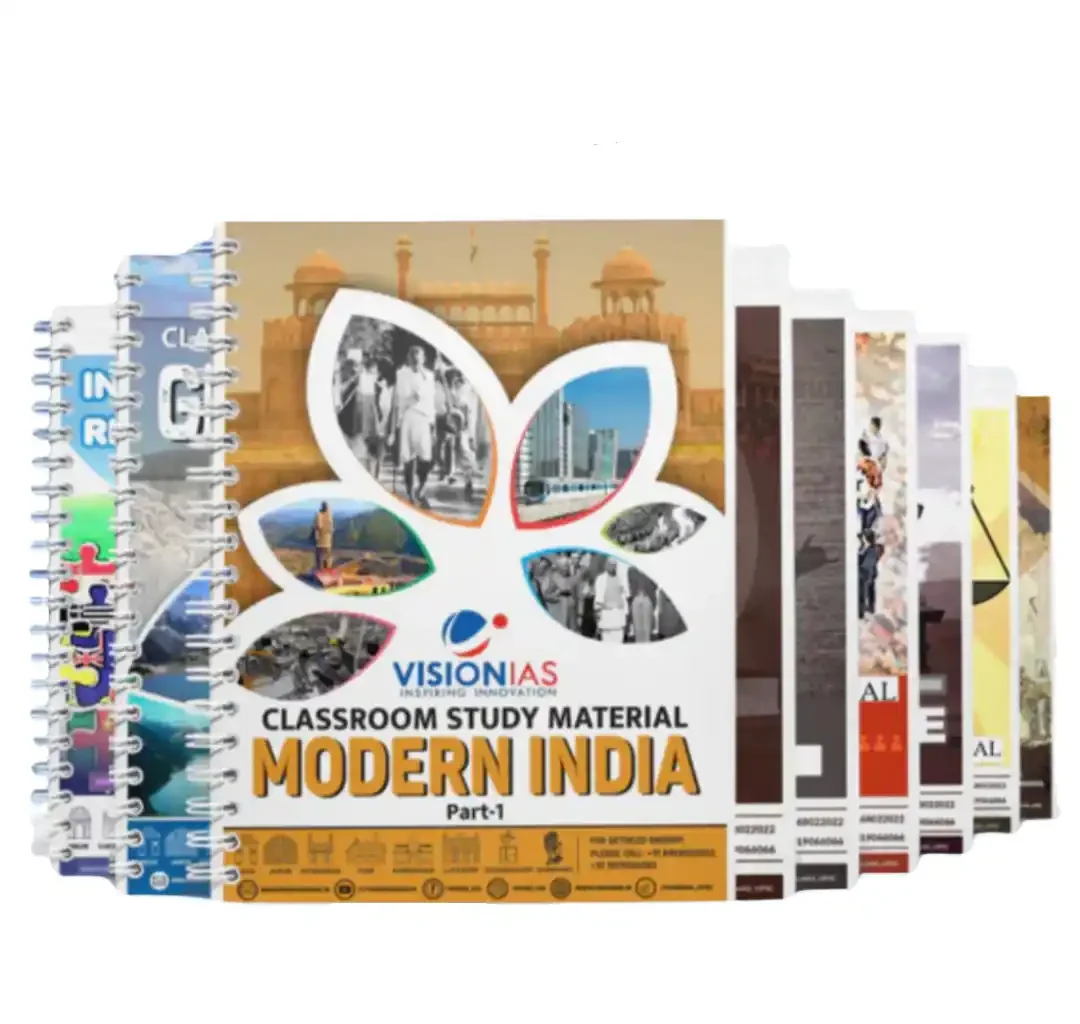
Old NCERTs are famously hard to find in the market. If you cannot source physical copies, read them as PDFs (links below) or rely on well-structured coaching notes that already distil old NCERT content. Curated GS material such as Vision IAS English Study Material 2025-2026 compresses the old and new NCERT history base into exam-ready booklets, saving you the hunt for out-of-print editions.
How to Read NCERT Books for UPSC: Class-Wise vs Subject-Wise
This section answers “how to read ncert books for upsc” and “Should I read NCERT class-wise or subject-wise?” — the strategy that separates efficient aspirants from those who waste months.
Read subject-wise, not class-wise. Instead of finishing all Class 6 books then all Class 7 books, pick one subject (say Geography) and read it from Class 6 straight through to Class 12. This builds a continuous, layered understanding of one subject before you move on. Class-wise reading scatters your focus across unrelated topics in a single day.
Recommended reading order:
- 1. Geography (6-12) – concrete, visual, confidence-building
- 2. Polity (9-12) – high Prelims + Mains return
- 3. History (6-8, then old NCERTs, then 11-12)
- 4. Economics (9-12)
- 5. Science & Environment (6-10 + Bio Class 12 ecology)
- 6. Art & Culture (Class 11) and Sociology (11-12)
Make lean notes. Do not copy the book. Write only what is new to you — facts, definitions, timelines, diagrams — in short bullet points or a digital note. Your NCERT notes should be quick-revision friendly: one subject per file, headings that match the syllabus, and space to add current-affairs linkages later.
Revise 2-3 times. A single reading is never enough. Read once to understand, a second time to underline and note, and a third time (closer to Prelims) to revise only your notes. This is how consistent aspirants convert NCERT reading into marks.
Selective Reading: Which Chapters to Skip
Most guides tell you to read whole books; the smarter move is a chapter-level filter. Here is where you can save weeks.
| Book / Subject | Read Fully | Skip / Skim |
|---|---|---|
| Geography 6-8 | All chapters (short) | Nothing major |
| Science 6-10 | Physics/Chem/Bio basics relevant to daily-life & environment | Heavy numerical, chapter-end problems |
| Polity 9-10 | All (foundation) | Repetitive civics activities |
| History Class 11 (World) | Industrial Revolution, Renaissance, key themes | Very detailed sub-themes for Prelims |
| Biology Class 12 | Last 4 chapters (ecology & environment) | Genetics, reproduction (unless optional) |
| Economics 11-12 | Concepts, definitions, sectors | Long derivations, graphs beyond basics |
NCERT Books for UPSC PDF Download (Class 6-12 Free)
For “ncert books for upsc pdf download”, the safest and only official source is the NCERT government portal — every Class 6-12 textbook is available there for free, in English and Hindi, chapter-wise and full-book.
| Source | What You Get | Cost |
|---|---|---|
| ncert.nic.in (official e-textbook portal) | All Class 1-12 books, English & Hindi, PDF | Free |
| NCERT e-Pathshala app/website | Chapter-wise PDFs, flip-book format | Free |
| DIKSHA platform | NCERT content, multiple languages | Free |
How to download NCERT book PDFs for UPSC: visit the official NCERT e-textbook portal, choose the class, subject and book, then download chapter-wise or the full PDF. Old NCERTs (RS Sharma, Satish Chandra, Bipin Chandra) are not on the current portal and must be sourced as archived PDFs or scanned copies.
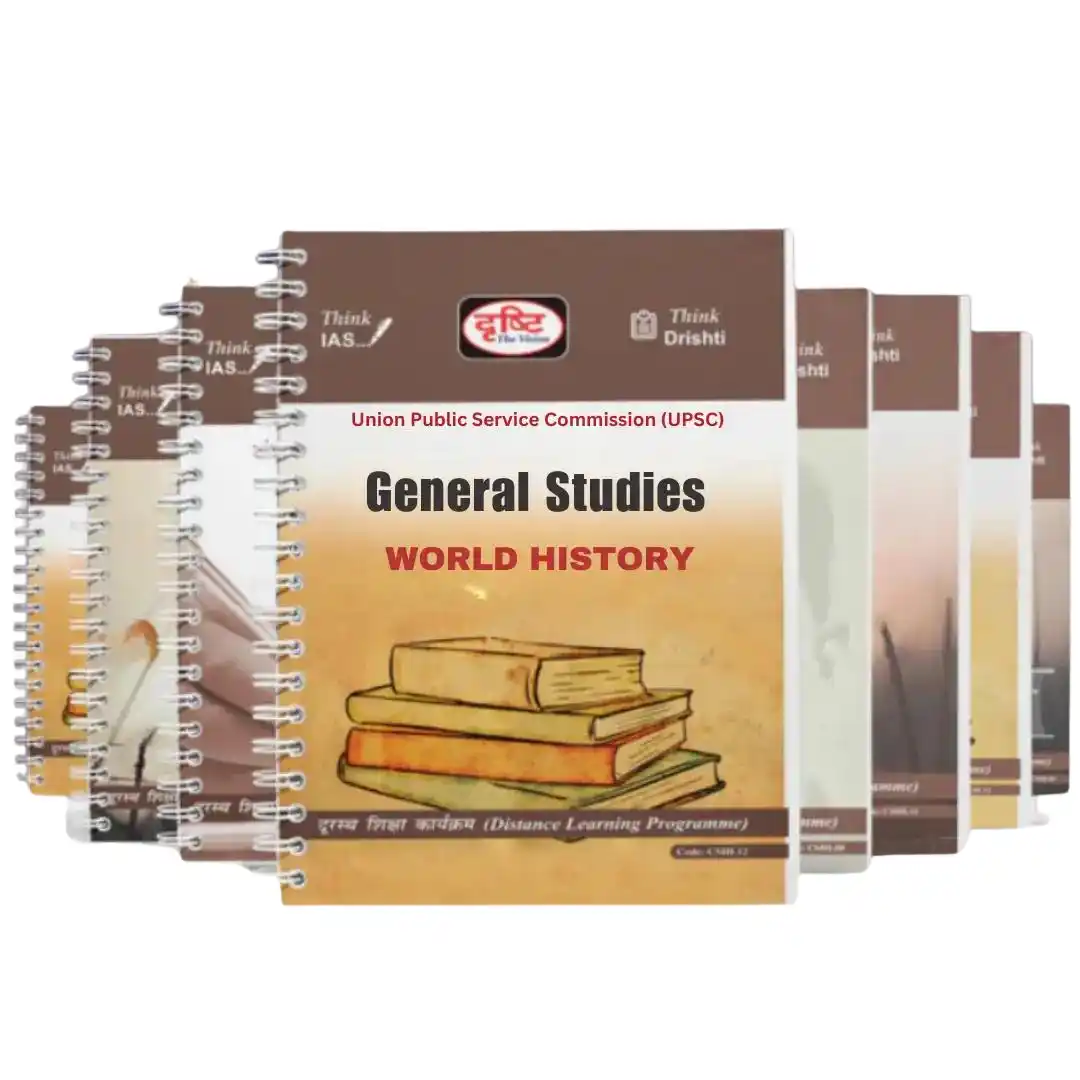
PDF vs physical — what actually works: PDFs are free and portable, but most aspirants read faster and retain more on paper, and underlining/annotation is easier. A practical hybrid: download PDFs to sample and search, but read your core subjects (History, Geography, Polity) on paper. If you would rather skip printing 40+ books and hunting old editions, structured printed GS booklets like Drishti IAS English Study Material 2025-26 package the same NCERT foundation subject-wise, ready to underline and revise.
How Many NCERT Books Are There for UPSC and How Long to Finish?
The complete ncert booklist for upsc prelims runs to roughly 40-44 books across all subjects (counting multi-part volumes). Here is a realistic timeline for how long to finish them.
| Aspirant Type | Daily Hours on NCERT | Time to Finish (1 reading) |
|---|---|---|
| Full-time aspirant | 5-6 hours | 2 to 2.5 months |
| College student | 3-4 hours | 3 months |
| Working professional | 1.5-2 hours | 3.5 to 4 months |
A common mistake is trying to “finish NCERTs in one month.” It is possible only if you read 8-10 hours daily with prior familiarity — not realistic for most beginners, and rushing kills retention. Plan for 2.5-3 months for the first pass plus notes, then quicker revisions.
Sample Reading Timetable (Working Professional)
| Week | Focus | Books |
|---|---|---|
| 1-3 | Geography | Class 6-12 Geography |
| 4-6 | Polity | Class 9-12 Political Science |
| 7-10 | History | Class 6-8 + old NCERTs + 11-12 |
| 11-13 | Economics | Class 9-12 Economics |
| 14-16 | Science, Environment, Art & Culture | Science 6-10, Bio ecology, Class 11 Art |
Do UPSC Questions Come Directly from NCERT? (PYQ Proof)
Often, yes — and this is where most guides make claims without evidence. Below are the kinds of Previous Year Question (PYQ) themes that trace straight back to NCERT chapters, showing their exam relevance.
| NCERT Source | PYQ Theme Seen in Prelims/Mains |
|---|---|
| Class 11 Indian Art (NCERT) | Questions on temple architecture, dance forms, Buddhist stupas |
| Biology Class 12 (ecology) | Food chains, biodiversity, ecosystem-based MCQs |
| Class 11-12 Geography | Monsoon, ocean currents, soil types, cropping patterns |
| Polity Class 11 (Constitution at Work) | Fundamental Rights, Parliament, federalism |
| Old NCERT Modern History | National movement, socio-religious reforms |
To systematically link each NCERT to real questions, pair your reading with a topic-wise PYQ resource. The Forum IAS UPSC Prelims Toolkit (Topic-Wise PYQ 1992-2025) lets you see, subject by subject, exactly how NCERT concepts have been tested — the fastest way to read NCERTs with an exam-oriented eye rather than as school textbooks.
Is NCERT Alone Enough to Crack UPSC?
No — NCERTs are necessary but not sufficient. They are the foundation, not the whole building. After NCERTs you must move to standard reference books and current affairs.
| Stage | Resource After NCERT |
|---|---|
| Polity | Laxmikanth – Indian Polity |
| Modern History | Spectrum – A Brief History of Modern India |
| Geography | GC Leong + atlas |
| Economics | Ramesh Singh / Mrunal |
| Current Affairs | Daily newspaper + monthly magazine |
Current affairs is the layer NCERTs cannot cover, and it decides a large share of the paper. Consistent monthly compilations bridge static NCERT knowledge with what is being asked now — a resource like the Vision IAS Current Affairs Magazine January 2026 keeps your foundation connected to the evolving syllabus.
Hindi-Medium NCERTs and Bilingual Reading
Every NCERT is published in both English and Hindi, and the official portal offers free Hindi PDFs (e.g., हमारे अतीत for History, भूगोल for Geography). Hindi-medium aspirants should read NCERTs in Hindi first for concepts, but note down key technical terms in English too — many standard books and current affairs sources are English-first. This bilingual habit prevents confusion later when terminology differs between mediums. Hindi-medium candidates who want ready structured notes alongside NCERTs can look at Hindi GS material such as Drishti IAS Hindi Study Material.
How to Structure NCERT Notes for Quick Revision
Good notes are the difference between reading NCERTs once and remembering them at the exam. Follow these rules:
- One file per subject, headings mapped to the syllabus — not per class.
- Bullet points only — facts, dates, definitions, cause-effect chains; no paragraphs.
- Leave margins to add current-affairs and standard-book points later.
- Draw or paste diagrams for Geography (monsoon, plate tectonics) and Environment.
- Colour-code Prelims facts vs Mains points so revision is targeted.
- Keep notes short enough to revise an entire subject in 2-3 hours before Prelims.
Printable NCERT Booklist Checklist for UPSC Prelims
Here is the consolidated, tick-off ncert booklist for upsc prelims — the single-page tracker most top pages fail to provide. Copy it, print it, and mark each book as you finish reading and note-making.
| Subject | Books to Tick | Status |
|---|---|---|
| Geography | Class 6, 7, 8, 9, 10, 11 (×2), 12 (×2) | ☐ |
| History (New) | Class 6, 7, 8, 11, 12 (×3) | ☐ |
| History (Old) | RS Sharma, Satish Chandra, Bipin Chandra | ☐ |
| Polity | Class 9, 10, 11, 12 | ☐ |
| Economics | Class 9, 10, 11, 12 | ☐ |
| Science | Class 6, 7, 8, 9, 10 (selective) | ☐ |
| Environment | Biology Class 12 (ecology units) | ☐ |
| Art & Culture | Class 11 – An Introduction to Indian Art | ☐ |
| Sociology / Society | Class 11, 12 Sociology | ☐ |
Total: approximately 40-44 books. Tick each one twice — once for first reading, once for revision — and you will have a fully audited NCERT foundation before you touch advanced material.
Common Mistakes Beginners Make with NCERTs
- Reading class-wise instead of subject-wise — scatters focus and breaks continuity.
- Copying the whole book into notes — wastes weeks; note only what is new.
- Skipping revision — one reading fades within a month.
- Trying to finish in one rushed month — kills retention.
- Ignoring old NCERTs for History — losing easy Prelims marks.
- Reading NCERTs endlessly without ever moving to standard books and PYQs.
Frequently Asked Questions
Which NCERT books are required for UPSC?
You need NCERTs for History (Class 6-8, 11-12 plus old NCERTs), Geography (Class 6-12), Polity (Class 9-12), Economics (Class 9-12), Science (Class 6-10, selective), Environment (Biology Class 12 ecology chapters), Art & Culture (Class 11 Indian Art) and Sociology (Class 11-12) — about 40-44 books in total.
Is NCERT alone enough to crack UPSC?
No. NCERTs build the foundation but are not sufficient on their own. After finishing them you must read standard books like Laxmikanth, Spectrum and GC Leong, and follow daily current affairs, which decides a large share of both Prelims and Mains.
Should I read NCERT class-wise or subject-wise for UPSC?
Read subject-wise. Pick one subject and read it from Class 6 up to Class 12 before moving to the next. This builds continuous, layered understanding, whereas class-wise reading scatters your focus across unrelated topics each day.
How many NCERT books are there for UPSC and how long do they take?
The full booklist is roughly 40-44 NCERTs across all subjects, counting multi-part volumes. A full-time aspirant reading 5-6 hours a day can finish one pass in about 2-2.5 months; working professionals should plan 3.5-4 months for the first reading plus lean notes, then faster revisions.
Which NCERT book is most important for UPSC?
Class 11-12 Geography, Class 11 Indian Constitution at Work (Polity), Class 11 An Introduction to Indian Art, and the ecology chapters of Class 12 Biology give the highest Prelims return for the time invested. History is also high-value but spread across more books, so treat it as a longer project.
Should I read old NCERT or new NCERT for UPSC?
Use old NCERTs for History — RS Sharma (Ancient), Satish Chandra (Medieval) and Bipin Chandra (Modern) offer superior depth. For Geography, Polity, Economics and Art & Culture, the new NCERTs are enough. If old editions are hard to find, read them as archived PDFs.
How many times should I read NCERT for UPSC?
At least 2-3 times. Read once to understand, a second time to underline and make lean notes, and a third time closer to Prelims to revise only your notes. Multiple revisions are what convert NCERT reading into actual marks.
Can I skip NCERT and start directly with standard books?
It is not advisable for beginners. Standard books like Laxmikanth and Spectrum assume the base that NCERTs build, so skipping them usually means slower reading and weaker retention. If you already have a strong school-level grasp of a subject, you can skim its NCERTs quickly instead of skipping entirely.
How do I download NCERT book PDFs for UPSC preparation?
Download free official PDFs from the NCERT e-textbook portal (ncert.nic.in) or the e-Pathshala platform — choose the class, subject and book, in English or Hindi, chapter-wise or full. Old NCERTs are not on the current portal and must be sourced as archived or scanned PDFs.
Recommended Study Material

Continue Reading
NEET Syllabus 2026: Subject & Chapter-Wise Topics, Weightage + PDF
The NEET syllabus for 2026 is the official list of Class 11 and Class 12 topics — across…
SBI PO Syllabus 2026: Prelims, Mains, Pattern & PDF
The SBI PO syllabus covers three subjects in Prelims — English Language, Quantitative Aptitude and Reasoning Ability —…
Anthropology Optional Syllabus 2026: Paper 1 & 2 + PDF
The anthropology optional syllabus for UPSC CSE Mains is divided into two papers of 250 marks each, totalling…