RBI Grade B Syllabus 2026: Phase 1, 2, Pattern + PDF
RBI Grade B syllabus 2026: Phase 1 & 2 topics, exam pattern, subject-wise weightage, negative marking, DEPR/DSIM streams and free syllabus PDF steps.

The RBI Grade B syllabus is spread across three phases: Phase 1 (Prelims) tests General Awareness, Reasoning, Quantitative Aptitude and English; Phase 2 (Mains) tests Economic & Social Issues (ESI), English Writing Skills and Finance & Management (FM); and Phase 3 is a 75-mark interview. Phase 1 is qualifying only and carries 200 marks, Phase 2 carries 300 marks, and the final merit is decided by Phase 2 + Interview (375 marks). General Awareness has the highest weightage in Prelims (about 80 marks).
This guide gives you the complete, phase-by-phase rbi grade b syllabus 2026 for the General (DR) stream — plus the DEPR and DSIM variations, exact subject-wise weightage, marking scheme, negative marking rules, a study timeline, and how to get the official syllabus PDF. Every number below is mapped to how the paper is actually set, so you can plan smart, not just study hard.
Editorial note: this guide is maintained by the Competer editorial team and cross-checked against the RBI “Recruitment of Officers in Grade ‘B’ (DR)” notification and RBI exam sources. Marks, timing and eligibility reflect the pattern used in recent cycles; always confirm final details against the current advertisement on rbi.org.in before you lock your plan. Last reviewed for the 2026 cycle.
RBI Grade B Exam Pattern 2026: Phases, Marks & Dates
Before the topics, fix the structure in your head. The rbi grade b exam pattern 2026 for the General/DR post has three stages. Phase 1 and Phase 2 are online; the interview is offline. Only Phase 2 (300) and Interview (75) count towards the final selection — a total of 375 marks.
| Stage | Type | Total Marks | Duration | Counts in Final Merit? |
|---|---|---|---|---|
| Phase 1 (Prelims) | Objective (online) | 200 | 120 minutes | No — qualifying only |
| Phase 2 (Mains) | Objective + Descriptive | 300 | 270 minutes (3 papers) | Yes |
| Phase 3 (Interview) | Personal interview | 75 | — | Yes |
Tentative 2026 exam dates: Phase 1 is expected around 13–14 June 2026 and Phase 2 around 25–26 July 2026, with the interview later in the year. These are indicative windows based on past cycles — always confirm against the official RBI notification when it is released, as the Board can shift dates.
What Is the Syllabus for RBI Grade B?
At a glance, the RBI Grade B syllabus for a General-stream aspirant covers four objective areas in Prelims and three specialised papers in Mains, followed by an interview. Here is the one-glance map of the full syllabus before we go deep into each phase.
| Phase | Subject / Paper | What It Covers | Marks |
|---|---|---|---|
| Phase 1 | General Awareness | Current affairs, banking & economy, static GK, RBI & govt schemes | 80 |
| Phase 1 | Reasoning | Puzzles, seating, syllogism, coding-decoding, data sufficiency | 60 |
| Phase 1 | Quantitative Aptitude | DI, number series, arithmetic, simplification | 30 |
| Phase 1 | English Language | Reading comprehension, cloze, error spotting, para jumbles | 30 |
| Phase 2 | Paper I — ESI | Economic growth, social sector, Indian economy, development | 100 |
| Phase 2 | Paper II — English (Writing Skills) | Essay, precis, reading comprehension, business/report writing | 100 |
| Phase 2 | Paper III — FM | Finance, financial markets, management & motivation theory | 100 |
| Phase 3 | Interview | No fixed syllabus — economy, finance, current affairs, DAF-based | 75 |
Quick facts: The whole selection runs on 575 marks on paper, but only 375 (Phase 2 + Interview) decide your rank. Phase 1 exists purely to filter the field down to a manageable number for Mains. So treat Prelims as a gate to clear and Mains as the race to win.
RBI Grade B Phase 1 Syllabus (Prelims): Subject-Wise
The rbi grade b phase 1 syllabus is objective and largely overlaps with SBI PO / IBPS PO in the reasoning, quant and English sections, but the General Awareness paper is far tougher and more economy-heavy. Phase 1 has 200 questions for 200 marks in 120 minutes with sectional time limits.
General Awareness (80 marks — highest weightage)
This single section decides most Phase 1 outcomes. Expect the current affairs of the last 6–8 months, banking and financial awareness, RBI functions and monetary policy, government schemes, Union Budget and Economic Survey highlights, national and international appointments, awards, sports, and static general knowledge. Because it carries the highest weightage, a candidate who is strong here can qualify Phase 1 comfortably even with average quant.
Reasoning (60 marks)
Puzzles and seating arrangement (linear, circular, floor-based), syllogisms, inequality, coding-decoding, blood relations, direction sense, input-output, data sufficiency, and logical/critical reasoning. This is the second-largest scoring block and is where a strong aspirant can gain a real edge.
Quantitative Aptitude (30 marks)
Data interpretation (tables, bar, pie, caselet), number series, simplification and approximation, quadratic equations, and arithmetic word problems (percentage, ratio, profit & loss, time-speed-distance, time & work, partnership, mixtures).
English Language (30 marks)
Reading comprehension, cloze test, error spotting, sentence improvement, para jumbles, fillers, and word usage. Reading business and economy articles daily builds both this section and the ESI paper simultaneously.
| Phase 1 Section | Questions | Marks | Approx. Time | Difficulty |
|---|---|---|---|---|
| General Awareness | 80 | 80 | 25 min | Moderate–Hard |
| Reasoning | 60 | 60 | 45 min | Moderate |
| Quantitative Aptitude | 30 | 30 | 25 min | Moderate–Hard |
| English Language | 30 | 30 | 25 min | Easy–Moderate |
| Total | 200 | 200 | 120 min | — |
Because Phase 1 is only qualifying, your goal is to clear the sectional and overall cut-off — not to top it. Note that RBI applies both a per-section minimum and an aggregate cut-off, and it decides these based on vacancies each year, so they are not fixed. Once you cross the cut-off, Prelims marks are discarded and Phase 2 becomes your battlefield.
RBI Grade B Phase 2 Syllabus (Mains): The Deciding Stage
The rbi grade b phase 2 syllabus is where selection is truly earned. It has three papers of 100 marks each. Papers I and III mix objective (multiple choice, filled online) with descriptive answers, while Paper II is fully descriptive English writing. Each paper is 90 minutes.
Paper I — Economic & Social Issues (ESI, 100 marks)
ESI covers growth and development (measurement of growth, national income, poverty alleviation, inequality), the structure of the Indian economy, planning and reforms since 1991, privatisation, globalisation and its impact, opening of the Indian economy, sectors (agriculture, industry, services), the social structure of India (education, health, urbanisation, migration, gender issues), demographics, and social justice. Objective questions test facts and current data; descriptive answers test your ability to argue with the Economic Survey and RBI reports.
Paper II — English (Writing Skills, 100 marks)
This fully descriptive paper is often underestimated. It tests essay writing (usually one essay of ~400 words on an economy/social theme), precis writing (compressing a passage to one-third with a title), reading comprehension, and report/business writing. Evaluation rewards clear structure, correct grammar, logical flow, and topic relevance — not vocabulary fireworks. Practising one essay and one precis a week under a timer is the single best return on effort.
Paper III — Finance & Management (FM, 100 marks)
The finance half covers the financial system (regulators — RBI, SEBI, IRDAI, PFRDA), financial markets (money market, capital market, primary/secondary market), risk management in the banking sector, Basel norms, financial inclusion, digital payment systems, and recent developments (UPI, CBDC, fintech). The management half covers the nature and scope of management, motivation theories (Maslow, Herzberg, McGregor), leadership, communication, corporate governance, and ethics at the workplace.
| Phase 2 Paper | Format | Marks | Duration |
|---|---|---|---|
| Paper I — ESI | 50% objective + 50% descriptive (online) | 100 | 90 min |
| Paper II — English (Writing Skills) | Fully descriptive (typed online) | 100 | 90 min |
| Paper III — FM | 50% objective + 50% descriptive (online) | 100 | 90 min |
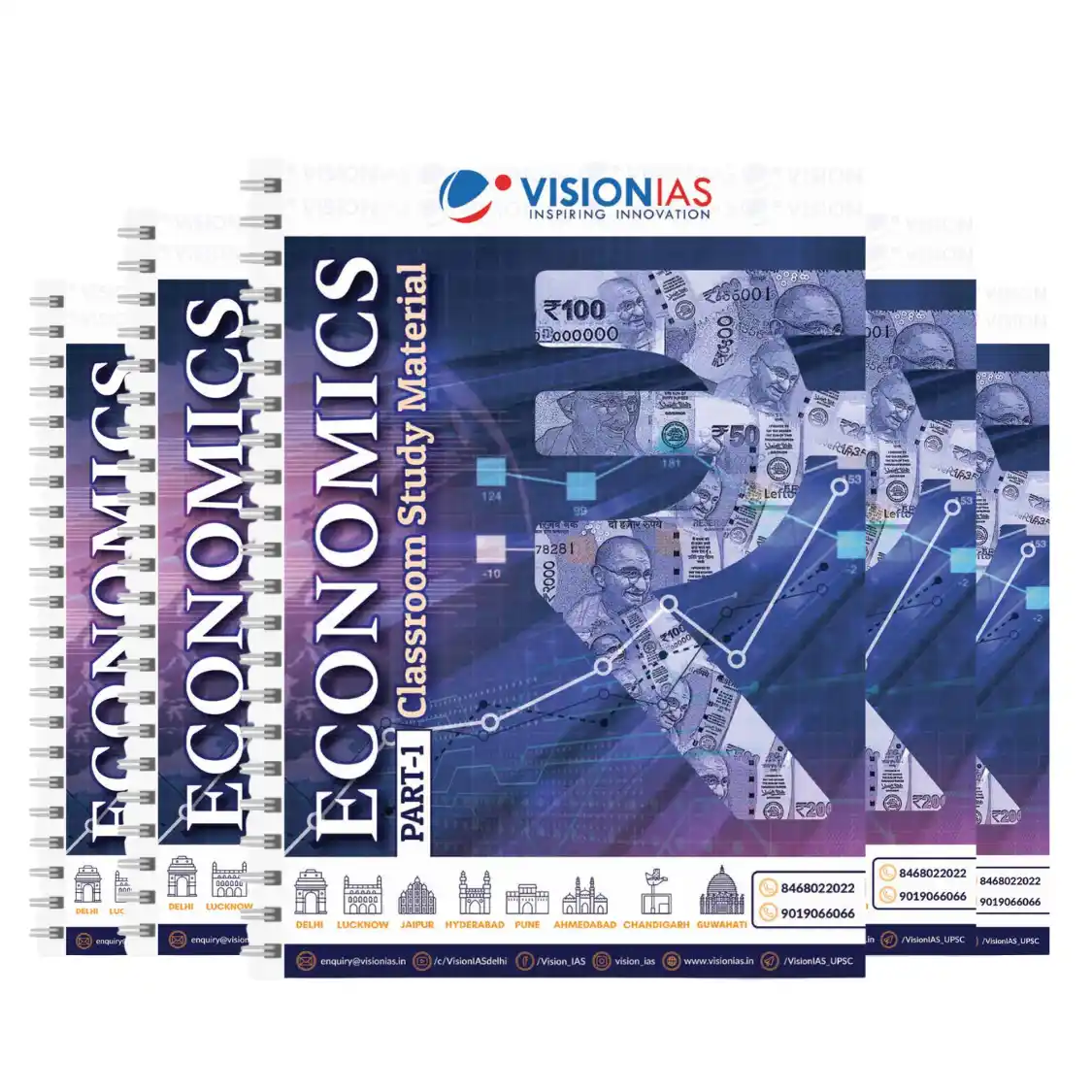
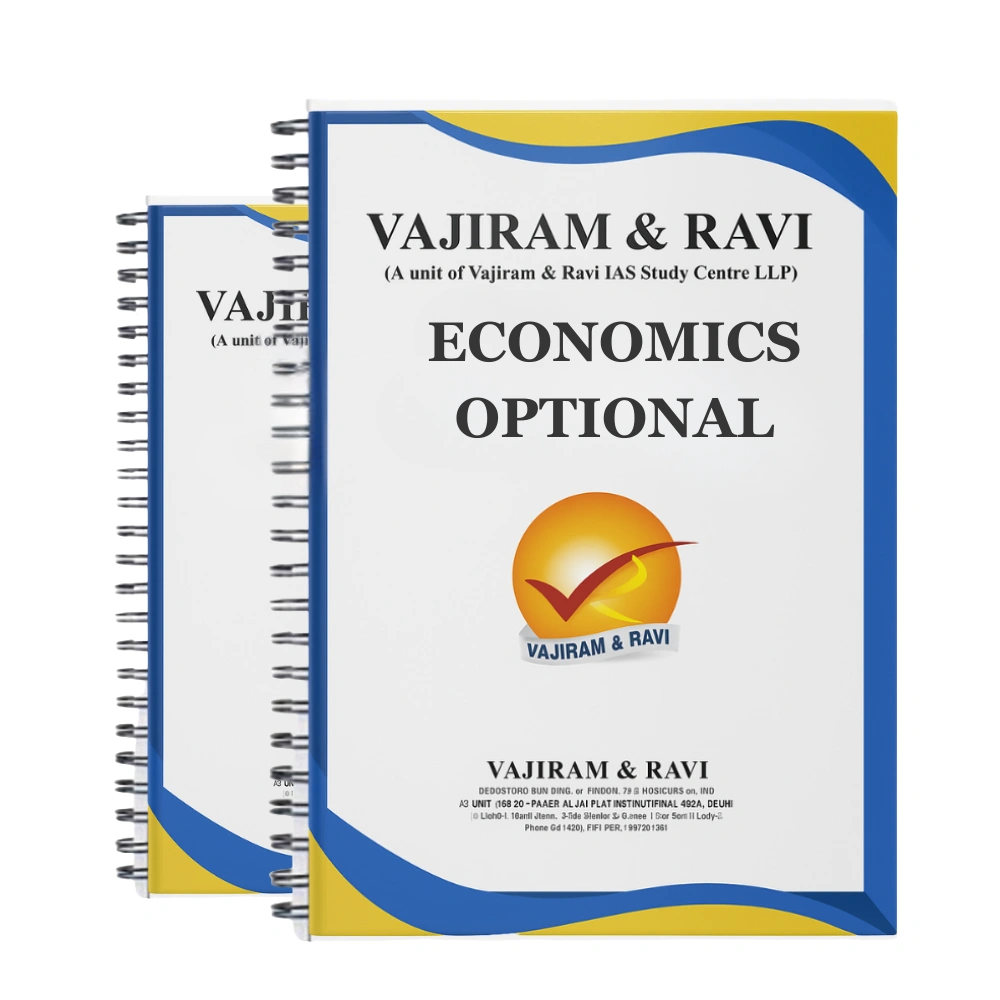
Because the Economic Survey, Union Budget and RBI Annual Report feed both ESI and General Awareness, building a strong economy foundation early pays off across phases. Structured, exam-ready economy notes such as the Vision IAS Economics Notes and the deeper Vajiram Economics Notes cover national income, growth, money & banking and reforms in the exact conceptual sequence ESI expects.
Subject-Wise / Topic-Wise Weightage Table
Most syllabus pages list topics but skip the marks split. Here is a consolidated rbi grade b syllabus subject wise weightage view combining question count and marks so you can prioritise. Read the “Share of Phase” column as how much of that phase’s total marks each area controls.
| Phase | Area | Weight (Marks) | Share of Phase | Priority |
|---|---|---|---|---|
| Phase 1 | General Awareness | 80 | 40% | Very High |
| Phase 1 | Reasoning | 60 | 30% | High |
| Phase 1 | Quantitative Aptitude | 30 | 15% | Medium |
| Phase 1 | English | 30 | 15% | Medium |
| Phase 2 | ESI | 100 | 33% | Very High |
| Phase 2 | English Writing | 100 | 33% | High |
| Phase 2 | Finance & Management | 100 | 33% | Very High |
Marking Scheme & Negative Marking Rules
This is the section most pages skip. Getting the marking scheme wrong quietly kills scores, so read it carefully.
- Phase 1 (Prelims): Each correct answer earns 1 mark. There is negative marking of ¼ (0.25) mark for every wrong answer in the objective sections. Unattempted questions carry no penalty.
- Phase 2 objective portions (ESI & FM): The same ¼ negative marking applies to the multiple-choice part of these papers.
- Descriptive answers (ESI, FM, English): No negative marking — these are evaluated on content, structure and expression.
- Interview: No negative marking; scored out of 75.
Practical takeaway: in Phase 1, blind guessing hurts. If you can eliminate two of five options, an educated guess is statistically worth it; a pure random guess on all is not. Aim for high accuracy in General Awareness, where you either know the answer or you don’t.
Is the Syllabus Same for General, DEPR and DSIM Streams?
No — Phase 1 is broadly similar, but Phase 2 differs sharply by stream. The General (DR) stream is what most aspirants target. DEPR (Department of Economic and Policy Research) and DSIM (Department of Statistics and Information Management) are specialist streams requiring a postgraduate degree in Economics or Statistics respectively.
| Stream | Phase 1 | Phase 2 Focus | Eligibility |
|---|---|---|---|
| General (DR) | GA, Reasoning, Quant, English | ESI, English Writing, Finance & Management | Graduate (60%) |
| DEPR | Objective Economics paper | Descriptive Economics + English | Master’s in Economics |
| DSIM | Objective Statistics paper | Descriptive Statistics + English | Master’s in Statistics / related |
So if a friend preparing for DEPR shares their booklist, do not follow it blindly — the economics depth expected there is postgraduate-level and beyond the General stream requirement.
RBI Grade B Interview (Phase 3) Syllabus
There is no fixed syllabus for the 75-mark interview. The Board tests your awareness of the economy, banking sector, monetary policy, recent RBI decisions, and your background as declared in the application (DAF). Common areas: your graduation subject, work experience, your home state’s economy, current economic debates (inflation, repo rate, fiscal deficit, growth), and situational/HR questions. Reading a quality current affairs magazine and forming your own opinions on 8–10 major economic issues is the best interview preparation, because the panel probes depth of view far more than rote facts.
Best Study Material & Source Mapping per Subject
The syllabus is only useful when mapped to sources. Here is what to read for each area rather than drowning in random PDFs.
| Subject | Best Sources |
|---|---|
| General Awareness | Monthly current affairs magazine, RBI press releases, budget & Economic Survey highlights |
| ESI | Economic Survey, RBI Annual Report, structured economy notes, NCERT macroeconomics base |
| Finance & Management | RBI/SEBI websites, financial market basics, management theory notes |
| English Writing | Editorial reading, essay & precis practice sets |
| Reasoning & Quant | Bank PO-level practice books and daily timed drills |
For the economy backbone that runs through GA, ESI and the interview, the Vajiram Economics Notes give conceptual depth, while a running Vision IAS Current Affairs Magazine (January 2026) keeps your factual layer current. For the English Writing Skills paper, structured Vajiram Essay Notes help you build the intro-body-conclusion discipline that examiners reward. If you also want a fresh, exam-oriented feed of monthly events, the December 2025 current affairs edition pairs well for back-coverage.
Common Topics Across Phase 1 & Phase 2 (Avoid Double-Studying)
A smart aspirant studies overlapping topics once and uses them everywhere. The economy portion of Phase 1 General Awareness feeds directly into Phase 2 ESI and the interview. Here is the overlap map.
| Topic | Phase 1 GA | Phase 2 ESI | Phase 2 FM | Interview |
|---|---|---|---|---|
| Monetary policy & RBI functions | Yes | Yes | Yes | Yes |
| Union Budget & Economic Survey | Yes | Yes | — | Yes |
| Financial markets & regulators | Yes | — | Yes | Yes |
| Social sector schemes | Yes | Yes | — | Yes |
| Banking & financial inclusion | Yes | Yes | Yes | Yes |
Study the economy and banking core deeply once, and you cover roughly 40% of GA, most of ESI, part of FM, and a large slice of the interview.
How Much Time Does It Take to Cover the Syllabus?
A working professional typically needs 5–7 months of consistent 3–4 hour daily study; a full-time aspirant can be ready in 4–5 months. The ESI and FM papers need the most calendar time because they are content-heavy and reward revision. The table below shows a realistic six-month build for someone starting from scratch.
| Phase | Focus | Suggested Duration |
|---|---|---|
| Months 1–2 | ESI + FM concept building; GA static base; daily current affairs | 8 weeks |
| Months 3–4 | Reasoning + Quant + English practice; ESI/FM revision round 1 | 8 weeks |
| Month 5 | Phase 1 mock tests; descriptive writing practice | 4 weeks |
| Month 6 | Phase 2 full-length mocks; revision; interview prep | 4 weeks |
RBI Grade B vs Other Prestigious Exams
Aspirants often weigh RBI Grade B against UPSC CSE, NABARD Grade A, SEBI Grade A and PFRDA. Here is how the syllabus scope and difficulty compare.
| Exam | Syllabus Scope | Descriptive Component | Relative Difficulty |
|---|---|---|---|
| RBI Grade B | Economy, finance, management, GA | ESI, FM, English (Phase 2) | High |
| UPSC CSE | Very broad — GS, optional, essay, ethics | Extensive (Mains) | Very High |
| NABARD Grade A | Economy + agriculture & rural development (ARD) | Moderate descriptive | High |
| SEBI Grade A | Securities market, finance, management, commerce | Descriptive Phase 2 | High |
| PFRDA | Finance, pension sector, economy, management | Descriptive Phase 2 | Moderate–High |
The good news: RBI Grade B, SEBI, NABARD and PFRDA share huge overlap in economy, finance and current affairs — one strong economy foundation lets you attempt all four in the same cycle.
RBI Grade B Syllabus PDF Download: Step-by-Step
You can get the official rbi grade b syllabus pdf download from the syllabus section inside the official notification. Here is how to download it:
- Go to the official RBI website (rbi.org.in) and open the “Opportunities@RBI” / Careers section.
- Click the current “Recruitment of Officers in Grade ‘B’ (DR)” advertisement.
- Open the detailed notification PDF — the syllabus for Phase 1 and Phase 2 is listed in the annexure.
- Use your browser’s download/save option to keep the PDF offline.
For a clean, exam-ready consolidated syllabus you can print and stick on your wall, this article’s tables above serve as a mobile-friendly one-glance version. If you prefer a broader printed syllabus reference for UPSC-linked economy prep alongside, the GS Score Latest Syllabus Booklet is a handy add-on.
Does the RBI Grade B Syllabus Change Every Year?
The core structure — three phases, the four Phase 1 subjects, and the ESI/English/FM Phase 2 papers — has been stable for years. What changes annually is the current affairs window, the government schemes and budget/economic-survey data that feed GA and ESI, and occasionally the number of vacancies or minor pattern tweaks. So the topic list stays constant while the factual content refreshes each cycle. Always cross-check the latest official notification for any change in dates, cut-offs or pattern.
Common Mistakes to Avoid
- Over-preparing Phase 1 quant/reasoning while neglecting ESI and FM — remember Phase 1 is only qualifying.
- Ignoring the English descriptive paper until the last week — it is 100 marks and easy to lose.
- Reading current affairs passively without linking events to ESI/FM concepts.
- Guessing randomly in Phase 1 and bleeding marks to the ¼ negative penalty.
- Treating the interview as an afterthought — 75 marks can change your rank dramatically.
Frequently Asked Questions
What is the syllabus for RBI Grade B?
The RBI Grade B syllabus has three phases. Phase 1 (Prelims) covers General Awareness, Reasoning, Quantitative Aptitude and English. Phase 2 (Mains) covers Economic & Social Issues, English Writing Skills and Finance & Management. Phase 3 is a 75-mark interview with no fixed syllabus.
Are RBI Grade B Phase 1 and Phase 2 syllabus different?
Yes. Phase 1 is objective and aptitude-based (GA, reasoning, quant, English), while Phase 2 is subject-specialised and partly descriptive, testing ESI, English writing and Finance & Management. Phase 1 is qualifying only; Phase 2 marks count towards final selection.
Which subject in RBI Grade B Phase 1 has the highest weightage?
General Awareness has the highest weightage in Phase 1, carrying about 80 out of 200 marks (40%). It is heavily focused on the economy, banking, RBI functions and recent current affairs, making it the most decisive section for clearing Prelims.
Is there negative marking in RBI Grade B Phase 1 and Phase 2?
Yes. There is ¼ (0.25) mark negative marking for every wrong answer in the objective sections of Phase 1 and in the objective portions of the ESI and FM papers in Phase 2. Descriptive answers and the interview have no negative marking.
Is the RBI Grade B syllabus the same for General, DEPR and DSIM streams?
No. Phase 1 is broadly similar, but Phase 2 differs. The General (DR) stream has ESI, English and FM papers, while DEPR requires postgraduate-level Economics papers and DSIM requires Statistics papers. DEPR and DSIM also need a relevant master’s degree.
What is the RBI Grade B interview syllabus?
The 75-mark interview has no fixed syllabus. The Board assesses your understanding of the economy, banking, monetary policy and recent RBI decisions, plus your application (DAF) details — graduation subject, work experience and home-state economy — along with current economic debates and HR-style questions.
How much time does it take to cover the RBI Grade B syllabus?
Most aspirants need 5–7 months of consistent study; full-time candidates can prepare in 4–5 months. ESI and Finance & Management need the most time, so start economy and finance concepts early and layer daily current affairs on top throughout.
Does the RBI Grade B syllabus change every year?
The structure and topic list stay largely the same year to year — three phases with fixed Phase 1 and Phase 2 subjects. What refreshes each cycle is the current affairs, schemes and budget/Economic Survey data feeding GA and ESI, plus occasional pattern or vacancy tweaks. Always verify against the latest official RBI notification.
Recommended Study Material

Continue Reading
NDA Syllabus 2026: Subject-Wise Maths & GAT + PDF
The NDA syllabus is set by UPSC and is divided into two papers written on the same day:…
SSC CGL Exam Pattern 2026: Tier 1 & 2, Marks, Timing
The SSC CGL exam pattern is a two-tier, fully computer-based (CBT) selection process: Tier 1 is a 100-question,…
Agniveer Syllabus 2025: Post-Wise Topics + Pattern + PDF
The Agniveer syllabus covers Class 10–12 (NCERT-level) topics across General Knowledge, General Science, Mathematics, Logical Reasoning and English,…