Agniveer Syllabus 2025: Post-Wise Topics + Pattern + PDF
Complete Agniveer syllabus 2025 for GD, Technical, Clerk, Air Force & Navy — exam pattern, marking scheme, subject-wise topics + free PDF download in Hindi.

The Agniveer syllabus covers Class 10–12 (NCERT-level) topics across General Knowledge, General Science, Mathematics, Logical Reasoning and English, with post-specific subjects added for Technical (Physics & Chemistry) and Clerk/Store Keeper Technical (General Knowledge + accountancy/computer awareness). The Indian Army written exam is a Computer-Based Common Entrance Exam (CEE) of 50–100 questions, followed by the Physical Fitness Test (PFT), Physical Measurement and Medical Examination. This guide breaks down every stream — Army GD, Technical, Clerk, Air Force (Agniveervayu) and Navy (SSR/MR) — with post-wise question distribution, marking scheme, PFT standards and a free subject-wise PDF you can download in English and Hindi.
Agniveer Syllabus 2025: Complete Overview
The indian army agniveer syllabus 2025 is built around the school curriculum, so an aspirant who has cleared Class 10 or 12 already knows most of the ground. The written stage — officially the Common Entrance Exam (CEE) — is conducted online (Computer-Based Test) at designated centres. The number of questions, marks and subject weightage change with the post you apply for, which is why there is no single “one-size-fits-all” paper.
Across the three armed forces, Agniveer recruitment has four broad written-exam families:
- Indian Army Agniveer — General Duty (GD), Technical, Clerk/Store Keeper Technical (SKT), Tradesman and allied trades.
- Indian Air Force Agniveervayu — Science subjects and Other-than-Science subjects.
- Indian Navy Agniveer — SSR (Senior Secondary Recruit) and MR (Matric Recruit).
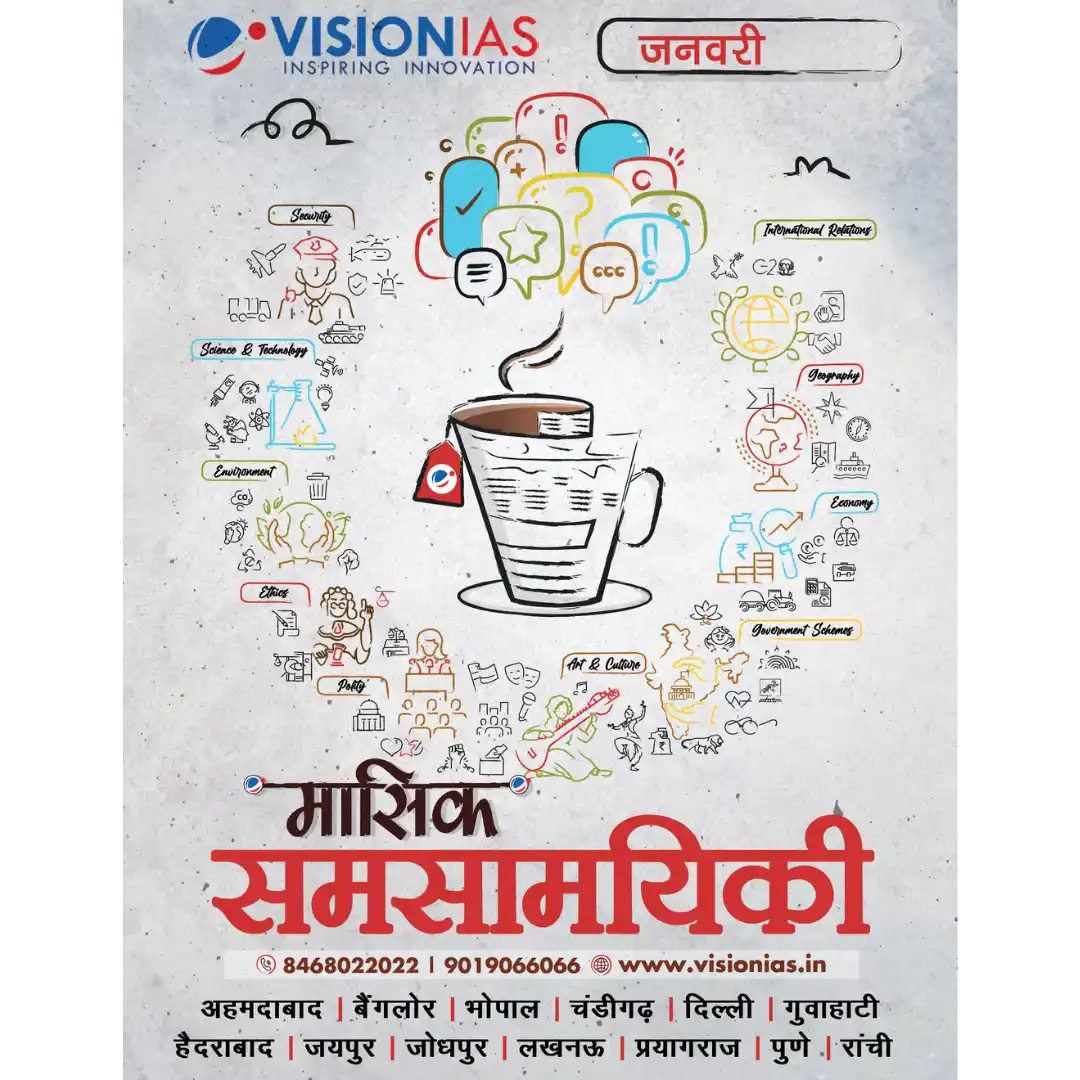
The whole exam ecosystem tests NCERT-standard understanding plus current affairs, so pairing your school books with an updated monthly current-affairs resource such as the Vision IAS Current Affairs Magazine (January 2026, English) keeps the General Knowledge section under control.
Agniveer Selection Process: Stage by Stage
Whichever stream you pick, selection follows a fixed sequence. Clearing one stage qualifies you for the next; failing any single stage ends the attempt.
| Stage | What Happens | Nature |
|---|---|---|
| Written Exam (CEE) | Online Computer-Based Test on the post-wise syllabus | Qualifying + merit |
| Physical Fitness Test (PFT) | 1.6 km run, beam (pull-ups), 9-feet ditch, zig-zag balance | Grouped scoring |
| Physical Measurement | Height, chest and weight verification | Pass/fail |
| Medical Examination | Full medical fitness, vision, dental, hearing | Pass/fail |
| Merit List | Final list based on CEE marks (and PFT where applicable) | Selection |
For the Indian Army, the CEE now comes first (online) and only shortlisted candidates are called for the PFT and medical at the Recruitment Rally — a reversal of the older “rally-first” model. For the Air Force and Navy, the online written test is always the first filter.
Agniveer GD Syllabus & Exam Pattern
The agniveer gd syllabus (General Duty) is the most-applied stream. The paper has 50 questions for 100 marks with a 60-minute duration, and it is the lightest in terms of marks per question.
| Subject | Questions | Marks |
|---|---|---|
| General Knowledge | 15 | 30 |
| General Science | 15 | 30 |
| Mathematics | 15 | 30 |
| Logical Reasoning | 5 | 10 |
| Total | 50 | 100 |
Marking scheme: +2 marks for every correct answer and −0.5 for every wrong answer (negative marking). The minimum qualifying (passing) mark for Agniveer GD is typically 35 marks, subject to the notification.
Agniveer GD subject-wise topics
- General Knowledge / Awareness: Indian history, freedom struggle, geography, Indian polity and Constitution, sports, awards, books & authors, national & international current affairs, defence and important days.
- General Science: Class 10 Physics, Chemistry and Biology basics — human body, food & nutrition, diseases, matter, force, motion, common science in daily life.
- Mathematics: Number system, HCF & LCM, decimals & fractions, percentage, ratio & proportion, average, profit & loss, time-work-distance, simple & compound interest, mensuration, algebra, trigonometry basics.
- Logical Reasoning: Coding-decoding, analogy, series, blood relations, direction sense, odd-one-out, mirror images and simple puzzles.
Agniveer Technical Syllabus & Exam Pattern
The agniveer technical syllabus is heavier on science. The paper carries 50 questions for 200 marks in 60 minutes, so each subject is weighted higher and Physics & Chemistry replace much of the General Knowledge load.
| Subject | Questions | Marks |
|---|---|---|
| General Science (General) | 10 | 40 |
| Mathematics | 15 | 60 |
| Physics | 15 | 60 |
| Chemistry | 10 | 40 |
| Total | 50 | 200 |
Marking scheme: +4 marks for a correct answer and −1 for a wrong answer. Candidates must clear the overall qualifying mark (commonly around 80 marks) as per the notification.
Agniveer Technical: Physics & Chemistry topics (Class 11–12)
- Physics: Units & measurement, kinematics, laws of motion, work-energy-power, gravitation, properties of matter, thermodynamics, oscillations & waves, electrostatics, current electricity, magnetism, optics, and modern physics (atoms & nuclei, semiconductors).
- Chemistry: Basic concepts, atomic structure, chemical bonding, states of matter, periodic table, redox reactions, hydrogen, s-block & p-block, organic chemistry basics, hydrocarbons and environmental chemistry.
- Mathematics: Sets, relations & functions, algebra, trigonometry, coordinate geometry, calculus (differentiation & integration basics), statistics and probability.
Because Technical maps almost one-to-one with the Class 11–12 NCERT Physics and Chemistry texts, keep those books as your primary source and use targeted module sets — the same discipline JEE/NEET aspirants use with resources like eSaral IIT-JEE modules — to drill numerical practice.
Agniveer Clerk / Store Keeper Technical Syllabus
The agniveer clerk syllabus (Clerk/SKT) is unique because the 50-question, 200-mark paper is split into two parts, and you must pass each part separately — not just the total.
| Part | Subject | Questions | Marks |
|---|---|---|---|
| Part 1 | General Knowledge | 5 | 20 |
| Part 1 | General Science | 5 | 20 |
| Part 1 | Mathematics | 10 | 40 |
| Part 1 | Computer Science | 5 | 20 |
| Part 2 | General English | 25 | 100 |
| Total | 50 | 200 |
Marking scheme: +4 for correct, −1 for incorrect. A candidate must score at least 32 marks in each part and meet the aggregate cut-off. English carries the highest weight (100 of 200 marks), so grammar and comprehension decide most Clerk selections.
Agniveer Clerk English & Computer topics
- General English: Comprehension passage, tenses, articles, prepositions, sentence structure, subject-verb agreement, verbs, adverbs, direct/indirect speech, active/passive voice, punctuation, synonyms-antonyms, one-word substitution, idioms & phrases, error spotting.
- Computer: Basics of computers, input/output devices, operating system fundamentals, MS Office, internet & email, and generation of computers.
Air Force Agniveer (Agniveervayu) Syllabus
The air force agniveer syllabus depends on the group you are eligible for. Agniveervayu has three question papers combined into a single online test as per your qualification.
| Eligibility Group | Papers | Questions | Duration |
|---|---|---|---|
| Science subjects (10+2 PCM) | English, Physics, Mathematics | 70 | 60 min |
| Other than Science | English, Reasoning & General Awareness (RAGA) | 50 | 45 min |
| Science + Other than Science | English, Physics, Maths, RAGA | 100 | 85 min |
Marking scheme: +1 for each correct answer and −0.25 for each wrong answer. The Air Force also prescribes a minimum pass percentage in each subject as per the advertisement.
Agniveervayu subject topics
- English (10+2 level): Comprehension, grammar, vocabulary, narration, voice, and error detection.
- Physics & Mathematics: Full CBSE Class 11–12 syllabus — mechanics, electricity, optics, modern physics; algebra, calculus, trigonometry, coordinate geometry, probability.
- RAGA (Reasoning & General Awareness): Verbal & non-verbal reasoning, numerical ability, general science, current events, history, geography, civics, and basic computers.
Navy Agniveer (SSR & MR) Syllabus
Army-focused pages usually ignore the Navy, but many aspirants apply to all three forces. The Indian Navy Agniveer written test is a bilingual online exam.
| Post | Sections | Questions | Marks |
|---|---|---|---|
| Agniveer SSR | English, Science, Maths, GK | 50 | 100 |
| Agniveer MR | Science & Maths, GK | 50 | 100 |
Marking scheme: Typically +2 for correct and −0.5 for incorrect answers, with a stream-wise qualifying mark. SSR (12th-pass) tests Physics, Chemistry and Maths at 10+2 level, while MR (10th-pass) sticks to Class 10 Science and Mathematics plus General Knowledge.
Agniveer Streams Compared: One Table for All Four
Here is the single comparison the top pages miss — every major Agniveer written exam, side by side, so you can pick the right preparation strategy.
| Stream / Post | Questions | Total Marks | Marking | Core Subjects |
|---|---|---|---|---|
| Army GD | 50 | 100 | +2 / −0.5 | GK, Science, Maths, Reasoning |
| Army Technical | 50 | 200 | +4 / −1 | Physics, Chemistry, Maths, Science |
| Army Clerk/SKT | 50 | 200 | +4 / −1 | English, Maths, GK, Science, Computer |
| Air Force (Science) | 70 | — | +1 / −0.25 | English, Physics, Maths |
| Navy SSR | 50 | 100 | +2 / −0.5 | English, Physics, Chemistry, Maths, GK |
| Navy MR | 50 | 100 | +2 / −0.5 | Science, Maths, GK |
The key takeaway: if you fear negative marking, GD and Navy are the most forgiving (−0.5). Technical and Clerk punish guesses hard (−1) but reward accuracy (+4), so answer only when confident.
Agniveer Physical Fitness Test (PFT) & Measurement Standards
Clearing the written exam is only half the job. The PFT converts fitness into merit groups, and physical measurement is a straight pass/fail gate. These standards are the most-searched “alongside the syllabus” details.
| PFT Event | Group I (Top) | Group II |
|---|---|---|
| 1.6 km Run | Up to 5 min 30 sec | 5:31 – 5:45 min |
| Beam (Pull-ups) | 10 pull-ups | 6–9 pull-ups |
| 9-feet Ditch | Must clear | Must clear |
| Zig-zag Balance | Must clear | Must clear |
Running earns the most marks; pull-ups are grouped (10 = 40 marks, scaling down to 6 = 25 marks). Ditch and balance are qualifying. Physical measurement standards (general/plains category) are outlined below and vary by region and category.
| Measurement | Agniveer GD | Technical / Clerk |
|---|---|---|
| Height (min) | 170 cm | 162–170 cm (region-wise) |
| Chest (min + expansion) | 77 cm + 5 cm | 76–77 cm + 5 cm |
| Weight | Proportionate to height/age | Proportionate to height/age |
The Medical Examination checks vision (6/6 without glasses for most trades), dental fitness (14 dental points), hearing, and freedom from disqualifying conditions such as knock knees, flat feet, varicose veins and colour blindness.
Agniveer Syllabus PDF Download (English & Hindi)
Competer has structured the complete post-wise syllabus into a clean, printable format so you can study offline. The agniveer syllabus pdf download in hindi mirrors the English version topic-for-topic, which helps Hindi-medium aspirants prepare without translation gaps. Each PDF is organised as:
- Stream-wise exam pattern & marking scheme (single-page cheat sheet).
- Subject-wise topic checklist with a tick-box for revision tracking.
- NCERT chapter mapping so each topic points to a study source.
- PFT and medical standards summary for quick reference.
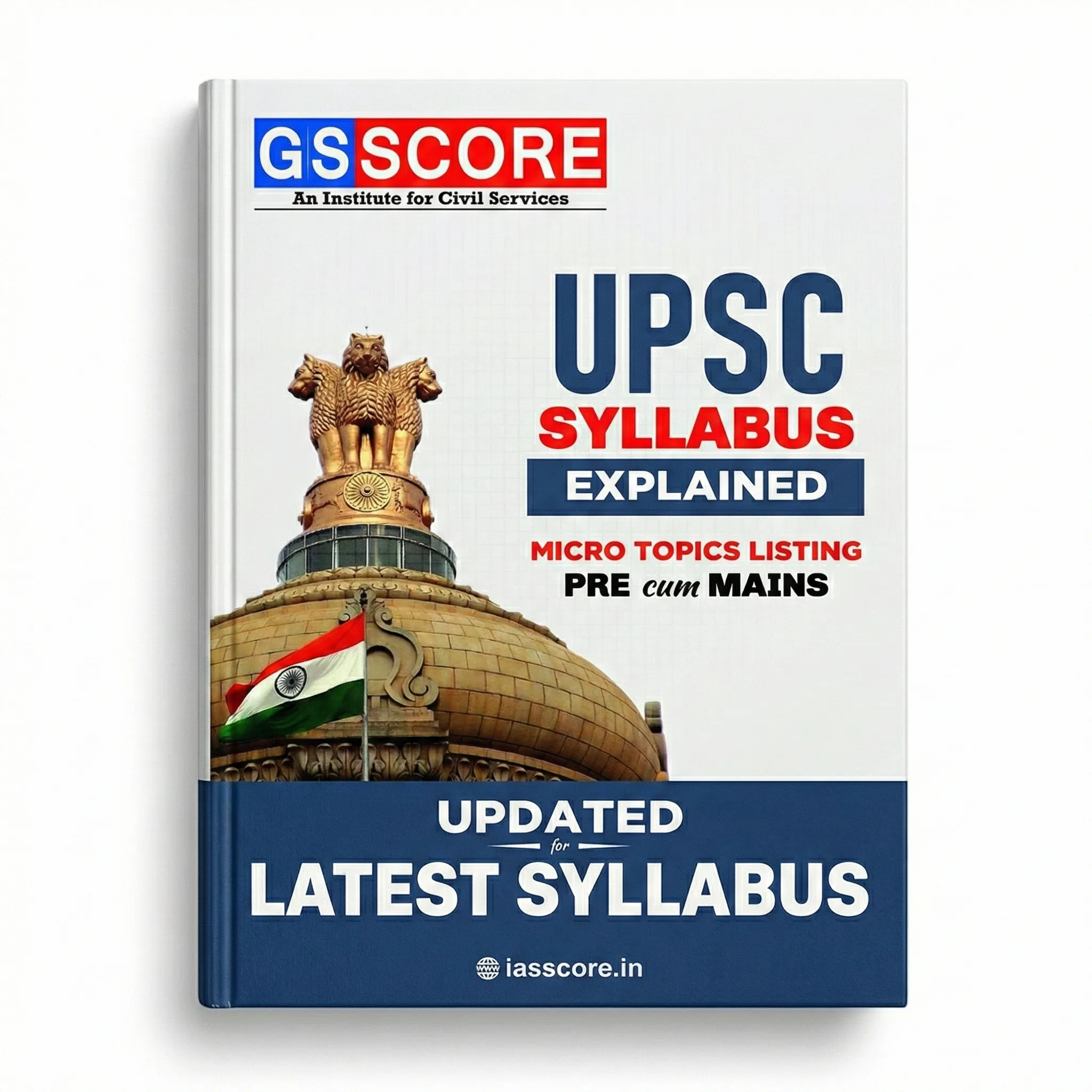
For the General Knowledge and current-affairs portion, a monthly magazine keeps you current on defence, awards, sports and national events — the exact areas GK questions are drawn from. Hindi-medium candidates can use the Vision IAS Current Affairs Magazine (January 2026, Hindi), and if you want the official syllabus formatting habit, the GS Score Latest Syllabus Booklet shows how to read a syllabus like an examiner.
NCERT-Mapped Chapter Breakdown & Best Books
The single biggest edge is knowing which book covers which topic. Here is the mapping most pages leave out.
| Subject | NCERT / Source Class | Recommended Books |
|---|---|---|
| General Science | NCERT Class 9–10 Science | Lucent’s General Science |
| Mathematics | NCERT Class 8–10 (SSR/MR up to 11–12) | R.S. Aggarwal Quantitative Aptitude |
| Physics (Technical/AF) | NCERT Class 11–12 Physics | NCERT + Concepts of Physics (H.C. Verma) |
| Chemistry (Technical) | NCERT Class 11–12 Chemistry | NCERT Chemistry |
| General Knowledge | NCERT History/Geography/Civics 6–10 | Lucent’s GK + monthly current affairs |
| Reasoning | Aptitude-based | R.S. Aggarwal Verbal & Non-Verbal Reasoning |
| English (Clerk/AF/Navy) | 10+2 grammar | Wren & Martin High School English Grammar |
Yes — the Agniveer exam is firmly based on NCERT and 10th/12th-standard material. You do not need coaching-level advanced content; you need mastery of the school curriculum plus disciplined revision and mock tests.
Agniveer Study Plan: Subject-Wise Strategy & Timetable
A syllabus without a plan is just a list. Use this 8-week timetable, scaled to your stream, and adjust as your mock scores rise.
| Weeks | Focus | Daily Split |
|---|---|---|
| Week 1–2 | Maths + Reasoning fundamentals | 2 hrs Maths, 1 hr Reasoning, 1 hr GS |
| Week 3–4 | General Science + GK base | 2 hrs Science, 1.5 hrs GK, 1 hr revision |
| Week 5–6 | Stream subjects (Physics/English/Computer) | 2.5 hrs core subject, 1 hr current affairs |
| Week 7 | Full-length mock tests | 1 mock/day + error analysis |
| Week 8 | Revision + weak-area drilling | Formula sheets, PYQs, timed practice |
How to prepare each subject
- Mathematics: Memorise formulas, then solve 40–50 questions daily. Speed matters — target 40 seconds per question.
- General Science: Read NCERT once, then revise through one-liners and previous-year questions.
- General Knowledge: Split into static (history, geography, polity) and dynamic (current affairs of the last 6–12 months). Revise a monthly magazine consistently.
- Reasoning: Practice pattern-based question types until they become reflex; do not over-read.
- English (Clerk/AF/Navy): One grammar rule + one comprehension passage daily; maintain an error log.
Common Mistakes Agniveer Aspirants Make
- Ignoring negative marking: Blind guessing in Technical/Clerk (−1) can wipe out gains from correct answers.
- Studying the wrong pattern: Preparing GD-style GK for a Technical paper wastes weeks — always match the post.
- Skipping the PFT: A high CEE score is useless if you cannot clear the 1.6 km run — train physically in parallel.
- Outdated current affairs: GK questions target the recent 6–12 months; last year’s magazine is not enough.
- No mock tests: Without timed online practice, the CBT interface itself becomes an obstacle on exam day.
Because the CEE is a Computer-Based Test, practising on a screen — not just paper — is essential. Aspirants preparing for competitive online tests often model their revision on structured test-series products; adopting that same test-then-analyse loop is what separates selected candidates from the rest.
Frequently Asked Questions
What is the syllabus of Agniveer?
The Agniveer syllabus covers Class 10–12 NCERT-level topics — General Knowledge, General Science, Mathematics, Logical Reasoning and English — with post-specific additions: Physics and Chemistry for Technical, Computer and heavy English for Clerk/SKT, and Physics/Maths for Air Force and Navy science streams. The written Common Entrance Exam is an online Computer-Based Test whose weightage changes by post.
What subjects are there in the Agniveer exam?
The core subjects are General Knowledge/Awareness, General Science, Mathematics and Logical Reasoning. Depending on the post, additional subjects include Physics, Chemistry, General English and Computer Science. Air Force Agniveervayu adds a Reasoning & General Awareness (RAGA) section, while Navy SSR/MR focuses on Science, Maths, English and GK.
Is there negative marking in the Agniveer exam?
Yes. Agniveer GD and Navy SSR/MR deduct 0.5 marks per wrong answer (+2 for correct). Army Technical and Clerk deduct 1 mark per wrong answer (+4 for correct). Air Force Agniveervayu deducts 0.25 marks (+1 for correct). Answer only when reasonably confident, especially in Technical and Clerk.
How many questions are asked in the Agniveer GD exam?
The Agniveer GD written exam has 50 questions for 100 marks, to be completed in 60 minutes. The split is General Knowledge 15, General Science 15, Mathematics 15 and Logical Reasoning 5. The usual passing mark is around 35, subject to the official notification.
What is the difference between the Agniveer GD, Technical and Clerk syllabus?
GD is a 100-mark paper focused on GK, Science, Maths and Reasoning with +2/−0.5 marking. Technical is a 200-mark paper heavy on Physics, Chemistry and Maths with +4/−1 marking. Clerk/SKT is a 200-mark two-part paper where English carries 100 marks, computer awareness is added, and you must pass each part separately with +4/−1 marking.
Which books are best for Agniveer exam preparation?
Use NCERT Class 9–12 as your base, then add Lucent’s General Knowledge and General Science, R.S. Aggarwal for Quantitative Aptitude and Reasoning, and Wren & Martin for English. For the Technical stream, H.C. Verma and NCERT Physics/Chemistry work best, supported by an updated monthly current-affairs magazine and regular online mock tests.
Recommended Study Material

Continue Reading
Super TET Syllabus 2025: Subject-Wise Marks + PDF
The Super TET syllabus is a single 150-mark objective paper covering 10 subject heads — Language (40 marks),…
KVS Syllabus 2026: PRT, TGT, PGT Pattern + Free PDF
The KVS syllabus for 2026 is organised around a two-tier recruitment exam: a common Tier 1 (100 objective…

Best Study Material for UPSC 2026: Subject-Wise Buying Guide
The best study material for UPSC is a four-layer stack: NCERT textbooks (Class 6–12), one standard reference book…