SSC CHSL Syllabus 2026: Tier 1 & 2 Topics + PDF Download
Complete SSC CHSL syllabus 2026 with Tier 1 & Tier 2 subject-wise topics, exam pattern, marking scheme, weightage, PYQ trends, study plan and PDF download steps.

The SSC CHSL syllabus has two computer-based tiers plus a qualifying skill/typing test. Tier 1 tests General Intelligence & Reasoning, General Awareness, Quantitative Aptitude and English Language (100 questions, 200 marks, 60 minutes, 0.50 negative marking). Tier 2 covers Mathematical Abilities, Reasoning & General Intelligence, English Language & Comprehension, General Awareness, a Computer Knowledge module and a Skill/Typing Test (around 135 questions, 405 marks, with 1 mark deducted per wrong answer in the MCQ modules). Clear both tiers and the qualifying typing/DEST test and you are selected for posts like LDC, JSA, DEO, PA and SA.
This guide gives you the complete, up-to-date ssc chsl syllabus 2026 — the full subject-wise topic breakdown for both tiers, the exact exam pattern and marking scheme, a printable high-yield weightage table, a previous-year (PYQ) most-asked-topics analysis, a ready study plan, book recommendations mapped to each subject, and clear steps to download the syllabus PDF. Everything is organised so you can plan smart preparation, not just read a topic dump.
How this is compiled: the topics and pattern below follow the scheme of examination published in the official SSC CHSL notification and are cross-checked against recent question papers. Because SSC can make minor tweaks between cycles, always confirm the final details against the official notification PDF (steps at the end of this guide).
What Is the SSC CHSL Syllabus? Quick Answer
In one line: the SSC CHSL syllabus is a two-tier objective test built on four core subjects, followed by a qualifying typing or data-entry test. Here is the fastest possible overview before the detailed breakdown:
- Number of subjects: four core subjects — Reasoning, General Awareness, Quantitative Aptitude and English — carried through both tiers, with a Computer Knowledge module added in Tier 2.
- Tier 1: 100 questions, 200 marks, 60 minutes, 0.50 negative marking; only screens candidates for Tier 2.
- Tier 2: deeper versions of the same subjects plus statistics/probability, a Computer Knowledge module and a Skill/Typing Test; 1-mark negative marking; decides final merit.
- Level: matriculation (10th) to 10+2 standard; eligibility is Class 12 (10+2) pass.
SSC CHSL 2026 Exam Highlights at a Glance
The Combined Higher Secondary Level (CHSL) Examination is conducted by the Staff Selection Commission (SSC) to recruit candidates for Group C posts in various ministries, departments and offices of the Government of India. It is one of the most popular exams for candidates who have passed Class 12 (10+2). Here is a quick snapshot before we go section by section.
| Feature | Details |
|---|---|
| Exam Name | SSC CHSL (10+2) Examination 2026 |
| Conducting Body | Staff Selection Commission (SSC) |
| Posts Offered | Lower Division Clerk (LDC), Junior Secretariat Assistant (JSA), Data Entry Operator (DEO), Postal Assistant (PA), Sorting Assistant (SA) |
| Selection Stages | Tier 1 (Objective) → Tier 2 (Objective + Skill/Typing) → Document Verification |
| Tier 1 Marks | 200 marks, 100 questions, 60 minutes |
| Tier 2 Marks | Approx. 405 marks across three sections/modules |
| Mode | Computer-Based Test (CBT), online |
| Negative Marking | 0.50 in Tier 1; 1 mark in Tier 2 (MCQ modules) |
| Eligibility | Class 12 (10+2) pass from a recognised board |
| Language | English & Hindi (except English section) |
SSC CHSL Selection Process: Stages Flow
Before diving into topics, understand how the stages connect, because your strategy for each is different. The ssc chsl exam pattern is a two-tier funnel followed by a qualifying skill test.
- Tier 1: Objective multiple-choice screening test. Purely qualifying-cum-ranking for shortlisting to Tier 2.
- Tier 2: The decisive stage. It has objective sections plus a Skill Test / Typing Test module. Marks here largely decide your final merit.
- Skill Test / Typing Test: Qualifying in nature (pass/fail). DEO applicants take a Data Entry Speed Test (DEST); LDC/JSA/PA/SA applicants take a Typing Test.
- Document Verification: Final eligibility and category checks before appointment.
Because Tier 1 only shortlists, do not over-invest in it — clear the cut-off comfortably and pour your remaining energy into Tier 2, which is where ranks are made.
SSC CHSL Tier 1 Exam Pattern
The ssc chsl tier 1 syllabus is delivered as a single 60-minute paper of 100 questions worth 200 marks, split equally across four sections of 25 questions (50 marks) each. There is a negative marking of 0.50 marks for every wrong answer, so accuracy matters as much as speed.
| Section | Questions | Marks | Duration |
|---|---|---|---|
| General Intelligence & Reasoning | 25 | 50 | 60 minutes (80 minutes for PwD scribe candidates) |
| General Awareness | 25 | 50 | |
| Quantitative Aptitude (Basic Arithmetic) | 25 | 50 | |
| English Language (Basic Knowledge) | 25 | 50 | |
| Total | 100 | 200 |
Key rules to remember: questions are of matriculation (10th) to 10+2 level; the paper is bilingual except the English section; and there is no sectional cut-off in Tier 1, only an overall qualifying standard. That means a weak section can be offset by a strong one — plan your balance accordingly.
SSC CHSL Tier 1 Syllabus: Subject-Wise Topics
Here is the complete subject-wise breakdown of the Tier 1 syllabus. These are the ssc chsl subject wise topics you must cover for the screening stage.
General Intelligence & Reasoning
This section is a scoring goldmine because it needs logic, not memory. Expect both verbal and non-verbal reasoning:
- Analogies (semantic, symbolic, number)
- Classification / odd-one-out
- Number, letter and mixed series
- Coding-decoding
- Blood relations and directions
- Syllogism and statement-conclusion
- Seating arrangement and puzzles
- Ranking, ordering and arrangement
- Non-verbal: mirror/water images, paper folding & cutting, embedded figures, figure completion
- Venn diagrams, matrix, word-building, symbolic operations
Quantitative Aptitude
The most feared but most predictable section. Master arithmetic first — it carries the largest share of questions:
- Arithmetic: number systems, simplification, LCM/HCF, ratio & proportion, percentage, average, profit & loss, discount, simple & compound interest, time & work, time-speed-distance, partnership, mixture & alligation
- Algebra: basic algebraic identities, linear equations, graphs of linear equations
- Geometry: triangles, congruence & similarity, circles, chords, tangents, angles
- Mensuration: areas and volumes of triangle, square, rectangle, circle, cube, cylinder, cone, sphere, hemisphere
- Trigonometry: ratios, identities, heights & distances, complementary angles
- Data Interpretation: bar graph, pie chart, histogram, frequency polygon, tables
General Awareness
A high-return section once you build the habit — questions are direct and static-heavy:
- History: ancient, medieval and modern India; freedom struggle
- Polity: Constitution, fundamental rights, Parliament, judiciary, governance
- Geography: India and world physical geography, rivers, climate, agriculture
- Economics: basic concepts, budget, banking, national income
- General Science: physics, chemistry, biology at 10th standard level
- Static GK: books & authors, awards, sports, important days, capitals, currencies
- Current Affairs: national and international events, schemes, appointments
English Language
Grammar and vocabulary carry this section — a little daily practice pays off quickly:
- Reading comprehension
- Spotting errors and sentence improvement
- Fill in the blanks
- Synonyms, antonyms and one-word substitution
- Idioms and phrases
- Spelling correction
- Active/passive voice and direct/indirect speech
- Cloze test and para jumbles
SSC CHSL Tier 2 Exam Pattern
Tier 2 is a single day of testing split into modular sessions. It is objective for most modules, with a compulsory qualifying skill/typing component. The ssc chsl tier 2 syllabus is deeper than Tier 1 and carries higher stakes, with 1 mark deducted for each wrong answer in the MCQ modules.
| Session | Section / Module | Questions | Marks | Time |
|---|---|---|---|---|
| Session 1 | Module 1: Mathematical Abilities | 30 | 90 | 1 hour |
| Module 2: Reasoning & General Intelligence | 30 | 90 | ||
| Module 3: English Language & Comprehension | 40 | 120 | ||
| Session 1 (contd.) | Module 4: General Awareness | 20 | 60 | — |
| Computer Knowledge Module (Section 2) | 15 | 45 | 15 min | |
| Session 2 | Skill Test / Typing Test (Section 3) | Qualifying | — | — |
In practice, Section 1 has two modules (Maths + Reasoning), Section 2 has two modules (English/GA and Computer Knowledge), and Section 3 is the Skill/Typing Test. The Computer Knowledge module and the Typing/DEST test are qualifying — you must clear them, but they do not add to your merit score in the same way as the main modules.
SSC CHSL Tier 2 Syllabus: Detailed Topics
Tier 2 revisits Tier 1 subjects at a higher difficulty and adds advanced maths and a computer proficiency module. Here is the full topic list.
Module 1 — Mathematical Abilities
- Number systems, fundamental arithmetic operations, decimals, fractions
- Percentage, ratio & proportion, square roots, averages
- Interest (simple & compound), profit & loss, discount, partnership
- Mixture & alligation, time & distance, time & work
- Algebra: basic identities, elementary surds, graphs of linear equations
- Geometry: triangles, quadrilaterals, regular polygons, circle, tangents, common tangents
- Mensuration: triangle, quadrilaterals, regular polygons, circle, prism, right circular cone/cylinder, sphere, hemisphere, rectangular parallelepiped
- Trigonometry: ratios, identities, complementary angles, heights & distances
- Statistics & probability: frequency polygon, bar diagram, pie chart, mean/median/mode, standard deviation, basic probability
Module 2 — Reasoning & General Intelligence
- Semantic, symbolic and figural analogy, series and classification
- Coding-decoding, word building, numerical operations
- Venn diagrams, drawing inferences, problem solving
- Space orientation, figural pattern folding and completion
- Critical thinking, emotional and social intelligence
- Embedded figures, punched hole/pattern folding, address matching
Module 3 — English Language & Comprehension
- Vocabulary, synonyms/antonyms, spellings, one-word substitution
- Grammar: articles, tenses, prepositions, subject-verb agreement
- Sentence structure, error detection, sentence improvement
- Idioms & phrases, active/passive voice, direct/indirect narration
- Comprehension passages, cloze test, para jumbles, fill in the blanks
Module 4 — General Awareness
- History, culture, geography, economic scene of India and neighbours
- Indian Polity and Constitution, general policy and scientific research
- Current events of national and international importance
- Static general knowledge and everyday science
Computer Knowledge Module (Computer Proficiency)
This qualifying module tests basic computer literacy — simple but do not ignore it:
- Computer basics: organisation of a computer, CPU, input/output devices, memory, hardware & software
- Software: Windows operating system basics, MS Office (Word, Excel, PowerPoint)
- Internet & networking: internet, WWW, web browsers, email, services
- Cyber security: viruses, hacking, firewalls, digital signature, networking basics
Tier 2 Skill Test & Typing Test (DEST) Criteria — Explained Simply
This is where most guides go thin, so here is the plain-English version. The skill/typing test is qualifying — you either meet the speed or you do not, and it does not add merit marks.
| Post / Test | Requirement | Simple Meaning |
|---|---|---|
| DEO (Data Entry Speed Test / DEST) | 8,000 key depressions per hour on a given passage | Roughly 15 words per minute of accurate data entry for about 15 minutes |
| LDC / JSA (Typing Test — English) | 35 words per minute (10,500 key depressions per hour) | Steady, accurate typing in English |
| LDC / JSA (Typing Test — Hindi) | 30 words per minute (9,000 key depressions per hour) | Steady, accurate typing in Hindi (Devanagari) |
| PA / SA (Typing Test) | 35 wpm English or 30 wpm Hindi | Same standard as LDC/JSA |
How to prepare: practise 15-20 minutes of typing daily on a free typing tutor. Focus on accuracy first, then speed — errors reduce your effective word count. For DEST, practise entering numeric and alphanumeric data from a passage into a Word document within the time limit.
SSC CHSL Subject-Wise Weightage & High-Yield Priority (Printable)
This is the table most top pages miss — a clean map of which topics give the most marks per hour of study, so you can prioritise smartly. Focus your first month on the “High” priority rows.
| Subject | High-Yield Topics | Approx. Questions (T1) | Study Priority |
|---|---|---|---|
| Quantitative Aptitude | Percentage, ratio, profit & loss, SI/CI, time-work-speed, DI | 12-15 | High |
| Reasoning | Series, analogy, coding-decoding, non-verbal, syllogism | 18-20 | High |
| English | Error spotting, fill-ups, vocabulary, cloze, comprehension | 15-18 | High |
| General Awareness | Static GK, polity, history, current affairs, science | 12-14 | Medium-High |
| Quant — Geometry/Trigonometry | Triangles, circles, ratios, heights & distances | 4-6 | Medium |
| Reasoning — Puzzles | Seating, arrangement, ranking | 3-5 | Medium |
Reading the table: reasoning and English are the highest return-per-hour in Tier 1 because they are learnable in weeks; General Awareness has a long tail (huge syllabus, fewer marks) so cap your effort there and rely on a daily current-affairs habit instead. Treat these question counts as indicative averages across shifts, not a fixed blueprint — SSC varies the mix slightly each session.
Previous-Year ‘Most Asked’ Topics: PYQ Trend Analysis
Raw syllabus tells you what can be asked; PYQ trends tell you what usually is. Based on repeated appearance across recent SSC CHSL papers:
- Quant favourites: percentage, average, ratio & proportion, profit & loss, simple & compound interest, and one data-interpretation set almost every shift.
- Reasoning favourites: analogy, odd-one-out, coding-decoding and mirror/paper-folding non-verbal questions appear very frequently.
- English favourites: one-word substitution, idioms, synonyms/antonyms and error spotting repeat heavily; a cloze test passage is standard.
- GA favourites: polity (fundamental rights, articles), static science (units, diseases, discoveries), awards, and recent government schemes.
Solving topic-wise previous-year questions is one of the highest-leverage habits in your prep. A structured PYQ practice set like the Forum IAS Topic-Wise PYQ Toolkit trains you to recognise these repeat patterns — the underlying skill of pattern-mapping past questions carries directly into SSC-style aptitude and GA revision.
Best Books & Resources Mapped to Each Subject
Generic booklists are useless without a topic-to-resource map. Here is a practical, subject-wise pairing with free-vs-paid guidance.
| Subject | Recommended Focus | Free vs Paid |
|---|---|---|
| Quantitative Aptitude | Fast-Track Objective Arithmetic (Arihant) / R.S. Aggarwal for concepts | Paid book + free YouTube shortcuts |
| Reasoning | R.S. Aggarwal Verbal & Non-Verbal Reasoning | Paid book + free daily quizzes |
| English | Plinth to Paramount (Neetu Singh) / Wren & Martin grammar | Paid grammar + free vocabulary apps |
| General Awareness | Lucent’s General Knowledge + monthly current affairs | Paid GK book + free monthly PDFs |
| Current Affairs | A reliable monthly compilation, revised weekly | Free/low-cost monthly magazine |
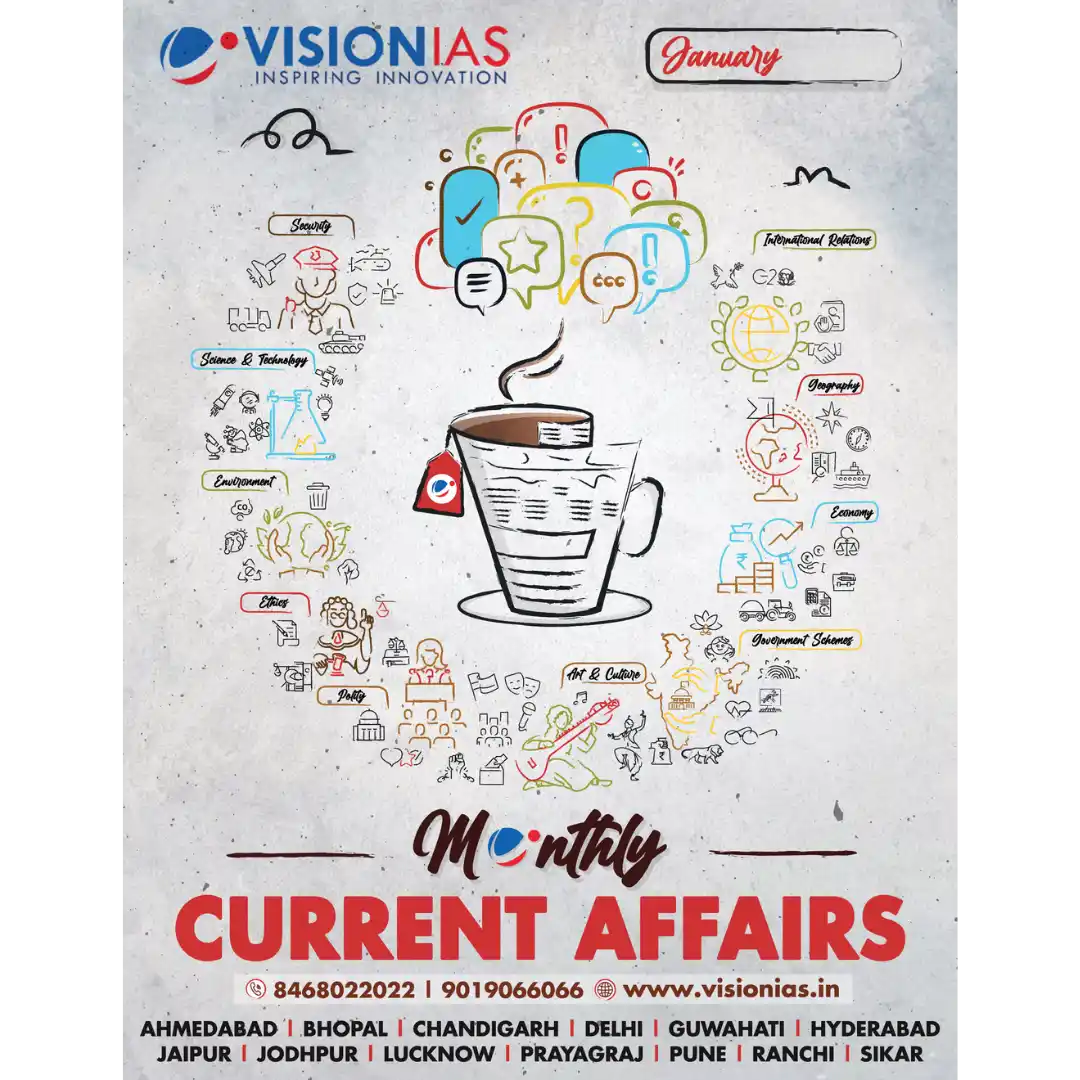
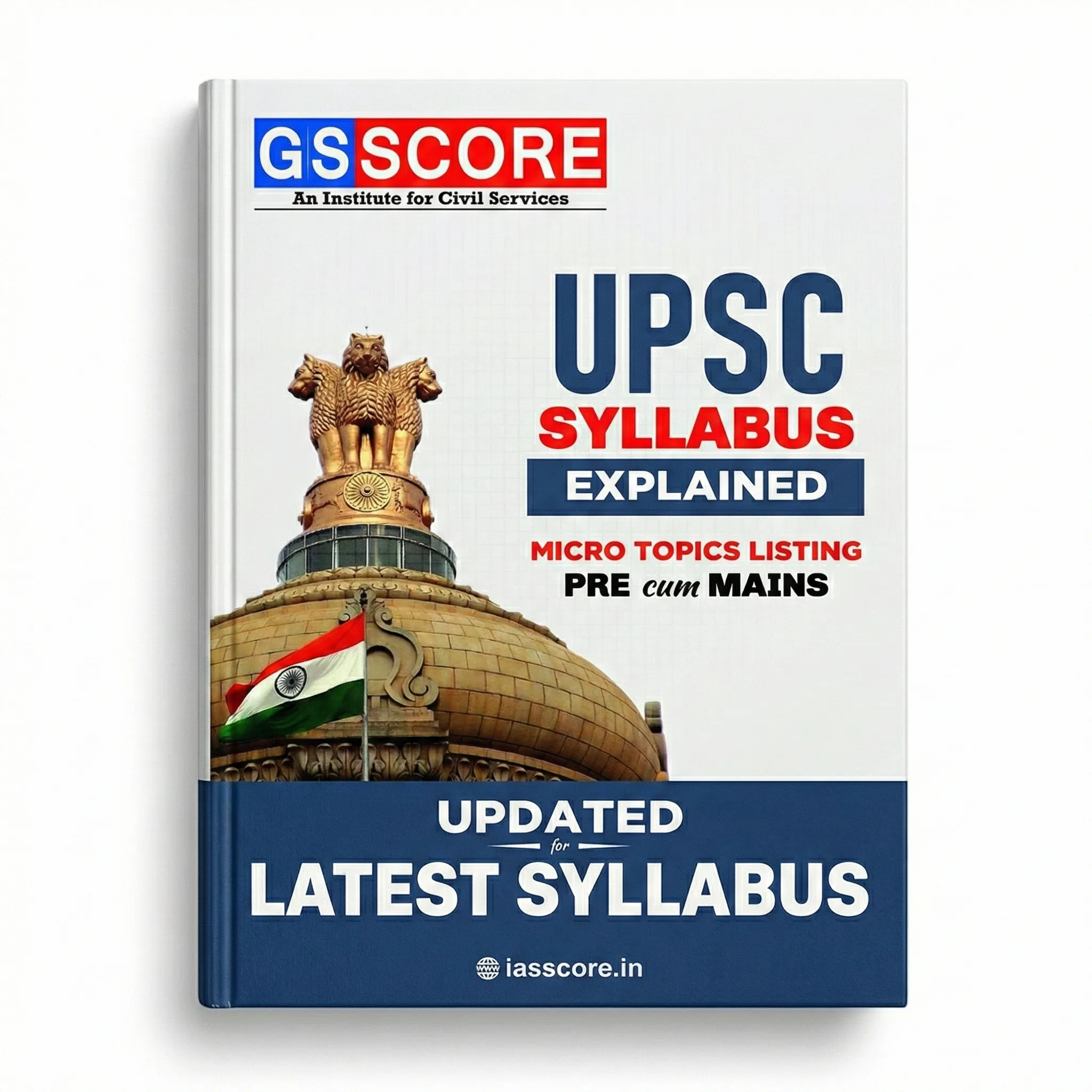
For the current-affairs slice of General Awareness, a monthly magazine keeps you consistent without drowning in news. Aspirants often use a compact edition like the Vision IAS Current Affairs Magazine (January 2026) as a revision anchor — the monthly-recap habit it builds is exactly what SSC GA rewards. If you want the raw exam blueprint printed for quick reference, a dedicated syllabus booklet is handy to keep on your desk while you plan chapters.
SSC CHSL Study Plan & One-Glance Revision Checklist
A schedule beats a topic list. Here is a realistic 12-week plan you can compress or expand. Treat weekdays as learning days and weekends as full-length mock days.
| Phase | Weeks | Focus |
|---|---|---|
| Foundation | 1-4 | Quant arithmetic + reasoning basics + English grammar; 1 easy topic per day |
| Build | 5-8 | Advanced quant (geometry/trig), non-verbal reasoning, GA static + daily current affairs |
| Practice | 9-11 | Sectional tests + topic-wise PYQs; start typing practice 20 min/day |
| Peak | 12 | Full-length mocks, error-log revision, speed & accuracy tuning |
Daily one-glance checklist:
- 20 quant questions (mixed arithmetic)
- 20 reasoning questions (rotate topics)
- 15 minutes English grammar + 10 new words
- 1 current-affairs recap (5-10 minutes)
- 15-20 minutes typing practice (from Week 9)
- Maintain an error log — revise it every Sunday
Sectional Strategy: Time, Accuracy vs Negative Marking
With 100 questions in 60 minutes in Tier 1, you have roughly 36 seconds per question. Strategy matters as much as knowledge.
- Order of attempt: start with General Awareness (fastest — you either know it or you don’t), then English, then Reasoning, and finish with Quant which needs the most time.
- Negative marking discipline: at 0.50 per wrong answer in Tier 1, only guess when you can eliminate two options. Blind guessing statistically hurts your score.
- Two-pass method: first pass — attempt all sure questions quickly; second pass — return to the marked, time-consuming ones.
- Tier 2 caution: with 1-mark negative in Tier 2, be even more selective; accuracy protects your rank because the competition here is small and tight.
Is SSC CHSL Tier 2 Tougher Than Tier 1?
Yes — Tier 2 is tougher and more decisive. It asks deeper quant (including statistics and probability), longer English comprehension, and adds a Computer Knowledge module plus the qualifying skill test, all with a higher 1-mark negative penalty. But the syllabus overlaps heavily with Tier 1, so strong Tier 1 fundamentals transfer directly. The real difference is depth and stakes: Tier 1 only shortlists, while Tier 2 marks decide your final merit and post allocation.
How to Download the SSC CHSL Syllabus PDF
To get the official ssc chsl syllabus pdf download, follow these steps:
- Visit the official SSC website (ssc.gov.in or ssc.nic.in).
- Open the SSC CHSL 2026 official notification link under the “Latest Notifications” section.
- The notification PDF contains the complete Tier 1 and Tier 2 syllabus, exam pattern and scheme of examination in Annexure form.
- Download and save the PDF; bookmark the exam-pattern pages for quick revision.
Always cross-check any third-party syllabus against the official notification PDF, since minor pattern tweaks can occur between cycles. Pair the PDF with a printed planner and subject notes so you are studying from the blueprint, not memory.
Common Mistakes to Avoid
- Over-preparing General Awareness’s static tail while ignoring high-return reasoning and quant.
- Skipping the typing/DEST practice until the last week — speed builds over weeks, not days.
- Blind guessing under negative marking, especially in Tier 2.
- Reading theory endlessly without solving topic-wise PYQs and timed mocks.
- Ignoring the Computer Knowledge module because it is “only qualifying” — you still must clear it.
Frequently Asked Questions
What is the syllabus of SSC CHSL?
The SSC CHSL syllabus spans two tiers. Tier 1 covers General Intelligence & Reasoning, General Awareness, Quantitative Aptitude and English Language (100 questions, 200 marks). Tier 2 covers Mathematical Abilities, Reasoning & General Intelligence, English Language & Comprehension, General Awareness, a Computer Knowledge module and a qualifying Skill/Typing Test.
Is there negative marking in SSC CHSL Tier 1 and Tier 2?
Yes. In Tier 1, 0.50 marks are deducted for each wrong answer. In Tier 2, the deduction is higher at 1 mark per wrong answer in the objective modules. There is no negative marking in the qualifying skill/typing test.
How many subjects are there in SSC CHSL?
Tier 1 has four subjects: Reasoning, General Awareness, Quantitative Aptitude and English. Tier 2 has the same core subjects with added depth, plus a Computer Knowledge module and a Skill/Typing Test, making it broader than Tier 1.
How many questions are asked in SSC CHSL Tier 1?
SSC CHSL Tier 1 has 100 questions for 200 marks in 60 minutes — 25 questions (50 marks) each from Reasoning, General Awareness, Quantitative Aptitude and English Language. Every wrong answer carries a 0.50-mark penalty, so a balanced, accurate attempt matters more than attempting all 100.
Is SSC CHSL Tier 2 tougher than Tier 1?
Yes. Tier 2 is more difficult and more important. It has advanced quant (including statistics and probability), a computer module, higher 1-mark negative marking, and it largely determines your final merit and post allocation, whereas Tier 1 only shortlists candidates.
What is the qualification required for SSC CHSL?
Candidates must have passed Class 12 (10+2) or an equivalent examination from a recognised board or university. For some DEO posts in specific departments, Science with Mathematics at the 12th level may be required. Age eligibility is generally 18 to 27 years, with relaxations for reserved categories.
Is there a computer knowledge test in SSC CHSL?
Yes. SSC CHSL Tier 2 includes a Computer Knowledge module covering computer basics, MS Office, internet and networking, and cyber security. It is qualifying in nature but must be cleared. Additionally, a Skill Test (typing or DEST) checks practical computer/typing proficiency for the relevant posts.
How to download the SSC CHSL syllabus PDF?
Go to the official SSC website (ssc.gov.in or ssc.nic.in), open the SSC CHSL 2026 notification under “Latest Notifications”, and download the PDF — the scheme of examination annexure lists the full Tier 1 and Tier 2 syllabus and exam pattern. Save it and cross-check any third-party syllabus against this official document.
Recommended Study Material

Continue Reading
SSC JE Syllabus 2026: Paper 1 & 2 + PDF Download
The SSC JE syllabus is split across two objective, computer-based papers. Paper 1 (200 marks, 2 hours) tests…
Best Books for JEE Advanced 2026: Subject-Wise Toppers' List
The best books for JEE Advanced are H.C. Verma and D.C. Pandey for Physics; NCERT with O.P. Tandon,…
Best Study Material for UPSC 2026: Subject-Wise Buying Guide
The best study material for UPSC is a four-layer stack: NCERT textbooks (Class 6–12), one standard reference book…