UGC NET Political Science Syllabus 2026: Units, PDF + Weightage
Complete UGC NET Political Science syllabus 2026: all 10 Paper 2 units, unit-wise topics, weightage, exam pattern, qualifying marks + free PDF (English/Hindi).

Last updated: October 2026 · Based on NTA’s official Subject Code 02 syllabus and our own analysis of 2019–2024 UGC NET question papers.
The ugc net political science syllabus is set by the NTA and has two papers: Paper 1 (Teaching & Research Aptitude, common to all subjects) and Paper 2, which tests Political Science under Subject Code 02 across 10 units — Political Theory, Western and Indian Political Thought, Comparative Politics, International Relations, India’s Foreign Policy, Indian Political Institutions and Processes, Public Administration, and Governance & Public Policy. Paper 2 carries 100 questions for 200 marks, there is no negative marking, and the syllabus for 2026 is unchanged from the previously notified syllabus — so your existing study material is still valid.
This guide gives you the complete official unit-wise Paper 2 syllabus, exam pattern, qualifying marks by category, a year-wise (2019–2024) weightage trend, a printable 1-page checklist, syllabus-to-book mapping, and free PDF links in both English and Hindi — everything you need to plan a focused attack on the exam.
UGC NET Political Science Syllabus 2026: Quick Overview
Before the unit-wise detail, here is the exam at a glance. UGC NET is conducted by the National Testing Agency (NTA) twice a year (typically June and December cycles) in Computer-Based Test (CBT) mode for Assistant Professor eligibility, Junior Research Fellowship (JRF), and PhD admission.
| Parameter | Detail |
|---|---|
| Conducting Body | National Testing Agency (NTA) |
| Subject Code (Political Science) | 02 |
| Exam Level | National (postgraduate) |
| Frequency | Twice a year (June & December cycles) |
| Mode | Online — Computer-Based Test (CBT) |
| Number of Papers | 2 (Paper 1 + Paper 2) |
| Total Questions | 150 (50 + 100) |
| Total Marks | 300 |
| Total Duration | 3 hours (180 minutes), combined, no break |
| Negative Marking | None |
| Medium | English & Hindi |
UGC NET Political Science Exam Pattern 2026 (Paper 1 + Paper 2)
Both papers are attempted in a single 3-hour session with no separate time limit per paper — you manage the clock yourself. All questions are multiple-choice (MCQs) with four options and exactly one correct answer. Every correct answer earns 2 marks; there is no deduction for a wrong answer, so you should attempt all 150 questions.
| Paper | Content | Questions | Marks | Duration |
|---|---|---|---|---|
| Paper 1 | Teaching & Research Aptitude (general) | 50 | 100 | 3 hours (combined) |
| Paper 2 | Political Science (Subject Code 02) | 100 | 200 | 3 hours (combined) |
| Total | — | 150 | 300 | 180 minutes |
Is there negative marking in UGC NET Political Science?
No. There is no negative marking in either Paper 1 or Paper 2. A correct answer gives +2 marks and an unanswered or wrong answer gives 0. Because there is no penalty, leave no question blank — even an educated guess has positive expected value.
UGC NET Political Science Paper 2 Syllabus: All 10 Units
The ugc net political science paper 2 syllabus is organised into 10 units. Questions are distributed across all units, so you cannot afford to skip any unit entirely. Here is the complete unit map with the broad theme of each.
| Unit | Title | Core Focus |
|---|---|---|
| Unit 1 | Political Theory | Concepts, approaches, ideologies, theories of the state |
| Unit 2 | Political Thought (Western) | Plato to Hannah Arendt |
| Unit 3 | Indian Political Thought | Kautilya to Ambedkar and modern thinkers |
| Unit 4 | Comparative Political Analysis | Approaches, regimes, party & electoral systems |
| Unit 5 | International Relations | IR theories, concepts, institutions, global issues |
| Unit 6 | India’s Foreign Policy | Determinants, Non-Alignment, India & the world |
| Unit 7 | Political Institutions in India | Constitution, executive, Parliament, judiciary, federalism |
| Unit 8 | Political Processes in India | Parties, elections, caste/religion, social movements |
| Unit 9 | Public Administration | Theories, organisation, personnel & financial admin |
| Unit 10 | Governance & Public Policy in India | Good governance, e-governance, public policy, RTI |
How many units are there in UGC NET Political Science Paper 2?
There are 10 units in UGC NET Political Science Paper 2. They span pure theory (Units 1–3), comparative and international politics (Units 4–6), the Indian constitutional and political system (Units 7–8), and administration and governance (Units 9–10).
UGC NET Political Science Unit-Wise Syllabus (Detailed Topics)
Below is the detailed, ugc net political science unit wise syllabus with the key sub-topics you must prepare under each unit.
Unit 1 – Political Theory
Meaning and approaches to Political Theory (normative, historical, empirical, behavioural, post-behavioural). Key concepts: State, Sovereignty (monist and pluralist), Law, Liberty, Equality, Rights, Justice, Property, Power, Citizenship, Civil Society. Ideologies: Liberalism, Marxism, Socialism, Fascism, Gandhism, Feminism, Multiculturalism, Communitarianism, Postmodernism. Theories of the State: Liberal, Marxist, Pluralist, Post-colonial and Feminist. Theories of Democracy and theories of Justice (Rawls, Nozick, Amartya Sen).
Unit 2 – Political Thought (Western)
Plato, Aristotle, Machiavelli, Hobbes, Locke, Rousseau, Kant, Hegel, Jeremy Bentham, J.S. Mill, Karl Marx, Antonio Gramsci and Hannah Arendt. Focus on each thinker’s view on the state, justice, liberty, the social contract, revolution and civil society.
Unit 3 – Indian Political Thought
Ancient and medieval: Kautilya, Manu, Aggannasutta (Buddhist tradition), Barani, Abul Fazl, Kabir. Modern thinkers: Raja Rammohan Roy, Pandita Ramabai, Swami Vivekananda, Sir Syed Ahmed Khan, Rabindranath Tagore, M.K. Gandhi, B.R. Ambedkar, Jawaharlal Nehru, M.N. Roy, Ram Manohar Lohia, Jayaprakash Narayan and Deen Dayal Upadhyay.
Unit 4 – Comparative Political Analysis
Nature and scope of comparative politics; approaches — political economy, institutional, new institutionalism, political culture and political sociology. Comparative method; constitutionalism; political regimes (democratic and authoritarian); electoral systems; party and party systems; pressure/interest groups; social movements; political participation; democratisation and globalisation.
Unit 5 – International Relations
Approaches to IR — Idealism, Realism, Neo-realism, Neo-liberalism, Marxist, Constructivism, Feminist and post-modern. Concepts: power, national interest, balance of power, security, deterrence. Cold War and post-Cold War order; international institutions (UN, IMF, World Bank, WTO); regional organisations (EU, ASEAN, SAARC, BRICS); globalisation; international political economy; disarmament; environment; human rights; and new security threats including terrorism.
Unit 6 – India’s Foreign Policy
Determinants of foreign policy; principles — Non-Alignment and Panchsheel. India and its neighbours; India and the major powers (USA, Russia, China, EU); India’s nuclear policy; India and the UN; India in regional groupings (SAARC, BIMSTEC, QUAD); economic diplomacy; and the shift in foreign policy since the 1991 liberalisation.
Unit 7 – Political Institutions in India
The Constitution — philosophy, Preamble, Fundamental Rights, Directive Principles and Fundamental Duties. Union executive (President, Prime Minister, Council of Ministers); Parliament; Judiciary (Supreme Court, judicial review, judicial activism, PIL); federalism and Centre–State relations; State executive and legislature; local government (73rd and 74th Constitutional Amendments); and constitutional/statutory bodies (Election Commission, CAG, UPSC, Finance Commission).
Unit 8 – Political Processes in India
Indian party system — national and regional parties; elections and electoral reforms; voting behaviour; the role of caste, religion, ethnicity, language and gender in politics; regionalism; coalition politics; and social movements (peasant, tribal, Dalit, women’s, and environmental movements). Panchayati Raj and grassroots participation.
Unit 9 – Public Administration
Meaning, nature and approaches; New Public Administration, New Public Management and Good Governance. Theories of organisation; principles of organisation (line and staff, formal/informal); personnel administration (recruitment, training, promotion); financial administration (budget, audit); accountability and control; administrative reforms; development administration; and comparative public administration.
Unit 10 – Governance and Public Policy in India
Concept of governance and good governance; e-governance; decentralisation. Public policy — nature, formulation, implementation and evaluation. Welfare and flagship schemes; Right to Information (RTI); citizens’ charter; social audit; grievance redressal; civil society and NGOs; corruption and transparency; and Sustainable Development Goals (SDGs).
UGC NET Political Science Important Topics and Weightage (2019–2024 Trend)
Top-ranking pages label units merely as “High” or “Moderate”. Based on our analysis of actual UGC NET Political Science question papers from 2019 to 2024, here is the approximate unit-wise question count per sitting (out of 100 in Paper 2). Treat these as indicative ranges — NTA does not publish a fixed blueprint, and the mix shifts a few questions each cycle.
| Unit | Approx. Questions / Paper | Priority |
|---|---|---|
| Unit 1 – Political Theory | 12–15 | High |
| Unit 2 – Western Political Thought | 9–12 | High |
| Unit 3 – Indian Political Thought | 7–10 | High |
| Unit 4 – Comparative Politics | 8–11 | High |
| Unit 5 – International Relations | 10–13 | High |
| Unit 6 – India’s Foreign Policy | 6–9 | Moderate |
| Unit 7 – Political Institutions in India | 10–13 | High |
| Unit 8 – Political Processes in India | 7–10 | Moderate |
| Unit 9 – Public Administration | 6–9 | Moderate |
| Unit 10 – Governance & Public Policy | 5–8 | Moderate |
What are the most important/high-weightage topics in UGC NET Political Science?
The consistently highest-scoring areas are Political Theory (Unit 1), International Relations (Unit 5), Political Institutions in India (Unit 7) and Western Political Thought (Unit 2) — together these four units typically supply around 40–50 of the 100 Paper 2 questions. Within them, high-yield topics include concepts of justice/liberty/rights, IR theories (Realism vs Liberalism), the Indian Constitution and judiciary, and the major Western thinkers (Hobbes, Locke, Rousseau, Marx). Lock these down first.
UGC NET Political Science Syllabus PDF Download (English & Hindi)
You can download the official ugc net political science syllabus pdf download from the NTA/UGC NET website (ugcnet.nta.ac.in). Navigate to the “Syllabus” / “Information Bulletin” section and open Subject Code 02 (Political Science). The same PDF covers both the English and the ugc net political science syllabus in hindi — the bilingual document lists every unit and sub-topic exactly as reproduced above.
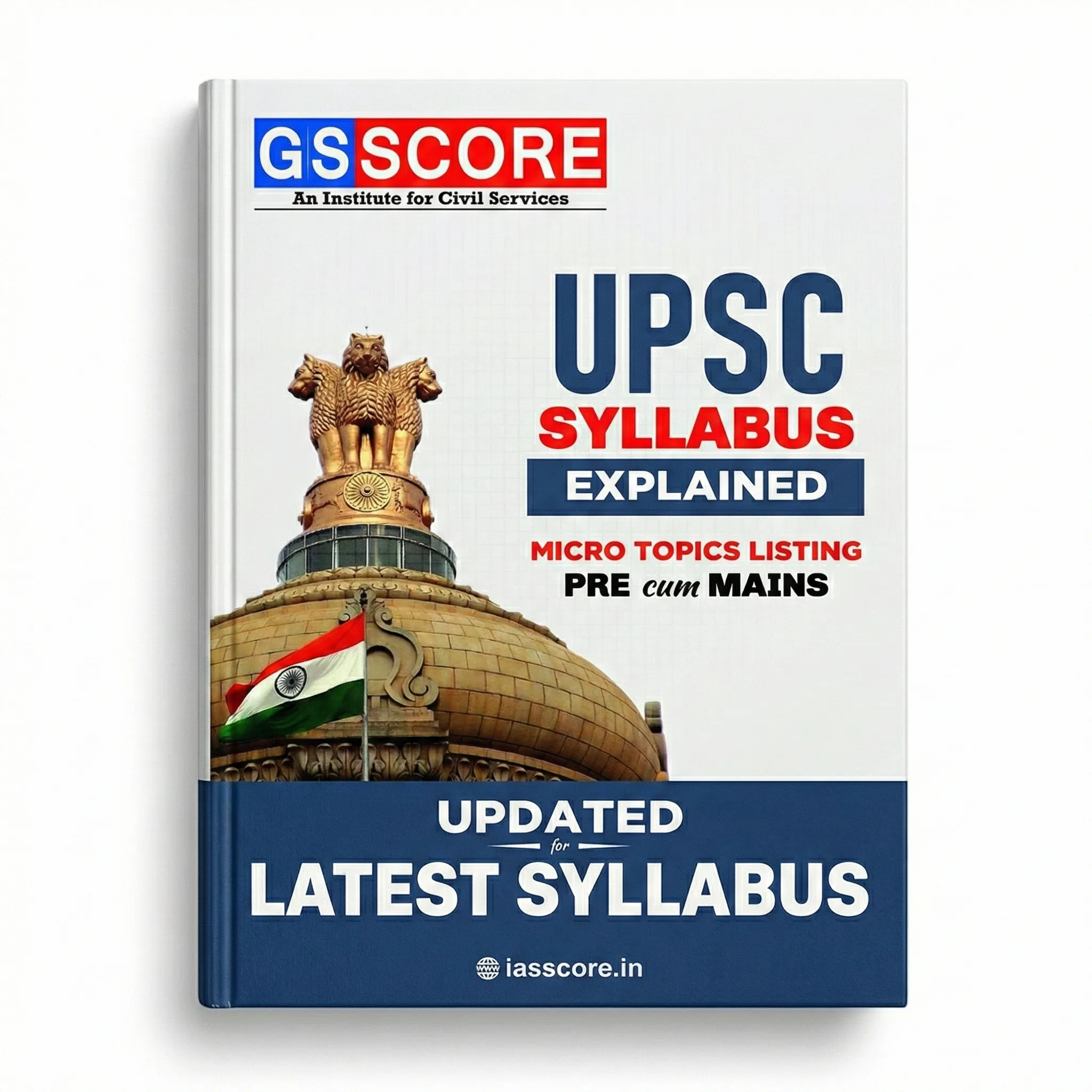
Keep two copies: one full PDF for reference, and the 1-page checklist below (print it) to tick off topics as you finish them. If you want a consolidated, exam-ready syllabus booklet to study from alongside, the GS Score Latest Syllabus Booklet 2026-27 is a handy printed companion for keeping the full scope in front of you.
Is the UGC NET Political Science syllabus available in Hindi?
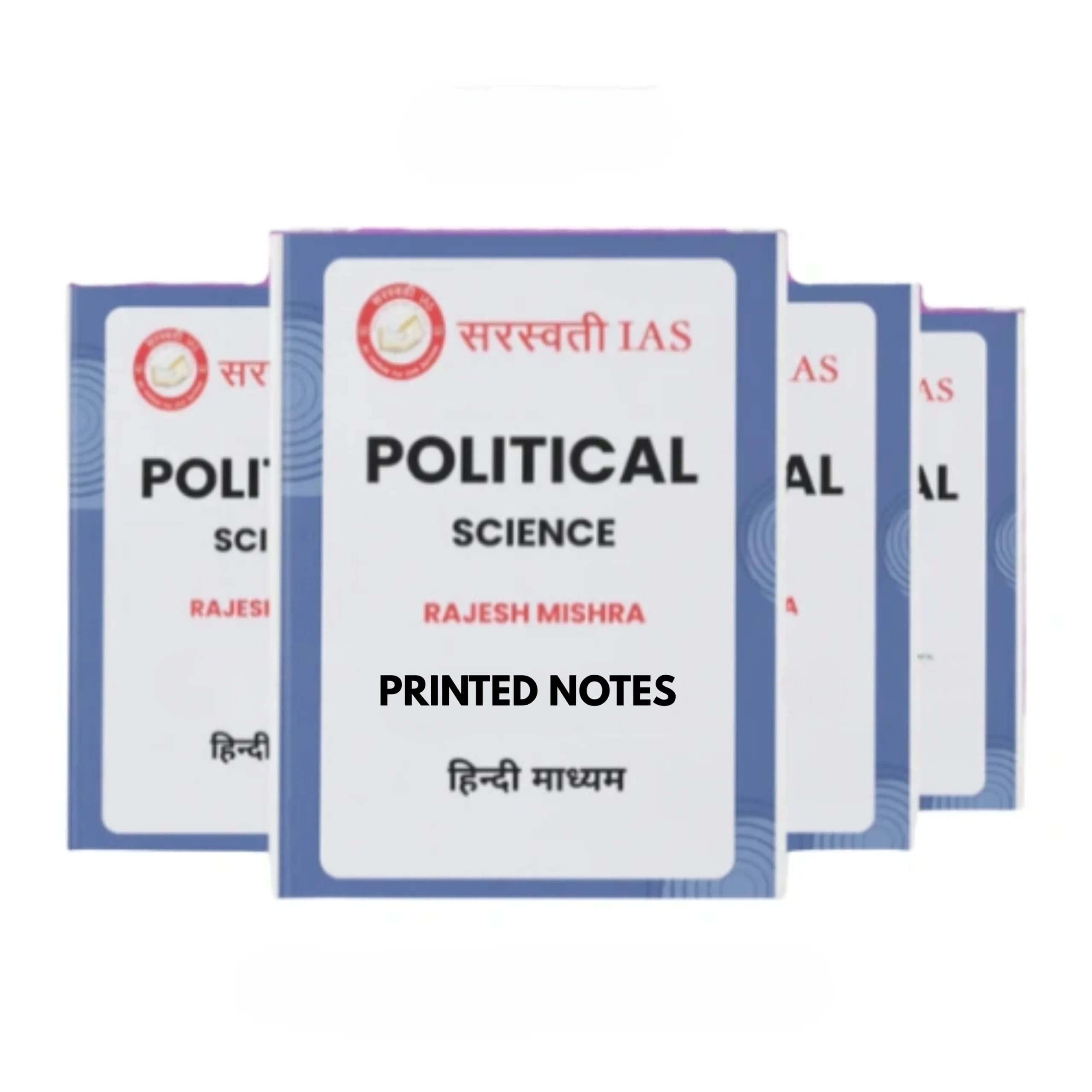
Yes. The official syllabus PDF is bilingual and lists all 10 Paper 2 units in Hindi as well as English, and the exam itself can be attempted in Hindi medium. Hindi-medium aspirants can pair the Hindi syllabus with Hindi-medium PSIR notes such as the Rajesh Mishra PSIR Notes (Hindi Medium), which map closely to Units 1–7.
Qualifying Marks for UGC NET Political Science
There is no fixed “pass mark” — NTA sets a category-wise minimum qualifying percentage in aggregate (Paper 1 + Paper 2 combined, out of 300), and final selection for JRF/Assistant Professor is based on the top-percentile merit cut-off within each category.
| Category | Minimum Qualifying % | Minimum Marks (of 300) |
|---|---|---|
| General / EWS | 40% | 120 |
| OBC (NCL) | 35% | 105 |
| SC | 35% | 105 |
| ST | 35% | 105 |
| PwD | 35% | 105 |
| Transgender | 35% | 105 |
What are the qualifying marks for UGC NET Political Science?
You need a minimum of 40% aggregate (120/300) for General/EWS and 35% (105/300) for OBC-NCL/SC/ST/PwD/Transgender. Clearing this threshold makes you eligible; actual JRF and Assistant Professor qualification is decided by the final merit cut-off, so aim well above the minimum — a realistic “good score” target is 200+/300.
How to Prepare for UGC NET Political Science From the Syllabus
A focused, unit-wise strategy beats random reading. Work the syllabus top-down: understand the theory units first (they recur everywhere), then layer the India-specific and current-affairs-linked units on top.
| Unit Cluster | Strategy & Focus Area |
|---|---|
| Units 1–3 (Theory & Thought) | Master definitions and thinker-wise positions; make comparison charts (e.g., Hobbes vs Locke vs Rousseau). Highest, most predictable yield. |
| Units 4–6 (Comparative, IR, Foreign Policy) | Pair static theory with current affairs — summits, treaties, India’s bilateral ties. IR theories are heavily tested. |
| Units 7–8 (Indian Institutions & Processes) | Use NCERT + Laxmikanth; track constitutional amendments, landmark judgments and recent elections. |
| Units 9–10 (Public Admin & Governance) | Focus on concepts (NPM, good governance, RTI) and government schemes; shorter but scoring with current-affairs linkage. |
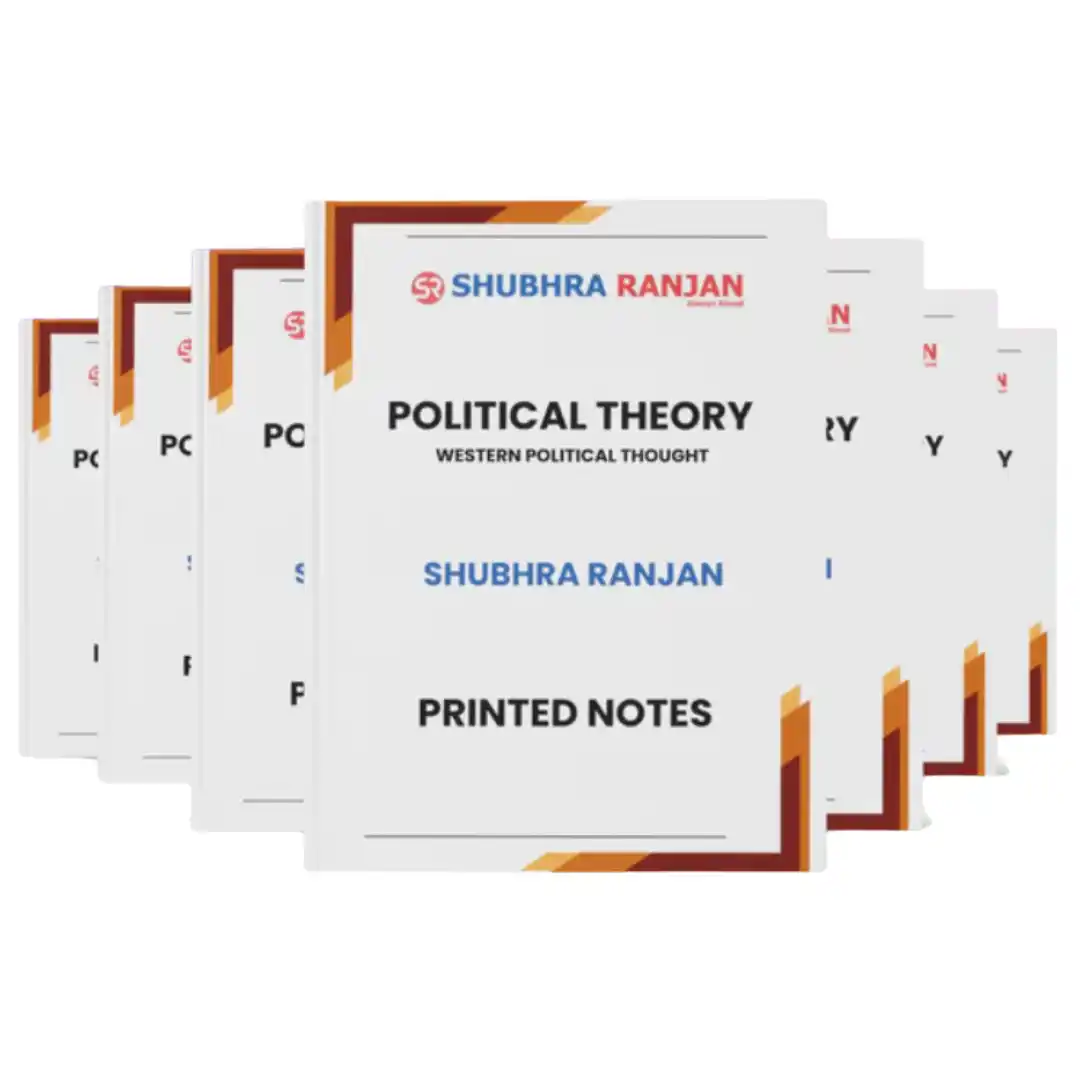
Revise with previous year questions after every two units, and take full-length mocks in the last 6–8 weeks to build the three-hour stamina for 150 questions. Because the PSIR optional syllabus for UPSC overlaps heavily with Units 1–7, dedicated PSIR notes double as excellent NET material — the Shubhra Ranjan PSIR Notes 2026 are a popular, well-structured option for theory and IR.
How to prepare for UGC NET Political Science from the syllabus?
Print the syllabus, then study it in four clusters rather than linearly: (1) Theory & Thought (Units 1–3), (2) Comparative, IR & Foreign Policy (Units 4–6), (3) Indian Institutions & Processes (Units 7–8), and (4) Public Administration & Governance (Units 9–10). A realistic timeline looks like this:
- Months 1–2: Finish Units 1–3 (theory is the backbone and recurs in every other unit). Build thinker-comparison tables.
- Months 3–4: Cover Units 4–7, linking static concepts to current affairs (summits, judgments, elections).
- Month 5: Complete Units 8–10 plus the full Paper 1 syllabus.
- Month 6: Solve 8–10 years of previous-year papers, take weekly full-length mocks, and revise from the checklist below.
After every two units, attempt the related previous-year questions — this converts passive reading into exam-ready recall and shows you exactly how NTA frames each topic.
Best Books for UGC NET Political Science + Syllabus-to-Book Mapping
Most pages give a flat booklist without telling you which book covers which unit. Here is a direct unit-to-source mapping so every chapter you read earns marks.
| Unit(s) | Recommended Source |
|---|---|
| Units 1–2 (Theory + Western Thought) | O.P. Gauba – An Introduction to Political Theory; Western Political Thought (Sabine / Mukherjee & Ramaswamy) |
| Unit 3 (Indian Thought) | Indian Political Thought – V.R. Mehta / Himanshu Roy & M.P. Singh |
| Unit 4 (Comparative Politics) | Comparative Government and Politics – J.C. Johari / Rod Hague |
| Units 5–6 (IR + Foreign Policy) | International Relations – Peu Ghosh; India’s Foreign Policy – Rajiv Sikri / V.P. Dutt |
| Units 7–8 (Indian Govt & Politics) | Indian Polity – M. Laxmikanth; NCERTs (Class 11–12 Political Science) |
| Units 9–10 (Public Admin & Governance) | Public Administration – Mohit Bhattacharya / Fadia & Fadia |
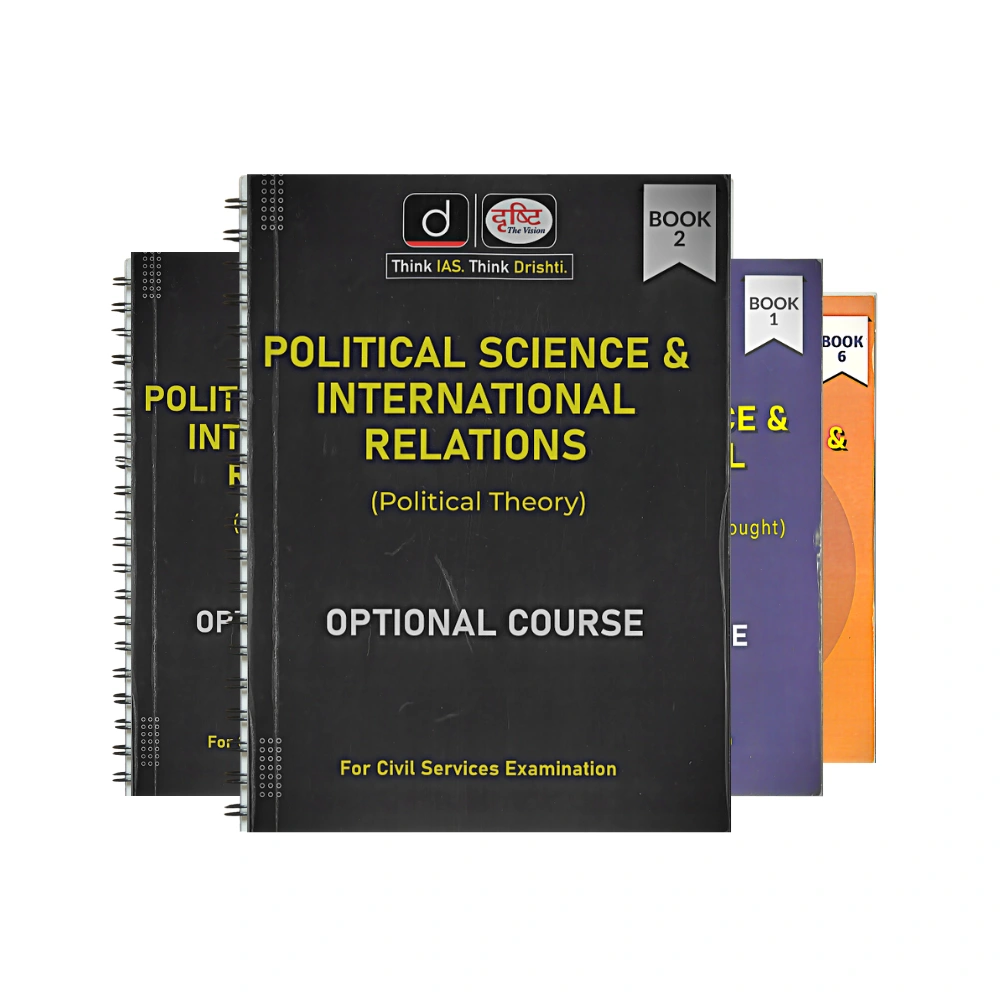
For a ready-made printed set that mirrors this scope, PSIR booklets are the closest off-the-shelf fit. The Drishti IAS PSIR Notes (6 booklets) offer a compact, affordable coverage of theory, thought and Indian politics, while serious theory-first aspirants often prefer the depth of the Shubhra Ranjan set linked above. Hindi-medium candidates should look at the Rajesh Mishra PSIR notes.
Which books are best for UGC NET Political Science?
The core five are O.P. Gauba (Political Theory), Mukherjee & Ramaswamy (Western Thought), M. Laxmikanth (Indian Polity), Peu Ghosh (International Relations) and Mohit Bhattacharya (Public Administration), backed by Class 11–12 NCERTs. Supplement these with structured PSIR notes and solved previous-year papers rather than reading new sources close to the exam.
Don’t Ignore Paper 1 (Teaching & Research Aptitude)
Many candidates over-invest in Paper 2 and treat Paper 1 as an afterthought — a costly mistake, because Paper 1 is 100 marks and is often where the JRF cut-off is won or lost. Paper 1 is common to all subjects and covers 10 units: Teaching Aptitude, Research Aptitude, Comprehension, Communication, Mathematical Reasoning & Aptitude, Logical Reasoning, Data Interpretation, ICT, People/Development & Environment, and Higher Education System. It is scoring and highly predictable, so budget around 25–30% of your prep time for it. (See our dedicated UGC NET Paper 1 syllabus guide for the full unit break-up.)
Printable 1-Page Syllabus Cheat-Sheet / Checklist
Print this and tick each unit as you complete reading + revision + PYQs. It is the fastest way to see what’s left.
| # | Unit | Read | Revised | PYQs Done |
|---|---|---|---|---|
| 1 | Political Theory | ☐ | ☐ | ☐ |
| 2 | Western Political Thought | ☐ | ☐ | ☐ |
| 3 | Indian Political Thought | ☐ | ☐ | ☐ |
| 4 | Comparative Political Analysis | ☐ | ☐ | ☐ |
| 5 | International Relations | ☐ | ☐ | ☐ |
| 6 | India’s Foreign Policy | ☐ | ☐ | ☐ |
| 7 | Political Institutions in India | ☐ | ☐ | ☐ |
| 8 | Political Processes in India | ☐ | ☐ | ☐ |
| 9 | Public Administration | ☐ | ☐ | ☐ |
| 10 | Governance & Public Policy | ☐ | ☐ | ☐ |
| P1 | Paper 1 (all 10 units) | ☐ | ☐ | ☐ |
What Changed in 2026 vs the Older Syllabus?
Good news: there is no change in the ugc net political science syllabus 2026. NTA continues to follow the same 10-unit Paper 2 syllabus (Subject Code 02) that has been in force for recent cycles, and Paper 1 is likewise unchanged. This means older standard books, PSIR notes and previous-year papers from 2019 onward remain fully valid for your 2026 preparation. The only practical updates each year are current-affairs-linked facts within Units 5, 6, 8 and 10 (new summits, schemes, elections and judgments) — keep those refreshed, but your core static material does not need replacing. Always cross-check the unit list against the latest Information Bulletin on ugcnet.nta.ac.in before you begin, since NTA reserves the right to revise any syllabus.
Common Mistakes to Avoid
- Skipping “low-weightage” units entirely — even Units 9 and 10 contribute 10–15 questions combined; leaving them blank forfeits easy marks in a no-negative-marking exam.
- Ignoring Paper 1 — it is 100 marks and decisive for the JRF cut-off.
- Reading too many sources — one standard book per unit plus notes beats five half-read books.
- Neglecting previous-year papers — NET repeats concepts and question patterns; PYQ practice is non-negotiable.
- Memorising thinkers in isolation — examiners love comparison and “match the following”; always study thinkers against each other.
- Leaving questions blank — with no negative marking, attempt all 150.
Frequently Asked Questions
What is the syllabus of UGC NET Political Science?
UGC NET Political Science (Subject Code 02) has two papers. Paper 1 is a common Teaching & Research Aptitude paper (50 questions, 100 marks). Paper 2 is subject-specific with 10 units — Political Theory, Western Political Thought, Indian Political Thought, Comparative Political Analysis, International Relations, India’s Foreign Policy, Political Institutions in India, Political Processes in India, Public Administration, and Governance & Public Policy (100 questions, 200 marks).
How many units are there in UGC NET Political Science Paper 2?
There are 10 units in Paper 2, and questions are drawn from all of them, so no unit can be fully skipped.
Is there negative marking in UGC NET Political Science?
No. Each correct answer gives +2 marks and there is no deduction for wrong or unattempted questions, so you should attempt all 150 questions across both papers.
What are the qualifying marks for UGC NET Political Science?
The minimum aggregate is 40% (120/300) for General/EWS and 35% (105/300) for OBC-NCL, SC, ST, PwD and Transgender candidates. Final JRF/Assistant Professor selection is based on the category-wise merit cut-off, so aim for 200+/300.
Is the UGC NET Political Science syllabus available in Hindi?
Yes. The official NTA syllabus PDF is bilingual and lists all 10 Paper 2 units in both Hindi and English, and the exam can be attempted in Hindi medium.
Which books are best for UGC NET Political Science?
Core recommendations are O.P. Gauba (Political Theory), Mukherjee & Ramaswamy (Western Thought), M. Laxmikanth (Indian Polity), Peu Ghosh (International Relations) and Mohit Bhattacharya (Public Administration), plus NCERTs and structured PSIR notes with previous-year papers for revision.
Is the UGC NET Political Science syllabus the same for JRF and Assistant Professor?
Yes. There is one common question paper and one syllabus; JRF and Assistant Professor candidates attempt exactly the same Paper 1 and Paper 2. The difference lies only in the age limit and the higher cut-off required to qualify for JRF — the syllabus you study is identical.
How long does it take to prepare for UGC NET Political Science?
Most candidates with a Political Science background need around 4–6 months of focused study (roughly 3–4 hours a day) to cover all 10 Paper 2 units plus Paper 1, finish previous-year papers, and complete several full-length mocks. Postgraduates revising familiar material can compress this; beginners should start with the theory units (1–3) and build from there.
Recommended Study Material
Continue Reading

HPSC Syllabus 2026: HCS Prelims & Mains Pattern + PDF
The HPSC syllabus for the 2026 Haryana Civil Services (HCS) exam runs across three stages: a Prelims with…
SSC CGL Preparation 2026: Plan, Books, Books & Strategy (Self-Study)
SSC CGL preparation in 2026 is entirely doable through disciplined self-study at home without coaching. In short: give…
CTET Paper 1 Syllabus 2026: Subjects, Pattern + PDF
The CTET Paper 1 syllabus covers five sections of 30 marks each — Child Development & Pedagogy, Language…