KPSC Syllabus 2026: KAS Prelims, Mains, Pattern + PDF
Complete KPSC syllabus 2026 for KAS Prelims & Mains — full exam pattern, marks, all 7 Mains papers, Karnataka-specific topics, best books, negative marking rules and a free syllabus PDF download.

The KPSC syllabus for the KAS (Gazetted Probationer) examination is split across three stages: a two-paper objective Prelims (400 marks, screening only), a descriptive Mains with two qualifying language papers plus an Essay and four General Studies papers (1,250 merit marks), and a 200-mark Personality Test. In the revised pattern, optional subjects have been removed from Mains, and roughly 30–40% of the syllabus is Karnataka-specific — covering the state’s history, geography, polity, economy and current affairs alongside national and international General Studies.
This guide gives you the complete, clearly dated kpsc kas syllabus 2026 for both Prelims and Mains, the full kpsc exam pattern 2026, topic-wise weightage trends, subject-wise book recommendations, a month-by-month strategy, and a free syllabus PDF download so you can plan every phase of your KAS journey. Everything below is mapped to the official KPSC notification structure so you can study with purpose.
KPSC Syllabus 2026 at a Glance (Quick Facts)
If you only read one section of this kpsc syllabus guide, read this. Here are the numbers every KAS aspirant should memorise before building a study plan.
- Conducting body: Karnataka Public Service Commission (KPSC), kpsc.kar.nic.in
- Exam name: Gazetted Probationer Examination (KAS — Karnataka Administrative Service)
- Stages: Prelims → Mains → Personality Test (Interview)
- Prelims: 2 objective papers, 400 marks, 0.25 negative marking, screening only
- Mains: 7 papers total — 2 qualifying language papers + 5 merit papers (Essay + GS I–IV)
- Merit total: 1,250 (Mains) + 200 (Interview) = 1,450 marks
- Optional subjects: Removed in the revised pattern
- Karnataka-specific content: Roughly 30–40% of the overall syllabus
KPSC KAS Exam Overview and 3-Stage Selection Process
The Karnataka Public Service Commission (KPSC) conducts the Gazetted Probationer Examination — popularly called the KAS (Karnataka Administrative Service) exam — to recruit officers for Group A and Group B posts such as Assistant Commissioner, Deputy Superintendent of Police, Commercial Tax Officer, Tahsildar and other administrative roles under the Government of Karnataka. It is Karnataka’s most prestigious state civil services exam and closely mirrors the UPSC structure.
Selection happens in three sequential stages. You must clear each stage to advance to the next, and the final merit list is prepared from Mains and Interview marks combined — Prelims marks are only a screening filter and are not counted in the final ranking.
| Stage | Nature | Purpose | Marks Counted in Merit? |
|---|---|---|---|
| Preliminary Examination | Objective (MCQ) | Screening / qualifying | No |
| Main Examination | Descriptive (written) | Merit ranking | Yes (1,250 marks) |
| Personality Test / Interview | Oral | Merit ranking | Yes (200 marks) |
Age eligibility is generally 21–35 years (with relaxations for reserved categories), and a graduate degree in any discipline from a recognised university is the minimum educational qualification. Always confirm exact age, attempts and eligibility from the official KPSC notification for the specific recruitment cycle, as these details are revised periodically.
KPSC Exam Pattern 2026: Prelims and Mains at a Glance
Understanding the kpsc exam pattern 2026 before you touch the syllabus is critical, because the marks scheme decides how you allocate study hours. Here is the complete structure across all three stages.
| Stage | Papers | Total Marks | Duration | Type |
|---|---|---|---|---|
| Prelims | 2 (Paper I + Paper II) | 400 (200 each) | 2 hours per paper | Objective, negative marking |
| Mains — Qualifying | 2 (Kannada + English) | 300 (150 each) | 3 hours each | Descriptive, qualifying only |
| Mains — Merit | 5 (Essay + GS I–IV) | 1,250 (250 each) | 3 hours each | Descriptive, counted in merit |
| Personality Test | Interview | 200 | — | Oral |
Grand total for merit ranking = 1,250 (Mains merit papers) + 200 (Interview) = 1,450 marks. The two language papers and the Prelims are purely qualifying/screening in nature, but you cannot ignore them — failing a qualifying paper ends your attempt regardless of your GS scores.
KPSC KAS Prelims Syllabus 2026: Paper I and Paper II
The kpsc kas prelims syllabus spans two objective papers of 200 marks each. Both papers are compulsory. Paper I leans towards national and international General Studies, while Paper II blends humanities, aptitude and heavy Karnataka-specific content.
Prelims Exam Pattern and Negative Marking
| Paper | Questions | Marks | Duration | Negative Marking |
|---|---|---|---|---|
| Paper I — General Studies | 100 | 200 | 2 hours | 0.25 per wrong answer |
| Paper II — General Studies | 100 | 200 | 2 hours | 0.25 per wrong answer |
Yes — there is negative marking in the KPSC KAS Prelims. One-fourth (0.25) of the marks assigned to a question is deducted for every wrong answer, so blind guessing across all questions can pull your score down. Attempt only where you can eliminate options confidently.
Prelims Paper I — Topic Breakdown
- Current events of state, national and international importance
- General Science and its applications in everyday life
- History of India and the Indian National Movement
- History of Karnataka — with emphasis on the growth of Karnataka’s unification and administration
- Indian and world geography — physical, social and economic geography of India and Karnataka
- Economic and social development — sustainable development, poverty, inclusion, demographics, social sector initiatives
- Environmental ecology, biodiversity and climate change (general awareness)
Prelims Paper II — Topic Breakdown
- Indian polity, Constitution, political system, Panchayati Raj and public policy
- Karnataka-specific polity, administration and governance
- General mental ability and logical reasoning
- Basic numeracy, data interpretation, and problem solving
- Comprehension and interpersonal/communication skills
- Science and technology — including Karnataka’s contributions in IT, biotech and space
- Humanities — sociology, public administration, and related social awareness
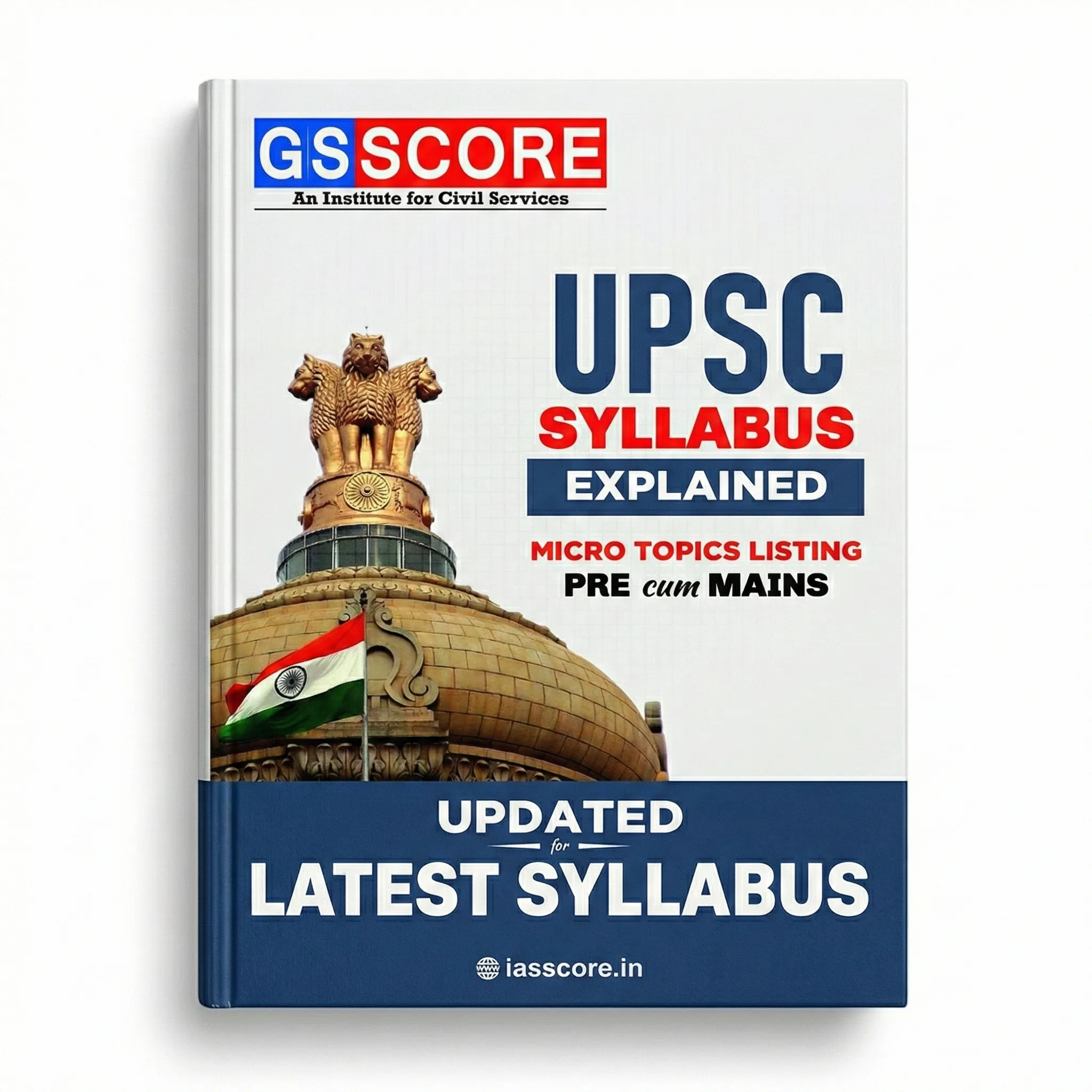
Because Prelims Paper II is decisive and heavily Karnataka-tilted, aspirants should pair standard national GS material with dedicated Karnataka state board (6th–10th and PU) textbooks. A ready reckoner of the official UPSC-standard syllabus like the GS Score Latest Syllabus Booklet helps you map overlapping national GS topics quickly, since a large chunk of KAS Prelims mirrors the UPSC GS structure.
KPSC KAS Mains Syllabus 2026: All 7 Papers Explained
The single biggest point of confusion across the top-ranking pages is the Mains structure — some list 7 papers, some 9, and some still show optional subjects. Here is the clearly dated clarification for the 2026 cycle: the revised kpsc kas mains syllabus has 7 papers total — 2 qualifying language papers plus 5 merit papers (Essay + GS I to IV). Optional subjects have been removed from KAS Mains. This is the structure you should plan around, and you should always cross-check it against the official notification for your cycle.
How Many Papers Are in KPSC KAS Mains?
| Paper | Subject | Marks | Counted in Merit? |
|---|---|---|---|
| Qualifying Paper 1 | Kannada | 150 | No (qualifying) |
| Qualifying Paper 2 | English | 150 | No (qualifying) |
| Paper I | Essay | 250 | Yes |
| Paper II | General Studies I | 250 | Yes |
| Paper III | General Studies II | 250 | Yes |
| Paper IV | General Studies III | 250 | Yes |
| Paper V | General Studies IV | 250 | Yes |
The Kannada and English papers only require you to score the minimum qualifying marks — they test basic language proficiency (comprehension, precis, translation, essay in the respective language) and their marks do not add to your merit total. The five merit papers carry the full 1,250 marks that decide your rank.
General Studies Paper I (250 Marks)
GS-I focuses on history, culture, society and geography, with a strong Karnataka thread running throughout.
- Cultural heritage of India and Karnataka — art, architecture, literature, music and dance forms
- Modern Indian history and the freedom struggle; unification and history of Karnataka
- World history — major events, revolutions, colonisation and decolonisation
- Indian society — social structure, diversity, women’s issues, urbanisation, globalisation
- Physical, human and economic geography of the world, India and Karnataka
- Distribution of natural resources; disaster and disaster management
General Studies Paper II (250 Marks)
GS-II covers the Constitution, polity, governance, social justice and international relations.
- Indian Constitution — features, amendments, fundamental rights and duties, DPSP
- Union and State functions; separation of powers; Parliament and State Legislature (Karnataka)
- Panchayati Raj, local self-government and Karnataka administrative structure
- Governance, transparency, accountability, e-governance and citizen charters
- Social justice — welfare schemes, vulnerable sections, health, education, poverty
- India and its international relations; bilateral, regional and global groupings
General Studies Paper III (250 Marks)
GS-III is the economy, science, technology and environment paper.
- Indian and Karnataka economy — planning, budgeting, growth, employment, inclusive development
- Agriculture, irrigation, food processing, and Karnataka’s agrarian issues
- Infrastructure, industry, investment models and land reforms
- Science and technology — developments, indigenous innovation, IT and biotech (Karnataka’s role)
- Environment, biodiversity, conservation, climate change and environmental impact
- Internal security, disaster management, and role of technology in security
General Studies Paper IV — Ethics (250 Marks)
GS-IV tests ethics, integrity and aptitude, including applied case studies.
- Ethics and human interface — values, essence and consequences of ethics in human action
- Attitude, aptitude and foundational values for civil service
- Emotional intelligence and its application in governance and administration
- Contributions of moral thinkers and philosophers (Indian and world)
- Probity in governance, accountability, code of conduct and citizen charters
- Case studies on ethical dilemmas faced by administrators
Karnataka-Specific Weightage: The Heart of the KPSC Syllabus
The single biggest differentiator between KAS and UPSC is the deliberate, heavy weightage given to Karnataka. Across Prelims Paper II and every GS Mains paper, expect Karnataka-specific questions on history, geography, polity, economy, culture and current affairs. Based on previous-year trends, here is an indicative weightage of how much attention each area deserves.
| Syllabus Area | Indicative Weightage | Karnataka Focus |
|---|---|---|
| History & Culture | High | Very high (unification, dynasties, art) |
| Polity & Governance | High | High (state administration, PRIs) |
| Geography | Medium-High | High (rivers, agro-climatic zones) |
| Economy | High | Medium-High (state budget, schemes) |
| Science, Tech & Environment | Medium | Medium (IT/biotech hubs, forests) |
| Current Affairs | Very High | High (state + national) |
| Ethics (Mains only) | Medium | Low |
A practical rule of thumb: roughly 30–40% of the overall KPSC syllabus is Karnataka-specific. This is why generic national material alone is never enough — you must layer Karnataka State Board textbooks, state economic survey highlights, and Karnataka current affairs on top of a strong UPSC-standard GS foundation.
Personality Test / Interview (200 Marks)
The final stage is the Personality Test, worth 200 marks and counted directly in the merit list. Candidates who clear the Mains cut-off are called for an interview before a KPSC board. The panel assesses mental alertness, clarity of thought, balanced judgement, leadership, integrity, depth of interest in Karnataka’s socio-economic issues, and overall suitability for public service — not textbook knowledge. Expect questions rooted in your Detailed Application Form (DAF), your home district, graduation subject, hobbies, and topical Karnataka and national current affairs.
KPSC Gazetted Probationer Syllabus vs UPSC: Is the KPSC Syllabus the Same as UPSC?
The kpsc gazetted probationer syllabus is broadly similar to UPSC in structure and General Studies content — both use a Prelims-Mains-Interview format and cover history, polity, geography, economy, science and ethics. However, they are not identical. The key differences are summarised below.
| Parameter | KPSC KAS | UPSC CSE |
|---|---|---|
| Prelims papers | 2 GS papers (both counted) | GS + CSAT (CSAT qualifying) |
| Optional subject | Removed | Retained (1 optional, 2 papers) |
| Mains merit papers | 5 (Essay + GS I–IV) | 7 (Essay + GS I–IV + 2 optional) |
| Language papers | Kannada + English (qualifying) | Indian language + English (qualifying) |
| Regional focus | Heavy Karnataka weightage | National, no state bias |
| Interview marks | 200 | 275 |
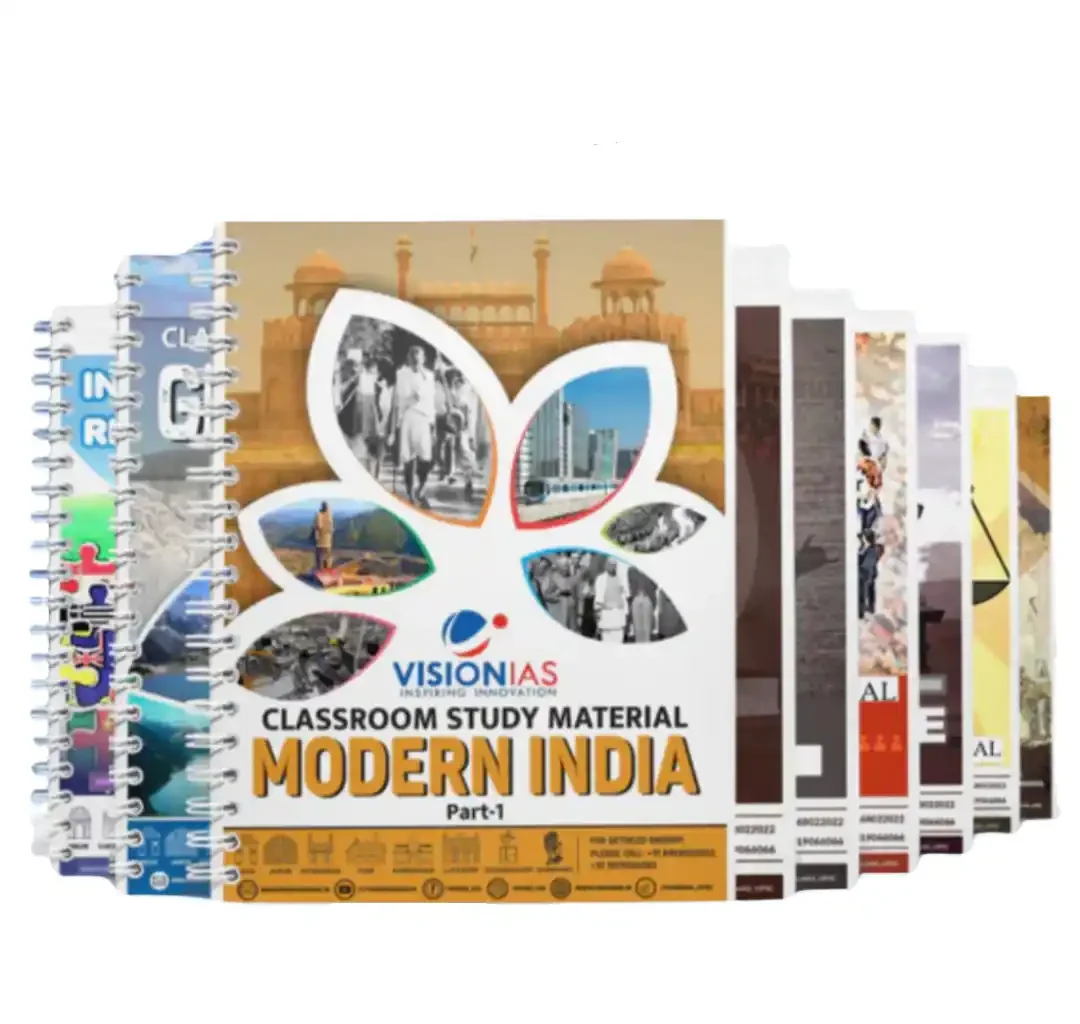
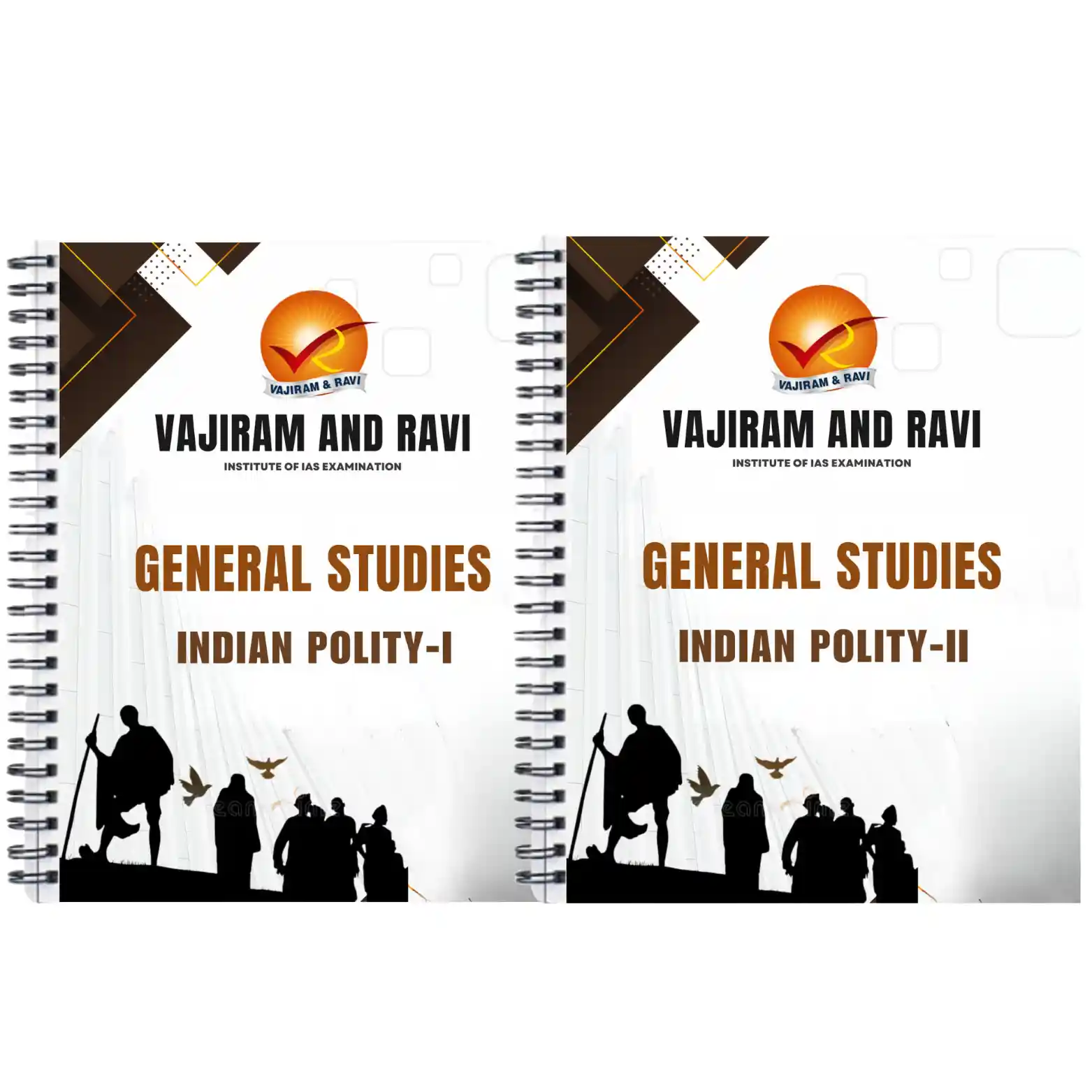
The practical takeaway: about 60–70% of your GS preparation overlaps with UPSC, so UPSC-standard notes are an excellent core. You then customise with Karnataka-specific layers. Because the national GS core is shared, comprehensive material such as the Vision IAS English Study Material or subject boosters like Vajiram Polity Notes cover the bulk of KAS GS-II directly.
Which Books Are Best for KPSC KAS Preparation?
The winning KAS booklist combines a strong national GS spine with Karnataka-specific reference material. Here is a subject-wise mapping tied to the syllabus so you buy with purpose, not randomly.
| Subject / Syllabus Area | Recommended Resource Type | Add Karnataka Layer |
|---|---|---|
| History (GS-I) | NCERTs + standard GS history notes | Karnataka State Board history, unification texts |
| Polity (GS-II) | Laxmikanth + GS polity notes | Karnataka administration & PRI material |
| Geography (GS-I/III) | NCERTs + GS geography notes | Karnataka geography, rivers, agro zones |
| Economy (GS-III) | GS economy notes + Economic Survey | Karnataka Economic Survey highlights |
| Ethics (GS-IV) | Standard ethics + case-study material | Karnataka governance case studies |
| Current Affairs | Monthly magazines + PYQ analysis | Karnataka daily/monthly current affairs |
For the national GS core, a full booklet set such as Vision IAS Study Material covers history, polity, geography, economy and ethics in one place. To master answer-writing and MCQ patterns, work backwards from questions using the Forum IAS Prelims Toolkit (Topic-Wise PYQ 1992–2025) — analysing UPSC PYQs sharpens conceptual clarity that transfers directly to KAS GS. Supplement current affairs with a reliable monthly like the Vision IAS Current Affairs Magazine, then layer Karnataka-specific state board books and state current affairs on top.
Subject-Wise Preparation Strategy for KPSC KAS 2026
Build the National GS Foundation First
Since 60–70% of the syllabus overlaps with UPSC, begin with NCERTs (6th–12th) followed by standard GS notes for history, polity, geography, economy and environment. This foundation serves both Prelims papers and all four GS Mains papers simultaneously.
Layer Karnataka-Specific Content Aggressively
Read Karnataka State Board textbooks (6th–10th and PU) for state history, geography and economy. Track the Karnataka Economic Survey, state budget highlights, and state government schemes. This layer is where most serious aspirants win or lose, because national-only candidates cannot answer Karnataka-focused questions.
Make Current Affairs a Daily Habit
Read one Kannada or English daily plus a national newspaper, and consolidate with a monthly magazine. Maintain separate notes for Karnataka and national/international events — current affairs feeds Prelims, GS Mains and the Interview alike.
Practise Answer Writing and Mock Tests Early
Descriptive Mains rewards structured, point-based answers with diagrams, maps and Karnataka examples. Start answer writing from month one, and take Prelims mock tests regularly to internalise the negative-marking discipline and time management.
KPSC KAS Preparation Timeline (12-Month Plan)
| Phase | Duration | Focus |
|---|---|---|
| Foundation | Months 1–4 | NCERTs + national GS + Karnataka basics |
| Core Building | Months 5–8 | Standard notes, Karnataka layer, answer writing |
| Prelims Sprint | Months 9–10 | Revision + full-length Prelims mocks |
| Mains Focus | Months 11–12 | GS papers, Essay, ethics case studies, test series |
Common Mistakes KAS Aspirants Make
- Relying only on national/UPSC material and ignoring the Karnataka-specific 30–40% of the syllabus.
- Neglecting Prelims Paper II, which is aptitude- and Karnataka-heavy and often decides selection.
- Guessing recklessly despite the 0.25 negative marking in Prelims.
- Preparing for optional subjects that no longer exist in the revised Mains pattern.
- Postponing answer writing until the last months instead of practising from the start.
- Underestimating the qualifying Kannada paper — failing it disqualifies you regardless of GS scores.
KPSC Syllabus PDF Download
You can download the complete, printable kpsc syllabus pdf download covering Prelims Paper I & II, all seven Mains papers, the exam pattern, and a Karnataka-specific weightage checklist as an annotated planner. The best practice is to keep the official KPSC notification syllabus (from the KPSC website, kpsc.kar.nic.in) as your primary reference and use an annotated PDF to map each topic to your study material and revision tracker. Print it, tick off topics as you finish them, and revise against it before each mock — a syllabus you can see is a syllabus you can conquer.
Frequently Asked Questions
What is the syllabus of KPSC KAS 2026?
The KPSC KAS 2026 syllabus covers two objective Prelims papers (General Studies with heavy Karnataka focus, 400 marks total) and a Mains with two qualifying language papers (Kannada and English) plus five merit papers — Essay and General Studies I to IV (1,250 marks). It spans history, culture, polity, geography, economy, science and technology, environment, ethics and current affairs, with strong Karnataka-specific weightage, followed by a 200-mark Personality Test.
How many papers are there in KPSC KAS Mains exam?
The revised KAS Mains has 7 papers in total — 2 qualifying language papers (Kannada and English, 150 marks each) and 5 merit papers: Essay, GS-I, GS-II, GS-III and GS-IV, each worth 250 marks. Only the five merit papers (1,250 marks) count towards the final rank.
What is the exam pattern for KPSC Prelims?
KPSC Prelims has two objective (MCQ) papers — Paper I and Paper II — of 200 marks each, for a total of 400 marks, with 2 hours allotted per paper and 100 questions in each. Both papers are compulsory and carry 0.25 negative marking per wrong answer. Prelims is only a screening stage; its marks are not added to the final merit list.
Are optional subjects still there in KPSC Mains?
No. Optional subjects have been removed from the revised KPSC KAS Mains pattern. Candidates now write only the compulsory Essay and four General Studies papers for merit, along with two qualifying language papers — there is no separate optional subject to choose.
Is the KPSC syllabus same as UPSC syllabus?
It is broadly similar in structure and General Studies content but not identical. KAS has no optional subject, has two counted GS Prelims papers instead of a qualifying CSAT, and places heavy weightage on Karnataka-specific history, geography, polity and economy. About 60–70% of GS preparation overlaps with UPSC, so UPSC-standard notes form an excellent core that you customise with Karnataka material.
Is there negative marking in the KPSC KAS exam?
Yes. In the Prelims, 0.25 marks (one-fourth of the question’s marks) are deducted for every wrong answer. There is no negative marking in the descriptive Mains papers or the Interview. Because of this, attempt Prelims questions only where you can eliminate options confidently.
Which books are best for KPSC KAS preparation?
Build a national GS spine with NCERTs (6th–12th), Laxmikanth for polity, and standard GS notes for history, geography, economy and ethics, then add a Karnataka layer using State Board textbooks (6th–10th and PU), the Karnataka Economic Survey and Karnataka current affairs. Consolidated sets like Vision IAS study material cover the shared GS core, while PYQ toolkits sharpen Prelims MCQ and Mains answer-writing skills.
How much of the KPSC syllabus is Karnataka-specific?
Roughly 30–40% of the overall KPSC syllabus is Karnataka-specific, appearing across Prelims Paper II and every GS Mains paper. Topics include Karnataka’s history and unification, state geography, administration and Panchayati Raj, the state economy and budget, cultural heritage, and Karnataka current affairs — which is why state board textbooks and local current affairs are essential alongside national GS material.
Is Kannada compulsory in the KPSC KAS exam?
Yes, in the sense that Kannada is one of the two qualifying language papers (150 marks) in Mains, and you must score the minimum qualifying marks to have your merit papers evaluated. The Kannada paper tests basic proficiency such as comprehension, precis, translation and essay writing; its marks do not add to your merit total, but failing it disqualifies you regardless of your GS scores.
Recommended Study Material

Continue Reading
WBCS Syllabus 2025: Prelims, Mains, Exam Pattern + PDF
The WBCS syllabus is set by the West Bengal Public Service Commission (WBPSC) and runs across three stages:…
MPSC Syllabus 2026: Rajyaseva Prelims, Mains + PDF
The MPSC syllabus for the Rajyaseva (Maharashtra Civil Services) examination now follows a revised, UPSC-style descriptive pattern: a…
DSSSB Syllabus 2026: TGT, PGT, PRT & Non-Teaching Pattern + PDF
The DSSSB syllabus is split into two clear parts for every post: a common Section A (General Awareness,…