MPSC Syllabus 2026: Rajyaseva Prelims, Mains + PDF
MPSC syllabus 2026 for Rajyaseva: Prelims & Mains topics, new 9-paper 1750-mark pattern, 26 optional subjects, and free PDF in Marathi & English.

The MPSC syllabus for the Rajyaseva (Maharashtra Civil Services) examination now follows a revised, UPSC-style descriptive pattern: a two-paper objective Prelims (200 + 200 marks), a nine-paper written Mains carrying 1,750 merit marks, and a 275-mark Personality Test (Interview). This single guide gives you the complete subject-wise MPSC Rajyaseva syllabus for both stages, the new 2026 exam pattern, the full list of 26 optional subjects, a bilingual (English + Marathi) topic reference, and direct links to download the official MPSC syllabus PDF.
MPSC Syllabus 2026 at a Glance
Short on time? Here is the entire MPSC Rajyaseva structure in one scannable table before the detailed, subject-wise breakdown below.
| Question | Quick Answer |
|---|---|
| How many stages? | 3 — Prelims, Mains, Interview |
| Prelims pattern | 2 objective papers × 200 marks (GS + CSAT), 1/4 negative marking |
| Mains pattern (new) | 9 papers; 7 merit papers × 250 = 1,750 marks; descriptive |
| Optional subjects | Choose 1 (2 papers = 500 marks) from 26 subjects |
| Interview | Personality Test = 275 marks |
| Final merit total | Mains 1,750 + Interview 275 = 2,025 marks |
| Medium | Marathi & English (bilingual) |
| Official source | mpsc.gov.in → Syllabus / Notification |
Download MPSC Syllabus PDF (English + Marathi)
Most aspirants land on a syllabus page and still cannot find the actual official document, so here it is first. The Maharashtra Public Service Commission publishes the notification and revised syllabus on its official portal, mpsc.gov.in. Download the Prelims and Mains syllabus PDFs below and keep a printed copy on your study desk as a tracker.
| Document | Stage | Medium | Where to Download |
|---|---|---|---|
| MPSC Rajyaseva Prelims Syllabus | Prelims (Paper I + CSAT) | English & Marathi | mpsc.gov.in → Syllabus section |
| MPSC Rajyaseva Mains Syllabus (New Pattern) | Mains (9 papers) | English & Marathi | mpsc.gov.in → Syllabus section |
| Optional Subjects Syllabus (26 subjects) | Mains optional papers | English & Marathi | mpsc.gov.in → Syllabus / Notification |
| Official Notification & Exam Pattern | All stages | Bilingual | mpsc.gov.in → Recruitment |
Always cross-check the syllabus attached to the latest advertisement, because MPSC releases the definitive, exam-specific syllabus with every notification. The topics below are unchanged in substance from that official PDF; use this page for a readable, planning-friendly version and the PDF for the final word. (This guide is reviewed against the current MPSC notification; where a date or figure could change, we point you back to the official portal.)
What Is MPSC and the Rajyaseva Exam?
The Maharashtra Public Service Commission (MPSC) is the constitutional body that recruits candidates for Group A and Group B posts in the Government of Maharashtra. Its flagship examination is the Rajyaseva Pariksha (Maharashtra State Services Examination), through which posts such as Deputy Collector, Deputy Superintendent of Police (DySP), Tahsildar, Assistant Commissioner of Sales Tax, Block Development Officer and other Class I / Class II officers are filled.
Like the UPSC Civil Services Examination, MPSC Rajyaseva is a three-stage process. You clear one stage to reach the next, and only the Mains and Interview count toward your final merit.
| Stage | Name | Nature | Counts Toward Merit? |
|---|---|---|---|
| Stage 1 | Preliminary Examination (Purva Pariksha) | Objective / MCQ, screening | No (qualifying only) |
| Stage 2 | Main Examination (Mukhya Pariksha) | Descriptive / written | Yes (1,750 marks) |
| Stage 3 | Personality Test (Interview) | Interview | Yes (275 marks) |
Final merit = Mains (1,750) + Interview (275) = 2,025 marks. The Prelims score is not added; it only decides who advances to the Mains.
MPSC New Syllabus 2026: Exam Pattern Changes Explained
The biggest news for every Maharashtra aspirant is the shift to a fully descriptive Mains modelled on the UPSC pattern. Under the old scheme the Mains had 6 papers for 800 marks and was largely objective. The revised MPSC new syllabus 2026 exam pattern replaces this with 9 descriptive papers carrying 1,750 merit marks, including two optional-subject papers — a structural change that rewards writing practice and conceptual depth over rote MCQ solving.
| Feature | Old Pattern | New Pattern (2026 onward) |
|---|---|---|
| Mains papers | 6 papers | 9 papers |
| Mains merit marks | 800 marks | 1,750 marks |
| Question type (Mains) | Mostly objective | Fully descriptive / written |
| Optional subject | Not applicable | 2 papers (250 + 250) |
| Essay paper | Not separate | Separate 250-mark paper |
| Prelims negative marking | Applicable | 1/4th (0.25) per wrong answer |
| Interview marks | 100 | 275 |
Transition clarity for backlog aspirants: the revised pattern applies to the Rajyaseva cycle from its notified implementation year onward and governs candidates preparing for the 2026 attempt. If you were preparing under the old objective scheme, the practical shift is significant — you now need answer-writing practice, an optional subject, and essay skills. Confirm the exact applicable cycle on the official MPSC notification before you finalise your strategy, as the Commission has revised the implementation timeline more than once.
MPSC Prelims Syllabus and Exam Pattern
The MPSC prelims syllabus is spread across two objective papers of 200 marks each. Paper I (General Studies) is the ranking paper for Prelims cut-off purposes, while Paper II (CSAT) is qualifying in nature — you must score at least 33% to have your Paper I evaluated, mirroring the UPSC approach.
| Paper | Subject | Marks | Questions | Duration | Negative Marking |
|---|---|---|---|---|---|
| Paper I | General Studies | 200 | 100 | 2 hours | 1/4th |
| Paper II | CSAT (Aptitude) | 200 | 80 | 2 hours | 1/4th |
Both papers are bilingual (questions in Marathi and English), except the English language comprehension segment. Note the 1/4th (0.25) negative marking — every wrong tick costs a quarter of the marks, so intelligent risk management in the exam hall matters.
Prelims Paper I (General Studies) — Subject-Wise Topics + Weightage
Paper I is a broad general-awareness test. Based on previous-year trends, here is how the topics typically break down so you can prioritise high-yield areas.
| Subject Area | Key Topics | Approx. Weightage |
|---|---|---|
| Current Events | State, national & international affairs of contemporary importance | High (15-20%) |
| History | History of India & the Indian National Movement; special focus on Maharashtra (Shivaji, social reformers, Samyukta Maharashtra movement) | High (15-18%) |
| Geography | Physical, social, economic geography of Maharashtra, India & the World | High (12-15%) |
| Polity & Governance | Constitution, Panchayati Raj, Public Policy, Rights issues | Medium-High (12-15%) |
| Economic & Social Development | Sustainable development, poverty, inclusion, demographics, social sector schemes | Medium (10-12%) |
| Environment & Ecology | Biodiversity, climate change (no subject specialisation required) | Medium (8-10%) |
| General Science | Everyday science & scientific developments | Medium (8-10%) |
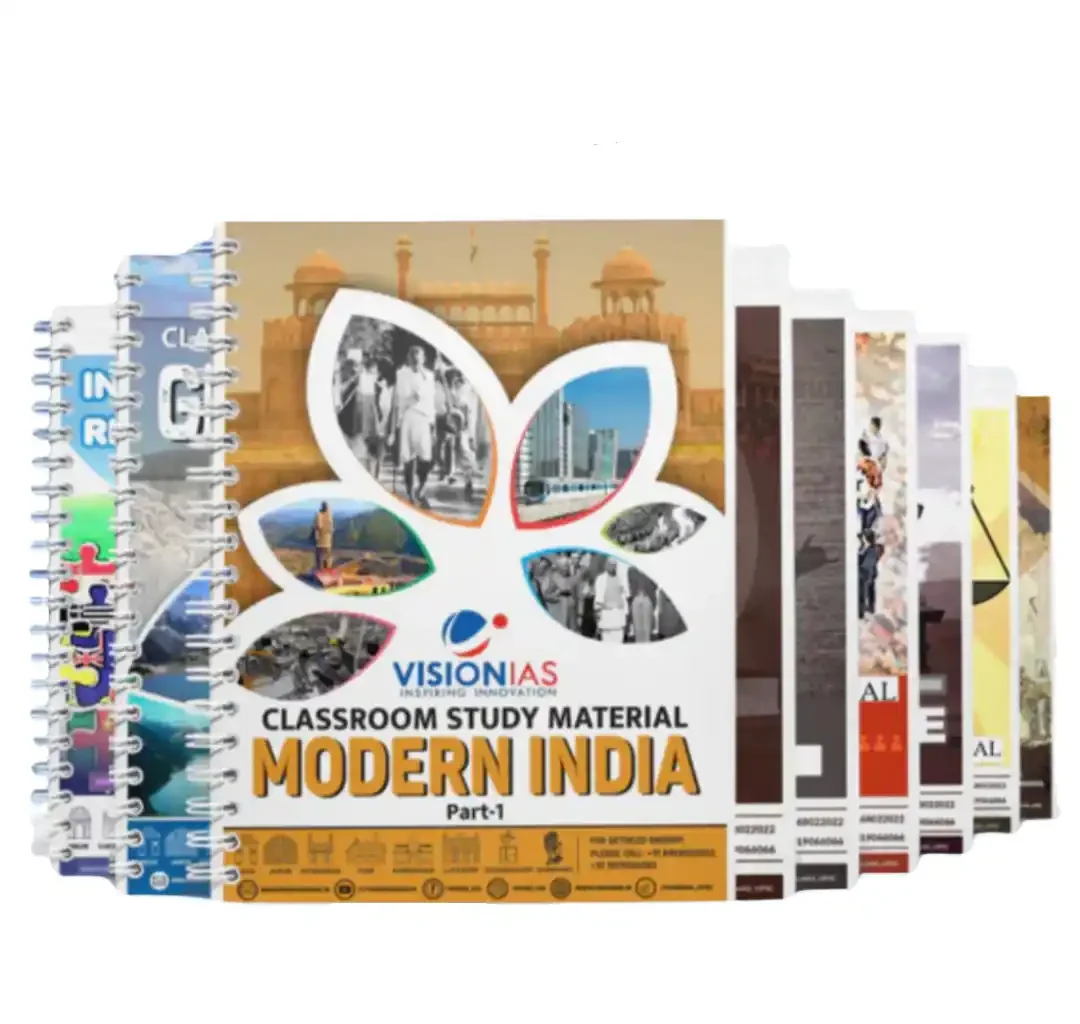
Maharashtra-specific history and geography are the differentiators from UPSC — invest early here. The rest of Paper I overlaps almost entirely with the UPSC Prelims GS syllabus, which means UPSC-grade GS notes work directly. Structured booklet sets such as the Vision IAS English Study Material cover polity, geography, economy, environment and science in a Prelims-ready format that maps cleanly onto MPSC Paper I.
Prelims Paper II (CSAT) — Aptitude Syllabus
CSAT is qualifying (33%) but candidates fail every year by ignoring it. The MPSC CSAT syllabus is identical in spirit to UPSC’s.
| CSAT Component | Topics |
|---|---|
| Comprehension | Reading passages in English and Marathi |
| Interpersonal & Communication Skills | Situational and communication-based questions |
| Logical Reasoning & Analytical Ability | Series, syllogisms, arrangements, coding-decoding |
| Decision Making & Problem Solving | Judgement-based questions (usually no negative marking) |
| General Mental Ability | Basic aptitude |
| Basic Numeracy & Data Interpretation | Numbers, orders of magnitude, tables, graphs, charts (Class X level) |
If maths intimidates you, allocate two focused hours weekly and use a dedicated CSAT resource. A timed practice environment such as the Vision IAS Prelims Test Series helps you convert the GS syllabus into exam-hall speed and accuracy under the 1/4th negative-marking regime.
MPSC Mains Syllabus and Exam Pattern (9 Papers, 1,750 Marks)
The MPSC mains syllabus is where the new pattern truly resembles UPSC. There are nine papers: two qualifying language papers (Marathi and English), plus seven merit papers — one Essay, four General Studies (GS I-IV) and two optional-subject papers. Only the seven merit papers, each 250 marks, count toward your 1,750-mark Mains total.
| Paper | Subject | Marks | Nature | Duration |
|---|---|---|---|---|
| Paper A | Marathi (Language) | 300 | Qualifying | 3 hours |
| Paper B | English (Language) | 300 | Qualifying | 3 hours |
| Paper I | Essay | 250 | Merit | 3 hours |
| Paper II | General Studies I | 250 | Merit | 3 hours |
| Paper III | General Studies II | 250 | Merit | 3 hours |
| Paper IV | General Studies III | 250 | Merit | 3 hours |
| Paper V | General Studies IV | 250 | Merit | 3 hours |
| Paper VI | Optional Paper I | 250 | Merit | 3 hours |
| Paper VII | Optional Paper II | 250 | Merit | 3 hours |
The Marathi and English papers are qualifying — you must clear the minimum threshold, but the marks are not added to merit. Do not treat them casually; failing a qualifying paper disqualifies the entire attempt regardless of your GS performance.
Detailed GS I-IV Mains Syllabus (Subject-Wise)
The four General Studies papers follow the UPSC template closely, with additional Maharashtra-centric content threaded through history, geography and governance.
| Paper | Broad Theme | Core Topics |
|---|---|---|
| GS I | Heritage, History, Geography & Society | Indian heritage & culture, modern Indian history, the freedom struggle, history and culture of Maharashtra, world & Indian geography, society, urbanisation, social empowerment |
| GS II | Governance, Constitution, Polity, Social Justice & International Relations | Indian Constitution, Panchayati Raj, governance, welfare schemes, human development sectors (health, education), Maharashtra-specific administration, international relations |
| GS III | Economy, Science & Technology, Environment, Security | Indian & Maharashtra economy, agriculture, infrastructure, science & technology, biodiversity & environment, disaster management, internal security |
| GS IV | Ethics, Integrity & Aptitude | Ethics & human interface, attitude, emotional intelligence, moral thinkers, public/civil-service values, probity in governance, case studies |
Because GS I-IV overlap so heavily with UPSC, comprehensive UPSC GS booklets are directly usable — you only need to supplement with Maharashtra-focused material for history, geography and state administration. For the Essay paper (Paper I), targeted practice with structured essay frameworks such as the Vajiram Essay Notes helps you build the argument-led writing MPSC now rewards.
MPSC Optional Subjects: List of 26 and Medium Rules
Under the new pattern you choose one optional subject with two papers (250 + 250 = 500 marks). The MPSC list of optional subjects mirrors UPSC and includes humanities, sciences, engineering, medical, commerce and Indian-language literatures.
| Category | Optional Subjects |
|---|---|
| Humanities & Social Sciences | History, Geography, Political Science & International Relations (PSIR), Sociology, Public Administration, Economics, Philosophy, Psychology, Anthropology |
| Sciences | Physics, Chemistry, Mathematics, Statistics, Botany, Zoology, Geology |
| Professional | Agriculture, Animal Husbandry & Veterinary Science, Civil Engineering, Mechanical Engineering, Electrical Engineering, Commerce & Accountancy, Law, Medical Science, Management |
| Literature | Marathi Literature (and other notified languages) |
Medium rule: you may write the optional and GS papers in either Marathi or English (except the language papers themselves). Literature optionals must be answered in the script of that language.
Which Optional Should You Choose?
Pick based on three practical filters: (1) overlap with GS to save time, (2) availability of quality material, and (3) your background. PSIR and Sociology overlap heavily with GS II and GS I/essay respectively and are among the most popular for their scoring, standardised syllabi. Geography and Public Administration also share ground with GS. If you have a graduation background in a science or professional subject, that subject can be a strong, high-scoring choice. Ready optional material such as Shubhra Ranjan PSIR Notes makes a GS-overlapping optional like Political Science efficient to prepare alongside your GS papers.
MPSC Interview / Personality Test (275 Marks)
Candidates who clear the Mains are called for the Personality Test, now carrying 275 marks. The board assesses mental alertness, critical assimilation, balance of judgement, leadership, social cohesion and integrity — not bookish knowledge. Expect questions on your Detailed Application Form (DAF), home district, graduation subject, current affairs and Maharashtra-specific issues. Since 275 marks out of the 2,025-mark final merit ride on this stage, structured mock interviews in the final months are worth the investment.
Bilingual Syllabus Reference (English & Marathi Terms)
Many aspirants prepare in Marathi but read English notes (or vice versa). This quick bilingual glossary of the core syllabus terminology keeps both audiences on the same page and helps you match this guide to the MPSC syllabus PDF in Marathi.
| English Term | Marathi Term |
|---|---|
| Preliminary Examination | Purva Pariksha (पूर्व परीक्षा) |
| Main Examination | Mukhya Pariksha (मुख्य परीक्षा) |
| General Studies | Samanya Adhyayan (सामान्य अध्ययन) |
| History | Itihas (इतिहास) |
| Geography | Bhugol (भूगोल) |
| Polity / Constitution | Rajyaghatana (राज्यघटना) |
| Economy | Arthavyavastha (अर्थव्यवस्था) |
| Ethics | Nitishastra (नीतिशास्त्र) |
| Essay | Nibandh (निबंध) |
| Optional Subject | Vaikalpik Vishay (वैकल्पिक विषय) |
| Interview / Personality Test | Mulakhat (मुलाखत) |
MPSC vs UPSC: How Similar Is the Syllabus?
The revised MPSC Rajyaseva syllabus is now roughly 70-80% aligned with UPSC in its GS and optional structure. Understanding the overlap lets you reuse UPSC-grade material efficiently.
| Aspect | MPSC Rajyaseva | UPSC CSE |
|---|---|---|
| Stages | Prelims + Mains + Interview | Prelims + Mains + Interview |
| Mains merit papers | 7 (Essay + 4 GS + 2 Optional) | 7 (Essay + 4 GS + 2 Optional) |
| Mains merit marks | 1,750 | 1,750 |
| Language papers | Marathi + English (qualifying) | Compulsory Indian language + English (qualifying) |
| State-specific content | Strong Maharashtra focus | National / all-India focus |
| Interview marks | 275 | 275 |
The practical takeaway: UPSC GS notes, optional material and answer-writing resources transfer almost directly to MPSC — you simply layer Maharashtra-specific facts on top.
How to Use This Syllabus: A Preparation Strategy
A syllabus is only useful if it drives a plan. Convert the topics above into a term-wise timetable: months 1-4 build static GS (history, polity, geography, economy) using standard booklets; months 3-onward layer daily current affairs and Maharashtra-specific notes; start your optional early since 500 marks depend on it; and from month 4 begin weekly answer-writing plus a Prelims test series. Keep a printed copy of this syllabus and tick each sub-topic as you complete a full revision — a simple checklist prevents the most common failure, which is uneven coverage. Consistent current-affairs consumption through a monthly magazine and full-length mock tests under exam conditions is what separates selected candidates from repeat aspirants. Sequence your effort to match the exam calendar: Prelims-oriented MCQ practice in the run-up to the Prelims, then a hard pivot to descriptive answer-writing and optional depth for the Mains window.
Common Mistakes MPSC Aspirants Make
First, ignoring CSAT because it is qualifying — every year candidates with strong GS scores fail the 33% CSAT cut-off. Second, treating the Marathi/English language papers casually; they are qualifying but disqualify you if failed. Third, delaying optional-subject preparation, then scrambling for 500 marks in the last months. Fourth, memorising static facts without answer-writing practice — the new descriptive Mains rewards structured, argument-led answers, not bullet-point recall. Fifth, neglecting Maharashtra-specific history, geography and administration, which are precisely where MPSC differs from UPSC and where marks are won.
Frequently Asked Questions
What is the syllabus of MPSC?
The MPSC Rajyaseva syllabus covers a two-paper objective Prelims — Paper I (General Studies: current events, history, geography, polity, economy, environment, general science) and Paper II (CSAT: comprehension, reasoning, numeracy, data interpretation) — followed by a nine-paper descriptive Mains comprising Marathi and English language papers, an Essay, four General Studies papers (GS I-IV) and two optional-subject papers, then a 275-mark Personality Test.
Is MPSC syllabus same as UPSC?
The revised MPSC syllabus is now roughly 70-80% aligned with UPSC, with the same nine-paper Mains structure, 1,750 merit marks, essay and optional papers. The key difference is MPSC’s strong focus on Maharashtra-specific history, geography and administration, and its Marathi language paper in place of UPSC’s compulsory Indian-language paper.
How many papers are there in MPSC 2026 new pattern?
The MPSC new pattern Mains has 9 papers: two qualifying language papers (Marathi and English), one Essay, four General Studies papers (GS I-IV) and two optional-subject papers. Of these, seven merit papers of 250 marks each contribute the 1,750-mark Mains total.
How many marks is the MPSC Rajyaseva exam?
Final merit is out of 2,025 marks — the Mains (7 merit papers × 250 = 1,750 marks) plus the Personality Test (275 marks). The two Prelims papers of 200 marks each (400 total) are only for screening and are not added to the final merit, and the Marathi and English Mains language papers (300 each) are qualifying only.
What are the optional subjects in MPSC Mains?
You choose one optional subject with two papers (500 marks) from 26 subjects that mirror the UPSC list — including History, Geography, PSIR, Sociology, Public Administration, Economics, Philosophy, Psychology, Anthropology; Physics, Chemistry, Mathematics, Statistics, Botany, Zoology, Geology; Agriculture, Animal Husbandry & Veterinary Science, Civil/Mechanical/Electrical Engineering, Commerce & Accountancy, Law, Medical Science, Management; and Marathi (and other notified) literature.
Is MPSC exam in Marathi or English?
MPSC Prelims question papers are bilingual (Marathi and English), except the English comprehension section. In the Mains, you may answer the GS, Essay and optional papers in either Marathi or English, while the separate Marathi and English language papers are qualifying. Literature optionals must be written in that language’s script.
Is there negative marking in MPSC Prelims?
Yes. MPSC Prelims applies a negative marking of 1/4th (0.25) of the marks allotted to a question for every wrong answer, in both Paper I and Paper II. There is no penalty for questions left unattempted, so guess only when you can eliminate options.
Where can I download the MPSC syllabus PDF?
Download the official MPSC syllabus PDF (English and Marathi) from the Commission’s website, mpsc.gov.in, under the Syllabus section, and always verify against the syllabus attached to the latest Rajyaseva notification. Use this page for a readable, planning-friendly version and the official PDF as the final authority.
Recommended Study Material
Continue Reading
OJAS GPSC Syllabus 2026: Class 1-2 Pattern + PDF Download
The OJAS GPSC syllabus for the Class 1-2 (Gujarat Administrative Service / Gujarat Civil Service) exam covers a…
UKPSC Syllabus 2025: Prelims, Mains, Exam Pattern & PDF Download
Quick answer: The UKPSC syllabus for the Combined State Civil Services (Upper PCS and Lower PCS) is a…
JPSC Syllabus 2025: Prelims, Mains Pattern + PDF Download
The JPSC syllabus for 2025 covers the Combined Civil Services Examination (CCSE) across three stages: a Preliminary exam…