UKPSC Syllabus 2025: Prelims, Mains, Exam Pattern & PDF Download
Complete UKPSC syllabus 2025 for Upper & Lower PCS — topic-wise Prelims, Mains and Interview, exam pattern, negative marking, total marks, Uttarakhand units, UPSC comparison + Hindi & English PDF download.

Quick answer: The UKPSC syllabus for the Combined State Civil Services (Upper PCS and Lower PCS) is a three-stage course — Prelims (2 objective papers: General Studies Paper 1 and a General Aptitude Test, 300 marks, screening only), Mains (descriptive papers covering General Hindi, Essay and General Studies I–V, about 1500 marks), and a Personality Test / Interview of 150 marks. Roughly one-third of the General Studies content is Uttarakhand-specific, Prelims carries negative marking of one-fourth, and the official syllabus is issued by the Uttarakhand Public Service Commission in both Hindi and English.
This single page consolidates the complete, topic-wise UKPSC syllabus and exam pattern for Prelims, Mains and Interview in one place — something most ranking pages split across separate URLs. It also breaks down the high-scoring Uttarakhand portion unit by unit, maps study material to each stage, compares UKPSC with UPSC, and gives you a printable checklist plus Hindi and English PDF guidance.
Last reviewed: October 2026. The figures below follow the recent UKPSC notification pattern; marks and paper counts have been revised across cycles, so always cross-verify against the official notification (psc.uk.gov.in) for your exam year before finalising a strategy.
UKPSC Syllabus 2025: Key Facts at a Glance
- Conducting body: Uttarakhand Public Service Commission (UKPSC), psc.uk.gov.in
- Exam: Combined State Civil / Upper Subordinate Services Examination (Upper PCS & Lower PCS)
- Stages: Prelims → Mains → Personality Test (Interview)
- Prelims: 2 objective papers, 300 marks, negative marking of ¼, screening only
- Mains: 7 descriptive papers (General Hindi, Essay, GS I–V), ~1500 marks
- Interview: Personality Test, 150 marks
- Final merit: Mains + Interview (~1650 marks); Prelims marks are not added
- Uttarakhand-specific share: about one-third of GS plus a full state-focused Mains paper (GS V)
- Languages: syllabus published in Hindi and English
UKPSC Syllabus 2025: Quick Overview
UKPSC (Uttarakhand Public Service Commission) conducts the Combined State Civil / Upper Subordinate Services Examination to recruit officers such as Deputy Collector (SDM), Deputy Superintendent of Police (DSP), Block Development Officer, Treasury Officer, District Minority Welfare Officer and more. The recruitment is held in three successive stages, and a candidate must clear each stage to move to the next.
| Stage | Nature | Purpose | Counts in Final Merit? |
|---|---|---|---|
| Preliminary Exam | Objective (MCQ) | Screening / qualifying to shortlist for Mains | No (screening only) |
| Main Exam | Descriptive (written) | Tests depth, analysis and expression | Yes |
| Personality Test | Interview | Assesses personality, awareness and suitability | Yes |
The same broad ukpsc upper pcs syllabus framework applies to Lower PCS (Subordinate Services) too, with differences mainly in post profile and cut-offs rather than the core General Studies content — which is why a consolidated resource covering Upper PCS, Lower PCS and other UKPSC posts together is far more useful than reading three separate pages.
UKPSC Exam Pattern 2025 (Prelims + Mains + Interview)
Before the topic lists, here is the full ukpsc exam pattern 2025 at a glance so you know exactly how marks are distributed across all three stages.
| Stage | Papers | Type | Total Marks | Negative Marking |
|---|---|---|---|---|
| Prelims | 2 (GS Paper 1 + General Aptitude Test) | Objective | 300 | Yes (¼ per wrong answer) |
| Mains | 7 (General Hindi, Essay, GS I–V) | Descriptive | ~1500 | No |
| Interview | Personality Test | Oral | 150 | No |
Key takeaways: Prelims is only a screening gate — its marks are not added to the final merit list. The final rank is decided by Mains (~1500) + Interview (150). That is why strong Mains answer-writing and a polished personality test matter more than a high Prelims score.
UKPSC Prelims Syllabus 2025 (Paper 1 & Paper 2)
The ukpsc prelims syllabus has two objective papers held on the same day. Paper 1 (General Studies) is the scoring, merit-deciding paper for the Prelims stage; Paper 2 is the General Aptitude Test (GAT).
| Paper | Subject | Questions | Marks | Duration |
|---|---|---|---|---|
| Paper 1 | General Studies | 150 | 150 | 2 hours |
| Paper 2 | General Aptitude Test (GAT) | 100 | 150 | 2 hours |
Both papers carry negative marking of one-fourth (0.25) of the marks assigned to a question for every incorrect answer. A crucial feature of UKPSC Prelims is that approximately one-third of Paper 1 is dedicated to Uttarakhand-specific questions — its geography, history, polity, economy, culture and current affairs.
UKPSC Prelims Paper 1 — Unit-wise Topics
| Unit | Core Topics | Uttarakhand Component |
|---|---|---|
| History of India & National Movement | Ancient, medieval & modern India; freedom struggle; social & religious reform movements | History of Uttarakhand, local freedom movements, princely states, regional leaders |
| Indian & World Geography | Physical, social & economic geography of India and the world; rivers, climate, resources | Physiography, rivers, glaciers, forests, climate & natural resources of Uttarakhand |
| Indian Polity & Governance | Constitution, political system, Panchayati Raj, public policy, rights issues | Uttarakhand administration, local self-government, state policies & schemes |
| Economic & Social Development | Sustainable development, poverty, inclusion, demographics, social sector initiatives | Uttarakhand economy, tourism, hydropower, horticulture, migration issues |
| General Science & Technology | Everyday science, environment, ecology, biodiversity, climate change | Himalayan ecology, biodiversity, disaster management in the hill state |
| Current Events | National & international current affairs of significance | State-level schemes, appointments, awards, events & sports of Uttarakhand |
UKPSC Prelims Paper 2 — General Aptitude Test (GAT)
Paper 2 tests reasoning and basic numeracy much like a CSAT paper. Topics include:
- Comprehension and interpersonal / communication skills
- Logical reasoning and analytical ability
- Decision-making and problem-solving
- General mental ability
- Numerical ability and data interpretation (Class X level — numbers, orders of magnitude, charts, tables)
- Hindi and English language comprehension skills
Because the aptitude foundation overlaps heavily with UPSC CSAT, candidates often sharpen it with a dedicated resource such as the Vajiram CSAT complete booklet set with practice questions before moving to state-specific material.
UKPSC Mains Syllabus 2025 (Paper-by-Paper Breakdown)
The ukpsc mains syllabus is entirely descriptive and is where the examination is actually won. The Mains stage for Upper PCS has seven papers totalling about 1500 marks. Below is the pattern followed by a topic breakdown of each paper.
| Paper | Subject | Marks | Duration |
|---|---|---|---|
| Paper 1 | General Hindi | 300 | 3 hours |
| Paper 2 | Essay | 200 | 3 hours |
| Paper 3 | General Studies I | 200 | 3 hours |
| Paper 4 | General Studies II | 200 | 3 hours |
| Paper 5 | General Studies III | 200 | 3 hours |
| Paper 6 | General Studies IV | 200 | 3 hours |
| Paper 7 | General Studies V | 200 | 3 hours |
Total Mains ≈ 1500 marks. Note that some older notifications show Mains totals near 1300 and a different number of GS papers; the structure above reflects the recent five-GS-paper pattern. Always confirm against the notification for your attempt.
Paper-wise Mains Topics
| Paper | Indicative Topic Coverage |
|---|---|
| General Hindi | Essay/precis, grammar, idioms, letter & official drafting, translation, comprehension — qualifying-level language competence |
| Essay | Multiple essays across sections — social, political, economic, scientific, philosophical and Uttarakhand-centric themes |
| GS I | History & culture of India and Uttarakhand, Indian heritage, world & Indian geography, Uttarakhand geography |
| GS II | Indian Constitution, polity, governance, social justice, international relations, Uttarakhand administration & governance |
| GS III | Economy, agriculture, science & technology, environment, biodiversity, disaster management — with Uttarakhand economy & ecology |
| GS IV | Ethics, integrity, aptitude, emotional intelligence, probity in governance, case studies |
| GS V | Uttarakhand-focused paper: state history, society, culture, administration, development & current issues |
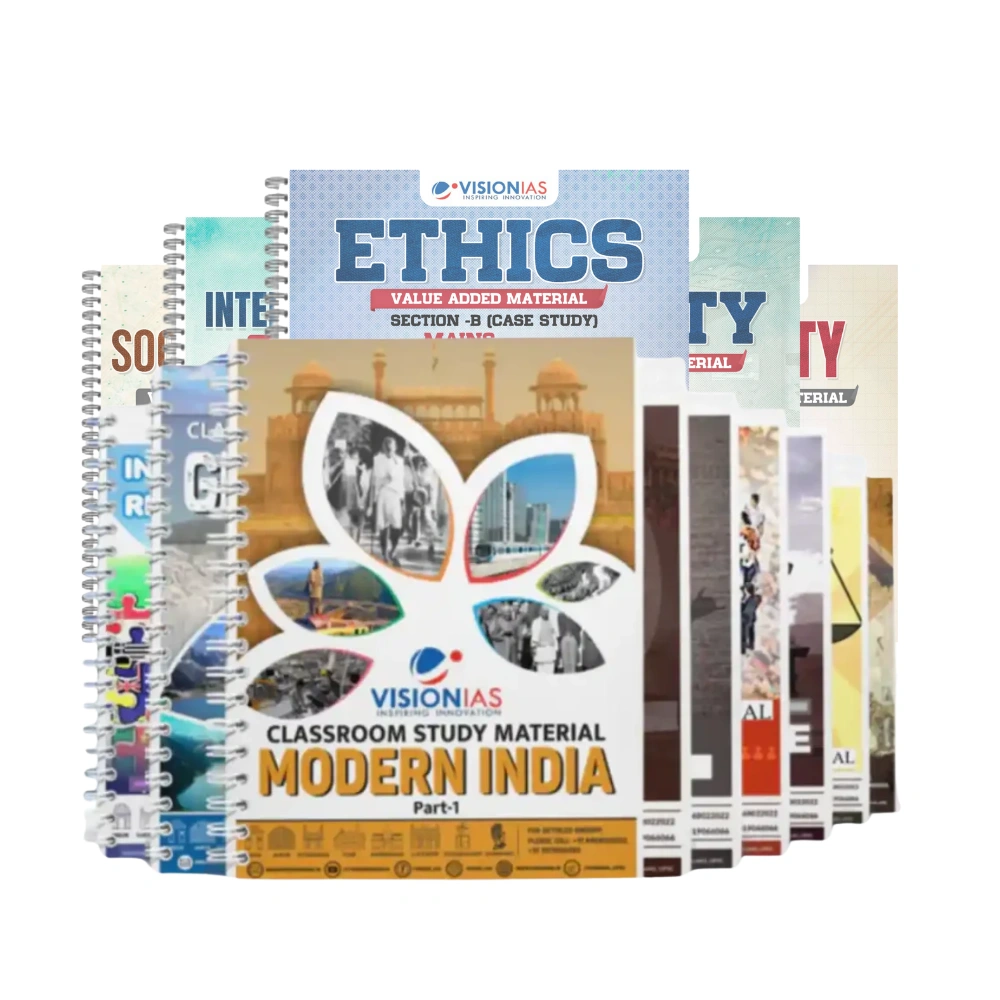
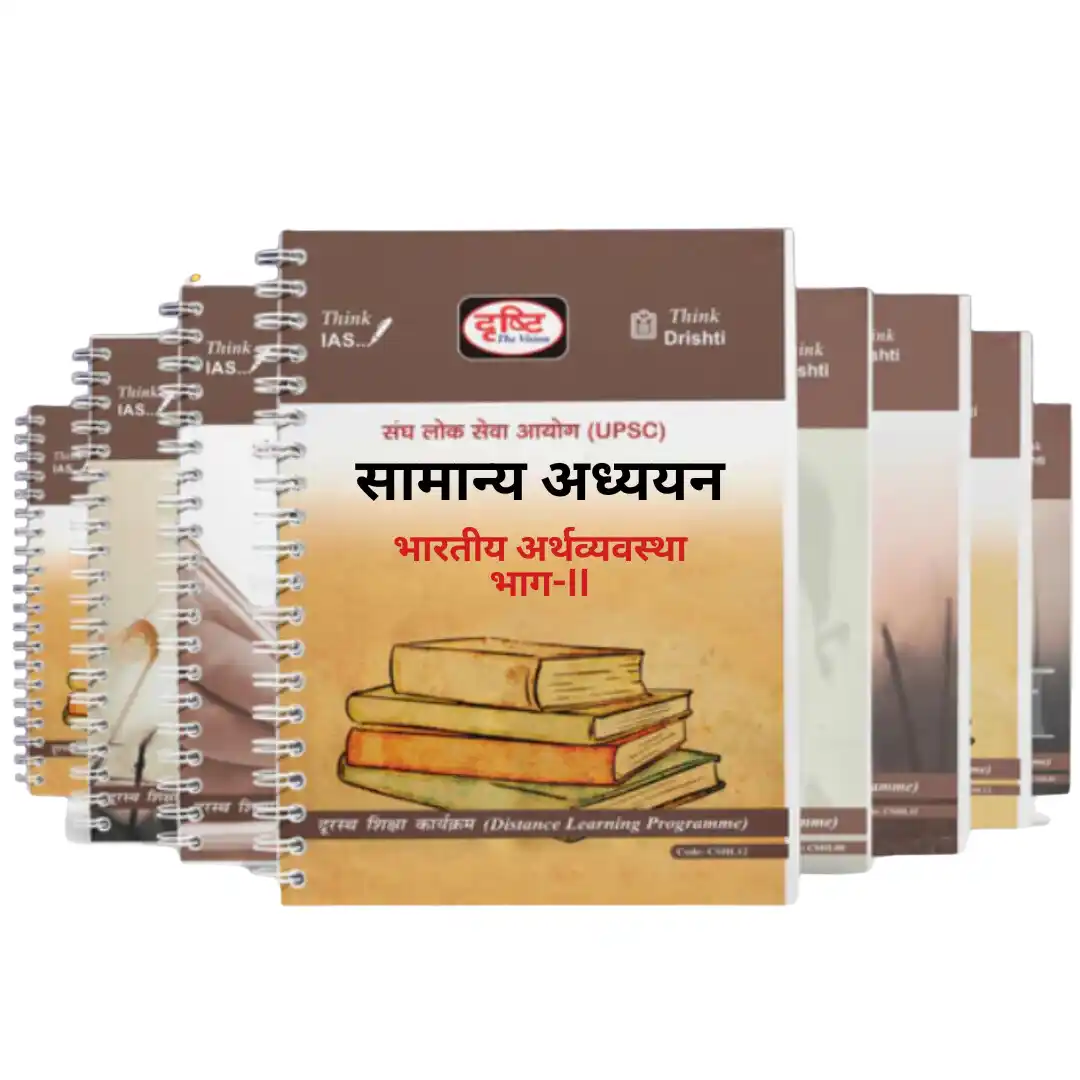
For the GS core (history, polity, economy, geography, environment and ethics), most UKPSC toppers build on standard civil-services notes and then layer Uttarakhand content on top. A comprehensive printed GS set like the Vision IAS GS 2026-27 booklets with value-added materials covers the national portion of GS I–IV thoroughly, and Hindi-medium aspirants can use the Drishti IAS Hindi study material (18 booklets) for the same ground in Hindi.
UKPSC Interview / Personality Test (150 Marks)
Candidates who clear Mains are called for the Personality Test, carrying 150 marks. The board assesses:
- Mental alertness, clarity and logical exposition of ideas
- Balance of judgement and depth of interest
- Social cohesion and leadership qualities
- Awareness of Uttarakhand affairs, your district/home region and current national issues
- Honesty, integrity and overall suitability for a civil service role
The interview is unstructured — questions often start from your Detailed Application Form (DAF): home district, graduation subject, hobbies and work experience. Daily current affairs, especially Uttarakhand-centric developments, are indispensable here; a monthly resource such as the Vision IAS Current Affairs Magazine (January 2026) keeps you anchored to recent national events.
The ~1/3rd Uttarakhand-Specific Portion, Decoded
The single most under-served, high-return area of the UKPSC syllabus is the Uttarakhand component. Because about one-third of GS questions — and an entire Mains paper (GS V) — focus on the state, mastering this section can lift your score faster than any national topic. Here is the topic-by-topic map.
| Domain | What to Study |
|---|---|
| Geography | Districts, major rivers (Ganga, Yamuna, Kali, Alaknanda), glaciers, lakes, national parks (Jim Corbett, Nanda Devi, Valley of Flowers), forests, soil & minerals |
| History | Katyuri, Chand & Panwar/Gorkha rule; Kumaon & Garhwal history; Tehri princely state; Coolie-Begar & Dola-Palki movements; Chipko; statehood movement (2000) |
| Polity & Administration | Formation of Uttarakhand, state legislature, districts & divisions, revenue administration, local bodies, major state departments |
| Economy | Tourism & pilgrimage economy (Char Dham), hydropower, horticulture, forest produce, MSMEs, migration & employment, state budget highlights |
| Art, Culture & Society | Folk dances (Langvir, Barada Nati), festivals, fairs, cuisine, languages & dialects, tribes (Jaunsari, Bhotia, Tharu, Buksa, Raji) |
| Current Affairs | State schemes, budget, appointments, awards, sports persons, recent policies and development projects of Uttarakhand |
Standard national GS books barely touch this material, so pair your core notes with state yearbooks and the UKPSC previous-year questions to spot recurring state themes.
UKPSC Syllabus 2025 PDF Download (English & Hindi)
You can obtain the official, authoritative ukpsc syllabus 2025 pdf download directly from the Uttarakhand Public Service Commission’s official website (psc.uk.gov.in) under the relevant Combined State Civil Services advertisement. The commission publishes the detailed syllabus as an annexure to the examination notification.
| Version | Where to Get It | Best For |
|---|---|---|
| English PDF | Official UKPSC notification annexure (psc.uk.gov.in) | English-medium aspirants; UPSC cross-preparation |
| Hindi PDF (हिंदी) | Same notification — Hindi is the default/parallel medium | Hindi-medium aspirants writing Mains in Hindi |
A clean ukpsc syllabus in hindi is especially important because a large share of UKPSC candidates attempt the Mains in Hindi, and the General Hindi paper itself demands strong command of the language. If you prepare in Hindi, build your GS foundation from a full Hindi set such as the Vision IAS GS Notes 2025-26 (Hindi medium) and track the syllabus against the official Hindi annexure so no sub-topic is missed. Keeping a printed topic-wise checklist (below) alongside the PDF is the simplest way to ensure full coverage.
UKPSC Upper PCS Total Marks (Prelims + Mains + Interview)
Here is the complete marks picture for Upper PCS, which answers one of the most common aspirant queries.
| Stage | Marks | Role in Selection |
|---|---|---|
| Prelims (Paper 1 + Paper 2) | 300 | Screening only — not added to final merit |
| Mains (7 papers) | ~1500 | Counted in final merit |
| Interview / Personality Test | 150 | Counted in final merit |
| Final Merit Total | ~1650 | Mains + Interview |
Lower PCS (Subordinate Services) follows a comparable staged structure and shares most of the General Studies content; the practical difference lies in the posts offered and the cut-offs, not in the fundamentals of the syllabus.
UKPSC vs UPSC Syllabus: Overlap for Dual Aspirants
Many Uttarakhand aspirants also prepare for UPSC. The good news: the GS core overlaps heavily, so one set of national notes serves both exams. The differences are in the state-specific layer and the language paper.
| Element | UKPSC | UPSC (CSE) |
|---|---|---|
| GS core (History, Polity, Geography, Economy, Environment, Ethics) | Yes — strong overlap | Yes |
| State-specific content | Heavy (~1/3 Prelims + dedicated GS V) | Minimal |
| Aptitude paper | General Aptitude Test (GAT) | CSAT (qualifying) |
| Compulsory language | General Hindi (300 marks, in merit) | Qualifying language papers only |
| Optional subject | No separate optional | Yes (one optional, 2 papers) |
| Final merit stages | Mains + Interview | Mains + Interview |
Practically, a dual aspirant can use common GS material for 70–80% of the preparation and only add Uttarakhand-specific study and General Hindi practice for UKPSC. A standard full GS course such as the Vision IAS complete GS notes (Prelims + Mains, 57 booklets) can anchor both exams simultaneously.
Stage-wise Preparation Strategy & Study-Material Mapping
A syllabus is only useful if you know how to cover it. Here is a practical, stage-wise plan with material mapped to each phase.
| Phase | Focus | How to Cover It |
|---|---|---|
| Foundation (Months 1–4) | GS core + NCERT base | Build concepts in History, Polity, Geography, Economy from standard notes; read NCERTs for fundamentals |
| State layer (Months 3–6) | Uttarakhand GK, geography, history, economy | Dedicated state material + previous-year UKPSC questions to map recurring themes |
| Prelims push (Months 5–7) | MCQ accuracy + GAT/aptitude | Topic-wise MCQs, full mock tests, CSAT-style aptitude practice |
| Mains build-up (Months 6–10) | Answer writing + Essay + General Hindi | Daily answer practice, essay structure, Hindi grammar & drafting |
| Interview (post-Mains) | DAF, current affairs, personality | Mock interviews, Uttarakhand & national current affairs revision |
How to cover each GS unit
- History & Culture: National freedom struggle from standard notes; then Uttarakhand history and folk culture separately.
- Polity & Governance: Constitution and governance from core GS material; add Uttarakhand administration and state schemes.
- Economy: National economy concepts first, then state economy — tourism, hydropower, horticulture, migration.
- Science, Environment & Disaster Management: Emphasise Himalayan ecology and disaster management, which are repeatedly asked in this seismically active hill state.
- Current Affairs: Maintain a parallel national + Uttarakhand current-affairs log throughout.
Hindi-medium candidates preparing the Drishti ecosystem can use the Drishti IAS GS Notes in Hindi (18 booklets) for the core, while anyone wanting the exact official wording of civil-services syllabi for reference can keep the GS Score latest syllabus booklet on the desk for quick mapping.
Printable Topic-wise UKPSC Syllabus Checklist
Use this tracker to tick off units as you finish them. Print it and keep it in your notebook — it is the fastest way to guarantee nothing in the syllabus is left uncovered.
| Stage | Unit / Paper | Status |
|---|---|---|
| Prelims P1 | History of India & National Movement (+ Uttarakhand) | ☐ |
| Prelims P1 | Indian & World Geography (+ Uttarakhand) | ☐ |
| Prelims P1 | Indian Polity & Governance (+ Uttarakhand) | ☐ |
| Prelims P1 | Economic & Social Development (+ Uttarakhand) | ☐ |
| Prelims P1 | General Science & Technology | ☐ |
| Prelims P1 | Current Events (National + Uttarakhand) | ☐ |
| Prelims P2 | General Aptitude Test (reasoning, comprehension, numeracy) | ☐ |
| Mains | General Hindi | ☐ |
| Mains | Essay | ☐ |
| Mains | GS I–V (incl. Uttarakhand GS paper) | ☐ |
| Interview | DAF + Uttarakhand & national current affairs | ☐ |
Common Mistakes UKPSC Aspirants Make
- Ignoring the Uttarakhand portion until the end — it is nearly a third of Prelims and a full Mains paper; start it early.
- Treating Prelims marks as part of the merit — they are only a screening gate; conserve energy for Mains.
- Neglecting General Hindi — 300 Mains marks ride on it, yet many English-medium aspirants under-prepare the language paper.
- Using outdated pattern figures — marks and paper counts have changed across cycles; verify against the current notification.
- Skipping answer-writing practice — the exam is decided in descriptive Mains, not objective Prelims.
- No current-affairs continuity — state and national affairs feed Prelims, Mains and the interview alike.
Frequently Asked Questions
What is the syllabus of UKPSC?
The UKPSC syllabus spans three stages. Prelims has two objective papers — General Studies Paper 1 (History, Geography, Polity, Economy, Science and Current Affairs, each with an Uttarakhand component) and a General Aptitude Test. Mains is descriptive, covering General Hindi, Essay and General Studies I–V (including a dedicated Uttarakhand paper). The final stage is a 150-mark Personality Test.
How many papers are there in UKPSC Mains?
The Upper PCS Mains typically has seven descriptive papers — General Hindi, Essay, and General Studies I, II, III, IV and V — totalling around 1500 marks. Always confirm the exact number against your cycle’s notification, as the structure has been revised across years.
What is the exam pattern for UKPSC Prelims?
UKPSC Prelims has two objective papers of two hours each: General Studies Paper 1 (150 questions, 150 marks) and a General Aptitude Test (150 marks). About one-third of Paper 1 is Uttarakhand-specific, and there is negative marking. Prelims is only a screening stage and its marks are not added to the final merit.
Is there negative marking in the UKPSC exam?
Yes. Both objective Prelims papers carry negative marking of one-fourth (0.25) of the marks allotted to a question for each wrong answer. The descriptive Mains papers and the interview have no negative marking.
What is the total marks of UKPSC Upper PCS?
Prelims carries 300 marks (screening only), Mains about 1500 marks, and the Personality Test 150 marks. The final merit is decided by Mains plus Interview — roughly 1650 marks — since Prelims marks do not count toward the final ranking.
How much of the UKPSC syllabus is Uttarakhand-specific?
Roughly one-third of the General Studies content is state-focused. In Prelims, about a third of General Studies Paper 1 is dedicated to Uttarakhand’s history, geography, polity, economy, culture and current affairs. In Mains, General Studies V is an entire paper devoted to Uttarakhand, and GS I–III each carry an additional state layer. This makes the Uttarakhand portion one of the highest-return areas to master.
Is the UKPSC syllabus available in Hindi?
Yes. UKPSC publishes the syllabus in both Hindi and English as an annexure to the official notification on psc.uk.gov.in, and a large share of candidates write the Mains in Hindi. The compulsory General Hindi paper (300 marks) also demands strong command of the language, so Hindi-medium aspirants should track their preparation against the official Hindi annexure.
Is the UKPSC syllabus similar to the UPSC syllabus?
The GS core — History, Polity, Geography, Economy, Environment and Ethics — overlaps heavily with UPSC, so a common set of national notes serves both exams. The key differences are UKPSC’s large Uttarakhand-specific portion, its 300-mark compulsory General Hindi paper that counts in the merit, and the absence of a separate optional subject. UPSC, by contrast, has an optional subject and only qualifying language papers.
Is the UKPSC syllabus the same for Upper PCS and Lower PCS?
The core General Studies content and the broad three-stage structure are largely shared between Upper PCS and Lower PCS (Subordinate Services). The practical differences lie in the posts offered, the number of vacancies and the cut-offs rather than in the fundamentals of the syllabus, so a single consolidated preparation covers both.
Recommended Study Material
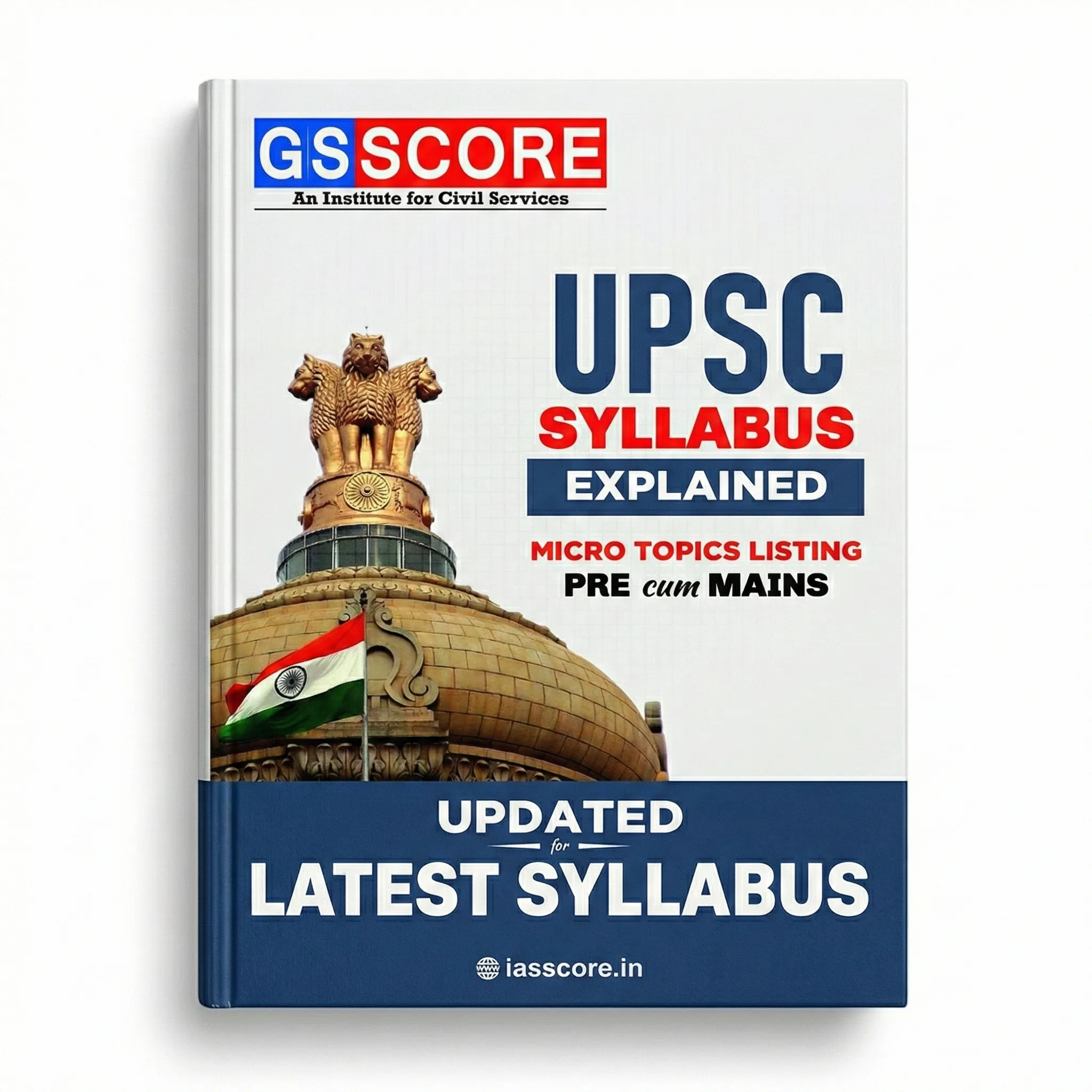

Continue Reading
JPSC Syllabus 2026: Prelims, Mains Pattern + PDF
The JPSC syllabus for the Combined Civil Services Examination is prescribed by the Jharkhand Public Service Commission (JPSC,…

SSC CGL Preparation 2026: Strategy, Study Plan & Books
SSC CGL preparation in 2026 comes down to three things done consistently: master the exam pattern and topic-wise…
RRB JE Syllabus 2025: CBT 1 & CBT 2 Subjects, Pattern & PDF
The RRB JE syllabus is split across two computer-based tests: CBT 1 covers Mathematics, General Intelligence & Reasoning,…