KVS Syllabus 2025-26: PRT, TGT, PGT Pattern + PDF
Complete KVS syllabus 2025-26 for PRT, TGT & PGT: two-tier exam pattern, marking scheme, subject-wise topics, negative marking rules and free PDF download.

The kvs syllabus for the 2025-26 recruitment cycle follows a two-tier structure: a Tier-1 screening test of 100 objective questions (150 marks) covering reasoning, quantitative ability, computer literacy, GK & current affairs, English and Hindi, followed by a Tier-2 subject-and-pedagogy paper of 150 marks — and finally a demonstration/interview that decides selection for PRT, TGT and PGT posts in Kendriya Vidyalayas. There is no negative marking under the standard pattern. This guide gives you the complete post-wise syllabus, the latest KVS exam pattern 2025, marking scheme, section-wise weightage, a preparation timeline, and where to download the official syllabus PDF — with no lead capture.
Quick facts at a glance:
- Tiers: Tier-1 (qualifying screening) + Tier-2 (merit-deciding) + interview/demonstration.
- Tier-1: 100 MCQs, 150 marks, six fixed parts, common to all posts.
- Tier-2: 150 marks, concerned subject + pedagogy, post-specific.
- Negative marking: None under the standard pattern — attempt every question.
- Medium: Bilingual (English & Hindi), except the language papers.
- PDF source: Official post-wise syllabus at kvsangathan.nic.in, free and never gated.
Before we begin, one clarification that most pages skip: this article covers the KVS recruitment (teacher) syllabus — not the KVS academic class-wise (Class 1-12) study syllabus. If you searched for the school subject curriculum, you want the academic session syllabus on kvsangathan.nic.in; if you are an aspirant preparing for the KVS PRT/TGT/PGT exam, you are in exactly the right place.
KVS Recruitment vs KVS Academic Syllabus: Clear the Confusion First
“KVS syllabus” is one of the most ambiguous exam-prep queries in India because it maps to two completely different things. Getting this wrong wastes weeks of preparation, so settle it before you download anything.
| Aspect | KVS Recruitment Syllabus (this guide) | KVS Academic Syllabus |
|---|---|---|
| Who needs it | Aspirants applying for PRT/TGT/PGT teacher jobs | Students & teachers of Class 1-12 in KVs |
| Issued by | KVS (Kendriya Vidyalaya Sangathan) recruitment cell | KVS following NCERT/CBSE framework |
| Structure | Tier-1 + Tier-2 + interview/demo | Subject-wise chapters per class per session |
| Goal | Get selected as a teacher | Cover the class curriculum for exams |
Everything below is the recruitment syllabus. KVS conducts recruitment through a Computer Based Test (CBT) and the pattern follows the two-tier model used in the last major recruitment drive, which is the template being carried forward for 2025-26.
KVS Exam Pattern 2025: The Two-Tier Structure Explained
The KVS exam pattern 2025 is built around two stages. Tier-1 is a screening test that qualifies you for Tier-2; Tier-2 is the merit-deciding subject paper. Understanding the split between the KVS Tier 1 and Tier 2 syllabus is the single most important thing an aspirant must internalise, because your study time should be divided accordingly.
How many stages/tiers are there in the KVS recruitment exam?
There are effectively three stages of selection: (1) Tier-1 written screening test, (2) Tier-2 written subject & pedagogy test, and (3) a demonstration/skill test and interview. Only Tier-2 marks and interview marks count toward the final merit list — Tier-1 is qualifying-cum-screening.
| Stage | Type | Purpose | Counts in merit? |
|---|---|---|---|
| Tier-1 | Objective CBT | Screening — shortlist candidates | Qualifying |
| Tier-2 | Objective (+ descriptive where applicable) | Subject knowledge & pedagogy | Yes |
| Interview / Demo | Teaching demonstration + interview | Assess teaching ability | Yes |
Because only Tier-2 and the interview feed the merit list, many aspirants clear Tier-1 comfortably yet fail to convert — the real battle is Tier-2 depth plus a confident teaching demonstration. Plan your timeline with that reality in mind.
KVS Tier-1 Syllabus & Pattern: 100 MCQs Across 6 Parts
Tier-1 is common to all posts — PRT, TGT and PGT candidates sit the same screening test. It has 100 multiple-choice questions carrying 150 marks, and the paper is bilingual (English and Hindi) except for the language sections. The six parts are fixed and appear in every KVS recruitment paper.
| Part | Section | No. of Questions | Marks |
|---|---|---|---|
| Part-I | General English | 10 | 15 |
| Part-II | General Hindi | 10 | 15 |
| Part-III | General Knowledge & Current Affairs | 10 | 15 |
| Part-IV | Reasoning Ability | 10 | 15 |
| Part-V | Computer Literacy | 10 | 15 |
| Part-VI | Subject Concerned / Perspectives on Education & Pedagogy | 50 | 75 |
Note the weightage lesson here: half the Tier-1 paper (50 of 100 questions) tests your subject and pedagogy knowledge. The five general sections together carry the other half. So even in the “screening” stage, subject command is decisive.
Tier-1 topic checklist you can tick off
- General English: reading comprehension, error spotting, fill in the blanks, synonyms/antonyms, one-word substitution, active-passive, narration, idioms & phrases.
- General Hindi: संधि, समास, अलंकार, मुहावरे, पर्यायवाची, विलोम, अपठित गद्यांश, रस और छंद.
- GK & Current Affairs: national & international events, sports, awards, static GK (history, geography, polity, economy), science, education-related news.
- Reasoning: analogy, coding-decoding, series, blood relations, direction sense, syllogism, seating arrangement, non-verbal reasoning.
- Computer Literacy: fundamentals of computers, MS Office, internet & email, input/output devices, shortcuts, operating systems, ICT in education.
KVS Tier-2 Syllabus & Pattern: Subject + Pedagogy Deep Dive
Tier-2 is where posts diverge. It carries 150 marks and tests the concerned subject in depth plus pedagogy (child development for PRT, teaching methodology for TGT/PGT). This is the merit-deciding paper. The difference between the Tier 1 and Tier 2 syllabus is essentially breadth vs depth: Tier-1 screens general aptitude and basic subject familiarity; Tier-2 demands mastery of the actual subject you will teach.
| Component | Weight (indicative) | Focus |
|---|---|---|
| Subject-concerned (in-depth) | ~60-70% | Graduate/post-graduate level subject content |
| Pedagogy / teaching methodology | ~20-30% | How to teach the subject; assessment |
| Perspectives on Education & Leadership | ~10% | Policies, NEP, educational psychology |
What is the difference between KVS Tier 1 and Tier 2 syllabus?
Tier-1 is a broad screening test with general aptitude (English, Hindi, GK, reasoning, computers) plus a subject sample. Tier-2 drops the general aptitude and goes deep into the concerned subject at a higher difficulty level, adding heavier pedagogy and “Perspectives on Education & Leadership.” In short: Tier-1 checks whether you are broadly eligible; Tier-2 checks whether you can actually teach the subject.
KVS PRT Syllabus 2025-26: Full Topic Checklist
The kvs prt syllabus targets primary teachers (Classes 1-5), so it is built on child-centric pedagogy and foundational subjects. Beyond the six common Tier-1 parts, the PRT subject-concerned section revolves around the following. Print this and tick topics as you finish them.
| PRT Subject Area | Key Topics to Cover |
|---|---|
| Child Development & Pedagogy | Development & learning, Piaget/Vygotsky/Kohlberg, inclusive education, learning difficulties, motivation, assessment (CCE) |
| Language I & II (English/Hindi) | Comprehension, language pedagogy, grammar, teaching of reading & writing |
| Mathematics | Number system, fractions, geometry, measurement, data handling, pedagogy of maths |
| Environmental Studies (EVS) | Family & friends, food, shelter, water, travel, things we make & do, EVS pedagogy |
| Teaching Aptitude | Classroom management, teaching-learning material, activity-based learning |
PRT is heavily NCERT-driven — the primary-level NCERT textbooks (Classes 1-5, and up to 8 for depth) are your core resource. A structured GS/foundational base helps for the GK and reasoning sections; aspirants often supplement with concise notes like the GS Score Latest Syllabus Booklet to keep the general portions organised.
KVS TGT Syllabus 2025-26: Subject-Wise Detailed Topics
The kvs tgt syllabus is for Trained Graduate Teachers (Classes 6-10). Where most pages just list subject names, here is the actual detailed breakdown under each TGT subject — the depth gap that helps you outscore other candidates.
| TGT Subject | Detailed Topics |
|---|---|
| Mathematics | Number systems, algebra, linear equations, geometry, mensuration, trigonometry basics, statistics, probability |
| Science | Physics (motion, force, light, electricity), Chemistry (matter, atoms, reactions), Biology (cell, tissues, life processes, ecology) |
| Social Studies (SST) | History (medieval-modern India), Geography (resources, agriculture, climate), Civics (democracy, constitution), Economics basics |
| English | Prose & poetry, grammar, composition, literature devices, language teaching methods |
| Hindi | गद्य-पद्य, व्याकरण, रचना, हिंदी शिक्षण विधि |
| Sanskrit | व्याकरण, श्लोक, संधि-समास, अनुवाद, संस्कृत शिक्षण शास्त्र |
TGT difficulty is pitched roughly at graduation level. The subject content typically follows NCERT up to Class 10 plus one level above, and the pedagogy component tests how you would teach that subject to secondary students. Current affairs and GK cannot be ignored — a monthly compilation such as the Vision IAS Current Affairs Magazine (January 2026) keeps the dynamic GK section covered efficiently.
KVS PGT Syllabus 2025-26: Post-Graduate Level Subject Detail
The kvs pgt syllabus is for Post Graduate Teachers (Classes 11-12) and is the most demanding, pitched at post-graduation level. Again, most competing pages give only subject names — here is the actual topic depth per PGT subject.
| PGT Subject | Detailed Topics |
|---|---|
| Mathematics | Sets & functions, calculus (limits, derivatives, integrals), matrices & determinants, vectors, 3D geometry, differential equations, linear programming |
| Physics | Mechanics, thermodynamics, electrostatics, current electricity, magnetism, optics, modern physics, semiconductors |
| Chemistry | Physical (thermodynamics, equilibrium, electrochemistry), organic (hydrocarbons, biomolecules), inorganic (periodicity, coordination) |
| Biology | Cell biology, genetics, evolution, human physiology, biotechnology, ecology, reproduction |
| Commerce | Accountancy, business studies, financial statements, partnership, company accounts, marketing, management principles |
| Economics | Micro & macroeconomics, national income, money & banking, statistics, Indian economic development |
| Computer Science | Programming, data structures, DBMS, networking, operating systems, Boolean logic, OOPs concepts |
| English | Literature (poetry, drama, prose), linguistics, ELT methods, phonetics, comprehension & writing |
| History | Ancient, medieval, modern India, world history, historiography |
PGT aspirants must go beyond Class 12 NCERT into graduation and post-graduation standard reference books for the concerned subject. The pedagogy and “Perspectives on Education & Leadership” portions remain common and are reliably scoring if prepared well.
Perspectives on Education & Leadership: The Underrated Scoring Section
Top pages barely touch this, yet it is a high-yield Tier-2 section common to PRT, TGT and PGT. It rewards conceptual clarity over rote learning, so a few focused hours can lift your merit score meaningfully.
- Educational psychology: theories of learning, intelligence, personality, motivation, individual differences.
- Policy & frameworks: NEP 2020, RTE Act 2009, NCF, KVS ethos and objectives.
- Leadership & management: school leadership, decision-making, team building, change management, conflict resolution.
- Inclusive & child-centric education: special needs, gender sensitivity, guidance & counselling.
- Assessment: continuous & comprehensive evaluation, formative vs summative, competency-based assessment.
KVS Marking Scheme, Total Marks, Duration & Negative Marking
The overall selection weightage combines Tier-2 written marks with the interview/demonstration. The written CBT is time-bound and, importantly, there is no negative marking in the KVS recruitment exam under the standard pattern — a strategic advantage that means you should attempt every question.
| Parameter | Detail |
|---|---|
| Total questions (Tier-1) | 100 MCQs |
| Total marks (Tier-1) | 150 marks |
| Tier-2 marks | 150 marks (subject + pedagogy) |
| Duration | 150-180 minutes (as notified) |
| Negative marking | No negative marking |
| Medium | Bilingual (English & Hindi), except language papers |
| Interview / Demo | Separate weightage in final merit |
Is there negative marking in the KVS exam?
No. The KVS recruitment CBT does not deduct marks for wrong answers under the standard pattern. Because every attempt is risk-free, you should mark an answer for all 100 questions — leaving blanks only costs you potential marks. Always confirm the exact marking scheme in the official notification, as KVS can revise it per recruitment cycle.
Section-Wise Weightage & Preparation Strategy Mapped to the Syllabus
Instead of studying randomly, map your effort to where the marks are. Half of Tier-1 and almost all of Tier-2 is subject & pedagogy — so that must be your first priority.
| Priority | Area | Why | Suggested effort |
|---|---|---|---|
| 1 | Subject-concerned (Tier-1 Part-VI + Tier-2) | Highest weightage, merit-deciding | 50% |
| 2 | Pedagogy & Perspectives on Education | Scoring, conceptual, common to all | 20% |
| 3 | Reasoning + Computer Literacy | Easy, high accuracy possible | 15% |
| 4 | English + Hindi | Scoring with grammar practice | 10% |
| 5 | GK & Current Affairs | Wide but manageable with revision | 5% |
A realistic 4-month preparation timeline
- Month 1: Finish the concerned subject core (NCERT for PRT/TGT; graduation texts for PGT). Start daily current affairs.
- Month 2: Cover pedagogy, child development and Perspectives on Education & Leadership. Begin reasoning and computer literacy practice.
- Month 3: English & Hindi grammar drills, GK static revision, and previous-year-paper analysis section by section.
- Month 4: Full-length mock tests, timed practice (no negative marking = attempt all), and targeted revision of weak areas.
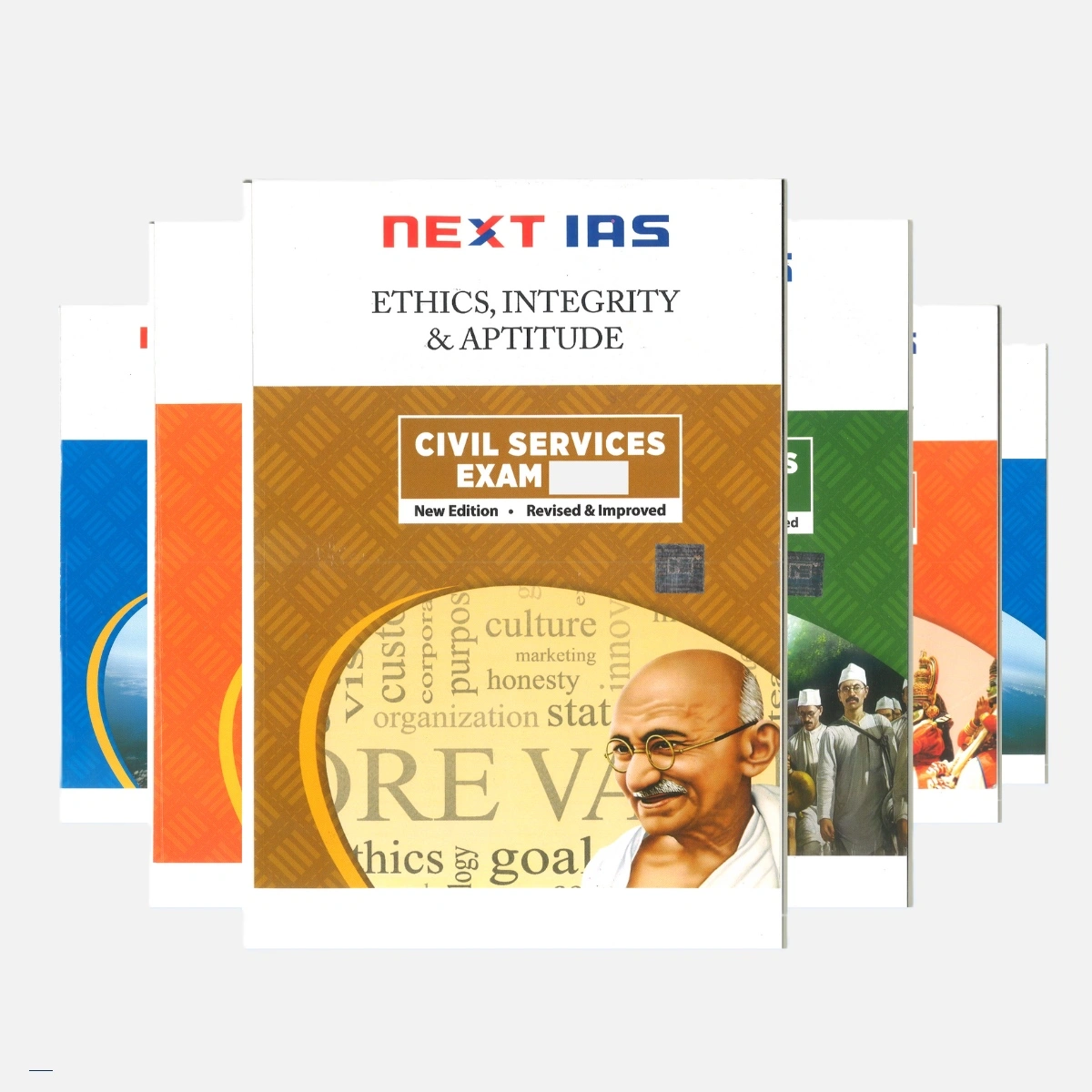
Since a strong general-studies base underpins GK, current affairs and reasoning, many candidates preparing across multiple teaching and government exams keep a consolidated GS resource such as the Next IAS Study Material (18 booklets) handy for quick concept revision.
Best Books & Study Material for KVS PRT, TGT and PGT
Book selection should follow the syllabus, not the other way round. Here is a section-mapped recommendation.
| Syllabus Section | Recommended Approach |
|---|---|
| Subject (PRT) | NCERT Classes 1-8 + a PRT-specific guide |
| Subject (TGT) | NCERT up to Class 10 + one level higher standard book |
| Subject (PGT) | Class 11-12 NCERT + graduation/PG reference texts |
| Pedagogy & CDP | A dedicated child development & pedagogy book (CTET-aligned) |
| GK & Current Affairs | A monthly current affairs magazine + static GK compendium |
| Reasoning | A standard verbal & non-verbal reasoning book |
| English / Hindi | Objective grammar book + comprehension practice |
Is CTET compulsory for the KVS teacher exam?
For PRT and TGT posts, a valid CTET (Central Teacher Eligibility Test) qualification is generally required as an eligibility condition, so CTET-aligned pedagogy preparation doubles for KVS. For PGT posts, CTET is typically not mandatory. Always verify the exact eligibility clause in the current KVS notification, as requirements can change per recruitment cycle. Because the pedagogy syllabus overlaps heavily with CTET, preparing pedagogy once serves both exams.
Which books are best for KVS PRT/TGT/PGT preparation?
For PRT/TGT, prioritise NCERT textbooks for the concerned subject plus a CTET-standard child development & pedagogy guide. For PGT, add graduation and post-graduation level standard reference books in your subject. Across all posts, a good current affairs magazine and a reasoning practice book complete the kit. Competer prints and delivers curated study material and GS resources you can pair with these NCERT foundations for the general and current-affairs sections.
NVS vs KVS & What Changed in the Exam Pattern
Many aspirants prepare for both KVS and NVS (Navodaya Vidyalaya Samiti) recruitment because the posts (PRT/TGT/PGT) and much of the syllabus overlap. The core difference is the recruiting body and some sectional weightage; the subject and pedagogy foundations are largely transferable, so preparing for one gives you a head start on the other.
| Aspect | KVS | NVS |
|---|---|---|
| Recruiting body | Kendriya Vidyalaya Sangathan | Navodaya Vidyalaya Samiti |
| Posts | PRT, TGT, PGT | PRT, TGT, PGT (residential) |
| Syllabus overlap | High — subject, pedagogy, GK, reasoning largely common | |
| Affiliation | CBSE / NCERT framework | CBSE / NCERT framework |
On pattern changes: the shift toward a defined Tier-1 screening + Tier-2 subject structure (with the 6-part Tier-1 split) is the model to prepare for; earlier cycles sometimes used a single combined paper. Always cross-check the live notification for the exact 2025-26 pattern before finalising your strategy.
Download the KVS Syllabus 2025-26 PDF (Post-Wise)
For the authoritative, always-current document, download the official post-wise syllabus directly from the KVS website: kvsangathan.nic.in. The official notification PDF carries the exact Tier-1 and Tier-2 structure, subject codes, marking scheme and eligibility for PRT, TGT and PGT. Save the PDF, print the subject checklist tables above, and tick topics as you complete them — that combination of an official source plus a workable checklist is what turns a syllabus into a study plan.
Where can I download the KVS syllabus PDF 2025-26?
For the kvs syllabus 2025 pdf download, use the official portal kvsangathan.nic.in under the recruitment/notification section — it is free and never gated. Choose the post-wise PDF (PRT, TGT or PGT) that matches your application. Pair the official PDF with the subject-wise topic checklists in this guide to prepare exhaustively.
Common Mistakes KVS Aspirants Make
- Ignoring Tier-1’s subject weight: half of Tier-1 is subject/pedagogy — treating it as “just general aptitude” is a costly error.
- Leaving questions blank: with no negative marking, every unattempted question is a wasted opportunity.
- Studying only subject names: for TGT/PGT you must go into the detailed topics, not memorise a subject list.
- Skipping Perspectives on Education & Leadership: it is scoring and common to all posts.
- Under-preparing the demonstration: since interview/demo counts in the merit list, rehearse a real teaching demo, not just theory.
- Confusing academic and recruitment syllabus: download the correct PDF from kvsangathan.nic.in.
Frequently Asked Questions
What is the syllabus of KVS exam?
The KVS recruitment syllabus has two tiers. Tier-1 (100 MCQs, 150 marks) covers General English, General Hindi, GK & Current Affairs, Reasoning, Computer Literacy and the concerned subject/pedagogy. Tier-2 (150 marks) tests the concerned subject in depth plus pedagogy and Perspectives on Education & Leadership, followed by a demonstration/interview.
Is there negative marking in the KVS exam?
No. Under the standard KVS recruitment pattern there is no negative marking for wrong answers, so you should attempt all questions. Always confirm the marking scheme in the current official notification as KVS may revise it per cycle.
What is the KVS exam pattern for PRT, TGT and PGT?
All three sit a common Tier-1 screening test of 100 MCQs across six parts, then a post-specific Tier-2 subject and pedagogy paper of 150 marks, and finally an interview/demonstration. PRT focuses on child development and foundational subjects; TGT is at graduation level; PGT is at post-graduation level.
Is CTET compulsory for the KVS teacher exam?
For PRT and TGT posts a valid CTET qualification is generally required as eligibility; for PGT it is usually not mandatory. Since the pedagogy syllabus overlaps with CTET, preparing pedagogy serves both. Verify the exact requirement in the live KVS notification.
What is the difference between KVS Tier 1 and Tier 2 syllabus?
Tier-1 is a broad screening test with general aptitude plus a subject sample and is only qualifying. Tier-2 drops general aptitude, goes deep into the concerned subject at higher difficulty, and adds heavier pedagogy and Perspectives on Education & Leadership — and its marks decide the merit list.
How is the KVS final merit calculated?
The final merit is based on Tier-2 written marks combined with the interview/demonstration weightage as specified in the notification; Tier-1 is only qualifying and does not add to the merit score. So invest the bulk of your effort in Tier-2 subject depth and a strong teaching demonstration.
Where can I download the KVS syllabus PDF 2025-26?
Download the official post-wise KVS syllabus PDF for PRT, TGT or PGT free from kvsangathan.nic.in under the recruitment section. Combine it with the subject-wise topic checklists in this guide for complete, tick-as-you-go preparation.
Recommended Study Material
Continue Reading
RRB NTPC Syllabus 2026: CBT 1 & CBT 2 Subjects, Pattern + PDF Download
The RRB NTPC syllabus is built around two computer-based stages — CBT 1 and CBT 2 — and…
UGC NET History Syllabus 2025: All 10 Units, Weightage + PDF
The UGC NET History syllabus (Subject Code 06) is set by the NTA and is built around 10…
RRB JE Syllabus 2025: CBT 1 & CBT 2 Subjects, Pattern & PDF
The RRB JE syllabus is split across two computer-based tests: CBT 1 covers Mathematics, General Intelligence & Reasoning,…