MPPSC Syllabus 2026: Prelims, Mains, Pattern + PDF
MPPSC syllabus 2026 — subject-wise Prelims, Mains & Interview pattern, negative marking, weightage, best books and Hindi & English PDF download.

The MPPSC syllabus for the 2026 State Service Examination is built around three stages: a two-paper objective Prelims (General Studies + CSAT, 200 marks each), a six-paper descriptive Mains worth 1400 marks, and a 175-mark Interview / Personality Test. Madhya Pradesh–specific General Knowledge — the history, geography, polity, economy and culture of MP — carries the highest weightage and is the single most decisive scoring area across every stage.
Quick answer: to prepare, you need General Studies + CSAT for Prelims (only GS Paper I counts for merit; CSAT is qualifying at 33%), four GS papers plus two compulsory Hindi papers for Mains, and no optional subject. This guide gives you the complete, subject-wise MPPSC syllabus 2026 for every stage, the latest exam pattern, topic-wise weightage from previous years, a booklist mapped to each unit, a practical attempt strategy for negative marking, and a bilingual (Hindi + English) PDF reference. Because MPPSC issues year-specific amendments, always cross-check the final wording against the official notification on mppsc.mp.gov.in before your last revision.
MPPSC Syllabus 2026: Highlights & Overview
Before diving into the detailed mppsc syllabus 2026, here is a quick snapshot of the exam conducted by the Madhya Pradesh Public Service Commission (MPPSC), headquartered in Indore. The State Service Examination (SSE) recruits Deputy Collectors, DSPs, Naib Tehsildars, Block Development Officers and other Group A & B posts across Madhya Pradesh, so the syllabus is deliberately administration-focused and MP-centric.
| Feature | Details |
|---|---|
| Conducting Body | Madhya Pradesh Public Service Commission (MPPSC), Indore |
| Exam Name | MPPSC State Service Examination (SSE) 2026 |
| Stages | Prelims → Mains → Interview (Personality Test) |
| Prelims Papers | 2 (General Studies + CSAT/Aptitude) |
| Mains Papers | 6 (4 General Studies + 2 Hindi papers) |
| Mode | Offline — OMR-based (Prelims), pen-and-paper descriptive (Mains) |
| Medium | Hindi & English (Hindi paper compulsory) |
| Negative Marking | Deduction per wrong answer in Prelims — confirm the exact fraction in the 2026 notification |
| Total Mains + Interview Marks | 1400 + 175 = 1575 |
| Official Website | mppsc.mp.gov.in |
MPPSC Selection Process 2026: How the Three Stages Fit Together
Understanding how the stages connect helps you plan effort. The three stages are sequential — you must clear each to reach the next — but they do not all count towards the final merit in the same way:
- Stage 1 — Prelims (screening): Purely a filter. Your General Studies Paper I score decides who advances; CSAT only has to be passed. Prelims marks are not carried into the final merit.
- Stage 2 — Mains (1400 marks): The scoring backbone of the exam. All six descriptive papers count towards your final rank.
- Stage 3 — Interview (175 marks): Added to your Mains total. Final merit = Mains (1400) + Interview (175) = 1575.
The practical takeaway: Prelims is a hurdle to cross, but the exam is won in Mains and the Interview. Build your study plan so that Prelims-only material (like heavy CSAT drilling) never crowds out the descriptive answer-writing that decides your rank.
MPPSC Syllabus 2026 PDF Download (Hindi & English)
Many pages either bury the Hindi-medium PDF or give only an English link — a problem for the large share of MP aspirants who study in Hindi. Below is a subject-wise, bilingual reference set. Save these so you can revise offline and cross-check every topic against the official notification.
| Syllabus PDF | Language | Where to Download |
|---|---|---|
| MPPSC Prelims Syllabus 2026 | Hindi & English | Official notification PDF on mppsc.mp.gov.in |
| MPPSC Mains Syllabus 2026 PDF | Hindi & English | Official notification PDF on mppsc.mp.gov.in |
| MPPSC Syllabus in Hindi PDF Download | Hindi | MPPSC notification (Hindi version) + printed Hindi notes |
| Subject-wise printed syllabus notes | Hindi & English | GS Score Latest Syllabus Booklet |
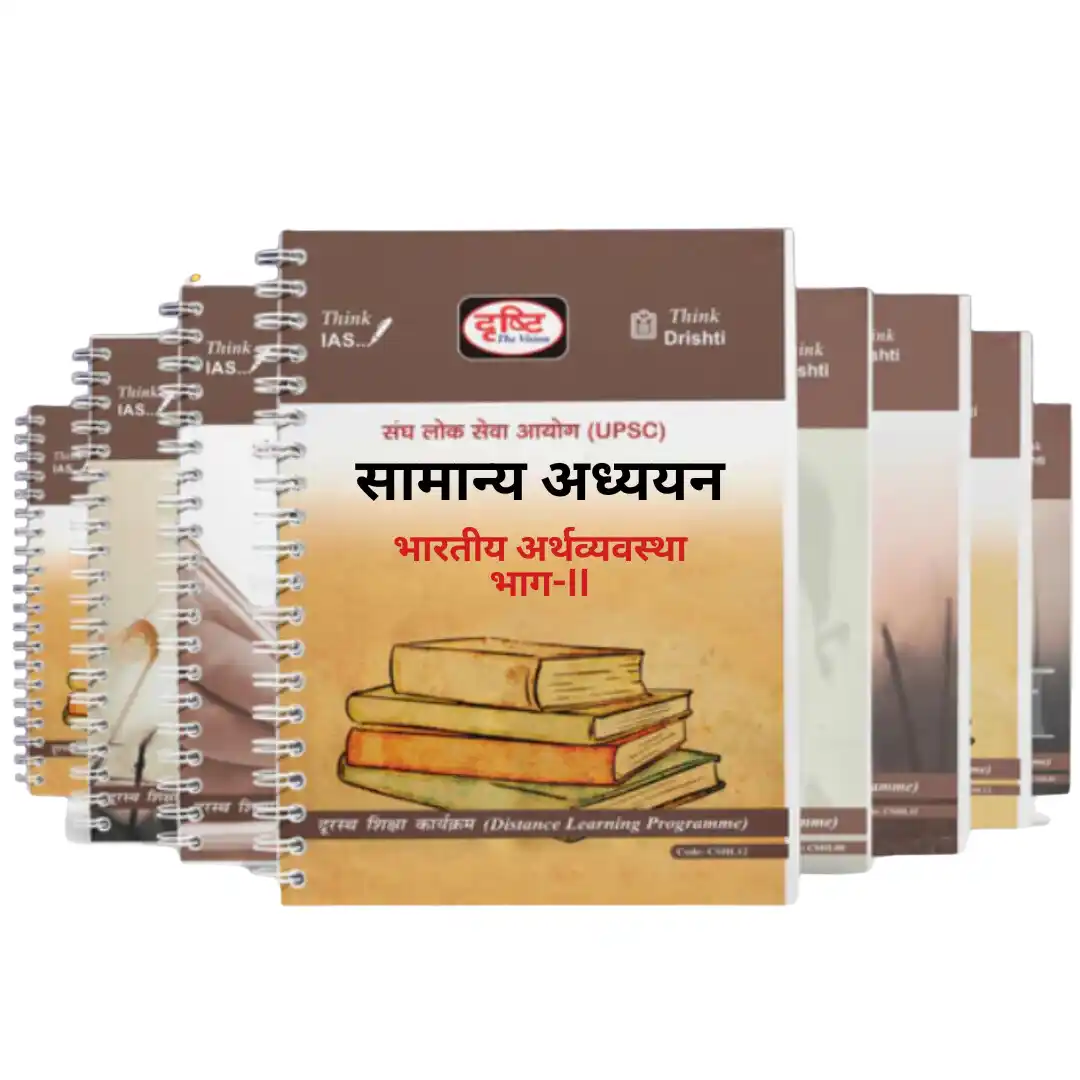
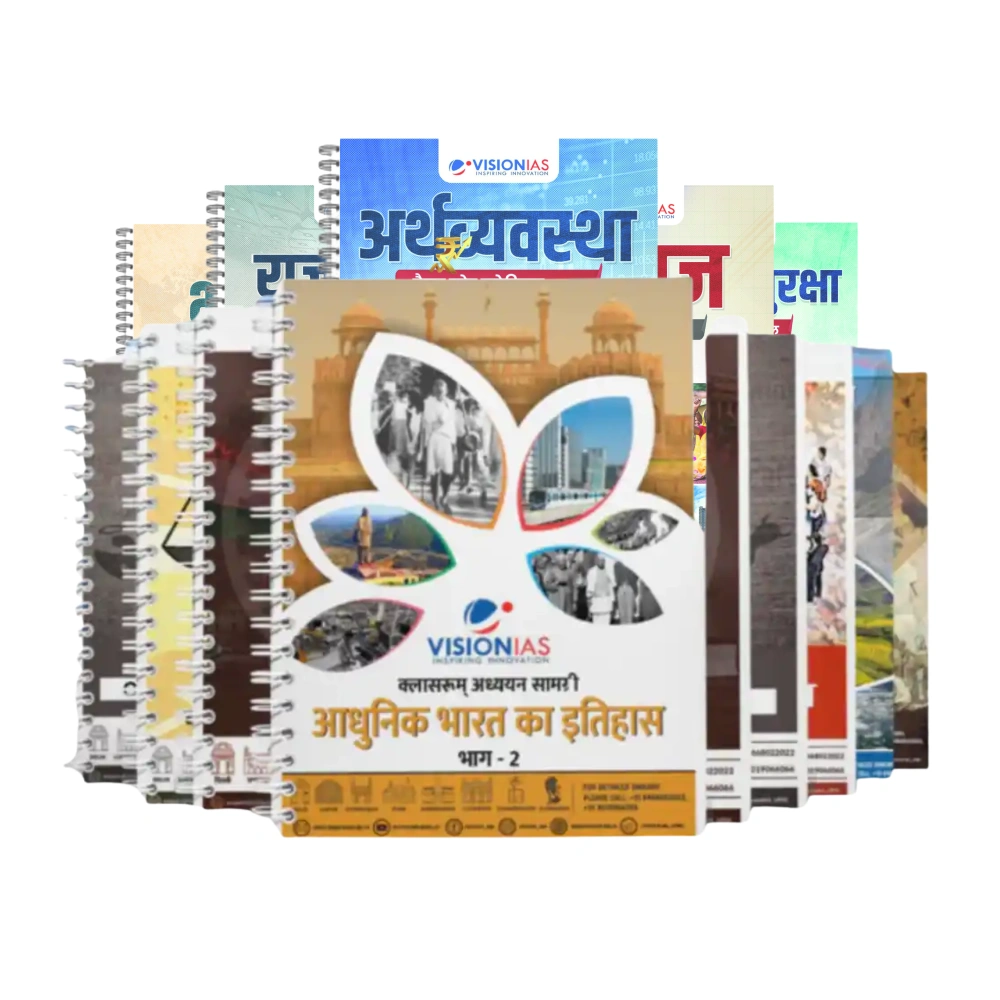
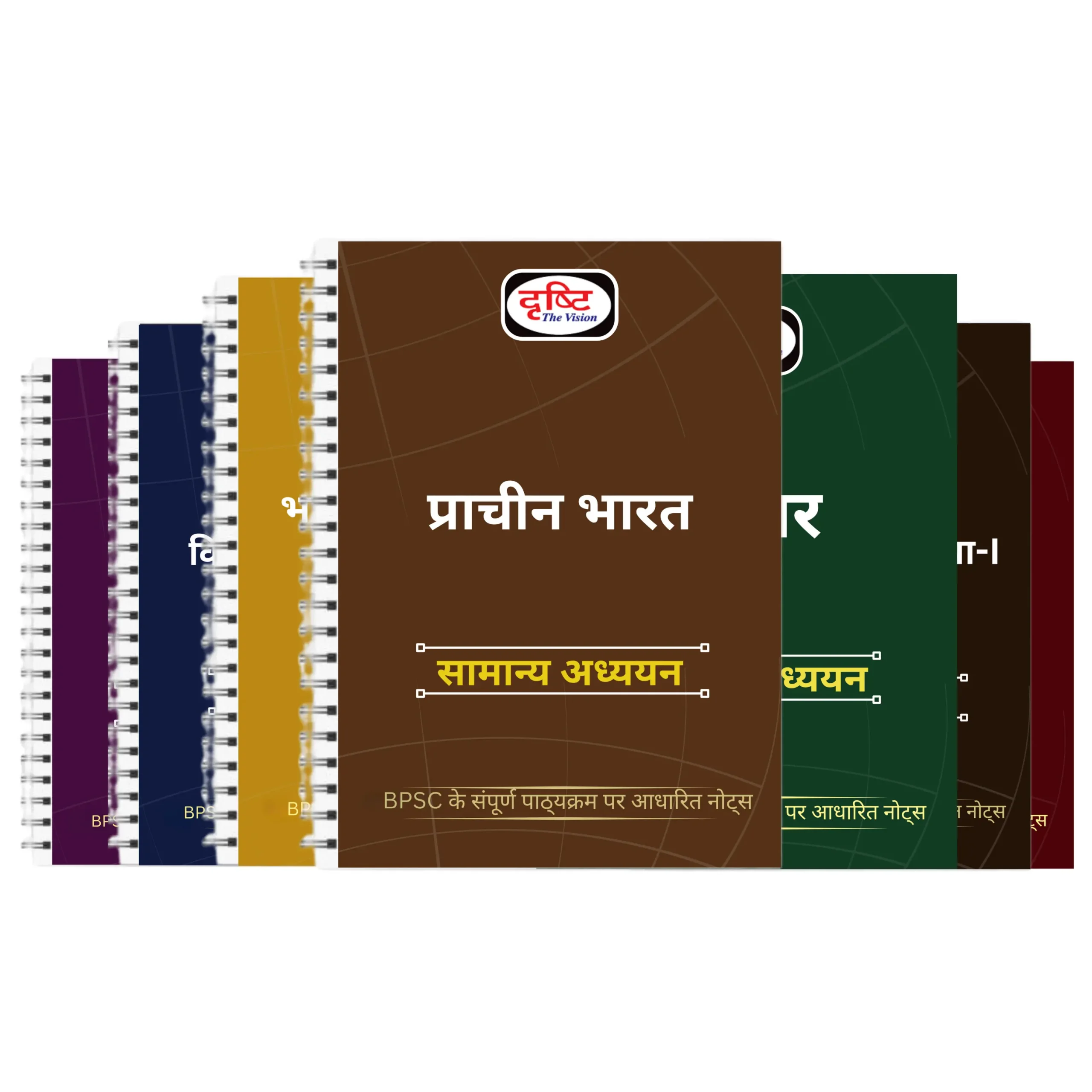
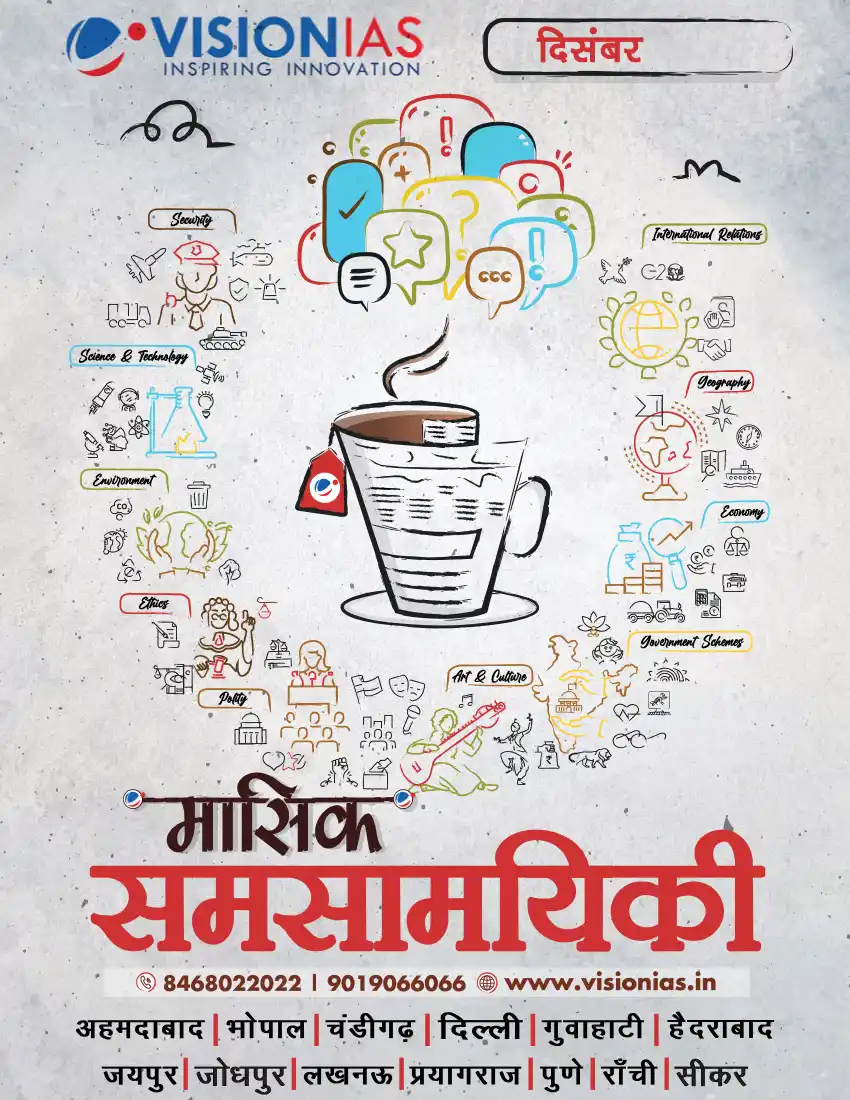
How to download the official PDF: open mppsc.mp.gov.in, go to the State Service Examination 2026 notification, and open the syllabus annexure — it lists Prelims and Mains topics in both Hindi and English in one document. For candidates who prefer ready, printed study material aligned to the syllabus, the Drishti IAS Hindi Study Material and Vision IAS GS Notes in Hindi 2026-27 cover almost the entire MPPSC GS syllabus in Hindi medium, so you don’t have to compile scattered PDFs yourself.
MPPSC Exam Pattern 2026 (Prelims)
The mppsc exam pattern 2026 for Prelims consists of two objective papers held on the same day. Both are worth 200 marks with 100 questions each and a duration of two hours. Crucially, General Studies (Paper I) marks count towards the Prelims merit/cut-off, while the CSAT (Paper II) is only qualifying.
| Paper | Subject | Questions | Marks | Duration | Nature |
|---|---|---|---|---|---|
| Paper I | General Studies | 100 | 200 | 2 hours | Merit-ranking |
| Paper II | General Aptitude Test (CSAT) | 100 | 200 | 2 hours | Qualifying (33%) |
Negative marking: MPPSC has moved towards penalising wrong answers in the Prelims, so blind guessing is no longer free. There is no penalty for questions you leave unattempted. Because the exact deduction fraction can be revised, confirm it in the official 2026 notification — but plan your strategy around the fact that accuracy is now rewarded and reckless guessing is punished. We cover a concrete attempt plan below.
Is CSAT (Paper II) qualifying in MPPSC Prelims?
Yes. You only need 33% (about 66 out of 200 marks) in the CSAT paper to qualify. Your CSAT score is not added to your Prelims merit — the cut-off is decided purely by your General Studies Paper I score. So treat CSAT as a hurdle to clear, not a scoring paper, and invest most of your Prelims prep time in GS Paper I.
MPPSC Prelims Syllabus 2026: Subject-Wise (Paper I – General Studies)
The mppsc prelims syllabus 2026 for General Studies Paper I is broad but MP-centric. Below is the complete subject-wise breakdown with the specific topics you must cover — effectively the MPPSC state service syllabus subject wise for the screening stage.
| Subject | Key Topics Covered |
|---|---|
| History | History of India & the Independence movement; history, culture, literature, art & architecture of Madhya Pradesh |
| Geography | Geography of India & the world; geography of Madhya Pradesh — rivers, mountains, climate, minerals, forests, natural resources |
| Polity & Governance | Indian Constitution; political & administrative structure of MP; Panchayati Raj; local self-government |
| Economy | Indian & MP economy; agriculture, industries, five-year plans; MP economic survey & schemes |
| Science, Technology & Environment | General science; ecology & environment; biodiversity; sustainable development; current science & tech developments |
| Madhya Pradesh GK | MP polity, economy, culture, festivals, tribes, tourism, sports, awards, important personalities |
| Current Affairs | National & international current events; MP-specific current affairs, schemes & policies |
| Information & Communication Technology (ICT) | Characteristics & applications of ICT; e-governance; internet, cyber security, digital initiatives in MP |
MPPSC Prelims Paper II (CSAT / Aptitude) Syllabus
Paper II tests aptitude and is qualifying. It broadly mirrors the UPSC CSAT structure and includes:
- Comprehension & interpersonal skills including communication
- Logical reasoning & analytical ability
- Decision-making & problem-solving
- General mental ability
- Basic numeracy & data interpretation (Class X level — numbers, orders of magnitude, tables, graphs, charts)
- Hindi language comprehension skills (Class X level)
MPPSC Prelims Topic-Wise Weightage & PYQ Trend
A gap most pages miss: which subject gives you the most questions. Based on recent MPPSC Prelims papers, here is the approximate weightage of GS Paper I. Treat these as indicative ranges drawn from past-year trends, not fixed quotas — the Commission varies the split each year. Notice that Madhya Pradesh GK plus MP-linked History/Geography together decide the paper.
| Subject | Approx. Questions | Approx. Weightage |
|---|---|---|
| Madhya Pradesh GK (polity, economy, culture) | 18–22 | ~20% |
| History (India + MP) | 14–16 | ~15% |
| Geography (India, World + MP) | 12–15 | ~14% |
| Polity & Governance | 10–12 | ~11% |
| Science, Tech & Environment | 12–14 | ~13% |
| Economy | 8–10 | ~9% |
| Current Affairs | 12–15 | ~14% |
| ICT & Miscellaneous | 4–6 | ~4% |
Takeaway: Roughly 35–40% of GS Paper I is directly or indirectly MP-specific. Aspirants who master Madhya Pradesh GK, MP history and MP geography tend to clear Prelims comfortably even with average performance elsewhere.
Negative Marking 2026: Practical Attempt Strategy
Since penalising wrong answers is a relatively recent shift for MPPSC, few resources give a concrete attempt plan. Here is a risk-based table to decide when to attempt and when to leave a question. The logic below assumes each question is 2 marks with a roughly one-third deduction for a wrong answer (about 0.66 mark); adjust the exact figure to whatever the 2026 notification specifies.
| Situation | Odds of Being Right | Recommended Action |
|---|---|---|
| You know the answer | 100% | Attempt — +2 marks |
| You can eliminate 2 of 4 options | ~50% | Attempt — expected value positive |
| You can eliminate 1 option | ~33% | Attempt selectively (calculated risk) |
| Total blind guess (4 options) | ~25% | Leave it — expected value negative |
Rule of thumb: if you can confidently eliminate at least one option, the maths still favours an attempt. Pure blind guessing now loses marks on average — so build accuracy through state-PCS style practice material and mock tests rather than relying on guesswork.
MPPSC Mains Syllabus 2026 (PDF): 6 Papers Explained
The mppsc mains syllabus 2026 pdf comprises six descriptive papers. Four are General Studies papers and two are compulsory Hindi papers. Every paper must be attempted; there is no optional subject in MPPSC (unlike UPSC), which makes the exam broad but predictable.
| Paper | Subject | Marks | Duration |
|---|---|---|---|
| Paper 1 | General Studies I — History & Geography | 300 | 3 hours |
| Paper 2 | General Studies II — Constitution, Polity, Security & Sociology | 300 | 3 hours |
| Paper 3 | General Studies III — Economics, Science & Technology, Public Health | 300 | 3 hours |
| Paper 4 | General Studies IV — Philosophy, Psychology, Public Administration & Case Study (Ethics) | 200 | 3 hours |
| Paper 5 | Hindi (Grammar & Language) | 200 | 3 hours |
| Paper 6 | Hindi Essay & Draft Writing | 100 | 3 hours |
Total Mains marks: 1400. Interview: 175. Grand total for final merit: 1575. Confirm the exact per-paper marks in the current notification, as MPPSC occasionally rebalances the Hindi papers.
Which subjects are included in MPPSC Mains?
The four GS papers cover: GS-1 — Indian & MP history, art & culture, world & Indian geography, geography of MP; GS-2 — Indian Constitution, political system, governance, social justice, international relations, sociology; GS-3 — Indian & MP economy, budgeting, science & technology, energy, public health, disaster management; GS-4 — philosophy, psychology, sociology, public administration, ethics, integrity, aptitude and a case-study section. The two Hindi papers test grammar, comprehension, precis, essay and official drafting.
MPPSC Mains GS Paper-Wise Focus
- GS Paper I: Heavy on Madhya Pradesh history, monuments, tribes, folk art and MP physical/economic geography. Pair NCERTs with MP-focused notes.
- GS Paper II: Constitution and polity dominate; add MP governance, Panchayati Raj and social schemes. UPSC polity material transfers directly here.
- GS Paper III: MP economy, agriculture, industries plus general science, public health and technology. The Economic Survey of MP is essential.
- GS Paper IV: Ethics, integrity and case studies — practise answer writing with real administrative scenarios.
For polity and economy — the highest-return GS units — the Vajiram Polity Notes and Vision IAS Economics Notes map cleanly to both Prelims and Mains requirements.
MPPSC Interview / Personality Test 2026
The final stage is the Interview (Personality Test) worth 175 marks. There is no fixed syllabus; the board assesses your mental alertness, critical powers of assimilation, clarity of thought, balance of judgement, leadership, and social traits. Expect questions on:
- Your home district and Madhya Pradesh — geography, culture, current issues, schemes
- Your graduation subject and work/optional background
- Current affairs — national, international and MP-specific
- Situational and administrative decision-making questions
- Your hobbies and details from your Detailed Application Form (DAF)
The final merit list is prepared by adding Mains (1400) and Interview (175) marks — a total of 1575. Consistent current affairs preparation is decisive here because the same reading feeds Prelims, Mains and the Interview.
Best Books & Study Material for the MPPSC Syllabus
Another gap on competing pages: they list topics but never tell you which material covers each unit. Here is a practical mapping of the MPPSC syllabus to study resources.
| Syllabus Area | Recommended Resource Type |
|---|---|
| Core GS (History, Geography, Polity, Economy) | NCERTs (6–12) + comprehensive GS notes — Vision IAS Hindi GS Notes |
| Full GS coverage in Hindi medium | Drishti IAS Hindi Study Material |
| MP GK, culture, geography & economy | State-focused GK books + MP Economic Survey (MP-specific) |
| State-PCS answer & exam approach | Drishti state-PCS books (methodology transfers to MPPSC) |
| Current Affairs (national + MP) | Monthly magazine — Vision IAS Current Affairs (Hindi) |
| Polity & Economy depth | Vajiram Polity Notes + Vision IAS Economics Notes |
Which books are best for the MPPSC syllabus?
Start with NCERTs (classes 6–12) for the base, add a strong GS notes set (Vision IAS or Drishti IAS in your preferred medium), keep a dedicated MP GK book for the state portion, and read one monthly current affairs magazine consistently. For Mains, supplement polity, economy and ethics with topic-specific booklets and practise answer writing regularly. The exact edition matters less than finishing one reliable source per subject and revising it repeatedly.
MPPSC vs UPSC Syllabus: What Overlaps?
If you’re preparing for both UPSC and MPPSC (dual preparation), a large chunk of material is reusable. This comparison helps you avoid duplicating resources.
| Aspect | MPPSC | UPSC |
|---|---|---|
| Prelims GS core (History, Geography, Polity, Economy, Sci-Env) | Yes — largely overlaps | Yes |
| State-specific GK | High — MP GK is decisive | Minimal |
| CSAT / Aptitude | Qualifying (33%) | Qualifying (33%) |
| Optional subject in Mains | No optional | One optional (2 papers) |
| Compulsory language paper | Hindi (2 papers) | English + one Indian language (qualifying) |
| Interview marks | 175 | 275 |
Verdict: your UPSC GS notes for History, Geography, Polity, Economy and Science cover roughly 60–70% of the MPPSC GS syllabus. You mainly need to add MP-specific GK and adjust to MPPSC’s no-optional, Hindi-compulsory structure.
What Changed in the MPPSC Syllabus for 2026
Aspirants keep asking whether the syllabus has been revised. Here’s a clear summary of the 2026 position:
- Negative marking in focus: the headline change is the penalty for wrong answers in Prelims — confirm the exact fraction in the official notification.
- Core syllabus structure retained: the subject coverage for Prelims (GS + CSAT) and the six-paper Mains structure remain broadly the same.
- Emphasis on MP-centric content continues: Madhya Pradesh history, geography, polity, economy and culture remain the highest-weightage section.
- CSAT stays qualifying: no change — 33% qualifying threshold for Paper II.
Always cross-verify the exact wording against the official MPPSC notification PDF before your final revision, as the Commission may issue minor amendments each cycle.
MPPSC 2026 Preparation Tips & Strategy
A syllabus is only useful with a plan to conquer it. Use this stage-wise strategy:
- Build the base first: finish NCERTs and a standard GS notes set before touching PYQs.
- Front-load Madhya Pradesh GK: since ~35–40% of Prelims is MP-linked, master MP history, geography, polity, economy and culture early — it’s the single highest-ROI area.
- Clear CSAT once, then move on: practise a few CSAT sets to guarantee 33%; don’t over-invest.
- Adapt to negative marking: train accuracy through mocks; use the elimination rule instead of blind guessing.
- Start Mains answer writing early: descriptive papers reward structure, MP examples and legible presentation — practise daily.
- Read current affairs consistently: one monthly magazine plus MP news serves Prelims, Mains and Interview together.
- Revise with a tracker: maintain a printable subject-wise checklist and tick off units every revision cycle.
Common Mistakes MPPSC Aspirants Make
- Neglecting MP-specific GK while over-studying national topics
- Ignoring CSAT until the last month and risking disqualification
- Not practising Hindi grammar and essay papers (they carry easy, high-return marks in Mains)
- Blind guessing in Prelims despite the negative marking penalty
- Skipping answer-writing practice for the descriptive Mains
Frequently Asked Questions
What is the syllabus of MPPSC 2026?
The MPPSC 2026 syllabus spans three stages: Prelims (General Studies + CSAT), Mains (four GS papers plus Hindi grammar and Hindi essay/draft writing), and a 175-mark Interview. Core subjects include History, Geography, Polity, Economy, Science, Environment, ICT, current affairs and — importantly — Madhya Pradesh-specific GK across all these areas.
How many papers are there in MPPSC Prelims and Mains?
MPPSC Prelims has 2 papers — General Studies (merit-ranking) and CSAT/Aptitude (qualifying), each of 200 marks. MPPSC Mains has 6 papers — four General Studies papers plus one Hindi grammar paper and one Hindi essay & draft-writing paper, totalling 1400 marks.
Is there negative marking in MPPSC Prelims 2026?
Yes. MPPSC deducts marks for wrong answers in the Prelims — commonly a one-third penalty (about 0.66 mark on a 2-mark question) — while there is no penalty for questions you leave unattempted. Because the exact fraction can change, confirm it in the official 2026 notification; either way, accuracy matters more than volume of attempts.
Is CSAT (Paper II) qualifying in MPPSC Prelims?
Yes, CSAT is only qualifying. You need 33% (about 66 out of 200) to pass it, and its marks are not counted in the Prelims merit list. The cut-off is decided solely by your General Studies Paper I score.
Has the MPPSC syllabus been revised for 2026?
The subject coverage and paper structure remain broadly unchanged, while the negative-marking rule in Prelims is the main talking point for 2026. Always confirm the latest details in the official MPPSC notification PDF before your final revision.
Is the MPPSC exam conducted in Hindi and English?
Yes. MPPSC question papers (except the language paper) are provided in both Hindi and English, and candidates may write the Mains in either medium. However, the Hindi grammar and Hindi essay papers are compulsory and must be attempted in Hindi.
Where can I download the MPPSC syllabus in Hindi PDF?
The complete MPPSC syllabus in Hindi is included in the official State Service Examination notification on mppsc.mp.gov.in, which publishes Prelims and Mains topics in both Hindi and English. For a printed, subject-wise version to revise offline, use aligned Hindi-medium study material such as Drishti IAS or Vision IAS GS notes.
Is there an optional subject in the MPPSC Mains syllabus?
No. Unlike UPSC, MPPSC has no optional subject. All six Mains papers — four General Studies papers and two Hindi papers — are compulsory and count towards your Mains total, which simplifies planning since every candidate covers the same syllabus.
Recommended Study Material
Continue Reading
Agniveer Syllabus 2025: Post-Wise Topics + Pattern + PDF
The Agniveer syllabus covers Class 10–12 (NCERT-level) topics across General Knowledge, General Science, Mathematics, Logical Reasoning and English,…
BPSC Syllabus 2026: Prelims, Mains, Optional + PDF
The BPSC syllabus covers a three-stage Combined Competitive Examination (CCE): a single 150-mark objective Prelims (General Studies), a…
JPSC Syllabus 2026: Prelims, Mains Pattern + PDF
The JPSC syllabus for the Combined Civil Services Examination is prescribed by the Jharkhand Public Service Commission (JPSC,…