OJAS GPSC Syllabus 2026: Class 1-2, Prelims, Mains + PDF
Complete OJAS GPSC syllabus 2026 for Class 1-2: latest Prelims & Mains exam pattern, marks, Gujarati PDF download steps, topic weightage, books and a topper study plan.

The ojas gpsc syllabus for Class 1-2 (Gujarat Administrative, Civil and allied services) is a three-stage syllabus covering a screening Preliminary Test (200 marks, MCQ), a descriptive Mains examination (900 merit marks across six papers), and a final Interview/Personality Test (100 marks). Candidates access the official syllabus, notification and application through the OJAS portal (Online Job Application System) at gpsc-ojas.gujarat.gov.in, and both the exam pattern and syllabus are published in English and Gujarati. This 2026 guide gives you the complete stage-wise syllabus, the latest exam pattern, a bilingual PDF download route, high-yield topic weightage, the best books, and a topper study plan — plus the syllabus for other OJAS posts like DySO, STI and Assistant Engineer that most pages ignore.
OJAS GPSC Syllabus 2026 at a Glance (Key Takeaways)
If you only remember six things about the ojas gpsc syllabus and exam pattern, make them these:
- Three stages: Prelims (200-mark MCQ screening) → Mains (900 merit marks, descriptive) → Interview (100 marks).
- Merit = Mains + Interview = 1000 marks. Prelims marks are qualifying only and are not added to your final rank.
- Six Mains papers: Gujarati & English language (qualifying, min 25% each) + Essay + General Studies 1, 2 and 3 (merit).
- Bilingual: the syllabus and question papers are available in both Gujarati and English; you may write the Mains in Gujarati.
- Gujarat-specific content (history, geography, current affairs) is the single biggest differentiator from generic UPSC prep.
- Only the notification-linked PDF on OJAS/GPSC is authoritative — GPSC revises the syllabus between recruitment cycles, so always verify against your specific advertisement.
OJAS vs GPSC: What the Portal Actually Is
A common point of confusion for first-time aspirants is the difference between OJAS and GPSC. OJAS (Online Job Application System) is the Government of Gujarat’s centralised online recruitment portal — the single window where you register, fill application forms, upload documents, pay fees and download call letters. It is not an exam-conducting body; it is the delivery platform.
GPSC (Gujarat Public Service Commission) is the constitutional recruiting authority that frames the syllabus, releases notifications, conducts the Class 1-2 examination and prepares the merit list. When people search for the “ojas gpsc syllabus”, they mean the GPSC-prescribed syllabus that they apply for and download via the OJAS portal. Other Gujarat bodies — GSSSB, GPSSB, Panchayat and various boards — also use OJAS, which is why the same portal lists DySO, STI, Assistant Engineer and Range Forest Officer vacancies alongside GPSC Class 1-2.
| Aspect | OJAS | GPSC |
|---|---|---|
| Full form | Online Job Application System | Gujarat Public Service Commission |
| Role | Application/recruitment portal | Exam-conducting constitutional body |
| Website | ojas.gujarat.gov.in | gpsc.gujarat.gov.in / gpsc-ojas.gujarat.gov.in |
| What you do there | Register, apply, pay fee, get call letter | Read syllabus, appear for exam, get result |
| Posts covered | GPSC, GSSSB, GPSSB, boards, corporations | Class 1-2 gazetted officer posts |
GPSC Class 1-2 Selection Process: Three Stages
The GPSC Class 1-2 (Combined Competitive) examination follows a strict three-stage funnel. Understanding this structure is the first step to reading the syllabus correctly, because the Prelims and Mains test the same subjects at very different depths.
- Stage 1 — Preliminary Test: Objective (MCQ) screening test. Purely qualifying; marks are not counted in the final merit.
- Stage 2 — Main Examination: Descriptive written papers. These 900 marks form the core of your merit.
- Stage 3 — Interview / Personality Test: 100 marks, added to Mains merit for the final rank list.
So your final rank is decided by Mains (900) + Interview (100) = 1000 marks. The Prelims only decides who is allowed to write the Mains — typically candidates equal to about 10-12 times the number of vacancies clear the screening.
| Stage | Type | Total Marks | Counted in Merit? |
|---|---|---|---|
| Preliminary Test | Objective (MCQ) | 200 | No (qualifying only) |
| Main Examination | Descriptive | 900 | Yes |
| Interview | Personality Test | 100 | Yes |
| Final Merit | Mains + Interview | 1000 | — |
GPSC Ojas Exam Pattern 2026: Prelims (Latest 200-Mark Format)
Here is where most competing pages create confusion by mixing the older 400-mark format with the current one. Latest 2026 pattern callout: GPSC Class 1-2 Prelims is now a single General Studies paper of 200 marks / 200 questions / 3 hours, conducted in a single sitting (earlier cycles used two GS papers of 200 marks each totalling 400). Always confirm the exact structure in the specific notification you apply under via OJAS, but the current standard is the 200-mark single-paper screening.
| Feature | GPSC Prelims 2026 |
|---|---|
| Paper | General Studies (single paper) |
| Total questions | 200 MCQs |
| Total marks | 200 |
| Duration | 3 hours (180 minutes) |
| Medium | Gujarati & English (bilingual paper) |
| Negative marking | Yes — 1/3 mark deducted per wrong answer |
| Nature | Qualifying / screening only |
GPSC Prelims Syllabus 2026 — Subject-Wise Topics
The Prelims General Studies syllabus is broad, with a heavy tilt toward Gujarat-specific history, geography and administration alongside national topics. The core areas are:
- History: History of India and the Indian National Movement; history and cultural heritage of Gujarat.
- Cultural Heritage: Art, literature, architecture, festivals and heritage of India and Gujarat.
- Polity & Constitution: Indian Constitution, Panchayati Raj, public policy, rights issues, governance and administration in Gujarat.
- Geography: Physical, social and economic geography of India, Gujarat and the world.
- Indian Economy & Planning: Economic and social development, sustainable development, poverty, inclusion, demographics; Gujarat’s economy.
- Science & Technology: General science, everyday science, ICT, space, biotech and their applications.
- Current Affairs: Regional (Gujarat), national and international events of significance.
- General Mental Ability & Reasoning: Data interpretation, logical reasoning and basic quantitative aptitude.
| Prelims Subject | Approx. Weightage (High-Yield) | Gujarat vs National Focus |
|---|---|---|
| History & Culture (incl. Gujarat) | High (18-22%) | Strong Gujarat focus |
| Polity & Governance | High (15-18%) | Both |
| Geography | Medium-High (12-15%) | Both, Gujarat heavy |
| Economy & Planning | Medium (10-14%) | Both |
| Current Affairs | High (15-18%) | Gujarat + National |
| Science & Tech | Medium (8-12%) | National |
| Reasoning & Aptitude | Low-Medium (6-10%) | Neutral |
Note: these weightages are indicative bands drawn from previous-year-question (PYQ) trends, not official GPSC quotas. GPSC does not publish a fixed sub-topic mark split, so treat the ranges as a study-prioritisation aid rather than a guarantee.
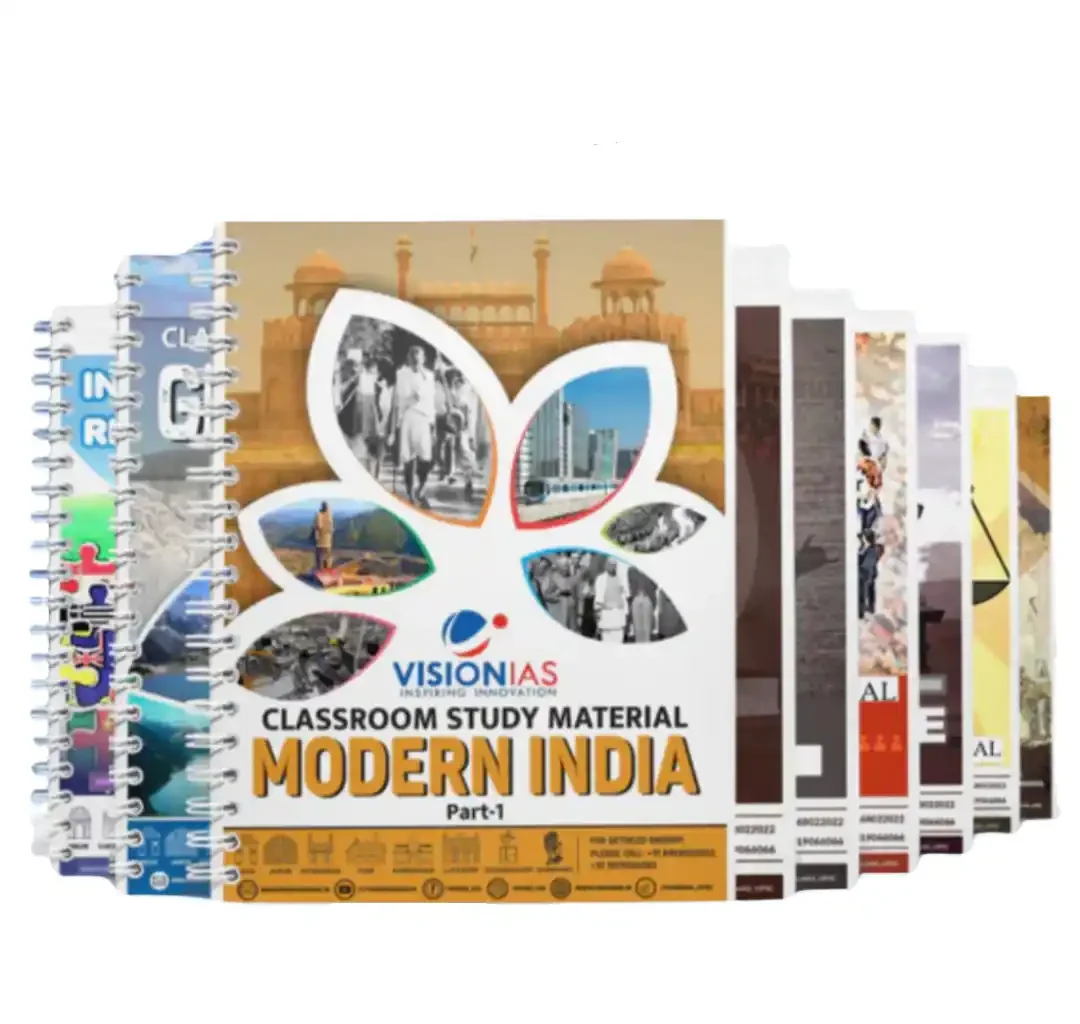
PYQ analysis of recent Prelims shows that Gujarat-specific history, geography and current affairs together carry roughly one-third of the paper — the single biggest differentiator between GPSC and generic UPSC preparation. Build a dedicated Gujarat notebook from day one. A well-structured GS foundation from a standard source like the Vision IAS English Study Material covers the national portion efficiently, which you then supplement with Gujarat-focused material.
GPSC Ojas Exam Pattern 2026: Mains (Descriptive)
The Main examination is where the exam is truly won. It comprises six papers: two qualifying language papers (Gujarati and English) plus four merit-counting papers — an Essay and General Studies I to III (some cycles structure it as Essay + GS I-IV; verify in your notification). The merit-counting papers total 900 marks.
| Paper | Subject | Marks | Duration | Nature |
|---|---|---|---|---|
| Paper 1 | Gujarati Language | 150 | 3 hrs | Qualifying (min 25%) |
| Paper 2 | English Language | 150 | 3 hrs | Qualifying (min 25%) |
| Paper 3 | Essay | 150 | 3 hrs | Merit |
| Paper 4 | General Studies 1 | 150 | 3 hrs | Merit |
| Paper 5 | General Studies 2 | 150 | 3 hrs | Merit |
| Paper 6 | General Studies 3 | 150 | 3 hrs | Merit |
Important qualifying rule: You must score a minimum of 25% in each language paper (Gujarati and English). If you fail to clear either language paper, your GS and Essay papers are not evaluated for merit — so never neglect them despite their “qualifying only” tag.
GPSC Mains Syllabus — Paper-Wise Breakdown
The descriptive GS papers go far deeper than Prelims, demanding analytical answers, current-affairs linkage and Gujarat-specific application.
- Gujarati Language Paper: Comprehension, precis, grammar, translation (English to Gujarati and vice versa), essay/letter/report writing, and idioms.
- English Language Paper: Comprehension, precis writing, grammar and usage, vocabulary, translation and composition.
- Essay: Two or three essays on socio-economic, political, administrative, cultural and contemporary themes — testing structured argument and balance.
- General Studies 1: History and cultural heritage of India and Gujarat; Indian and Gujarat geography; disaster management.
- General Studies 2: Indian Constitution, polity, governance, public administration, social justice, and international relations.
- General Studies 3: Indian and Gujarat economy, planning, agriculture, science & technology, environment, and internal security.
- Ethics component: Where included, ethics, integrity, aptitude, emotional intelligence and case studies of administrative dilemmas.
| Mains Paper | Core Themes | Best Approach |
|---|---|---|
| GS 1 | History, Culture, Geography, Disaster Mgmt | Gujarat + India timelines, map practice |
| GS 2 | Polity, Governance, Public Admin, IR | Constitution + current governance schemes |
| GS 3 | Economy, Agriculture, S&T, Environment, Security | Budget, Economic Survey, Gujarat economy |
| Essay | Contemporary & abstract themes | Weekly writing, quotes, structure |
| Language (Guj + Eng) | Grammar, precis, translation | Daily 30-min drill to cross 25% |
The public administration, governance and ethics load in GS 2 mirrors UPSC’s GS closely, so quality UPSC material transfers well. Aspirants often strengthen these papers with focused resources such as Vajiram Public Administration Notes for administrative theory and answer frameworks.
Interview / Personality Test (100 Marks)
Candidates who clear the Mains cut-off are called for the Interview, carrying 100 marks. The board assesses mental alertness, clarity of expression, balance of judgement, leadership, and awareness of Gujarat’s socio-economic landscape and current affairs. Your Detailed Application Form — hobbies, home district, graduation subject and work experience — is the primary launchpad for questions, so prepare it thoroughly.
GPSC Class 1-2 Cut-Off: How Marks Translate to Selection
Because Prelims is only a gateway, aspirants often ask what score actually secures selection. GPSC does not release a fixed cut-off in advance — it is decided after each exam based on vacancies, difficulty and category-wise competition. As a realistic frame drawn from past cycles:
- Prelims: a general-category qualifying score has commonly sat in the broad 50-60% band (about 100-120 of 200), shifting with paper difficulty each year.
- Mains: the descriptive stage is scored strictly, so consistent, well-structured answers matter far more than volume; strong Essay and GS scores separate the merit list.
- Interview: most candidates cluster within a narrow band, so a few marks here can move your rank meaningfully given the final list is out of 1000.
Treat published cut-offs as historical reference only, and always target a comfortable margin above them rather than the bare minimum.
Eligibility, Age Limit, Vacancies & Pay
Eligibility varies slightly by post within the Class 1-2 combined notification, but the general framework is:
| Criterion | Details |
|---|---|
| Nationality | Indian citizen |
| Educational qualification | Bachelor’s degree from a recognised university (post-specific for technical roles) |
| Minimum age | 20-21 years (post-dependent) |
| Maximum age | 35 years (general); relaxation for reserved categories |
| Age relaxation | SC/ST/OBC/EWS/PwD/Women/Ex-servicemen as per Gujarat rules |
| Gujarati language | Knowledge of Gujarati and/or Hindi required |
| Number of attempts | No fixed limit within age ceiling |
Class 1 posts (e.g., Dy. Collector, DySP, DSO, Assistant Commissioner) typically fall in Pay Level 10 (₹56,100+), while Class 2 posts (e.g., Section Officer, Taluka Development Officer, Mamlatdar) fall in Pay Level 8-9 (approx. ₹44,900-53,100) under the 7th Pay Commission, plus DA, HRA and allowances. Vacancy counts vary per notification cycle (recent combined notifications have ranged from roughly 100 to 300+ posts).
Beyond Class 1-2: Syllabus for Other OJAS/GPSC Posts
This is the biggest gap in competing articles — they cover only Class 1-2, yet thousands search “ojas gpsc syllabus” intending other popular posts. Here is a quick-reference map so you land on the right pattern.
| Post | Conducting Body | Pattern (Broad) | Key Syllabus Focus |
|---|---|---|---|
| DySO / Dy. Section Officer & Mamlatdar | GPSC | Prelims (MCQ) + Mains (descriptive) + Interview | GS + Gujarat + Governance |
| STI (State Tax Inspector) | GPSC/GSSSB | Prelims + Mains | GS, Maths, Reasoning, Gujarati/English |
| AE (Assistant Engineer) | GPSC | Prelims (GS + Engineering) + Mains | Civil/Mech/Elec Engineering + GS |
| Municipal Chief Officer | GPSC | Prelims + Mains + Interview | GS + Urban governance + Gujarat |
| Range Forest Officer (RFO) | GPSC | Prelims + Mains + Physical + Interview | GS + Science + Environment |
For engineering and tax-inspector roles, the GS portion overlaps with Class 1-2, so a common GS + Gujarat foundation serves multiple exams. Only the technical/subject paper changes. This is why building a strong, reusable GS core first is the smartest strategy if you are targeting multiple OJAS posts.
GPSC Syllabus in Gujarati: Bilingual PDF Availability
Yes — the GPSC syllabus is officially available in Gujarati as well as English. Because a large share of aspirants prepare in Gujarati medium, GPSC publishes each notification’s syllabus in both languages, and the Prelims/Mains question papers are bilingual. When you search “gpsc syllabus class 1 2 in gujarati pdf” or “gpsc mains syllabus in gujarati”, you are looking for the Gujarati-language version attached to the official advertisement.
To get the accurate Gujarati (ગુજરાતી) syllabus PDF, always use the specific advertisement number’s syllabus link on the GPSC/OJAS portal rather than third-party rewrites, so you study the exact prescribed topics. Keep both the Gujarati and English versions side by side — the English one helps you map GS to standard UPSC-style study material, while the Gujarati one aligns you with the actual answer-writing medium.
How to Download the GPSC Ojas Syllabus PDF (Step-by-Step)
For “gpsc ojas syllabus pdf download”, follow these steps to reach the official document:
- Step 1: Visit gpsc-ojas.gujarat.gov.in or the GPSC website gpsc.gujarat.gov.in.
- Step 2: Open the Advertisement or Syllabus section from the main menu.
- Step 3: Locate your specific post (e.g., Class 1-2 Combined, DySO, AE) by advertisement number.
- Step 4: Click the Syllabus or Preliminary/Main Syllabus link — it opens the official PDF.
- Step 5: Choose the Gujarati or English version and download/save the PDF.
- Step 6: For the exam pattern and marks scheme, check the same advertisement’s instructions annexure.
Bookmark the exact advertisement page, because GPSC revises syllabi between recruitment cycles and only the notification-linked PDF is authoritative.
Best Books for the GPSC Class 1-2 Syllabus
The ideal booklist blends a strong national GS foundation (where UPSC-grade material excels) with Gujarat-specific sources (state board textbooks, Gujarat year book, and GCERT material). Here is a practical, subject-wise stack:
| Subject | Recommended Resource Type | Purpose |
|---|---|---|
| Full GS Foundation | Comprehensive coaching GS notes | Covers Prelims + Mains national portion |
| Polity | Laxmikanth + focused polity notes | GS 2 depth |
| Economy | NCERT + economy notes + Economic Survey | GS 3 + current data |
| Gujarat History/Geography | GCERT / state board textbooks | High-weightage state portion |
| Current Affairs | Monthly magazine (Gujarat + national) | Prelims + Mains + Interview |
| Syllabus & PYQ practice | Syllabus booklet + PYQ toolkit + test series | Targeted revision |
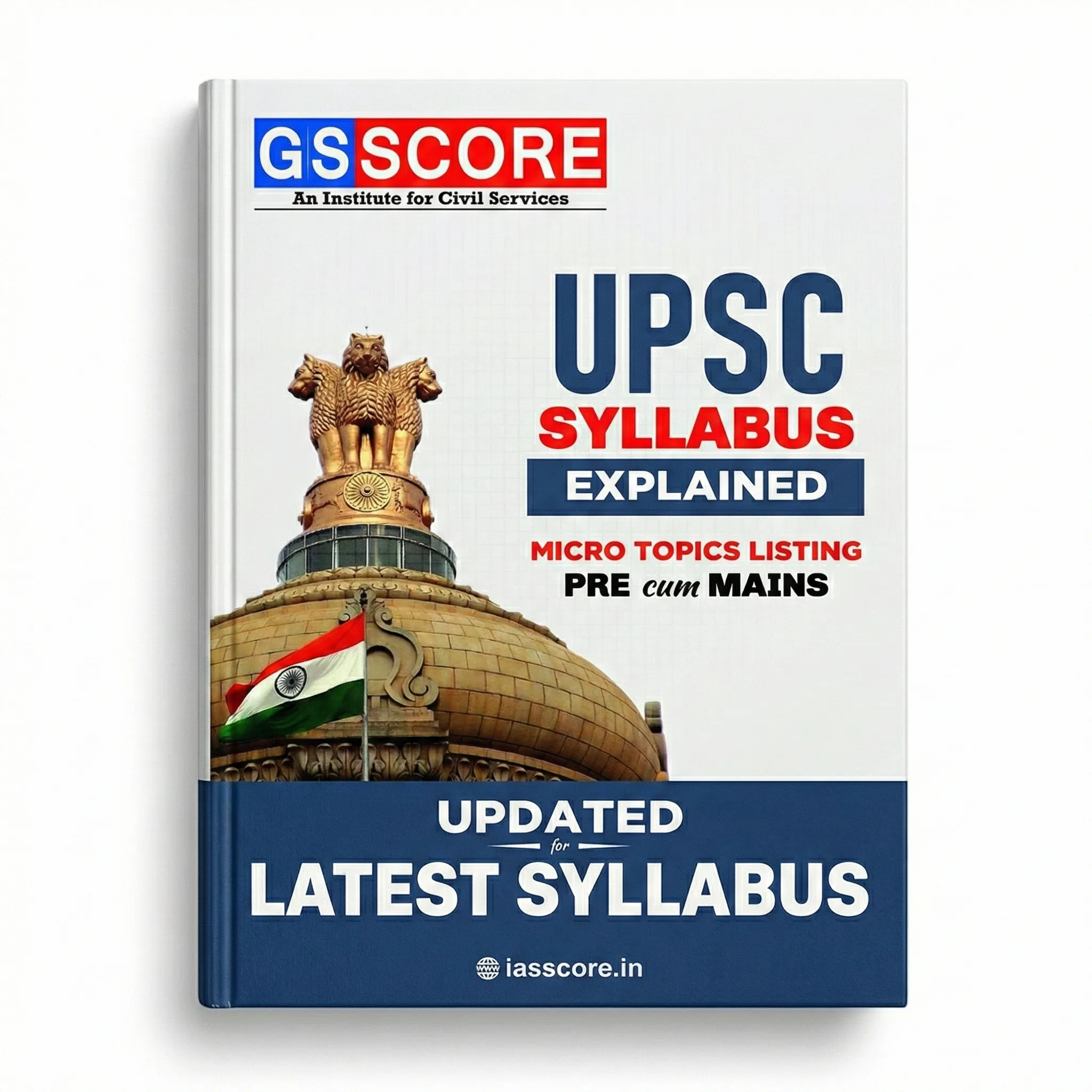
For the national GS core, a complete set such as the Vision IAS English Study Material or the GS Score Latest Syllabus Booklet keeps your topic mapping precise. For PYQ-driven Prelims revision, the Forum IAS Prelims Toolkit (Topic-Wise PYQ) trains you to spot the exact question patterns GPSC borrows from the UPSC-style GS pool, and monthly coverage from a source like the Vision IAS Current Affairs Magazine keeps the dynamic portion current. Layer Gujarat-specific state material on top of these for full coverage.
Topic-Wise Weightage: What to Study First
With a syllabus this broad, sequencing matters more than raw hours. Based on PYQ trends, prioritise in this order:
- First (highest ROI): Gujarat history, geography and current affairs — the highest-yield, least-competitive differentiator.
- Second: Polity & Governance and Indian Economy — heavy in both Prelims and Mains.
- Third: National History, Geography and Culture — large but scoring with NCERT + notes.
- Fourth: Science & Tech and Environment — high-frequency but factual; revise via current affairs.
- Fifth: Reasoning & Aptitude — low weightage; needs only steady practice.
Topper Study Plan & Preparation Tips
A realistic 9-12 month plan that toppers commonly follow:
| Phase | Duration | Focus |
|---|---|---|
| Foundation | Months 1-4 | Full syllabus first read: NCERT + GS notes + Gujarat basics |
| Depth + Mains | Months 5-7 | Answer writing, GS 1-3 depth, essay practice, language papers |
| Prelims Sprint | Months 8-9 | MCQ tests, PYQ, current affairs consolidation |
| Post-Prelims Mains | Months 10-11 | Intensive answer writing + full-length tests |
| Interview | Final month | DAF prep, mock interviews, Gujarat awareness |
Common mistakes to avoid: ignoring the language qualifying papers, neglecting Gujarat-specific current affairs, over-relying on English material without Gujarati answer practice, and skipping answer writing until after Prelims. Start Mains answer writing early — the merit is decided there. Use a printable syllabus tracker to tick topics off as you cover them across Prelims and Mains, so nothing in this vast syllabus slips through.
People Also Ask: Quick Answers
Beyond the formal FAQ below, these are the follow-up questions aspirants raise most often once they understand the core ojas gpsc syllabus:
- Which books are best for the GPSC Class 1-2 syllabus? Pair a national GS foundation (comprehensive coaching notes plus Laxmikanth for polity and NCERT for economy) with Gujarat-specific GCERT/state-board textbooks and a Gujarat + national current-affairs magazine — no single book covers the whole syllabus.
- Is there negative marking in GPSC Prelims? Yes — 1/3 mark is deducted per wrong MCQ, so avoid blind guessing.
- Can I write the Mains in Gujarati? Yes. The papers are bilingual and you may answer the descriptive papers in Gujarati.
- Does the GPSC syllabus change every year? It can be revised between recruitment cycles, so the notification-linked PDF is the only authoritative version.
Frequently Asked Questions
What is the syllabus of GPSC Class 1-2?
The GPSC Class 1-2 syllabus spans three stages: a 200-mark objective Prelims covering General Studies (History, Culture, Polity, Geography, Economy, Science & Tech, Current Affairs with Gujarat and national focus, plus reasoning); a 900-mark descriptive Mains with Essay, GS 1-3 and qualifying Gujarati and English language papers; and a 100-mark Interview. Merit is based on Mains plus Interview.
How to download GPSC syllabus PDF from OJAS?
Go to gpsc-ojas.gujarat.gov.in or gpsc.gujarat.gov.in, open the Advertisement or Syllabus section, find your specific post by advertisement number, click the Syllabus link to open the official PDF, and download the Gujarati or English version. Always use the notification-linked PDF, as GPSC revises the syllabus between cycles.
What is the exam pattern for GPSC Prelims and Mains?
Prelims is a single objective General Studies paper of 200 marks / 200 MCQs in 3 hours, with 1/3 negative marking, and is qualifying only. Mains is descriptive with six papers of 150 marks each — Gujarati and English language (qualifying, minimum 25%), Essay, and General Studies 1, 2 and 3 — of which the Essay and three GS papers count toward the 900-mark merit. A 100-mark Interview follows.
Is the GPSC syllabus available in Gujarati?
Yes. GPSC publishes the syllabus in both Gujarati and English, and the Prelims and Mains question papers are bilingual. Gujarati-medium aspirants can download the official Gujarati (ગુજરાતી) syllabus PDF from the specific advertisement page on the GPSC/OJAS portal and write the Mains in Gujarati.
Are GPSC Prelims marks counted in the final merit?
No. The GPSC Preliminary Test is only a qualifying/screening stage — its 200 marks are not added to the final merit. The final rank is decided by the Mains (900 merit marks) plus the Interview (100 marks), totalling 1000 marks.
How many papers are there in GPSC Mains?
GPSC Mains has six papers: Gujarati Language and English Language (each qualifying, minimum 25%), Essay, and General Studies 1, 2 and 3. The Essay and GS papers carry 150 marks each and count toward the 900-mark merit total, while the two language papers are qualifying only.
Which books are best for the GPSC Class 1-2 syllabus?
Combine a strong national GS foundation — comprehensive coaching GS notes, Laxmikanth for polity, and NCERT plus the Economic Survey for economy — with Gujarat-specific GCERT and state-board textbooks for the high-weightage state portion, and a Gujarat + national current-affairs magazine for the dynamic part. Add a PYQ toolkit and test series for targeted revision. No single title covers the full syllabus, so a layered stack works best.
What is the difference between OJAS and GPSC?
OJAS (Online Job Application System) is Gujarat’s online recruitment portal where you register, apply, pay fees and download call letters. GPSC (Gujarat Public Service Commission) is the constitutional body that frames the syllabus, conducts the Class 1-2 exam and prepares the merit list. You apply for GPSC exams through the OJAS portal.
Recommended Study Material

Continue Reading
Public Administration Optional Syllabus 2026: Paper 1 & 2 + PDF
The public administration optional syllabus for UPSC has two papers of 250 marks each (500 total): Paper 1…
KVS Syllabus 2025: PRT, TGT, PGT Pattern + PDF Download
The kvs syllabus for teaching posts (PRT, TGT, PGT) and non-teaching posts is set by the Kendriya Vidyalaya…
UPPCS Syllabus 2026: Prelims, Mains (8 Papers) + PDF Download
Quick answer: The UPPCS syllabus for 2026 spans three stages run by the Uttar Pradesh Public Service Commission…