UGC NET Political Science Syllabus 2026: Unit-Wise + PDF
Complete UGC NET Political Science syllabus 2026: all 10 units of Paper 2, exam pattern, unit-wise weightage, English & Hindi PDF download, best books and a study plan.

In short: the ugc net political science syllabus has two papers — Paper 1 (General Aptitude, 50 questions for 100 marks, common to all subjects) and Paper 2 (Political Science, 100 questions for 200 marks) — and Paper 2 is organised into 10 units: Political Theory, Political Thought, Indian Political Thought, Comparative Political Analysis, International Relations, India’s Foreign Policy, Political Institutions in India, Political Processes in India, Public Administration, and Governance & Public Policy. The exam is a single 3-hour online MCQ test with no negative marking, and the subject syllabus has stayed stable across recent cycles. This guide gives you the complete unit-wise breakdown, exam pattern, marks-weightage, English and Hindi PDF download steps, the best books per unit, and a realistic preparation plan.
Last reviewed: June 2026. Always cross-check the unit list against the official NTA syllabus PDF before you start preparing, as that is the only authoritative source.
UGC NET Political Science Syllabus 2026 Overview
UGC NET (National Eligibility Test) is conducted by the National Testing Agency (NTA) on behalf of the University Grants Commission to determine eligibility for Assistant Professor and Junior Research Fellowship (JRF) in Indian universities and colleges. Political Science is subject code 02, one of the most popular humanities subjects, taken by lakhs of aspirants every cycle.
Candidates appear for two papers in a single 3-hour session. Paper 1 tests teaching and research aptitude and is common to every subject. Paper 2 is entirely on Political Science and is where the subject syllabus matters. The complete ugc net political science syllabus topics are spread across 10 thematic units, each carrying roughly equal weight, so no single unit can be skipped safely.
| Particular | Detail |
|---|---|
| Exam Name | UGC NET (Political Science) |
| Conducting Body | National Testing Agency (NTA) |
| Subject Code | 02 |
| Number of Papers | 2 (Paper 1 + Paper 2) |
| Total Units in Paper 2 | 10 |
| Total Questions | 150 (50 + 100) |
| Total Marks | 300 (100 + 200) |
| Duration | 3 hours (180 minutes) |
| Mode | Online (Computer-Based Test) |
| Question Type | Objective MCQ |
| Negative Marking | None |
| Frequency | Twice a year (June & December) |
| Official Website | ugcnet.nta.ac.in |
What’s New in the UGC NET Political Science Syllabus 2026?
A question many aspirants ask before buying notes is whether the syllabus changed for 2026. The honest answer: the UGC NET Political Science subject syllabus was last revised a few cycles ago and has remained the same 10-unit structure since, so the 2026 June and December cycles use the same framework described here. There is no officially notified content overhaul for 2026 at the time of writing. What does change each cycle is the current-affairs flavour of dynamic units (Foreign Policy, IR, Governance) and the exam-date calendar. Treat any “new 2026 syllabus” claim from a coaching PDF with caution and verify against the NTA copy.
UGC NET Political Science Exam Pattern 2026
Before diving into the syllabus, understand the ugc net political science exam pattern. Both papers are conducted together in one continuous 3-hour slot with no separate timing for each paper, so you must manage time yourself. Every question carries 2 marks and there is no penalty for a wrong answer, which means you should attempt all 150 questions.
| Paper | Subject | Questions | Marks | Duration |
|---|---|---|---|---|
| Paper 1 | Teaching & Research Aptitude (General) | 50 | 100 | 3 hours (combined) |
| Paper 2 | Political Science | 100 | 200 | |
| Total | 150 | 300 | ||
Key rules for Political Science aspirants
- Each correct answer = +2 marks; wrong or unattempted = 0. No negative marking.
- All questions are compulsory and objective (MCQ) in nature.
- The medium of Paper 2 Political Science is English and Hindi both.
- There is no sectional cut-off; only the aggregate of Paper 1 + Paper 2 counts for the merit/cut-off.
- Since both papers are in one window, a smart split is roughly 50-55 minutes on Paper 1 and the remaining 125-130 minutes on Paper 2.
- You can switch between Paper 1 and Paper 2 freely on the screen within the 3-hour window — there is no forced lock after Paper 1.
Paper 1 covers 10 units of its own — Teaching Aptitude, Research Aptitude, Comprehension, Communication, Mathematical/Logical Reasoning, Data Interpretation, ICT (Information & Communication Technology), People-Development-Environment, and Higher Education System. It is scoring with the right practice, so do not ignore it while obsessing over the subject paper.
Paper 1 vs Paper 2 — how they differ
Think of Paper 1 as the “qualifier you can’t neglect” and Paper 2 as the “differentiator that decides your rank.” Paper 1 is generic, formula-and-logic heavy, and identical for a chemistry or history aspirant. Paper 2 is pure Political Science and is where the cut-off battle is actually won, because it carries double the marks (200 vs 100). A balanced candidate scores 70+ in Paper 1 and pushes hard on Paper 2 to clear the JRF line.
UGC NET Political Science Syllabus 2026 Unit Wise
Here is the complete ugc net political science paper 2 syllabus unit wise. The official NTA syllabus lists 10 units; below is the detailed topic and thinker breakdown for each so you know exactly what to study.
Unit 1 – Political Theory
The conceptual foundation of the entire paper. Topics include the meaning and approaches to Political Theory; key concepts such as Liberty, Equality, Justice, Rights, Citizenship, Democracy, Power, Authority, Sovereignty; theories of the state (Liberal, Marxist, Pluralist, Post-colonial, Feminist); and contemporary debates around multiculturalism, secularism, and civil society. Expect questions linking thinkers like Isaiah Berlin (two concepts of liberty), John Rawls (justice as fairness), and Amartya Sen.
Unit 2 – Political Thought (Western)
Western political thinkers from antiquity to the modern era: Plato, Aristotle, Machiavelli, Hobbes, Locke, Rousseau, Bentham, J.S. Mill, Hegel, Marx, Gramsci, and Hannah Arendt. You should know each thinker’s core ideas — Plato’s ideal state, Aristotle’s classification of governments, the social contract tradition, Mill’s liberty, and Gramsci’s hegemony.
Unit 3 – Indian Political Thought
Indian thinkers and traditions: Kautilya, Manu, Aggannasutta (Buddhist tradition), Barani, Sir Syed Ahmad Khan, Swami Vivekananda, Gandhi, Ambedkar, Nehru, M.N. Roy, Jayaprakash Narayan, Ram Manohar Lohia, and Deendayal Upadhyaya. Themes such as Swaraj, Satyagraha, social justice, integral humanism, and constitutional morality are heavily tested.
Unit 4 – Comparative Political Analysis
Approaches to comparative politics; comparative methods; theories of the state; political culture and political socialisation; political development and modernisation; democratisation; regimes — democratic and authoritarian; party systems; pressure groups; and electoral systems. Thinkers like Almond, Powell, Huntington, and Lijphart appear often.
Unit 5 – International Relations
Theories and approaches to IR — Realism, Neo-realism, Liberalism, Neo-liberalism, Marxism, Constructivism, Feminism; key concepts like power, national interest, balance of power, security, and deterrence; the international system; the UN and its organs; globalisation; regional organisations; arms control; and contemporary issues such as terrorism, climate diplomacy, and human rights.
Unit 6 – India’s Foreign Policy
Determinants of India’s foreign policy; Non-Alignment and its evolution; India’s relations with the USA, Russia, China, and neighbours (Pakistan, Bangladesh, Sri Lanka, Nepal); India and SAARC, BIMSTEC, BRICS, QUAD, G20; nuclear policy; India in the UN; and current bilateral/multilateral developments. This is the most current-affairs-linked unit, so pair it with monthly current affairs.
Unit 7 – Political Institutions in India
The Indian Constitution — Preamble, Fundamental Rights, DPSPs, Fundamental Duties; the Union and State executive, legislature, and judiciary; President, Prime Minister, Parliament, Supreme Court and judicial review; federalism and Centre-State relations; constitutional amendments; and bodies like the Election Commission, CAG, and Finance Commission.
Unit 8 – Political Processes in India
Party system in India; caste, religion, ethnicity, language, and gender in Indian politics; regionalism and sub-nationalism; social movements; electoral politics and voting behaviour; coalition politics; and the politics of reservation and identity. Recent electoral trends are commonly asked here.
Unit 9 – Public Administration
Meaning, scope, and significance of Public Administration; theories and approaches (Scientific Management, Bureaucratic theory of Weber, Human Relations, New Public Administration, New Public Management); organisation principles; civil services; administrative reforms; accountability and control; and budgeting. Thinkers: Wilson, Taylor, Weber, Fayol, Simon, and Riggs.
Unit 10 – Governance and Public Policy
Concept of governance, good governance, and e-governance; the public policy process — formulation, implementation, evaluation; decentralisation and Panchayati Raj (73rd & 74th Amendments); citizens’ charters, RTI, and grievance redressal; development administration; and welfare schemes. This unit overlaps with current affairs on flagship government programmes.
| Unit | Title | Core Focus |
|---|---|---|
| 1 | Political Theory | Concepts: liberty, justice, rights, state |
| 2 | Political Thought | Plato to Marx & Gramsci |
| 3 | Indian Political Thought | Kautilya to Ambedkar |
| 4 | Comparative Political Analysis | Methods, regimes, party systems |
| 5 | International Relations | Theories, UN, globalisation |
| 6 | India’s Foreign Policy | NAM, neighbours, multilateralism |
| 7 | Political Institutions in India | Constitution, organs, federalism |
| 8 | Political Processes in India | Parties, caste, elections |
| 9 | Public Administration | Theories, bureaucracy, reforms |
| 10 | Governance & Public Policy | Good governance, PRI, policy |
UGC NET Political Science Syllabus 2026 PDF Download
The official, latest ugc net political science syllabus 2026 pdf download is hosted on the NTA UGC NET portal. Always treat the NTA copy as the authoritative source because coaching PDFs can carry outdated unit numbering. To download it:
- Visit ugcnet.nta.ac.in and open the “Syllabus” or “Information Bulletin” section.
- Select Political Science (Subject Code 02).
- Download and save the 10-unit PDF for offline use.
- Verify the unit list matches the 10 units above before you trust any third-party copy.
Because UGC last revised the subject syllabus a few cycles ago and it has stayed stable since, the same 10-unit structure applies for the 2026 June and December cycles. If you want a single, clean reference, keep the official PDF and one good printed note set side by side while you study.
UGC NET Political Science Syllabus PDF in Hindi
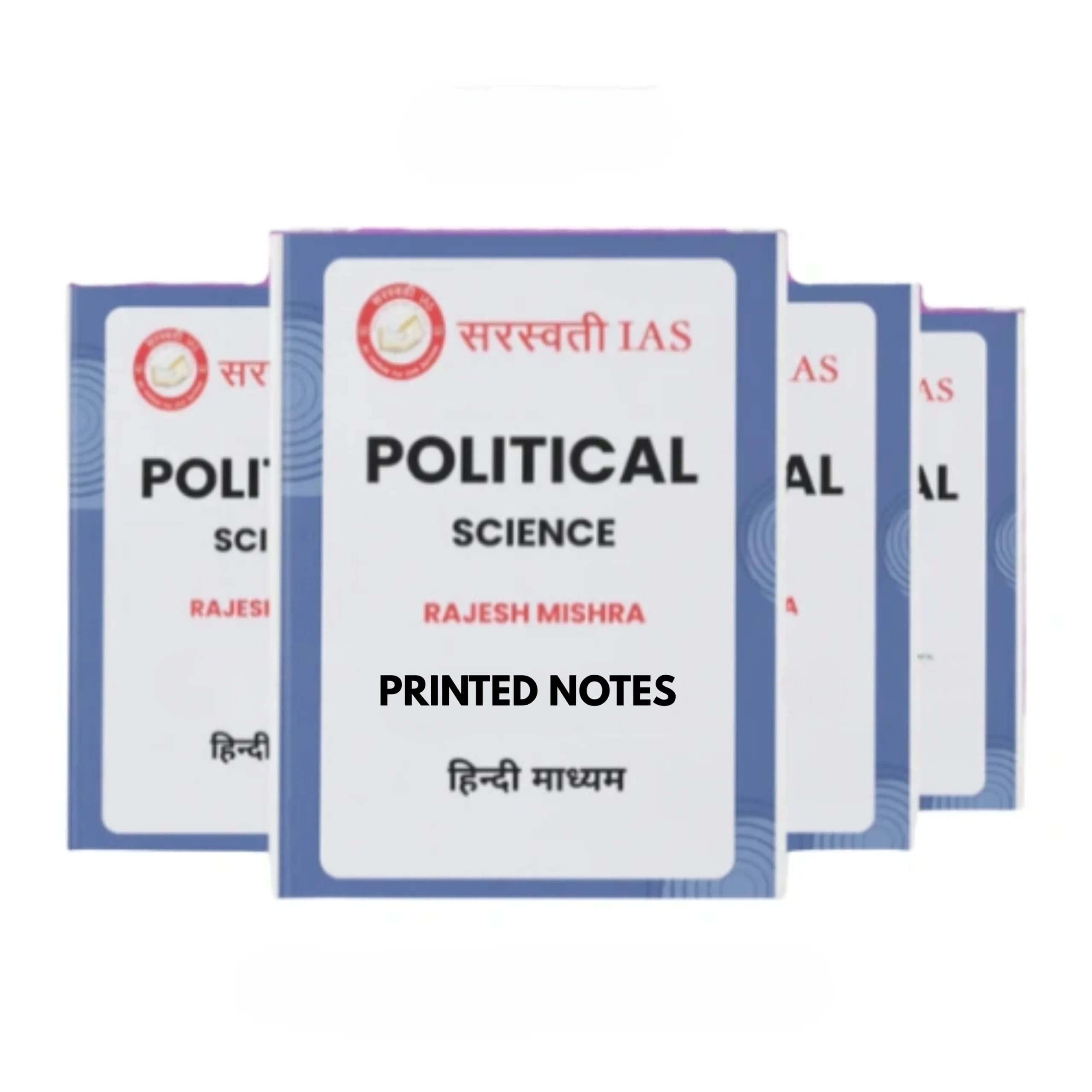
The ugc net political science syllabus in hindi is also published officially. The NTA syllabus document is bilingual — both English and Hindi versions of every unit are provided on the same portal, so Hindi-medium aspirants get the identical 10-unit coverage. On the NTA syllabus page, look for the Hindi (हिन्दी) link alongside the English one and download the राजनीति विज्ञान syllabus. For Hindi-medium study material on the Political Science optional, many aspirants use Rajesh Mishra PSIR Notes (Hindi Medium) to build conceptual depth in their own language.
UGC NET Political Science Unit-Wise Weightage (PYQ Analysis)
One thing many competitor pages skip entirely is which units actually carry more questions. While the official syllabus gives each unit roughly equal status, a PYQ-based pattern emerges across recent papers. Use this as a smart-prioritisation guide, not a license to skip units.
| Unit | Approx. Questions / Paper | Priority |
|---|---|---|
| Political Theory | 10-13 | High |
| Western Political Thought | 9-12 | High |
| Indian Political Thought | 8-11 | High |
| Comparative Political Analysis | 8-10 | Medium-High |
| International Relations | 9-12 | High |
| India’s Foreign Policy | 7-9 | Medium |
| Political Institutions in India | 10-12 | High |
| Political Processes in India | 7-9 | Medium |
| Public Administration | 7-10 | Medium-High |
| Governance & Public Policy | 6-9 | Medium |
The takeaway: Political Theory, Western Thought, IR, and Political Institutions together can fetch 40+ questions, so they deserve your strongest preparation. But because there is no sectional cut-off and units overlap (e.g., Indian Political Thought feeds Indian Institutions and Processes), covering all 10 is the only safe strategy. These figures are indicative trends from past papers, not an official weightage notified by NTA, so treat them as planning aids.
UGC NET Political Science Minimum Qualifying Marks & Cut-Off
To be declared NET-qualified, a candidate must first clear the minimum qualifying marks and then make the category-wise cut-off prepared by NTA. The aggregate of Paper 1 and Paper 2 (out of 300) is what counts.
| Category | Minimum Qualifying % |
|---|---|
| General / Unreserved | 40% |
| OBC (NCL) / SC / ST / PwD / EWS / Transgender | 35% |
Clearing the minimum percentage is only the gate. The final cut-off is decided so that the top 6% of candidates who appeared (combining both papers) qualify. Within that, the JRF cut-off is always higher than the Assistant Professor cut-off because JRF has limited fellowship slots. As a working benchmark, General-category aspirants often need roughly 200+/300 for Assistant Professor and noticeably higher for JRF, though the exact figure shifts every cycle with difficulty and number of candidates.
JRF vs Assistant Professor — what’s the difference?
Both certificates come from the same exam, but JRF (with a higher cut-off and an upper age limit) qualifies you for a research fellowship to pursue a Ph.D. with a monthly stipend, while “Assistant Professor eligibility” (NET) has no age limit and qualifies you to apply for teaching posts. If you want both, you must aim for the JRF cut-off.
Best Books for UGC NET Political Science (Unit-Wise)
This is where many ranking pages stay vague. Here is a concrete, unit-mapped ugc net political science books and preparation list using standard, widely-recommended texts.
| Unit / Theme | Recommended Book(s) | Author |
|---|---|---|
| Political Theory & Concepts | An Introduction to Political Theory | O.P. Gauba |
| Western Political Thought | A History of Political Thought: Plato to Marx | Subrata Mukherjee & Sushila Ramaswamy |
| Comparative & Modern Politics | Politics | Andrew Heywood |
| Indian Political Thought | Indian Political Thought | Himanshu Roy / V.R. Mehta |
| Indian Government & Institutions | Indian Polity | M. Laxmikanth |
| Indian Constitution & Politics | The Indian Constitution / Politics in India | Granville Austin / Rajni Kothari |
| International Relations | Global Politics / International Relations | Andrew Heywood / Peu Ghosh |
| India’s Foreign Policy | Does the Elephant Dance? | David M. Malone |
| Public Administration | Public Administration / New Horizons of PA | Mohit Bhattacharya / Avasthi & Maheshwari |
| Indian Politics & Society | Indian Government & Politics | B.L. Fadia |
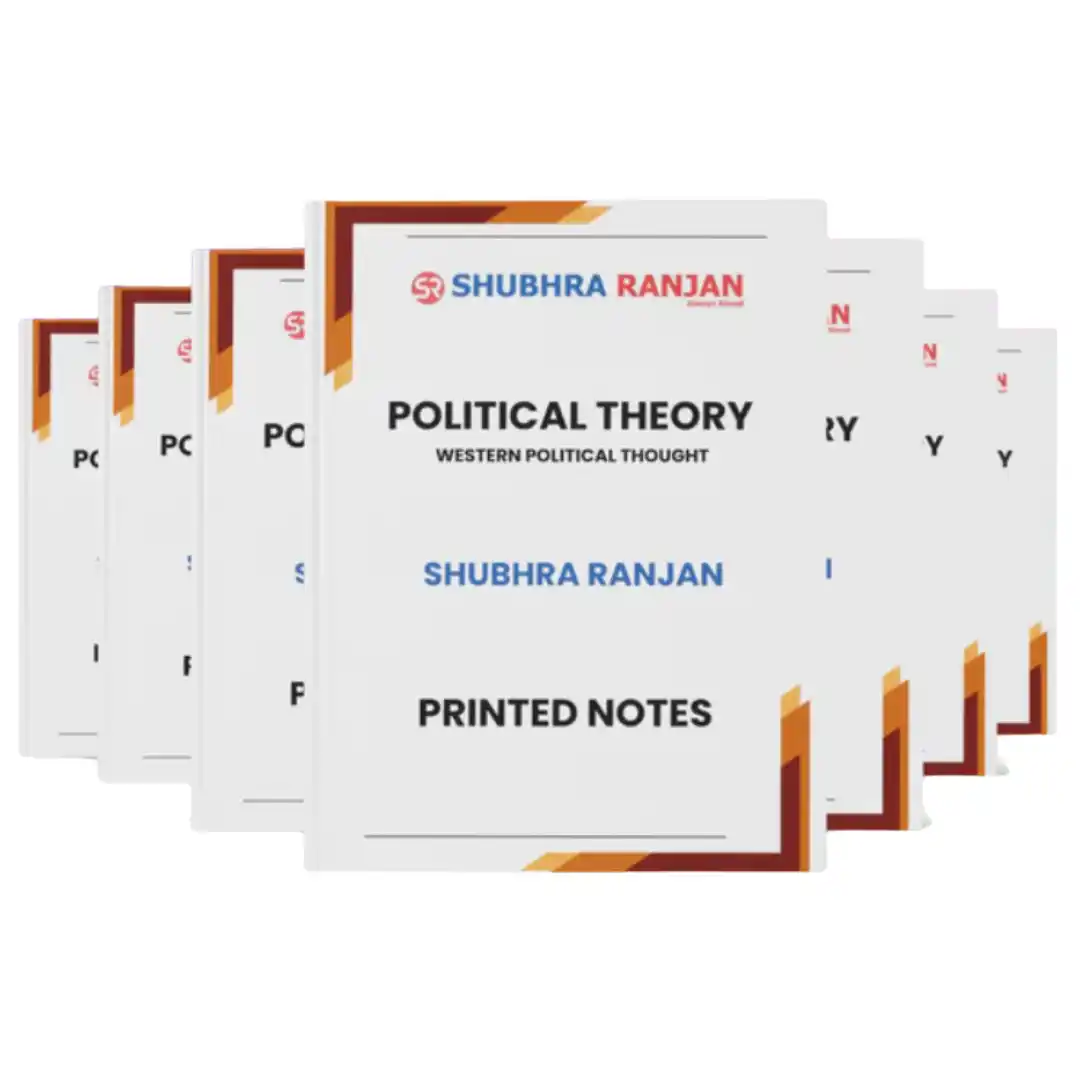
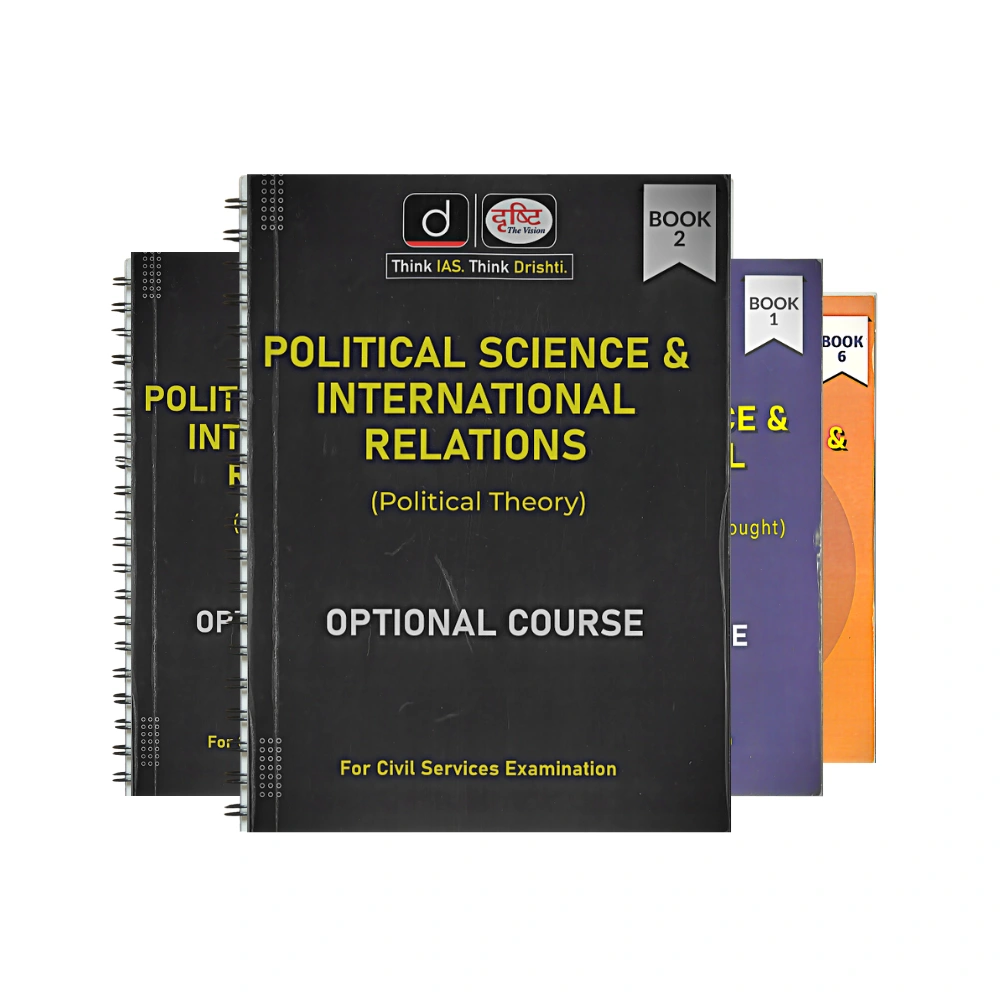
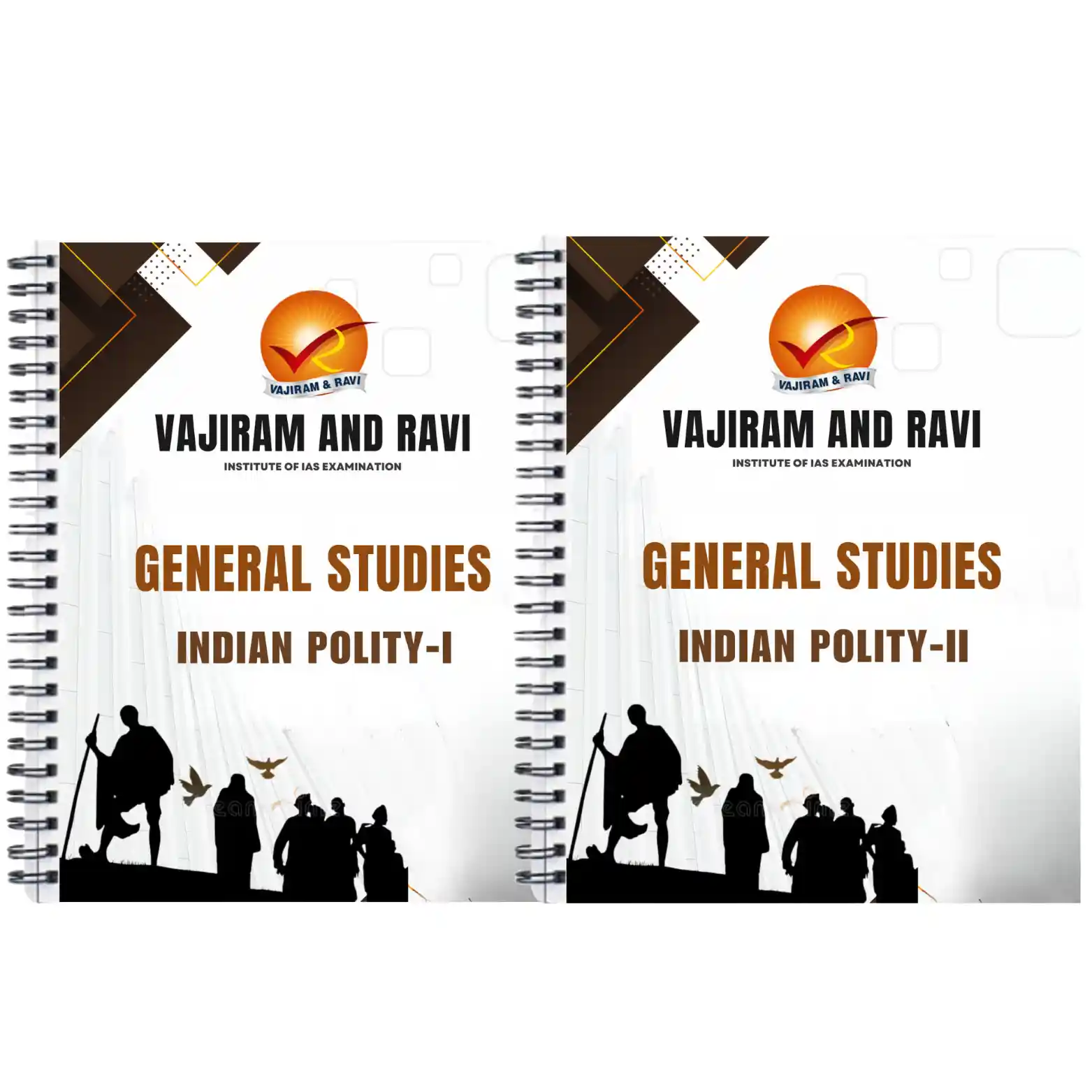
For aspirants who also target UPSC, the PSIR optional study material doubles up beautifully for UGC NET because the syllabi overlap heavily. A well-structured note set like Shubhra Ranjan PSIR Notes (Set of 4 Booklets) or Drishti IAS PSIR Notes (Set of 6 Booklets) compresses Political Theory, Thinkers, Comparative Politics, and IR into exam-ready language — far faster to revise than thick standard textbooks. For the Indian Institutions unit specifically, Vajiram Polity Notes pairs well with Laxmikanth for quick revision.
How to Prepare UGC NET Political Science Syllabus
A vague “read books, give mocks” plan is why many aspirants stall. Here is a realistic, sequenced strategy.
Step 1: Lock the syllabus and PYQs first
Print the 10-unit syllabus and the last 5-6 years of UGC NET Political Science previous-year papers. Map every PYQ to its unit. Within two days you will see the recurring high-yield themes (liberty/justice, social contract thinkers, Constitution, IR theories) and you can prioritise accordingly.
Step 2: Build concepts unit by unit
Study in the syllabus order but front-load the four high-weightage units (Political Theory, Western Thought, IR, Indian Institutions). Make short one-page notes per thinker/concept — these become your revision gold in the last week.
Step 3: Link current affairs to dynamic units
Units 5, 6, 8, and 10 (IR, Foreign Policy, Political Processes, Governance) move with current events. A monthly current-affairs digest such as the Vision IAS Current Affairs Magazine (January 2026) keeps you updated on India’s recent bilateral developments, summits, and policy launches that frequently appear as application-based MCQs.
Step 4: Mock tests and revision
From the halfway point, take a full-length mock every week — both papers, timed, in one 3-hour window. Because there is no negative marking, train yourself to attempt all 150 questions. Maintain an error log and revisit weak units every weekend.
| Phase | Duration | Focus |
|---|---|---|
| Phase 1 — Foundation | Weeks 1-5 | Political Theory, Western & Indian Thought + Paper 1 basics |
| Phase 2 — Core | Weeks 6-10 | Comparative Politics, IR, Foreign Policy, Indian Institutions |
| Phase 3 — Completion | Weeks 11-13 | Political Processes, Public Admin, Governance + current affairs |
| Phase 4 — Revision | Weeks 14-16 | Full mocks, PYQ practice, short-notes revision |
Quick last-month revision checklist
- One-page thinker-concept sheets revised at least twice.
- Constitution articles, amendments, and constitutional bodies fact-drilled.
- IR theories and their key proponents memorised cold.
- Last 5 years’ PYQs re-attempted under timer.
- Two full mocks in the exact 3-hour combined format.
Common mistakes to avoid
- Ignoring Paper 1 — it is 100 easy marks that decide many borderline cut-offs.
- Reading thick textbooks cover to cover without making revision notes.
- Skipping “low-weightage” units — with no sectional cut-off, every 2-mark question counts equally.
- Not practising in the exact 3-hour combined-paper format before exam day.
Is UGC NET Political Science Tough? Difficulty & UPSC Overlap
UGC NET Political Science is moderately difficult — conceptual rather than tricky. The challenge is breadth (10 wide units) more than depth. Aspirants with a graduation/post-graduation background in Political Science find it manageable with 4-5 months of focused study. Because there is no negative marking, even partially confident attempts can be made, which lowers the risk profile compared to negatively-marked exams.
A major advantage: the syllabus overlaps heavily with UPSC PSIR optional and the GS Polity/IR portions. If you are preparing for UPSC with PSIR, you have effectively covered a large share of UGC NET Political Science already — the same thinkers, theories, Constitution, and IR concepts recur. The difference is format (UGC NET is objective; PSIR is descriptive), so you mainly need to add fact-recall and MCQ practice on top of your existing PSIR base. This two-in-one efficiency is why many serious aspirants prepare for both simultaneously.
Sample UGC NET Political Science Questions
To make this concrete, here is the type of MCQ you should expect, unit-wise:
- Political Theory: “The concept of ‘negative liberty’ is most closely associated with which thinker?” (Answer: Isaiah Berlin)
- Western Thought: “‘Man is by nature a political animal’ is stated by ___” (Answer: Aristotle)
- Indian Thought: “The ‘Saptanga’ theory of state is propounded in which text?” (Answer: Kautilya’s Arthashastra)
- International Relations: “‘Politics Among Nations’, a foundational realist text, was written by ___” (Answer: Hans Morgenthau)
- Public Administration: “The ‘ideal-type’ bureaucracy model was given by ___” (Answer: Max Weber)
Notice that most questions test author-concept matching, sequencing, and assertion-reason formats. This is exactly why short, thinker-wise revision notes outperform passive reading.
Featured Study Material for Political Science Aspirants
Since UGC NET Political Science and UPSC PSIR share a near-identical conceptual base, well-organised optional notes are the fastest path to revision-ready coverage. Consider Shubhra Ranjan PSIR Notes for English-medium conceptual clarity, Rajesh Mishra PSIR Notes for Hindi-medium aspirants, and Drishti IAS PSIR Notes for a balanced, exam-focused set — each of which Competer prints and delivers to your doorstep.
Frequently Asked Questions
What is the syllabus of UGC NET Political Science?
The UGC NET Political Science syllabus has two papers. Paper 1 is a general aptitude paper (50 questions/100 marks), and Paper 2 is the subject paper (100 questions/200 marks) organised into 10 units: Political Theory, Political Thought, Indian Political Thought, Comparative Political Analysis, International Relations, India’s Foreign Policy, Political Institutions in India, Political Processes in India, Public Administration, and Governance & Public Policy.
How many units are there in UGC NET Political Science Paper 2?
Paper 2 has 10 units, each covering a distinct theme of Political Science and carrying roughly equal weight, so all 10 must be prepared for the 100-question subject paper.
What is the exam pattern for UGC NET Political Science?
It is a single 3-hour online computer-based test with two papers taken together. Paper 1 has 50 questions (100 marks) and Paper 2 has 100 questions (200 marks), all objective MCQs worth 2 marks each. There is no negative marking and no separate timing for each paper, so you manage the 180 minutes yourself.
Is there negative marking in UGC NET Political Science?
No. There is no negative marking in UGC NET. Each correct answer earns 2 marks and wrong or unattempted answers earn 0, so you should attempt all 150 questions across both papers.
Is UGC NET Political Science tough?
It is moderately difficult and conceptual rather than tricky. The main challenge is the breadth of 10 units, not the depth of any single topic. With 4-5 months of focused study, PYQ practice, and short revision notes — and given there is no negative marking — most Political Science graduates find it manageable.
Which books are best for UGC NET Political Science?
Standard recommendations include O.P. Gauba for political theory, Subrata Mukherjee & Sushila Ramaswamy for Western thought, Andrew Heywood for comparative politics and global politics, M. Laxmikanth for Indian polity, and Mohit Bhattacharya for public administration. UPSC PSIR optional notes also cover most of the syllabus efficiently.
How many marks are required to qualify UGC NET Political Science?
You must first score the minimum qualifying percentage — 40% for General and 35% for reserved categories — out of the combined 300 marks. Final qualification then depends on making the category-wise cut-off, set so that the top 6% of candidates qualify; the JRF cut-off is higher than the Assistant Professor cut-off.
Is the UGC NET Political Science syllabus available in Hindi?
Yes. NTA publishes the official Political Science syllabus in both English and Hindi (राजनीति विज्ञान) on ugcnet.nta.ac.in, and Paper 2 questions are also asked bilingually, so Hindi-medium aspirants get identical 10-unit coverage.
Has the UGC NET Political Science syllabus changed for 2026?
No major change has been notified. The current 10-unit structure was set a few cycles ago and continues for the 2026 June and December cycles. Only the current-affairs content of dynamic units evolves naturally. Always confirm against the official NTA syllabus PDF before relying on any third-party “new syllabus” claim.
How many attempts are allowed for UGC NET Political Science?
There is no limit on the number of attempts for Assistant Professor eligibility. For JRF, eligibility is governed by an upper age limit (with category-wise relaxations) rather than a fixed attempt count, so you can appear as long as you meet the age criteria.
Recommended Study Material
Continue Reading
UGC NET History Syllabus 2026: Unit-Wise + PDF Download
The ugc net history syllabus has two papers set by the NTA: Paper 1 (Teaching & Research Aptitude…

HPSC Syllabus 2026: HCS Prelims, Mains Pattern + PDF
The HPSC syllabus — the official Haryana Civil Services (HCS) syllabus — for the 2026 examination spans three…
WBCS Syllabus 2026: Prelims, Mains, Exam Pattern + PDF Download
The WBCS syllabus for 2026, prescribed by the West Bengal Public Service Commission (WBPSC), runs across three stages:…