UPSC Ethics Syllabus 2026: GS Paper 4 Topics, PDF & Books
Complete UPSC ethics syllabus for GS Paper 4 (2026) — all 8 themes, micro-topics, 2013–2025 PYQ matrix, case-study topics, best books and a free syllabus PDF download.

The upsc ethics syllabus is the official UPSC-notified syllabus for General Studies Paper 4 — titled Ethics, Integrity and Aptitude — a 250-mark, 3-hour Mains paper split into a theory section (Section A) and a case-studies section (Section B). It covers eight broad themes: Ethics and Human Interface; Human Values; Attitude; Aptitude and foundational values for civil service; Emotional Intelligence; contributions of moral thinkers and philosophers; public/civil-service values and ethics in public administration; and probity in governance — plus case studies on these issues. This page gives you the complete word-for-word syllabus, a micro-topic breakdown, a 2013–2025 PYQ matrix, sample case studies with model-answer approaches, a week-by-week plan, the best books, and a free downloadable syllabus PDF and study checklist.
UPSC Ethics Syllabus 2026 at a Glance (GS Paper 4)
GS Paper 4 is one of four General Studies papers in the UPSC Civil Services Mains examination. The upsc ethics syllabus 2026 is unchanged from the syllabus notified in 2013 — UPSC has not revised the text, so what you study this year is identical to what toppers have prepared from for over a decade. The paper tests not bookish knowledge but your attitude, your approach to conflicts, and your integrity as a probable civil servant.
| Parameter | Details |
|---|---|
| Paper name | General Studies Paper 4 — Ethics, Integrity & Aptitude |
| Total marks | 250 |
| Duration | 3 hours |
| Nature | Descriptive (written), merit-ranking |
| Section A | Theory questions (~13 questions, ~150 words each) |
| Section B | Case studies (~6 cases, ~250–300 words each) |
| Language medium | As opted for the whole Mains examination |
| Weight in Mains | 250 of the written Mains total |
Because the content is finite and repetitive, Ethics is widely regarded as a high-return paper. Published mark sheets of recent rankers show scores commonly in the 100–130 band — higher than many candidates manage in GS Papers 2 and 3 — which is why disciplined aspirants treat it as a rank-booster. Our full Vision IAS GS 2026-27 booklet set includes dedicated Ethics material if you prefer an integrated GS package.
What Is the Syllabus of Ethics in UPSC? The Official Text
Below is the exact UPSC-notified scope of GS Paper 4, reproduced so you can map every answer and case study against the source. This is the complete ethics integrity and aptitude syllabus upsc aspirants must cover.
“This paper will include questions to test the candidates’ attitude and approach to issues relating to integrity, probity in public life and his problem solving approach to various issues and conflicts faced by him in dealing with society. Questions may utilise the case study approach to determine these aspects. The following broad areas will be covered.”
- Ethics and Human Interface: Essence, determinants and consequences of ethics in human actions; dimensions of ethics; ethics in private and public relationships.
- Human Values: Lessons from the lives and teachings of great leaders, reformers and administrators; role of family, society and educational institutions in inculcating values.
- Attitude: Content, structure, function; its influence and relation with thought and behaviour; moral and political attitudes; social influence and persuasion.
- Aptitude and foundational values for Civil Service: Integrity, impartiality and non-partisanship, objectivity, dedication to public service, empathy, tolerance and compassion towards the weaker sections.
- Emotional Intelligence: Concepts, and their utilities and application in administration and governance.
- Contributions of moral thinkers and philosophers from India and the world.
- Public/Civil Service Values and Ethics in Public Administration: Status and problems; ethical concerns and dilemmas in government and private institutions; laws, rules, regulations and conscience as sources of ethical guidance; accountability and ethical governance; strengthening of ethical and moral values in governance; ethical issues in international relations and funding; corporate governance.
- Probity in Governance: Concept of public service; philosophical basis of governance and probity; information sharing and transparency in government, Right to Information, codes of ethics, codes of conduct, citizen’s charters, work culture, quality of service delivery, utilisation of public funds, challenges of corruption.
- Case Studies on the above issues.
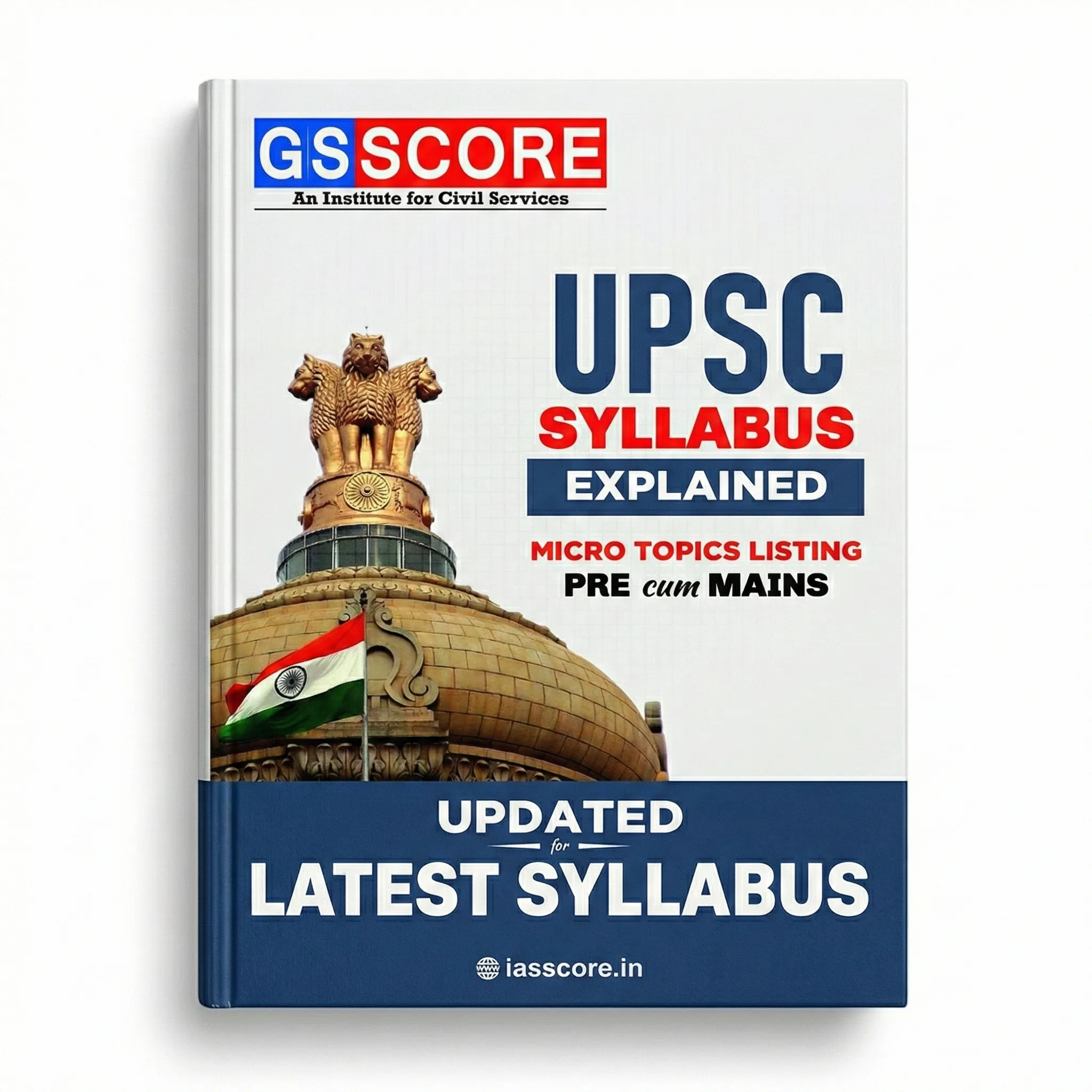
If you want the clean source document covering this and every other paper, the GS Score Latest Syllabus Booklet 2026-27 is a handy printed reference for your desk.
GS Paper 4 Syllabus: Theme-by-Theme Micro-Topic Breakdown
The headline upsc gs paper 4 syllabus is deceptively short. What trips aspirants up is the hidden depth inside each line. Here is the micro-topic expansion you need for complete coverage — these are the upsc ethics syllabus micro topics examiners actually probe.
| Theme | Core micro-topics to master |
|---|---|
| 1. Ethics & Human Interface | Meaning of ethics; ethics vs morality vs values vs law; essence & sources of ethics; determinants (family, religion, law, culture); consequences; normative ethics (consequentialism, deontology, virtue ethics); dimensions (descriptive, meta, normative, applied); private vs public morality |
| 2. Human Values | Lessons from Gandhi, Buddha, Vivekananda, Lincoln, Mandela, Kalam; role of family, peers, society, educational institutions, workplace; value erosion; value education |
| 3. Attitude | Definition, components (ABC: affective, behavioural, cognitive), functions; formation & change; attitude–behaviour gap; moral vs political attitudes; prejudice, stereotype; persuasion, propaganda, social influence (conformity, compliance, obedience) |
| 4. Aptitude & Foundational Values | Civil-service aptitude; integrity, impartiality, non-partisanship, objectivity, dedication to public service, empathy, tolerance, compassion; neutrality vs anonymity |
| 5. Emotional Intelligence | Goleman’s model; self-awareness, self-regulation, motivation, empathy, social skills; EI vs IQ; application in stress, crisis, team management, public dealing |
| 6. Moral Thinkers & Philosophers | Indian: Gandhi, Kautilya, Buddha, Tiruvalluvar, Ambedkar, Vivekananda; Western: Aristotle, Socrates, Plato, Kant, Mill, Bentham, Rawls, Nietzsche |
| 7. Public/Civil-Service Values & Ethics in Public Admin | Ethical dilemmas; laws/rules/conscience as guides; accountability; 2nd ARC recommendations; corporate governance; ethics in international relations & funding; whistleblowing |
| 8. Probity in Governance | Concept & philosophical basis of public service; RTI; codes of ethics vs codes of conduct; citizen’s charter; work culture; service delivery; public funds; corruption & anti-corruption framework (CVC, Lokpal, PCA) |
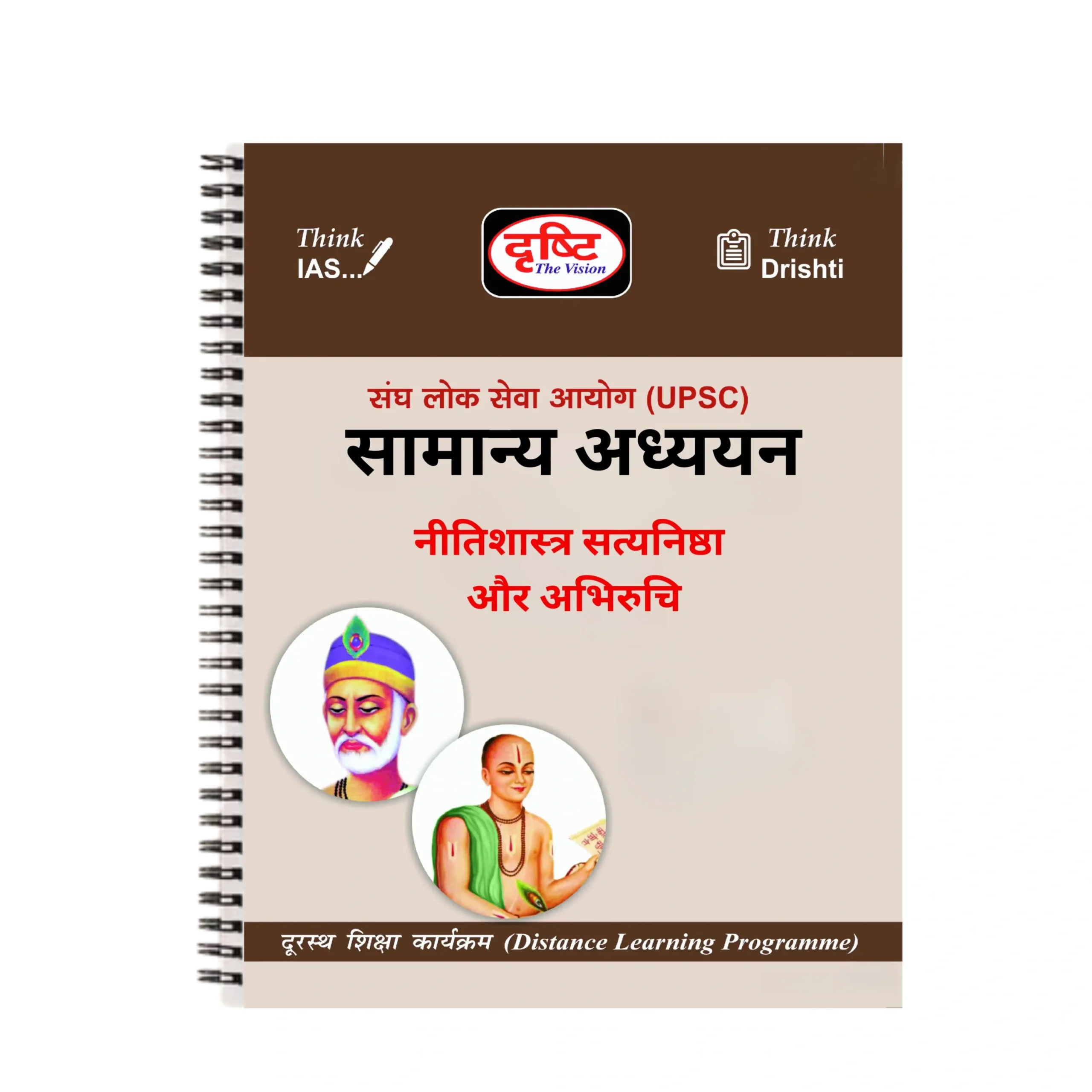
A dedicated ethics module keeps this structure intact. The Drishti IAS Ethics Notes organise these eight themes with definitions, thinkers and keywords in exam-ready form.
What Is Probity in Governance in the UPSC Ethics Syllabus?
Probity in governance is the most heavily tested single theme in GS Paper 4, so it deserves a focused explanation. Probity means confirmed integrity and uprightness — acting honestly and incorruptibly while holding public office, not just avoiding illegality but upholding the highest standard of conduct. In the syllabus, “probity in governance” bundles the concept and philosophical basis of public service with the practical instruments that enforce it.
- Transparency tools: the Right to Information (RTI) Act, proactive disclosure, and information sharing that let citizens hold officials to account.
- Standard-setting instruments: codes of ethics (aspirational values) versus codes of conduct (enforceable rules), and citizen’s charters that commit a department to measurable service standards.
- Service and resource integrity: work culture, quality of service delivery and the honest utilisation of public funds.
- Anti-corruption framework: the challenges of corruption and the bodies that counter it — the Central Vigilance Commission (CVC), the Lokpal and Lokayuktas, and the Prevention of Corruption Act (PCA).
Link every probity answer to a real instrument and, where possible, a recommendation from the 2nd ARC’s fourth report, Ethics in Governance — that is what moves an answer from generic to examiner-grade.
How Many Questions Are Asked in GS Paper 4? Paper Structure
Understanding the paper’s architecture is half the battle. GS Paper 4 is split into two sections that carry roughly 125 marks each.
| Section | Content | Typical questions | Word limit | Marks |
|---|---|---|---|---|
| Section A | Theory — conceptual & application questions, quotes to interpret | ~13 (often sub-divided a/b) | ~150 words each | ~125 |
| Section B | Case studies (situational dilemmas) | ~6 cases | ~250–300 words each | ~125 |
| Total | Ethics, Integrity & Aptitude | ~19 answer units | — | 250 |
In recent years UPSC has blended theory and application even within Section A — many “theory” questions carry a mini-situation or a quotation by a thinker that you must decode and relate to governance. Section B case studies carry the heaviest marks per question (20 marks each) and are where ranks are made or broken.
Topic-Wise Previous Year Questions (2013–2025) Mapped to the Syllabus
This PYQ matrix is the gap most top pages miss. Mapping where UPSC actually asks from tells you where to invest time. Across 2013–2025, the distribution has been remarkably stable.
| Syllabus theme | Approx. PYQ frequency (2013–2025) | Representative question themes |
|---|---|---|
| Ethics & Human Interface | High | Essence of ethics, ethical dimensions, private vs public conduct |
| Attitude | Medium | Attitude change, persuasion, moral attitude in administration |
| Foundational Values | Very High | Integrity, objectivity, compassion, empathy — defined & applied |
| Emotional Intelligence | Medium | EI in crisis, decision-making, public dealing |
| Moral Thinkers | High | Gandhi, Kautilya, Kant, Aristotle quotes & application |
| Ethics in Public Administration | Very High | Dilemmas, accountability, conscience vs law, corporate governance |
| Probity in Governance | Very High | RTI, transparency, corruption, citizen’s charter, public funds |
| Quotation-based (Section A) | High | One-line quotes you must interpret in 150 words |
Takeaway: Foundational Values, Ethics in Public Administration and Probity together account for the bulk of marks every single year. If you are short on time, secure these three first. A topic-wise PYQ compilation such as the Forum IAS Topic-Wise PYQ Toolkit (though Prelims-focused) reflects the same question-mapping discipline you should bring to Mains ethics practice.
GS Paper 4 Case Studies Topics + Model-Answer Approach
Section B is worth about 125 marks and is where generic answers die. The common gs paper 4 case studies topics revolve around recurring dilemma types. Learn the categories, not just individual cases.
| Case-study category | Typical dilemma | Stakeholders usually involved |
|---|---|---|
| Corruption & bribery | Pressure to overlook irregularities for personal/political gain | Officer, politician, contractor, public |
| Conflict of interest | Personal relationship vs official duty | Officer, family/friend, department |
| Whistleblowing | Report wrongdoing vs loyalty & career risk | Officer, senior, institution |
| Development vs environment/displacement | Public project vs local community rights | State, citizens, NGOs, industry |
| Gender, caste & social justice | Rule-following vs compassion/equity | Officer, victim, society |
| Resource crunch / triage | Limited funds, competing urgent needs | Administrator, beneficiaries |
| Private-sector & corporate ethics | Profit, disclosure & whistleblowing in a company setting | Employee, management, regulator, consumers |
A reliable 7-step case-study framework:
- Identify the stakeholders and their legitimate interests.
- List the ethical dilemmas/issues at stake (name them precisely — e.g., conflict between legality and compassion).
- Spell out the options available to you.
- Weigh each option’s merits and demerits against ethical principles and rules.
- State and justify the course of action you would take.
- Add safeguards/systemic reforms to prevent recurrence.
- Close with a value-based conclusion linking to public interest.
Sample case (abridged): As District Magistrate you discover that relief funds for a flood-hit block are being siphoned by a contractor politically close to a powerful minister who hints at your transfer if you interfere. Model approach: name the dilemma (integrity & probity vs career self-interest and political pressure); identify stakeholders (flood victims, taxpayers, contractor, minister, your family, institution); list options (ignore, confront quietly, build evidence and act through due process, go public); choose the principled yet feasible path — document evidence, route it through the vigilance/CVC machinery and competent authority, ensure relief reaches victims, accept personal cost as the price of integrity; conclude that public service demands the welfare of the vulnerable override personal convenience.
Which Is the Best Book for UPSC Ethics (GS Paper 4)?
The right resource stack keeps Ethics compact. You do not need many books — you need one reliable base plus thinkers, quotes and ARC inputs.
| Resource | Best for | Priority |
|---|---|---|
| Lexicon for Ethics (Niraj Kumar) | Dictionary-style concept & definition coverage | Core base |
| Ethics, Integrity & Aptitude (G. Subba Rao & P.N. Roy Chowdhury) | Comprehensive theory & thinkers | Core base (alternative) |
| Coaching ethics notes (e.g., Drishti/Vision) | Structured theme-wise notes, keywords, answers | High |
| 2nd ARC Reports (4th: Ethics in Governance) | Governance, probity, anti-corruption | High (selective reading) |
| NCERT Psychology (Class 11–12) | Attitude, emotional intelligence basics | Supplementary |
| PYQs + a case-study workbook | Answer writing & case practice | Essential practice |
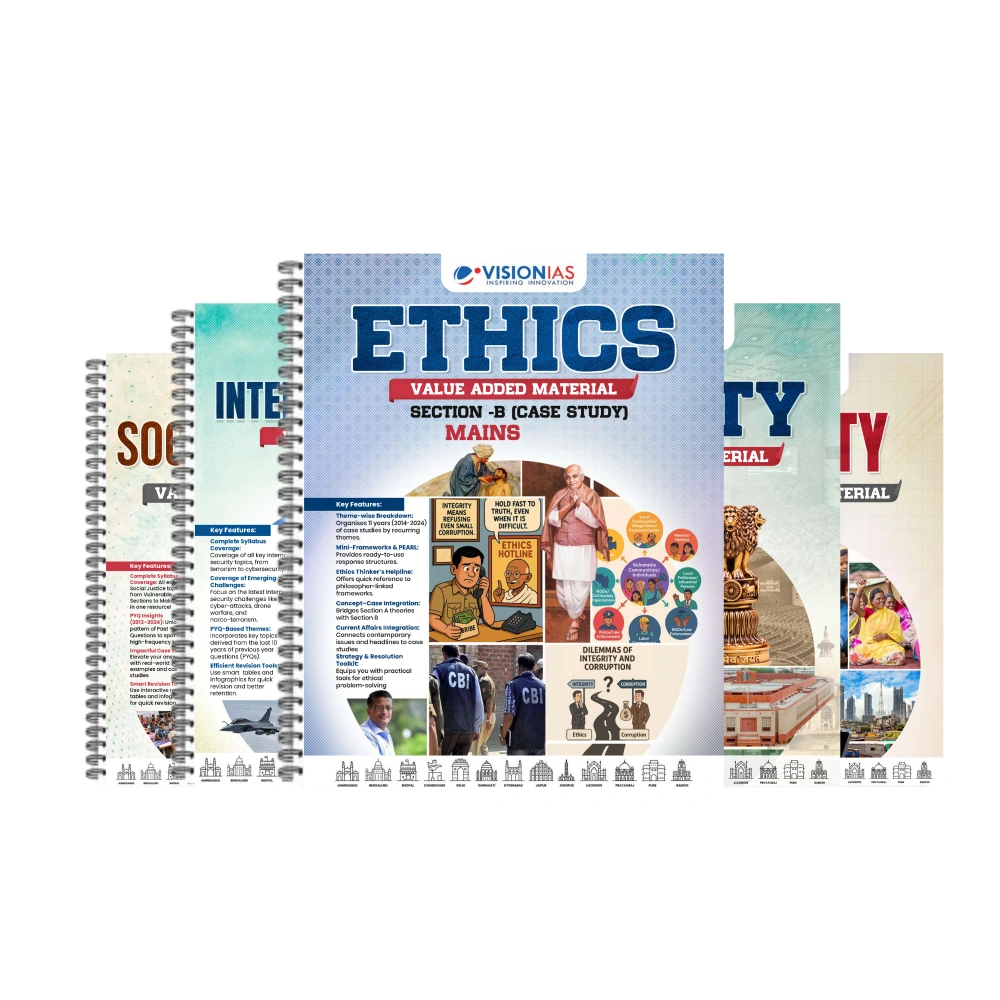
For a clean, theme-wise printed base many aspirants start with the Drishti IAS Ethics Notes, and supplement value-addition (quotes, examples, keywords) using the Vision IAS GS Value Added Materials. Pick one core book — do not collect five.
Keyword & Definition Bank: Exam-Ready Terms
Precise definitions win marks because examiners want conceptual clarity before application. Memorise these crisp, exam-ready lines.
| Term | Exam-ready definition |
|---|---|
| Ethics | A set of standards distinguishing right from wrong that guides human conduct. |
| Integrity | Consistency of character — adherence to moral principles even when unobserved. |
| Probity | Confirmed integrity and uprightness in public life; incorruptibility in the use of public office. |
| Objectivity | Decision-making based on facts and evidence, free of personal bias. |
| Impartiality | Treating all citizens equally without favour or prejudice. |
| Non-partisanship | Serving the government of the day without political alignment. |
| Emotional Intelligence | The ability to recognise, understand and manage one’s own and others’ emotions. |
| Accountability | Being answerable for one’s decisions and their consequences. |
| Compassion | Sympathetic concern for others’ suffering coupled with a desire to help. |
Pair each definition with one thinker’s quote and one administrative example — that triad (definition + quote + example) is the structure that separates top answers from average ones.
How to Prepare Ethics for UPSC Mains: Week-by-Week Plan
Ethics rewards a short, intense, answer-writing-heavy preparation rather than months of passive reading. Here is a focused 6-week plan tied to specific resources and micro-topics.
| Week | Focus | Deliverable |
|---|---|---|
| Week 1 | Ethics & Human Interface + Foundational Values | Definition bank + 10 answers |
| Week 2 | Attitude + Emotional Intelligence (NCERT Psychology) | ABC model notes + 8 answers |
| Week 3 | Moral thinkers (Indian + Western) — quotes & application | One-page thinker chart + quotes list |
| Week 4 | Ethics in Public Administration (2nd ARC) + corporate governance | Dilemma frameworks + 8 answers |
| Week 5 | Probity in Governance — RTI, citizen’s charter, corruption | Case-study examples bank + 8 answers |
| Week 6 | Full-length case studies + previous year papers | 2 full timed papers + review |
Daily habit: write at least one 150-word theory answer or one case study every day. Ethics scores improve through writing, not reading. Keep a personal “examples diary” of administrators, Gandhian episodes, Supreme Court lines and real governance cases you can plug into any answer.
Common Mistakes Aspirants Make in GS Paper 4
- Over-reading theory. Candidates mug up philosophy for months but never practise answers. The paper is application-driven.
- Ignoring the word limit. 150-word answers must be crisp; case studies must be structured, not essays.
- Generic case-study answers. Failing to name stakeholders and precise dilemmas loses easy marks.
- No examples. Answers without real administrators, thinkers or incidents read as hollow.
- Preachy conclusions. Avoid moral sermons; give practical, balanced, feasible action.
- Skipping quotes. A relevant one-liner from Gandhi, Kant or Kautilya lifts an answer instantly.
What Is NOT in the UPSC Ethics Syllabus
Equally important is knowing where to stop so you do not over-read. The upsc ethics syllabus does not require:
- Deep academic philosophy — you need working knowledge of thinkers, not a philosophy degree.
- Memorising every school of ethics in exhaustive detail — core normative theories suffice.
- Legal provisions in minute detail (you need concepts like RTI, Lokpal, CVC — not section-wise law).
- Current affairs as a standalone — ethics uses examples from current events but is not a current-affairs paper.
- Any separate quantitative “aptitude” content — “aptitude” here means civil-service aptitude and values, not CSAT-style reasoning.
Download the UPSC Ethics Syllabus PDF + Study Checklist
For offline revision we have compiled a clean, printable one-page syllabus plus an editable study-tracker checklist — ideal to paste above your desk. Use the upsc ethics syllabus pdf download to tick off each of the eight themes and their micro-topics as you finish them, and pair it with a printed notes set so your theory, quotes and case practice stay in one place.
If you want physical, ready-to-revise material delivered to you, start with the Drishti IAS Ethics Notes for the core theme-wise base, add the Vision IAS GS Value Added Materials for quotes, keywords and answer enrichment, and keep the GS Score Latest Syllabus Booklet as your single-source syllabus reference across all GS papers.
Frequently Asked Questions
What is the syllabus of ethics in UPSC?
The UPSC ethics syllabus is GS Paper 4 — Ethics, Integrity and Aptitude — covering eight themes: Ethics and Human Interface, Human Values, Attitude, Aptitude and foundational values for civil service, Emotional Intelligence, contributions of moral thinkers and philosophers, public/civil-service values and ethics in public administration, and probity in governance, plus case studies on these issues.
What are the topics in GS Paper 4 (Ethics)?
GS Paper 4 topics are the eight notified themes above, each with deeper micro-topics: normative ethics (consequentialism, deontology, virtue ethics), the ABC model of attitude, Goleman’s emotional-intelligence model, Indian and Western moral thinkers (Gandhi, Kautilya, Kant, Aristotle, Rawls), the 2nd ARC’s recommendations, and probity instruments such as RTI, citizen’s charters, CVC, Lokpal and the Prevention of Corruption Act — all tested through theory questions and case studies.
How many marks is the UPSC ethics paper?
GS Paper 4 carries 250 marks and must be completed in 3 hours. It is split into Section A (theory, about 125 marks) and Section B (case studies, about 125 marks), making it one of the four 250-mark General Studies papers in the UPSC Mains examination.
How many questions are asked in GS Paper 4?
Typically around 13 theory questions of about 150 words each in Section A and about 6 case studies of 250–300 words each in Section B, totalling roughly 19 answer units for 250 marks. The exact count varies slightly year to year.
What is probity in governance in the UPSC ethics syllabus?
Probity in governance means acting with confirmed integrity and uprightness in public office — honest, incorruptible conduct beyond mere legality. In the syllabus it covers the concept and philosophical basis of public service, transparency and information sharing (RTI), codes of ethics and codes of conduct, citizen’s charters, work culture, quality of service delivery, honest use of public funds, and the challenges of corruption along with bodies like the CVC and Lokpal.
How to prepare ethics for UPSC Mains?
Use one core book (Lexicon or Subba Rao) plus a theme-wise notes set, read the 2nd ARC’s Ethics in Governance report selectively, and build a bank of thinkers, quotes and real administrative examples. Most importantly, write at least one answer or case study daily and solve previous year papers under timed conditions.
Which is the best book for UPSC ethics (GS Paper 4)?
Lexicon for Ethics by Niraj Kumar and Ethics, Integrity & Aptitude by G. Subba Rao are the two most recommended core books, supplemented by structured coaching ethics notes, NCERT Psychology for attitude and emotional intelligence, and the 2nd ARC report for governance and probity.
Is ethics an easy paper to score in UPSC?
Ethics is considered a high-scoring paper because the syllabus is finite and repetitive, and published topper mark sheets often show scores in the 100–130 range. However, scores depend heavily on answer writing, use of examples and structured case-study answers rather than theory memorisation alone, so consistent practice matters more than wide reading.
Recommended Study Material
Continue Reading
RRB JE Syllabus 2025: CBT 1 & CBT 2 Subjects, Pattern & PDF
The RRB JE syllabus is split across two computer-based tests: CBT 1 covers Mathematics, General Intelligence & Reasoning,…
SSC CPO Syllabus 2025: Paper 1 & 2 Pattern, PET/PST + PDF
The SSC CPO syllabus covers four subjects in Paper 1 (General Intelligence & Reasoning, General Knowledge & General…
Best Study Material for UPSC 2026: Subject-Wise Buying Guide
The best study material for UPSC is a four-layer stack: NCERT textbooks (Class 6–12), one standard reference book…