UPSC Exam Pattern 2026: Prelims, Mains & Interview Marks
Complete UPSC exam pattern 2026 for Prelims, Mains & Interview — papers, marks, duration, negative marking, qualifying rules, marking scheme & strategy in one guide.

The UPSC exam pattern follows a three-stage structure: the Preliminary Examination (400 marks, objective screening), the Main Examination (1750 marks, descriptive) and the Personality Test or Interview (275 marks). Only the Mains and Interview marks are added to decide the final merit — a total of 2025 marks — while Prelims is a purely qualifying screening test that does not count in the final ranking. This single guide to the upsc exam pattern and marking scheme explains every paper, its questions, marks, duration, negative marking and qualifying rule for the UPSC Civil Services Examination (CSE) 2026, and pairs each stage with a practical preparation strategy. Aspirants often search it as the ias exam pattern for prelims and mains — the structure is identical, because the IAS and the other services are recruited through this same CSE.
UPSC Exam Pattern 2026 at a Glance
The Union Public Service Commission conducts the Civil Services Examination (CSE) in three successive stages. A candidate must clear each stage to advance to the next. The Prelims filters lakhs of applicants down to roughly 12–13 times the number of vacancies; the Mains then narrows this to about twice the vacancies; and the Interview decides the final rank. Understanding the full upsc cse exam pattern 2026 before you begin is the difference between random study and a targeted strategy.
| Stage | Nature | Papers | Total Marks | Counts in Final Merit? |
|---|---|---|---|---|
| Prelims (CSP) | Objective (MCQ) | 2 | 400 | No — screening only |
| Mains (CSM) | Descriptive (written) | 9 | 1750 | Yes |
| Interview / Personality Test | Oral | — | 275 | Yes |
| Final Merit Total | — | — | 2025 | Mains 1750 + Interview 275 |
The exam is usually notified in January–February, with Prelims held around late May, Mains in September and interviews the following January–April. Because the cycle stretches over a year, aspirants preparing for 2026 should treat the pattern below as their long-term blueprint.
UPSC Prelims Exam Pattern: Papers, Marks and Duration
The upsc prelims exam pattern has two objective papers of 200 marks each, both held on the same day. Paper 1 is General Studies (GS-I) and Paper 2 is the Civil Services Aptitude Test (CSAT), also called GS Paper 2. Crucially, only GS-I marks decide the Prelims cutoff; CSAT is only a qualifying paper.
| Paper | Subject | Questions | Marks | Duration | Nature |
|---|---|---|---|---|---|
| Paper 1 | General Studies (GS-I) | 100 | 200 | 2 hours | Merit-ranking |
| Paper 2 | CSAT (GS Paper 2) | 80 | 200 | 2 hours | Qualifying (33%) |
Both papers carry a two-hour window (extended to 2 hours 40 minutes for eligible candidates with benchmark disabilities). Question papers are bilingual — set in Hindi and English. The GS-I paper covers current events, Indian history and the freedom movement, Indian and world geography, polity and governance, economic and social development, environmental ecology, biodiversity and general science.
Why GS-I decides everything
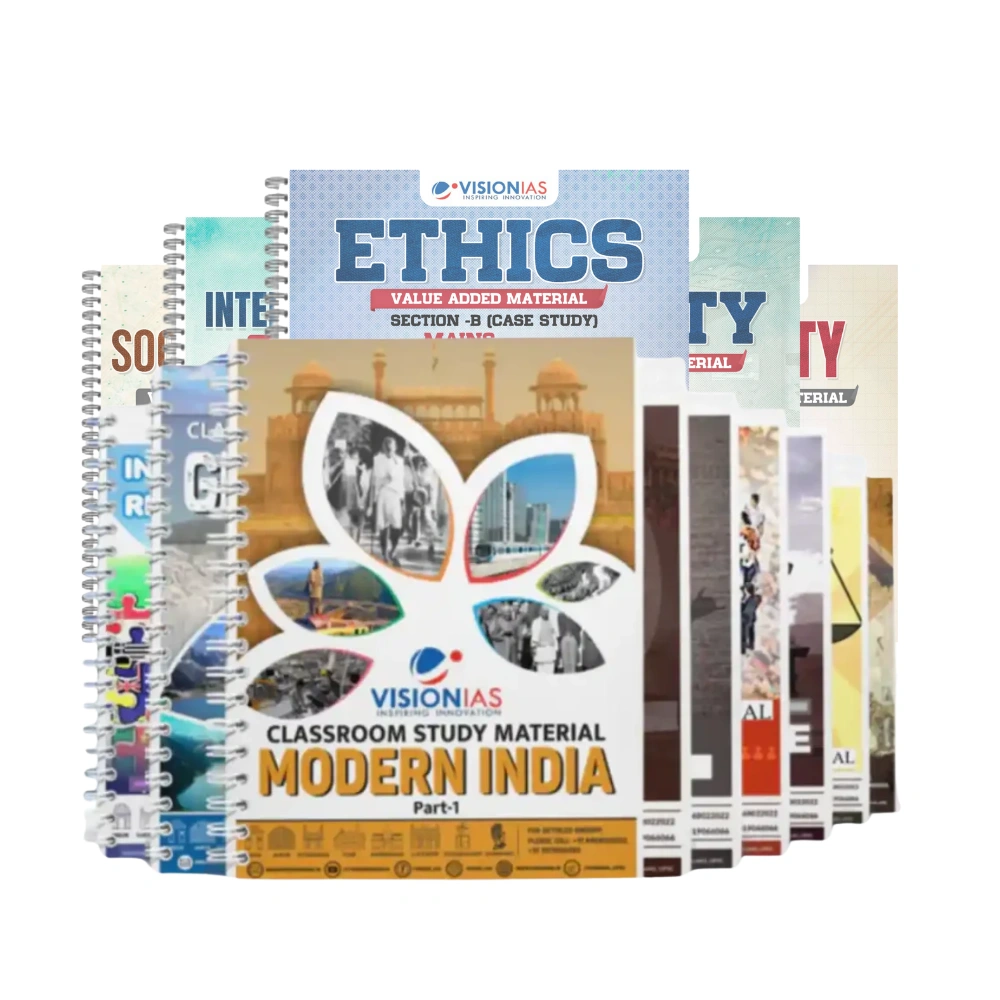
Since CSAT is only qualifying, your entire Prelims rank rests on the 100 questions of GS-I. The cutoff moves every year with paper difficulty — typically hovering in the 87–98 marks band (out of 200) for the General category. Building a strong factual base with structured notes and heavy MCQ practice is non-negotiable here. A well-organised set like the Vision IAS GS 2026-27 Booklets covers the entire GS-I static syllabus, and a disciplined Vision IAS Prelims Test Series 2026 trains you to convert that knowledge into net marks under negative marking.
UPSC Negative Marking Pattern Explained
The upsc negative marking pattern is one of the most searched — and most misunderstood — parts of the exam. In both Prelims papers, one-third (1/3rd) of the marks assigned to a question are deducted for every wrong answer. Unattempted questions carry no penalty. There is no negative marking in the descriptive Mains papers.
| Paper | Marks per Question | Penalty per Wrong Answer | Unattempted |
|---|---|---|---|
| GS-I (100 Qs / 200 marks) | 2.0 | −0.66 (approx. 0.67) | No penalty |
| CSAT (80 Qs / 200 marks) | 2.5 | −0.83 | No penalty |
Worked example: does guessing help?
Suppose in GS-I you are sure of 60 questions and completely blind on the remaining 40. The 60 correct answers give you 120 marks. Now consider the 40 guesses. On MCQs with four options, random guessing gets roughly 1 in 4 right. Of 40 wild guesses, about 10 are correct (+20 marks) and 30 are wrong (30 × −0.66 = −19.8 marks). Net gain from pure guessing ≈ +0.2 marks — statistically negligible.
The maths changes the moment you can eliminate options. If you narrow a question to two choices, your success rate rises to 50%; of 40 such “educated guesses”, 20 correct (+40) and 20 wrong (−13.2) yield a net +26.8 marks — a decisive swing near the cutoff. The takeaway: never blind-guess, but always attempt a question where you can eliminate even one option. This attempt-versus-accuracy calculus is a skill you build only through timed mock tests.
Is CSAT Compulsory? The 33% Qualifying Trap
Yes — CSAT is compulsory. Every candidate must sit for GS Paper 2, and you must score at least 33% (66 out of 200 marks) to qualify. If you clear the GS-I cutoff but fail to reach 33% in CSAT, your Prelims result is rejected. Thousands of otherwise strong aspirants are eliminated here every year, which is why CSAT is a top People-Also-Ask concern.
| CSAT Section | Focus Area | Approx. Weight |
|---|---|---|
| Comprehension | English passages, reasoning from text | High |
| Logical Reasoning & Analytical Ability | Syllogisms, arrangements, puzzles | Medium–High |
| Basic Numeracy | Class X arithmetic, percentages, ratios | Medium |
| Data Interpretation | Tables, charts, graphs | Medium |
| Decision Making | Situational judgement (no negative marking on these) | Low–Medium |
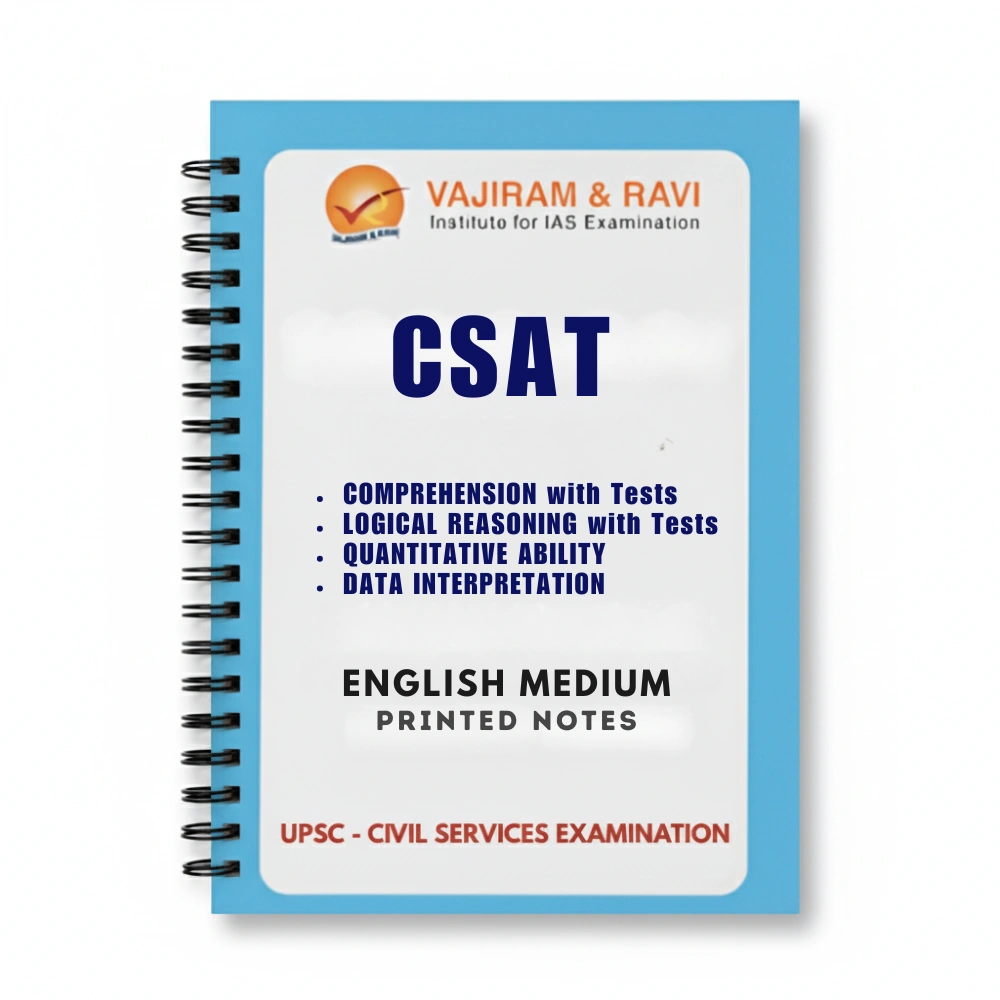
CSAT trips candidates because humanities-background aspirants underestimate its maths and reasoning load, while the passages have grown longer and trickier since 2023. Treat it seriously: solve at least two full CSAT papers a week in the final months. Targeted resources such as the Vajiram CSAT Complete Booklet Set cover every question type with practice sets so 33% never becomes a stumbling block.
UPSC Mains Exam Pattern: 9 Descriptive Papers
The upsc mains exam pattern is written and descriptive, comprising nine papers written over roughly five to seven days. Two of these — the language papers — are merely qualifying, while the remaining seven (1750 marks) count towards the final merit. Each paper is three hours long. This is where the exam is truly won or lost.
| Paper | Subject | Marks | Type |
|---|---|---|---|
| Paper A | Compulsory Indian Language | 300 | Qualifying (25%) |
| Paper B | English | 300 | Qualifying (25%) |
| Paper I | Essay | 250 | Merit |
| Paper II | General Studies I | 250 | Merit |
| Paper III | General Studies II | 250 | Merit |
| Paper IV | General Studies III | 250 | Merit |
| Paper V | General Studies IV (Ethics) | 250 | Merit |
| Paper VI | Optional Paper I | 250 | Merit |
| Paper VII | Optional Paper II | 250 | Merit |
| Total counted for merit | 1750 | — | |
Qualifying vs merit papers — clearing the confusion
Beginners often panic about the language papers. Paper A and Paper B each need only 25% (75/300) to pass, and their marks are NOT added to your total. UPSC will not even evaluate your GS and Optional answer sheets if you fail either language paper — so treat them as a gate, not a scoring opportunity. Candidates from Nagaland, and some others, are exempt from Paper A under specific rules; always confirm from the notification. In short, of the nine Mains papers only seven feed the merit list, and this qualifying-versus-counted split is the single most misread part of the marking scheme.
Mains GS Syllabus Mapped to Each Paper
Most reference pages list marks but never tell you what actually falls under GS-I to GS-IV. This subject-wise mapping is the gap that decides your Mains score — study to the paper, not to a vague syllabus.
| Paper | Broad Theme | Core Topics |
|---|---|---|
| GS-I | Heritage, History, Geography, Society | Indian culture, Modern history & freedom struggle, World history, Indian society, urbanisation, physical & human geography |
| GS-II | Governance, Polity, IR | Constitution, Parliament, judiciary, governance, social justice schemes, international relations |
| GS-III | Economy, Environment, Sci-Tech, Security | Economic development, agriculture, budgeting, environment, disaster management, internal security, technology |
| GS-IV | Ethics, Integrity, Aptitude | Ethics theory, attitude, emotional intelligence, civil service values, case studies |
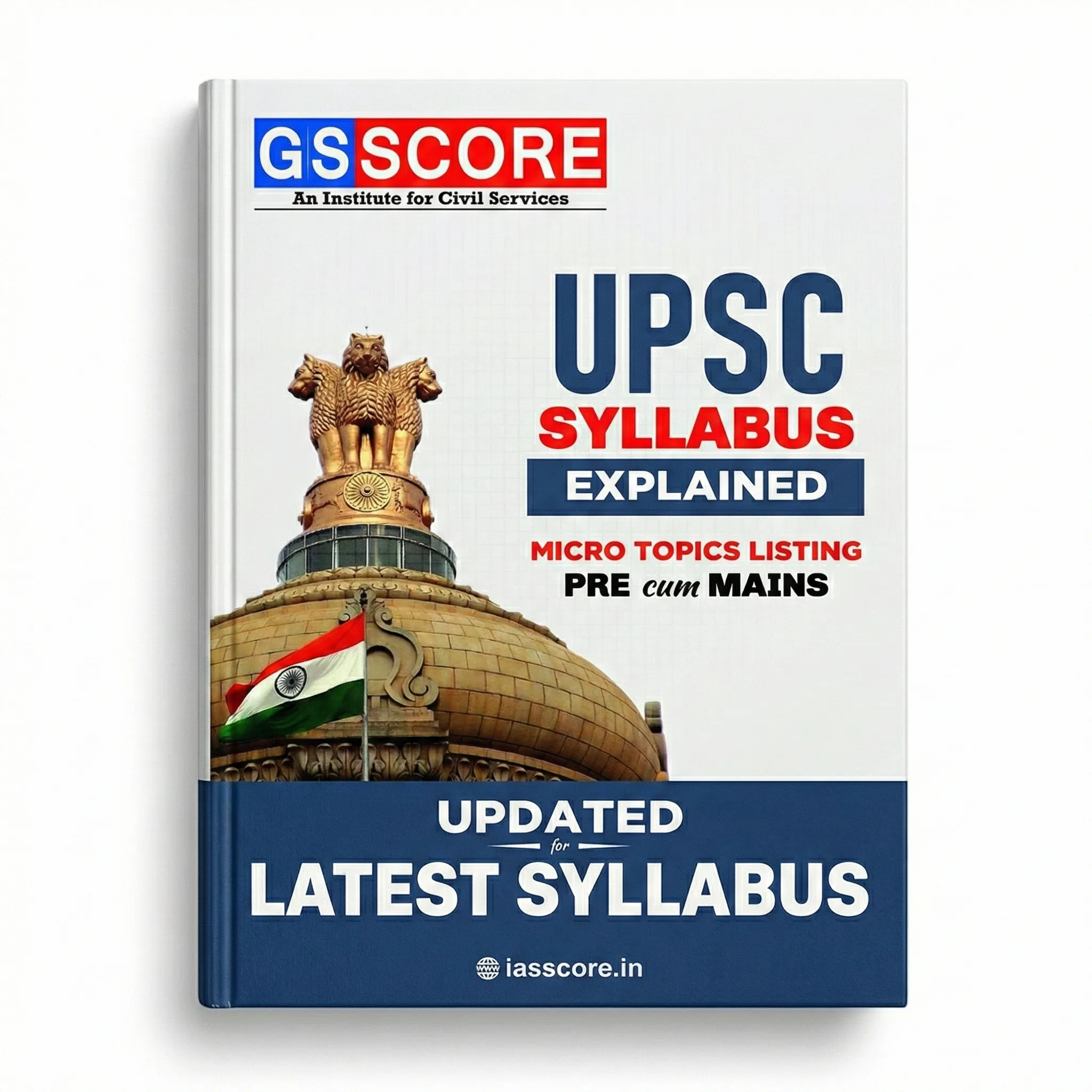
The Essay paper (250 marks) is separate from GS and demands structured argument across two essays. Ethics (GS-IV) and Essay are the fastest way to gain a rank because most candidates neglect them. A focused resource like Vajiram Essay Notes helps you build the frameworks and quotations that separate a 120+ Essay from an average one. For candidates who want the complete, current syllabus text in one booklet, the GS Score Latest Syllabus Booklet 2026-27 is a compact reference to keep on your desk.
Optional Subjects: 48 Choices and How to Pick
Each candidate chooses one Optional subject with two papers of 250 marks (500 total). UPSC offers 48 optionals, including 23 literature options in Indian languages plus English. Since 500 marks — nearly a quarter of the merit total — ride on this choice, selecting well matters enormously.
| Category | Examples | Best Suited For |
|---|---|---|
| Humanities & Social Sciences | PSIR, Sociology, Public Administration, Geography, History, Anthropology | Overlap with GS; large aspirant base & guidance |
| Sciences | Physics, Chemistry, Mathematics, Zoology | Graduates comfortable with technical scoring |
| Commerce & Others | Commerce & Accountancy, Economics, Management, Law, Medical Science | Domain graduates seeking predictable marks |
| Literature (23 languages) | Hindi, Tamil, Telugu, Malayalam, English, etc. | Native/strong-language candidates |
Pick your Optional on four tests: genuine interest, availability of quality material, syllabus overlap with GS, and your comfort with the answer-writing style. Political Science & International Relations (PSIR), Sociology and Geography remain popular for their GS overlap. Curated notes such as Shubhra Ranjan PSIR Notes 2026 or SS Pandey Sociology Notes give you a ready structure so you spend time writing answers, not compiling scattered sources.
Interview / Personality Test: 275 Marks
The final stage is the Personality Test, worth 275 marks, conducted by a UPSC board and lasting about 20–30 minutes. It is not a knowledge quiz — it assesses mental alertness, critical assimilation, clarity and balance of judgement, depth of interest, social cohesion, leadership and intellectual integrity. Questions draw heavily on your Detailed Application Form (DAF): your background, graduation subject, hobbies, home state and current affairs.
With no qualifying minimum published for the interview, marks here vary widely (typically 150–210 for successful candidates) and can move your rank by hundreds of places. Since the Interview and Mains together (1750 + 275 = 2025) form the final merit, even a modest interview improvement can secure the service and cadre you want.
The Prelims-to-Mains Funnel: The Real Numbers
Understanding how many aspirants survive each stage reframes your strategy. Roughly 9–11 lakh candidates apply each year; about half actually appear. The pattern is deliberately a steep funnel.
| Stage | Approx. Candidates | Selection Ratio |
|---|---|---|
| Applied | ~10 lakh | — |
| Appeared in Prelims | ~5–6 lakh | — |
| Cleared Prelims (Mains eligible) | ~13,000–14,000 | ~12–13× vacancies |
| Cleared Mains (Interview call) | ~2,500–3,000 | ~2× vacancies |
| Final selection | ~1,000–1,100 | Against notified vacancies |
Two lessons flow from this funnel. First, Prelims is a rejection test — speed and accuracy under negative marking matter more than depth. Second, the Mains is a ranking test — answer-writing practice and Optional strength decide who converts. Structure your year so that your foundation is built early through comprehensive material like the Vision IAS GS Booklets, then shift decisively to writing and revision in the last five months.
Exam-Day Time Management by the Pattern
The pattern dictates your clock. In GS-I you have 120 minutes for 100 questions — about 72 seconds each, but plan three passes: first pick the sure-shots (roughly 45–55 questions), second attempt the eliminable ones, and reserve the last 15 minutes for the OMR bubbling and review. In CSAT, front-load comprehension and decision-making (no penalty on the latter), then attack numeracy.
In Mains, three hours for 20 questions (in GS papers of ~250 marks) means roughly 7–8 minutes per 10-mark answer and 11–12 minutes per 15-mark answer, including thinking time. Missing even three questions per paper across four GS papers can cost you 100+ marks — so word economy and completing the paper beat writing beautiful but unfinished answers. This intuition is built only by writing full-length tests, which is why a Vision IAS Mains Test Series 2026 is worth its weight in the final phase.
Eligibility: Age Limit, Attempts and Services
While not strictly part of the marking scheme, eligibility governs who can use this pattern. A candidate must be a graduate (any discipline). The age and attempt limits are category-based.
| Category | Age Limit (as on 1 Aug) | Number of Attempts |
|---|---|---|
| General / EWS | 21–32 years | 6 |
| OBC | 21–35 years | 9 |
| SC / ST | 21–37 years | Unlimited (till age limit) |
| PwBD (Gen/EWS/OBC) | Up to 42 / 45 years | 9 (Gen/OBC), unlimited for SC/ST-PwBD |
The examination fills posts across the All India and Central Services — including the IAS (Indian Administrative Service), IPS (Indian Police Service), IFS (Indian Foreign Service), IRS, IA&AS, IRTS and around two dozen more. Your final marks (out of 2025) and service preference in the DAF together decide the cadre you are allotted.
How to Prepare Stage-by-Stage (Strategy Summary)
Match your resources to the stage the pattern demands:
- Foundation (Months 1–6): Read the full static GS syllabus once with structured booklets, alongside daily current affairs. A complete printed set such as the Vision IAS GS 2026-27 Booklets keeps GS-I to GS-IV in one place.
- Prelims Sprint (Months 7–10): Shift to MCQ solving and full-length mocks. Use a Prelims Test Series for GS-I and a dedicated CSAT practice set to lock the 33% qualifier.
- Mains Phase (post-Prelims): Write daily answers, revise the Optional, and attempt at least 8–10 full Mains mocks. Prioritise Essay and Ethics for quick gains.
- Interview: Prepare your DAF thoroughly and follow current affairs with an opinion of your own.
Consistency across a 12-month cycle, not last-minute intensity, is what the UPSC pattern rewards.
Common Mistakes Aspirants Make with the Pattern
- Ignoring CSAT until the last month and failing the 33% qualifier.
- Blind-guessing in Prelims and losing 15–25 net marks to negative marking.
- Treating the language papers casually and getting disqualified despite good GS.
- Choosing an Optional for its “scoring reputation” rather than genuine interest or material availability.
- Over-preparing static facts for Mains while neglecting answer-writing speed and word limits.
- Underrating the Interview’s 275 marks, which routinely decide the final service.
Frequently Asked Questions
What is the exam pattern of the UPSC exam?
The UPSC Civil Services Examination has three stages: Prelims (two objective papers, 400 marks, screening only), Mains (nine descriptive papers, 1750 marks counted) and the Interview/Personality Test (275 marks). Final merit is decided by Mains plus Interview, totalling 2025 marks.
How many papers are there in UPSC Prelims and Mains?
Prelims has 2 papers — General Studies I and CSAT (GS Paper 2). Mains has 9 papers — two qualifying language papers, Essay, GS I–IV, and two Optional papers. Of the nine Mains papers, seven (1750 marks) count towards the final merit.
Is there negative marking in the UPSC exam?
Yes, in both Prelims papers. One-third of the marks (about 0.66 in GS-I and 0.83 in CSAT) is deducted for each wrong answer; unattempted questions carry no penalty. There is no negative marking in the descriptive Mains papers.
Is CSAT compulsory and how many marks are needed to qualify?
CSAT is compulsory. It is a qualifying paper requiring at least 33% — that is, 66 out of 200 marks. CSAT marks do not count towards the Prelims cutoff, but failing to reach 33% disqualifies you regardless of your GS-I score.
How many marks is the UPSC exam in total (Prelims + Mains + Interview)?
Prelims carries 400 marks (two papers of 200), Mains carries 1750 counted marks (plus two qualifying language papers of 300 each) and the Interview carries 275 marks. However, the final merit list is out of 2025 marks only — Mains 1750 + Interview 275 — because Prelims and the language papers are not added.
Which papers in UPSC Mains are qualifying and which count for the final merit?
The two language papers — Paper A (Compulsory Indian Language) and Paper B (English), 300 marks each — are only qualifying, needing 25% each, and their marks are not added. The seven merit papers are Essay, General Studies I–IV and the two Optional papers, together worth 1750 marks that count towards the final rank.
Do Prelims marks count in the final UPSC merit list?
No. Prelims is only a screening stage to shortlist candidates for Mains. Prelims marks are not added to the final merit list, which is calculated solely from Mains (1750) and Interview (275), totalling 2025 marks.
How many attempts and what is the age limit for UPSC CSE?
General category candidates get 6 attempts and an age limit of 21–32 years; OBC candidates get 9 attempts up to 35 years; and SC/ST candidates get unlimited attempts up to 37 years. Age is calculated as on 1 August of the exam year.
Recommended Study Material
Continue Reading
JEE Main 2026 Preparation: Study Plan, Timetable & Books
JEE Main 2026 preparation works best when you combine a syllabus-first approach with a phase-wise study plan: build…
Sociology Optional Syllabus 2026: Paper 1 & 2 + Free PDF
The sociology optional syllabus for UPSC has two papers of 250 marks each (500 marks total): Paper 1…
JPSC Syllabus 2026: Prelims & Mains Pattern + PDF Download
The JPSC syllabus covers a three-stage selection process for the Jharkhand Combined Civil Services Examination — a Preliminary…